
The Spirit of Shaolin Long Fist: More Than Just Techniques

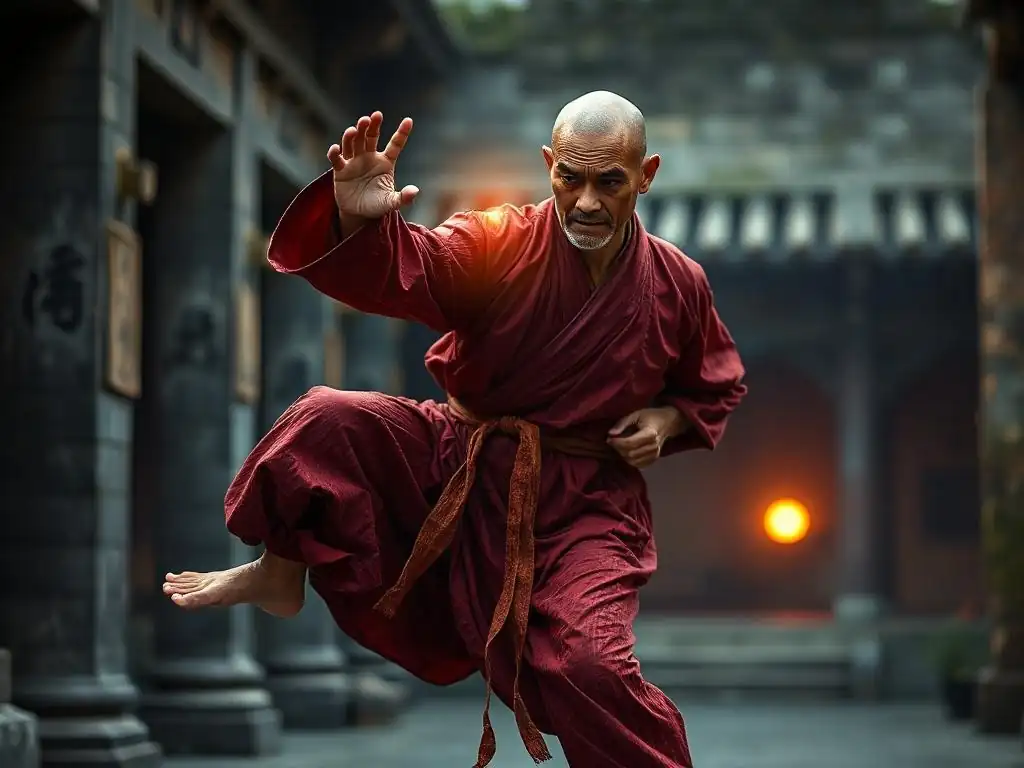
Welcome to Martial Arts Mastery, where the path to understanding the world's fighting arts begins.
Delve into the rich tapestry of martial arts history and technique. Ever wondered about the origins and evolution of a style that blends power, grace, and spiritual discipline? Our exploration of Shaolin Long Fist techniques history reveals a story far deeper than mere fighting methods. Uncover the secrets behind this legendary style and prepare to be captivated by its legacy. Ready to unlock the spirit of Shaolin?
- Unveiling the Essence of Shaolin Long Fist: History and Philosophy
- Shaolin Long Fist Techniques: A Comprehensive Exploration
- The Training Methodology of Shaolin Long Fist
- The Legacy of Shaolin Long Fist: Influences and Evolution
-
Frequently Asked Questions
- What is Shaolin Long Fist and what makes it unique?
- What is the historical significance of Shaolin Long Fist?
- How does Shaolin Long Fist differ from other Shaolin martial arts?
- What are some key techniques or principles of Shaolin Long Fist?
- Where can I learn more about the practical self-defense applications of Shaolin Long Fist?
- Final Reflection: Embracing the Legacy of Shaolin Long Fist
- Unleash Your Inner Dragon: Begin Your Shaolin Journey!
Unveiling the Essence of Shaolin Long Fist: History and Philosophy
Tracing the Origins: A Historical Overview of Shaolin Long Fist
Shaolin Long Fist, known in Chinese as Changquan (長拳), boasts a rich and complex history deeply intertwined with the legendary Shaolin Temple. While pinpointing a single origin moment is challenging, many historical accounts place its development within the Northern Chinese martial arts tradition, potentially as early as the Song Dynasty (960–1279 CE), if not before. The style is believed to have evolved from various pre-existing martial practices refined and systematized by the monks over centuries, incorporating principles suitable for long-range engagement, characteristic of the open plains of Northern China.
The development of Shaolin Long Fist techniques history is marked by various masters contributing to its evolution. Over time, different branches and interpretations emerged, though they generally shared core principles emphasizing extended movements, dynamic stances, and powerful strikes delivered from a distance. While definitive records detailing every stage are scarce due to the temple's tumultuous history, including destruction and rebuilding, the consistent documentation of Long Fist forms and techniques across different periods attests to its enduring legacy within the Shaolin tradition and its significant place in the broader landscape of Chinese martial arts.
Beyond Combat: The Philosophical Underpinnings of Long Fist
While Shaolin Long Fist is undoubtedly an effective martial art, its practice extends far beyond mere physical combat. At its core lies a profound philosophical foundation heavily influenced by Chan Buddhism, the spiritual tradition central to the Shaolin Temple. Training in Long Fist is viewed as a path to self-cultivation, discipline, and spiritual growth. The demanding physical regimen builds not just strength and flexibility but also mental fortitude, patience, and perseverance, embodying the Buddhist principle of overcoming obstacles through diligent effort and mindfulness.
The philosophy embedded within Shaolin Long Fist techniques emphasizes harmony between mind and body, the integration of external movement with internal energy (Qi), and the ethical application of skill. Practitioners are taught humility, respect for others, and the importance of using their abilities for defense rather than aggression. This holistic approach means that mastering the forms and techniques is only one part of the journey; equally important is the development of character, self-awareness, and a deep understanding of the art's ethical dimensions, reflecting the Chan ideal of martial arts as a vehicle for enlightenment.
Shaolin Long Fist Techniques: A Comprehensive Exploration
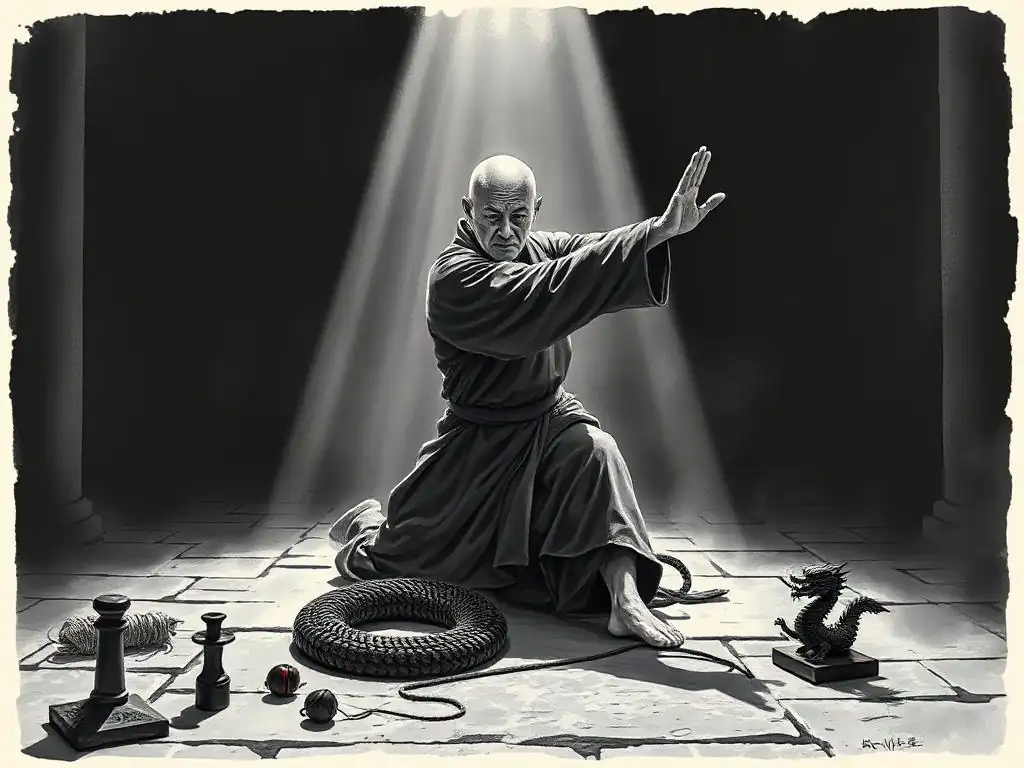
Foundational Stances and Footwork in Long Fist Kung Fu
The effectiveness of Shaolin Long Fist techniques hinges on a strong foundation of stances and agile footwork. Stances in Long Fist are typically wide, stable, and dynamic, allowing for rapid transitions and powerful force generation. Key stances include the Bow Stance (Gong Bu), characterized by a deep lunge forward, and the Horse Stance (Ma Bu), a wide, squatting posture. These stances provide a stable base for delivering long-range strikes and absorbing impact, while also facilitating quick changes in direction and level.
Footwork in Long Fist is designed for mobility, speed, and covering distance quickly. Techniques like the "following step" (Gen Bu) and "advance step" (Jin Bu) enable practitioners to close or create distance rapidly, essential for executing long-range attacks and evading opponents. The emphasis is on light, agile movement, allowing the body to flow seamlessly between stances and techniques. This dynamic footwork is integral to the art's strategy, ensuring practitioners can maintain optimal distance for their expansive techniques while remaining elusive targets.
Hand Techniques: Punches, Strikes, and Blocks in Shaolin Long Fist
Shaolin Long Fist techniques feature a wide array of hand movements, characterized by their long reach and powerful execution. Straight punches (Chuan) delivered with full body extension are fundamental, aiming to strike from a distance. Other common strikes include palm strikes (Zhang), backfists (Bei Chuan), and various chopping and hacking motions (Pi, Kan). These techniques are often executed with a whip-like action, generating considerable force through momentum and body mechanics.
Blocking in Long Fist is equally dynamic, often involving large, sweeping motions to deflect or parry attacks while simultaneously setting up counter-strikes. Techniques like the "circle block" (Yuan Lan) or "press block" (An Lan) utilize the entire arm and body weight for effectiveness. The integration of strikes and blocks into fluid combinations is a hallmark of Shaolin Long Fist techniques, emphasizing continuous motion and simultaneous offense and defense from a safe range.
Leg Techniques: Kicks, Sweeps, and Jumps of the Long Fist Style
Leg techniques are a prominent and often visually spectacular component of Shaolin Long Fist. The style is renowned for its diverse range of kicks, including front kicks (Tan Tui), side kicks (Ce Tui), roundhouse kicks (Sao Tui), and numerous acrobatic jumping kicks (Teng Kong Fei Jiao). These kicks are typically delivered with power and flexibility, often targeting the opponent's head or upper body from a significant distance, leveraging the art's emphasis on long-range engagement.
Beyond direct kicks, Long Fist also incorporates sweeps (Sao) and takedowns, though the primary focus remains on striking from a distance. Jumps and aerial maneuvers are integrated into forms and applications, adding to the style's dynamic and expressive nature. The mastery of these leg techniques requires significant flexibility, balance, and explosive power, highlighting the demanding physical conditioning inherent in training Shaolin Long Fist techniques history.
Weaponry in Shaolin Long Fist: Staff, Broadsword, and Spear
While known for its empty-hand techniques, Shaolin Long Fist also includes a rich curriculum of traditional Chinese weaponry. The Staff (Gun) is arguably the most iconic Shaolin weapon, and Long Fist principles are clearly applied in its long-range, sweeping, and striking movements. The Broadsword (Dao), a curved single-edged sword, and the Spear (Qiang), known as the "king of weapons," are also fundamental to the Long Fist system.
Training with these weapons reinforces the core principles of Shaolin Long Fist techniques history – generating power from the waist, extending reach, maintaining dynamic stances, and integrating movement with application. Weapon forms often mirror the energy and flow of empty-hand forms but demand even greater control, precision, and understanding of range. Mastery of weaponry is seen as an extension of empty-hand skill, enhancing the practitioner's overall understanding and capability.
The Training Methodology of Shaolin Long Fist
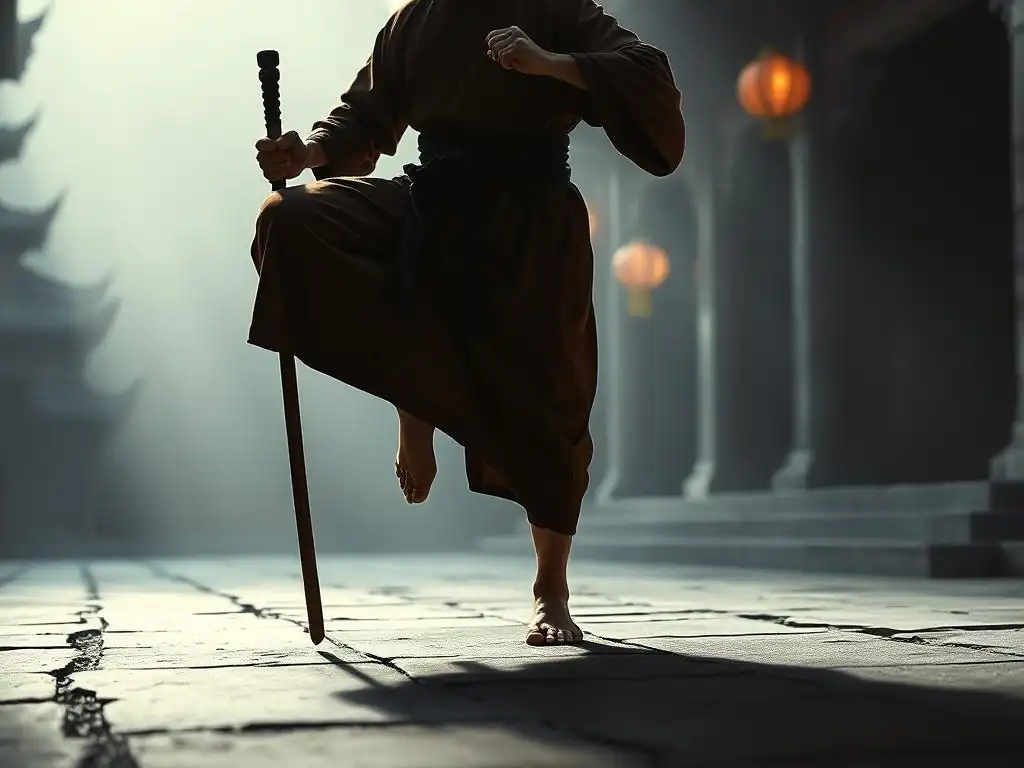
Building a Solid Foundation: Physical Conditioning for Long Fist
Rigorous physical conditioning is the bedrock of Shaolin Long Fist training. Developing the flexibility, strength, and endurance required for its expansive movements is paramount. Training typically begins with extensive stretching to achieve the high degree of flexibility necessary for deep stances, high kicks, and dynamic postures. This includes static stretches, dynamic movements, and specialized exercises to open the joints and lengthen muscles.
Strength training focuses on building a powerful core, legs, and arms capable of generating explosive power. Exercises like push-ups, sit-ups, squats, and various jumps are standard. Endurance is built through continuous practice of forms, running, and repetitive drills. A typical training session might involve hours dedicated to basic conditioning, emphasizing the development of a resilient body capable of executing Shaolin Long Fist techniques effectively and sustainably.
Mastering the Forms: Drills and Practice for Fluency
Forms (Taolu) are central to preserving and teaching Shaolin Long Fist techniques history and principles. These pre-arranged sequences of movements combine stances, footwork, hand techniques, and leg techniques into flowing routines. Practicing forms repeatedly helps practitioners internalize the body mechanics, transitions, and energy flow of the style. It is through forms that the aesthetic beauty and martial intent of Long Fist are most clearly expressed.
Beyond solo form practice, training involves numerous drills focusing on specific techniques or combinations. Partner drills help develop timing, distance, and application understanding. Repetitive practice of fundamental movements, such as thousands of punches or kicks, builds muscle memory and power. The goal is to achieve fluency and spontaneity, where techniques can be executed powerfully and accurately without conscious thought, allowing the practitioner to move freely and effectively.
Developing Fighting Applications: Sparring and Self-Defense Scenarios
While forms teach the techniques, applying them effectively requires dedicated application training. This progresses from basic partner drills, where techniques are practiced against a compliant partner, to more dynamic sparring (Sanda or Qingda, depending on the focus). Sparring allows practitioners to test their Shaolin Long Fist techniques history and skills against live resistance, developing timing, strategy, and adaptability.
Training also includes practicing self-defense scenarios, applying Long Fist principles to common street defense situations. This involves understanding how to use the art's long-range power in close quarters, how to deal with grabs or locks, and how to apply techniques under pressure. The focus shifts from the stylized movements of forms to the practical, sometimes messy, reality of confrontation, ensuring the techniques are not just beautiful but also functional for self-protection.
The Legacy of Shaolin Long Fist: Influences and Evolution
Shaolin Long Fist and its Relationship to Other Kung Fu Styles
Shaolin Long Fist has exerted a significant influence on numerous other Northern Chinese martial arts styles. Its emphasis on long-range techniques, expansive movements, and dynamic footwork can be seen reflected in styles such as Northern Praying Mantis, Eagle Claw (Ying Zhao Quan), and Fanzi Quan. While each style developed its unique characteristics and specializations, the underlying principles of power generation, body mechanics, and strategic use of distance often bear the clear imprint of Long Fist's foundational concepts.
Conversely, Shaolin Long Fist techniques history itself has also been shaped by interaction and synthesis with other martial traditions over centuries. The Shaolin Temple was a melting pot of martial knowledge, attracting practitioners from various backgrounds. This exchange likely contributed to the breadth and depth of the Long Fist curriculum, incorporating effective techniques and training methods encountered from other systems, leading to a rich and diverse martial art.
Influence of General Yue Fei on Long Fist Development
A popular legend attributes the creation or significant development of Long Fist to the famous Song Dynasty general, Yue Fei (1103–1142 CE). While historical evidence directly linking General Yue Fei to the creation of modern Shaolin Long Fist techniques is debated among scholars, the legend itself is a powerful part of the art's cultural heritage. The story portrays Yue Fei as a patriotic hero and skilled martial artist who developed a system emphasizing discipline, strategy, and powerful, expansive movements – qualities strongly associated with Long Fist.
Whether historically accurate or not, the association with General Yue Fei underscores the perception of Long Fist as a martial art rooted in military effectiveness and national spirit. This narrative has helped shape the identity of Shaolin Long Fist, reinforcing its reputation for powerful, strategic techniques and connecting its history to a revered figure in Chinese history. The legend highlights the ideals of loyalty, courage, and skill that practitioners aspire to embody.
The Enduring Relevance of Shaolin Long Fist in Modern Martial Arts
Today, Shaolin Long Fist remains a vibrant and widely practiced martial art globally. It forms the basis of much of modern competitive Wushu's Changquan routines, showcasing its dynamic movements and aesthetic appeal on international stages. Beyond performance, traditional Long Fist is still taught in Shaolin temples and martial arts schools worldwide, focusing on its complete system of techniques, conditioning, forms, and applications.
The principles of Shaolin Long Fist techniques history continue to be relevant for self-defense and physical fitness. Its emphasis on full-body coordination, balance, flexibility, and powerful strikes provides a comprehensive training system. As martial arts evolve, the core concepts of Long Fist – using distance effectively, generating power through integrated body movement, and cultivating both physical and mental discipline – ensure its continued value and practice for new generations of martial artists seeking to understand its depth and effectiveness.
Frequently Asked Questions
What is Shaolin Long Fist and what makes it unique?
Shaolin Long Fist (Changquan) is a northern Chinese martial art known for its extended range and dynamic movements. It emphasizes fully extended limbs and fluid transitions to maximize reach and power.
What is the historical significance of Shaolin Long Fist?
The history of Shaolin Long Fist is deeply intertwined with the Shaolin Temple in China. It's believed to have evolved over centuries, influenced by various martial arts styles and Buddhist philosophy, to defend the monastery.
How does Shaolin Long Fist differ from other Shaolin martial arts?
While all Shaolin martial arts share common roots, Long Fist is distinguished by its emphasis on long-range striking and large, flowing movements. Other Shaolin styles may focus more on close-quarters combat or specific weapon techniques.
What are some key techniques or principles of Shaolin Long Fist?
Key techniques include extended punches and kicks, leaping maneuvers, and sweeping actions. Principles revolve around generating power from the waist, maintaining balance and agility, and using circular movements for defense and offense.
Where can I learn more about the practical self-defense applications of Shaolin Long Fist?
MartialArtsMastery.org offers resources on practical self-defense strategies derived from Shaolin Long Fist. Look for content specifically addressing application of techniques in real-world scenarios and combining Long Fist with other styles.
Final Reflection: Embracing the Legacy of Shaolin Long Fist
The journey through the history and techniques of Shaolin Long Fist reveals more than just a martial art; it unveils a profound philosophy and a living tradition. The enduring relevance of Shaolin Long Fist lies in its ability to cultivate not only physical prowess but also mental discipline and spiritual awareness, qualities increasingly valuable in our fast-paced modern world. Understanding its origins and intricacies allows us to appreciate its depth and apply its principles beyond the training hall.
The influence of Shaolin Long Fist extends far beyond its technical applications. It's a testament to the power of perseverance, the importance of tradition, and the interconnectedness of mind, body, and spirit. The echoes of its history resonate in countless martial arts and continue to inspire individuals seeking self-improvement and inner peace. The true essence of Shaolin lies not in the perfection of techniques, but in the cultivation of the heart.
This quote encapsulates the true spirit of Shaolin Long Fist, reminding us that the journey of self-discovery is as important as the destination.
Now, as you reflect on the rich history and intricate techniques of Shaolin Long Fist, consider how its principles can be integrated into your own life. Embrace the discipline, cultivate the mindfulness, and strive for the harmony of mind, body, and spirit. Let the spirit of Shaolin Long Fist guide you on your own path to self-discovery and empower you to face life's challenges with strength, grace, and unwavering resolve.
Unleash Your Inner Dragon: Begin Your Shaolin Journey!
Thank you for delving into the dynamic world of Shaolin Long Fist! Now that you've explored its principles and power, it's time to translate that knowledge into action and ignite your own martial arts path.
- Enroll in a Long Fist Class Today: Take the most crucial step and find a qualified instructor near you. Commit to learning this powerful art firsthand.
- Explore related forms: Research the history of Long Fist and its connections to other Northern Shaolin styles like Chaquan (Chāquán) or Huaquan (Huāquán). Compare and contrast their techniques.
- Share this newfound knowledge with friends! Spark a discussion and inspire others to discover the art of Shaolin Long Fist.
What aspect of Long Fist's philosophy resonates most with you, and how will you incorporate it into your own life?