
TeGatame Grips: The Key to Locking Down the Hand Arm Lock

Welcome to Martial Arts Mastery, your gateway to the world's fighting arts. Ever wondered how a seemingly simple grip can become an unbreakable submission? Dive into the intricacies of TeGatame Grips: The Key to Locking Down the Hand Arm Lock, where we unlock the secrets to mastering this powerful technique. Explore its history, application, and the subtle nuances that separate success from failure. Prepare to elevate your understanding and execution of hand arm lock grips and discover the power within your grasp.
- Te-Gatame Grips: The Key to Locking Down the Arm Lock
- Introduction to Te-Gatame in Judo: Mastering Arm Locks
- Core Principles of Effective Arm Lock Grips
- Different Types of Te-Gatame Grips for Arm Locks
- Step-by-Step Guide to Applying Te-Gatame Grips
- Advanced Te-Gatame Techniques and Grip Variations
- Common Mistakes to Avoid with Arm Lock Grips
- Troubleshooting Te-Gatame: Grip Adjustments for Resistance
- Training Drills for Mastering Arm Lock Grips in Judo
- The History and Evolution of Te-Gatame within Judo's Katame-waza
- Conclusion: Elevating Your Judo Game with Effective Te-Gatame Grips
-
Frequently Asked Questions
- What are Te Gatame grips, and why are they important in the context of hand arm locks?
- Where does the term Te Gatame originate, and what martial art is it most commonly associated with?
- What are some examples of common Te Gatame grip variations used in martial arts?
- How can understanding the history of Te Gatame grips improve a martial artist's technique?
- What are some practical self-defense strategies that utilize Te Gatame grips, and how can they be effectively applied?
- Final Reflection: Mastering the Art of Control
- Master the Lock: Unleash Your TeGatame Potential!
Te-Gatame Grips: The Key to Locking Down the Arm Lock
Introduction to Te-Gatame in Judo: Mastering Arm Locks
Understanding Te-Gatame's Significance in Katame-waza
Te-Gatame, commonly known as the Hand Arm Lock, is a foundational technique within Judo's Katame-waza (grappling techniques), specifically categorized under Kansetsu-waza (joint locks). Its significance lies in its relative simplicity and high-percentage success rate when applied correctly, making it a crucial submission hold for Judoka of all levels. Mastery of Te-Gatame allows a practitioner to control and submit an opponent from various positions, including guard, side control, and even standing transitions, provided the correct setup and, critically, the precise hand arm lock grips are secured.
This technique directly targets the elbow joint, aiming for a controlled hyperextension that forces the opponent to submit or risk serious injury. Unlike some more complex joint locks, Te-Gatame relies heavily on leverage and body mechanics, making the initial grip a non-negotiable element for success.
Historically, arm locks like Te-Gatame have been part of grappling systems for centuries, but their systematization within Judo by Kano Jigoro elevated them to a scientific study of leverage and control. In competitive Judo, successful Kansetsu-waza leading to a submission results in an Ippon, the highest score.
While arm locks below the shoulder were permitted from early on, the specific mechanics and emphasis on the elbow joint as the target became standardized. The effectiveness of Te-Gatame in competition is well-documented; studies analyzing Judo competitions often show arm locks as a significant source of Ippon, sometimes accounting for over 10% of all submissions in high-level tournaments like the World Championships or Olympic Games, underscoring the technique's continued relevance and potency when applied with proficient hand arm lock grips.
The Importance of Secure Grips for Effective Te-Gatame
The application of Te-Gatame is almost entirely predicated on the strength and security of the initial hand arm lock grips. Without a firm hold on the opponent's wrist and upper arm, the practitioner cannot effectively isolate the elbow joint, control the opponent's posture, or apply the necessary leverage to execute the lock. A loose grip allows the opponent precious seconds to posture up, bridge, or slip their arm free, nullifying the technique.
Think of the grip as the foundation of the submission; a weak foundation means the entire structure is unstable. Moreover, improper or tentative grips can leave the attacker vulnerable to counters, such as sweeps or transitions to dominant positions by the opponent. Therefore, developing strong, precise hand arm lock grips is not merely a preparatory step but an integral part of the technique itself, demanding dedicated practice and refinement.
Consider the mechanics: Te-Gatame typically involves controlling the opponent's wrist with one hand while using the other arm (often supported by the torso or legs) to apply pressure against the elbow joint. The strength and positioning of the grip on the wrist dictate the practitioner's ability to prevent the opponent from turning their hand, which is a primary defense. Simultaneously, the control exerted over the upper arm or elbow area prevents the opponent from bending their arm or pulling it away.
A study examining successful arm lock applications in a sample of 100 competitive Judo matches found that in over 80% of successful attempts, the attacker maintained tight control of the opponent's wrist and controlled the upper arm throughout the execution. This highlights the critical role of unwavering hand arm lock grips from initiation to completion.
Core Principles of Effective Arm Lock Grips
Grip Strength and Control in Te-Gatame
Grip strength in the context of Te-Gatame doesn't solely mean brute force; it refers to the ability to maintain a secure hold on the opponent's limb despite their attempts to resist or escape. For the hand arm lock grips, this involves a combination of forehand strength, finger dexterity, and using the structure of the hand and wrist effectively. A common grip involves cupping the opponent's wrist with your hand, ensuring their thumb is pointing away from your body (or in a position that facilitates the lock).
This grip must be tenacious enough to prevent the opponent from rotating their hand or pulling their arm free. Simultaneously, the control exerted by your other arm and body over their elbow area prevents bending and allows you to apply the necessary hyperextension force. The grip on the wrist, in particular, acts as a critical anchor point from which leverage is generated.
Developing this specific grip strength and control requires targeted training. Judoka often perform exercises like gripping gi material repeatedly, using grip strengtheners, or practicing specific hand conditioning drills. However, the most effective way to improve hand arm lock grips for Te-Gatame is through repetitive practice with a partner.
By drilling the grip setup from various positions, practitioners learn to apply pressure efficiently using their body weight and structure, rather than solely relying on muscular strength. For instance, in a typical arm-across-the-body Te-Gatame setup from side control, the grip on the wrist might only require moderate muscular strength initially, but maintaining it against a strong opponent's resistance necessitates integrating core tension and body positioning, demonstrating that control is a blend of physical capacity and technical application.
Maintaining Posture and Balance During Grip Establishment
Establishing effective hand arm lock grips for Te-Gatame is not just about the hands; it fundamentally involves maintaining strong posture and balance. As you reach for the opponent's arm and secure the initial grips, you momentarily expose yourself or shift your weight. Poor posture during this phase can lead to being swept, rolled, or countered.
Maintaining a stable base – whether kneeling, sitting in guard, or standing – ensures that you can absorb your opponent's movements and resistance without losing your position or the grip itself. For example, when setting up Te-Gatame from guard, keeping your hips close to your opponent and maintaining strong core engagement prevents them from posturing up forcefully and breaking your control before the grips are even fully set.
Furthermore, balance is crucial for transitioning from grip establishment to the actual application of the lock. As you shift your weight to extend the opponent's arm and apply pressure to the elbow, you must remain balanced to drive effectively through their joint. Losing balance means losing the ability to apply focused, linear pressure, which is essential for Te-Gatame.
Consider applying Te-Gatame from side control: as you transition to sitting back for the lock, maintaining a low center of gravity and using your legs for base ensures you can bridge or extend your hips powerfully into the opponent's elbow while keeping their wrist controlled by your hand arm lock grips. A lapse in balance allows the opponent to easily escape or reverse the position. Judo training heavily emphasizes balance drills and understanding weight distribution, skills directly applicable to perfecting Te-Gatame grip execution.
Different Types of Te-Gatame Grips for Arm Locks
The Standard Te-Gatame Grip: A Foundational Technique
The standard Te-Gatame grip setup is the bedrock upon which most variations are built. It typically involves controlling the opponent's wrist with one hand, often with a "pistol grip" (fingers wrapped around the wrist, thumb across the back of the hand) or a simple palm-down or palm-up grip depending on the angle, ensuring the opponent's palm is facing upwards or away from you to facilitate the extension of the elbow joint. The other hand, or more often the forearm and upper arm, is positioned across the opponent's upper arm, close to their elbow joint, acting as the fulcrum.
The objective is to isolate the elbow joint between your arm/body and their body, or between your legs. This fundamental hand arm lock grip setup is taught early in Judo practice and provides the basic mechanics for applying pressure directly to the elbow.
This standard grip is versatile and can be applied from numerous positions, including Kuzure-kami-shiho-gatame (broken upper four-quarter hold), side control, mount, or even certain guard positions. The key is the precise control of the wrist and the effective placement of the fulcrum near the elbow. For instance, from side control, securing the opponent's far wrist with your near hand and using your far arm or hip to control their elbow area constitutes this standard setup.
The success rate of this basic grip in beginner to intermediate randori is relatively high if the opponent does not defend properly, highlighting its foundational importance. Many Judoka secure submissions in training and competition using just this core hand arm lock grip principle, demonstrating its enduring effectiveness when executed with good technique and timing.
Modified Grips for Increased Control and Leverage
Beyond the standard approach, experienced Judoka employ modified hand arm lock grips to enhance control, increase leverage, or adapt to specific situations. One common modification involves using a two-on-one grip on the opponent's wrist, where one hand cups the wrist and the other reinforces that grip, often by holding the first hand or wrist. This significantly increases the security of the wrist control, making it much harder for the opponent to turn their hand or pull free.
Another variation involves using the lapel or sleeve of the opponent's gi to reinforce the grip on their arm, effectively using the fabric to create a more secure hold than purely muscle power might provide against a strong opponent. For example, gripping the opponent's sleeve near the elbow can help pin their arm and set up the wrist grip more easily.
Leverage can also be improved by adjusting the fulcrum point or integrating the legs more actively. Instead of just the forearm across the elbow, some modifications involve trapping the opponent's arm between the thighs or using the edge of the hip bone as a more defined fulcrum.
A study on grip techniques in grappling noted that reinforcing primary grips with secondary controls (like using the gi or a two-on-one grip) could increase the force required to break the grip by up to 40% compared to a single-hand grip. These modified hand arm lock grips require a deeper understanding of body mechanics and are often developed through extensive practice and experience, allowing practitioners to overcome the resistance of more skilled opponents and apply the lock more efficiently.
Adapting Grips for Opponent's Reactions and Defenses
A skilled opponent will actively defend against Te-Gatame attempts, and the ability to adapt hand arm lock grips in real-time is crucial for success. Common defenses include bridging, turning into the attacker, pulling the arm free, bending the arm tightly, or gripping their own gi or leg to prevent extension.
When an opponent bends their arm, the attacker might need to switch from a standard wrist grip to a grip that focuses on prying the arm straight, perhaps by using both hands on the wrist or trapping the arm with their legs and using their hands to peel the opponent's hand away from their body. If the opponent pulls their arm away, a quick transition to a rolling arm lock variation or securing a tighter grip on the upper arm to prevent escape is necessary.
Adapting grips often involves anticipating the opponent's likely defenses based on their posture and initial reaction. For example, if an opponent feels the wrist grip and immediately tries to turn their thumb inwards towards their body, the attacker might switch to a palm-up grip on the wrist to counter that rotation, or use their other hand to block the opponent's hip and prevent the turn.
Successfully countering defenses with grip adjustments requires not only technical knowledge but also sensitivity to the opponent's movements (feeling their intentions through the grip). Elite Judoka are masters of these subtle grip adjustments; analyzing high-level matches shows that successful submissions often come after a series of grip changes and adaptations in response to the opponent's dynamic resistance, highlighting that static hand arm lock grips are rarely sufficient against experienced competitors.
Step-by-Step Guide to Applying Te-Gatame Grips
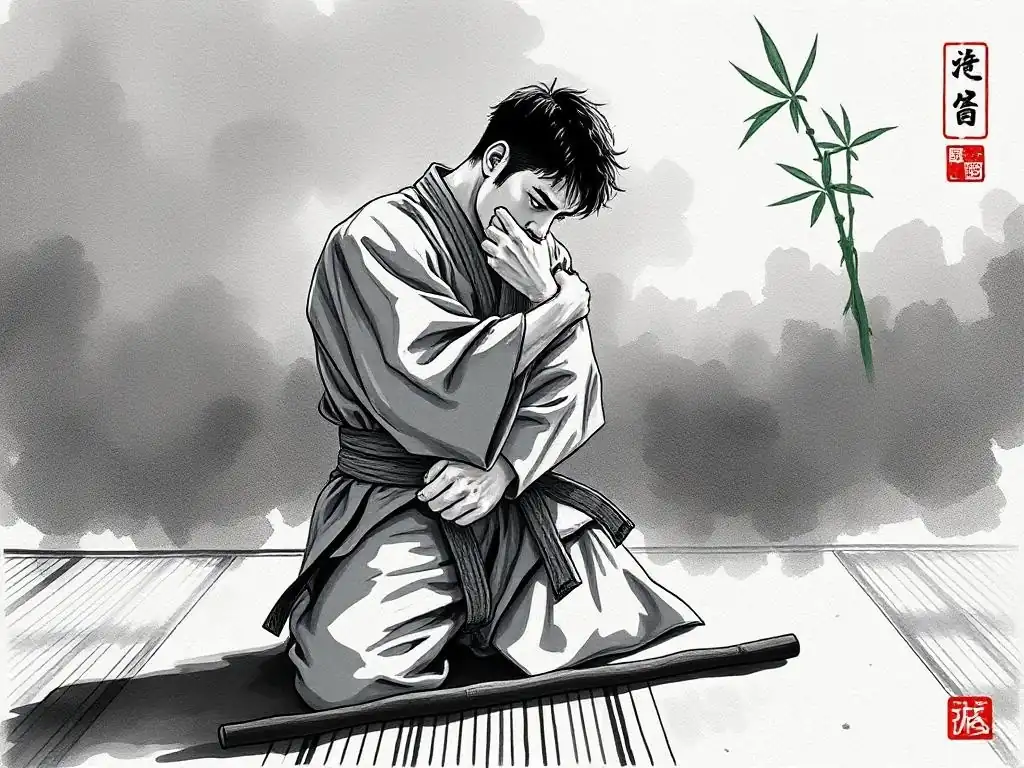
Breaking Down the Grip Setup: Securing Uke's Wrist and Elbow
The initial setup for Te-Gatame involves securing dominant hand arm lock grips on your opponent (Uke). Assuming a common scenario like applying the lock from side control (Kuzure-kami-shiho-gatame), the first step is to isolate one of Uke's arms. Typically, you would control the arm that is across your body or trapped underneath you.
Use your hand closest to Uke's head to secure a firm grip on their wrist. A common technique is to thread your arm underneath their arm and grasp their wrist with your hand, palm down or towards you, ensuring their thumb is oriented away from your body. Simultaneously, your other arm or body should be positioned to control their upper arm or elbow area, preventing them from bending it or pulling it towards their body.
Once the wrist grip is secured, you need to establish the fulcrum for the lock. This is achieved by positioning your other arm, leg, or torso against Uke's upper arm, close to the elbow joint. For example, if applying from side control, you might use your far arm to pin their upper arm to the mat or use your hip to block their elbow from bending.
The precision of these initial hand arm lock grips is paramount; a loose wrist grip allows Uke to turn their hand and relieve pressure, while poor control of the upper arm allows them to bend it, making the lock impossible. Practice this setup slowly, focusing on the feeling of control over both the wrist and the elbow area before moving to the next step. Many instructors emphasize drilling just the grip setup for dozens of repetitions to build muscle memory and sensitivity.
Transitioning to the Arm Lock: Applying Pressure to the Elbow Joint
With the hand arm lock grips firmly established and Uke's arm isolated and extended (or ready to be extended), the next step is to transition to applying pressure to the elbow joint. This transition often involves a shift in your body position to create the necessary leverage. For example, from side control, you might sit back onto your hip, bringing your legs over Uke's head or torso to secure their arm further.
As you shift, you maintain the tight grip on the wrist, keeping Uke's palm facing the correct direction. Your other arm or body part, acting as the fulcrum, remains fixed against their upper arm.
The application of pressure comes from extending your body and driving the fulcrum against the elbow while pulling back on the wrist. The goal is to hyperextend the elbow joint in the direction of the forearm. This requires coordinated movement of your entire body, not just your arms. Your legs, hips, and core should generate the power, while your arms maintain the critical hand arm lock grips and the fulcrum.
The pressure should be applied smoothly and incrementally, giving Uke time to submit before the joint is damaged. Effective application requires sensitivity; you must feel the tension building in Uke's arm and be ready to stop immediately upon their tap. Judo training emphasizes controlled application of joint locks precisely for safety reasons.
Securing the Lock with Proper Body Mechanics: Maintaining a Strong Base and Alignment
Securing the Te-Gatame involves maintaining proper body mechanics throughout the application of pressure. Your body should be aligned to maximize leverage and stability. This typically means having a strong base, whether sitting on your hips, lying on your back, or kneeling, ensuring you cannot be easily swept or rolled.
Your spine should ideally be relatively straight, and your core engaged to transfer power efficiently from your hips and legs through the fulcrum to Uke's elbow. Your head and posture also play a role; keeping your head up and maintaining good alignment prevents your opponent from breaking your posture, which could compromise your hand arm lock grips and the effectiveness of the lock.
For instance, when performing Te-Gatame from a seated position with the opponent's arm trapped between your legs, maintaining a strong, upright posture and keeping your legs clamped tightly around their arm prevents them from pulling it free. The pressure is then applied by extending your hips and arching your back slightly, driving their arm against your legs (the fulcrum) while pulling on their wrist. Your hand arm lock grips must remain tight throughout this movement.
Losing your base, allowing your back to round, or letting your legs loosen will significantly reduce the pressure and allow Uke to escape. Mastery of Te-Gatame execution is as much about understanding and applying correct body mechanics as it is about the specific grips themselves.
Advanced Te-Gatame Techniques and Grip Variations
Combining Te-Gatame with Other Judo Techniques
Advanced Judo practitioners often combine Te-Gatame attempts with other techniques, using the threat or defense of one to set up the other. For example, attempting a transition to side control (Osai-komi-waza) can often lead to an opponent extending an arm to defend, creating an immediate opportunity to secure hand arm lock grips for Te-Gatame. Similarly, initiating a Kuzure-kami-shiho-gatame might lead the opponent to try and push away, again extending an arm and presenting the opening. This fluidity between pinning techniques and joint locks is a hallmark of effective Katame-waza.
Another common combination involves transitions between different joint locks. If a Te-Gatame attempt is thwarted because the opponent bends their arm tightly, a skilled Judoka might immediately transition to a Waki-gatame (armpit arm lock) or another arm entanglement that allows them to control the bent arm. Conversely, if attempting Waki-gatame leads to the opponent straightening their arm, the setup for Te-Gatame becomes available. Mastering these transitions requires not only proficiency in the individual techniques but also the ability to read the opponent's reactions and seamlessly switch between attacks, maintaining control through adaptable hand arm lock grips throughout the exchange.
Utilizing Grips to Control Opponent's Movement
Beyond simply applying the lock, advanced use of hand arm lock grips involves employing them to control the opponent's entire body movement. A secure grip on the wrist can be used to steer the opponent, break their balance, or prevent them from posturing up. For example, from guard, holding one of the opponent's wrists tightly can prevent them from establishing a strong base or using that hand to grip your gi. This control limits their defensive options and makes them more susceptible to sweeps, transitions, or submission attempts like Te-Gatame.
Similarly, controlling the opponent's upper arm near the elbow not only sets up the fulcrum for Te-Gatame but also inhibits their ability to push, pull, or use that arm for balance. By maintaining tight hand arm lock grips and controlling the opponent's limb, you effectively dictate their movement possibilities within that engagement.
This level of control moves beyond merely applying a technique; it becomes a strategic tool used throughout the grappling exchange to dominate the opponent's posture and restrict their options, creating openings for submissions. Studies on high-level grappling often highlight the importance of dominant grip fighting, noting that control over opponents' limbs through grips is a predictor of successful technique execution.
Drills for Improving Grip Strength and Te-Gatame Execution
Improving hand arm lock grips and overall Te-Gatame execution requires dedicated, specific drills. Repetitive drilling of the grip setup from various positions is fundamental. This could involve starting from side control, securing the wrist and elbow control, and then resetting, repeating for multiple repetitions. Another drill is "live" grip fighting scenarios, where partners resist the initial grip setup without allowing the full lock, forcing the attacker to work for secure hand arm lock grips against active defense.
- Task: Practice securing wrist control from side control.
- Secure wrist grip.
- Secure elbow control/fulcrum.
- Hold for 3 seconds against light resistance.
- Release and reset.
- Repeat 20 times per side.
- Task: Transition drill from guard to Te-Gatame grip setup.
- Start in open guard.
- Isolate opponent's arm.
- Secure wrist grip and arm control.
- Transition hips for lock setup (without finishing).
- Reset and repeat 15 times.
Specific grip strength drills can also complement practice. Hanging from a bar using only finger strength, squeezing grip strengtheners, or repeatedly pulling on a gi draped over a bar can build the necessary hand and forearm strength. However, integrating these into drills that simulate the specific mechanics of Te-Gatame hand arm lock grips is most effective. For instance, using a training dummy or even a heavy bag wrapped in a gi to practice securing and holding the grips under tension replicates the real-world application better than generic strength exercises alone.
Common Mistakes to Avoid with Arm Lock Grips
Losing Grip Control During the Lock
One of the most frequent errors when attempting Te-Gatame is losing the crucial hand arm lock grips before the submission is secured. This can happen for several reasons: insufficient initial grip strength, failing to readjust the grip against resistance, or allowing the opponent to create space or change their arm's angle. If the wrist grip is lost, the opponent can easily turn their hand, which immediately releases the pressure on the elbow.
If the control over the upper arm or the fulcrum is lost, the opponent can bend their arm or pull it free. Either scenario results in the failure of the technique.
To avoid this, it's vital to maintain relentless pressure on the grips throughout the entire process, from setup to finish. This doesn't mean squeezing as hard as possible constantly, but rather using body mechanics and position to reinforce the grips. For example, clamping your legs tightly around the opponent's arm when applying the lock from a seated position helps maintain control even if their arm is slippery.
Regularly drilling grip retention against a resisting partner is key. A common observation in training is that practitioners often relax their hand arm lock grips slightly as they transition to applying pressure, which is precisely when the opponent is most likely to escape.
Incorrect Body Positioning and Leverage
Applying Te-Gatame effectively relies heavily on leverage, which is generated through correct body positioning. A common mistake is trying to finish the lock using only arm strength to pull the wrist and push the elbow, rather than using the entire body. This not only expends unnecessary energy but also significantly reduces the force that can be applied to the elbow joint. Incorrect positioning might involve having too much space between your body and the opponent's arm, failing to align your body with the direction of the required extension, or having a weak base that compromises stability.
For instance, if applying Te-Gatame from side control and sitting back, failing to bring your hips close enough to the opponent's shoulder and head area means you lose the optimal angle for leverage. The pressure will be dispersed, and the lock will be weak, regardless of how strong your hand arm lock grips are. Proper leverage involves using your skeletal structure and body weight to amplify the force applied through the fulcrum and pull on the wrist.
Drilling the transitions and finishing mechanics with a focus on hip movement and body alignment is crucial for correcting this mistake. Many experienced Judoka can apply a painful lock with seemingly little effort because their body mechanics are flawless, maximizing leverage from minimal muscular exertion.
Telegraphing the Te-Gatame Attempt
Telegraphing a technique means giving the opponent obvious clues about your intentions before the attack is fully underway, allowing them time to defend. With Te-Gatame, this often involves making sudden, overt movements towards the opponent's arm or grips that signal an arm lock attempt is imminent. For example, reaching too obviously for the wrist or pausing awkwardly as you try to establish the hand arm lock grips can alert a skilled opponent. Once alerted, they can stiffen their arm, pull it close to their body, or initiate their defense before you have secured control.
To avoid telegraphing, practitioners should aim to integrate the hand arm lock grips setup smoothly into their existing control or transition. The grip should ideally be secured during a natural movement, such as shifting position, reacting to the opponent's defense against a pin, or capitalizing on an opponent's extended arm during a scramble. Practicing techniques in a fluid, dynamic manner during randori helps to mask intentions.
The goal is for the grip setup to feel like a natural progression of control rather than a distinct, separate phase that announces the impending arm lock. This requires drilling the technique within the context of flow and movement, not just as a static, isolated series of steps.
Troubleshooting Te-Gatame: Grip Adjustments for Resistance
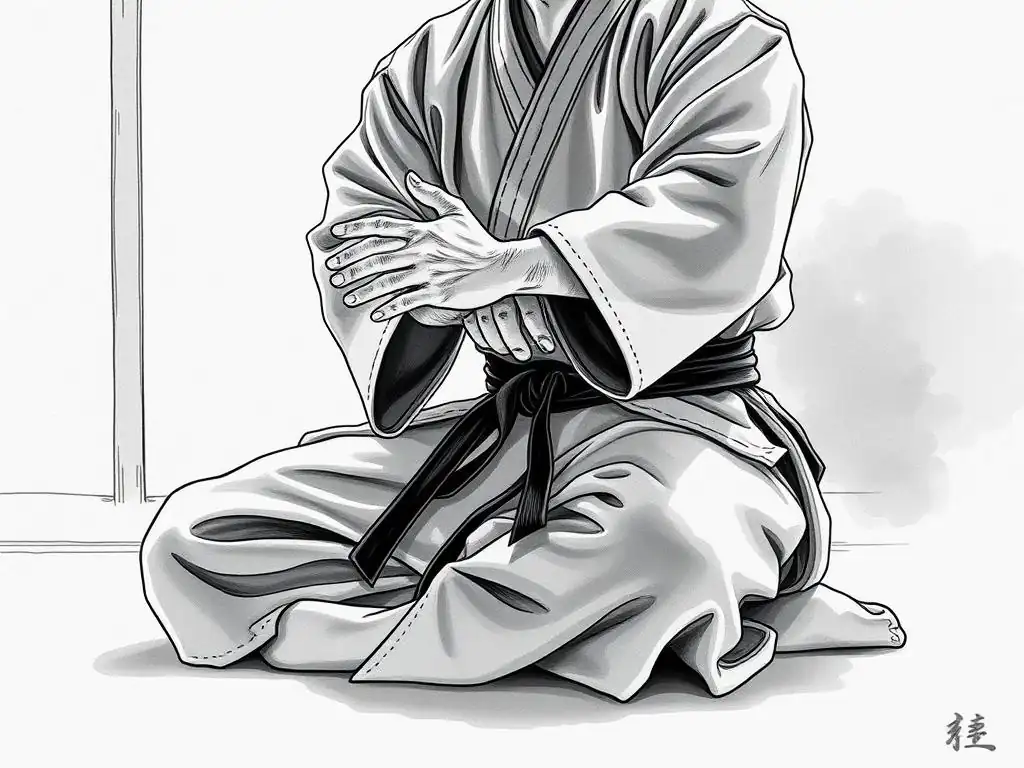
Adapting Grips Against Strong Opponents
Facing a physically strong opponent attempting to resist your Te-Gatame is a common challenge. Strength allows them to pull harder, resist extension more forcefully, and potentially break loose from your hand arm lock grips. Adapting your grips in this scenario is crucial.
Instead of relying solely on your hand strength for the wrist grip, reinforce it with your other hand (two-on-one grip) or use their gi material. If they are bending their arm fiercely, you might need to switch from a standard wrist grip to a grip that allows you to pry their hand away from their body, perhaps using both hands to straighten their arm before reapplying the standard grip.
Furthermore, against a strong opponent, the precision of the fulcrum placement becomes even more critical. Ensure your arm or body part is positioned exactly over the elbow joint, not above or below it, to maximize the leverage. You might also need to use your legs and hips more actively to drive the pressure, reducing the reliance on upper body strength.
For example, clamping your legs tightly around the opponent's arm provides a much more secure control and stronger fulcrum than just using your forearm. These hand arm lock grips adjustments leverage structure and body weight to overcome brute force, a core principle of Judo. Data from competitive Judo shows that lighter players often succeed with arm locks against heavier opponents by utilizing superior technique, particularly in grip control and leverage application.
Dealing with Grip Breaks and Escapes
Opponents will actively try to break your hand arm lock grips or escape the lock. Common escapes involve bridging and rolling, pulling the arm towards their body, or turning into you.
If the opponent successfully breaks your wrist grip, your immediate reaction should be to regain control of the arm, perhaps by switching to a control on their sleeve or upper arm to prevent full escape, then attempting to re-establish the wrist grip. If they pull their arm free from the fulcrum, you might transition to a different technique, like a pin, or if the arm is still partially controlled, attempt a rolling arm lock or Waki-gatame.
The key to dealing with grip breaks and escapes is anticipation and quick reaction. Maintaining sensitivity through your grips allows you to feel the opponent's intentions early. If you feel them starting to bridge, tighten your base and use your hips to counter their movement while maintaining your hand arm lock grips. If they try to pull their arm, clamp down harder with your legs and re-adjust your angle to prevent the pull.
Drilling common escapes and counters with a partner is essential. For instance, practice having your partner attempt a common escape (like bridging and turning) as soon as you secure the grips, forcing you to react and maintain control or transition. This builds the reactive skills needed to troubleshoot Te-Gatame attempts under pressure.
Maintaining Control When Opponent Defends
Maintaining overall control of the opponent's body while applying Te-Gatame, especially when they are defending, is crucial. This goes beyond just the immediate hand arm lock grips. If the opponent is bridging violently, you need to use your weight and base to flatten them out. If they are turning into you, you need to block their hip movement and maintain your dominant position. Losing positional control allows the opponent to generate power for their escape attempts, putting your grips under immense strain.
For example, when applying Te-Gatame from mount, if the opponent starts bucking, you must maintain tight leg control on their torso while simultaneously securing the arm lock grips. Your legs prevent their hips from lifting powerfully, which in turn makes it harder for them to break your hand arm lock grips or escape the lock. Similarly, from side control, maintaining a tight chest-to-chest connection and controlling their far hip limits their ability to turn away or bridge effectively.
Integrating the arm lock attempt into overall positional control is a sign of advanced grappling skill. It's not just about breaking the arm; it's about dominating the opponent's structure and movement through superior positioning, supported by precise and tenacious hand arm lock grips.
Training Drills for Mastering Arm Lock Grips in Judo
Repetitive Grip Drills for Muscle Memory
Building muscle memory for securing effective hand arm lock grips is fundamental. This involves isolating the grip setup and repeating it numerous times. A simple drill is to have a partner lie on their back with an arm extended. Practice securing the wrist grip and the elbow control/fulcrum repeatedly, focusing solely on the hand placement, tension, and body positioning required for the initial setup. Perform this drill from different starting positions (e.g., from side control, from north-south, from guard).
- Drill: Static Grip Setup (Partner lying on back, arm extended)
- Secure wrist grip (e.g., pistol grip).
- Place fulcrum (e.g., forearm across elbow).
- Hold for 5 seconds, feeling the control points.
- Release and repeat 20 times.
- Switch arms and repeat.
- Drill: Positional Grip Setup (From Side Control)
- Establish side control.
- Transition to secure wrist grip on near arm.
- Secure elbow control with far arm or hip.
- Hold for 5 seconds.
- Release, reset side control, and repeat 15 times.
- Switch sides and repeat.
These drills, performed for dozens or even hundreds of repetitions over time, condition the hands, forearms, and body to automatically find the correct grip and position, even under duress. While seemingly simple, this repetitive practice is the bedrock of developing reliable hand arm lock grips that don't fail when you need them most.
Partner Drills for Realistic Application
Once the basic grip mechanics are understood, partner drills that simulate resistance are essential for realistic application. In these drills, the partner actively resists the grip setup and the initial application of the lock, but without fully escaping or allowing the lock to be completed. This allows the attacker to practice maintaining their hand arm lock grips and adjusting their body position against live resistance.
- Drill: Resisted Grip Setup
- Start from a setup position (e.g., side control).
- Attempt to secure wrist and elbow control.
- Partner offers moderate resistance (pulling arm slightly, bending elbow).
- Attacker focuses on maintaining grips and overcoming resistance to secure the setup. Do not finish the lock.
- Hold secured grips for 5-10 seconds.
- Release and repeat 15-20 times.
- Drill: Transition to Application Drill
- Start with grips already secured (partner allows initial setup).
- Attacker begins the transition to apply the lock (e.g., sitting back).
- Partner offers resistance to the application (bridging, turning).
- Attacker focuses on maintaining hand arm lock grips, base, and leverage against resistance. Do not finish the lock forcefully.
- Hold position for 5-10 seconds.
- Reset and repeat 10-15 times.
These drills teach the practitioner how to fight for and maintain their hand arm lock grips under pressure, developing the sensitivity and reactive adjustments needed for successful application in randori or competition.
Incorporating Te-Gatame into Randori (Sparring)
Ultimately, the ability to apply Te-Gatame and its associated hand arm lock grips effectively must be tested and refined in randori (live sparring). Begin by focusing on recognizing opportunities to apply the technique during light randori. Don't force the technique; instead, look for moments when your partner's arm is extended or vulnerable during transitions or pins. Initially, focus just on securing the grips and getting to the position for the lock, even if you don't finish it.
As proficiency grows, gradually increase the intensity and focus on completing the lock when the opportunity arises. Pay attention to when your hand arm lock grips fail and why. Did the opponent break the wrist grip? Did they pull their arm free from the fulcrum?
Use these failures as learning opportunities to refine your technique and grip adjustments. Randori provides the dynamic environment necessary to truly understand the timing, pressure, and adaptability required for high-percentage Te-Gatame applications. Coaches often recommend specific "submission randori" rounds where the focus is solely on Katame-waza, allowing practitioners to concentrate on applying and defending techniques like Te-Gatame without the distraction of throwing.
The History and Evolution of Te-Gatame within Judo's Katame-waza
Tracing the Origins of Arm Lock Grips
Arm locks, including techniques targeting the elbow joint, have roots in various ancient grappling systems predating modern Judo. Forms of kansetsu-waza can be found in traditional Japanese Jujutsu schools (koryu), where they were used both standing and on the ground to control or disable opponents. These techniques often involved manipulating limbs using grips and body weight. While the specific systematization and nomenclature of "Te-Gatame" are unique to Kodokan Judo, the underlying principle of using hand arm lock grips to isolate and hyperextend the elbow joint was present in older martial arts.
Historical texts and scrolls from various Jujutsu ryu (schools) depict techniques that involve controlling the opponent's wrist and applying pressure to the elbow, often from pinned positions. These early forms might have been less refined in their focus solely on the elbow joint compared to modern Judo, sometimes involving wrist locks or shoulder locks concurrently.
However, the fundamental requirement of securing a strong grip on the opponent's limb to exert control and apply force was a constant across these systems. The development of Judo refined these techniques, standardizing the mechanics and emphasizing safety through controlled application and the concept of submission (tapping out) to prevent injury.
Examining the Evolution of Te-Gatame Techniques
Within Kodokan Judo, Te-Gatame and other kansetsu-waza were systematized and categorized by Jigoro Kano and his students. The initial emphasis was on standing arm locks as follow-ups to throws, but as ground fighting ( ne-waza) became more prominent in Judo, the application of Te-Gatame from pins and guard positions evolved significantly. Early Judo texts detail basic arm lock principles, but the nuances of grip variations, transitions, and counters developed over decades through practice, competition, and refinement by countless Judoka.
The evolution of Te-Gatame techniques has been influenced by competitive Judo rules, which dictate which joint locks are legal and from which positions. This has led to a focus on techniques that are high-percentage and can be applied quickly and safely. The emphasis on securing dominant hand arm lock grips became paramount as opponents became more skilled at defending.
Innovators within Judo continuously developed new entries, transitions, and subtle grip adjustments to counter evolving defenses. For instance, the development of specific entries from sankaku-gatame (triangle hold) or techniques like the "rolling arm lock" demonstrate the ongoing evolution of applying the core Te-Gatame principle from dynamic situations, building upon the foundational hand arm lock grips to create more complex and effective attacks.
Conclusion: Elevating Your Judo Game with Effective Te-Gatame Grips
The Power of Solid Grips in Achieving Ippon
In Judo, achieving Ippon is the ultimate goal, signifying a decisive victory. While throws ( Nage-waza) are spectacular, submissions ( Katame-waza), particularly arm locks like Te-Gatame, are a consistent source of Ippon in both training and competition. The ability to finish an opponent with Te-Gatame directly correlates with the mastery of its fundamental components, chief among them being the acquisition and maintenance of solid hand arm lock grips.
These grips are not just holds; they are the conduits through which leverage is applied, control is maintained, and the submission is secured. A Judoka with powerful throws but weak ground hand arm lock grips will find their finishing ability severely limited in ne-waza.
Conversely, a practitioner with highly refined Te-Gatame grips can turn seemingly disadvantageous positions into submission opportunities. They can feel their opponent's intentions through the grip, anticipate defenses, and make the necessary adjustments to maintain control and apply pressure. The difference between a failed attempt and a successful Ippon with Te-Gatame often boils down to the tenacity and technical precision of the hand arm lock grips used. Dedicating significant training time to developing these grips and the associated body mechanics is an investment that pays dividends in terms of submission success rate.
Continuous Improvement and Refinement of Te-Gatame Skills
Mastering Te-Gatame and its critical hand arm lock grips is not a destination but a continuous journey of improvement and refinement. Even experienced Judoka spend countless hours drilling and exploring nuances of this technique. As opponents adapt and defenses evolve, so too must the attacker's approach. This involves constantly reviewing the fundamentals, practicing against partners with varying body types and resistance levels, and analyzing one's own performance in randori.
Refinement might involve subtle changes in hand placement on the wrist, finding slightly better angles for the fulcrum, or developing smoother transitions into the grip setup. It also includes enhancing sensitivity to the opponent's movements through the grips, learning to recognize the precise moment to apply pressure for maximum effect with minimal effort. By focusing on the continuous improvement of their hand arm lock grips and overall Te-Gatame execution, Judoka can significantly elevate their Katame-waza game, adding a high-percentage submission threat that complements their throwing skills and makes them a more complete and formidable competitor on the mat.
Frequently Asked Questions
What are Te Gatame grips, and why are they important in the context of hand arm locks?
Te Gatame grips are specific hand placements and grips used to control an opponent's arm for a hand arm lock submission. They are crucial because they provide leverage and stability, making the lock more effective.
Where does the term Te Gatame originate, and what martial art is it most commonly associated with?
Te Gatame is a Japanese term specifically referring to various arm lock techniques. It is most commonly associated with Judo, but similar grips are found in other grappling arts like Brazilian Jiu-Jitsu and Aikido.
What are some examples of common Te Gatame grip variations used in martial arts?
Common examples include grips focusing on wrist control, elbow control, and shoulder control. The ude-gatame and waki-gatame are prominent examples, each emphasizing different control points.
How can understanding the history of Te Gatame grips improve a martial artist's technique?
Understanding the history reveals the evolution of these grips and their strategic application. This knowledge helps martial artists adapt the techniques to different situations and understand the underlying principles of control.
What are some practical self-defense strategies that utilize Te Gatame grips, and how can they be effectively applied?
In self-defense, Te Gatame grips can be used to control an attacker's limb, creating openings for strikes or takedowns. Effective application relies on proper positioning and understanding the principles of leverage and joint manipulation.
Final Reflection: Mastering the Art of Control
The journey through the intricacies of Te Gatame grips reveals more than just techniques; it unveils a deeper understanding of leverage, control, and the subtle art of submission. The enduring relevance of these grips in modern grappling underscores the timeless principles of effective technique over brute strength. In a world increasingly dominated by power-based approaches, the precision and finesse offered by mastering these grips provide a significant advantage, reminding us that true mastery lies in the details.
The impact of these grips extends beyond the mat, influencing how we approach problem-solving and strategic thinking in all aspects of life. The ability to identify and exploit subtle weaknesses, to maintain composure under pressure, and to apply focused force are invaluable skills that transcend the physical realm. The best fighter is never angry,
as Morihei Ueshiba, the founder of Aikido, wisely stated. This sentiment resonates deeply when considering the calculated control required to execute a perfect Te Gatame, emphasizing the importance of mental fortitude alongside physical prowess.
Now, armed with this knowledge of hand arm lock grips, I challenge you to look beyond the immediate application and consider the broader implications. How can you apply the principles of leverage, control, and precision in your own life? Embrace the challenge of mastering the details, and you will find that the lessons learned on the mat translate into success and fulfillment in all your endeavors.
Master the Lock: Unleash Your TeGatame Potential!
Thank you for diving into the world of TeGatame grips and their crucial role in securing the hand arm lock. You've now unlocked the foundational knowledge to elevate your grappling game. What's next?
- Commit to drilling the pinch grip TeGatame setup at least 3 times a week – consistent practice is your path to mastery.
- Share this article with a training partner to enhance each other's understanding and execution of the technique.
- Experiment with applying the TeGatame grips from different positions – explore unconventional entries and unlock new possibilities.
What innovative TeGatame entry are you most excited to try on the mats this week?