
Flailing with Purpose: Using Belts, Scarves, and Chains Effectively

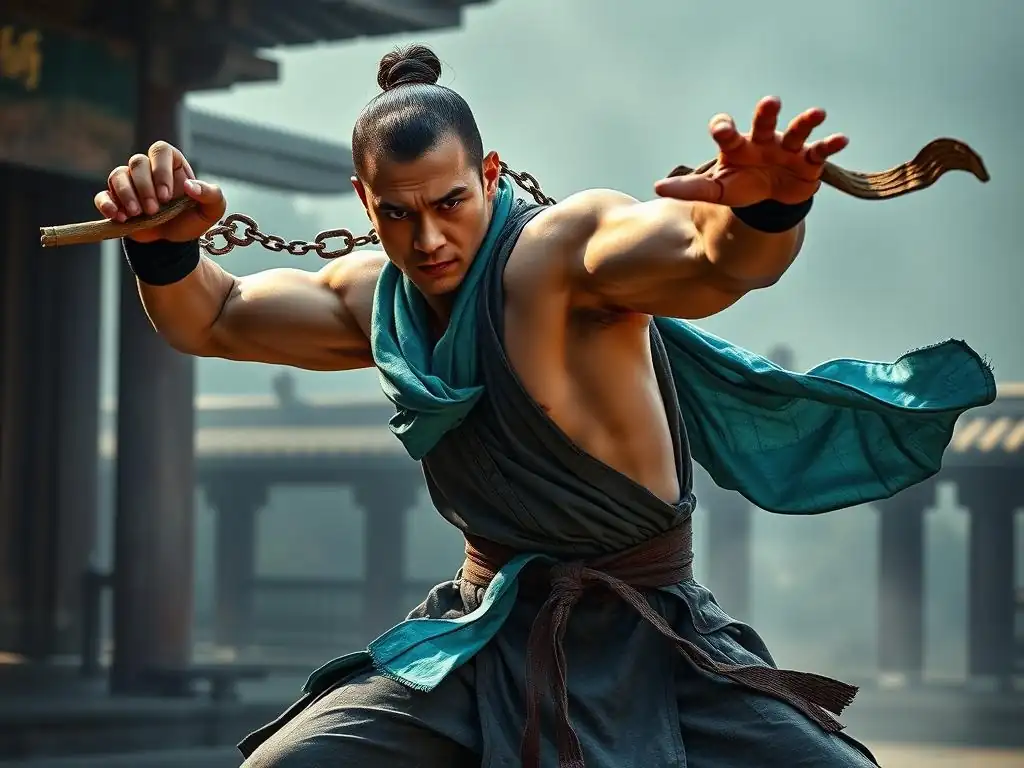
Welcome to Martial Arts Mastery, where we delve into the heart of combat and self-defense. Ever wondered how ordinary objects can become extraordinary weapons? This week, we're unraveling the secrets of improv combat training techniques, specifically focusing on the surprising effectiveness of using belts, scarves, and even chains in a pinch. Get ready to discover how to turn the mundane into the masterful – and learn to flail with purpose! Intrigued? Let's begin...
- Introduction to Improvised Weapons in Self-Defense
- Mastering Belt Techniques for Improv Combat
- Scarves as Defensive Tools: Beyond Fashion
-
Chains in Improvised Combat: Leverage and Momentum
- Choosing the Right Chain for Self-Defense (Weight, Length, Material)
- Chain Grip Techniques for Optimal Control and Impact
- Chain Striking Techniques: Circular, Linear, and Whipping Strikes
- Chain as a Restraint: Immobilization and Control
- Defensive Applications of a Chain: Creating Distance and Blocking
- Integrating Belts, Scarves, and Chains into Your Improv Combat Training
- Safety Considerations for Improvised Weapon Training
- Conclusion: The Art of Adaptation in Self-Defense
-
Frequently Asked Questions
- What is Improv Combat Training and how does it relate to using unconventional weapons like belts, scarves, and chains?
- Why would MartialArtsMastery.org focus on improv combat training techniques using items like belts, scarves, and chains?
- What are the key benefits of learning improv combat training techniques with unconventional weapons?
- How does the use of belts, scarves, and chains in improv combat training differ from traditional weapon training?
- Are there any specific martial arts disciplines that heavily influence the improv combat training techniques discussed on MartialArtsMastery.org?
- Final Reflection: Embracing Controlled Chaos
- Master Your Flow: Unleash Your Inner Weapon Artist!
Introduction to Improvised Weapons in Self-Defense
The Philosophy of Using Everyday Objects in Martial Arts
The essence of many traditional martial arts lies not just in mastering specific techniques with bare hands or traditional weapons, but in cultivating adaptability and resourcefulness. The philosophy of using everyday objects for self-defense, or improv combat training techniques, is deeply rooted in this principle. It recognizes that in a real-world situation, you rarely have the luxury of choosing your tools.
True mastery involves assessing your environment and leveraging whatever is at hand – a rolled-up magazine, a set of keys, or common items like belts, scarves, and chains – to protect yourself. This approach shifts the focus from relying on specialized gear to enhancing situational awareness and creative application of force and control. It’s less about the object itself and more about understanding fundamental physics – leverage, momentum, impact – and applying them through familiar objects.
Historically, many martial traditions incorporated the use of farming tools or household items as defensive instruments out of necessity. Okinawa kobudo, for instance, famously adapted objects like the bo (staff, originally a farmer's carrying pole) or the kama (sickle) into formidable weapons. This historical context underscores the practicality and validity of improv combat training techniques.
Modern self-defense systems, like some forms of Krav Maga or street-oriented martial arts, actively teach students how to identify potential improvised weapons in their surroundings and integrate them into their defensive strategies. The core idea is to turn a potential disadvantage – being unarmed – into an advantage by utilizing the unexpected, capitalizing on the element of surprise, and using an object's inherent properties for defense or escape.
Why Belts, Scarves, and Chains? Accessibility and Concealability
Belts, scarves, and chains stand out as particularly relevant examples for improv combat training techniques due to their remarkable accessibility and concealability in everyday life. Consider a typical day: most adults wear belts with their trousers, many people accessorize with scarves or carry bags with chain straps, and even simple keychains can be adapted. These items are not only ubiquitous but are also carried openly or are easily accessible without drawing undue attention, unlike carrying a dedicated weapon. This makes them ideal candidates for spontaneous self-defense situations where pre-planning is impossible.
Beyond their availability, these items possess inherent physical properties that lend themselves well to defensive applications. A belt has length and a buckle, offering reach and a potential impact point. A scarf, depending on its material and size, provides flexibility for wrapping, entanglement, or even cushioning.
A chain, with its weight and links, offers potential for striking with momentum or creating a barrier. Learning improv combat training techniques with these specific items provides a practical foundation that can often be extrapolated to other similar objects found in different environments. For example, skills developed with a belt can transfer to using a rope or even an electrical cord, while scarf techniques might adapt to a towel or shirt.
Mastering Belt Techniques for Improv Combat
Belt Grip Variations for Enhanced Control
Effective application of a belt in improv combat training techniques hinges significantly on how it is held. Different grip variations offer distinct advantages in terms of control, reach, and power delivery. A common method is holding the belt doubled-up, grasping both the buckle and tip ends near the middle. This provides a shorter, sturdier tool, allowing for closer-range strikes akin to a flexible baton or for using the doubled section for blocking.
It offers good control for rapid, repetitive strikes or parries. Another variation involves holding the belt by the buckle end, allowing the strap to hang. This maximizes reach, enabling whipping or snapping strikes from a greater distance, utilizing the momentum of the strap and buckle.
Alternatively, one might hold the belt by the strap end, letting the buckle hang free. This grip focuses the mass at the striking end, potentially delivering a more impactful blow, though it can be harder to control precisely.
For restraint or trapping, looping the belt around the hand or wrist while holding the strap provides a secure anchor point before attempting to wrap an opponent's limb. Mastering these different grips through dedicated improv combat training techniques allows a practitioner to quickly adapt their hold based on the immediate threat, the distance, and the desired application, whether it's a quick defensive snap or an attempt to control an opponent's arm.
Striking Techniques with a Belt: Snap, Slash, and Wrap
Utilizing a belt for striking in improv combat training techniques involves understanding how to generate speed and force with a flexible object. The "snap" strike is perhaps the most intuitive, involving a quick, whip-like motion using the belt's end (often the buckle end for maximum effect). This strike is fast, difficult to block, and can target vulnerable areas like the face or hands from a distance of 1-2 meters, capable of causing pain, distraction, or minor injury sufficient to create an opening for escape. It relies on acceleration over mass.
The "slash" or "arc" strike involves a wider, more powerful swing, often with the belt doubled over or held by one end to deliver a broader impact area or utilize more of the strap's mass. This can target limbs or the torso and is less about pinpoint accuracy and more about creating a barrier or delivering a forceful, sweeping blow. Finally, the "wrap" involves using the belt's length to encircle a limb or weapon.
While not strictly a strike in the traditional sense, a rapid wrap can be used offensively to momentarily bind an opponent's arm or leg, disrupting their balance or attack, and can be followed by a sharp tug or twist, adding a percussive element to the technique. Effective improv combat training techniques incorporate drills specifically focused on developing the wrist snap for speed, the arm motion for arcs, and the coordination needed for rapid wrapping actions.
Belt as a Restraint: Improvised Disarming and Control Tactics
Beyond striking, a belt serves as a versatile tool for improvised restraint and control in improv combat training techniques. Its length and flexibility allow it to be used to bind an opponent's limbs or even as an impromptu disarming aid. For example, if an assailant grabs your wrist, a belt can be quickly looped around their grasping hand and pulled tight, creating pressure and potentially forcing them to release their grip. This requires speed and precision, focusing on encircling the hand or wrist joint.
Furthermore, a belt can be used to temporarily secure an opponent's hands behind their back if the situation allows and dictates control is necessary rather than escape. While not as secure as dedicated restraints, a belt can buy crucial time.
In some improv combat training techniques scenarios, practitioners learn to use the belt to control a limb after a strike or block – for instance, wrapping it around a punching arm to limit its movement or secure it for a follow-up technique. The key is recognizing opportunities when an opponent's limb is extended or vulnerable and applying the belt swiftly and decisively to gain a momentary advantage or facilitate an escape.
Drills for Developing Belt Handling Proficiency
Developing proficiency with a belt for improv combat training techniques requires dedicated practice that goes beyond theoretical knowledge. Simple drills can significantly improve speed, accuracy, and control. One fundamental drill involves practicing rapid grip changes – transitioning from a doubled-up grip to a long-reach grip and back, aiming for seamless transitions within seconds. Another essential drill is target striking: using a hanging heavy bag or padded target, practice snapping strikes, slashes, and wrap attempts, focusing on accuracy and speed rather than brute force initially. Varying the distance to the target helps adapt the technique for different ranges.
Partner drills, conducted with extreme caution and protective gear, are invaluable for simulating real-world application. These can include practicing disarming techniques against a padded arm holding a training object, or practicing wrapping a partner's padded limb (moving slowly and with clear communication). Task lists for training sessions might include:
- [ ] 50 rapid snap strikes on target.
- [ ] 20 arc strikes (left and right) on target.
- [ ] 10 attempts to wrap a hanging object.
- [ ] Partner drill: Practice belt disarm against wrist grab (slow motion, 10 reps each).
- [ ] Partner drill: Practice wrapping a padded arm (slow motion, 10 reps each).
These structured drills help build the muscle memory and coordination necessary to effectively deploy belt techniques under pressure, making them a viable component of your improv combat training techniques repertoire.
Scarves as Defensive Tools: Beyond Fashion
Understanding Scarf Material and Its Impact on Effectiveness
The effectiveness of a scarf in improv combat training techniques is heavily influenced by its material composition. A thin silk scarf, while easily concealable, offers minimal structural integrity and is primarily useful for distraction, light entanglement, or perhaps blinding an opponent if thrown or wrapped around the face. Its strength is low, making it unsuitable for applying significant force or control. In contrast, a thicker wool or cotton scarf, or even a pashmina-style wrap, offers greater durability and substance.
These more robust materials are better suited for techniques involving wrapping limbs, applying pressure, or even potentially using the folded material for rudimentary blocking or padding. A sturdy material is less likely to tear under tension when used for entanglement or attempting a control hold.
Understanding the limitations and strengths of the specific scarf material you might be using is crucial for effective application in improv combat training techniques. Practicing with different types of scarves during training helps build an intuitive sense of what is possible with each material, from a quick, deceptive flick with silk to a more substantial wrapping action with wool.
Scarf Entanglement Techniques: Trapping and Distraction
Scarves excel in improv combat training techniques focused on entanglement and distraction due to their flexible nature and potential length (some scarves are over 2 meters long). A primary application is rapidly wrapping the scarf around an opponent's limbs – arms, wrists, or even legs – to disrupt their balance, momentarily trap a hand holding a weapon, or impede their movement. This is particularly effective against extended limbs during an attack. The goal is often not permanent restraint but creating a brief window of opportunity.
Another powerful use is distraction or sensory deprivation. A scarf can be quickly thrown or wrapped around an opponent's head or eyes. While they are momentarily blinded or attempting to remove the scarf, you gain precious seconds to escape, create distance, or follow up with another defensive action. This technique requires speed and accuracy, aiming for the face. Improv combat training techniques incorporating scarves should include drills focused on rapid deployment, aiming for specific points of entanglement on a training dummy or padded partner, and practicing the swift motion of throwing or wrapping for distraction.
Using a Scarf for Blocking and Deflecting Attacks
While a scarf is not a primary blocking tool like a rigid shield or weapon, it can offer limited defensive utility in improv combat training techniques, particularly against certain types of attacks. A thick, folded scarf can potentially be used to absorb some of the impact from a blunt strike to the head or body, acting as a makeshift cushion. This is a last-resort measure and its effectiveness is highly dependent on the scarf's material and thickness, as well as the force of the attack.
More practically, a scarf can be used to deflect or guide an incoming attack, especially against a grabbing hand or a simple push. By rapidly wrapping the scarf around the attacking limb and pulling or guiding it, you can potentially redirect the force or motion away from your body. This requires precise timing and coordination, often integrating footwork to move offline while performing the deflection. Improv combat training techniques for this application should focus on timing drills and practicing the wrapping/guiding motion against controlled, incoming "attacks" from a partner using padded gear.
Scarf Choking and Control Holds: When and How to Apply
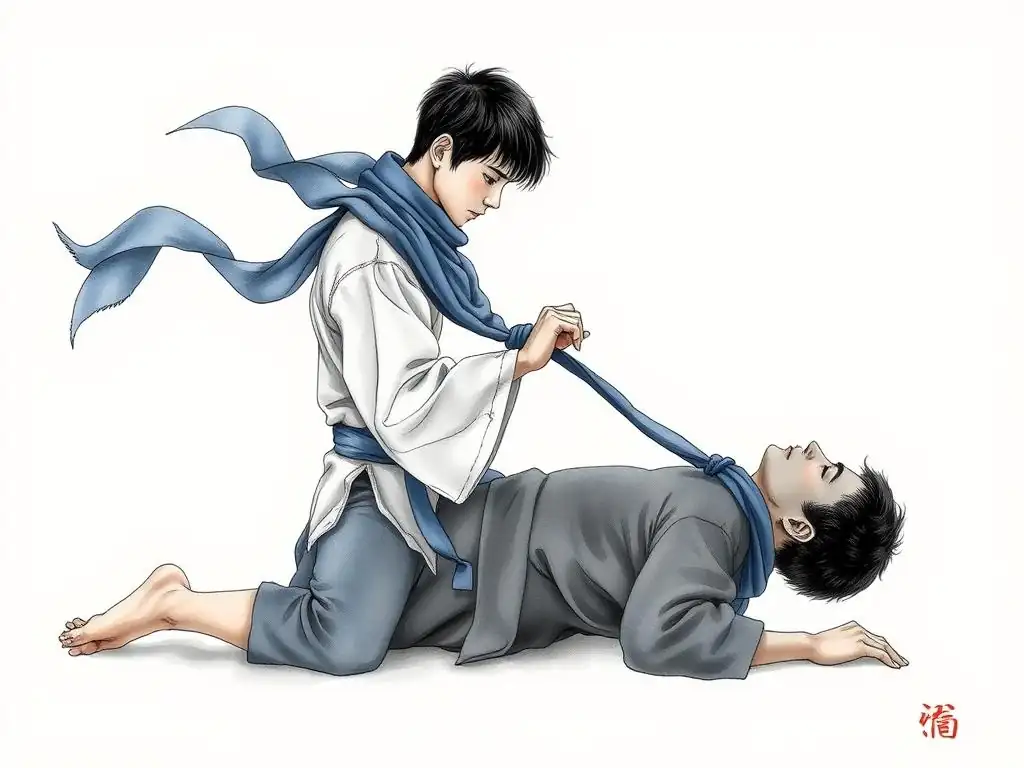
Using a scarf for choking or applying control holds is a highly dangerous and potentially lethal application in improv combat training techniques, suitable only for extreme, life-threatening situations where all other options have failed. A long, strong scarf can be rapidly looped around an opponent's neck from behind, allowing the user to apply pressure to the carotid arteries (blood choke) or trachea (air choke). A blood choke can render someone unconscious relatively quickly (within 10-15 seconds with sufficient pressure), while an air choke is slower and more painful.
Applying control holds involves using the scarf to secure a limb or joint to maintain control or apply pressure. For example, wrapping a scarf around an opponent's wrist and your own, coupled with body mechanics, can help control their arm.
Due to the inherent danger, training in scarf choking techniques must be approached with extreme caution, conducted under expert supervision, and only practiced in controlled environments focusing on the mechanics without applying significant pressure. The ethical and legal ramifications of applying such force are significant, emphasizing that these are techniques of last resort within the spectrum of improv combat training techniques.
Scarf-Based Evasion and Footwork Drills
Integrating a scarf into evasion and footwork drills within improv combat training techniques adds another layer of complexity and realism. One drill involves holding a scarf loosely and practicing moving around an imaginary or actual obstacle while ensuring the scarf doesn't snag, simulating movement in a cluttered environment while handling an object. Another involves using the scarf as a prop to practice creating distance; as you move backward or laterally, you might practice extending the scarf slightly to deter pursuit or create a momentary barrier.
A more dynamic drill involves a partner gently swinging a scarf towards you, and your task is to evade the "attack" using footwork and body movement, perhaps occasionally using your own scarf (or just your hands simulating scarf use) to deflect or trap the incoming scarf. This helps develop timing, spatial awareness, and the ability to move effectively while potentially wielding or handling an improvised tool. These scarf-based drills enhance agility and reinforce the principle that evasion and positioning are often the first and best lines of defense in improv combat training techniques.
Chains in Improvised Combat: Leverage and Momentum
Choosing the Right Chain for Self-Defense (Weight, Length, Material)
When considering chains for improv combat training techniques, it's essential to understand that not all chains are created equal, and their characteristics significantly impact their usability as an improvised weapon. The weight of the chain determines the impact force it can generate through momentum.
A heavy chain (like a thick bicycle chain or a tow chain) can deliver powerful blunt force strikes but requires more strength and control to wield effectively. A lighter chain (like a decorative handbag strap or a thin dog leash chain) is faster and more maneuverable but delivers less impactful strikes, though it can still be used for whipping or entanglement.
The length dictates reach and control. A short chain (under 1 meter) is better for close-quarters striking or using it doubled-up like a flexible sap. A longer chain (1-2 meters or more) provides greater reach for whipping strikes and creating distance but is harder to control, increasing the risk of hitting yourself or getting tangled. The material (steel, brass, etc.) affects durability and weight.
Steel is common and durable. Understanding these factors is key when analyzing potential improvised chains for improv combat training techniques. A common example might be a sturdy dog leash chain (approx. 1-1.5m, moderate weight) which offers a balance of reach and control for many applications.
Chain Grip Techniques for Optimal Control and Impact
Effective grip techniques are paramount when using a chain in improv combat training techniques to maximize control and impact while minimizing self-injury. A common grip is holding one end of the chain securely, allowing the rest to hang free. This maximizes reach for whipping or swinging strikes, utilizing the weight of the far end.
Control is maintained primarily through the wrist and arm motion. For closer range or more controlled strikes, the chain can be folded or doubled over, holding both ends or a loop in the middle. This shortens the effective length, making it behave more like a flexible baton or flail, allowing for more direct strikes or blocks.
Another technique involves holding the chain at different points along its length to adjust reach and control on the fly. Holding it closer to the weighted end reduces reach but increases control for short, powerful snaps. Holding it further back increases reach but requires greater skill to manage the momentum.
Some improv combat training techniques also incorporate wrapping the chain around the hand or forearm for a more secure grip or to add weight/protection to a block, but this carries a risk of the chain binding or injuring the user. Practicing transitions between these grips is vital for adapting to changing distances in a confrontation.
Chain Striking Techniques: Circular, Linear, and Whipping Strikes
Chains are particularly effective in improv combat training techniques for delivering strikes that utilize momentum and leverage. Circular strikes involve swinging the chain in arcs (horizontal, vertical, or diagonal) to generate significant force with the weighted end. A horizontal swing targeting the head or limbs can deliver a powerful blow from a distance. Vertical swings can target different levels or be used in a 'figure-eight' motion for continuous defense and offense. These strikes require space and control to avoid hitting unintended targets or getting the chain tangled.
Linear strikes with a chain are less common but possible, involving a thrusting or snapping motion, often with the chain doubled or held short. A quick snap forward can use the buckle or a weighted end like a projectile. Whipping strikes are similar to belt snaps but utilize the chain's mass for more impact.
This involves a rapid extension and retraction of the arm and wrist, focusing the momentum at the chain's end. Improv combat training techniques for chains should include extensive practice of these different strike types on padded targets, focusing on generating speed and controlling the chain's path to ensure accuracy and prevent self-harm.
Chain as a Restraint: Immobilization and Control
While less flexible than a belt or scarf, a chain can also be used for improvised restraint and control in improv combat training techniques, particularly for immobilization. A strong chain can be wrapped around an opponent's limbs or even a weapon to restrict movement. For instance, wrapping a chain around an assailant's wrist and then securing it can make it difficult for them to use that hand. The rigidity of the chain, compared to fabric, can make it more difficult to apply quickly but potentially more secure once in place.
Using a chain for control might involve looping it around an opponent's arm or leg and using the leverage to manipulate their position or balance. This is a higher-risk technique as it often requires closer proximity. In improv combat training techniques, practitioners might simulate wrapping a chain around a training dummy's limb or a padded partner's arm (with minimal tension) to understand the mechanics of securing and controlling with this type of object. The primary goal when using a chain as a restraint is typically temporary immobilization to facilitate escape rather than long-term containment.
Defensive Applications of a Chain: Creating Distance and Blocking
Beyond offensive striking, a chain has valuable defensive applications in improv combat training techniques, primarily in creating distance and offering limited blocking capabilities. Swinging a chain, even without intending to strike, creates a dynamic barrier or 'zone of control' around the user. An assailant is less likely to rush into a rapidly moving, potentially painful object, effectively buying the defender time and space. This psychological deterrent is a significant advantage.
A chain, particularly a doubled-up or heavier section, can also be used for blocking or parrying certain attacks. Against blunt force weapons like sticks or pipes, swinging the chain to intercept the incoming strike can potentially deflect it or absorb some of the impact, though this carries a risk of the chain breaking or the force transferring through.
Against grabbing attacks, a swift swing or thrust of the chain can deter or disrupt the grab. Improv combat training techniques for defensive chain use should focus on footwork combined with continuous or intermittent swinging motions to maintain distance and practicing parrying against padded training weapons.
Integrating Belts, Scarves, and Chains into Your Improv Combat Training
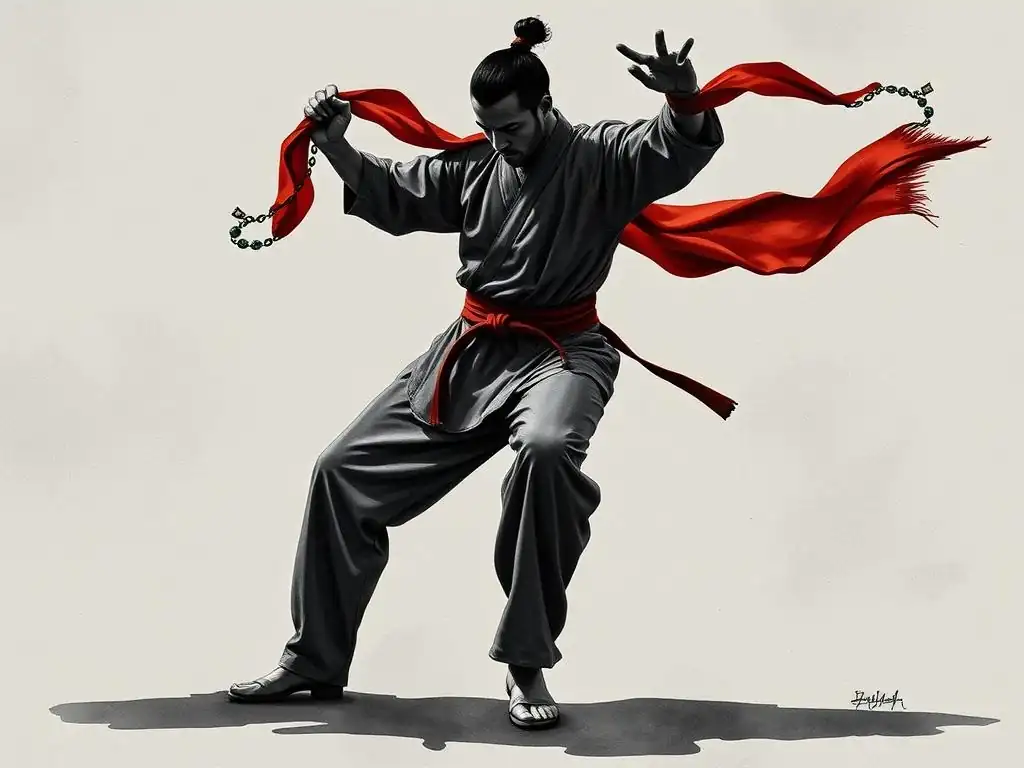
Combining Techniques: Belt Strikes Followed by Scarf Entanglement
Effective improv combat training techniques emphasize the ability to combine different skills and tools seamlessly. One practical combination involves using a belt for initial striking to create an opening or distraction, followed by deploying a scarf for entanglement or control. For example, a quick snap strike to an assailant's face with a belt buckle (potentially causing a flinch or momentary disorientation) could be immediately followed by wrapping a scarf around their outstretched arm to impede their reaction or secure a potential weapon.
This type of combined technique leverages the strengths of each improvised tool: the belt's potential for focused impact and reach, and the scarf's ability to entangle or distract. Training drills for this could involve a partner presenting a padded target (representing a face or hand) for the belt strike, then immediately extending a padded arm for the scarf wrap. Practicing these sequences repeatedly helps build the necessary coordination and timing to transition smoothly between using different improvised weapons in a dynamic situation, enhancing overall improv combat training techniques proficiency.
Drills for Transitioning Between Improvised Weapons
Fluidly transitioning between different improvised weapons is a hallmark of advanced improv combat training techniques. Drills should focus on quickly assessing a situation and deploying the most appropriate tool, or switching tools if the initial one proves ineffective or the situation changes. One drill involves setting up a scenario where the practitioner starts with a belt, engages a target, and then, based on a cue (e.g., partner changes stance, a second target appears), must quickly access and deploy a scarf or chain (represented by training props) to address the new situation.
Another transition drill could involve practicing a disarm attempt with a belt, and if unsuccessful, immediately transitioning to using a scarf for distraction or escape while dropping the belt. These drills are best done initially slowly, focusing on the mechanics of dropping/accessing the items and changing techniques, before increasing speed. Task lists might include:
- [ ] Drill: Belt strike -> drop belt -> scarf distraction (10 reps).
- [ ] Drill: Access chain -> swing -> drop chain -> use belt for control (10 reps).
- [ ] Scenario: Start with belt, partner attacks with padded stick. Defend with belt, if stick is dropped, use scarf for control (simulated).
These exercises are vital for building the adaptability needed in real-world improv combat training techniques.
Scenario-Based Training: Applying Techniques in Realistic Situations
Applying improv combat training techniques in realistic, scenario-based drills is crucial for developing practical self-defense skills. Training should move beyond isolated techniques to simulate the chaos and unpredictability of an actual confrontation.
Scenarios might include being grabbed from behind in a simulated crowded space, being confronted in a narrow hallway, or dealing with multiple simulated attackers. In these scenarios, practitioners must identify available improvised weapons (perhaps a belt they are wearing, a scarf in a bag, or a chain on a nearby object), quickly decide how to use them based on the threat, and combine techniques with movement and awareness.
For instance, a scenario might involve starting with hands up defensively, a partner (wearing protective gear) lunges forward. The practitioner must react, perhaps using a belt for a quick strike to create space, then using footwork to evade, and if the partner persists, perhaps using a scarf pulled from a pocket for distraction or entanglement. These drills should be conducted under supervision, with emphasis on safety, realism (within training limits), and debriefing afterwards to analyze decisions and technique application. This practical application is where improv combat training techniques truly come to life.
Emphasizing Fluidity and Adaptability in Improvised Combat
The core principle underpinning all improv combat training techniques, especially when using everyday objects like belts, scarves, and chains, is fluidity and adaptability. Unlike traditional weapons systems where specific forms and techniques are practiced for a dedicated tool, improvised combat is about creative problem-solving under pressure. Fluidity means moving seamlessly between different techniques – striking, wrapping, creating distance – and between different tools if necessary. It's about not being locked into a rigid plan but responding instinctively to the evolving situation.
Adaptability means being able to use whatever object is available, even if it's not ideal. The skills learned with a belt should be adaptable to a rope, a towel, or even a heavy cable. Scarf techniques might transfer to a shirt or jacket.
Chain techniques could inform the use of a heavy string of keys or a flexible pipe. Effective improv combat training techniques cultivate this mindset, encouraging practitioners to constantly observe their environment for potential tools and mentally run through how they might be used defensively. It's an art form based on necessity, requiring a flexible mind as much as a capable body.
Safety Considerations for Improvised Weapon Training
Proper Training Environment and Gear
Safety is paramount when practicing improv combat training techniques, especially with objects that can cause injury. The training environment must be clear of obstacles, have sufficient space for movement, and ideally, feature padded walls or floors if practicing techniques involving throws or takedowns (though belts, scarves, and chains are less focused on throws). Hard surfaces should be avoided. Using training props that simulate the weight and feel of real items but are made from safer materials (e.g., rubber belts, padded chains, soft fabric scarves) is highly recommended.
Appropriate protective gear is non-negotiable. This includes:
- Eye protection (safety glasses or a face shield) to guard against snaps or whips.
- Padded gloves, especially when practicing striking or disarming against a partner.
- Body padding (chest protector, forearm pads) when practicing strikes or blocks against a partner.
- A mouthguard.
- Groin protection.
Ensuring everyone involved in improv combat training techniques uses the correct gear significantly reduces the risk of accidental injury during drills involving potentially hazardous objects.
Partner Safety and Communication Protocols
Working with a partner in improv combat training techniques requires strict adherence to safety protocols and clear communication. All techniques, especially strikes, wraps, and control attempts, should be practiced at reduced speed and power initially, gradually increasing intensity only when both partners are comfortable and proficient. Before starting a drill, partners should agree on the techniques to be practiced, the level of resistance, and clear stop signals (verbal like "stop" or physical like tapping out).
Constant communication during drills is essential. Partners should provide feedback on comfort levels, accidental contact, or any discomfort. When practicing restraint techniques like scarf wraps or belt holds, the partner receiving the technique must be able to tap out immediately if pressure becomes uncomfortable or unsafe. Improv combat training techniques involving chains or belts with buckles carry a higher risk of bruising or scrapes, necessitating extra caution and padding. Building trust through clear communication and mutual respect for safety limits is fundamental to productive partner training.
Legal Considerations and Ethical Responsibility
While improv combat training techniques focus on physical skills, it's crucial to be aware of the legal considerations and ethical responsibility surrounding the use of force and improvised weapons. Laws regarding self-defense and the legality of using everyday objects as weapons vary significantly by jurisdiction. In many places, the use of force, including with an improvised weapon, is only legally justifiable when facing an imminent threat of serious bodily harm and the force used is deemed necessary and proportionate to the threat.
Using an object like a belt, scarf, or chain in self-defense, even if improvised, could be legally interpreted as using a weapon, potentially leading to more severe charges than if bare hands were used, depending on local laws and the specifics of the encounter. Ethically, the principles of martial arts emphasize using force only as a last resort and with the minimum necessary to neutralize the threat and ensure safety.
Improv combat training techniques should reinforce this ethical stance, emphasizing de-escalation, evasion, and escape as primary goals, with the use of improvised tools reserved for situations where physical confrontation is unavoidable and necessary for survival.
Conclusion: The Art of Adaptation in Self-Defense
The Importance of Consistent Practice and Refinement
Proficiency in improv combat training techniques, particularly with everyday objects like belts, scarves, and chains, is not a destination but a continuous journey. Like any martial art skill, mastery requires consistent practice and refinement. The ability to quickly assess a situation, identify a potential improvised weapon, and apply a suitable technique under pressure diminishes rapidly without regular reinforcement. Dedicated practice sessions, even short ones, help maintain muscle memory, improve reaction time, and refine the subtle movements required for effective deployment of these unconventional tools.
Regularly revisiting the fundamental grip variations, striking patterns, and control techniques for belts, scarves, and chains ensures that these skills remain sharp. Furthermore, consistent practice allows for refinement – identifying what works best for you with your typical everyday items and adapting techniques to suit your physical capabilities and the specific objects you are likely to have access to. This ongoing process of practice and refinement is what transforms theoretical knowledge of improv combat training techniques into practical, reliable self-defense capabilities.
Furthering Your Improv Combat Skills with Belts, Scarves, and Chains
Embarking on the path of improv combat training techniques using everyday objects opens up a vast area of self-defense study focused on adaptability and resourcefulness. Belts, scarves, and chains serve as excellent starting points due to their commonality and versatile properties, but the principles learned extend far beyond these specific items. To further your skills, seek out qualified instructors who incorporate improvised weapons into their curriculum. Look for training that emphasizes practical application, scenario-based drills, and safe training methodologies.
Continue to observe your environment and think creatively about how other common objects – pens, books, umbrellas, water bottles – could be used defensively, applying the fundamental principles of leverage, momentum, and structure learned from working with belts, scarves, and chains. By integrating these specific improv combat training techniques into your broader self-defense practice, you enhance your ability to protect yourself in a wider range of situations, truly embodying the adaptable spirit of the martial arts.
Frequently Asked Questions
What is Improv Combat Training and how does it relate to using unconventional weapons like belts, scarves, and chains?
Improv combat training, in this context, focuses on adaptive fighting skills using available resources. It builds resourcefulness and adaptability, crucial for self-defense situations where conventional weapons are unavailable and you must improvise with everyday objects.
Why would MartialArtsMastery.org focus on improv combat training techniques using items like belts, scarves, and chains?
MartialArtsMastery.org aims to provide comprehensive martial arts knowledge, including practical self-defense. Improv combat training is a vital aspect of this, offering realistic self-defense strategies beyond formal techniques and weapon use, aligning with the website's goal of practical self-defense strategies.
What are the key benefits of learning improv combat training techniques with unconventional weapons?
The main benefits are increased situational awareness, improved reaction time, and the ability to effectively defend oneself using readily available objects, boosting confidence and adaptability in unexpected situations.
How does the use of belts, scarves, and chains in improv combat training differ from traditional weapon training?
Unlike traditional weapon training with fixed rules and forms, improv combat emphasizes adaptability and creativity. It focuses on utilizing the unique properties of each item rather than adhering to pre-defined techniques, making it a more dynamic approach.
Are there any specific martial arts disciplines that heavily influence the improv combat training techniques discussed on MartialArtsMastery.org?
While not explicitly tied to one style, principles from grappling arts like Judo and Aikido, and striking arts like Krav Maga and Wing Chun influence it. The focus is on practical application, drawing from multiple sources to create a versatile self-defense system.
Final Reflection: Embracing Controlled Chaos
The techniques explored in this article, focusing on improv combat training techniques using everyday objects like belts, scarves, and chains, are not merely about learning to fight; they are about cultivating adaptability and resourcefulness in the face of the unexpected. In a world increasingly defined by rapid change and unforeseen challenges, the ability to think on your feet and leverage available resources is more crucial than ever.
The influence of improv combat extends beyond the dojo or stage, shaping our approach to problem-solving and creative expression in all areas of life. This practice has personally shown me the power of embracing imperfection and finding strength in vulnerability. The only way to discover the limits of the possible is to go beyond them into the impossible.
- Arthur C. Clarke. This quote perfectly encapsulates the spirit of improv combat, pushing us to explore the boundaries of our capabilities and discover new potential within ourselves.
Now, consider how you can apply these principles of adaptability and resourcefulness to your own life. How can you transform seemingly ordinary situations into opportunities for growth and innovation? Embrace the "flailing with purpose" mentality, and discover the power of turning limitations into strengths. The world is your stage; what will you create?
Master Your Flow: Unleash Your Inner Weapon Artist!
Thank you for diving into the world of improvised weaponry! We hope this article has ignited your creativity and shown you the potential hidden in everyday items. Now, it's time to translate that knowledge into action and feel the power of flow in your own hands.
Here are a few steps you can take to continue your journey:
- Practice the foundational moves we outlined. Even 15 minutes a day can drastically improve your coordination and control.
- Experiment with different materials! Find a safe, open space and discover how scarves, belts, or even light chains respond to your movements. Consider how length and weight impact your flow.
- Share your practice progress on social media using #MartialArtsMasteryFlow. Who knows? You might inspire someone else to pick up a scarf and join the fun!
What surprising item are you most excited to turn into a flowing extension of yourself?