
Martial Arts Ethics: The Moral Imperative of Attempting Deescalation First

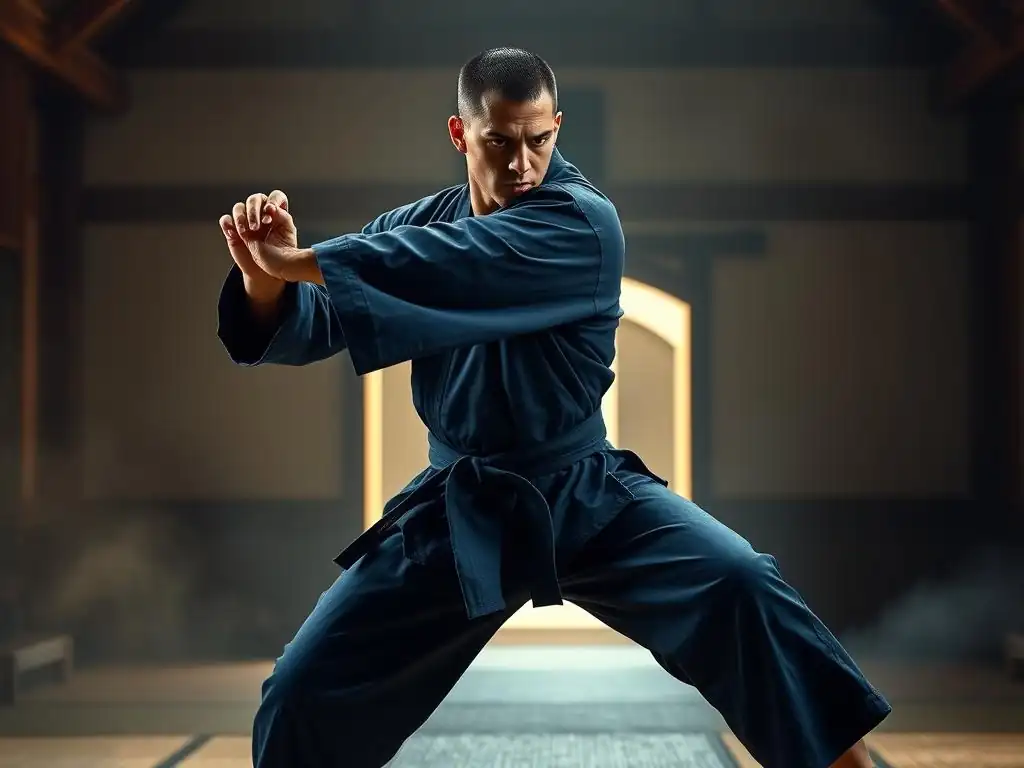
Welcome to Martial Arts Mastery, where we delve deep into the world of combat and self-improvement. But true mastery extends beyond physical prowess. Today, we explore a critical, often overlooked aspect of martial arts philosophy: the moral obligation to seek peaceful resolution.
Are you truly prepared to defend yourself? It starts before the first strike. Our featured article, " Martial Arts Ethics: The Moral Imperative of Attempting Deescalation First," unveils the crucial role of deescalation techniques martial arts in responsible self-defense. Discover how understanding and applying these skills can not only protect you but also uphold the very spirit of martial arts. Intrigued? Read on to learn more about this essential element of ethical combat.
- Martial Arts Ethics: Prioritizing De-escalation
- Introduction: Ethics in Martial Arts
- Ethical Foundations of De-escalation
- De-escalation Techniques
- When De-escalation Fails: Justification for Intervention
- De-escalation Training
- The Role of the Instructor
- Case Studies: Real-World De-escalation
- Conclusion: De-escalation as a Core Principle
-
Frequently Asked Questions
- What is the primary ethical consideration discussed in the context of martial arts?
- Why is deescalation considered important in martial arts training?
- How does MartialArtsMastery.org approach the topic of deescalation?
- What are some examples of deescalation techniques taught in martial arts?
- How does learning deescalation techniques enhance a martial artist's skills?
- Final Reflection: Embracing Peace Through Strength
- Embrace Wisdom: Transform Conflict Into Opportunity!
Martial Arts Ethics: Prioritizing De-escalation
Introduction: Ethics in Martial Arts
Commitment to Responsible Self-Defense
The study and practice of martial arts confer significant physical and mental capabilities upon practitioners. With this enhanced ability comes a profound ethical responsibility: the commitment to responsible self-defense. This means understanding that martial skills are primarily for protection – of oneself and innocent others – and not for aggression, intimidation, or unnecessary conflict. The core principle is to avoid physical confrontation whenever safely possible, viewing it as a last resort. This ethical stance is fundamental to the philosophy taught in reputable dojos and schools worldwide, emphasizing discipline, respect, and the judicious application of learned techniques.
This commitment extends beyond the training floor into daily life. A truly skilled martial artist is often the one who can navigate potential conflicts without ever needing to throw a punch or block a strike. They understand that the ultimate victory in self-defense is avoiding the fight altogether. This requires not just physical readiness but also mental fortitude and a strong moral compass guiding actions in stressful situations. The ethical martial artist strives to be a force for peace, using their training to prevent harm rather than inflict it.
Ethical Core: Beyond Physical Prowess
Martial arts training is not merely about developing physical strength, speed, or technical proficiency. At its heart lies a deep ethical core that shapes character and behavior. Disciplines like Judo, Karate, Aikido, and others emphasize virtues such as humility, perseverance, integrity, and compassion. These principles are interwoven with the physical practice, teaching students not just how to fight, but how to live ethically. The belt system, while signifying technical rank, also often represents stages of personal and ethical development.
This ethical dimension is what distinguishes martial arts from simple combat sports or fighting. It instills a sense of duty and restraint. Students learn that the power they gain must be tempered with wisdom and control. The ethical framework provides a moral compass, guiding decisions in high-pressure situations and reinforcing the idea that true mastery involves mastering oneself, including one's impulses towards aggression. This internal discipline is paramount.
Why De-escalation is Paramount
In the context of this ethical framework, prioritizing de-escalation techniques martial arts is not just a tactical choice, but a moral imperative. Physical conflict, even in self-defense, carries inherent risks of serious injury or even death for all parties involved. It can also have significant legal and psychological consequences. Therefore, the most ethical and often most effective approach to a potential confrontation is to attempt to defuse it before it turns physical. De-escalation techniques martial arts training equips practitioners with the skills to calm tense situations, communicate effectively under pressure, and avoid unnecessary violence.
Studies and real-world observations consistently show that a significant percentage of potential conflicts can be resolved through skilled de-escalation. For instance, analyses of altercations indicate that verbal intervention and tactical positioning can prevent physical violence in perhaps up to 70% of encounters where one party is trained in conflict resolution. This highlights the profound practical impact of mastering deescalation techniques martial arts as the primary response strategy. It aligns perfectly with the martial artist's ethical commitment to minimizing harm and respecting life.
Ethical Foundations of De-escalation
Minimizing Harm: The Primary Goal
The fundamental ethical principle guiding the use of de-escalation techniques martial arts is the minimization of harm. A core tenet across many martial disciplines is the preservation of life and well-being. Engaging in physical conflict, even defensively, inherently risks injury to oneself, the aggressor, and potentially bystanders. Serious injuries like broken bones, concussions, or worse can result from even relatively minor altercations. From an ethical standpoint, if a situation can be resolved without resorting to actions that carry such risks, that path must be pursued first.
De-escalation is the most direct application of this principle. By using communication, positioning, and emotional regulation, the goal is to prevent the situation from ever reaching the point where physical force is necessary. This not only protects the potential aggressor from injury resulting from a self-defense response but also safeguards the martial artist from the physical and psychological toll of a fight, as well as potential legal ramifications. It embodies the idea that the most successful defense is one that avoids the fight altogether, thus minimizing the possibility of harm for everyone involved.
Respect for Human Life
A cornerstone of martial arts philosophy is respect – respect for oneself, for one's instructor, for fellow practitioners, and critically, for all human life. This deep respect forms the ethical basis for prioritizing de-escalation techniques martial arts. Every individual, regardless of their current behavior, possesses inherent value. While self-defense is a recognized right and necessity when faced with imminent threat, the ethical martial artist does not view an aggressor as inherently disposable or deserving of excessive harm.
De-escalation is an active demonstration of this respect. It is an attempt to reach the other person on a human level, to understand (without necessarily agreeing with) their state, and to offer them a path away from violence. It acknowledges the potential for conflict resolution through means other than physical force, thereby upholding the value of the other person's life and well-being, even as you protect your own. This ethical stance elevates martial arts from mere fighting techniques to a practice deeply concerned with human dignity and peaceful coexistence.
Understanding Aggression
Effective de-escalation techniques martial arts require a foundational understanding of aggression. Aggression in interpersonal conflicts is often complex, stemming from fear, frustration, misunderstanding, substance abuse, mental health issues, or perceived threats (real or imagined). It is rarely a simple, rational decision. Recognizing these potential underlying causes helps a martial artist approach a situation with a more informed and less reactive mindset. This understanding is not about excusing aggressive behavior, but about recognizing the state of mind of the person exhibiting it.
Training in de-escalation often includes learning to identify the signs of escalating tension – clenched fists, shouting, aggressive posturing, verbal threats – and understanding the psychological triggers that can push someone towards physical violence. By understanding that aggression is often a manifestation of internal distress or misperception, a martial artist can approach the situation with more strategic empathy and patience, rather than meeting aggression with immediate counter-aggression. This informed perspective is crucial for selecting and applying the most appropriate de-escalation strategies effectively.
De-escalation Techniques
Verbal De-escalation Tactics
Verbal de-escalation is often the first and most critical layer of defense. It involves using communication skills to calm a potentially violent situation and guide the interaction towards a peaceful resolution. Mastering verbal de-escalation techniques martial arts requires practice, patience, and the ability to remain calm under pressure. The goal is to create a verbal environment that reduces tension rather than increasing it, giving the aggressor an opportunity to back down without losing face, and providing the martial artist with valuable time and information.
Effective verbal tactics include using a calm, clear voice, avoiding inflammatory language, and framing the conversation in terms of solving a problem rather than engaging in a confrontation. It's about steering the interaction away from threats and challenges towards dialogue and understanding, even if that understanding is limited to acknowledging the other person's emotional state. This requires significant self-control and the ability to choose words carefully in a high-stress situation, demonstrating that the martial artist is not looking for a fight.
Active Listening
Active listening is a cornerstone of effective de-escalation techniques martial arts. It involves fully concentrating on, understanding, responding to, and remembering what is being said. In a tense situation, this means paying attention not just to the words, but also to the tone of voice, pacing, and underlying emotions. It involves providing verbal cues that you are listening, such as nodding, making appropriate eye contact (without staring aggressively), and using phrases like "I hear you," or "Okay, I understand that you're feeling..."
The purpose of active listening is twofold: it helps you gather critical information about the aggressor's intentions, state of mind, and potential triggers, and it can help to calm the aggressor by making them feel heard and acknowledged. When someone feels truly listened to, it can sometimes diffuse their anger or frustration, opening a small window for rational communication. This technique requires putting aside your own immediate defensive responses to truly process what the other person is communicating, which is a skill honed through dedicated training.
Empathy and Validation
Empathy and validation are powerful tools within de-escalation techniques martial arts, though they are often misunderstood. Empathy is the ability to understand and share the feelings of another. Validation is acknowledging and confirming that someone's feelings are understandable, even if you don't agree with their actions or perspective. In a de-escalation context, this doesn't mean saying "You're right to be angry and threaten me," but rather, "I can see that you're very upset about this situation," or "It sounds like you feel disrespected."
Validating feelings can help to lower emotional intensity. It shows the aggressor that you recognize their emotional state, which can sometimes break through their anger or fear. It's about connecting on a human level, acknowledging their reality in that moment. This can be incredibly difficult when feeling threatened, requiring significant emotional intelligence and control, which are developed through dedicated practice in de-escalation training scenarios. It's a subtle but potentially very effective way to build a minimal level of rapport or understanding.
Strategic Communication
Strategic communication involves choosing what you say and how you say it to achieve the goal of de-escalation. This includes using a calm, low, and steady tone of voice, which is often contagious and can help lower the overall tension level. Avoid shouting or speaking too quickly. The content of your communication should be clear, simple, and non-confrontational. Avoid jargon, sarcasm, threats, challenges, or commands. Use "I" statements ("I feel concerned about this situation") rather than "You" statements ("You are making things worse"), which can sound accusatory.
Asking open-ended questions (if safe and appropriate) can also be strategic, encouraging the aggressor to talk rather than act, and potentially revealing their underlying needs or motives. However, in some high-tension situations, silence or minimal, calm responses are more strategic. The key is to communicate respect (even if not agreement), maintain personal boundaries firmly but politely, and project confidence and calm. Effective strategic communication is a vital component of deescalation techniques martial arts, buying time and creating options.
Non-Verbal De-escalation
While verbal techniques are crucial, non-verbal communication often carries more weight, especially in emotionally charged situations. Non-verbal de-escalation techniques martial arts focus on using body language, posture, and proximity to project calmness, non-aggression, and control. Your non-verbal cues can either escalate or de-escalate a situation regardless of your words. Maintaining congruent verbal and non-verbal signals is essential for building trust and reducing suspicion in the aggressor.
This involves conscious control over your physical presence. For instance, avoiding aggressive stances or direct, prolonged eye contact (which can be perceived as a challenge) is key. Non-verbal cues can signal whether you are perceived as a threat, a target, or someone attempting to resolve the situation peacefully. Mastering these non-verbal elements is as important as mastering physical self-defense techniques, as they are the tools used before any physical engagement becomes necessary.
Body Language and Posture
Your body language and posture communicate your intentions and emotional state more powerfully than words sometimes can. In non-verbal de-escalation, the goal is to project calm confidence and non-aggression. This means adopting an open stance, avoiding crossing your arms (which can appear defensive or closed off), and keeping your hands visible (not clenched or hidden). Avoiding aggressive postures like squaring up directly to the aggressor is crucial; instead, stand at a slight angle. This reduces the confrontational aspect and also offers a better position for movement if necessary.
Maintaining relaxed shoulders and avoiding fidgeting can also project calmness. Slouching, however, can signal fear or weakness, potentially making you appear vulnerable. The ideal posture is upright and balanced, signaling confidence and readiness, but angled and open, signaling a lack of aggressive intent. Training in de-escalation techniques martial arts often includes drills focused solely on maintaining appropriate body language under simulated stress, as it's a skill that requires conscious practice to become natural.
Maintaining Safe Distance
Proxemics, the study of the use of space, is critical in non-verbal de-escalation. Maintaining a safe distance from a potentially aggressive individual provides crucial personal space for both parties, reducing the feeling of being cornered or threatened. It also gives you time to react if the situation suddenly turns physical. The optimal distance is often described as slightly outside of striking or grabbing range, which can vary depending on the environment and the individuals involved, but is typically several feet.
Respecting the aggressor's personal space (by not crowding them) while simultaneously protecting your own helps to lower tension. If the aggressor is advancing, calmly creating distance by stepping back can non-verbally communicate a desire to avoid conflict and establish boundaries. This tactical positioning is a key element taught in de-escalation techniques martial arts, providing a physical buffer that complements verbal strategies and enhances safety.
Tone of Voice and Facial Expressions
While technically non-verbal, tone of voice is intimately linked with verbal communication and is a powerful de-escalation tool. A calm, steady, and lower-pitched voice is generally more soothing and less confrontational than a high-pitched, shaky, or loud one. Varying your tone slightly can help convey empathy or seriousness, but avoid tones that are sarcastic, mocking, or challenging. The goal is to sound reasonable and in control, not aggressive or fearful.
Similarly, facial expressions should ideally be calm and neutral, or express concern or understanding (like a slight frown or raised eyebrows when actively listening). Avoid aggressive expressions like glaring, sneering, or rolling your eyes. A genuine, non-threatening expression can sometimes disarm an aggressor. Conversely, a fearful expression might embolden them, while an angry expression will almost certainly escalate the situation. Controlling facial expressions under stress is a significant challenge, requiring conscious effort and practice within deescalation techniques martial arts training.
When De-escalation Fails: Justification for Intervention
Recognizing the Limits of De-escalation
While mastering de-escalation techniques martial arts is paramount, it is equally important to recognize that these techniques are not a guaranteed solution in every situation. Some individuals may be unwilling or unable to de-escalate due to extreme intoxication, severe mental health crises, predatory intent, or overwhelming rage. There are clear indicators that de-escalation is failing or inappropriate: when verbal threats escalate to physical action, when weapons are introduced, when the aggressor closes distance aggressively despite attempts to create space, or when the safety of yourself or others is in immediate, unavoidable jeopardy.
In such circumstances, attempting further de-escalation may be ineffective and even dangerous, potentially putting you at greater risk. Recognizing these limits requires heightened situational awareness and the ability to make rapid assessments under pressure. Martial arts training emphasizes reading cues and understanding pre-assault indicators. When these signs clearly indicate that a physical attack is imminent and unavoidable despite best de-escalation efforts, the ethical calculus shifts from preventing the fight to surviving it, justifying a transition to physical self-defense.
The Continuum of Force
Responsible self-defense training, including de-escalation techniques martial arts, teaches the concept of the continuum of force. This principle dictates that the level of force used in self-defense should be proportionate to the threat faced. De-escalation sits at the lowest point on this continuum, representing the least amount of force (ideally, none). If de-escalation fails, the response may escalate through various levels – from defensive postures and verbal commands, to non-injurious control techniques, to strikes or other techniques necessary to stop the threat.
The ethical and legal justification for using force is tied to the necessity of stopping an imminent threat. Excessive force, meaning force beyond what is reasonably necessary to neutralize the danger, is generally not justifiable. The continuum of force model provides a framework for martial artists to understand and apply this principle, ensuring that their physical response, if required, is both effective and ethically sound, never exceeding the level of danger presented by the aggressor. This measured response is a hallmark of responsible martial arts practice.
Legal Considerations: Self-Defense Laws
Understanding the legal framework surrounding self-defense is a critical component of responsible de-escalation techniques martial arts application. While specific laws vary significantly between jurisdictions (countries, states, provinces), common principles often include the right to use reasonable force to protect oneself or others from imminent harm. Key legal concepts frequently encountered include the "duty to retreat" (or lack thereof), the concept of "reasonable force" (proportional to the threat), and the "imminent danger" requirement.
Generally, force is legally justifiable only when there is an honest and reasonable belief of imminent danger of unlawful physical harm. The level of force used must be reasonable under the circumstances as they appeared to the defender at the time. Attempting de-escalation first can be legally beneficial, as it demonstrates an effort to avoid conflict, supporting a claim of self-defense if force ultimately becomes necessary.
Conversely, initiating physical contact or escalating the situation yourself can undermine a self-defense claim. While this article cannot provide legal advice, martial artists are strongly encouraged to understand the specific self-defense laws applicable in their local area.
De-escalation Training
Role-Playing Scenarios
Effective mastery of de-escalation techniques martial arts extends beyond theoretical understanding; it requires practical application under simulated stress. Role-playing scenarios are an invaluable tool for this training. In these exercises, instructors or fellow students act out realistic conflict situations – perhaps a verbal dispute, an aggressive panhandler, or a confrontation in a crowded space. The student practices applying verbal and non-verbal de-escalation strategies in real-time, receiving feedback on their communication, body language, and decision-making.
Role-playing allows students to experience the psychological pressure of a potential confrontation in a safe environment. This helps them to practice staying calm, thinking clearly, and applying techniques under duress, skills that are difficult to develop through lecture alone. Repeated practice through varied scenarios helps build confidence and automaticity in employing de-escalation as the default response, solidifying it as the primary tool before physical techniques are even considered. A typical training session might involve several different scenarios, lasting from 5-15 minutes each, focusing on specific de-escalation elements.
Mindfulness and Emotional Regulation
De-escalating others effectively often depends on your ability to manage your own emotional state. Mindfulness and emotional regulation training are therefore integral components of comprehensive de-escalation techniques martial arts programs. Mindfulness, the practice of being present and aware of your thoughts and feelings without judgment, helps martial artists recognize their own stress responses – increased heart rate, tunnel vision, anger – as they occur during a tense situation. This self-awareness is the first step towards control.
Emotional regulation involves developing the ability to manage these internal responses. Techniques might include deep breathing exercises, mental reframing (seeing the situation as a problem to solve rather than a personal attack), and focusing on the goal of de-escalation rather than the provocation. By remaining calm and centered, a martial artist can think more clearly, communicate more effectively, and avoid inadvertently escalating the situation through their own fear or anger. This internal discipline is as crucial as any physical technique.
Developing Situational Awareness
Situational awareness is the ability to perceive environmental elements and events with respect to time or space, comprehend their meaning, and project their future status. For de-escalation techniques martial arts, this means constantly observing your surroundings, identifying potential threats or conflict triggers (e.g., intoxicated individuals, crowded exits, aggressive interactions nearby), and assessing the mood and behavior of people around you. This proactive awareness allows a martial artist to potentially avoid dangerous situations entirely or begin de-escalation efforts at the earliest signs of trouble.
Developing situational awareness involves training your peripheral vision, listening to conversations (without eavesdropping aggressively), noticing body language cues in others, and having an escape plan mentally prepared. It's about being present and observant rather than being distracted. This heightened awareness provides valuable lead time to assess whether de-escalation is possible, identify potential risks, and position yourself advantageously, making it a foundational skill that supports the effective application of all de-escalation strategies.
The Role of the Instructor
Leading by Example
The martial arts instructor plays a pivotal role in instilling the ethical principles of de-escalation techniques martial arts. Students learn as much from observing their teacher's behavior as they do from explicit instruction. An instructor who consistently demonstrates patience, respect, and humility, both on and off the training floor, provides a living example of the ethical martial artist. When faced with minor conflicts or disagreements in the dojo, the instructor's calm and fair handling of the situation serves as a practical lesson in de-escalation.
Instructors who share personal anecdotes (appropriately anonymized) about using de-escalation successfully in real-world situations reinforce its importance and practicality. They model the attitude that physical force is a last resort and that true strength lies in control and compassion. This consistent modeling creates a dojo culture where de-escalation is not just taught as a technique, but is valued as a core principle, deeply embedded in the ethos of the practice.
Teaching Respect
Respect is a cornerstone value in nearly every martial art discipline, and teaching respect is fundamental to fostering an environment where de-escalation is prioritized. Instructors emphasize respect for oneself, for others (including opponents in sparring), for the training space, and for the art itself. This foundation of respect helps students understand the inherent value of human life and the importance of treating others with dignity, even during conflict.
By fostering respect, instructors lay the ethical groundwork for students to naturally lean towards de-escalation rather than confrontation. Students learn that demonstrating control and restraint is a form of respect for both themselves and the potential aggressor. Regular bowing, using honorifics, and practicing techniques with control and care are all rituals within martial arts that reinforce this principle, making the ethical choice to de-escalate a natural extension of their training.
Emphasizing Responsibility
Martial arts training bestows upon practitioners the responsibility to use their skills wisely and ethically. Instructors continually emphasize that the ability to cause harm comes with a heavy burden of responsibility. They teach students that they are accountable for their actions and that the power they wield must be controlled and directed only towards necessary self-preservation, never towards aggression or unnecessary violence. This focus on responsibility is crucial for ensuring that physical skills are not misused.
This emphasis on responsibility directly underpins the importance of de-escalation techniques martial arts. Students learn that their first responsibility in a potential conflict is to attempt resolution without violence. Instructors discuss the potential consequences of physical altercations – injury, legal issues, emotional trauma – and frame de-escalation as the most responsible course of action. This constant reinforcement ensures that students understand the gravity of their abilities and the ethical obligation to prioritize peaceful solutions.
Case Studies: Real-World De-escalation
Case Study 1: Road Rage Incident
Consider a scenario involving 'Alex', a long-term martial arts practitioner trained in de-escalation techniques martial arts. While driving, another driver aggressively cuts Alex off, slams on their brakes, and then follows closely, honking incessantly. At a red light, the aggressive driver pulls alongside, rolls down their window, and begins shouting obscenities and threats, their face red with anger, hands gripping the steering wheel tightly.
Instead of reacting in kind or engaging physically, Alex immediately locks their doors, maintains a neutral, calm facial expression (avoiding eye contact initially), and keeps their hands visible on the steering wheel. They take a deep breath to regulate their own stress response. When the driver shouts, Alex calmly and clearly says, "Hey, I understand you're upset. There's no need for this. Let's just both drive safely." Alex avoids yelling back or making aggressive gestures. They keep a safe distance between the cars. The aggressive driver continues to yell for a moment, but receiving no aggressive response back, their energy begins to dissipate. When the light changes, Alex pulls away slowly and calmly, avoiding further interaction. The incident, which could easily have escalated to a physical confrontation at the roadside, was defused through calm non-verbal cues, a safe distance, and clear, non-confrontational verbal communication – core deescalation techniques martial arts.
Case Study 2: Bar Fight Averted
Imagine 'Ben', another martial artist, at a crowded bar. Two individuals nearby, clearly intoxicated, begin arguing loudly, bumping into other patrons, and pushing each other. The situation is rapidly escalating, drawing attention and creating tension. One individual shoves the other hard, and it looks like a physical fight is about to erupt, potentially involving bystanders.
Ben, trained in de-escalation techniques martial arts, assesses the situation. He doesn't rush in but positions himself strategically to the side, creating a slight buffer while remaining aware of his surroundings and potential escape routes. He uses a calm, clear voice, projecting across the immediate space but not shouting, saying something like, "Hey guys, take it easy. It's not worth it.
Let's just cool down." He addresses them generally, not singling one out aggressively. He maintains open body language, palms slightly visible, showing he's not reaching for anything or clenching fists. He avoids direct, challenging eye contact with either person but maintains overall awareness.
Another patron joins in with a similar calm plea. The combined, non-threatening interventions, coupled with the difficulty of fighting in the crowded space and the absence of an aggressive counter-challenge, disrupt the escalating dynamic. The two individuals, distracted by the unexpected calm voices, grumble but back away from each other, and the immediate threat of a physical fight is averted. This demonstrates how verbal and non-verbal de-escalation, combined with strategic positioning, can prevent violence even when not directly involved in the initial dispute.
Lessons Learned
These case studies, while illustrative, highlight common principles in effective de-escalation techniques martial arts. Firstly, remaining calm under pressure through emotional regulation is paramount; panic or anger on your part will likely escalate the situation. Secondly, non-verbal communication – posture, distance, eye contact, and facial expression – significantly impacts how your message is received.
Thirdly, calm, clear, and non-confrontational verbal communication can break through an aggressor's emotional state. Finally, strategic positioning and maintaining safe distance are critical for both safety and creating space for de-escalation to occur. These examples reinforce that the most powerful martial arts techniques are often those that prevent violence from ever happening, showcasing the practical effectiveness of prioritizing de-escalation.
Conclusion: De-escalation as a Core Principle
The Future of Martial Arts
The future of martial arts is increasingly recognizing and emphasizing the critical role of de-escalation techniques martial arts. As the understanding of conflict evolves, martial arts training is moving beyond purely physical combat skills to encompass a more holistic approach to self-protection and conflict resolution. Modern dojos and instructors are integrating psychological principles, communication skills, and ethical discussions more deeply into their curricula. This evolution reflects a commitment to producing not just capable fighters, but responsible citizens who are equipped to navigate the complexities of modern conflict in a way that minimizes harm.
This growing emphasis acknowledges that real-world self-defense situations rarely begin with a formal bow and often involve verbal aggression, intimidation, and unpredictable behavior before any physical contact occurs. Therefore, the ability to de-escalate is becoming recognized as the most fundamental self-defense skill. The future sees martial arts as a practice that empowers individuals to handle conflict at its earliest stages, preventing it from escalating, and ensuring that physical techniques are only used as a last resort when faced with unavoidable, imminent danger.
Empowering Peacemakers
By prioritizing de-escalation techniques martial arts, training empowers practitioners to become peacemakers. Instead of viewing every potential confrontation as a challenge to be met with physical force, martial artists are trained to seek peaceful resolutions first. They gain the confidence and skills to stand firm without resorting to aggression, to use their voice and presence to calm rather than provoke, and to actively work towards defusing tense situations.
This shift in focus encourages martial artists to be agents of calm and reason in a chaotic world. They are equipped not just to protect themselves physically, but to contribute positively to their communities by reducing the likelihood of violence. This perspective aligns with the highest ideals of many traditional martial arts, which were founded not just for warfare, but for personal development and the betterment of society. Empowering peacemakers is arguably the most valuable contribution modern martial arts can make.
Continuing the Legacy of Responsible Self-Defense
The legacy of martial arts is one of discipline, mastery, and responsible application of power. By placing de-escalation techniques martial arts at the forefront of training, contemporary practitioners continue this legacy. They uphold the tradition of viewing physical skill as a tool to be used with wisdom and restraint, not a license for aggression. They honor the ethical foundations laid by generations of masters who understood that true strength lies in control and the ability to avoid unnecessary conflict.
Embracing de-escalation is not a sign of weakness; it is a demonstration of advanced skill, ethical understanding, and genuine confidence. It requires courage, patience, and discipline – qualities that are the hallmark of dedicated martial arts practice. By prioritizing de-escalation, martial artists ensure that their skills serve the highest purpose: the preservation of life and the promotion of peace, thereby continuing the noble legacy of responsible self-defense.
Frequently Asked Questions
What is the primary ethical consideration discussed in the context of martial arts?
The primary ethical consideration is the moral imperative to attempt deescalation techniques before resorting to physical engagement. This prioritizes avoiding conflict whenever possible.
Why is deescalation considered important in martial arts training?
Deescalation is crucial because martial arts skills can cause serious harm. Practicing deescalation promotes responsible use of force and prevents unnecessary violence.
How does MartialArtsMastery.org approach the topic of deescalation?
MartialArtsMastery.org views deescalation as an integral part of a well-rounded martial arts education, alongside training in history, techniques, and self-defense. It emphasizes both physical and mental discipline.
What are some examples of deescalation techniques taught in martial arts?
Examples include verbal communication skills, maintaining a calm demeanor, creating space, and understanding body language cues to diffuse tense situations.
How does learning deescalation techniques enhance a martial artist's skills?
Deescalation strengthens a martial artist's self-control, awareness, and ability to assess threats effectively. This leads to more responsible and ethical decision-making in conflict situations.
Final Reflection: Embracing Peace Through Strength
The principles explored throughout this article, centered on deescalation techniques in martial arts, are not merely historical artifacts or theoretical exercises. They represent a vital and increasingly relevant framework for navigating conflict in our modern world. In a society often quick to escalate, the discipline and ethical considerations inherent in martial arts training offer a powerful alternative: a path towards resolution that prioritizes peace over aggression.
The enduring influence of martial arts ethics extends far beyond the dojo. It shapes our understanding of responsibility, respect, and the profound impact our actions have on others. The commitment to deescalation, learned through rigorous training and mindful practice, fosters a culture of empathy and understanding. As Bruce Lee so eloquently stated: Using no way as way; having no limitation as limitation.
This philosophy encourages us to adapt, to find creative solutions, and to prioritize the well-being of all involved, even in the face of adversity.
Now, consider the power you hold within you. The ability to deescalate, to diffuse tension, and to choose peace is a skill that transcends physical prowess. It is a moral imperative, a responsibility we all share. Embrace the lessons of martial arts ethics, cultivate your inner strength, and strive to be a force for calm and understanding in a world that desperately needs it. Let us all commit to attempting deescalation first, transforming conflict into opportunity for growth and connection.
Embrace Wisdom: Transform Conflict Into Opportunity!
Thank you for exploring the crucial role of de-escalation in martial arts! We hope this article has empowered you with a deeper understanding of ethical responsibility in self-defense. Now, let's put these principles into action:
- Commit to practicing verbal de-escalation techniques in your daily interactions – before resorting to physical force. This is where true mastery begins.
- Share this article with your dojo or martial arts community to spark important conversations about ethical self-defense.
- Challenge yourself to identify three new ways you can personally embody the principles of peace and restraint, both on and off the mat.
What specific scenario can you envision where applying these de-escalation principles could lead to a positive outcome, and how will you prepare yourself for it?