
From Slow Motion to Full Speed: Structuring Your Reflex Development

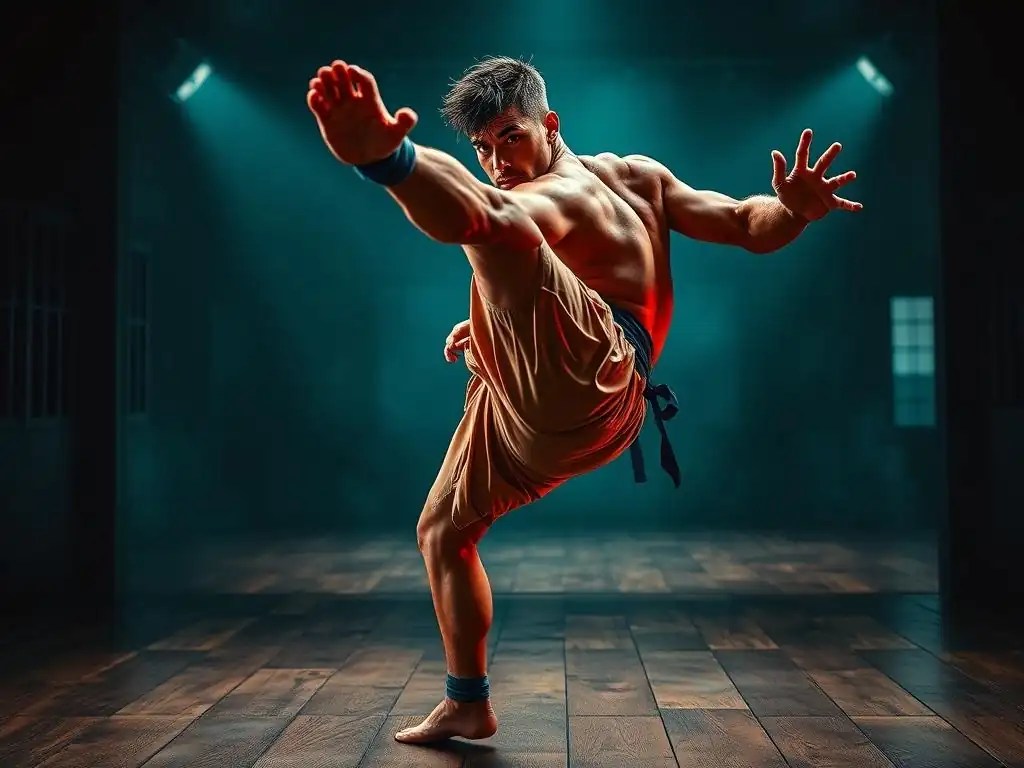
Welcome to Martial Arts Mastery, your portal to unlocking the secrets of combat. Ever wondered how legendary martial artists achieve lightning-fast reactions? This isn't just about innate talent; it's about refined technique. Dive into "From Slow Motion to Full Speed: Structuring Your Reflex Development" and discover the proven methods for reflex speed training martial arts that will elevate your game. Intrigued? The journey to unparalleled responsiveness starts now.
- Introduction: Mastering Reflex Speed Training in Martial Arts
- The Science Behind Reflexes and Reaction Time in Martial Arts
- Foundational Exercises for Enhancing Reflex Speed in Martial Arts
- Specific Drills for Reflex Speed Training in Martial Arts
- Advanced Reflex Training Techniques for Martial Arts
- Integrating Reflex Training into Your Martial Arts Curriculum
- The Mental Aspect of Reflex Speed in Martial Arts
- Nutrition and Recovery for Optimal Reflex Speed
- Case Studies: Legendary Martial Artists and Their Reflex Skills
- Common Mistakes to Avoid in Reflex Speed Training
- Conclusion: Achieving Peak Reflex Speed for Martial Arts Mastery
-
Frequently Asked Questions
- How does this article define reflex speed in the context of martial arts?
- What are some key training methods mentioned for improving reflex speed?
- Why is reflex speed considered so important in martial arts?
- Does the article discuss the role of mental training in improving reflexes?
- What are some potential pitfalls to avoid when focusing on reflex speed training?
- Final Reflection: Embracing the Speed Within
- Ignite Your Reflexes: Unveil Your Hidden Potential!
Introduction: Mastering Reflex Speed Training in Martial Arts
Why Reflex Speed is Crucial for Martial Arts Mastery
In the dynamic world of martial arts, the ability to react instantly can be the difference between executing a successful technique and being caught off guard. Reflex speed isn't just about moving fast; it's about processing information from your environment – whether it's an opponent's twitch, a change in distance, or an incoming attack – and initiating the correct physical response in the shortest possible time. Superior reflexes provide a critical edge in both offensive and defensive situations, allowing practitioners to evade strikes, seize fleeting opportunities for attack, or transition smoothly between techniques.
Developing sharp reflexes is fundamental to achieving mastery in any combat discipline. Consider the rapid exchanges in boxing or Muay Thai, the lightning-fast blocks and counters in Karate, or the split-second decision-making required in Judo or Brazilian Jiu-Jitsu transitions. Each relies heavily on the practitioner's capacity for quick, accurate responses. Consistent and structured reflex speed training martial arts is therefore not merely supplementary; it is an essential component of a complete training regimen for anyone serious about excelling.
Understanding the Difference Between Reaction Time and Reflex Speed
While often used interchangeably, reaction time and reflex speed represent distinct neurological processes, though both are critical in martial arts. Reaction time involves a conscious decision: you perceive a stimulus (like seeing a punch), your brain processes it, you make a decision (to block, slip, or counter), and then you initiate the motor command. This pathway involves the brain and is slower, typically taking around 200-300 milliseconds for visual stimuli in average adults, though athletes can be faster.
Reflex speed, conversely, refers to involuntary, near-instantaneous responses mediated primarily by the spinal cord via a reflex arc, bypassing conscious brain processing almost entirely. Examples include the patellar reflex (knee-jerk) or pulling your hand from a hot stove. While martial arts don't rely on true involuntary reflexes for complex actions, effective training makes reaction time responses so fast and automatic through repetition that they appear reflexive. Structured reflex speed training martial arts aims to shorten that conscious processing and execution time dramatically, blurring the line between deliberate action and seemingly automatic response.
Setting Realistic Goals for Reflex Development in Combat
Improving reflex speed is a progressive journey that requires patience and consistent effort. It's vital to set realistic expectations rather than aiming for unattainable, instant results. Understand that biological limits exist, and progress often comes in small increments. Goals should be specific and measurable, focusing on tangible improvements in performance during drills or sparring, such as reducing the time taken to execute a specific defensive maneuver against a predictable stimulus or increasing the number of successful reactions within a set time frame.
A SMART goal approach can be highly effective. For instance, instead of "get faster reflexes," aim for "improve reaction time to a partner's jab by 10% in 8 weeks through dedicated reflex speed training martial arts drills for 15 minutes daily." Track your progress, perhaps by using a simple timer or having a partner record outcomes. Celebrate small victories and adjust your training plan based on what works and what doesn't. Remember that improvement is continuous, and plateaus are opportunities to refine your approach.
The Science Behind Reflexes and Reaction Time in Martial Arts
Neurological Pathways and Reflex Arc Explained
Understanding the biological basis of speed in combat begins with the nervous system. A true reflex arc is the simplest pathway: a sensory receptor detects a stimulus (like pain), sends a signal along a sensory neuron to the spinal cord, where it synapses with an interneuron, which in turn activates a motor neuron. This motor neuron sends a signal directly to the effector muscle, causing an immediate, involuntary action (like withdrawing your hand). This process is incredibly fast because it doesn't involve the brain's higher processing centers.
In contrast, the pathway for voluntary reaction time, which is what we primarily train in reflex speed training martial arts, is more complex. The sensory signal travels from the receptor up the spinal cord to the brain (e.g., visual cortex).
The brain interprets the signal, decides on a response (prefrontal cortex), plans the movement (motor cortex, cerebellum, basal ganglia), and sends motor commands back down the spinal cord to the muscles. While slower than a reflex arc, consistent training optimizes this pathway, making it faster and more efficient through processes like myelination (insulating nerve fibers for faster signal transmission) and strengthening specific neural connections.
The Role of the Brain and Spinal Cord in Fast Reactions
The spinal cord handles the rapid, involuntary responses of true reflexes. However, for the complex, context-dependent reactions needed in martial arts, the brain plays a central role. Different areas of the brain are involved: the visual or auditory cortex for processing sensory input, the prefrontal cortex for decision-making and strategy, and the motor cortex, cerebellum, and basal ganglia for planning, coordinating, and executing movements. The cerebellum, in particular, is crucial for timing and coordination, refining movements based on practice.
Neuroplasticity is the key principle that allows us to improve reaction time. The brain's ability to rewire itself means that with consistent practice, the neural pathways involved in recognizing a specific stimulus (like an opponent's feint) and executing a specific response (like a parry) become more direct and efficient.
Studies have shown that athletes who regularly engage in activities requiring fast reactions, like martial arts or ball sports, develop faster reaction times and more efficient brain activation patterns compared to non-athletes, sometimes showing improvements of 50-100 milliseconds in specific tasks, a significant margin in combat. This underscores how dedicated reflex speed training martial arts physically changes the nervous system.
Factors Affecting Reflex Speed: Age, Fatigue, and Focus
Several factors influence reaction time and reflex speed. Age is a significant factor; while highly trained individuals can maintain excellent reaction times well into older age, there is a general trend of slowing reaction time starting in the late 20s or 30s. However, consistent training can significantly mitigate this decline, highlighting the "use it or lose it" principle for neural function.
Fatigue, both physical and mental, is a major detriment to fast reactions. When you're tired, your ability to process information, make decisions, and execute movements quickly is impaired. Training while fatigued can also increase the risk of injury. Similarly, focus and concentration are paramount.
Distraction, anxiety, or lack of mental presence directly degrade reaction time. The ability to maintain intense focus under pressure is a skill that must be trained alongside the physical aspects of reflex speed training martial arts. Furthermore, factors like hydration levels (even 2% dehydration can impair cognitive function) and nutrition can impact nerve function and overall alertness, affecting reaction speed.
Foundational Exercises for Enhancing Reflex Speed in Martial Arts
Building a Strong Base: Core Stability and Balance Training
Fast reactions in martial arts rarely occur from a static, stable position. They often involve sudden shifts in weight, pivots, or changes in posture. A strong, stable core is the bedrock upon which dynamic movement and rapid reactions are built. A weak core leads to wasted motion, slower transitions, and difficulty maintaining balance while reacting. Exercises like planks, side planks, Russian twists, and leg raises are essential for building this foundational strength.
Equally critical is balance. If your balance is compromised, reacting quickly and effectively becomes impossible, or worse, leads to falling or being easily swept. Training balance improves proprioception (your body's awareness in space) and the ability to recover quickly from being slightly off-balance. Incorporating exercises like single-leg stances (with eyes open and closed), balancing on unstable surfaces (wobble boards, foam pads), or practicing slow, deliberate forms like Tai Chi or specific martial arts kata with focus on weight distribution directly supports the physical execution of techniques honed through reflex speed training martial arts.
Dynamic Stretching and Flexibility for Improved Agility
Preparing the body for rapid, explosive movements is key to translating neural speed into physical speed. Dynamic stretching, which involves controlled movements through a full range of motion (e.g., leg swings, arm circles, torso twists), improves mobility, increases blood flow to muscles, and prepares the nervous system for activity. Unlike static stretching (holding a stretch), dynamic stretching is ideal as a warm-up for reflex-focused training.
Flexibility is also crucial for agility – the ability to change direction and speed quickly and efficiently. Good flexibility allows for larger ranges of motion in joints, reducing the risk of strain during sudden movements and enabling quicker, more fluid transitions. Combining flexibility with agility drills like ladder drills, cone drills, or shuttle runs enhances the body's capacity to move rapidly and change direction in response to stimuli, directly supporting the physical demands of reflex speed training martial arts.
Proprioceptive Exercises: Enhancing Body Awareness and Control
Proprioception is your body's sixth sense – the unconscious awareness of the position and movement of your limbs and body in space. In martial arts, high-level proprioception allows you to know exactly where your hands and feet are without looking, how your weight is distributed, and how to adjust your balance instantly. This awareness is fundamental to executing fast, accurate techniques and reacting effectively to unexpected movements.
Training proprioception involves challenging this sense. Simple exercises include balancing on one foot, standing on unstable surfaces, or performing familiar movements slowly with closed eyes to heighten internal awareness. More advanced drills might involve practicing specific techniques or sequences while focusing intensely on body mechanics and balance, or performing drills that require precise limb placement under time pressure. Enhancing proprioception makes the physical response triggered by reflex speed training martial arts more precise and efficient, reducing wasted motion.
Specific Drills for Reflex Speed Training in Martial Arts
Partner Drills: Developing Anticipation and Timing
Training with a partner introduces the crucial elements of unpredictability, reading an opponent's intentions, and timing. While solo drills build raw speed, partner drills teach you to apply that speed in a dynamic, interactive environment. Safety is paramount, so start slowly and gradually increase speed and intensity as proficiency improves.
Partner drills are excellent for developing anticipation – the ability to predict an opponent's likely action based on cues like stance, weight distribution, or breathing. This allows you to initiate your reaction before the attack fully materializes, significantly reducing your effective reaction time. Drills focusing on specific attack/defense scenarios, flow drills where partners cycle through techniques, and controlled sparring are invaluable for applying reflex speed training martial arts principles in a realistic context.
Focus Mitt Drills for Punching Reflexes
Focus mitts are a staple for developing striking reflexes, both offensive and defensive. The mitt holder can present targets at varying speeds, angles, and combinations, forcing the striker to react quickly to hit the pads accurately. This hones offensive reaction time – seeing an opening (the presented mitt) and hitting it fast.
Even more valuable for reflex speed training martial arts are defensive mitt drills. The mitt holder might throw a hook after the striker finishes a combination, requiring an immediate slip or block. They might feint before presenting a target, forcing the striker to read the intention. Varying the rhythm and predictability of the mitt presentations is key to pushing reaction speed and timing.
Sparring Drills for Defensive Reflexes
Controlled sparring is arguably the most realistic method for developing combat reflexes. Start with light contact and limited techniques to focus specifically on defensive reactions. For example, one partner throws only jabs, and the other focuses solely on slipping or parrying. Or, practice defensive footwork drills where one partner tries to cut off the other's movement, forcing quick adjustments.
As skill improves, gradually increase the range of techniques and intensity. The goal is to learn to read subtle cues – a shoulder movement, a shift in weight – that signal an incoming attack and react instantly. Sparring drills integrate all aspects of reflex speed training martial arts under pressure, from processing visual information to executing physical responses while managing distance and balance.
Solo Drills: Enhancing Reaction Time and Awareness
Solo drills allow for high-volume repetition and focused practice on specific reaction mechanics without needing a partner. They are excellent for building the raw speed of a movement once the decision to react has been made. While lacking the unpredictability of a partner, they are crucial for automating physical responses.
Examples include using a reaction ball (an irregularly shaped ball that bounces unpredictably, forcing quick hand-eye coordination), hitting a speed bag (improving rhythm and hand speed), or practicing defensive movements like blocks, parries, and evasions against imaginary attacks coming from different directions or angles. These drills hone the physical component of reaction time and improve spatial awareness, complementing partner-based reflex speed training martial arts.
Shadow Boxing with Reactive Elements
Shadow boxing is fundamental for practicing technique and movement. To turn it into a reflex drill, add reactive elements. Imagine a specific opponent or scenario and react to their perceived actions. Visualize an incoming attack and practice slipping, blocking, or countering instantly.
More advanced versions involve using external cues. A training partner can stand outside your visual field and call out "Jab!" or "Hook!" forcing you to react appropriately. Alternatively, use visual stimuli like flashing lights (different colors requiring different reactions) or a partner holding targets (without hitting them) that you react defensively to. This trains the brain to process sensory input and trigger the correct motor program rapidly, enhancing the neurological pathways involved in reflex speed training martial arts.
Target Practice with Speed and Accuracy
Improving reaction time isn't just about defense; it's also about reacting quickly to offensive opportunities. Target practice, such as hitting a heavy bag, speed bag, or even wall-mounted targets, with emphasis on speed and accuracy, trains the ability to launch your own attacks rapidly when an opening is perceived.
Focus on minimizing the lag time between identifying the target (or opening) and initiating the strike. Use timers to measure how quickly you can execute a combination from a ready stance, or challenge yourself to perform a certain number of strikes on target within a short time frame, maintaining form and power. This reinforces the output side of reflex speed training martial arts, ensuring your physical response is not only quick but also effective.
Advanced Reflex Training Techniques for Martial Arts
Utilizing Visual Cues to Improve Reaction Time
The majority of reactions in combat are triggered by visual stimuli. Advanced reflex speed training martial arts focuses on optimizing visual processing speed and the ability to read subtle cues. Drills using reaction lights (like BATAK boards or similar systems) that require hitting a lit target as quickly as possible are direct methods for training visual reaction time.
Beyond simple light drills, advanced training involves learning to read an opponent's body language for pre- সাও cues – the micro-movements that signal an impending attack. This could be a slight shift in weight, a tensing of a muscle, or a change in eye direction. Training your eyes and brain to spot these subtle signals allows you to react sooner, effectively buying you precious milliseconds. This often involves slow-motion analysis of sparring footage or specific drills focused on observing and identifying these tells.
Incorporating Auditory and Tactile Stimuli into Training
While visual cues are primary, reaction time can also be triggered by auditory or tactile stimuli. Integrating these into training provides a more complete sensory challenge and prepares you for the chaos of real combat where information comes from multiple sources.
Auditory drills could involve a partner calling out commands ("Move left!" "Block!") or making sounds (a clap, a stomping foot) that require a specific reaction, often while your vision is obscured or focused elsewhere. Tactile drills might involve a partner giving a light touch (on the shoulder, back, or leg) that requires an immediate defensive response like a breakfall, pivot, or counter-grappling move. Training reaction to varied stimuli makes your nervous system more adaptable and responsive, enhancing your overall reflex speed training martial arts.
Plyometric Training for Explosive Reflex Speed
Plyometrics are exercises characterized by rapid, explosive movements, like jumping, hopping, or throwing. While they don't directly train reaction time (the processing speed), they train the body to exert maximal force in minimal time, making the execution of a reaction faster and more powerful. This is crucial for explosive movements required for dodging, lunging, or powerful counter-strikes that follow a rapid reaction.
Examples relevant to martial arts include jump squats, box jumps, clapping push-ups, medicine ball throws (simulating striking power), and bounds. These exercises improve the stretch-shortening cycle of muscles, allowing them to contract more forcefully and quickly after being stretched. Integrating plyometrics complements neural reflex speed training martial arts by ensuring your physical capacity can match your improved processing speed.
Integrating Reflex Training into Your Martial Arts Curriculum
Designing a Progressive Reflex Training Program
Effective reflex speed training martial arts should be structured progressively. Begin with simple drills involving predictable stimuli and minimal movement. As proficiency increases, introduce complexity by adding more techniques, increasing the speed and unpredictability of stimuli, incorporating movement, and combining different types of reactions (e.g., reacting defensively then immediately countering offensively).
A sample program could dedicate 10-20 minutes per training session, 2-4 times per week, specifically to reflex drills. Start with basic reaction ball or light drills. Progress to simple partner reaction drills (e.g., single attack/single defense). Then move to more complex mitt work, limited sparring scenarios, and incorporating auditory or visual cue drills. Consistency is more important than intensity initially; build the foundation before pushing speed limits.
Measuring Progress and Adjusting Training Intensity
Tracking progress is essential to ensure your reflex speed training martial arts is effective. While scientific measurements require specialized equipment, practical methods include timing specific reactions during drills, counting successful reactions within a set time, or using reaction time apps on smartphones (though these have limitations). Subjective assessment by an experienced instructor or training partner is also invaluable.
If you notice improvement plateauing or declining, analyze potential causes. Is the training too easy or too hard? Are you fatigued? Is your focus lacking? Adjust the intensity, complexity, or duration of your drills. Sometimes, a period of slightly lower intensity or focusing on a different aspect (like technique or conditioning) can allow for nervous system recovery and renewed progress in reflex speed development.
Avoiding Overtraining and Injury During Reflex Speed Development
Training at high speeds with sudden, explosive movements places significant stress on muscles, joints, and the nervous system. Proper warm-up and cool-down routines are critical to prepare the body and aid recovery. Executing techniques with correct form, even when trying to be fast, is paramount to prevent injuries like sprains, strains, or joint issues.
Overtraining is a real risk in reflex speed training martial arts. The nervous system requires adequate time to recover and adapt. Symptoms of overtraining can include decreased performance, chronic fatigue, increased irritability, and higher susceptibility to illness and injury. Ensure you include sufficient rest days in your training schedule and prioritize sleep. Listening to your body and not pushing through persistent pain is key to sustainable progress.
The Mental Aspect of Reflex Speed in Martial Arts
Cultivating Focus and Concentration
Physical speed is useless without mental sharpness. Fast reflexes demand intense focus and concentration. The ability to filter out distractions and zero in on the relevant stimuli (an opponent's eyes, a hand movement) is fundamental. In combat, the environment is chaotic, and maintaining presence of mind is a skill that must be trained.
Practice mindfulness exercises or meditation to improve your general capacity for concentration. During drills, make a conscious effort to eliminate external thoughts and focus solely on the task at hand – observing the stimulus and executing the response. This mental discipline is a vital, often underestimated, component of effective reflex speed training martial arts.
Visualization Techniques for Improved Reflexes
Visualization, or mental rehearsal, is a powerful tool for enhancing performance, including reflexes. By vividly imagining yourself reacting quickly and effectively to specific scenarios, you can strengthen the neural pathways involved in those responses even without physical movement. This technique is widely used by elite athletes across various disciplines.
Dedicate a few minutes daily to visualization. Close your eyes and picture yourself in a training scenario or sparring match. See the stimulus (e.g., an opponent starting a kick), feel your body reacting instantly and correctly (e.g., blocking and countering), and experience the successful outcome. Consistent mental rehearsal reinforces the desired response pattern, making your physical reflex speed training martial arts more effective.
Managing Stress and Anxiety in Combat Situations
High-stress situations, like sparring or competition, can trigger the body's fight-or-flight response, leading to adrenaline surges, tunnel vision, and sometimes, paralysis by analysis or "freezing." These responses severely impair reaction time and decision-making. Learning to manage stress and anxiety under pressure is crucial for maintaining peak reflex speed when it matters most.
Gradually exposing yourself to controlled stress through progressive sparring drills (starting very light and slow) helps build resilience. Practice staying calm, focusing on your breathing, and relying on your trained reactions rather than panicking. Techniques like tactical pauses or self-talk can help regain composure. Integrating stress inoculation into your training ensures that your physical and mental reflex speed training martial arts holds up under pressure.
Nutrition and Recovery for Optimal Reflex Speed
The Importance of a Balanced Diet for Neurological Function
The brain and nervous system, the engines of reaction time, require proper fuel to operate optimally. A balanced diet rich in essential nutrients supports nerve function, neurotransmitter production, and overall cognitive health. Omega-3 fatty acids, found in fatty fish, flaxseeds, and walnuts, are particularly important for brain structure and function. B vitamins play a crucial role in nerve signal transmission.
Ensure your diet includes a variety of whole foods: lean proteins for muscle repair, complex carbohydrates for sustained energy, and healthy fats. Adequate intake of antioxidants from fruits and vegetables protects nervous system cells. Avoiding excessive processed foods and sugar helps prevent energy crashes and maintain consistent focus, which is vital for effective reflex speed training martial arts.
Hydration Strategies for Peak Performance
Even mild dehydration can negatively impact cognitive function, concentration, and physical performance, all of which are critical for fast reactions. Dehydration by as little as 2% of body weight can impair reaction time and mood. Maintaining optimal hydration ensures efficient nerve signal transmission and overall alertness.
Drink water consistently throughout the day, not just when you feel thirsty. Increase your intake before, during, and after training sessions. For intense or prolonged training, consider drinks that replenish electrolytes lost through sweat. Staying well-hydrated is a simple yet fundamental step in supporting the nervous system's capacity for rapid response honed through reflex speed training martial arts.
Sleep and Recovery for Reflex Development
Perhaps the most critical, yet often neglected, aspect of improving reflex speed is adequate sleep and recovery. Sleep is when the body repairs muscle tissue and the brain consolidates learning, including the complex motor skills and reaction patterns practiced during training. Chronic sleep deprivation significantly impairs reaction time, decision-making, focus, and physical performance.
Aim for 7-9 hours of quality sleep per night. Incorporate rest days into your training schedule to allow the nervous system and muscles to recover. Active recovery methods like light stretching or foam rolling can also aid in muscle recovery. Ignoring recovery prevents the adaptations necessary for improved reflex speed training martial arts and increases the risk of injury and burnout.
Case Studies: Legendary Martial Artists and Their Reflex Skills
Analyzing the Reflexes of Bruce Lee
Bruce Lee remains one of the most iconic figures in martial arts, revered for his incredible speed and seemingly superhuman reflexes. His famous demonstrations, such as catching grains of rice with chopsticks or the "one-inch punch," showcased exceptional timing and explosive speed. Lee's philosophy of Jeet Kune Do emphasized adaptability and reacting instantly to the opponent's movements, highlighting the paramount importance of reflexes in combat.
Lee's training regimen was ahead of its time, incorporating elements of Western physical conditioning, including weightlifting and plyometrics, alongside traditional martial arts practice. He trained techniques relentlessly to make them automatic, effectively shortening his reaction time through extensive repetition and neural pathway optimization. Accounts from those who trained with him or witnessed his abilities often speak of his unparalleled speed and the difficulty in even perceiving his movements, a testament to his dedication to reflex speed training martial arts.
Examining the Reflexes of Anderson Silva
Former UFC Middleweight Champion Anderson Silva was famous for his defensive reflexes, often appearing to move just inches to avoid strikes that would knock out lesser fighters. His ability to stand within striking range, read his opponents' intentions, and slip or parry attacks with minimal movement was a hallmark of his style. This wasn't just raw speed but a combination of anticipation, timing, and incredibly refined defensive reactions honed over decades.
Silva's success relied heavily on his ability to stay calm under pressure, process incoming information rapidly, and execute precise defensive maneuvers that often created openings for his own devastating counter-attacks. His training involved extensive sparring and technical drills specifically focused on distance management, reading body language, and reacting efficiently, demonstrating how high-level application of reflex speed training martial arts translates into dominance in competitive combat.
Lessons Learned from Observing Elite Performers
Analyzing legendary martial artists reveals common threads in their development of exceptional reflexes. Firstly, while some innate ability may exist, their speed and reaction time were products of relentless, specific training. They didn't just train hard; they trained smart, focusing on drills that directly challenged and improved their reactive capabilities.
Secondly, their physical conditioning was top-tier, providing the explosive power and stamina necessary to translate fast reactions into effective techniques over sustained periods. Thirdly, and perhaps most importantly, their mental game was incredibly strong – characterized by intense focus, composure under pressure, and the ability to read subtle cues. Aspiring practitioners engaged in reflex speed training martial arts should emulate this holistic approach, integrating physical, technical, and mental conditioning.
Common Mistakes to Avoid in Reflex Speed Training
Neglecting Foundational Training
One of the most common errors is rushing into complex, high-speed drills without first building a solid physical and technical foundation. Attempting to react quickly with poor balance, a weak core, or incorrect basic technique will result in ineffective or even injurious movements. Speed amplifies what's already there; if the foundation is flawed, increasing speed only makes the flaws more pronounced.
Before dedicating significant time to advanced reflex speed training martial arts, ensure you have adequate core strength, balance, flexibility, and a solid grasp of fundamental techniques relevant to your art. These foundational elements provide the stability and efficiency needed to execute fast reactions correctly and safely.
Focusing Solely on Speed Without Accuracy
Another pitfall is prioritizing speed above all else, neglecting accuracy and proper technique. Reacting quickly but missing your block, slipping into a strike, or throwing a wild, inaccurate counter is counterproductive. In combat, accuracy is just as important as speed; a fast, precise technique is far more effective than a lightning-fast but uncontrolled one.
During reflex speed training martial arts drills, always strive to maintain accuracy and good form as you increase speed. Use drills that require hitting specific targets or successfully executing a defensive maneuver within defined parameters. If speed compromises accuracy, slow down, refine the technique, and then gradually increase speed again while holding onto that precision.
Ignoring the Importance of Recovery
The demands of high-intensity, speed-focused training can lead to overtraining if adequate recovery is not prioritized. The nervous system needs time to adapt and rebuild after strenuous activity. Pushing yourself constantly without sufficient rest, sleep, nutrition, and hydration will lead to diminished performance, increased risk of injury, and burnout.
View recovery not as passive downtime but as an essential part of the training process. Schedule rest days, ensure you get 7-9 hours of quality sleep nightly, maintain a balanced diet, and stay well-hydrated. Listening to your body's signals of fatigue or pain is crucial. Proper recovery ensures that your efforts in reflex speed training martial arts yield consistent, sustainable improvements over time.
Conclusion: Achieving Peak Reflex Speed for Martial Arts Mastery
Summarizing Key Principles of Reflex Development
Mastering reflex speed in martial arts is a journey that requires a comprehensive approach. It involves understanding the scientific basis of reaction time, building a strong physical foundation of strength, balance, and flexibility, and engaging in specific, progressive drills that challenge your ability to react quickly and effectively to various stimuli. Integrating advanced techniques like training with varied sensory cues and incorporating plyometrics can further enhance your capabilities.
Crucially, developing peak reflexes also demands significant mental training – cultivating intense focus, using visualization, and learning to manage stress under pressure. Finally, supporting your training with proper nutrition, hydration, and adequate recovery is essential for allowing your body and nervous system to adapt and perform at their best. Effective reflex speed training martial arts is a holistic endeavor that combines physical, mental, and technical discipline.
Long-Term Strategies for Maintaining and Improving Reflex Speed
Achieving a high level of reflex speed is not a destination but an ongoing process. To maintain and continue improving your reactive abilities throughout your martial arts journey, consistency is key. Regularly incorporate dedicated reflex drills into your training routine, even as you advance in skill.
To prevent stagnation, continuously challenge yourself. Introduce new drills, train with partners who present different styles and challenges, and explore variations of familiar exercises. Seek feedback from instructors or experienced partners. Continuous learning, adaptation, and dedicated practice are vital for keeping your reflexes sharp and further refining your abilities through ongoing reflex speed training martial arts.
The Ongoing Journey of Mastering Reflex Speed in Martial Arts
The pursuit of mastery in martial arts is a lifelong endeavor, and the development of reflex speed is an integral part of that journey. While genetic factors may play a role, significant improvements are possible through dedicated, structured training. By understanding the science, addressing physical and mental aspects, and consistently practicing targeted drills, you can dramatically enhance your ability to react quickly and effectively in any situation.
Committing to reflex speed training martial arts will not only make you a faster and more responsive practitioner but will also deepen your understanding of movement, timing, and the subtle dynamics of combat. Embrace the challenge, be patient with your progress, and recognize that every training session is an opportunity to refine your reactions and move closer to achieving your full potential.
Frequently Asked Questions
How does this article define reflex speed in the context of martial arts?
The article focuses on reflex speed as the ability to react quickly and effectively to an opponent's movements, transforming a stimulus into a timely action. It emphasizes that reflexes are not solely innate, but can be significantly improved through training.
What are some key training methods mentioned for improving reflex speed?
The article likely outlines drills like partner drills with variable attacks, shadow boxing focusing on reaction to imagined threats, and specific exercises to improve reaction time and decision-making under pressure.
Why is reflex speed considered so important in martial arts?
Reflex speed is crucial for both offense and defense. It allows a martial artist to anticipate attacks, block or evade effectively, and launch counter-attacks with minimal delay, giving them a significant advantage.
Does the article discuss the role of mental training in improving reflexes?
Yes, the article will very likely emphasize the importance of mental focus and awareness. Visualizing scenarios and practicing quick decision-making are key aspects of mental training for faster reflexes.
What are some potential pitfalls to avoid when focusing on reflex speed training?
Overdoing it can lead to burnout and injury. The article will likely advise a balanced approach incorporating rest, recovery, and proper technique to prevent these issues and ensure long-term improvement.
Final Reflection: Embracing the Speed Within
The journey from deliberate, slow-motion practice to lightning-fast reflexes, as explored throughout this article, is not merely a training regimen for martial artists; it's a metaphor for life itself. The ability to react decisively and adapt swiftly is increasingly crucial in our rapidly evolving world, making the principles of reflex speed training relevant far beyond the dojo.
This exploration of structured reflex development has profoundly impacted my understanding of skill acquisition. It's a reminder that mastery isn't about innate talent, but about consistent, focused effort and intelligent training. The process highlights the power of breaking down complex actions into manageable components, a principle applicable to any field. The successful warrior is the average man, with laser-like focus.
- Bruce Lee. This quote encapsulates the essence of reflex training: honing our focus and channeling our energy to achieve extraordinary results.
Now, I invite you to consider how you can apply these principles of structured development to your own life. Whether you're striving for excellence in martial arts, pursuing a professional goal, or simply seeking to navigate the complexities of daily life with greater agility, remember the power of deliberate practice, focused attention, and unwavering commitment. Embrace the speed within, and unlock your full potential.
Thank you for diving deep into the world of reflex development. Now that you understand the structure and process, it's time to put that knowledge into action and experience the difference firsthand.
Here are a few things you can do right now to continue your journey:
- Commit to 15 minutes of focused reflex training each day, using the drills we discussed to sharpen your responses.
- Explore related martial arts disciplines like Wing Chun or Systema that are renowned for their emphasis on instinctive reactions.
- Share this article with fellow martial artists and training partners to build a community focused on heightened awareness and reactive speed.
What specific training drill will you start with today to turbocharge your reflexes?