
Analyzing Choy Li Fut's Kwa Choi (Swinging Backfist): Long or Short Range Weapon?

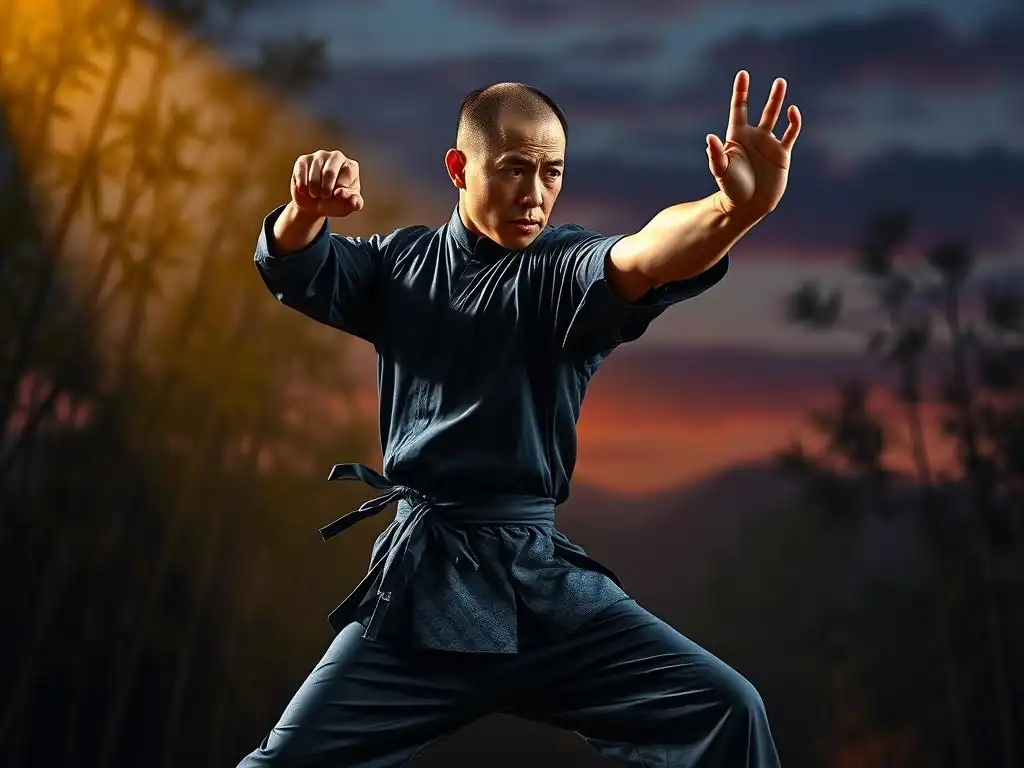
Welcome to Martial Arts Mastery, your ultimate resource for delving deep into the world of combat. Ever wondered about the secrets behind a single, devastating technique? Our latest exploration dissects the enigmatic Kwa Choi of Choy Li Fut. Is this powerful swinging backfist truly a long-range surprise, or a close-quarters knockout? Prepare to unravel the intricacies of this iconic move in our in-depth analysis, and discover how it reflects the broader principles of Choy Li Fut. Intrigued? Let's begin...
- Introduction to Choy Li Fut Kwa Choi: Understanding the Swinging Backfist
- Kwa Choi as a Long-Range Technique: Extending Reach and Power
- Kwa Choi as a Short-Range Technique: Close-Quarters Combat Applications
- Biomechanics of the Kwa Choi: Power Generation and Delivery
- Kwa Choi Training Drills and Exercises: Developing Skill and Precision
- Kwa Choi in Choy Li Fut Forms: Identifying and Understanding Variations
- Kwa Choi vs. Other Backfist Techniques: A Comparative Analysis
- Practical Applications of Kwa Choi in Self-Defense Scenarios
- Conclusion: Mastering the Versatility of Choy Li Fut's Kwa Choi
-
Frequently Asked Questions
- What is Kwa Choi in the context of Choy Li Fut?
- Is the Kwa Choi primarily a long-range or short-range technique?
- What are the key principles behind generating power in a Kwa Choi?
- How does the historical context of Choy Li Fut influence the use of the Kwa Choi?
- What are some training methods to improve the effectiveness of the Kwa Choi?
- Final Reflection: The Enduring Power of the Kwa Choi
- Unleash Your Inner Strength: Master the Kwa Choi!
Introduction to Choy Li Fut Kwa Choi: Understanding the Swinging Backfist
What is Kwa Choi in Choy Li Fut Kung Fu?
The Kwa Choi, often translated as "Swinging Backfist," is a distinctive and fundamental striking technique within the art of Choy Li Fut Kung Fu. This technique is characterized by a circular or swinging motion of the arm, culminating in a strike delivered with the back of the fist, typically the knuckles. Unlike more linear backfists found in some other martial arts, the Choy Li Fut Kwa Choi leverages significant body rotation and centrifugal force, embodying the circular and fluid principles inherent in the style. It is a versatile strike, capable of being deployed from various stances and distances.
Taught early in the Choy Li Fut curriculum, the Kwa Choi is considered a signature technique, showcasing the style's emphasis on long-range power and dynamic movement. Its name, combining Kwa (掛 - meaning 'to hang' or 'to swing') and Choi (捶 - meaning 'fist' or 'strike'), directly describes its visual execution. Mastery of the Kwa Choi is essential for understanding the power generation mechanics and strategic applications that define Choy Li Fut's unique fighting system. It serves as a building block for more complex techniques and combinations encountered later in training.
The Significance of Kwa Choi in Choy Li Fut's Fighting System
The Kwa Choi holds significant importance within the comprehensive fighting system of Choy Li Fut. Its strategic value lies in its ability to bridge the gap between long and short range, providing a potent attacking option from surprising distances or as a rapid close-quarters strike. This versatility aligns perfectly with Choy Li Fut's tactical philosophy, which integrates a wide array of techniques effective at varying ranges. The circular path of the Kwa Choi also makes it harder for opponents to predict and block compared to direct, linear attacks.
Furthermore, the power generation method of the Choy Li Fut Kwa Choi, heavily relying on coordinated body rotation and weight transfer, is a microcosm of Choy Li Fut's overall power principles. Learning to execute a strong Kwa Choi teaches the practitioner how to harness the kinetic chain from the ground up, driving power through the hips and torso into the strike. This skill is transferable to many other techniques in the system. Its prevalence in foundational forms underscores its role not just as a strike, but as a core lesson in Choy Li Fut body mechanics and offensive strategy.
Kwa Choi as a Long-Range Technique: Extending Reach and Power
Utilizing Kwa Choi for Distance Control in Choy Li Fut
One of the primary applications of the Kwa Choi in Choy Li Fut is as a long-range weapon. The inherent swinging motion allows the practitioner to extend their reach significantly beyond that of a standard straight punch or even a hook. By initiating the strike with a strong step and hip rotation, the arm is propelled in a wide arc, covering distance rapidly and enabling strikes to targets that would typically be considered out of range for many hand techniques. This makes the Kwa Choi excellent for controlling distance, intercepting an advancing opponent, or striking from safety.
In a long-range exchange, the Choy Li Fut Kwa Choi can add several inches, potentially up to a foot, of effective reach compared to a direct forward strike from the same stance. This reach advantage allows a practitioner to engage or disengage while maintaining a safer distance. It can be used to probe an opponent's defenses, disrupt their rhythm, or land a powerful blow before they can close the distance effectively. The combination of reach and speed makes it a potent tool for managing the fighting distance.
Generating Power from Rotation: The Long-Range Kwa Choi Mechanism
The power behind a long-range Choy Li Fut Kwa Choi is primarily generated through the coordinated rotation of the entire body, from the feet rooted to the ground, through the hips and torso, and finally whipping the arm and fist through the target. This kinetic chain builds momentum, and the centrifugal force of the swinging arm adds significant impact power. The strike is not merely an arm movement; it is a full-body explosion of energy directed through the back of the fist.
The mechanism involves planting the lead foot (or shifting weight onto it), powerfully rotating the hips and torso, and allowing the arm to follow this rotation in a wide arc. The wrist and fist remain relatively relaxed during the initial swing and then snap tight just before or at the moment of impact. This 'whipping' action, combined with the mass and speed generated by the body's rotation, allows even a relatively light practitioner to deliver a strike with surprising force, capable of causing significant concussive damage, particularly to targets like the temple or jaw.
Examples of Long-Range Kwa Choi Applications in Ping Quan Form
The foundational Choy Li Fut form, Ping Quan (平拳), meaning "Level Fist" or "Even Fist," provides excellent examples of the long-range application of the Kwa Choi. Throughout Ping Quan, the Kwa Choi appears in contexts that emphasize its reach and power from a distance. For instance, it is often executed following a preparatory movement or block, launched with a full body turn from stances like the Four-Six Stance (四六步 - Sei Luk Bou) or Triangle Stance (三角步 - Saam Gok Bou).
One notable sequence in Ping Quan features a Kwa Choi thrown with significant hip rotation after a defensive block, demonstrating its use as a powerful counter-attack from a slight distance. Another instance shows it as a primary offensive technique, launched as part of a series of strikes from a mobile stance, highlighting its ability to cover ground and strike from range.
These examples in Ping Quan consistently depict the Kwa Choi as a technique requiring ample space for the full body rotation, aimed at targets accessible from arm's length or further, reinforcing its role as a long-range weapon in the Choy Li Fut arsenal.
Kwa Choi as a Short-Range Technique: Close-Quarters Combat Applications
Adapting Kwa Choi for Close-Range Engagement in Choy Li Fut
While renowned for its long-range power, the Choy Li Fut Kwa Choi is remarkably adaptable for close-quarters combat. When the distance is minimal, the technique is modified to generate power through a more compact motion, relying less on a wide arc and more on rotational torque and a sharp snap. The body mechanics shift from a broad swing to a tight, explosive turn of the torso and shoulder, often utilizing 'short power' or 'inch power' principles similar to Cun Jing (寸勁).
In close range, the practitioner may be in contact or very near their opponent, limiting the space for a large swing. The Kwa Choi is executed by keeping the elbow relatively bent and generating force primarily from a rapid twist of the waist and shoulder, snapping the back of the fist into the target. This adaptation allows the technique to be delivered quickly and powerfully even when face-to-face or slightly off-angle, proving effective in confined spaces or when locked in a close-range exchange.
Delivering Powerful Strikes at Close Proximity with Kwa Choi
Delivering a powerful Kwa Choi at close range relies on generating maximum acceleration over a very short distance. This is achieved through the explosive rotation of the core and shoulder girdle, combined with a sharp extension and retraction of the arm and wrist at the moment of impact. The power comes from the sudden torque and the 'whip' effect created by the snapping action, rather than the momentum of a long swing. Targets at close range might include the side of the head, the ribs, or even the solar plexus, depending on the angle and situation.
This close-range version leverages internal body mechanics and structural alignment to transfer energy efficiently into the strike. While it may not possess the same sweeping momentum as the long-range Kwa Choi, it can generate surprising force due to the rapid acceleration and focused impact area (the knuckles). Mastering the close-range Kwa Choi requires developing explosive core strength and precise timing, ensuring the snap happens exactly at the point of contact for maximum effect.
Combining Kwa Choi with Other Short-Range Techniques in Choy Li Fut
In close-quarters combat within Choy Li Fut, the Kwa Choi is rarely used in isolation. Its effectiveness is amplified when combined with other short-range techniques, creating rapid-fire sequences that overwhelm an opponent. Choy Li Fut is known for its continuous, flowing combinations, and the close-range Kwa Choi integrates seamlessly with techniques like palm strikes (掌 - Jeung), elbow strikes (肘 - Jau), short hooks (勾 - Gau), and various short-range punches (捶 - Choi).
For example, a practitioner might use a short-range Kwa Choi to the ribs to set up a palm strike to the head, or follow a defensive block with a rapid close-range Kwa Choi counter. The circular nature of the Kwa Choi complements the linear and angular attacks, making the combinations unpredictable.
A common sequence might involve a short hook, transitioning directly into a compact Kwa Choi, and finishing with a driving palm strike, all delivered in quick succession within arm's reach. This ability to mix and transition between different close-range hand techniques is a hallmark of Choy Li Fut's approach to infighting.
Biomechanics of the Kwa Choi: Power Generation and Delivery
The Role of Body Mechanics in Maximizing Kwa Choi Effectiveness
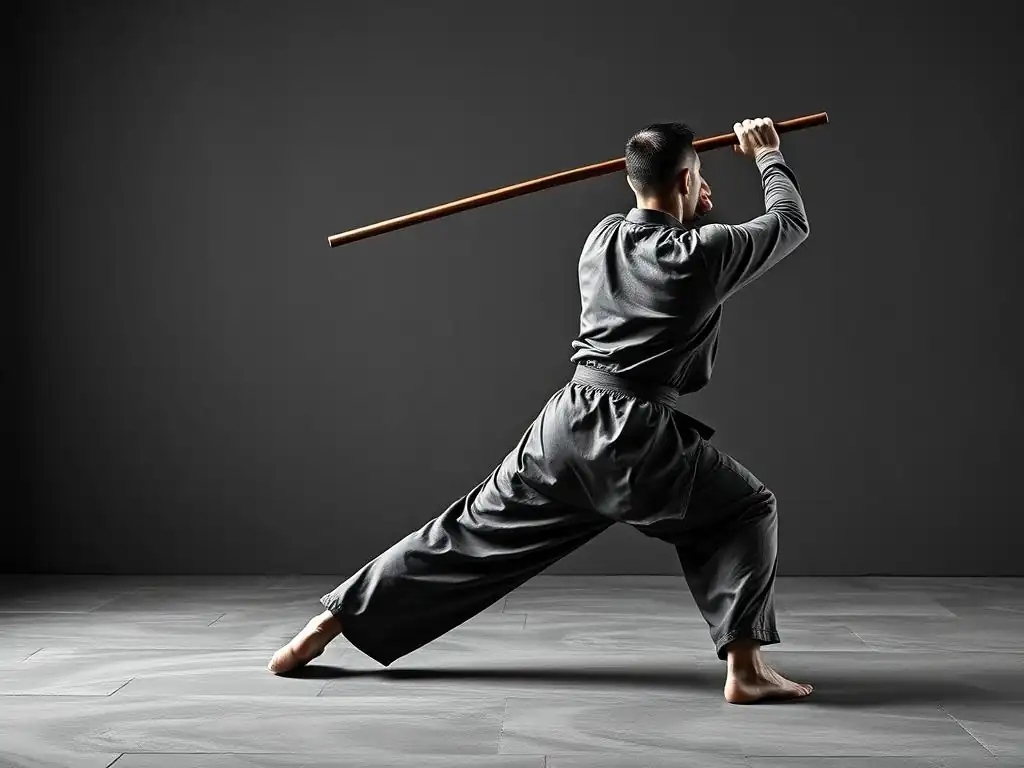
Effective execution of the Choy Li Fut Kwa Choi, regardless of range, is fundamentally dependent on precise body mechanics. The entire body acts as a single unit to generate and deliver power. This process begins with the connection to the ground – rooting through the feet and legs provides a stable base and allows for the transfer of force generated by the lower body. The hips are the engine of the movement, initiating the powerful rotation that drives the strike.
The torso and shoulder girdle follow the hip rotation, adding further momentum and mass to the swing. The arm acts as a lever, guided by the shoulder and propelled by the body's rotation. Proper alignment ensures that the force generated by the larger muscle groups is efficiently channeled through the arm and into the fist. Approximately 60-70% of the strike's power comes from the coordinated action of the legs, hips, and torso, with the remaining power coming from the acceleration of the arm and the final snap of the wrist.
Understanding the Swinging Motion for Optimal Power Transfer
The unique swinging motion of the Choy Li Fut Kwa Choi is key to its power transfer, particularly at longer ranges. The arm moves along an arc, building speed as the body rotates. Optimal power transfer occurs when the body's rotation, the arm's swing, and the final snap of the fist are perfectly timed to converge at the point of impact. The momentum generated by the swinging mass of the arm and body is concentrated into the small area of the knuckles.
For optimal power, the swing should be smooth and accelerating throughout its path, not starting slowly and then trying to muscle it at the end. The wrist should be relatively loose during the swing to allow for maximum speed, snapping firm and straight only at the moment of contact to prevent injury and ensure the force is delivered effectively. The trajectory of the swing is typically horizontal or slightly downward, targeting the side of the head or body.
Common Mistakes to Avoid When Executing Kwa Choi
Several common mistakes can significantly reduce the effectiveness and power of the Choy Li Fut Kwa Choi. One of the most frequent errors is attempting to generate power solely from the arm and shoulder, neglecting the crucial role of the hips and torso. This results in a weak, 'arm-only' strike that lacks the characteristic Choy Li Fut power and can also put excessive strain on the shoulder joint. Another mistake is failing to properly root the feet and transfer weight, disconnecting the body from the ground and losing the foundation for power generation.
Poor timing of the snap is also a common issue; snapping the wrist too early or too late diminishes the impact force and can lead to a sprained wrist. Over-extending the strike, swinging too wide without control, can leave the practitioner off-balance and vulnerable to counter-attack. Finally, telegraphing the strike with exaggerated preparatory movements allows the opponent to anticipate and evade. Correcting these errors involves diligent practice focusing on integrating the entire body and refining the timing of the swing and snap.
Kwa Choi Training Drills and Exercises: Developing Skill and Precision
Fundamental Drills for Mastering the Kwa Choi Technique
Mastering the Choy Li Fut Kwa Choi requires dedicated and systematic training, starting with fundamental solo drills. Air striking, practicing the movement repeatedly in the air, is essential for developing correct form, body mechanics, and coordination. Practitioners should focus on the full kinetic chain, from the feet to the fist, ensuring smooth rotation and proper timing of the snap. Practicing in front of a mirror can help identify and correct flaws in posture and movement.
Striking a stationary target like a wall bag or a heavy bag allows practitioners to develop power and accuracy. Repetitive drills, such as throwing 50-100 Kwa Choi strikes per side in a training session, build muscular endurance and reinforce the correct muscle memory. These drills should emphasize hitting with the correct part of the fist (the back knuckles) and feeling the power transfer from the body. Varying the speed of execution – sometimes focusing on slow, deliberate movement to feel the mechanics, other times on maximum speed for explosiveness – is also beneficial.
Partner Drills for Practicing Kwa Choi Application
Partner drills are crucial for developing the practical application of the Kwa Choi in a dynamic context. Using focus mitts or strike pads, a partner can hold targets at various distances and angles, allowing the practitioner to practice hitting a moving or specific target. These drills help refine timing, distance judgment, and accuracy under pressure. The partner can provide feedback on power and technique.
Defensive partner drills involve practicing using the Kwa Choi as a counter-attack. One partner throws a simulated attack (like a punch or grab), and the other responds with a defensive maneuver followed immediately by a Kwa Choi. This type of drill helps integrate the Kwa Choi into realistic self-defense scenarios and teaches practitioners to apply the technique spontaneously. Safety is paramount in partner drills, using appropriate protective gear and controlled force.
Developing Speed and Power in Your Kwa Choi Strikes
Developing both speed and power in the Choy Li Fut Kwa Choi is an ongoing process. Speed training can involve practicing the technique with light resistance, such as resistance bands anchored behind the practitioner, or performing very fast, light strikes focusing on acceleration. Plyometric exercises for the upper body and core can also improve explosive speed.
Power training typically involves working with heavier targets like the heavy bag, focusing on generating maximum force with each strike. Medicine ball twists and throws are excellent exercises for developing rotational power in the core and hips, which directly translates to a stronger Kwa Choi. Incorporating strength training for the shoulders, back, and core is also vital. Consistency is key; dedicating specific portions of training time each week to speed and power development drills will yield significant improvements in the potency of the Kwa Choi.
Kwa Choi in Choy Li Fut Forms: Identifying and Understanding Variations
Analyzing the Use of Kwa Choi in Specific Choy Li Fut Forms ( Ping Quan, Sup Yee Jeung)
The Choy Li Fut Kwa Choi is a ubiquitous technique found in numerous forms, each form often highlighting different applications or nuances of the strike. As discussed, Ping Quan (平拳) serves as a fundamental introduction, often featuring wider, full-body Kwa Choi applications emphasizing long-range power and basic mechanics. It appears multiple times throughout the form, frequently following defensive movements or as a primary offensive strike from a stable stance, reinforcing its role as a foundational power technique.
Another significant form featuring the Kwa Choi is Sup Yee Jeung (十字拳), or "Cross Pattern Fist." In Sup Yee Jeung, the Kwa Choi often appears in faster, more dynamic combinations, sometimes executed with tighter movements or in conjunction with rapid changes in direction or range. It might be used as a transitional strike or integrated into sequences that involve simultaneous blocking and striking. The variations seen in Sup Yee Jeung tend to emphasize the technique's adaptability and speed, showcasing how the basic Kwa Choi is applied in more complex and fluid fighting scenarios than the foundational Ping Quan.
Variations in Kwa Choi Execution Based on Different Choy Li Fut Lineages
Choy Li Fut, like many traditional martial arts, has several distinct lineages stemming from the disciples of its founder, Chan Heung. While the core principles and techniques, including the Kwa Choi, remain consistent across lineages, subtle variations in execution, emphasis, and application exist. These variations might manifest in the exact angle of the swing, the degree of hip rotation, the specific hand formation upon impact, or the preferred range of application taught initially.
For example, one lineage might emphasize a slightly more vertical or downward angle for the strike, while another might teach a strictly horizontal path. Some variations might place greater emphasis on the 'whipping' action of the arm, while others focus more on driving power from a rooted stance. While precise, quantifiable differences in power or speed between lineages are difficult to measure uniformly, these subtle distinctions represent the accumulated teaching methodologies and tactical preferences passed down through generations of masters within each branch, adding layers of richness to the study of the Choy Li Fut Kwa Choi.
Understanding the Strategic Placement of Kwa Choi Within Forms
The placement of the Choy Li Fut Kwa Choi within the forms is highly strategic and serves to teach the practitioner its potential applications in simulated combat scenarios. Forms are essentially codified sequences of techniques that act as a 'living textbook' of the style's fighting principles. When a Kwa Choi appears in a form, its preceding and succeeding movements provide context for its use.
For instance, if a Kwa Choi follows a block or parry, the form is illustrating its application as a devastating counter-attack after defending against an incoming strike. If it appears at the end of a complex sequence of movements, it might represent a potential finishing blow or a technique used to create distance after an engagement.
Its placement often demonstrates transitions between different ranges or illustrates how the technique can be chained with other strikes or defensive maneuvers. Analyzing the strategic placement of the Kwa Choi within forms is crucial for understanding not just how to perform the technique, but when and why to use it in a fighting context.
Kwa Choi vs. Other Backfist Techniques: A Comparative Analysis
Comparing Kwa Choi to Standard Backfists in Other Martial Arts Styles
While the concept of striking with the back of the fist exists in many martial arts, the Choy Li Fut Kwa Choi possesses unique characteristics that differentiate it from standard backfists found elsewhere, such as the Uraken in Karate or Deung Joomok Chigi in Taekwondo. Standard backfists are often more linear or snapping movements, sometimes delivered vertically, horizontally, or even upwards, and may primarily utilize arm or shoulder power with less emphasis on full body rotation.
In contrast, the Choy Li Fut Kwa Choi is defined by its pronounced circular, swinging motion and the integral role of powerful hip and torso rotation. While a Karate Uraken might be a sharp, snapping strike over a short distance, or a Taekwondo backfist might be part of a rapid-fire combination or even a jumping technique, the Kwa Choi's power is heavily derived from the centrifugal force generated by the swinging arc and the mass of the rotating body.
This results in a strike that often has greater reach and potentially more concussive power from range compared to its counterparts in other styles, which might prioritize speed or different power generation methods.
Unique Characteristics of the Choy Li Fut Kwa Choi
The most unique characteristics of the Choy Li Fut Kwa Choi lie in its power generation mechanism and its inherent versatility across different ranges. The reliance on a sweeping, circular motion to build momentum and centrifugal force sets it apart from more direct or linear backfist techniques. This method allows for significant power to be generated even with a relatively relaxed arm during the swing, culminating in an explosive snap at impact.
Furthermore, the Kwa Choi's seamless adaptability between long and short range, utilizing essentially the same core principle but scaled differently, is a key differentiator. It can be a wide, powerful arc covering significant distance or a tight, sharp snap delivered from within grappling range, all while maintaining the fundamental 'swinging backfist' identity. This dual-range capability, combined with its integration into Choy Li Fut's dynamic circular footwork and continuous combinations, makes the Kwa Choi a uniquely versatile and potent weapon.
Advantages and Disadvantages of Kwa Choi Compared to Other Striking Techniques
Compared to other striking techniques, the Choy Li Fut Kwa Choi offers several advantages. Its primary benefit is its extended reach, allowing practitioners to strike effectively from distances where many other hand techniques would fall short. The circular motion can also be harder for opponents to track and defend against compared to linear attacks. When executed correctly with full body power, the Kwa Choi can deliver a highly concussive blow, particularly effective against the head or side of the body, potentially causing disorientation or knockout. Its versatility across ranges is also a significant advantage.
However, the Kwa Choi is not without its disadvantages. The swinging motion, if not properly controlled or if telegraphed, can take slightly longer to execute than a straight punch or jab, potentially leaving an opening. A poorly executed swing that misses the target or is blocked can leave the practitioner off-balance or over-extended, making them vulnerable.
It requires significant training to master the complex coordination of body mechanics for optimal power and control, more so perhaps than a simple jab. While powerful, its concussive force might be less penetrating than a direct strike like a Biao Choi (darting finger) or a powerful straight punch, depending on the target and execution.
Practical Applications of Kwa Choi in Self-Defense Scenarios
Utilizing Kwa Choi for Effective Self-Defense
In a real-world self-defense scenario, the Choy Li Fut Kwa Choi can be a highly effective technique due to its surprising reach and potential for power. In situations where an aggressor is approaching or lunging, a well-timed long-range Kwa Choi can intercept them before they get too close, potentially stopping the threat immediately with a strike to the head or neck area. Its circular path makes it less predictable than a straight punch in the chaos of a sudden confrontation.
The close-range application is also vital. If a situation escalates to grappling or a close-quarters struggle, the compact Kwa Choi can be delivered with explosive force to vulnerable areas like the ribs or side of the head, creating an opening to escape or follow up. Even a partial hit can be disorienting, buying precious time to react. The ability to generate significant power from a relatively small, tight motion makes it suitable for confined spaces where there isn't room for large movements.
Adapting Kwa Choi to Different Confrontation Situations
The adaptability of the Choy Li Fut Kwa Choi allows it to be modified based on the specific confrontation situation. If facing an opponent at a distance in an open area, the practitioner can utilize the full, long-range swing to maintain distance and strike from safety. If the situation is in a cramped environment like a hallway or crowded space, the technique is naturally compressed into its short-range version, emphasizing torque and snap over a wide arc.
Furthermore, the power level can be adapted. While capable of delivering knockout force, the Kwa Choi can also be used with less power for control or to create a distraction, perhaps using the flat of the forearm or the back of the hand rather than the knuckles. It can be used defensively, as a parry or block that immediately transitions into a strike, or offensively as a primary attack. Its versatility makes it a valuable tool in a wide range of self-defense contexts, from creating space to fighting in a clinch.
The Psychological Impact of a Well-Executed Kwa Choi
Beyond its physical effects, a well-executed Choy Li Fut Kwa Choi can have a significant psychological impact on an aggressor. The speed and power of the strike, especially when delivered from a seemingly safe distance or with surprising compactness at close range, can be shocking and disorienting. A powerful blow to the head delivered by the back of the fist can immediately shut down aggression, causing confusion, loss of balance, or even unconsciousness.
The visual aspect of the swinging motion itself can also be psychologically impactful; the circular path is less common in street altercations than linear punches and can be visually confusing, adding to the element of surprise. The sheer force generated can be perceived by the aggressor not just physically, but also mentally, reinforcing the seriousness of the situation and the practitioner's capability. This psychological edge can be crucial in de-escalating or ending a confrontation quickly.
Conclusion: Mastering the Versatility of Choy Li Fut's Kwa Choi
Embracing the Dual Nature of Kwa Choi: Long and Short Range
The Choy Li Fut Kwa Choi is a prime example of the style's emphasis on versatility and adaptability. Its ability to function effectively as both a powerful long-range weapon and a quick, explosive short-range strike is a testament to the ingenuity of the system. Practitioners who understand and train both aspects of the Kwa Choi gain a significant advantage, equipped with a single technique that can be applied in a wide spectrum of fighting distances and situations.
Mastering the dual nature of the Kwa Choi means understanding how to seamlessly transition between the full-body rotation for long-range power and the compact torque for close-range explosiveness. It requires recognizing the subtle shifts in body mechanics and timing required for each application. Embracing this versatility unlocks the full potential of the Kwa Choi, making it a truly dynamic and formidable strike within the Choy Li Fut arsenal.
The Importance of Dedicated Practice for Kwa Choi Proficiency
Achieving proficiency in the Choy Li Fut Kwa Choi demands dedicated and consistent practice. It is not a technique that can be mastered overnight; it requires countless repetitions of solo drills to perfect the form and body mechanics, partner drills to refine timing and application, and heavy bag work to develop power. Integrating the Kwa Choi into form practice helps solidify its strategic placement and flow within combinations.
Practitioners should aim for structured training sessions, perhaps dedicating at least 30-60 minutes per week specifically to drilling and refining the Kwa Choi technique. Focusing on quality over quantity, paying attention to the details of footwork, hip rotation, arm motion, and the final snap, is crucial. This dedicated practice builds the necessary muscle memory, coordination, and power to execute the Kwa Choi effectively and intuitively under pressure, whether at long range or in close quarters.
Further Exploration of Choy Li Fut Kung Fu and its Techniques.
The Choy Li Fut Kwa Choi is just one piece of a vast and intricate martial art system. While mastering this technique is a significant step, a deeper understanding of Choy Li Fut Kung Fu requires exploring its many other unique elements. This includes studying the diverse range of stances (馬 - Ma) and footwork (步 - Bou) that provide mobility and power, as well as its extensive repertoire of other hand techniques (拳 - Choi, 掌 - Jeung, 橋 - Kiu), kicks (腳 - Gok), and weapon forms.
Further exploration involves understanding the principles behind Choy Li Fut's circular movements, continuous combinations, and emphasis on simultaneous defense and offense. Studying other foundational forms and more advanced sequences reveals how the Kwa Choi integrates with other techniques and strategic concepts. By continuing to train diligently and explore the breadth of the Choy Li Fut system, practitioners can gain a truly comprehensive understanding of this rich and effective martial art.
Frequently Asked Questions
What is Kwa Choi in the context of Choy Li Fut?
The Kwa Choi (swinging backfist) is a signature technique in Choy Li Fut. It's a powerful striking method utilizing a circular arm motion.
Is the Kwa Choi primarily a long-range or short-range technique?
The Kwa Choi can be adapted for both, but is generally considered more effective as a close to mid-range technique, allowing for maximum power generation.
What are the key principles behind generating power in a Kwa Choi?
Power comes from the whole body, not just the arm. Key principles include hip rotation, core engagement, and proper footwork to deliver a forceful strike.
How does the historical context of Choy Li Fut influence the use of the Kwa Choi?
Choy Li Fut's history, blending various styles, emphasizes practical self-defense. The Kwa Choi reflects this through its versatility and effectiveness in real-world scenarios.
What are some training methods to improve the effectiveness of the Kwa Choi?
Training involves repetitive drills, focus mitt work, and sparring. Focusing on proper form and power generation is crucial for mastering the Kwa Choi.
Final Reflection: The Enduring Power of the Kwa Choi
The preceding analysis has hopefully illuminated the multifaceted nature of the Choy Li Fut Kwa Choi, a technique that defies simple categorization as either a long or short-range weapon. Ultimately, its effectiveness lies in its adaptability and the practitioner's ability to seamlessly transition between ranges, a testament to the dynamic and fluid nature of Choy Li Fut itself. This adaptability remains incredibly relevant today, not just in martial arts, but in navigating the complexities of modern life.
The Kwa Choi, in its deceptive simplicity, embodies a deeper principle: the power of adaptability and the importance of understanding context. This exploration has reinforced my own appreciation for the nuanced strategies within martial arts and their potential to inform broader perspectives on problem-solving and resilience. Adapt what is useful, reject what is useless, and add what is specifically your own.
- Bruce Lee. This quote perfectly encapsulates the spirit of mastering the Kwa Choi and, indeed, the art of living a fulfilling life.
Now, consider the lessons learned from dissecting the Kwa Choi. How can you apply the principles of adaptability and contextual awareness to your own challenges? Embrace the fluidity of the Kwa Choi; be prepared to adjust your approach, leverage your strengths, and find the optimal range for success in all your endeavors. The power to adapt, like the Kwa Choi itself, is a weapon you can wield with precision and purpose.
Unleash Your Inner Strength: Master the Kwa Choi!
Thank you for diving deep into the world of Choy Li Fut and exploring the intricacies of the Kwa Choi! We hope you've gained valuable insights into this dynamic technique. Now, it's time to put that knowledge into action!
Here are a few ways to continue your journey:
- Practice the Kwa Choi drill focusing on both long and short-range execution. Visualize different scenarios and adapt your technique accordingly.
- Share this article with fellow martial artists and discuss your interpretations of the Kwa Choi's applications. Collaboration fuels mastery!
- Research other Choy Li Fut techniques and compare their range and application to the Kwa Choi. Discover the interconnectedness of the system!
Which aspect of the Kwa Choi's application are you most eager to explore in your training?