
An Introduction to IsshinRyu's Unique Training Drills and Partner Exercises

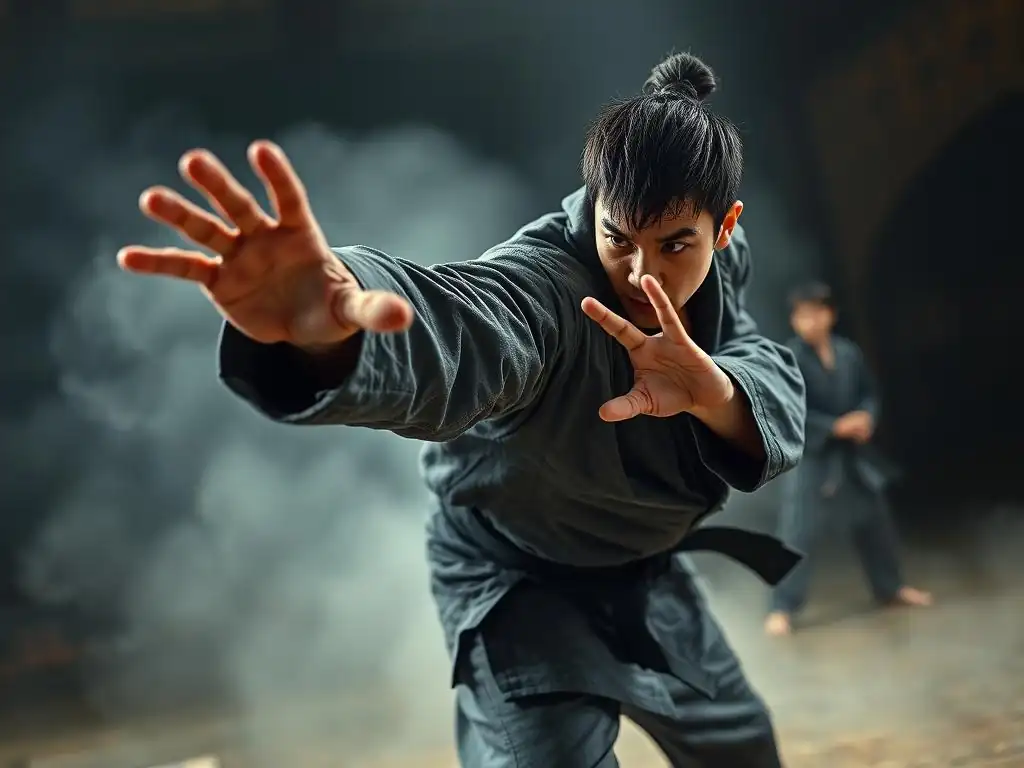
Welcome to Martial Arts Mastery, your gateway to understanding the profound world of combat arts! Are you ready to delve into the distinctive training methods that set certain styles apart? This article unveils the secrets of IsshinRyu partner training drills, offering a unique glimpse into how this Okinawan karate style cultivates power and precision. But what makes IsshinRyu's approach so effective, and how can these drills elevate your own martial arts journey? Explore further to unlock the answers and discover the power of structured partnership in mastering this potent art.
- Exploring IsshinRyu's Unique Training Drills and Partner Exercises
- Understanding IsshinRyu Karate: A Foundation for Partner Work
- Exploring IsshinRyu's Distinctive Solo Training Drills
-
Deep Dive into IsshinRyu Partner Training Drills
- Sanbon Kumite: Three-Step Sparring in IsshinRyu
- Exploring the Significance of Sanbon Kumite in Developing Basic Skills
- Yakusoku Kumite: Prearranged Sparring Sequences in IsshinRyu
- Benefits of Yakusoku Kumite for Timing and Distance Control
- Bunkai: Unlocking Kata Applications Through Partner Practice
- Practical Applications of Kata Techniques with a Partner
-
IsshinRyu Self-Defense Applications Through Partner Drills
- Emphasis on Practical Self-Defense Techniques in IsshinRyu
- Partner Drills Focusing on Realistic Attack Scenarios
- Drill Against a Straight Punch Utilizing a Gedan Barai and Gyaku Zuki
- Drill Against a Wrist Grab Utilizing a Kotegaeshi Technique
- Training for Multiple Attackers in IsshinRyu Partner Exercises
- Advanced IsshinRyu Partner Training Methods
- Benefits of IsshinRyu Partner Training Drills
- Tips for Effective IsshinRyu Partner Training
- The Legacy of IsshinRyu Partner Training in Modern Martial Arts
-
Frequently Asked Questions
- What makes IsshinRyu partner training drills unique compared to other martial arts?
- How important is partner training in mastering IsshinRyu?
- What are some common IsshinRyu partner training drills?
- How do IsshinRyu partner training drills contribute to self-defense skills?
- Where can I find resources to learn more about IsshinRyu partner training drills?
- Final Reflection: Embracing the Spirit of IsshinRyu Through Partnership
- Unleash Your Inner Warrior: Your IsshinRyu Journey Starts Now!
Exploring IsshinRyu's Unique Training Drills and Partner Exercises
IsshinRyu Karate, founded by Tatsuo Shimabuku, is a distinctive Okinawan martial art known for its vertical punch, unique stances, and practical approach. While solo practice through kata (forms) is fundamental, IsshinRyu places significant emphasis on partner training drills to develop practical skills, timing, and realistic application of techniques. These drills are not merely exercises; they are crucial components that bridge the gap between theoretical movement and effective self-defense. Engaging in IsshinRyu partner training drills allows practitioners to test their balance, power generation, and defensive reactions against a live opponent, albeit in a controlled environment.
The structured nature of IsshinRyu partner training drills, ranging from basic three-step sparring to more dynamic free sparring, provides a systematic path for students to progress. This progression ensures that foundational skills are solidified before moving on to more complex interactions. Furthermore, the emphasis on safety and mutual respect within these partner exercises cultivates a supportive learning environment, essential for effective skill acquisition. Understanding the principles behind these drills is key to unlocking the full potential of IsshinRyu training.
Understanding IsshinRyu Karate: A Foundation for Partner Work
The Core Principles of IsshinRyu Influencing Training Methods
IsshinRyu, meaning "One Heart Way," emphasizes simplicity, practicality, and directness. These principles deeply influence its training methods, particularly its partner drills. Unlike some styles that might favor elaborate or circular movements, IsshinRyu techniques are often linear and direct, designed for efficiency in real-world situations.
This focus on directness is evident in drills like Sanbon Kumite, where attackers use straightforward techniques like a middle punch or front kick, and the defender responds with equally direct blocks and counter-attacks. The vertical fist strike (tate tsuki) is a prime example of this directness, and partner drills are essential for developing the body mechanics and power generation required for this unique weapon.
The principle of Isshin (One Heart) also promotes unity of mind and body, which is crucial in partner exercises. Practitioners are encouraged to train with focus and intent, treating each drill as a serious application scenario while maintaining respect for their partner. This mindset helps develop not just physical technique but also mental fortitude and situational awareness, key aspects refined through consistent IsshinRyu partner training drills. The integration of kata applications ( bunkai) directly into partner work further reinforces the practicality principle, ensuring that the movements learned in solo forms can be effectively applied against a resisting opponent.
Key Characteristics of IsshinRyu Stance and Movement for Effective Partnering
IsshinRyu utilizes distinct stances that are relatively high and mobile compared to some other Okinawan styles, facilitating quick movement and transitions crucial for partner work. The basic stance, Seisan Dachi, is stable yet allows for rapid forward and backward movement, essential for managing distance in sparring or self-defense drills. This mobility is vital when practicing IsshinRyu partner training drills that involve closing distance, evading attacks, or creating openings for counter-attacks. The ability to shift weight and move quickly is tested and refined through various partner exercises.
Another characteristic is the natural hip rotation and body mechanics used to generate power, even from these relatively high stances. Partner drills, especially those involving blocking and striking combinations, help students understand how to efficiently transfer energy from their core through their limbs. Practicing Tsuki (punch) or Keri (kick) techniques against a partner providing light resistance or a target allows for immediate feedback on power generation and accuracy. This dynamic interaction is far more effective for developing functional strength and technique than simply practicing in the air.
Exploring IsshinRyu's Distinctive Solo Training Drills
Foundational Kata and Their Application to Partner Exercises
IsshinRyu has eight traditional kata: Seisan, Seiunchin, Naihanchi, Passai, Kūsankū, Chintō, Sanchin, and Tokumine no Kun. While practiced solo, these forms are the repository of IsshinRyu techniques and principles that are directly applied in IsshinRyu partner training drills. Each movement within a kata has a practical application ( bunkai), which is typically practiced with a partner. For instance, the opening movements of Seisan kata involve a block and counter-punch, which forms the basis for numerous fundamental partner drills focused on defense against a straight attack.
The solo practice of kata builds the foundational body mechanics, balance, and muscle memory. However, it is through partner practice that the meaning and effectiveness of these movements are truly understood. Bunkai practice, a form of IsshinRyu partner training, allows students to see how a specific block or strike from a kata can be used against various attacks. This ensures that kata is not just a dance, but a practical system of self-defense, reinforcing the connection between solo form and real-world application.
Solo Drills Focusing on Speed, Power, and Precision in IsshinRyu
Beyond kata, IsshinRyu incorporates solo drills designed to enhance specific physical attributes critical for effective partner interaction. Repetitive striking drills, such as practicing the vertical punch (tate tsuki) hundreds of times against a makiwara (striking post), build bone conditioning, power, and focus. Similarly, kicking drills, like Mae Geri (front kick) or Mawashi Geri (roundhouse kick) against a heavy bag, develop leg strength, balance, and accuracy. These solo power and precision drills lay the groundwork for applying techniques effectively during IsshinRyu partner training drills.
Speed drills, such as rapid fire punching or kicking combinations practiced in the air or against light targets, improve reaction time and muscle speed. Shadow boxing, simulating sparring scenarios solo, helps practitioners visualize timing and distance, crucial elements later tested with a partner. While these drills are performed alone, their ultimate purpose is to prepare the body and mind for the dynamic environment of partner work, ensuring that techniques can be delivered quickly and powerfully when needed against a live opponent.
Sanchin Kata and its Application to Body Conditioning Drills
Sanchin Kata, often considered the most important kata in many Okinawan styles, including IsshinRyu, is primarily a body conditioning and internal energy (kime) development exercise. Performed with tension and focused breathing, it builds a strong, resilient physique capable of absorbing impact and delivering powerful techniques. While solo, the conditioning developed in Sanchin is directly applicable to IsshinRyu partner training drills, particularly those involving receiving blocks or grappling applications.
Practicing Sanchin regularly builds core strength, leg stability, and the ability to maintain structure under pressure. This physical resilience is tested during partner drills where students might practice receiving low-level strikes to condition their limbs or bracing against pushes and pulls. The focused breathing and mental concentration developed in Sanchin also translate to maintaining composure and focus during the controlled chaos of sparring or self-defense scenarios practiced in partner drills.
Naihanchi Kata and its Application to Close-Range Combat Drills
Naihanchi Kata, performed primarily in a sideways stance ( Naihanchi Dachi), emphasizes close-range fighting techniques, including trapping, joint manipulation, and close-quarters striking. This kata's movements are highly relevant to IsshinRyu partner training drills that simulate grappling range or in-fighting scenarios. The side-to-side movement and hip usage in Naihanchi develop the ability to generate power and maintain balance in confined spaces, skills essential for effective close-range engagement with a partner.
The bunkai of Naihanchi often involves techniques like controlling an opponent's arm, off-balancing them, or striking from very close distance. Practicing these applications as IsshinRyu partner training drills allows students to feel the mechanics of these techniques against resistance. Drills derived from Naihanchi might involve practicing escapes from grabs, executing close-range strikes like elbow or knee strikes, or learning how to maintain positional control, all vital skills for self-defense situations that often occur at close range.
Deep Dive into IsshinRyu Partner Training Drills
Sanbon Kumite: Three-Step Sparring in IsshinRyu
Sanbon Kumite, meaning "three-step sparring," is a foundational IsshinRyu partner training drill designed to teach basic defensive and offensive principles in a structured format. In this drill, one partner acts as the attacker, performing three predetermined attacks (usually a sequence of punches or kicks) while stepping forward.
The other partner acts as the defender, stepping back with each attack while executing a corresponding block, followed by a counter-attack after the third block. For example, Attacker steps forward three times with a Jodan Tsuki (head-level punch), Defender steps back three times with a Jodan Uke (head-level block), and then counter-attacks with a Gyaku Zuki (reverse punch).
This drill is invaluable for developing fundamental skills such as stepping, blocking, distance management, and timing. By repeating the sequence multiple times, students build muscle memory for basic defensive reactions and learn to execute counter-attacks immediately after a successful block. While highly structured, Sanbon Kumite introduces the dynamic element of interacting with a moving target, a crucial step before moving to less predictable IsshinRyu partner training drills. It is often practiced at varying speeds and power levels as students progress.
Exploring the Significance of Sanbon Kumite in Developing Basic Skills
The repetitive nature of Sanbon Kumite is its strength in skill development. It provides a controlled environment to practice fundamental techniques under slight pressure. Students learn to judge the distance required for each step back to effectively evade the attack while remaining close enough to counter. This refines their sense of timing – knowing when to block and when to counter. For instance, consistently practicing the defender role against a middle punch helps a student internalize the precise timing needed for a Chudan Uke (middle block) and the subsequent counter.
Sanbon Kumite also reinforces the importance of strong stances and proper body mechanics. Stepping back while blocking requires balance and stability, preventing the defender from being easily pushed off balance. The counter-attack necessitates proper hip rotation and weight transfer for maximum power, skills honed through consistent repetition in this drill. While simple, mastering Sanbon Kumite provides a solid base for all subsequent IsshinRyu partner training drills, building confidence in basic defense and counter-offense.
Yakusoku Kumite: Prearranged Sparring Sequences in IsshinRyu
Yakusoku Kumite, meaning "promised" or "prearranged sparring," takes the structured interaction of Sanbon Kumite a step further. These are longer, more complex sequences of attacks and defenses, often incorporating multiple techniques and movements derived directly from kata bunkai. Unlike Sanbon Kumite's simple attack-block-counter format, Yakusoku Kumite might involve joint locks, throws (though throws are less emphasized in IsshinRyu compared to some other styles), or multiple strikes and defenses in a fluid exchange. A typical sequence might involve defending against a grab, followed by a strike, then an escape, and a final counter-attack.
Practicing Yakusoku Kumite enhances timing, distance, and flow between techniques. Because the sequence is known, partners can focus on the quality of their movements, the precision of their techniques, and the smooth transition from defense to offense. It allows practitioners to safely explore more complex applications of IsshinRyu techniques in a dynamic setting. These prearranged IsshinRyu partner training drills are crucial for understanding how different techniques connect and flow together in a self-defense context.
Benefits of Yakusoku Kumite for Timing and Distance Control
Yakusoku Kumite is particularly effective for refining timing and distance control in more complex scenarios than simple linear attacks. Since the sequences are prearranged, partners can practice performing techniques at realistic speed without the unpredictability of free sparring. This allows for focused repetition of specific timing cues – for example, learning the exact moment to execute a block and counter combination against a specific attack sequence, or understanding the precise distance needed to apply a joint lock or throw effectively.
The longer sequences also require students to maintain focus and awareness throughout the exchange, improving their concentration and ability to react sequentially. By practicing various Yakusoku Kumite sequences, students develop a better intuitive sense of how to manage the space between themselves and their partner during dynamic exchanges, a skill directly transferable to spontaneous sparring and self-defense. These IsshinRyu partner training drills build confidence in executing combinations under pressure.
Bunkai: Unlocking Kata Applications Through Partner Practice
Bunkai is the analysis and application of movements found within kata. While kata is practiced solo, bunkai is almost exclusively practiced as an IsshinRyu partner training drill. Partners simulate attacks that correspond to the defensive and offensive movements within the kata, allowing students to understand the practical purpose of each technique. For example, a seemingly simple movement in Seisan kata might be revealed, through bunkai, to be a block combined with a joint lock or a deflection setting up a strike.
Practicing bunkai with a partner is essential for truly understanding IsshinRyu. It transforms kata from a series of abstract movements into a living, breathing self-defense system. Students learn why a particular stance is used in a specific part of a kata, or how a certain hand movement can be used to trap an opponent's limb. These IsshinRyu partner training drills make the connection between the traditional forms and practical application explicit, ensuring that the techniques are not just memorized but understood and usable.
Practical Applications of Kata Techniques with a Partner
The practical applications explored through bunkai partner drills cover a wide range of self-defense scenarios. For instance, movements from Passai kata might be applied to defend against grabs or multiple attackers, while techniques from Chintō could be used for defenses against attacks from different angles or while off-balance. By practicing these applications with a partner simulating realistic attacks, students learn how to adapt the kata movements to dynamic situations.
These IsshinRyu partner training drills are not about creating choreography but about making the kata techniques functional. The focus is on effectiveness and understanding the underlying principles – leverage, balance displacement, timing, and targeting. Practicing a throw or joint lock from Kūsankū kata with a partner allows students to feel the necessary pressure points, angles, and timing to make the technique work, moving beyond theoretical knowledge to practical skill.
IsshinRyu Self-Defense Applications Through Partner Drills
Emphasis on Practical Self-Defense Techniques in IsshinRyu
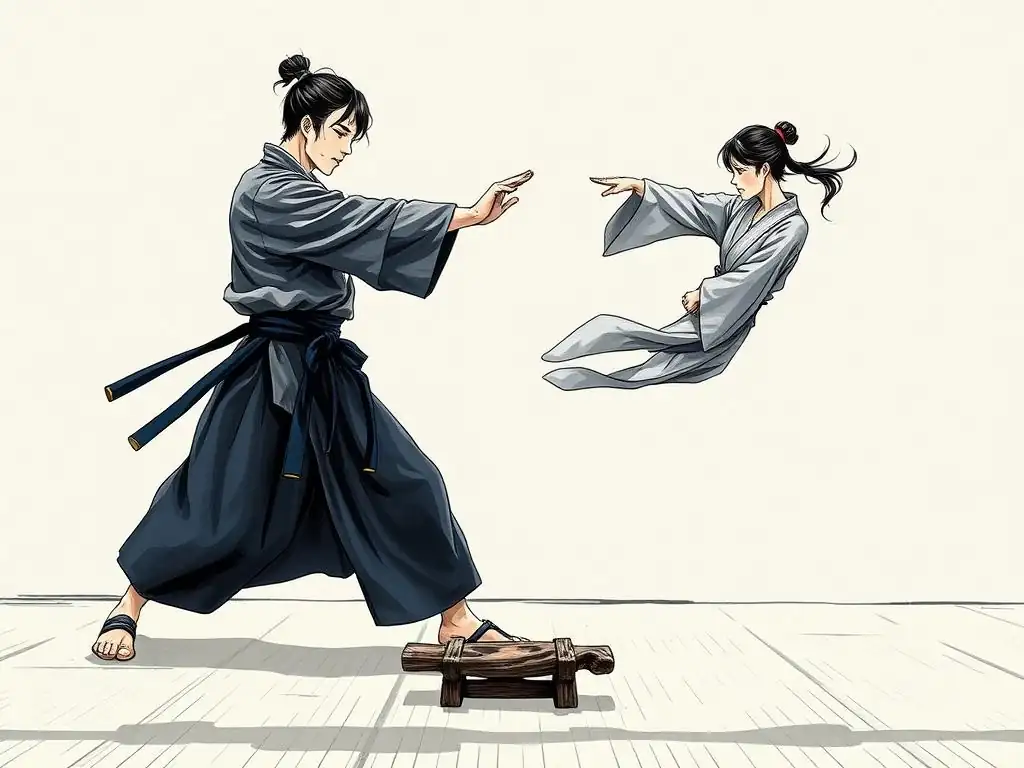
IsshinRyu has a strong historical emphasis on practical self-defense, rooted in its Okinawan origins where martial arts were developed for survival. This focus is clearly reflected in its training methodology, particularly in its IsshinRyu partner training drills. The techniques taught are generally direct and efficient, designed to quickly neutralize a threat. Drills are often based on common street attacks rather than purely sport-based scenarios, making the training highly relevant for personal safety.
The practical self-defense aspect means that while power and technique are important, the ability to react effectively under pressure is paramount. IsshinRyu partner training drills simulating realistic attacks help students develop this crucial ability. They learn to assess a situation, make quick decisions, and apply appropriate techniques, whether it's a simple block and counter or a more complex defense against a grab or hold. The goal is to train the body and mind to respond instinctively and effectively when faced with danger.
Partner Drills Focusing on Realistic Attack Scenarios
Realistic attack scenarios are a cornerstone of IsshinRyu self-defense partner training drills. Instead of just practicing against a static target, students practice against partners who simulate common real-world threats, such as a straight punch, a hook punch, a grab from the front or behind, a choke, or even attacks from multiple directions. These drills are typically performed with control and varying levels of resistance as students progress, ensuring safety while maintaining realism.
For example, a drill might involve a partner throwing a committed, albeit controlled, straight punch to the face. The defender must react instantly with a head-level block ( Jodan Uke) or evasion, followed by an immediate counter-attack, such as a Gyaku Zuki to the body or head. This type of IsshinRyu partner training helps students develop the necessary reflexes and decision-making skills needed when confronted with an actual attack. The focus is on immediate, effective responses to common threats.
Drill Against a Straight Punch Utilizing a Gedan Barai and Gyaku Zuki
A fundamental IsshinRyu partner training drill for self-defense against a straight punch involves using a low block ( Gedan Barai) to deflect the incoming attack, followed immediately by a reverse punch ( Gyaku Zuki) counter-attack. In this drill, the attacker steps forward with a straight punch aimed at the defender's midsection or groin area. The defender simultaneously steps back and executes a strong Gedan Barai to deflect the punch outwards and downwards.
Crucially, as the defender completes the block and the attacker's momentum is momentarily disrupted, the defender immediately executes a powerful Gyaku Zuki to the attacker's body or head. This sequence is practiced repeatedly with both partners switching roles. The emphasis is on the simultaneous nature of the step and block, the strength and angle of the block to effectively clear the line of attack, and the speed and power of the immediate counter-attack. This drill reinforces the principle of simultaneous block and counter, a hallmark of IsshinRyu.
Drill Against a Wrist Grab Utilizing a Kotegaeshi Technique
Another common IsshinRyu partner training drill focuses on defenses against grabs, such as a single wrist grab. A specific technique often practiced is Kotegaeshi, a wrist lock or throw. In this drill, the attacker grabs the defender's wrist firmly. The defender uses body movement, leverage, and specific hand positioning to apply pressure to the attacker's wrist joint, causing discomfort and forcing them to release or be taken off balance.
The execution involves precise timing and understanding of joint mechanics. The defender might step in or pivot, using their body weight to assist in the technique while rotating their grabbed hand in a specific way to initiate the lock. This IsshinRyu partner training drill allows students to feel the pressure points and leverage required for Kotegaeshi to be effective. It is practiced slowly at first to understand the mechanics, gradually increasing speed and resistance as proficiency grows, providing a practical defense against a common street attack.
Training for Multiple Attackers in IsshinRyu Partner Exercises
While often practiced one-on-one, some advanced IsshinRyu partner training drills simulate scenarios involving multiple attackers. These drills are complex and require a high level of awareness, movement, and technique application. They are not about fighting multiple opponents simultaneously in a static position but rather about movement, positioning, and quickly neutralizing one threat before the next can engage effectively.
In a multiple attacker drill, two or more partners might approach the defender from different angles. The defender must use footwork to avoid being surrounded, quickly address the most immediate threat using learned techniques (like a block/counter or grab defense), and then reposition to face the next attacker. These IsshinRyu partner training drills emphasize scanning the environment, managing distance against multiple opponents, and executing decisive techniques under significant pressure, providing a challenging test of skills learned in simpler partner exercises.
Advanced IsshinRyu Partner Training Methods
Ippon Kumite: One-Step Sparring in IsshinRyu
Ippon Kumite, or "one-step sparring," is a more advanced IsshinRyu partner training drill that bridges the gap between structured Sanbon Kumite and the relative freeness of Jiyu Kumite. In Ippon Kumite, the attacker performs a single, committed attack (such as a strong punch or kick), and the defender responds with a single, decisive block and counter-attack combination. The key difference from Sanbon Kumite is that there is only one exchange, making the timing and effectiveness of that single response critical.
This drill requires greater precision and commitment from both partners. The attacker must deliver a realistic, powerful attack, and the defender must execute a perfect block and immediate counter. There is less room for error than in three-step sparring. Ippon Kumite forces students to react instantly and decisively, honing their ability to deliver a single, effective technique to end the encounter. It is a demanding IsshinRyu partner training drill that builds confidence in one's ability to handle a sudden, committed attack.
Developing Reflexes and Counter-Attacking Skills
Ippon Kumite is exceptionally effective for developing fast reflexes and sharp counter-attacking skills. Because the attack is singular and committed, the defender must react almost instantaneously. This trains the practitioner's ability to process the incoming threat and initiate their defensive and offensive response in a fraction of a second. The drill emphasizes simultaneous or near-simultaneous defense and counter, a core principle in IsshinRyu.
Practicing Ippon Kumite against various single attacks (different types of punches, kicks, or even simulated grabs) helps students develop a repertoire of immediate responses. They learn to identify the type of attack quickly and select the most appropriate counter, executing it with speed and power. This repetitive, high-intensity IsshinRyu partner training drill is a direct method for improving reaction time and ensuring that counter-attacks are delivered automatically and effectively.
Jiyu Kumite: Free Sparring and Controlled Application
Jiyu Kumite, meaning "free sparring," is the most dynamic form of IsshinRyu partner training drills. While not a full-contact sport like boxing, it involves partners engaging in spontaneous, controlled sparring using the techniques learned through kata and other drills. Attacks and defenses are not prearranged, requiring participants to react in real-time to their partner's movements. The level of contact and intensity is adjusted based on the participants' skill level and the dojo's rules, with safety being paramount.
Jiyu Kumite allows practitioners to integrate all the skills they have developed – stance, movement, blocking, striking, timing, distance, and awareness – in a fluid, unpredictable environment. It simulates the dynamic nature of a real confrontation more closely than structured drills. It is within Jiyu Kumite that the effectiveness of the IsshinRyu partner training drills, from Sanbon Kumite to Bunkai, is truly tested, allowing students to see which techniques work for them under pressure.
Integrating Learned Techniques in Dynamic Partner Scenarios
The primary benefit of Jiyu Kumite is the opportunity to integrate and apply the vast array of learned techniques in a dynamic, unpredictable setting. A student who has practiced bunkai from Seisan kata against a simulated grab can now attempt to use that technique if their partner initiates a similar grab during free sparring. Similarly, the timing and distance control honed in Yakusoku Kumite are put to the test when deciding when and how to execute a counter-attack in a spontaneous exchange.
Jiyu Kumite reveals what techniques a student can truly rely on under pressure and highlights areas that need more work. It encourages adaptability, forcing practitioners to think on their feet and adjust their strategy based on their partner's actions. This advanced IsshinRyu partner training is vital for developing the ability to transition smoothly between different techniques and adapt to changing circumstances, moving beyond rote memorization to intuitive application.
Partner Drills for Developing Sensitivity and Flow
Beyond structured and free sparring, some IsshinRyu partner training drills focus specifically on developing sensitivity and 'flow' or mushin (empty mind). These drills often involve partners maintaining light physical contact, such as hands touching, and responding to subtle shifts in pressure or balance. Examples might include simple pushing hands drills or exercises where one partner attempts to maintain balance while the other gently tries to off-balance them.
These sensitivity drills cultivate a deeper awareness of an opponent's movement and intent through touch. They teach practitioners to feel their partner's energy and tension, allowing for quicker and more intuitive reactions. Developing this sensitivity is crucial for techniques that rely on leverage, joint manipulation, or maintaining control in close quarters. Practicing these types of IsshinRyu partner training drills enhances the practitioner's ability to react not just to what they see but also to what they feel, leading to smoother transitions and more effective techniques.
Benefits of IsshinRyu Partner Training Drills
Enhancing Reaction Time and Reflexes
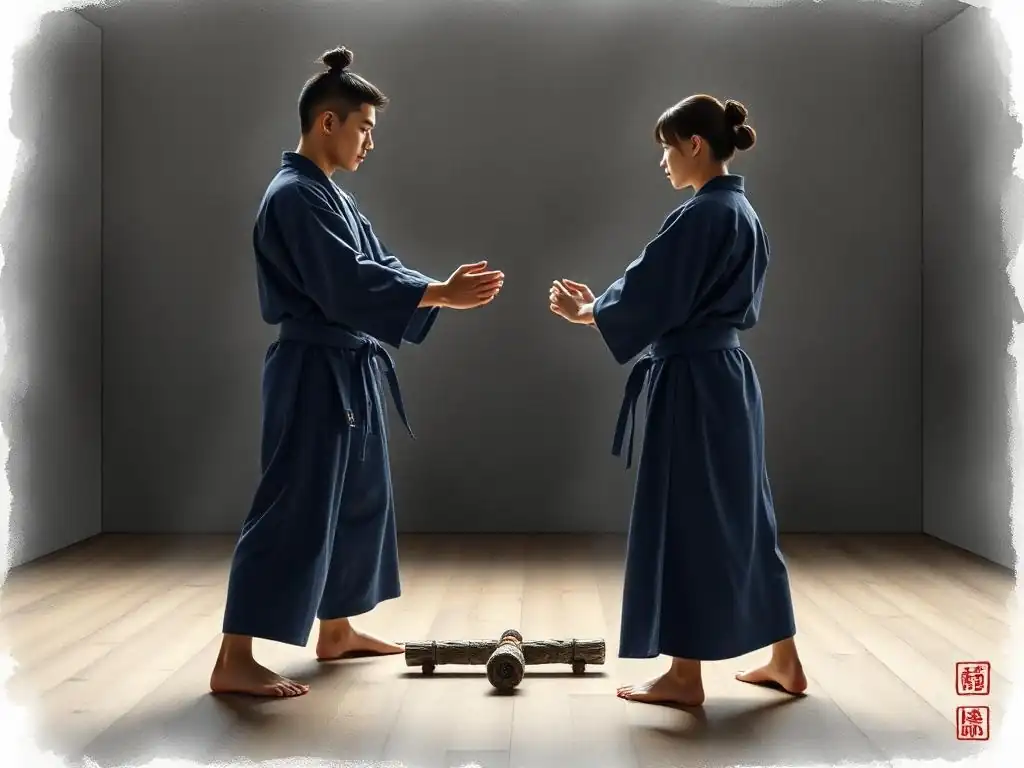
One of the most significant benefits of consistent IsshinRyu partner training drills is the dramatic improvement in reaction time and reflexes. Drills like Ippon Kumite and Jiyu Kumite require instantaneous responses to unpredictable movements. By repeatedly practicing blocking, evading, and countering incoming attacks, the practitioner's brain and body become conditioned to react faster. What initially requires conscious thought becomes a semi-automatic reflex.
For example, studies in sports science have shown that athletes who engage in reactive drills significantly improve their response times compared to those who only practice solo. In martial arts, this translates to the ability to defend oneself effectively when faced with a sudden attack. The dynamic interaction in IsshinRyu partner training drills provides the necessary stimulus to hone these crucial reflexive skills, making the practitioner more responsive under pressure.
Improving Timing and Distance Management
Accurate timing and distance management are critical in any martial art, and IsshinRyu partner training drills are specifically designed to develop these skills. Whether practicing Sanbon Kumite, Yakusoku Kumite, or Bunkai, students constantly interact with a partner who is moving and occupying space. They learn to judge the precise moment to initiate a technique, the optimal distance for different strikes or defenses, and how to close or create distance effectively.
Practicing a specific technique, like a vertical punch, against a partner holding a focus mitt at varying distances teaches the student how to adjust their step and hip rotation to ensure maximum power upon impact. Similarly, practicing defensive drills helps refine the timing of blocks and evasions relative to the attacker's movement. This constant feedback loop in IsshinRyu partner training allows for the subtle calibration of timing and distance that is difficult to achieve through solo practice alone.
Developing Realistic Self-Defense Skills
While traditional solo kata provides a library of techniques, it is through IsshinRyu partner training drills that these techniques are adapted and applied to realistic self-defense scenarios. Practicing defenses against common attacks like grabs, chokes, or punches from various angles prepares the practitioner for the unpredictable nature of real-world confrontations. These drills move beyond theoretical knowledge to practical application against a resisting, albeit controlled, opponent.
The emphasis on direct, efficient techniques in IsshinRyu lends itself well to self-defense. Partner drills simulating street attacks, including defenses against weapons (practiced safely with training tools), build confidence and competence in handling dangerous situations. By repeatedly facing simulated threats in a controlled environment, the practitioner develops not only the physical skills but also the mental preparedness to react effectively when their safety is truly threatened. These IsshinRyu partner training drills are the bridge between dojo practice and real-world readiness.
Fostering a Deeper Understanding of IsshinRyu Techniques
Practicing IsshinRyu partner training drills fosters a much deeper understanding of the techniques contained within the kata. When practicing bunkai, for example, a student learns not just the sequence of movements but why those movements are performed in that specific order against a particular type of attack. They feel the leverage points in a joint lock, understand the angles for a throw, or realize the subtle body mechanics needed for a powerful block and counter.
This hands-on, interactive learning is far more insightful than simply analyzing kata movements in isolation. Partners provide immediate feedback on the effectiveness of a technique – if a block isn't strong enough, or a counter-attack is mistimed, the partner's reaction (or lack thereof) makes it clear. This experiential learning process, central to effective IsshinRyu partner training, leads to a profound comprehension of the art's principles and applications.
Building Confidence and Mental Fortitude Through Partner Work
Facing a partner, even in a controlled drill, requires overcoming apprehension and building confidence. As students successfully execute techniques, defend against attacks, and manage dynamic situations during IsshinRyu partner training drills, their self-assurance grows. This confidence extends beyond physical ability to mental fortitude – the ability to remain calm, focused, and decisive under pressure.
Sparring, in particular, teaches resilience and the ability to handle being hit or having a technique fail. Learning to recover, adjust, and continue training despite minor setbacks builds mental toughness. The supportive yet challenging environment of IsshinRyu partner training encourages students to push their limits, learn from mistakes, and persevere, developing not just physical skills but also the mental and emotional strength necessary for effective self-defense and personal growth.
Tips for Effective IsshinRyu Partner Training
Importance of Clear Communication and Respect
Effective IsshinRyu partner training hinges on clear communication and mutual respect between partners. Before starting a drill, partners should agree on the speed, power level, and focus of the exercise. During the drill, verbal cues ("stop," "too hard," "ready") are essential, especially when practicing potentially sensitive techniques like joint locks or throws. Open communication ensures safety and allows both partners to gain the maximum benefit from the drill.
Respect for one's partner is paramount. This means training with control, not trying to injure or overpower them, and being mindful of their skill level and physical condition. Bowing before and after drills, listening to feedback, and being a good training partner are fundamental aspects of martial arts etiquette that facilitate effective and safe IsshinRyu partner training drills. A respectful environment encourages trust, which is necessary for pushing boundaries safely.
Focusing on Proper Technique and Safety
While speed and power are goals, the primary focus during IsshinRyu partner training drills, especially for beginners and intermediate students, should always be on proper technique and safety. Executing a technique correctly, even slowly, is more beneficial than performing it incorrectly at high speed. Instructors often emphasize executing movements with precision, ensuring proper body alignment, balance, and application of force.
Safety measures are non-negotiable. This includes wearing appropriate protective gear (mouthguards, gloves, shin guards, etc. depending on the intensity of the drill), maintaining control, and knowing when to stop or yield. Partners must actively protect each other, being aware of their own power and their partner's vulnerability. Prioritizing technique and safety ensures that IsshinRyu partner training drills are productive learning experiences rather than opportunities for injury.
Gradual Progression and Skill Development
Effective IsshinRyu partner training follows a principle of gradual progression. Students start with highly structured and predictable drills like Sanbon Kumite and basic bunkai, performed slowly and with light contact. As they develop proficiency, strength, and control, they gradually move to more complex and dynamic exercises such as Yakusoku Kumite, more advanced bunkai, Ippon Kumite, and eventually, controlled Jiyu Kumite.
This systematic approach ensures that students build a strong foundation before attempting more challenging interactions. Attempting free sparring too early without sufficient control or understanding of basic principles can be counterproductive and unsafe. A good instructor will guide students through this progression, ensuring they are ready for each new level of IsshinRyu partner training drills and helping them consolidate their skills step by step.
Adapting Drills to Individual Skill Levels
IsshinRyu partner training drills should be adaptable to the individual skill levels of the participants. A drill practiced by a beginner will look different from the same drill practiced by an advanced black belt. For beginners, the focus might be purely on understanding the movement and timing, performed slowly with minimal resistance. For advanced students, the same drill might be performed at higher speed, with greater power, varying angles, or incorporating feints and variations.
Instructors play a key role in modifying drills to suit the students. They might pair students of similar skill levels or have more experienced students train patiently with beginners, providing guidance and ensuring safety. The ability to adapt IsshinRyu partner training drills makes them accessible and beneficial for practitioners at all stages of their journey, ensuring continuous learning and growth.
The Role of the Instructor in Guiding Partner Training
The instructor's role is crucial in guiding effective IsshinRyu partner training drills. They introduce new drills, explain their objectives, demonstrate proper technique, and ensure safety protocols are followed. Instructors observe students practicing, provide feedback, correct mistakes, and offer variations or modifications to suit individual needs. They also foster the respectful and disciplined atmosphere necessary for productive partner work.
A good instructor can identify when students are ready to progress to more challenging drills or when they need to revisit foundational exercises. They mediate any misunderstandings between partners and ensure that the training remains focused on learning and improvement. The instructor's expertise and guidance are indispensable in maximizing the benefits derived from practicing IsshinRyu partner training drills, ensuring students develop skills correctly and safely.
The Legacy of IsshinRyu Partner Training in Modern Martial Arts
How IsshinRyu's Training Philosophy Continues to Influence Martial Arts
IsshinRyu's practical and direct approach to training, heavily reliant on IsshinRyu partner training drills, has had a lasting influence on modern martial arts. The emphasis on applying techniques from forms ( bunkai) directly against partners is a practice adopted by many styles seeking to make their kata more functional. The structured progression from basic prearranged sparring to more dynamic free sparring is also a common pedagogical model found across various disciplines.
Furthermore, IsshinRyu's focus on realistic self-defense scenarios in partner drills resonates with the growing demand for practical martial arts training. The idea of training techniques against common attacks rather than abstract movements is a principle that many modern self-defense systems incorporate. The legacy of IsshinRyu partner training demonstrates the effectiveness of combining solo form practice with dynamic, interactive drills to produce well-rounded and capable practitioners.
Finding an IsshinRyu Dojo and Starting Your Partner Training Journey
For those interested in experiencing the benefits of IsshinRyu partner training drills firsthand, the first step is finding a reputable IsshinRyu dojo. Look for schools affiliated with established IsshinRyu organizations, as this often indicates adherence to traditional training methods and standards. Visit potential dojos, observe a class, and speak with the instructor and students to get a feel for the training environment and philosophy.
Starting your journey in an IsshinRyu dojo means committing to regular training, including both solo kata practice and partner work. Be patient with your progress, especially in partner drills, as learning to interact effectively with a moving opponent takes time and practice. Embrace the learning process, listen to your instructor, and train respectfully with your partners. The rewards of consistent IsshinRyu partner training, in terms of skill development, confidence, and physical fitness, are significant.
Online Resources and Reputable IsshinRyu Organizations
While hands-on training in a dojo is essential for mastering IsshinRyu partner training drills, online resources can supplement your learning. Many reputable IsshinRyu organizations have websites that provide information about the style, its history, philosophy, and techniques. Some may offer instructional videos or articles, though these should always be used in conjunction with, and not as a replacement for, in-person instruction from a qualified sensei.
Reputable IsshinRyu organizations, such as the American Okinawan Karate Association (AOKA), the Isshin-ryu Hall of Fame, or the Isshinryu World Karate Association (IWKA), maintain directories of affiliated dojos and often provide educational materials. These organizations help preserve the integrity of IsshinRyu and ensure that the core principles, including the vital role of IsshinRyu partner training drills, are passed down accurately to future generations of practitioners.
Frequently Asked Questions
What makes IsshinRyu partner training drills unique compared to other martial arts?
IsshinRyu emphasizes natural body mechanics and short, powerful techniques. This translates to partner drills that focus on efficiency and practical application, often incorporating elements of choku-zuki (straight punch) and mae-geri (front kick).
How important is partner training in mastering IsshinRyu?
Partner training is absolutely essential in IsshinRyu. It allows practitioners to develop timing, distancing, and reaction speed, which are crucial for effective self-defense. It also helps refine technique under pressure.
What are some common IsshinRyu partner training drills?
Common drills include kihon (basic techniques) practice with a partner, kumite (sparring) exercises focusing on specific combinations, and drills designed to counter common attacks, utilizing IsshinRyu's unique blocking and striking methods.
How do IsshinRyu partner training drills contribute to self-defense skills?
These drills directly translate to self-defense by simulating real-world combat scenarios. They allow students to practice applying IsshinRyu techniques under duress, improving their ability to react quickly and effectively in a confrontation.
Where can I find resources to learn more about IsshinRyu partner training drills?
MartialArtsMastery.org offers articles, videos, and resources dedicated to IsshinRyu, including detailed explanations of training drills and profiles of experienced instructors. It is a great starting point for further exploration.
Final Reflection: Embracing the Spirit of IsshinRyu Through Partnership
The exploration of IsshinRyu's unique training drills and partner exercises reveals more than just physical techniques; it unveils a philosophy of mutual growth and unwavering dedication. These drills, far from being mere repetitions, are living embodiments of the IsshinRyu spirit, fostering resilience, adaptability, and a deep understanding of both oneself and one's partner. Their continued relevance lies in their ability to cultivate not only martial prowess but also essential life skills like communication, trust, and respect.
The impact of IsshinRyu's collaborative training extends beyond the dojo, shaping individuals who value teamwork and mutual support. Witnessing the dedication and camaraderie fostered through these drills underscores the profound influence that martial arts can have on personal development. IsshinRyu is not just about fighting; it is about building character and helping others.
This quote, often attributed to Tatsuo Shimabuku, perfectly encapsulates the essence of IsshinRyu's partner-centric approach, emphasizing the importance of mutual growth and support in achieving mastery.
As you reflect on the principles and practices of IsshinRyu partner training drills, consider how you can apply these lessons of collaboration and mutual support in your own life. Embrace the spirit of partnership, not just in martial arts, but in all your endeavors. Cultivate trust, communicate effectively, and strive to uplift those around you. By embodying the essence of IsshinRyu, you can unlock your own potential and contribute to a world where mutual growth and understanding prevail.
Unleash Your Inner Warrior: Your IsshinRyu Journey Starts Now!
Thanks for diving deep into the world of IsshinRyu training! You've now gained valuable insight into the unique drills and partner exercises that set this style apart. Ready to put that knowledge into action?
Here are a few steps to take your training to the next level:
- Boldly seek out a qualified IsshinRyu instructor in your area. Hands-on guidance is crucial for mastering these techniques!
- Share this article with a training partner. Discuss which drills you found most interesting and plan a practice session together.
- Explore videos of advanced IsshinRyu practitioners online. Observe their form and footwork to gain further inspiration.
What specific IsshinRyu drill are you most eager to try out first, and why?