
Finishing the Kimura: Essential Details for a Quick Tap in BJJ


Welcome to Martial Arts Mastery, where we delve into the depths of combat traditions! Ever wondered how a simple wrist lock can become a devastating submission? In this article, we're unlocking the secrets to the Kimura submission BJJ technique. Prepare to refine your grip, amplify your leverage, and discover the subtle adjustments that transform this fundamental move into a fight-ending maneuver. Are you ready to master the Kimura and add a powerful new weapon to your Brazilian Jiu-Jitsu arsenal? Let's begin!
- Understanding the Kimura Submission BJJ Technique: Key Concepts and Importance
- Breaking Down the Mechanics of the Kimura Submission in BJJ
- Essential Details for Finishing the Kimura Quickly and Safely
- Variations and Setups to Enhance Kimura Submission Success
- Training Tips to Improve Your Kimura Submission Execution
- Defensive Strategies Against the Kimura: Understanding Counters and Escapes
- Integrating the Kimura Submission into Your Overall BJJ Game Plan
- Conclusion: Mastering the Kimura Submission BJJ Technique for Efficient Finishes.
-
Frequently Asked Questions
- What is the Kimura submission in Brazilian Jiu-Jitsu (BJJ)?
- What are the key details for successfully finishing a Kimura submission?
- From what positions can the Kimura submission be applied in BJJ?
- What are some common defenses against the Kimura submission, and how can you counter them?
- Why is understanding the history of the Kimura important for BJJ practitioners?
- Final Reflection: Mastering the Art of Submission
- Ignite Your Kimura Game: Tap Out Faster!
Understanding the Kimura Submission BJJ Technique: Key Concepts and Importance
The Kimura submission BJJ technique is a powerful and versatile joint lock targeting the shoulder joint, primarily via external rotation and abduction, often combined with elbow flexion. It's named after the legendary Japanese judoka Masahiko Kimura, whose dominant victory over Hélio Gracie in 1955 cemented its place in the grappling world, particularly within Brazilian Jiu-Jitsu (BJJ). This technique involves securing an opponent's arm behind their back in a figure-four grip, creating immense pressure on the shoulder and potentially the elbow.
Understanding the core principles of the Kimura submission BJJ technique is crucial for any BJJ practitioner. It's not just about applying a lock; it's about control, leverage, and understanding the opponent's body mechanics. The technique can be applied from numerous positions – guard, side control, mount, and even standing – making it a constant threat. Its effectiveness lies in isolating one of the body's most complex and vulnerable joints, allowing a smaller practitioner to generate significant force against a larger opponent.
Origins and Evolution of the Kimura in Brazilian Jiu-Jitsu
The submission now universally known as the "Kimura" in BJJ has roots deeply embedded in judo, where it is recognized as gyaku ude-garami (reverse arm entanglement). Its adoption and popularization within Brazilian Jiu-Jitsu stem directly from the historic challenge match between Masahiko Kimura and Hélio Gracie in 1955 at the Maracanã Stadium in Rio de Janeiro. Kimura, significantly larger and more experienced, dominated the match, eventually defeating Gracie using gyaku ude-garami, which Gracie refused to tap to, resulting in a broken radius bone before Carlos Gracie threw in the towel.
Following this pivotal match, the Gracie family and the broader BJJ community began to deeply analyze and incorporate Kimura's devastating technique into their own curriculum. Over decades, BJJ practitioners refined the entry points, control strategies, and finishing mechanics specifically for the ground-fighting emphasis of BJJ. While the core principle of the figure-four grip and shoulder lock remains, the setups, transitions, and positional nuances adapted significantly from its original judo context, evolving into the highly effective Kimura submission BJJ technique seen today in sport BJJ and self-defense applications.
Why the Kimura Submission is a Fundamental Joint Lock in BJJ
The Kimura submission stands as one of the most fundamental and frequently taught joint locks in Brazilian Jiu-Jitsu, particularly at beginner and intermediate levels. Its prevalence is due to several factors: it is relatively simple to understand conceptually, it can be applied from a wide variety of positions, and it serves not only as a direct submission threat but also as a powerful control position and a setup for other techniques like sweeps and transitions. This versatility makes the Kimura submission BJJ technique a cornerstone of grappling strategy.
Furthermore, the mechanics of the Kimura submission are highly effective against opponents of varying sizes. By isolating the shoulder joint and using body leverage, a smaller individual can generate enough torque to force a tap from a larger, stronger adversary. It is a staple in BJJ competition, seen frequently in professional circuits like the IBJJF and ADCC. For instance, statistics from major tournaments often show the Kimura as one of the top three most common upper-body joint lock submissions, alongside the armbar and Americana, highlighting its reliability and high success rate when applied correctly.
Breaking Down the Mechanics of the Kimura Submission in BJJ
Executing the Kimura submission BJJ technique effectively requires a precise understanding of its mechanical components. It's not just about strength, but about leverage, body positioning, and isolating the opponent's limb. The technique hinges on the figure-four grip and the ability to manipulate the opponent's shoulder joint through external rotation and abduction, often exacerbated by bending the elbow.
The process typically begins by isolating the opponent's arm. Once the arm is trapped, the practitioner secures the figure-four grip: one hand grasps the opponent's wrist, and the other hand wraps around the opponent's upper arm and connects to the practitioner's own wrist, creating a locked structure. From this point, the practitioner uses their body to control the opponent, apply pressure, and finish the lock, targeting the vulnerable shoulder joint for the tap.
Anatomy of the Kimura Lock: Targeted Joints and Muscle Groups
The primary target of the Kimura submission BJJ technique is the opponent's shoulder joint. Specifically, the lock applies pressure that forces external rotation and abduction of the humerus (upper arm bone) within the glenohumeral joint (the main shoulder joint). This extreme range of motion, particularly when combined with flexion of the elbow, puts significant stress on the ligaments, tendons, and muscles surrounding the shoulder, including the rotator cuff muscles (supraspinatus, infraspinatus, teres minor, subscapularis) and the deltoid.
While the shoulder is the main target, the elbow joint is also indirectly affected and can be injured if the lock is applied incorrectly or too forcefully with excessive elbow flexion. The bending of the arm behind the back also stretches the biceps and triceps muscles. A successful Kimura submission BJJ technique leverages the structural limits of these joints and the surrounding soft tissues, generating pain and the threat of injury (such as rotator cuff tears, dislocations, or fractures) to elicit a tap from the opponent before serious damage occurs.
Proper Grip and Hand Positioning for Effective Kimura Control
The cornerstone of the Kimura submission BJJ technique is the figure-four grip, often referred to as the "Kimura grip" itself. This grip involves using your arm to secure the opponent's wrist with your hand, and then using your other arm to reach under their captured arm, wrapping your hand back to grab your own wrist. The hand gripping your own wrist provides the leverage point and structure for the lock. It's crucial that the hand gripping the opponent's wrist is as close to their wrist as possible to maximize control and minimize slack.
Proper positioning of the hands is paramount. The hand on the opponent's wrist should maintain a firm, non-slipping grip. The hand gripping your own wrist should be secure and tight, forming a strong frame.
Crucially, the elbow of the arm that grips your own wrist should be kept relatively close to your body, often tucked into your side or near the opponent's body, to prevent them from easily pulling their arm free or creating space. Maintaining this tight figure-four structure is the first line of defense against escapes and the foundation for applying the finishing pressure of the Kimura submission BJJ technique.
Body Positioning and Leverage Principles in Executing the Kimura
Effective application of the Kimura submission BJJ technique relies heavily on correct body positioning and the intelligent use of leverage, rather than brute strength alone. Your body should be positioned to control your opponent's posture and create the necessary angle to attack the shoulder. Often, this involves using your chest or shoulder to apply pressure to the opponent's back or side, preventing them from turning away or straightening their arm.
Leverage is applied by using your body weight and hip movement to rotate the opponent's arm behind their back. For example, from side control, pinning the opponent's shoulder to the mat while rotating their captured arm creates immense pressure. From the guard, lifting your hips or turning your body can amplify the force. The principle is to use your larger, stronger body structures (core, hips, legs) to manipulate the opponent's arm and shoulder, making the Kimura submission BJJ technique effective even against stronger opponents.
Essential Details for Finishing the Kimura Quickly and Safely
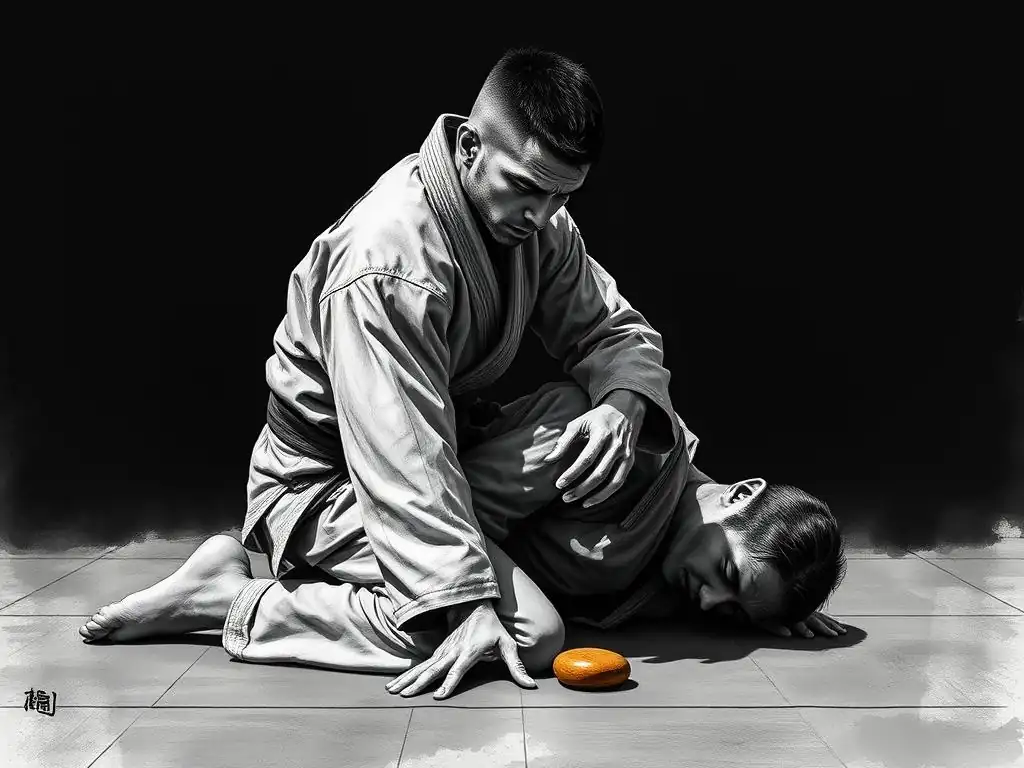
Securing the Kimura grip is only half the battle; the true art lies in the finishing mechanics. A quick and safe tap from the Kimura submission BJJ technique requires precise application of pressure, understanding the opponent's escape attempts, and knowing exactly how to leverage your body for the final turn. Rushing the finish or applying pressure incorrectly can allow the opponent to escape or, worse, cause unnecessary injury.
The final moments of applying the Kimura submission BJJ technique involve specific movements designed to rotate the opponent's captured arm further behind their back, maximizing the stress on the shoulder joint. This is typically achieved by adjusting your body position, pulling the opponent's wrist towards your body, and rotating their elbow upwards or towards their head, depending on the position. Attention to these details ensures an efficient and controlled finish.
Securing the Kimura Grip to Prevent Escapes and Counters
Once the figure-four grip is established for the Kimura submission BJJ technique, the immediate priority is to secure it against the opponent's initial escape attempts. The most common defense is for the opponent to straighten their arm or grab their own gi/belt/leg with their free hand to prevent their trapped arm from being pulled behind their back. To counter this, maintaining a tight grip with your hands is essential – imagine your hands are glued together.
Beyond the hand grip, using your body to control the opponent's posture and prevent them from creating space is vital. For instance, from side control, keeping your chest heavy on their upper body limits their ability to sit up or turn into you. From the guard, using your legs to control their hips or posture prevents them from posturing up and breaking the grip. Driving your shoulder or chest into the opponent can also help pin their arm or limit their movement, solidifying the control necessary for the Kimura submission BJJ technique.
Step-by-Step Breakdown of the Final Lock Application for a Fast Tap
Finishing the Kimura submission BJJ technique efficiently involves a sequence of coordinated movements that maximize pressure on the shoulder. Assuming you have a solid figure-four grip and good positional control, the final steps typically involve:
- Pulling the wrist: Pull the opponent's captured wrist towards your chest or hip, depending on the angle. This helps to bend their arm and bring their hand closer to their back.
- Lifting the elbow: While pulling the wrist, simultaneously lift the opponent's elbow upwards or towards their head. This is the key movement that causes the external rotation and abduction at the shoulder. The trajectory of the elbow lift depends heavily on the position (e.g., upwards from side control, towards the head from guard).
- Applying body pressure/rotation: Use your body to amplify the pressure. This could involve arching your back slightly, rotating your hips, or driving your shoulder into the opponent's chest or side. The goal is to use your core strength and weight to increase the torque on their shoulder.
- From Side Control Kimura: Pull the wrist towards your hip, lift the elbow towards their head, and drive your chest down onto them.
- From Guard Kimura: Pull the wrist towards your chest, lift the elbow upwards, and use your legs to control their posture while potentially bridging your hips slightly.
This combined action of pulling the wrist, lifting the elbow, and using body leverage quickly stresses the shoulder joint, leading to a tap.
Common Mistakes to Avoid When Applying the Kimura Submission in BJJ
Several common errors can prevent the successful application of the Kimura submission BJJ technique or allow the opponent to escape. Recognizing and correcting these mistakes is crucial for improving your finishing rate.
- Loose Grip: Not securing a tight figure-four grip allows the opponent to pull their arm free or straighten it.
- Lack of Control: Failing to control the opponent's body (posture, hips) means they can create space or turn away from the pressure. From side control, for example, not keeping your chest heavy can allow them to escape.
- Using Only Arm Strength: Relying solely on arm strength to apply the lock is inefficient and tiring. The power comes from body leverage and rotation.
- Wrong Angle of Pressure: Applying pressure in the wrong direction (e.g., pulling straight back instead of rotating and lifting the elbow) will not effectively target the shoulder joint.
- Rushing the Finish: Attempting to finish too quickly without securing the position and grip can lead to losing the lock entirely.
- Ignoring the Opponent's Defenses: Not recognizing when the opponent is straightening their arm or grabbing their leg means you won't adapt your strategy to counter their defense.
Avoiding these pitfalls through focused drilling and mindful application of the Kimura submission BJJ technique will significantly improve your success rate.
Variations and Setups to Enhance Kimura Submission Success
The versatility of the Kimura submission BJJ technique is one of its greatest strengths. It can be initiated from almost any position in grappling, and mastering various setups and entries makes it a constant threat to your opponent. Understanding how to transition into the Kimura from dominant positions or use it as an offensive weapon from less dominant ones is key to integrating it effectively into your game.
Beyond direct entries, the Kimura grip itself is a powerful control tool that can lead to numerous other techniques. Threatening the Kimura can open opportunities for sweeps, passes, and transitions to other submissions like the armbar or triangle choke. This interconnectedness makes the Kimura submission BJJ technique a central hub in many BJJ arsenals.
From Guard: Executing the Kimura Submission BJJ Technique
Applying the Kimura submission BJJ technique from the guard is a highly effective strategy, particularly from closed guard or half guard. From closed guard, a common setup involves controlling one of the opponent's arms, often during a posture battle or when they reach in. By securing the opponent's wrist and then feeding your other arm through to establish the figure-four grip, you isolate their arm within the confines of your guard.
Once the grip is secured from closed guard, the finish involves controlling the opponent's posture with your legs, pulling the captured wrist towards your chest, and lifting their elbow upwards, often requiring you to slightly shift your hips to the side of the trapped arm. From half guard, the Kimura can be attacked from the bottom or top, frequently initiated when the opponent posts their arm on the mat or attempts to crossface. The key is to trap their arm and secure the grip while maintaining strong leg control to prevent them from escaping or improving position.
Kimura from Side Control and Mount Positions: Adjustments and Details
The Kimura submission BJJ technique is arguably most potent from dominant top positions like side control and mount. From side control, the setup often occurs when the opponent defends by framing with their arm or posting their hand on the mat. By securing the opponent's far arm (the one on the opposite side of your body relative to their head) with your near arm, you can then transition your other arm under their arm to establish the figure-four grip.
Finishing the Kimura from side control involves pinning the opponent's shoulder to the mat with your chest or shoulder pressure, pulling the captured wrist towards your hip, and rotating their elbow upwards towards their head. From the mount, the Kimura submission BJJ technique can be attacked when the opponent frames against you or attempts to escape. Securing the grip on either arm from mount provides immense control and leverage. The finish from mount often involves using your weight to flatten the opponent while rotating their arm upwards behind their head, applying powerful pressure directly down onto the shoulder joint.
Combining Kimura with Other Submissions and Transitions for Increased Effectiveness
The Kimura grip is not only a submission threat but also a powerful control position that can lead to a variety of other techniques. One of the most common transitions from the Kimura submission BJJ technique is to the armbar. If the opponent straightens their arm to defend the Kimura, you can often transition your grip to isolate their elbow, step over their head, and finish with a straight armbar. This "Kimura to armbar" sequence is a fundamental combination taught in BJJ.
Furthermore, the threat of the Kimura can be used to set up sweeps or positional advancements. For instance, from guard, attacking the Kimura often causes the opponent to base out or shift their weight, creating opportunities for sweep attempts like the balloon sweep or hip bump sweep. From side control, the Kimura grip can control the opponent while you transition to mount or back control. Using the Kimura submission BJJ technique as part of a chain attack, transitioning between submissions and positional control, significantly increases its effectiveness and makes you a more unpredictable grappler.
Training Tips to Improve Your Kimura Submission Execution
Consistent and focused training is essential for mastering the Kimura submission BJJ technique. Simply knowing the steps isn't enough; you need to develop the feel, timing, and precision required to apply it effectively against resisting opponents. Incorporating specific drills, seeking detailed feedback, and ensuring your body is prepared are all crucial elements of improving your Kimura execution.
Developing muscle memory for the grip, the proper angle of attack, and the finishing mechanics through repetition is key. Furthermore, understanding how your partner reacts to the technique allows you to refine your application and learn to adjust based on different body types and defensive strategies. Training the Kimura submission BJJ technique involves both technical repetition and dynamic application.
Drills and Repetition Strategies Focused on the Kimura Lock
Drilling the Kimura submission BJJ technique involves breaking it down into its core components and practicing them repeatedly. A basic drill involves starting from a controlled position, such as side control or closed guard, and practicing securing the figure-four grip quickly and efficiently. This can be done with a compliant partner simply allowing you to get the grip.
More advanced drills involve practicing the full sequence against light resistance. For example, from side control, your partner might offer slight resistance as you secure the grip and attempt the finish, allowing you to feel the correct angles and pressure points. Positional sparring focused specifically on achieving and finishing the Kimura from a particular position (like half guard or mount) is also highly effective. Aim for a minimum of 10-15 repetitions from each position during a dedicated drilling session to build muscle memory for the Kimura submission BJJ technique.
Partner Feedback and Sensitivity Training for Refining Kimura Finishes
Receiving and providing feedback from your training partners is invaluable for refining your Kimura submission BJJ technique. When practicing, your partner can tell you exactly where they feel the pressure, where they feel they can escape, or if the grip is loose. This immediate feedback helps you understand if you are applying the lock correctly and targeting the shoulder effectively.
Sensitivity training involves practicing the Kimura submission BJJ technique with varying levels of resistance, focusing on feeling your partner's reactions and adjusting your pressure accordingly. Learning to feel when the opponent is about to tap allows you to apply just enough pressure for a quick, safe finish without unnecessary force. This sensitivity is crucial for preventing injuries and becoming a more controlled practitioner of the Kimura submission BJJ technique.
Conditioning and Flexibility Exercises to Support Joint Lock Application
While the Kimura submission BJJ technique relies on leverage, having a degree of physical conditioning and flexibility can support its effective application. Grip strength is important for maintaining the figure-four lock, so exercises like deadlifts, pull-ups, and grip trainers can be beneficial. Core strength is also vital for maintaining positional control and applying body leverage during the finish.
Flexibility in your own shoulders, wrists, and hips can help you get into better positions to apply the lock and maintain control. For example, good shoulder mobility can allow you to reach further to secure the grip, and hip flexibility can help you adjust your angle from guard or side control. While not strictly necessary for every application, improving these physical attributes can enhance your ability to execute the Kimura submission BJJ technique efficiently and safely.
Defensive Strategies Against the Kimura: Understanding Counters and Escapes
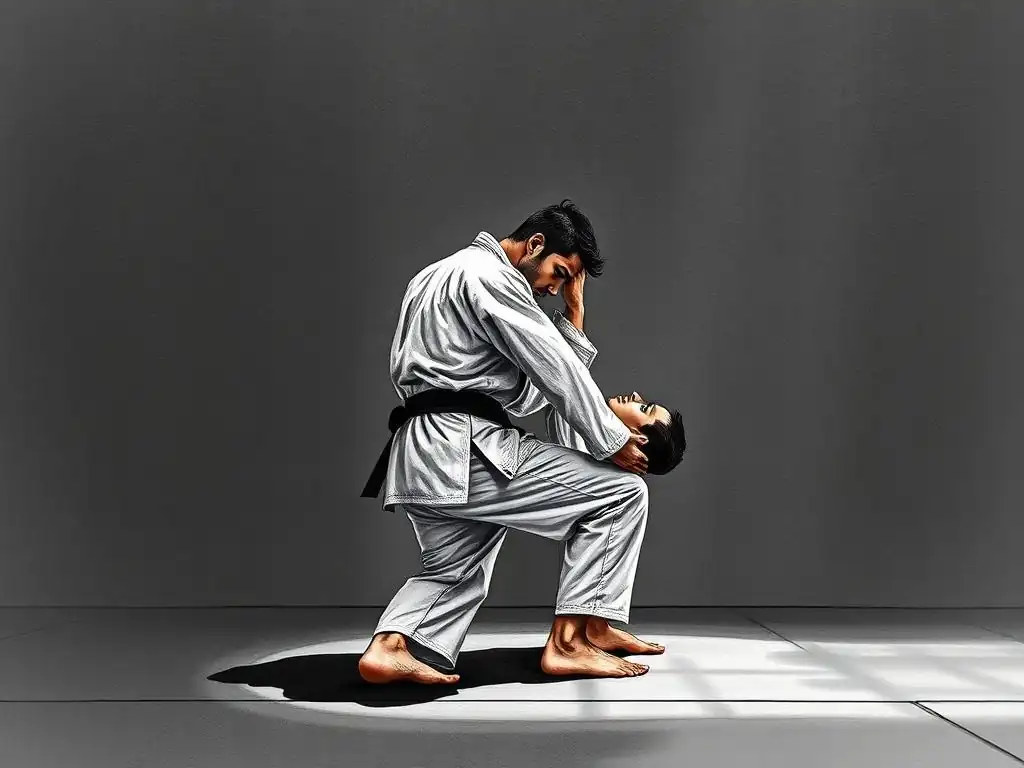
Just as important as learning to apply the Kimura submission BJJ technique is learning how to defend against it. Recognizing the setup early and understanding the common escape routes are crucial skills for survival on the mats. Effective defense involves preventing the opponent from securing a solid grip and, if the grip is secured, executing timely and strategic escapes.
Defending the Kimura often involves disrupting the opponent's grip, straightening the arm to prevent the necessary angle, or using body movement to create space and relieve the pressure. Understanding the opponent's intent and reacting quickly are key to neutralizing the threat of the Kimura submission BJJ technique.
Recognizing and Preventing Kimura Setups from Opponents
Preventing the Kimura submission BJJ technique begins with recognizing the opponent's typical entry points. Be aware when your arm is isolated, particularly in positions like side control, mount, or when you are framing in the guard. If an opponent starts reaching for your wrist or trying to secure your arm behind your back, you should immediately be on high alert.
Early prevention involves keeping your arms tight to your body, avoiding posting your hands on the mat where they can be easily attacked, and maintaining good posture to prevent the opponent from isolating your limbs. If an opponent begins to secure the grip, fight their hands immediately. Use your free hand to peel away their fingers or prevent them from connecting their figure-four grip. Straightening your arm can also temporarily alleviate the pressure and make it harder for them to establish the leverage needed for the Kimura submission BJJ technique.
Effective Escapes and Counterattacks to Neutralize the Kimura Threat
If an opponent has secured the figure-four grip for the Kimura submission BJJ technique, escaping requires a combination of grip fighting, body movement, and strategic timing. One of the primary escape strategies is to straighten your trapped arm as much as possible. This prevents the necessary angle for the shoulder lock and makes it harder for the opponent to apply torque.
Another common escape involves "hiding" your trapped hand by bringing it towards your body, often towards your hip or even under your own body. This makes it difficult for the opponent to pull your wrist towards them and apply the finishing pressure. If the opponent is on top, bridging your hips and creating space can help.
Sometimes, rolling towards the direction of the trapped arm can relieve pressure and offer an escape route, although this can be risky. Successfully defending the Kimura submission BJJ technique often opens opportunities for counterattacks, such as sweeps or even transitioning to your own submission attempts.
Integrating the Kimura Submission into Your Overall BJJ Game Plan
Mastering the Kimura submission BJJ technique is not just about knowing how to apply the lock; it's about understanding its strategic value within the broader context of a BJJ match. The Kimura can be used not only as a direct submission but also as a powerful tool for control, positional advancement, and setting up other attacks. Developing a game plan that incorporates the Kimura submission BJJ technique makes you a more well-rounded and dangerous grappler.
Whether in training or competition, the ability to threaten the Kimura can dictate the opponent's reactions and open up opportunities you might not otherwise have. Its versatility from different positions means you can look for it throughout a match, regardless of where you are relative to your opponent.
Tactical Use of the Kimura Lock in Competition Scenarios
In BJJ competition, the Kimura submission BJJ technique is a high-percentage attack from many common positions, particularly side control, mount, and half guard. Competitors frequently use the Kimura threat to force reactions from their opponents. For example, attacking the Kimura from side control might cause the opponent to turn towards you, giving you an opportunity to take their back.
The control offered by the Kimura grip is also tactically valuable. Even if you don't finish the submission, maintaining the Kimura grip from a top position can help you maintain control, run the clock, or transition to a more dominant position like mount or back control, scoring points in the process. Experienced competitors use the Kimura submission BJJ technique not just for the tap, but as a strategic tool to control the flow of the match and create scoring opportunities.
Psychological and Strategic Advantages of Mastering the Kimura Submission
Developing a reputation for having a dangerous Kimura submission BJJ technique offers significant psychological advantages. Opponents who know you are proficient with the Kimura will be constantly wary of their arms being isolated, which can make them hesitant in certain positions or force them to adopt defensive postures that you can exploit.
Strategically, the threat of the Kimura can open up other avenues of attack. If an opponent is solely focused on defending their arm from the Kimura, they might neglect other defenses, making them vulnerable to armbars, chokes, or sweeps. Mastering the Kimura submission BJJ technique allows you to use it as leverage, forcing your opponent to make difficult choices and creating openings for your other techniques. It becomes a cornerstone of your offensive strategy, influencing the entire dynamic of the match.
Conclusion: Mastering the Kimura Submission BJJ Technique for Efficient Finishes.
Mastering the Kimura submission BJJ technique is a valuable pursuit for any BJJ practitioner. From its historical significance rooted in the legendary Masahiko Kimura's victory over Hélio Gracie to its modern-day application as a versatile and powerful joint lock, the Kimura remains a fundamental technique. Understanding its mechanics, practicing precise grip and body positioning, and dedicating time to drilling its application from various positions are all crucial steps towards proficiency.
The ability to secure the figure-four grip and apply the finishing pressure with leverage, rather than just strength, is the hallmark of an effective Kimura. Recognizing and avoiding common mistakes, exploring its numerous variations and setups, and understanding how to defend against it contribute to a comprehensive understanding. By integrating the Kimura submission BJJ technique into your overall game plan, using it tactically in training and competition, you gain both a high-percentage submission option and a powerful strategic tool that can enhance your control and open up opportunities throughout a match, leading to more efficient and frequent finishes.
Frequently Asked Questions
What is the Kimura submission in Brazilian Jiu-Jitsu (BJJ)?
The Kimura is a shoulder lock submission in BJJ that involves trapping an opponent's arm and applying pressure by rotating their wrist and shoulder joint. It's named after Masahiko Kimura, who famously used it in a match against Helio Gracie. It is a powerful submission that can force a quick tap.
What are the key details for successfully finishing a Kimura submission?
The key details include securing a strong grip, controlling the opponent's posture, and using your body weight to amplify the pressure on their shoulder. Proper leverage and understanding the opponent's likely escape routes are also crucial.
From what positions can the Kimura submission be applied in BJJ?
The Kimura can be applied from various positions, including side control, mount, guard, and even standing. It is a versatile submission that can be adapted to different grappling scenarios.
What are some common defenses against the Kimura submission, and how can you counter them?
Common defenses include framing, creating space, and attempting to roll out of the submission. You can counter these by maintaining a tight grip, adjusting your angle, and anticipating their movements to prevent escapes.
Why is understanding the history of the Kimura important for BJJ practitioners?
Understanding the Kimura's history, particularly its association with Masahiko Kimura's legacy, provides context and respect for the technique. Knowing its roots can inform your approach and deepen your understanding of its effectiveness.
Final Reflection: Mastering the Art of Submission
The journey through the intricacies of the Kimura submission, as explored in this article, reveals more than just a grappling technique; it unveils a pathway to understanding leverage, control, and the profound respect for one's training partner. In today's fast-paced world of Brazilian Jiu-Jitsu, where flashy techniques often overshadow fundamental principles, revisiting and refining the Kimura serves as a crucial reminder of the power of precision and dedication to the basics.
The Kimura's enduring presence in BJJ underscores its timeless effectiveness and adaptability. My own experience with the Kimura has taught me the importance of patience and attention to detail, transforming it from a simple submission into a powerful tool for both offense and defense. The art of Jiu-Jitsu is to control the opponent, not to overpower him.
- Carlos Gracie. This quote perfectly encapsulates the spirit of the Kimura, emphasizing the strategic application of technique over brute strength.
Now, as you step back onto the mats, armed with a deeper understanding of the Kimura's nuances, I encourage you to reflect on the principles discussed. Embrace the challenge of refining your technique, not just for the sake of a quicker tap, but for the pursuit of mastery. Let the Kimura be a reminder that true progress lies not in the accumulation of techniques, but in the relentless pursuit of perfection in the fundamentals.
Ignite Your Kimura Game: Tap Out Faster!
Thanks for diving into the details of the Kimura! We hope you've gained some valuable insights that will sharpen your submissions. Now, let's put that knowledge into action!
- Drill, Drill, Drill: Dedicate your next BJJ session to perfecting the Kimura technique, focusing on the grip and finishing mechanics we covered. Feel the difference!
- Share this article with your training partners to elevate everyone's Kimura game. A rising tide lifts all boats!
- Try using the details from this article in a sparring session and reflect on how it changed your success.
What unexpected detail from this article will you immediately integrate into your Kimura strategy?