
The 42 Combined Competition Form: A Melting Pot of Tai Chi Styles Analyzed

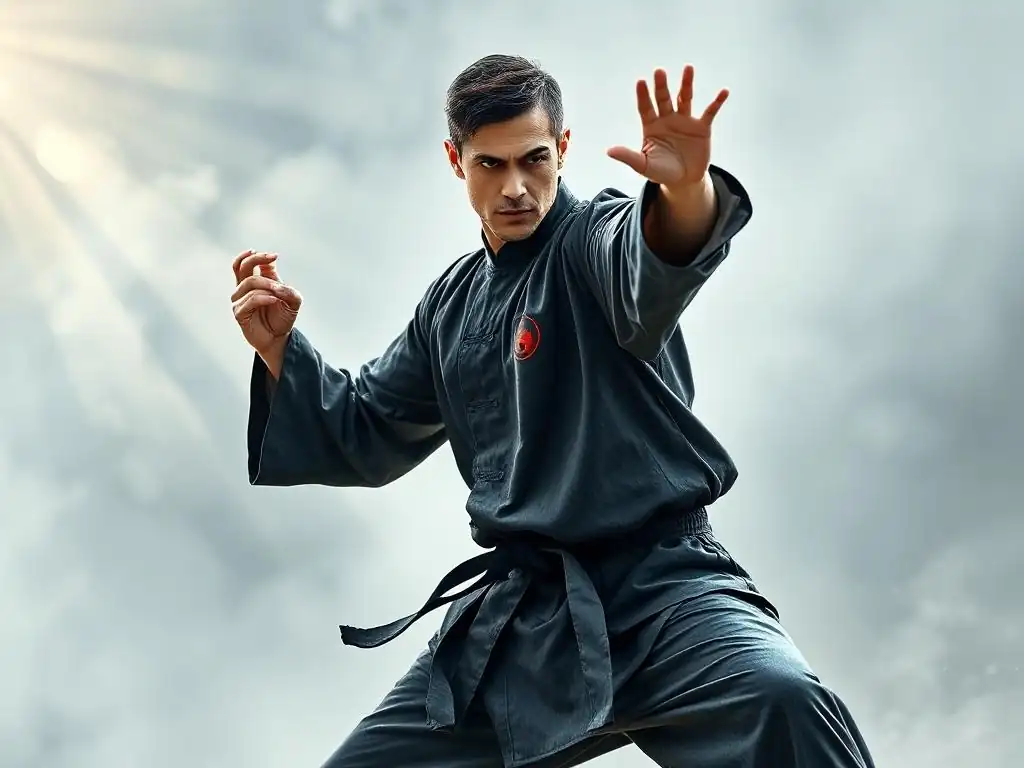
Welcome to Martial Arts Mastery, your ultimate resource for exploring the fascinating world of combat disciplines! Ever wondered how different Tai Chi styles blend together to create a single, powerful form? Dive in and unlock the secrets behind The 42 Combined Competition Form, a stunning synthesis of techniques analyzed in detail. Discover its origins, movements, and strategic applications – and prepare to deepen your understanding of this captivating martial art.
- The 42 Combined Competition Form: A Synthesis of Tai Chi Styles
- Introduction to the 42 Form: A Modern Tai Chi Synthesis
- Deconstructing the 42 Form: A Breakdown of Movements and Styles
- Analyzing the Key Principles of the 42 Combined Taijiquan Form
- The Benefits of Practicing the 42 Combined Tai Chi Form
- Comparing the 42 Form to Traditional Tai Chi Styles
- Mastering the 42 Combined Competition Form: Training Tips and Considerations
- Conclusion: The Enduring Legacy of the 42 Combined Form in Tai Chi Chuan
- Frequently Asked Questions
- Final Reflection: Harmonizing Movement, Embracing Evolution
- Unleash Your Inner Tai Chi Master!
The 42 Combined Competition Form: A Synthesis of Tai Chi Styles
Introduction to the 42 Form: A Modern Tai Chi Synthesis
Defining the 42 Form: Origins and Purpose in Competitive Tai Chi
The 42 Combined Competition Form, often simply referred to as the 42 Form or the International Competition Form, is a standardized Tai Chi sequence developed in the late 1980s by the Chinese Wushu Association. Its creation was a significant step in standardizing Tai Chi Chuan practice for competitive purposes, particularly within the framework of Wushu (Chinese martial arts).
The goal was to synthesize key movements and principles from the four major traditional Tai Chi styles – Yang, Chen, Wu, and Sun – into a single, comprehensive routine suitable for international competition. This approach aimed to provide a common ground for judging and comparison among practitioners from diverse backgrounds.
Prior to the 42 Form, competitive Tai Chi often involved practitioners performing routines from their specific family styles, making objective scoring challenging due to variations in interpretation and technique. The 42 Combined Competition Form provided a unified standard, comprising 42 distinct movements sequenced to demonstrate a wide range of Tai Chi techniques, including stances, footwork, hand forms, and body mechanics. Its purpose was explicitly educational and competitive, designed to showcase technical proficiency, fluidity, balance, and internal principles in a structured format, thereby promoting Tai Chi as a sport and a cultural art form on a global scale.
The Role of the 42 Form in Promoting Wushu and Taijiquan Globally
The introduction of the 42 Combined Competition Form played a pivotal role in elevating Tai Chi Chuan's status within the international Wushu community and beyond. As a standardized routine, it became a staple in Wushu competitions, including national championships and major international events like the World Wushu Championships and regional games. This standardization facilitated fairer judging and made the sport more accessible and understandable to a global audience, contributing significantly to Tai Chi's inclusion in various multi-sport events.
Furthermore, the 42 Form served as an accessible entry point for many newcomers to Tai Chi, offering a structured curriculum that incorporates foundational elements from multiple styles. This accessibility, coupled with its prominence in competition, helped to popularize Tai Chi practice worldwide. Training centers and instructors globally adopted the 42 Combined Tai Chi Form as part of their curriculum, allowing students to learn a routine recognized internationally and providing a common language for practitioners across different countries. Its widespread adoption solidified its position as a key component in the modern evolution and global spread of Tai Chi Chuan.
Deconstructing the 42 Form: A Breakdown of Movements and Styles
Yang Style Influence in the 42 Tai Chi Form
The Yang style is arguably the most represented style in the 42 Combined Competition Form, reflecting its widespread popularity and relatively gentle, expansive movements. Approximately 50-60% of the movements in the 42 Form draw heavily from the Yang style, particularly from the widely practiced 24 Simplified Form and elements of the Traditional Yang Long Form. Characteristics such as large, open postures, even tempo, and a focus on smooth, continuous transitions are hallmarks of the Yang influence visible throughout the routine.
Specific Yang style movements that are clearly incorporated include "White Crane Spreads Wings," "Brush Knee and Twist Step," "Repulse Monkey," "Grasp Sparrow's Tail" (in its various sections like Ward Off, Rollback, Press, and Push), and "Cloud Hands." These movements are performed with the characteristic upright posture, relaxed shoulders and elbows, and emphasis on moving from the waist, all central tenets of Yang family Tai Chi. The accessibility and flowing nature of these movements make the Yang component a foundational layer within the combined competition routine.
Chen Style Elements Integrated into the 42 Sequence
While the Yang style provides the overall framework and flow for much of the 42 Combined Competition Form, the Chen style contributes dynamic and powerful elements, adding complexity and martial flavor. Chen style, the oldest of the major Tai Chi styles, is known for its spiraling movements (Chan Si Jing or silk reeling energy), alternating slow and fast movements, and occasional bursts of power (Fa Jing). These characteristics are deliberately woven into the 42 Form, albeit in a modified or less pronounced manner than in traditional Chen routines.
Movements like "Cover Hands and Punch," "Diagonal Flying," and specific applications of "Wave Hands Like Clouds" show clear Chen influence through their emphasis on rotational power and integrated body movement. The inclusion of Fa Jing in certain sections, such as the end of "Step Forward and Punch," is a direct nod to Chen style's dynamic power emission. While the overall pace of the 42 Form is more consistent than traditional Chen forms, these integrated elements provide moments of controlled power and demonstrate the martial roots of Tai Chi, distinguishing the 42 combined competition form from purely health-focused routines.
Wu Style Contributions to the 42 Combined Form
The Wu style, distinct for its slightly leaning posture, compact movements, and emphasis on subtle internal adjustments, also contributes unique characteristics to the 42 Combined Competition Form. Wu style movements are often characterized by smaller circles and a focus on redirecting force with minimal visible effort. The leaning posture is not present in the 42 Form's execution, which emphasizes an upright central equilibrium, but the principles of compactness and internal refinement are subtly integrated.
Elements such as the precise footwork and subtle weight shifts in movements like "Single Whip" or the detailed hand manipulations in sections of "Grasp Sparrow's Tail" demonstrate Wu style's influence. The emphasis on leading the movement with the intention (Yi) and coordinating the breath with the physical action, central to Wu style, is also crucial for mastering the 42 combined Tai Chi form. While perhaps less overtly visible than Yang or Chen influences, the Wu style's contribution lies in the refinement of transitions and the internal mechanics required for smooth and efficient movement.
Sun Style Characteristics Present in the 42 Competition Routine
The Sun style, founded by Sun Lu Tang, is known for its agile footwork, particularly the "open-close steps," and its incorporation of principles from Xing Yi Quan and Ba Gua Zhang, including the unique "follow step" (active stepping where the rear foot follows the front foot closely). These dynamic footwork patterns and integrated internal arts principles are key contributions of the Sun style to the 42 Combined Competition Form.
Movements like "Opening and Closing Hands" (from which the style derives part of its name) and the agile, continuous stepping patterns used in transitions or sequences like "Advance, Parry, and Punch" showcase Sun style's influence. The emphasis on fluidity, responsiveness, and the integration of internal power generation through coordinated body movement and unique stepping methods adds another layer of complexity and martial practicality to the 42 Form. The Sun style elements provide moments of quicker, more intricate transitions and footwork compared to the predominantly smooth flow derived from the Yang style.
Analyzing the Key Principles of the 42 Combined Taijiquan Form
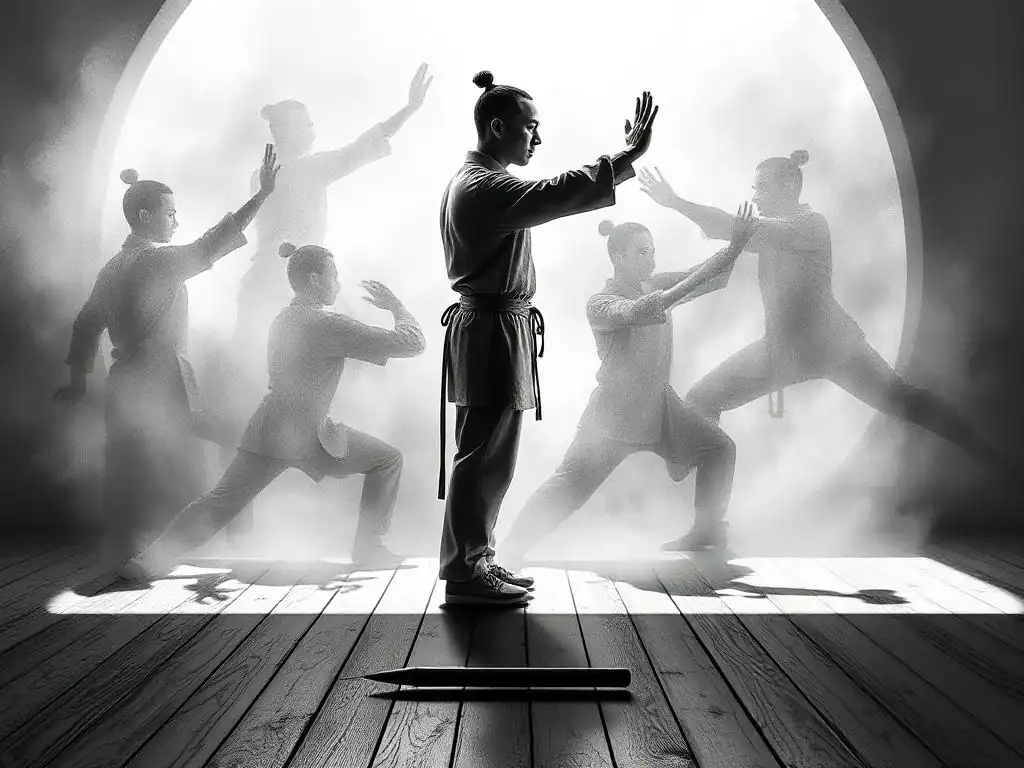
Stance Work and Footwork in the 42 Form: Stability and Agility
Effective stance work and precise footwork are fundamental to the successful execution of the 42 Combined Competition Form. The routine incorporates a variety of stances, including the Bow Stance (Gong Bu), Empty Stance (Xu Bu), Horse Stance (Ma Bu), and Cross Stance (Jiao Bu), each requiring specific weight distribution and structural alignment. Stability is paramount; practitioners must maintain a rooted base while transitioning between stances, ensuring that the body's center of gravity is controlled and balanced throughout the sequence. This stability allows for the generation of power and enables smooth, controlled movements.
Footwork in the 42 Form is equally crucial, demanding both agility and precision. Steps must be light yet grounded, with the weight transferring smoothly and deliberately. Techniques like the "cat step" (walking heel-to-toe with weight shifting gradually) are used to maintain balance during transitions. The Sun style's influence introduces more dynamic footwork patterns like the "follow step," requiring coordination between advancing and trailing legs. Mastering the intricate interplay between stable stances and agile footwork is essential for fluidity, balance, and expressing the internal principles of the 42 combined Tai Chi form.
Hand Techniques and Coordination in the 42 Tai Chi Routine
The 42 Combined Tai Chi Form features a diverse repertoire of hand techniques drawn from the contributing styles, including pushes, presses, rolls, deflections, strikes, and joint locks. These techniques are performed with specific hand shapes (like the palm, fist, hook hand) and require precise coordination with the body's movement and weight shifts. For instance, in "Push," the hands extend forward as the weight shifts into the front leg in a bow stance, demonstrating coordinated action.
Coordination extends beyond just matching hand movements with footwork; it involves the entire body moving as a single, integrated unit. The hands lead or follow the movement initiated from the waist and legs, ensuring that force is generated from the ground up and channeled effectively.
Principles like "separating empty and full" (distinguishing weight-bearing from empty limbs) are vital for executing hand techniques with power and control. The variety of hand techniques, from the expansive movements of Yang to the spiraling actions influenced by Chen, demands a high level of coordination to maintain fluidity and coherence throughout the 42 combined competition form.
The Importance of Body Mechanics and Posture in Executing the 42 Form
Correct body mechanics and posture are foundational to the internal principles and effective execution of the 42 Combined Competition Form. Maintaining an upright yet relaxed posture, with the head suspended as if pulled by a string from above (Baihui point), ensures that the spine is aligned, allowing Qi (vital energy) and blood to flow freely. The shoulders should be relaxed and sunk, elbows dropped, and the chest slightly hollowed (Han Xiong) while the back is rounded (Ba Bei). The waist is considered the primary engine of movement, initiating rotations and driving the limbs.
Proper body mechanics involve the coordinated movement of the entire structure. As one part moves, all parts respond; there are no isolated movements. The concept of "song" (relaxed looseness) is critical, enabling smooth transitions and the potential for explosive power (Fa Jing). The integration of hip rotation with torso and limb movement is essential for generating unified force. Adhering to these principles of body mechanics and maintaining correct posture not only enhances the aesthetic appeal of the 42 form but also unlocks its health benefits and martial efficacy.
Fa Jing (Emitting Power) Applications Within the 42 Combined Sequence
Fa Jing, the emission of explosive power, is a key characteristic of certain Tai Chi styles, most notably Chen, and its inclusion in the 42 Combined Competition Form adds a dynamic dimension. While the majority of the form is performed slowly and smoothly, specific movements culminate in a sudden, focused burst of power. These moments of Fa Jing are not merely external muscular contractions but are generated internally through the coordinated release of energy cultivated through relaxation, rootedness, and spiraling movement.
Examples of movements where Fa Jing is typically applied in the 42 Form include the final punch in "Step Forward, Deflect, Parry, and Punch" and potentially in certain applications within "Diagonal Flying" or "Cover Hands and Punch." The preparation for Fa Jing involves gathering power through winding or coiling movements, followed by a sudden, unified release coordinated with a sharp exhalation and grounded stance. Executing Fa Jing correctly within the 42 combined competition form requires a deep understanding of internal mechanics and adds a layer of martial intent to the performance.
The Benefits of Practicing the 42 Combined Tai Chi Form
Physical Health Benefits: Improved Balance, Flexibility, and Strength
Regular practice of the 42 Combined Competition Form offers a wide array of physical health benefits. The slow, deliberate movements and low stances significantly improve balance and proprioception, reducing the risk of falls, especially in older adults. Studies have shown that Tai Chi practice can improve balance scores by 15-20% in consistent practitioners over several months. The large range of motion used in the routine enhances flexibility in the joints and muscles, particularly around the hips, knees, and shoulders.
Furthermore, holding the various stances and executing the controlled movements builds isometric and dynamic strength throughout the body, notably in the legs, core, and back. The continuous, flowing nature of the form promotes cardiovascular health and improves circulation without the high impact associated with many other forms of exercise. The weight-bearing nature of the stances also contributes positively to bone density. Practicing the 42 combined Tai Chi form is a holistic exercise that simultaneously addresses strength, flexibility, balance, and cardiovascular well-being.
Mental and Cognitive Benefits: Focus, Concentration, and Mindfulness
Beyond the physical advantages, practicing the 42 Combined Tai Chi Form cultivates significant mental and cognitive benefits. Learning and remembering the sequence of 42 movements requires focus and concentration, improving memory and cognitive function over time. The practice demands present-moment awareness, fostering mindfulness as practitioners pay close attention to their body's posture, weight distribution, and the flow of movement and breath.
The meditative aspect of Tai Chi practice, inherent in the slow, rhythmic performance of the 42 Form, helps to calm the nervous system, reduce stress, and alleviate anxiety. The deliberate coordination of breath with movement promotes relaxation and mental clarity. Regular engagement with the 42 combined competition form provides a moving meditation that enhances mental resilience, improves concentration span, and fosters a sense of calm and well-being, contributing to overall mental health.
Self-Defense Applications and Martial Value of the 42 Form
Although often practiced for health or competition, the 42 Combined Tai Chi Form contains movements rooted in self-defense applications, reflecting Tai Chi's origins as a martial art. Each movement, from "Ward Off" to "Punch," has practical applications for neutralizing threats, redirecting force, joint manipulation, and striking. While the form itself is performed slowly for cultivation and demonstration, understanding the martial intent behind each movement enhances its execution and deepens the practitioner's understanding.
For example, "Grasp Sparrow's Tail" embodies principles of yielding, neutralizing, adhering, and projecting force – fundamental concepts in self-defense. "Brush Knee and Twist Step" can be applied as a block and simultaneous strike or takedown. While dedicated self-defense training requires partner work and application drills, studying the 42 combined Tai Chi form provides a comprehensive vocabulary of movements and principles that underpin effective self-defense techniques, offering practical martial value to dedicated students.
Comparing the 42 Form to Traditional Tai Chi Styles
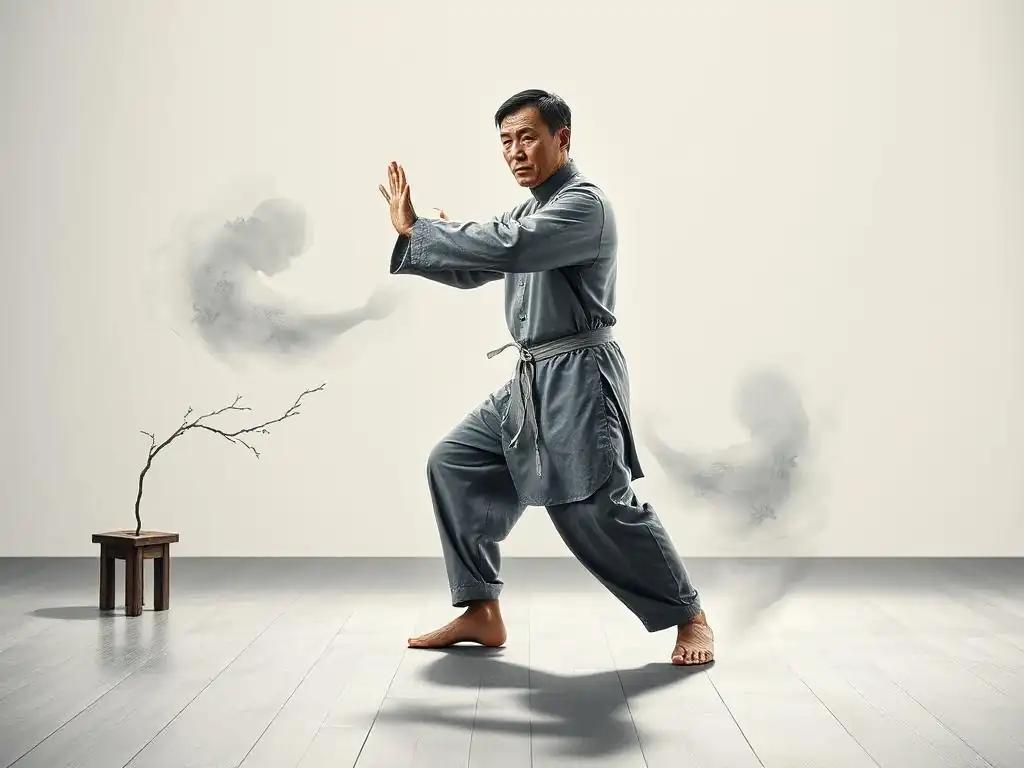
42 Form vs. 24 Form: A Comparison of Complexity and Scope
The 42 Combined Competition Form and the 24 Simplified Tai Chi Form are both standardized routines developed in China, but they differ significantly in complexity and scope. The 24 Form, created in 1956, was the first standardized routine and is much simpler, containing just 24 movements primarily drawn from the Yang style. It was designed as a basic exercise routine for promoting public health and is relatively easy to learn, making it widely accessible and popular globally.
In contrast, the 42 Form, developed later, is more complex, featuring 42 movements that integrate elements from Yang, Chen, Wu, and Sun styles. It requires a higher level of skill, coordination, and understanding of diverse Tai Chi principles. While the 24 Form serves primarily as a health exercise and introduction, the 42 Combined Tai Chi Form is explicitly designed for competitive performance, demanding greater technical precision, internal expression, and physical prowess. It represents a more advanced and comprehensive synthesis compared to the foundational 24 Form.
Exploring the Differences Between the 42 Form and Chen Style Laojia
Comparing the 42 Combined Competition Form to Chen Style Laojia (Old Frame) highlights the differences between a modern, synthesized routine and a traditional, foundational family style. Chen Laojia Yi Lu (First Form) is a long, intricate sequence containing over 70 movements (depending on the lineage) that embodies the core principles of Chen Tai Chi, including prominent silk reeling, alternating slow and fast sections, and overt Fa Jing. Its structure and movements are deeply rooted in martial applications and traditional cultivation methods passed down through generations.
The 42 Form incorporates elements of Chen style, such as spiraling movements and Fa Jing, but it streamlines them and integrates them into a broader sequence dominated by Yang style's smooth flow. The pronounced dynamic changes, the emphasis on specific silk-reeling patterns unique to Chen, and the sheer length and depth of exploration found in Chen Laojia are not replicated in the 42 Form. The 42 Combined Tai Chi Form is a curated selection designed for competitive demonstration, whereas Chen Laojia is a complete system embodying the full spectrum of its style's techniques and internal work.
42 Form as a Bridge Between Traditional and Modern Tai Chi Practice
The 42 Combined Competition Form serves as a significant bridge between traditional Tai Chi styles and modern practice. For practitioners who begin with the 42 Form, it offers exposure to fundamental principles and representative movements from the four major styles (Yang, Chen, Wu, Sun). This broad introduction can pique their interest in exploring the depth and nuances of the individual traditional styles later.
Conversely, for practitioners rooted in traditional styles, learning the 42 Form provides a common framework for interacting with practitioners from other lineages and participating in standardized competitions. It encourages practitioners to refine their understanding of universal Tai Chi principles, such as rootedness, relaxation, and mind-body integration, within a different context. By synthesizing key elements, the 42 combined Tai Chi form facilitates cross-pollination of ideas and techniques, helping to preserve and evolve Tai Chi Chuan in the modern era while honoring its diverse traditional roots.
Mastering the 42 Combined Competition Form: Training Tips and Considerations
Training Drills for Balance and Stability in the 42 Form
Mastering the balance and stability required for the 42 Combined Competition Form necessitates specific training drills. Practicing holding fundamental stances like the Bow Stance and Empty Stance for extended periods, focusing on even weight distribution and sinking the weight (Chen Zhong), helps build leg strength and rootedness. Single-leg balance drills, such as standing on one leg with the other raised in front, to the side, or behind, and gradually increasing the hold time, directly improve the balance needed for transitions and specific movements like "Golden Rooster Stands on One Leg."
Another effective drill involves slow, deliberate weight transfers between stances without lifting the feet unnecessarily, emphasizing grounding and control. Walking along a straight line heel-to-toe (like the "cat step") enhances balance and coordination crucial for the intricate footwork in the 42 form. Incorporating mindful breathing during these drills further aids concentration and stability. Consistent practice of these targeted exercises significantly enhances the practitioner's ability to maintain equilibrium throughout the dynamic and varied movements of the 42 combined Tai Chi form.
[ ] Practice holding Bow Stance for 1 minute per leg.
[ ] Practice holding Empty Stance for 1 minute per leg.
[ ] Perform single-leg balance drill (Golden Rooster) for 30 seconds per leg.
[ ] Practice slow weight transfers between stances for 5 minutes.
[ ] Walk heel-to-toe along a line for 5 minutes.
Common Mistakes in Transition Movements and Corrections
Transition movements are often the most challenging aspects of the 42 Combined Competition Form, and common mistakes include jerky movements, loss of balance, improper weight distribution, and failure of the body to move as a unified unit. A frequent error is lifting the feet too high or too early during steps, which compromises stability and disconnects the lower body from the ground. Another mistake is moving the hands or upper body independently of the waist and legs, resulting in fragmented movements.
Corrections involve focusing on the principle that the waist leads the movement. Transitions should be initiated from the core, with the limbs following. Weight transfer must be smooth and complete before the next step is taken; the concept of "separating empty and full" is crucial here. Practicing transitions slowly and deliberately, perhaps isolating just the footwork and weight shift initially, can help. Filming oneself and reviewing the transitions can also reveal areas for improvement, ensuring the movements in the 42 combined Tai Chi form are continuous and fluid.
Strategies for Optimizing Performance in 42 Form Competitions
Optimizing performance in 42 Combined Competition Form requires dedicated practice focused on both technical precision and expressive quality. Judges evaluate various criteria, including posture, accuracy of movements according to the standard, fluidity of transitions, balance, power emission (Fa Jing), rhythm, and spirit (Shen). Therefore, training should encompass all these aspects. Practicing the form repeatedly to develop muscle memory and consistency is essential.
Beyond basic accuracy, focus on enhancing the internal aspects: ensure movements originate from the waist, maintain relaxation (Song) throughout, and coordinate breath with movement. Pay attention to the tempo and rhythm, varying speed appropriately where the style dictates (e.g., subtle acceleration before Fa Jing). Work on expressing the martial intent or underlying principle of each movement. Seeking feedback from experienced coaches or judges familiar with the 42 combined competition form standards can provide invaluable insights for refining technique and presentation for competitive success.
Conclusion: The Enduring Legacy of the 42 Combined Form in Tai Chi Chuan
The 42 Form's Contribution to the Evolution of Tai Chi
The 42 Combined Competition Form has made a significant contribution to the evolution of Tai Chi Chuan, particularly in its modern, global context. It successfully synthesized key elements from the major traditional styles into a single, accessible, yet challenging routine. This standardization facilitated the growth of Tai Chi as a competitive sport, bringing it to international platforms and increasing its visibility worldwide. It also provided a structured learning pathway for countless new practitioners, acting as a gateway to the deeper study of Tai Chi.
By blending the characteristics of Yang, Chen, Wu, and Sun styles, the 42 Form encouraged cross-pollination of techniques and principles among different lineages, fostering a broader understanding of Tai Chi Chuan as a unified art form despite its diverse branches. Its influence is seen in subsequent standardized routines and in the way Tai Chi is taught and practiced in many contemporary settings. The 42 combined competition form stands as a testament to the adaptability and enduring appeal of Tai Chi Chuan.
Future Directions and Continued Relevance of the 42 Combined Style
The 42 Combined Competition Form continues to hold significant relevance in the world of Tai Chi Chuan. It remains a primary form used in international Wushu competitions and is widely taught in schools and clubs globally. Its standardized nature ensures its continued use as a benchmark for technical proficiency and a tool for promoting Tai Chi across cultures. As Tai Chi continues to gain recognition for its health benefits and as a mind-body practice, the 42 Form provides a well-structured and recognized routine for practitioners of all levels.
While traditional styles will always be the source material and foundation of Tai Chi, the 42 Combined Tai Chi Form serves a distinct purpose in education, sport, and global dissemination. Its future relevance lies in its ability to introduce the art to new generations, provide a platform for international exchange and competition, and serve as a comprehensive exercise routine. The enduring legacy of the 42 Form is secure as a vital component of modern Tai Chi practice, bridging tradition and contemporary needs.
Frequently Asked Questions
What exactly is the 42 Combined Competition Form?
The 42 Form is a standardized Tai Chi routine created for competition. It combines elements from various traditional Tai Chi styles like Chen, Yang, Wu, and Sun.
Why was the 42 Form created in the first place?
It was developed to offer a unified and standardized form for judging in Tai Chi competitions. This allows for fairer comparisons of skill and technique.
Which Tai Chi styles contribute to the 42 Combined Competition Form?
The form primarily draws from the Chen, Yang, Wu, and Sun styles. Each style contributes specific movements and principles to the overall sequence.
Is the 42 Form beneficial for self-defense?
While not explicitly designed for self-defense, the 42 Form develops body awareness, balance, and coordination. These skills can be applicable to practical self-defense scenarios, but additional training is likely required.
How does learning the 42 Form help me understand other Tai Chi styles?
The 42 Form provides a broad overview of core Tai Chi principles and movements. Understanding it can offer a foundational base for exploring and understanding the unique characteristics of individual Tai Chi styles.
Final Reflection: Harmonizing Movement, Embracing Evolution
The analysis presented here highlights the dynamic nature of the 42 Combined Competition Form, demonstrating how it serves as a vibrant tapestry woven from diverse Tai Chi styles. This form, far from being a static entity, is a living testament to the ongoing evolution and adaptation within the Tai Chi community, reflecting a desire to both preserve tradition and embrace innovation for competitive purposes.
The influence of the 42 Form extends beyond the competition mat; it shapes how practitioners understand and experience Tai Chi globally. Personally, witnessing the dedication and artistry poured into each movement underscores the profound connection between mind, body, and spirit that Tai Chi cultivates. The art of Tai Chi lies not just in the execution of forms, but in the cultivation of inner peace and harmony.
This quote perfectly encapsulates the essence of what the 42 Form, and Tai Chi in general, strives to achieve.
Now, consider how you can apply the principles of harmony and adaptability, so evident in the 42 Combined Competition Form, to your own life. Embrace the fluidity of change, find balance amidst complexity, and strive to create your own unique expression of inner peace. Let the spirit of Tai Chi guide you towards a more centered and fulfilling existence.
Unleash Your Inner Tai Chi Master!
Thank you for exploring the fascinating world of the 42 Combined Competition Form with us! We hope this analysis has deepened your understanding and ignited your passion for Tai Chi. Now, it's time to take your practice to the next level.
- Master the foundational movements. Dedicate time each week to refine the key postures and transitions discussed in the article to unlock fluidity and power.
- Explore workshops or online classes that delve into the specific styles influencing the 42 Form, such as Chen, Yang, Wu, and Sun.
- Share your insights and experiences with fellow Tai Chi enthusiasts on the Martial Arts Mastery forum - what unique challenges or breakthroughs have you encountered in your journey with the 42 Form?