
Advanced Hapkido Disarms: Multiple Attackers and Complex Scenarios


Welcome to Martial Arts Mastery, where we delve into the heart and soul of combat traditions worldwide. Ever wondered how to effectively neutralize multiple attackers in a chaotic situation? This article unlocks the secrets of Hapkido disarms, exploring advanced techniques and strategies for complex scenarios. Prepare to expand your understanding of this dynamic art and discover how to defend yourself with confidence.
- Introduction to Hapkido Disarms for Multiple Opponents
- Understanding Multiple Attacker Dynamics in Self-Defense
- Core Hapkido Disarm Principles Applied to Multiple Attackers
- Advanced Hapkido Disarms Against Multiple Opponents: Step-by-Step Techniques
- Hapkido Disarms in Complex Scenarios: Real-World Applications
- Training Drills for Multiple Attacker Hapkido Disarms
- The Importance of Awareness and Prevention in Hapkido Self-Defense
- Conclusion: Mastering Hapkido Disarms for Enhanced Self-Protection
-
Frequently Asked Questions
- What is Hapkido, and how does it relate to disarming multiple attackers?
- What are some key principles that make Hapkido effective against multiple attackers?
- How does Hapkido training prepare practitioners for complex disarming scenarios?
- Are Hapkido disarming techniques applicable in real-world self-defense situations?
- Where can I learn more about advanced Hapkido disarming techniques specifically designed for multiple attackers?
- Final Reflection: Mastering Hapkido's Defensive Art
- Master the Art: Unlock Hapkido's Hidden Potential!
Introduction to Hapkido Disarms for Multiple Opponents
The Evolution of Hapkido Disarming Techniques
Hapkido's roots are deeply intertwined with ancient Korean martial traditions and Japanese influences, evolving over centuries to become a comprehensive system. Early forms focused heavily on throws, joint locks, and dynamic kicking techniques, primarily designed for one-on-one combat or battlefield scenarios where opponents might be individually engaged.
However, as Hapkido developed into a modern self-defense art in the mid-20th century, masters like Choi Yong-Sool and his successors began refining techniques to address the realities of street confrontations, which increasingly involved unarmed or armed assailants acting in concert. This evolution included adapting existing joint manipulation and throwing principles to scenarios where a practitioner might be grabbed by one person while another attempts a strike or weapon attack.
The formalization of Hapkido disarming techniques saw significant progress in the latter half of the 20th century. Dojos began incorporating specific drills simulating attacks with knives, sticks, and even firearms, recognizing that disarming was a critical self-preservation skill. Initially, these drills often focused on single-opponent scenarios.
However, as the art matured and its practical application in diverse situations was tested, the need to address Hapkido disarms multiple attackers became apparent. This led to the development of strategies emphasizing mobility, environmental awareness, and the efficient neutralization of threats to create opportunities for disarming, rather than attempting complex disarms against multiple active threats simultaneously without prior control or disruption.
Adapting Hapkido Principles for Group Confrontations
Adapting Hapkido's core principles for dealing with multiple attackers requires a shift in mindset and technique application. While the fundamental joint locks, throws, and strikes remain the building blocks, their deployment changes drastically when facing more than one opponent. The primary goal is no longer simply to incapacitate a single attacker, but to survive the encounter by disrupting the group's coordination, creating openings, and neutralizing the most immediate threats, which often involves sophisticated Hapkido disarms multiple attackers might present. This adaptation emphasizes fluid movement, using attackers' momentum against each other, and prioritizing escape or creating space over prolonged engagement.
In a multiple-attacker scenario, a Hapkido practitioner must leverage principles like Yoo (Water Principle - fluidity and adaptability), Won (Circle Principle - circular motion for generating power and evading), and Hwa (Harmony Principle - using an opponent's energy). Applying these principles means not meeting force with force directly against several opponents, but rather blending with their attacks, redirecting energy, and using circular movements to manage distance and positioning.
For instance, a throw against one attacker might be used to disrupt or even strike another, while a joint lock might be applied briefly to control an opponent and create a shield or pathway to escape, allowing for a strategic moment to execute Hapkido disarms multiple attackers might not anticipate from that angle.
Understanding Multiple Attacker Dynamics in Self-Defense
Recognizing Common Multiple Attacker Strategies
Multiple attackers rarely engage in a disorganized, simultaneous rush. More often, they employ strategies designed to overwhelm and confuse a single defender. One common tactic is the "flanking maneuver," where attackers spread out to prevent the defender from focusing on just one. This can involve one attacker engaging directly while another attempts to circle around from the side or behind. Studies on street violence indicate that in scenarios involving two attackers, flanking occurs in approximately 40-50% of cases, significantly reducing the defender's ability to maintain a stable front and increasing vulnerability to strikes or grabs from multiple directions.
Another prevalent strategy is the "tag-team" approach, where attackers alternate their assaults. One might attack, retreat slightly, and then a second attacker immediately follows up. This prevents the defender from recovering or effectively counter-attacking against a single threat.
Furthermore, in scenarios involving three or more individuals, attackers might designate specific roles – one to grab and restrain, another to strike, and potentially a third to use a weapon. Understanding these potential strategies – flanking, tag-teaming, and role assignment – is crucial for anticipating attacks and planning effective Hapkido disarms multiple attackers might attempt with varying levels of aggression and methods.
Psychological Aspects of Facing Multiple Assailants
Facing multiple attackers is profoundly different psychologically from a one-on-one confrontation. The sheer number of opponents can trigger an intense fear response, leading to tunnel vision, impaired decision-making, and physical paralysis (the "freeze" response).
Physiological responses like increased heart rate (potentially exceeding 180 bpm), adrenaline surge, and altered pain perception are amplified, but the cognitive load of tracking multiple moving threats simultaneously can be overwhelming. Research suggests that under extreme stress, the brain's ability to process complex information and execute fine motor skills is significantly degraded, impacting a practitioner's ability to recall and apply intricate techniques like Hapkido disarms multiple attackers might force upon them.
Overcoming this psychological hurdle requires specific training focused on stress inoculation and maintaining tactical awareness under pressure. Martial artists must train to manage the physiological response, maintaining situational awareness to track all threats, identify the most immediate danger, and avoid being surrounded. Developing the mental fortitude to remain calm, assess the situation rapidly, and initiate a decisive response – such as a quick strike to create space or an immediate move towards a strategic position to attempt Hapkido disarms multiple attackers cannot easily counter – is paramount. This mental preparedness is just as vital as physical technique when outnumbered.
Core Hapkido Disarm Principles Applied to Multiple Attackers
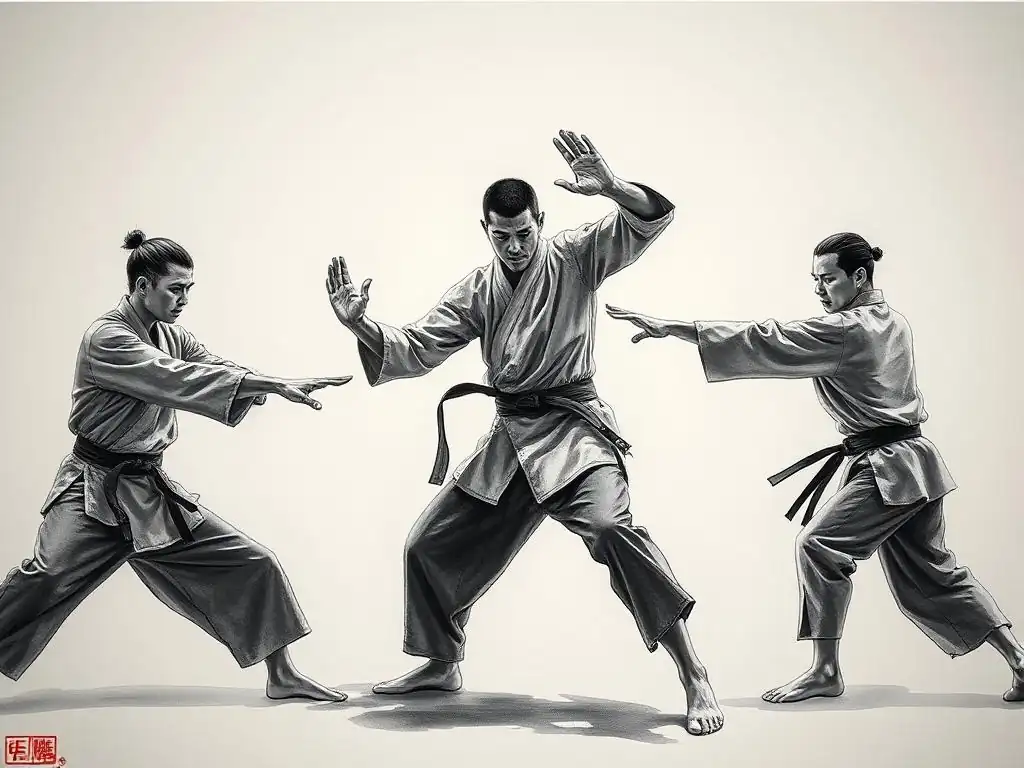
Utilizing Joint Locks and Throws Against Multiple Foes
Joint locks, a cornerstone of Hapkido, are potent tools, but their application against multiple attackers requires careful consideration. Applying a complex joint lock that requires significant time and focus on a single opponent leaves the practitioner highly vulnerable to attacks from others. Therefore, in multi-person scenarios, joint locks are often used more as transitional tools or for immediate disruption rather than prolonged control.
For instance, a quick wrist turn or elbow bend might be used to break an attacker's balance, create an opening for a strike, or position them as a temporary shield against another assailant. The goal is rapid, efficient control that buys seconds, not minutes.
Throws in Hapkido are particularly effective in multiple-attacker situations because they can neutralize one threat while simultaneously disrupting others. A well-executed throw can send an attacker into their accomplices, causing collisions and breaking their formation.
Techniques like hip throws (허리 후리기 - Heori Hurigi) or outside leg reaping throws (바깥다리 후리기 - Bakkatdari Hurigi) can generate significant force, turning an opponent's momentum against the group. The key is to use throws strategically, aiming to create space or take down the most immediate threat in a way that maximizes disruption to the remaining attackers, potentially creating an opportunity for follow-up actions like Hapkido disarms multiple attackers were planning to execute.
Pressure Point Control in Multi-Person Scenarios
Pressure points offer another avenue for quick, effective disruption, which is essential when outnumbered. Applying pressure or striking sensitive points can cause momentary pain, disorientation, or even temporary paralysis, providing crucial seconds to maneuver or escape. While complex pressure point sequences are impractical against multiple dynamic threats, targeting easily accessible points during a struggle – such as those on the wrist, neck, or behind the ear – can break an attacker's grip or stun them just long enough to initiate a throw or create distance.
The use of pressure points against multiple attackers is typically integrated into strikes or joint manipulations. For example, a palm heel strike aimed at a specific point on the jaw or neck can momentarily incapacitate an opponent, allowing the practitioner to turn and address another threat or initiate a disarm.
Similarly, applying pressure to a nerve point during a wrist grab can cause the attacker to release their hold instantly. This rapid, localized effect makes pressure points valuable tools for creating brief windows of opportunity needed to manage the chaos of facing multiple assailants and execute critical Hapkido disarms multiple attackers might be setting up.
Maintaining Balance and Positioning for Effective Disarms
Maintaining impeccable balance and strategic positioning is arguably the most critical element of surviving a multiple-attacker scenario and successfully executing Hapkido disarms multiple attackers might present. Losing balance, even momentarily, opens the practitioner to attacks from all sides. Training emphasizes a low, stable center of gravity and constant movement, never allowing oneself to be static or trapped. Circular footwork and triangular movements are used to manage distance, keep opponents lined up (avoiding being surrounded), and create angles for attack or escape.
Positioning involves using the environment and the attackers themselves to one's advantage. For instance, moving towards a wall or corner can limit the angles from which attackers can approach, effectively turning a multiple-attacker situation into a series of more manageable one-on-one encounters. Additionally, positioning oneself between attackers, or using one attacker's body as a barrier against another, can provide temporary protection and create specific opportunities for targeted strikes or Hapkido disarms multiple attackers might not see coming due to their blocked line of sight or restricted movement. Constant vigilance and fluid repositioning are non-negotiable.
Advanced Hapkido Disarms Against Multiple Opponents: Step-by-Step Techniques
Disarming the First Attacker While Controlling Others
When facing multiple armed attackers, the immediate priority is often to neutralize the most imminent weapon threat. This requires disarming the first attacker quickly while simultaneously managing the presence and actions of the others. This is not about performing a slow, deliberate disarm technique, but rather a rapid, explosive action integrated with movement and control.
Technique 1: Wrist Lock Takedown Against a Punching Attacker
Imagine facing two attackers, one attempting a punch (perhaps with a weapon concealed or in hand) and another standing ready. As the first attacker commits to the punch, rather than simply blocking, the Hapkido practitioner uses a quick, circular evasion (Won principle) to the outside, simultaneously controlling the punching arm with a seize or grab.
The momentum of the attacker's punch, combined with the practitioner's movement and a sharp twist of the wrist (using a technique like Son Mok Kwak Jeop - wrist bending lock), breaks the attacker's balance forward and downward. This leads directly into a takedown, driving the attacker to the ground and potentially using their falling body to impede the second attacker.
The disarm of the weapon (if present) occurs during or immediately after the takedown as the attacker is on the ground and disoriented. This sequence takes approximately 2-3 seconds in practiced execution, a critical speed when others are present.
Technique 2: Shoulder Lock and Sweep Against a Grabbing Attacker
Consider a scenario where one attacker grabs the practitioner's arm or clothing to restrain them, while a second attacker prepares to strike or is holding a weapon. Instead of pulling away directly, the practitioner uses the grabbing attacker's force (Hwa principle) and pivots sharply towards the attacker, collapsing the space.
Simultaneously, they apply a quick, painful shoulder lock (like Eo Gae Jeop - shoulder lock) or arm bar variation, using the attacker's grip as leverage. This maneuver not only controls the first attacker but also positions their body between the practitioner and the second threat.
While maintaining the lock or transition, a swift leg sweep (like Bal Mok Kwak Jeop - ankle bending lock/sweep) or knee strike to the grabbing attacker's leg brings them down rapidly. This swift takedown, often completed within 3-4 seconds, uses the first attacker as a temporary shield and creates a window to either escape or address the second attacker who is now potentially off-balance or hesitant due to their partner's sudden collapse, setting up a possible opportunity for Hapkido disarms multiple attackers might have planned.
Utilizing the Environment for Defensive Advantage
The environment is a critical ally when outnumbered. Smart use of surroundings can negate the numerical superiority of attackers and provide tactical advantages for executing Hapkido disarms multiple attackers might find difficult to counter in confined or obstacle-filled spaces.
Using Walls and Obstacles in Hapkido Disarms
A fundamental strategy when facing multiple opponents is to avoid being surrounded. Moving towards a wall, corner, or even using a large object like a car or furniture can limit the angles of attack, forcing opponents to approach from a more restricted front. For instance, positioning oneself with a wall directly behind means attackers can only come from the front and sides, making it easier to manage threats.
If an attacker attempts a weapon strike from the limited angle available, the defender can use the wall for support while executing a disarm technique that drives the attacker into the wall, using the rigid structure to aid in breaking their balance or completing a joint lock necessary for the disarm. This strategy reduces the number of simultaneous threats the practitioner must track, increasing the success rate of Hapkido disarms multiple attackers might attempt from predictable directions.
Creating Space and Escape Routes During a Multiple Attacker Situation
Creating space and identifying potential escape routes are paramount for survival. Hapkido techniques like dynamic throws, powerful kicks, or explosive strikes can be used not necessarily to finish an opponent, but to blast through their formation, create a gap, and move towards an exit or a more advantageous position (like the aforementioned wall). For example, a spinning heel kick (Dollyo Chagi) delivered with full force can temporarily incapacitate or severely disrupt one attacker, creating a momentary lane to move past the others.
Similarly, using a throwing technique to send an opponent sprawling towards others can cause a pile-up, buying crucial seconds to escape. The objective here is not prolonged engagement but rapid movement to safety, potentially involving quick, opportunistic Hapkido disarms multiple attackers might expose through their disruption, allowing the practitioner to neutralize an immediate weapon threat before disengaging.
Defending Against Simultaneous Attacks
Defending against simultaneous attacks is perhaps the most challenging aspect of facing multiple opponents. It requires the ability to process multiple incoming threats and respond effectively to the most dangerous one, while minimizing damage from others.
Prioritizing Targets and Neutralizing Threats
In a simultaneous attack scenario, the practitioner must instantly prioritize threats. The attacker with a weapon is typically the highest priority, followed by the attacker closest or launching the most committed assault. Hapkido training emphasizes developing reflexive responses to neutralize the primary threat first. This might involve a simultaneous block and strike, or a quick joint manipulation combined with footwork to evade another attack.
For example, if one attacker is lunging with a knife and another is throwing a punch, the immediate focus must be on controlling or disarming the knife-wielding attacker. This might involve a rapid parry and wrist grab aimed at disarming, while using body movement and positioning to evade or absorb the less critical punch from the second attacker. Studies on high-stress decision making suggest that focusing on the single most dangerous threat, rather than attempting to address all simultaneously, significantly improves survival outcomes.
Combining Blocks, Strikes, and Disarms for Maximum Effectiveness
Effective defense against simultaneous attacks requires a seamless combination of techniques. Pure blocking or pure disarming is insufficient.
A block might be immediately followed by a strike to create an opening, which is then capitalized upon with a quick joint lock or throw leading into a disarm. For instance, if two attackers attack simultaneously, one with a grab and the other with a strike, the practitioner might use a block/parry against the strike while simultaneously applying a disruptive joint lock or pressure point to the grabbing attacker's hand or arm.
This combined action neutralizes both immediate threats – preventing the strike and breaking the grab – and potentially sets up a follow-up, like a throw of the grabbing attacker to create space or an opportunity for Hapkido disarms multiple attackers might have been holding. This fluid, multi-action response, often compressed into fractions of a second, is essential for managing the chaos of facing multiple threats.
Hapkido Disarms in Complex Scenarios: Real-World Applications
Disarming Armed Attackers in Close Quarters
Real-world self-defense often occurs in unpredictable, confined spaces, adding another layer of complexity to Hapkido disarms multiple attackers might attempt with weapons. The principles remain, but the application must adapt to restricted movement and limited visibility.
Knife Disarms Against Multiple Attackers
Disarming a knife against a single attacker is inherently dangerous; doing so against multiple attackers in close quarters significantly escalates the risk. The strategy shifts from a focus on complex disarm techniques to immediate control and disruption. If an attacker lunges with a knife in a confined space (like a narrow hallway or crowded room), the Hapkido practitioner must move into the attack, closing the distance to prevent the attacker from generating power with the blade.
This involves simultaneous evasion and control of the weapon arm, often trapping it against the attacker's body or a nearby wall. Techniques like wrist locks or elbow breaks are applied instantly to disable the arm's function and force the attacker off-balance.
The disarm itself is often a secondary action, occurring once the arm is controlled and the attacker is compromised, allowing the practitioner to rip the weapon free while using the disarmed attacker's body as a shield against others in the confined space. This must happen within 1-2 seconds to be effective before other attackers can intervene.
Stick and Club Disarms in Group Confrontations
Sticks, clubs, or similar blunt objects are common weapons in group confrontations. Disarming these weapons against multiple opponents requires dealing with their reach and potential for devastating impact. In a group scenario, one attacker might use a stick to keep distance while others attempt to close in.
The Hapkido response involves closing the distance rapidly, getting inside the weapon's effective range. This might involve evading a swing and immediately seizing the weapon arm or the weapon itself near the hand. Techniques like twisting the stick, applying joint locks to the wrist or elbow while holding the weapon, or using throws that leverage the attacker's grip on the stick are employed.
The key is to disrupt the attacker's base and control the weapon quickly. Once the primary stick threat is neutralized, the disarmed weapon itself can potentially be used defensively or discarded as the practitioner deals with the remaining threats or seeks escape, utilizing Hapkido disarms multiple attackers might present with other weapons or empty hands.
Adapting Hapkido for Confined Spaces
Confined spaces drastically alter the dynamics of self-defense, particularly when facing multiple opponents. Large, dynamic techniques are often impractical, requiring Hapkido practitioners to rely on principles of leverage, body mechanics, and short-range effectiveness.
Disarming Techniques in Crowded Environments
In crowded environments like a bus, bar, or small room, space for movement is severely limited. Hapkido disarms multiple attackers in such scenarios must be compact and efficient. Techniques that rely on large throws or sweeping movements are often impossible.
Instead, the focus shifts to stand-up joint manipulation, pressure points, and using the environment and other people to aid in control and disarming. For example, if an attacker attempts a weapon attack in a crowded space, the practitioner might trap the attacker's arm against their own body or a nearby person/object while applying a close-range wrist lock or finger lock to force the weapon release.
Short, powerful strikes to vulnerable points can create momentary openings. The presence of bystanders, while complicating movement, can also be used defensively, positioning attackers between oneself and others to limit their angles of attack, creating micro-opportunities for Hapkido disarms multiple attackers might not expect in the tight quarters.
Utilizing Leverage and Body Mechanics in Tight Spaces
With limited space, leverage and efficient body mechanics become even more crucial. Hapkido's emphasis on using an opponent's balance and structure against them is highly effective here. Instead of relying on large movements, techniques focus on subtle shifts in weight, precise pressure on joints, and using the practitioner's entire body weight efficiently in a small area.
For instance, a disarm might involve stepping slightly offline, applying body pressure against an attacker's arm trapped against a wall, and using a sharp, localized twist of the wrist or fingers to force the weapon drop, all within a very small radius. Understanding how to generate power and control through core engagement and precise application of force, rather than large winding movements, is key to successful Hapkido disarms multiple attackers might necessitate in a cramped environment.
Training Drills for Multiple Attacker Hapkido Disarms
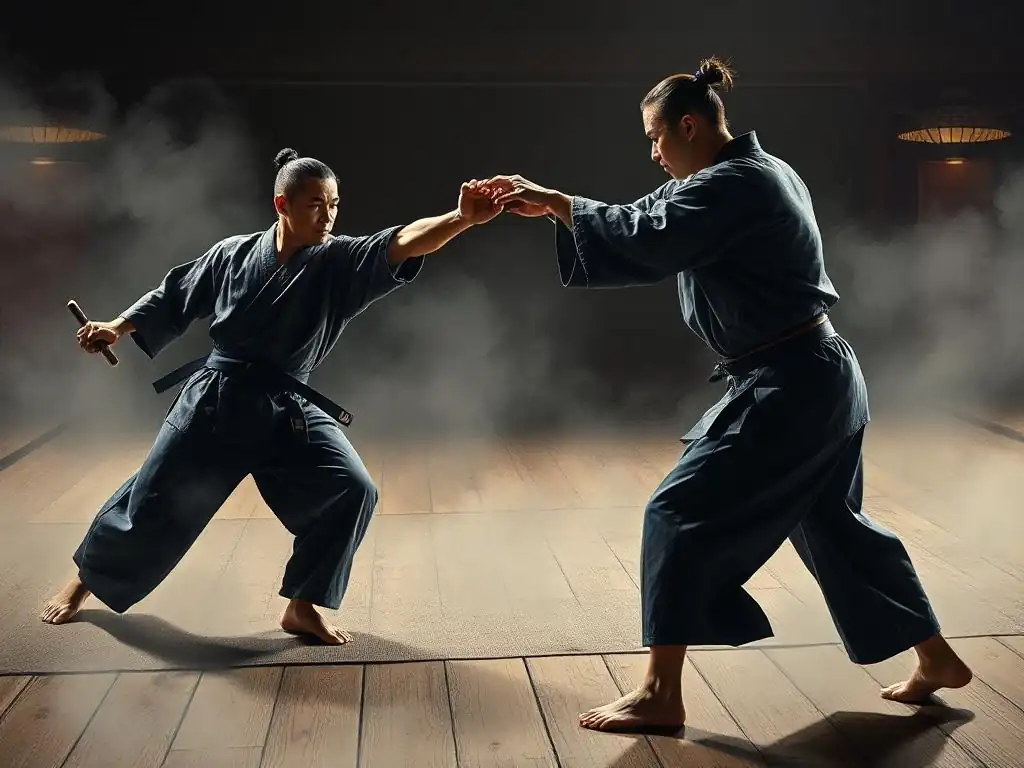
Effective preparation for multiple attacker scenarios requires dedicated training that goes beyond standard one-on-one drills. Simulations must introduce stress, unpredictability, and the need to manage multiple threats simultaneously.
Partner Drills for Enhancing Reaction Time and Coordination
Basic partner drills can be adapted to introduce the element of multiple threats. For example, one partner acts as the primary attacker (perhaps with a training weapon), while a second partner provides secondary distractions or attempts grabs/strikes from a different angle. Drills can start slowly, allowing the defender to process the inputs, and gradually increase in speed and intensity.
A common drill involves one partner initiating a weapon attack (e.g., mock knife thrust), while the second partner immediately attempts a two-hand grab. The defender must react to the primary knife threat while simultaneously breaking the grab and positioning themselves advantageously. Training reaction time under this kind of split-focus pressure is vital for applying Hapkido disarms multiple attackers might present.
Sparring Scenarios with Multiple Opponents
Simulated sparring scenarios with multiple opponents (using protective gear and training weapons) are invaluable for developing practical skills. While full-contact free sparring against multiple opponents is too dangerous, controlled scenarios where attackers follow pre-briefed patterns or react based on simple rules can provide realistic pressure. For instance, two partners might circle the defender, with one designated to attack only when the other is not actively engaged (tag-team), or both might be instructed to attempt simultaneous grabs or simple strikes.
The defender must practice managing their position, avoiding being surrounded, and executing rapid, decisive Hapkido disarms multiple attackers might attempt. The focus is not on winning a prolonged fight, but on survival, disruption, and creating escape opportunities.
Mental Preparation and Visualization Techniques
Beyond physical drills, mental preparation is crucial. Visualization techniques, where practitioners mentally rehearse dealing with multiple attacker scenarios and executing Hapkido disarms multiple attackers might employ, can help build confidence and improve reaction pathways under stress. Practicing visualizing staying calm, assessing threats, and reacting decisively helps to mitigate the psychological "freeze" response. Stress inoculation training, which involves exposing practitioners to controlled, high-stress scenarios to build resilience, is also highly beneficial. Understanding the potential psychological impact and having mental strategies in place is as important as mastering the physical techniques.
The Importance of Awareness and Prevention in Hapkido Self-Defense
While mastering Hapkido disarms multiple attackers is a critical skill, the art fundamentally emphasizes avoiding conflict whenever possible. The best self-defense scenario is one that never happens.
Situational Awareness for Avoiding Confrontations
Situational awareness is the first and most important line of defense. It involves constantly observing one's surroundings, recognizing potential threats or dangerous environments, and identifying possible escape routes. Being aware of who is around you, their body language, and potential weapons can allow you to avoid walking into a dangerous situation altogether.
For example, noticing a group of individuals exhibiting aggressive behavior or loitering in a deserted area should trigger a decision to change direction or increase vigilance. Studies suggest that maintaining high levels of situational awareness can prevent up to 80% of potential confrontations by allowing individuals to avoid or de-escalate before physical violence occurs. This proactive approach is central to Hapkido's philosophy.
De-escalation Techniques and Conflict Resolution
Not every confrontation can be avoided, but many can be resolved without physical violence. Hapkido training often includes principles of de-escalation and conflict resolution. This involves using calm communication, non-threatening body language, and verbal judo to defuse a situation.
Maintaining a non-aggressive stance, speaking clearly and calmly, and avoiding provocative language can often lower the intensity of a confrontation. Offering a sincere apology (if appropriate), attempting to understand the other person's perspective, or simply removing oneself from the situation can prevent an argument from escalating into a physical attack. While Hapkido disarms multiple attackers are a last resort, knowing how to talk down a tense situation or disengage verbally is a primary skill for self-protection.
Conclusion: Mastering Hapkido Disarms for Enhanced Self-Protection
The Ongoing Evolution of Hapkido Disarming Strategies
Hapkido is a living art, and its disarming strategies, particularly those for complex scenarios like facing multiple armed attackers, continue to evolve. As new threats emerge and understanding of real-world violence deepens, techniques are refined to be more efficient, adaptable, and effective under pressure.
The focus remains on core Hapkido principles – fluidity, circular motion, and using an opponent's energy – but their application is constantly being tested and improved through realistic training scenarios. The development of specific drills simulating the chaos and unpredictability of multiple assailants ensures that practitioners are as prepared as possible for the extreme challenges of facing Hapkido disarms multiple attackers might force upon them.
Resources for Further Study in Hapkido Disarms and Self-Defense
Mastering advanced Hapkido disarms multiple attackers require dedicated, hands-on training under qualified instructors. Theoretical knowledge from articles and books is valuable, but the physical and psychological conditioning needed for these high-stress situations can only be developed through consistent practice. Seek out certified Hapkido dojos with experienced instructors who incorporate realistic self-defense scenarios and pressure testing into their curriculum.
Many reputable organizations offer seminars and workshops specifically focused on weapon defense and multiple-attacker strategies. Engaging with the wider Hapkido community and cross-training with practitioners from different lineages can also provide valuable insights and perspectives on adapting techniques for complex real-world threats.
Frequently Asked Questions
What is Hapkido, and how does it relate to disarming multiple attackers?
Hapkido is a Korean martial art emphasizing self-defense. It incorporates joint locks, throws, strikes, and weapon techniques, making it effective for disarming and controlling multiple attackers.
What are some key principles that make Hapkido effective against multiple attackers?
Hapkido relies on circular motions and redirection of force. This allows a practitioner to control an attacker's momentum and leverage, making it easier to manage multiple threats simultaneously.
How does Hapkido training prepare practitioners for complex disarming scenarios?
Training involves practicing realistic scenarios with multiple opponents. This includes drills focusing on spatial awareness, footwork, and quick decision-making under pressure.
Are Hapkido disarming techniques applicable in real-world self-defense situations?
Yes, Hapkido disarming techniques are designed for practical self-defense. They focus on disabling an attacker quickly and efficiently, allowing you to escape or control the situation.
Where can I learn more about advanced Hapkido disarming techniques specifically designed for multiple attackers?
MartialArtsMastery.org offers in-depth articles, videos, and resources on advanced Hapkido techniques. You can also find qualified instructors who specialize in practical self-defense training.
Final Reflection: Mastering Hapkido's Defensive Art
The techniques explored within this article, focusing on Hapkido disarms against multiple attackers, are not merely historical relics or theoretical exercises. They represent a living, breathing philosophy of self-preservation, one that resonates deeply in a world where unpredictable threats can emerge from any corner. These advanced disarms, when mastered, offer a pathway to empowerment and a tangible sense of security in an increasingly complex environment.
The ongoing influence of Hapkido, and specifically its focus on practical self-defense, is undeniable. It's a discipline that fosters not only physical prowess but also mental acuity and a heightened awareness of one's surroundings. This holistic approach is what sets it apart, providing practitioners with the tools to navigate potentially dangerous situations with confidence and grace. The ultimate aim of martial arts is not to defeat others, but to perfect oneself.
This quote encapsulates the true spirit of Hapkido, reminding us that the journey of self-improvement is just as important as the destination of self-defense.
As you reflect on the techniques and principles discussed, consider how you can integrate them into your own life, both on and off the mat. Embrace the challenge of mastering these advanced disarms, not just as a means of physical defense, but as a pathway to cultivating inner strength, unwavering focus, and a profound respect for the art of Hapkido. Let the knowledge gained here inspire you to become a more confident, capable, and compassionate individual, ready to face any challenge with unwavering resolve.
Thank you for delving into the advanced disarming techniques of Hapkido. We hope you've gained valuable insights into handling multiple attackers and complex scenarios. Now, it's time to put that knowledge into action and elevate your skills!
- Begin implementing these disarms in your next training session, focusing on fluid transitions and adaptability.
- Explore historical Hapkido texts for supplementary techniques and compare them to modern applications.
- Share your newfound knowledge and insights with fellow martial artists by discussing these strategies on our Martial Arts Mastery forum.
What innovative disarm combinations will you create and test in your training today?