
Tai Chi's Big Five: Comparing Form Characteristics of Chen, Yang, Wu, Sun, and Hao Styles

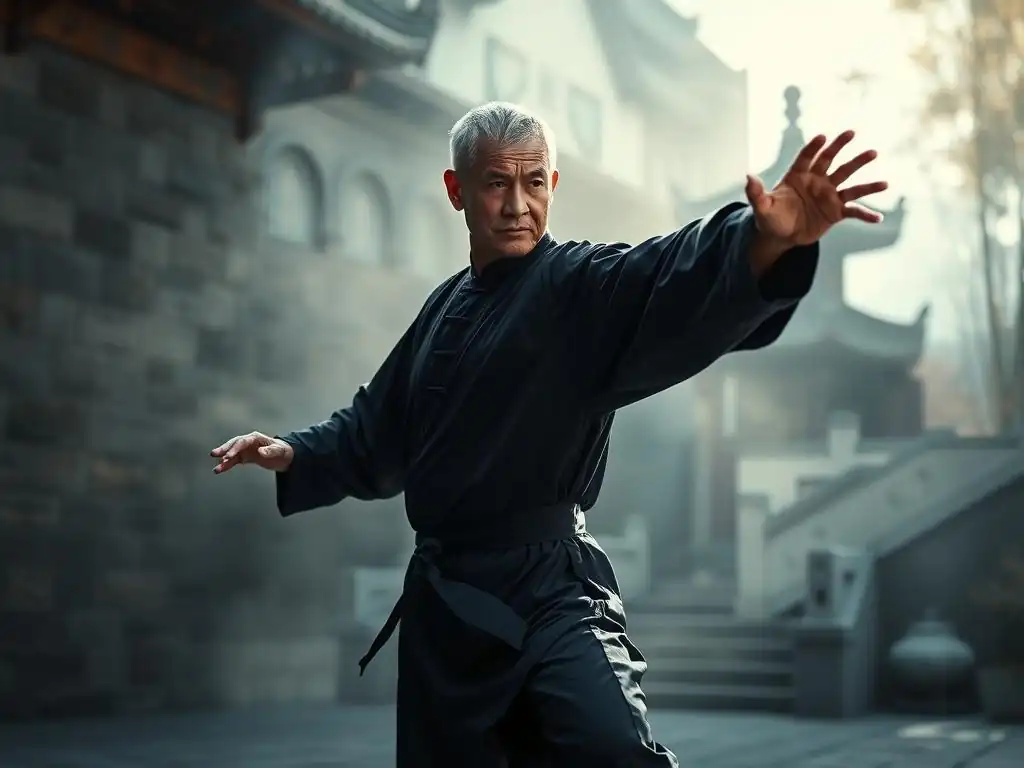
Welcome to Martial Arts Mastery, your gateway to the fascinating world of combat traditions!
Dive into the nuanced differences that define the major Tai Chi styles. Ever wondered how Chen Tai Chi truly stands apart from Yang, Wu, Sun, and Hao? Uncover the secrets within our detailed Chen Tai Chi Form Comparison, exploring the unique characteristics that make each form a distinct expression of this ancient art. Prepare to deepen your understanding and refine your practice – the journey to mastery starts here.
- Chen Style Tai Chi: Form Characteristics and Distinguishing Features
-
Frequently Asked Questions
- What are the five major styles of Tai Chi discussed in the article?
- How does Chen style Tai Chi differ from the other four styles?
- What are some key characteristics of Yang style Tai Chi?
- How does the Sun style of Tai Chi emphasize mobility?
- What are some defining features of Wu style Tai Chi forms?
- Final Reflection: Harmonizing Movement, Embracing Diversity
- Embrace the Flow: Start Your Tai Chi Journey Today!
Chen Style Tai Chi: Form Characteristics and Distinguishing Features
Chen Style History and Lineage
Originating in Chenjiagou (Chen Village) in Henan province, China, Chen style is widely recognized as the oldest of the five major Tai Chi Chuan styles. Its creation is attributed to Chen Wangting, a military general from the late Ming and early Qing dynasties, around the 17th century. Developed within the confines of the Chen family, the style was initially a synthesis of existing martial arts techniques, traditional Chinese philosophy, and health cultivation practices. It served both as a sophisticated fighting art for self-defense and warfare and as a method for maintaining physical and mental well-being within the family compound.
Over generations, the Chen style was refined and passed down through the family lineage. Key figures like Chen Changxing (1771–1853) consolidated the forms into the 'Old Frame' (Laojia), which remains foundational.
It was a student of Chen Changxing, Yang Luchan, who eventually took the art outside the village, leading to the development of the immensely popular Yang style. Later, in the early 20th century, Chen Fake (1887–1957) brought the 'New Frame' (Xinjia) to Beijing, significantly expanding Chen style's reach beyond its village origins and introducing its dynamic power generation to a wider audience, solidifying its position as a distinct and powerful form of Tai Chi.
Key Characteristics of Chen Style Forms: Spiraling, Explosive Power (Fajin), and Low Stances
A defining characteristic of Chen style Tai Chi is the pervasive use of Chan Si Jin (纏絲勁), or "Silk Reeling Energy/Movement." This principle involves spiraling movements that originate from the core (dantian) and extend through the limbs and joints. Every movement, whether small or large, incorporates this rotational quality, creating a continuous, interconnected flow of energy throughout the body. These spiraling mechanics are crucial for generating power, controlling an opponent's force, and promoting circulation, making it a fundamental element in any Chen Tai Chi Form Comparison.
Another prominent feature is the integration of Fajin (發勁), or explosive power release. Unlike the consistently slow and gentle pace often associated with other Tai Chi styles, Chen style forms deliberately mix slow, flowing movements with sudden bursts of speed and power.
This Fajin is generated through the coordinated unwinding of the silk-reeling spirals, rooted firmly through the legs and waist, culminating in a powerful strike or push. This dynamic alternation between soft and hard, slow and fast, alongside the frequently low and sometimes asymmetric stances, gives Chen style a visibly martial and vigorous quality that stands out in a Chen Tai Chi Form Comparison.
Chen Style Form Example: Analysis of Laojia Yilu
The Laojia Yilu, or "Old Frame First Routine," is the cornerstone of Chen style Tai Chi and often the first form learned by practitioners. It is a long and comprehensive routine, typically comprising between 75 and 83 movements depending on the specific lineage and interpretation. This form embodies all the fundamental principles of Chen style, starting with gentle, foundational movements that gradually build in complexity and intensity. It systematically introduces the core mechanics of silk reeling, rooting, body alignment, and the integration of breath with movement, providing a thorough grounding in the style.
Laojia Yilu features a wide range of techniques, including punches, kicks, joint locks, throws, and sophisticated pushing hands applications, often demonstrated through integrated martial postures. Specific movements like "Buddha's Warrior Attendant Pounds Mortar" (金剛搗碓 - Jin Gang Dao Dui) exemplify the explosive Fajin, while movements such as "Single Whip" (單鞭 - Dan Bian) showcase intricate spiraling transitions and deep, stable stances.
Practicing Laojia Yilu develops strength, flexibility, balance, and internal energy circulation, making it an essential routine for understanding the depth and martial efficacy inherent in Chen style and serving as a primary reference point for any Chen Tai Chi Form Comparison.
Chen Tai Chi Form Comparison
When conducting a Chen Tai Chi Form Comparison against other major styles like Yang, Wu, Sun, and Hao, several key distinctions immediately become apparent. The most visually striking difference is the dynamic pacing and the overt expression of Fajin. While other styles contain martial applications and internal power, Chen style makes the explosive release of energy a prominent and integrated part of the form itself, often accompanied by audible exhalations or stomping. This contrasts with the more uniform speed and subtle power generation typically seen in Yang or Wu forms.
Furthermore, the stances in Chen style are often lower and more varied than those found in, for example, the widely practiced Yang 24 Form. Chen forms frequently involve deep lunges, low crouches, and stances where one leg bears significantly more weight than the other, demanding substantial leg strength and flexibility.
The spiraling, silk-reeling movements are also more pronounced and visible throughout the entire body in Chen style compared to the more linear or circular movements emphasized in other styles. These characteristics contribute to Chen style's reputation for being physically demanding and overtly martial when performing a Chen Tai Chi Form Comparison.
Frequently Asked Questions
What are the five major styles of Tai Chi discussed in the article?
The article focuses on comparing the form characteristics of Chen, Yang, Wu, Sun, and Hao styles of Tai Chi. These are often considered the most influential and widely practiced.
How does Chen style Tai Chi differ from the other four styles?
Chen style is considered the original style, known for its fast and slow movements, fajing (explosive power), and spiraling motions, unlike the more even-paced styles.
What are some key characteristics of Yang style Tai Chi?
Yang style is characterized by its large, graceful movements and smooth transitions, making it popular for its health benefits and accessibility. It's a direct descendant of Chen style.
How does the Sun style of Tai Chi emphasize mobility?
Sun style is known for its unique footwork, including following steps and opening-closing steps, which greatly enhances mobility and reduces the risk of falling.
What are some defining features of Wu style Tai Chi forms?
Wu style features smaller, more compact frames and emphasizes gentle yielding and neutralizing techniques. This style is often practiced with a forward leaning posture.
Final Reflection: Harmonizing Movement, Embracing Diversity
The exploration of the "Big Five" Tai Chi styles – Chen, Yang, Wu, Sun, and Hao – reveals not just differences in form, but a profound testament to the adaptability and enduring relevance of Tai Chi in the modern world. What began as a martial art has blossomed into a global practice, each style offering a unique pathway to physical and mental well-being, a testament to the art's inherent flexibility and its capacity to resonate with diverse needs and preferences.
This journey through the nuances of each style has deeply underscored the importance of individual exploration and finding the form that resonates most authentically with one's own body and spirit. The subtle shifts in posture, the varying emphasis on spiral energy, and the distinct rhythmic patterns all contribute to a rich tapestry of movement. The journey of a thousand miles begins with a single step,
as Lao Tzu wisely stated, and in Tai Chi, that first step is often the most crucial, leading us down a path of self-discovery and mindful movement.
Now, as you consider the distinctions between these styles, I invite you to reflect on your own movement practice. How can you incorporate the principles of Chen's spiraling energy, Yang's expansive grace, Wu's gentle yielding, Sun's flowing steps, or Hao's compact precision into your daily life? Embrace the diversity within Tai Chi, and allow its wisdom to guide you towards a deeper understanding of yourself and the world around you. Let the flow begin.
Embrace the Flow: Start Your Tai Chi Journey Today!
Thank you for exploring the subtle nuances of Tai Chi with us! We hope this comparative analysis of the five major styles has enriched your understanding and sparked a deeper appreciation for this ancient art. Ready to put knowledge into practice?
- Begin your journey with a beginner's class in the Tai Chi style that resonates most with you! Find local studios or online courses and take the first step towards improved balance, flexibility, and inner peace.
- Explore videos showcasing masters performing different forms. Pay attention to the unique movements and energy flow of each style.
- Share this article with fellow martial arts enthusiasts and discuss your favorite aspects of each Tai Chi style. Let's build a community of mindful movement!
Which of the five Tai Chi styles most intrigues you, and what's one thing you're most excited to experience from practicing it?