
Emotional Regulation on the Mat: A Martial Artist's Key to Resilience and Composure

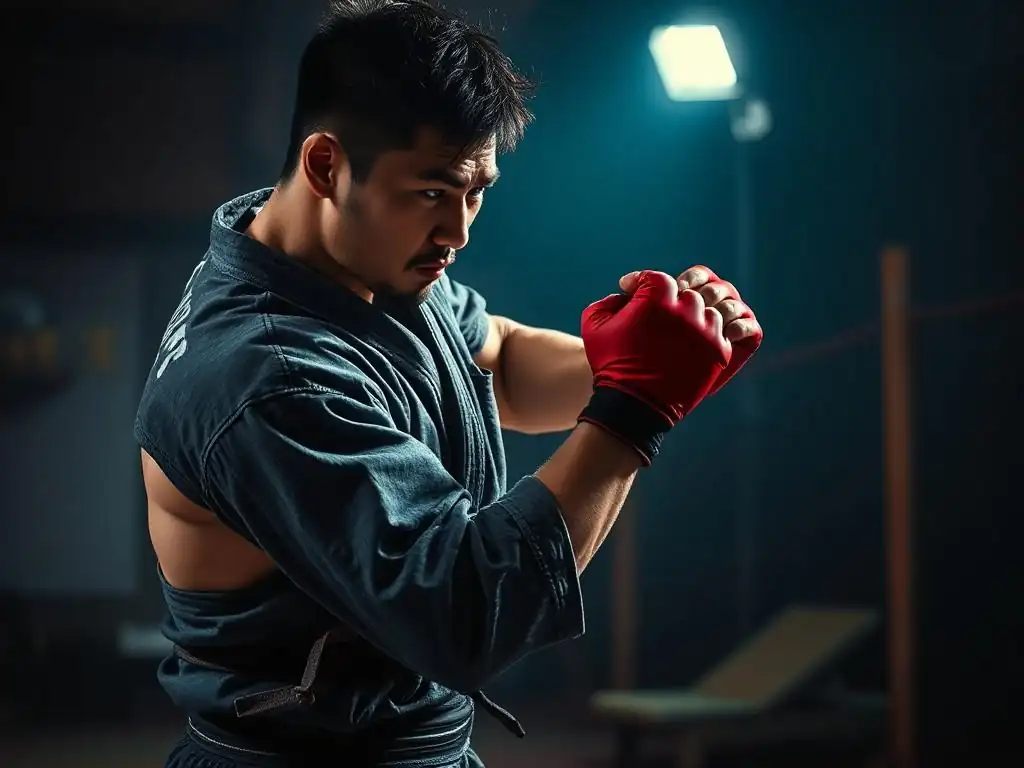
Welcome to Martial Arts Mastery, your gateway to unlocking the profound depths of combat disciplines!
Dive into the fascinating world where physical prowess meets mental fortitude. Ever wondered how the most skilled martial artists maintain unwavering focus and control, even under immense pressure? Prepare to discover the secrets behind martial arts emotional regulation, a critical component often overlooked but essential for true mastery. Explore how cultivating this vital skill not only enhances your performance on the mat but also empowers you to navigate life's challenges with resilience and composure. Intrigued? The journey to inner peace and unwavering focus begins now...
- Introduction: Mastering Emotions in Martial Arts
- The Neuroscience of Emotional Regulation in Combat Sports
- Techniques for Emotional Regulation in Martial Arts Training
- Applying Emotional Regulation in Real-World Martial Arts Scenarios
- Cultivating Long-Term Emotional Resilience Through Martial Arts
- Conclusion: The Enduring Power of Emotional Mastery in Martial Arts
-
Frequently Asked Questions
- What is the connection between martial arts and emotional regulation?
- How does martial arts training help build resilience?
- What specific techniques in martial arts promote emotional control?
- Can martial arts training help manage anger and frustration?
- How can I integrate emotional regulation techniques into my martial arts practice?
- Final Reflection: Cultivating Inner Strength
- Unleash Your Inner Zen Master Now!
Introduction: Mastering Emotions in Martial Arts
Why Emotional Control is Crucial for Martial Arts Mastery
Emotional control is not merely a desirable trait in martial arts; it is foundational to achieving true mastery. While physical technique and conditioning are essential, the ability to manage one's emotional state directly impacts performance, learning, and safety. A martial artist overwhelmed by fear or anger is prone to making critical errors, misjudging distance, neglecting defensive postures, or applying techniques improperly, potentially leading to injury for themselves or their training partners.
Studies in sports psychology consistently show that athletes who maintain emotional composure perform significantly better under pressure. For example, research indicates that anxiety can reduce reaction time by up to 10-15% in high-stress situations, a critical delay in combat sports or self-defense.
Beyond immediate performance, cultivating emotional regulation in martial arts fosters a more effective learning environment. Frustration during training, for instance, can lead to giving up on challenging techniques or practicing with excessive force, hindering progress and increasing the risk of injury. Conversely, a martial artist who can process frustration constructively is more likely to persevere, analyze their mistakes calmly, and adapt their approach. This consistent, calm perseverance is a hallmark of long-term development. Therefore, mastering martial arts emotional regulation is as vital as mastering any physical strike or throw.
Defining Emotional Regulation for Martial Arts Practitioners
For a martial artist, emotional regulation refers to the ability to monitor, evaluate, and modify one's emotional reactions in response to training stimuli, sparring pressure, or real-world situations. It is not about suppressing emotions entirely, but rather understanding them and choosing appropriate responses. This involves recognizing the physical and psychological signs of emotions like fear, anger, anxiety, or frustration as they arise, and then employing strategies to manage their intensity and impact on behavior and cognition.
In the context of martial arts, effective emotional regulation means being able to stay calm and focused when facing a larger opponent, recovering quickly from making a mistake in a kata, or maintaining a strategic mindset during a competitive match despite falling behind on points. It is the capacity to prevent emotions from dictating actions impulsively. This internal discipline is a continuous practice, developed alongside physical techniques, and is a core component of building resilience and mental toughness on the path of martial arts emotional regulation.
The Neuroscience of Emotional Regulation in Combat Sports
Understanding the Amygdala and Emotional Response in Martial Arts
The amygdala, a small almond-shaped region deep within the brain, is the primary processing center for emotions, particularly fear and threat detection. In a martial arts context, whether facing a sparring partner, a competition opponent, or a potential aggressor in self-defense, the amygdala is highly active. It triggers the "fight or flight" response, preparing the body for immediate action by releasing stress hormones, increasing heart rate, and sharpening sensory focus on potential dangers. This is a primal survival mechanism.
However, in a controlled training environment or a situation requiring nuanced response, an overactive amygdala can be detrimental. It can lead to panic, freezing, or reckless aggression, bypassing rational thought. For instance, a sudden unexpected movement from an opponent might trigger an intense fear response in the amygdala, causing a novice martial artist to tense up completely, hindering their ability to react effectively. Developing martial arts emotional regulation involves learning to manage this initial amygdala response.
The Role of the Prefrontal Cortex in Maintaining Composure
While the amygdala is the fast, automatic emotional alarm system, the prefrontal cortex (PFC), located at the front of the brain, is the executive control center responsible for higher-level cognitive functions such as planning, decision-making, impulse control, and evaluating consequences. The PFC plays a critical role in moderating the signals from the amygdala. When faced with a potentially threatening stimulus, the PFC can assess the situation rationally, considering context and learned responses, and send inhibitory signals back to the amygdala to dampen the fear or stress response.
For a skilled martial artist, a well-trained PFC allows them to remain calm under pressure. Instead of reacting purely on instinct driven by the amygdala, they can access their repertoire of techniques, analyze their opponent's movements, and make strategic decisions. This deliberate, controlled processing, facilitated by the PFC, is a cornerstone of effective martial arts emotional regulation, enabling practitioners to move from a reactive state to a proactive and strategic one.
Stress Response and the Martial Artist: Managing Cortisol
The body's stress response system, involving the release of hormones like cortisol and adrenaline, is activated by the amygdala. While useful in short bursts for survival, chronic or intense stress can impair cognitive function, muscle control, and decision-making – all critical elements in martial arts. High cortisol levels can lead to tunnel vision, reduced fine motor skills, and difficulty processing complex information, making it hard to execute techniques correctly or adapt plans mid-sparring.
Effective martial arts emotional regulation includes techniques specifically designed to manage the stress response and mitigate cortisol release. Regular practice of breathing exercises, mindfulness, and controlled physical exertion within training itself helps the body become more resilient to stress triggers. Over time, consistent training teaches the nervous system to differentiate between perceived threats and actual danger, allowing the martial artist to harness the beneficial aspects of adrenaline (like increased strength and speed) while minimizing the detrimental effects of excessive cortisol.
Techniques for Emotional Regulation in Martial Arts Training
Breath Control Techniques for Calming the Mind and Body
Breath control is one of the most accessible and immediate tools for martial arts emotional regulation. Conscious manipulation of the breath directly influences the autonomic nervous system, shifting it from a sympathetic ("fight or flight") state towards a parasympathetic ("rest and digest") state. This physiological shift slows heart rate, reduces muscle tension, and promotes a sense of calm, allowing the practitioner to regain composure and clarity even in stressful situations like intense sparring or before a grading.
Incorporating specific breathing exercises into warm-ups, cool-downs, and even during brief pauses in training can significantly enhance a martial artist's ability to manage anxiety and maintain focus. Simple techniques practiced regularly build a strong foundation for utilizing breath control when it's needed most, whether recovering from a hard exchange or preparing for the next round. Mastering breath is mastering a fundamental aspect of martial arts emotional regulation.
Diaphragmatic Breathing for Stress Reduction in Martial Arts
Diaphragmatic breathing, also known as belly breathing, involves engaging the diaphragm, a large muscle located below the lungs, rather than just the chest. This deep breathing technique increases oxygen intake and stimulates the vagus nerve, which plays a key role in calming the nervous system. To practice, inhale deeply through the nose, allowing the abdomen to expand, as if filling a balloon. Exhale slowly through the mouth, gently drawing the abdomen inward.
Practicing diaphragmatic breathing for just a few minutes daily, perhaps before class or during breaks, can lower baseline stress levels. During training, if feeling overwhelmed or tense, taking a few conscious, deep diaphragmatic breaths can help interrupt the stress response cycle, restoring a sense of control and allowing the martial artist to refocus on the task at hand. It's a fundamental technique for effective martial arts emotional regulation.
Ujjayi Breath: A Simple Technique for Immediate Calm
Ujjayi breath, often used in yoga but highly applicable to martial arts, involves breathing through the nose while slightly constricting the back of the throat, creating a soft oceanic sound. This constriction provides gentle resistance to the breath, lengthening inhalations and exhalations and promoting a steady, rhythmic pattern. The sound also serves as an anchor for focus, helping to quiet distracting thoughts.
Ujjayi breath is particularly useful during physical exertion or moments of high intensity. Its rhythmic nature can help maintain a calm internal state while the body is active. A martial artist can use Ujjayi breath during kata, forms practice, or even light sparring to maintain focus and composure, preventing the build-up of tension and supporting sustained martial arts emotional regulation.
Mindfulness and Meditation for Enhanced Emotional Awareness
Mindfulness and meditation practices cultivate present moment awareness without judgment. For a martial artist, this means paying attention to physical sensations, thoughts, and emotions as they arise during training or competition, without getting carried away by them. This heightened awareness is crucial for recognizing the early signs of emotional distress – a tightening in the chest, a surge of anger, or a wave of self-doubt – before they escalate and negatively impact performance.
Regular meditation, even for 5-10 minutes daily, trains the mind to observe internal states with detachment. This practice translates directly onto the mat, enabling the practitioner to notice feelings of fear or frustration during a tough drill but choose not to react impulsively. Instead, they can acknowledge the emotion and return their focus to the technique or strategy, significantly enhancing their martial arts emotional regulation capabilities.
Cultivating Present Moment Awareness During Training
Present moment awareness in training means fully immersing oneself in the now. This involves paying attention to the feeling of the gi on the skin, the sensation of the feet on the mat, the sound of breath, the movements of the partner, and the instructions of the instructor, all without getting lost in thoughts about past mistakes or future outcomes (like winning or losing).
During a sparring session, for example, instead of worrying about being hit or thinking about the technique that just failed, a mindful martial artist focuses on the immediate interaction: observing the opponent's stance, feeling their weight distribution during a clinch, and being aware of their own body's positioning. This focused attention keeps the mind anchored, reducing the space for anxiety or frustration to take hold and supporting dynamic martial arts emotional regulation.
Using Meditation to Reduce Anxiety and Improve Focus
Meditation, in various forms such as seated mindfulness meditation or walking meditation, is a powerful tool for reducing overall anxiety levels and improving sustained focus. By training the mind to gently return to a chosen anchor (like the breath) whenever it wanders, practitioners strengthen their ability to direct their attention deliberately.
This improved focus directly benefits martial arts training. A martial artist with a trained mind is less likely to be distracted by internal chatter or external stimuli, allowing them to concentrate fully on learning complex movements, analyzing strategic situations, and performing techniques with precision. Reduced anxiety also means less cognitive load, freeing up mental resources for higher-level processing required in dynamic martial arts scenarios, thereby reinforcing martial arts emotional regulation.
Cognitive Restructuring: Reframing Negative Thoughts in Martial Arts
Cognitive restructuring is the process of identifying and challenging unhelpful or irrational thought patterns and replacing them with more realistic and constructive ones. Negative self-talk or catastrophic thinking can severely undermine a martial artist's confidence and performance. Thoughts like "I'm not good enough," "I'll never get this technique right," or "I'm going to get hurt" can become self-fulfilling prophecies, increasing anxiety and hindering learning.
Learning to recognize these negative thoughts as just thoughts, not necessarily facts, is the first step. The next is to question their validity and actively replace them with more balanced perspectives. This mental discipline is a crucial aspect of developing robust martial arts emotional regulation and resilience.
Identifying and Challenging Negative Self-Talk
Negative self-talk often occurs automatically, especially after a setback or failure. It might manifest as internal criticism ("That was stupid") or predictions of future failure ("I know I'm going to fail this test"). Identifying these thoughts requires self-awareness, often cultivated through mindfulness practices. Keeping a training journal can also help track recurring negative thought patterns.
Once identified, these thoughts should be challenged. Ask: Is this thought true? What evidence supports it? What evidence contradicts it? For example, if the thought is "I'll never get this technique right," evidence against it might be: "I've improved significantly on other difficult techniques before," or "My instructor said I'm making progress." Replacing the thought with a more balanced statement like "This technique is challenging, but with practice, I can improve" is key to fostering better martial arts emotional regulation.
Developing a Positive and Growth-Oriented Mindset
Shifting from a fixed mindset (believing abilities are innate and unchangeable) to a growth mindset (believing abilities can be developed through effort and learning) is transformative for martial arts emotional regulation. A growth mindset reframes challenges as opportunities for learning and setbacks as temporary obstacles, not reflections of inherent inability.
This involves focusing on effort and process rather than solely on outcomes. Celebrate small improvements, view mistakes as valuable feedback, and understand that mastery is a journey of continuous learning. Cultivating gratitude for the opportunity to train and focusing on the inherent value of the practice itself, rather than just rank or victory, fosters a positive internal environment conducive to resilience and effective martial arts emotional regulation.
Visualization for Building Confidence and Emotional Resilience
Visualization, or mental rehearsal, is a technique where a martial artist mentally practices performing techniques, executing strategies, or handling challenging situations. This involves creating vivid mental images, incorporating sensory details like the feel of the mat, the sounds of the dojo, and the physical sensations of movement. Visualization can be used to rehearse successful outcomes, prepare for stressful events, and build confidence.
Regular visualization helps desensitize the practitioner to the anxiety associated with difficult scenarios by mentally navigating them successfully. It reinforces positive neural pathways related to performance and composure. This mental training is a powerful complement to physical practice, enhancing both skill execution and martial arts emotional regulation.
Mentally Rehearsing Successful Outcomes
Mentally rehearsing successful outcomes involves vividly imagining performing techniques flawlessly, executing strategic plans effectively in sparring, or maintaining perfect composure during a competition. Focus on the desired feelings: confidence, control, power, and calm. Imagine overcoming obstacles smoothly and achieving your goals.
For example, before a grading, a martial artist might visualize themselves performing each required technique with strength and precision, feeling calm and focused throughout. Before a sparring session, they might visualize successfully applying specific strategies and reacting calmly to unexpected movements. This positive mental rehearsal builds confidence and prepares the mind for success, bolstering martial arts emotional regulation.
Overcoming Fear and Doubt Through Visualization
Visualization can also be used to confront and overcome fear and doubt. Instead of avoiding anxious scenarios in the mind, one can visualize themselves facing those fears – perhaps being put in a difficult position during sparring or making a mistake – but then mentally practice responding calmly and effectively, recovering their composure and continuing to perform.
This process helps demystify fearful situations and builds mental resilience. By repeatedly visualizing themselves handling challenges with grace and control, the martial artist reduces the power of fear and doubt, replacing it with a sense of capability and preparedness. This proactive approach to mental training is vital for developing robust martial arts emotional regulation.
Applying Emotional Regulation in Real-World Martial Arts Scenarios
Maintaining Composure Under Pressure in Sparring
Sparring is a dynamic and unpredictable environment that provides an excellent training ground for martial arts emotional regulation. The pressure of facing an opponent, even a training partner, can trigger fear, anxiety, or frustration. Maintaining composure is essential for effective sparring; losing control can lead to reckless attacks, neglected defense, or freezing up.
A martial artist practicing emotional regulation in sparring focuses on staying present, observing their partner's movements without panic, and sticking to their strategy despite pressure. They use breath control to manage surges of adrenaline and cognitive restructuring to counter negative thoughts that arise after being hit or making a mistake. Recovering quickly from emotional disruption is a key skill developed through consistent, mindful sparring practice, directly applying techniques for martial arts emotional regulation.
Regulating Emotions During Competitions and Tournaments
Competitions amplify the pressures felt in sparring. The stakes are higher, the environment is often unfamiliar, and the audience adds another layer of stress. Managing emotions like pre-competition anxiety, the intensity of the match itself, and potential disappointment or elation afterwards is critical for performance and well-being.
Successful competitors often employ sophisticated martial arts emotional regulation strategies. This includes thorough preparation to reduce uncertainty, using visualization to mentally rehearse the competition day, employing breathing techniques to stay calm before and during the match, and practicing mindfulness to stay focused despite distractions. Learning to process the outcome, win or lose, with equanimity is also part of this regulation, allowing the martial artist to learn from the experience constructively.
Using Emotional Intelligence in Self-Defense Situations
While physical techniques are central to self-defense, emotional intelligence and regulation are equally, if not more, important in real-world scenarios. The primary goal of self-defense is safety, which often involves de-escalation and avoiding physical confrontation if possible. This requires the ability to manage one's own fear or anger while also reading and potentially influencing the emotional state of another person.
A martial artist trained in emotional regulation is better equipped to assess a potential threat calmly, make rational decisions under duress, and respond appropriately, which may mean using verbal skills before physical ones. Maintaining composure projects confidence, which can sometimes deter an aggressor, and allows for clearer thinking should physical defense become necessary. Effective martial arts emotional regulation is thus integral to practical self-defense.
De-escalation Techniques and Emotional Control
De-escalation involves using verbal and non-verbal communication to reduce tension and prevent a situation from escalating to physical violence. This requires significant emotional control, particularly the ability to remain calm and assertive while potentially facing aggression or hostility. Responding to anger with anger typically fuels the conflict.
A martial artist applying emotional regulation in a de-escalation scenario must manage their own fear response to avoid appearing weak or panicky, and manage their anger response to avoid provoking the aggressor. Techniques include speaking in a calm, clear voice, maintaining non-threatening body language, active listening, and validating the other person's feelings without necessarily agreeing with their actions. This measured response is a direct application of martial arts emotional regulation in a high-stakes context.
Assessing Threats and Responding Calmly
In a self-defense situation, the ability to quickly and accurately assess the level of threat while remaining calm is paramount. Panic can lead to poor judgment, delayed reactions, or overreactions. A calm mind can better observe the environment, evaluate the aggressor's intent and capabilities, and access learned self-defense strategies effectively.
Training in martial arts emotional regulation helps the practitioner bypass the initial panic response and activate the rational processing centers of the brain. This allows for a more objective assessment of the danger ("Is this person truly a physical threat, or are they just trying to intimidate?") and enables a measured response ("Should I create distance, prepare to defend, or attempt to de-escalate?"). This calm assessment and response flow directly from well-developed martial arts emotional regulation skills.
Cultivating Long-Term Emotional Resilience Through Martial Arts
Building a Strong Mind-Body Connection
Martial arts inherently cultivate a strong mind-body connection. The physical demands of training require acute awareness of one's body, its capabilities, and its limitations. Simultaneously, the mental discipline required to learn complex techniques, maintain focus, and persevere through difficulty strengthens the mind. This constant interplay between physical action and mental state is the foundation for developing emotional resilience.
Through consistent training, the martial artist becomes intimately aware of how emotions manifest physically – tension in the shoulders from stress, trembling hands from fear, increased heart rate from excitement. This awareness allows for quicker recognition and management of emotional states. The physical practice itself also becomes a release for tension and stress, providing a healthy outlet and reinforcing the body's capacity to handle pressure, thereby building long-term martial arts emotional regulation.
Developing Self-Discipline and Emotional Control
Self-discipline is a cornerstone of martial arts training, encompassing regular attendance, consistent effort, and adherence to dojo rules and etiquette. This discipline directly translates into improved emotional control. The practice of showing up even when tired or unmotivated builds mental fortitude. The requirement to perform techniques precisely and maintain composure under the instructor's watchful eye teaches self-regulation.
Over time, this rigorous self-discipline strengthens the prefrontal cortex's ability to override impulsive emotional urges. The martial artist learns to act in accordance with their goals and values (like safety, respect, and continuous improvement) rather than being swayed by fleeting emotions like laziness, frustration, or fear. This cultivated self-discipline is inseparable from advanced martial arts emotional regulation.
The Philosophical Underpinnings of Emotional Regulation in Martial Arts
Many traditional martial arts philosophies contain principles that directly address emotional regulation and mental fortitude. These philosophical tenets provide a framework for understanding the importance of inner calm, resilience, and control, elevating the physical practice into a path for personal development. Exploring these ideas deepens a martial artist's appreciation for the mental aspects of their training.
Understanding these philosophies provides context and motivation for the challenging work of mastering one's emotions. It connects the physical drills and sparring sessions to a larger goal of cultivating character and achieving a state of inner balance, reinforcing the importance of martial arts emotional regulation as a life skill.
Examining Bushido and the Concept of Fudoshin (Immovable Mind)
Bushido, the code of the samurai, includes principles that emphasize mental fortitude and emotional control. A key concept is Fudoshin (不動心), often translated as "immovable mind" or "unmoving heart." This does not mean being emotionless, but rather having a mind that is not easily disturbed or swayed by fear, doubt, surprise, or confusion in the face of adversity.
Achieving Fudoshin is a lifelong pursuit that involves rigorous physical and mental training. It signifies a state where the martial artist remains calm and centered regardless of external circumstances, able to perceive clearly and act decisively. This concept directly embodies the pinnacle of martial arts emotional regulation, representing the ideal state of mental resilience and composure sought by serious practitioners.
Finding Inner Peace and Balance Through Training
Beyond combat effectiveness, martial arts training often serves as a path to finding inner peace and balance. The physical exertion provides stress relief, the focus required during practice clears the mind, and the disciplined routine creates structure and stability. The process of overcoming physical and mental challenges builds self-confidence and a sense of accomplishment.
Many practitioners report that the dojo becomes a sanctuary from the stresses of daily life, a place where they can focus entirely on the present moment and their personal growth. This consistent practice of challenging oneself physically and mentally, within a supportive and disciplined environment, fosters a deep sense of well-being and contributes significantly to long-term emotional stability and effective martial arts emotional regulation.
Conclusion: The Enduring Power of Emotional Mastery in Martial Arts
The Path to Resilience: Combining Physical Skill with Emotional Intelligence
True mastery in martial arts is not solely defined by physical prowess but by the harmonious integration of physical skill, mental discipline, and emotional intelligence. Resilience, the ability to bounce back from adversity, is significantly enhanced when a martial artist can effectively manage their internal emotional landscape alongside their external physical actions.
By actively training martial arts emotional regulation, practitioners build a robust inner foundation that supports them not only on the mat or in a self-defense situation but in all aspects of life. The capacity to remain calm under pressure, learn from mistakes without excessive self-criticism, and persevere through challenges with a positive mindset are direct results of cultivating emotional mastery, proving its enduring power.
Continued Practice and Development of Emotional Regulation Skills
Like any physical technique, martial arts emotional regulation is a skill that requires consistent and deliberate practice. It is not a destination but a continuous journey of self-awareness and refinement. Integrating emotional regulation techniques – such as breath control, mindfulness, cognitive restructuring, and visualization – into regular training routines is essential for ongoing development.
Experienced martial artists understand that the work of mastering the self, including one's emotions, is never truly finished. Each training session, each sparring match, each challenge provides a new opportunity to observe emotional responses and apply learned strategies. This commitment to continued practice ensures that the power of martial arts emotional regulation grows stronger over time, leading to deeper resilience, greater composure, and a more fulfilling martial arts journey.
Frequently Asked Questions
What is the connection between martial arts and emotional regulation?
Martial arts training provides a structured environment to practice self-discipline and manage stress, fostering emotional regulation through focused breathing and mindful movement. This translates to improved composure both on and off the mat.
How does martial arts training help build resilience?
The challenges inherent in martial arts training, such as learning new techniques and facing sparring partners, build resilience by teaching practitioners to persevere through adversity. This cultivates a growth mindset and the ability to bounce back from setbacks.
What specific techniques in martial arts promote emotional control?
Practices like meditation, focused breathing (pranayama), and kata/forms require intense concentration, which helps to calm the nervous system and develop emotional awareness. These techniques promote a sense of inner peace.
Can martial arts training help manage anger and frustration?
Yes, martial arts can be a healthy outlet for anger and frustration. By channeling these emotions into controlled movements and disciplined practice, practitioners can learn to manage their impulses and reduce reactivity.
How can I integrate emotional regulation techniques into my martial arts practice?
Start by being mindful of your emotional state before, during, and after training. Practice deep breathing exercises and focus on the present moment. Seek guidance from your instructor on incorporating mindfulness practices.
Final Reflection: Cultivating Inner Strength
The journey through martial arts is not merely a physical one; it's a profound exploration of the self, and emotional regulation stands as the bedrock of true mastery. As we navigate an increasingly complex world, the lessons learned on the mat – the discipline, the focus, and the ability to manage our emotional responses – become invaluable tools for navigating life's challenges with resilience and composure.
The impact of emotional regulation extends far beyond the dojo. It shapes our relationships, influences our decision-making, and ultimately defines our character. It's a continuous process of self-awareness and refinement, a journey that demands honesty and dedication. The warrior's ultimate victory is to conquer oneself.
– Morihei Ueshiba, Founder of Aikido. This quote encapsulates the essence of emotional regulation in martial arts: the true battle lies within.
Now, as you step off the mat and back into the world, consider how you can apply these principles of emotional regulation to your daily life. Embrace the challenges that test your composure, and remember the lessons learned in the face of adversity. Cultivate your inner strength, and let the discipline of martial arts guide you towards a more balanced, resilient, and fulfilling life.
Unleash Your Inner Zen Master Now!
Thank you for exploring the path of emotional regulation with us. We hope you've discovered valuable insights into cultivating resilience and composure, both on and off the mat. Now, it's time to put these principles into action and deepen your practice.
- Embark on your journey to enhanced composure:Commit to a daily 5-minute mindfulness exercise, focusing on your breath and observing your emotions without judgment.
- Share your newfound wisdom: Discuss these emotional regulation techniques with your training partners at the dojo. Create a support system!
- Try something new:Experiment with applying these principles to a non-martial arts setting, such as a challenging conversation or stressful situation at work, and journal your experiences.
What small, concrete step will you take today to integrate emotional regulation into your daily martial arts practice and life?