
Krav Maga Rear Bear Hug Escape (Arms Free): Elbows, Stomps, and Turns

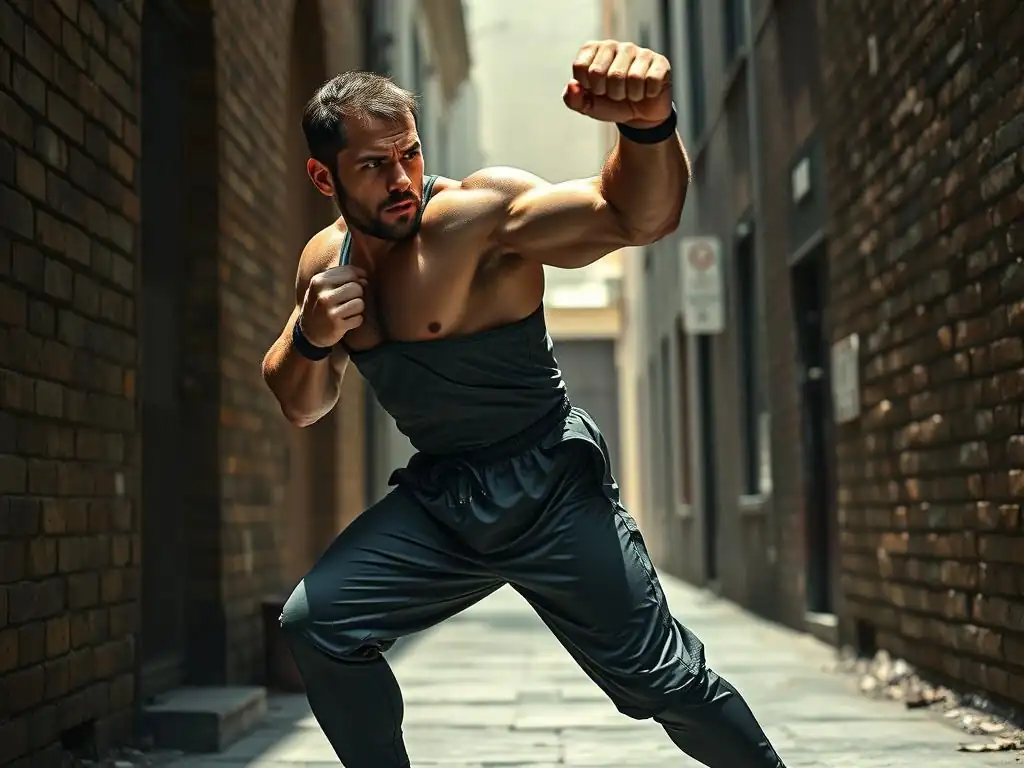
Welcome to Martial Arts Mastery, your ultimate resource for unlocking the secrets of combat. Ever wondered how to instantly neutralize a rear bear hug with your arms pinned? This article delves into the brutal efficiency of Krav Maga, specifically the Krav Maga rear hug escape. Discover the devastating techniques that turn a vulnerable position into a decisive counter-attack. Ready to learn how to protect yourself?
- Introduction to Krav Maga Rear Bear Hug Defenses
-
Krav Maga Rear Bear Hug Escape (Arms Free): Step-by-Step Guide
- Step 1: Initial Reaction to the Rear Bear Hug (Arms Free) - Maintaining Balance
- Step 2: Creating Space - The Importance of the Initial Movement
- Step 3: The Elbow Strike - Targeting Vulnerable Areas
- Step 4: The Foot Stomp - Disrupting the Attacker's Balance
- Step 5: Turning and Creating Distance - The Final Escape Maneuver
- Advanced Krav Maga Techniques for Rear Bear Hug Defense (Arms Free)
- Training Drills for Mastering the Krav Maga Rear Bear Hug Escape
- Common Mistakes to Avoid When Escaping a Rear Bear Hug (Arms Free)
- The Psychology of Self-Defense: Staying Calm Under Pressure
- Krav Maga Principles Applied to Rear Bear Hug Escapes
- Conclusion: Mastering the Krav Maga Rear Bear Hug Escape for Self-Protection
-
Frequently Asked Questions
- What is the primary goal of a Krav Maga rear bear hug escape when your arms are free?
- Why are elbows and stomps emphasized in the Krav Maga rear bear hug escape from MartialArtsMastery.org?
- How does turning the body assist in escaping a rear bear hug in Krav Maga?
- Is the Krav Maga rear bear hug escape technique described on MartialArtsMastery.org suitable for all body types and sizes?
- Where can I find more detailed information and training resources on Krav Maga techniques beyond the rear bear hug escape?
- Final Reflection: Embracing Empowerment Through Self-Defense
- Unleash Your Inner Defender: Take Action Now!
Introduction to Krav Maga Rear Bear Hug Defenses
Understanding the Threat of a Rear Bear Hug in Self-Defense Scenarios
A rear bear hug, where an attacker grabs you from behind, wrapping their arms around your torso, is a particularly dangerous form of assault. This hold is often used to control a victim, preventing them from running, striking effectively, or accessing potential weapons.
If the attacker lifts you off the ground, it significantly increases their control and your vulnerability, potentially leading to a throw or further assault. This type of attack is unfortunately common in street altercations because it exploits the element of surprise and immediately restricts the victim's primary defensive tools – their arms and ability to move freely.
The danger is compounded when the attacker's arms are free, meaning they haven't pinned your arms to your sides. While seemingly less restrictive than an arms-pinned bear hug, this version allows the attacker to potentially lift, slam, or drag you more easily. It also means their hands are free to grab your head, neck, or even transition to other attacks. Recognizing the immediate threat and understanding the specific vulnerabilities of the attacker in this hold are crucial first steps in any effective Krav Maga rear hug escape strategy.
Why Krav Maga Techniques are Effective for Rear Bear Hug Escapes
Krav Maga, the self-defense system developed in Israel, is specifically designed to address real-world violent encounters, including common attacks like the rear bear hug. Its principles prioritize immediate danger neutralization, simultaneous defense and attack, and targeting vulnerable points to facilitate escape. Unlike traditional martial arts that might focus on aesthetic forms or sport-specific techniques, Krav Maga is brutally efficient and direct, emphasizing simple, instinctive movements that work under extreme stress.
For a Krav Maga rear hug escape when the arms are free, the system leverages the fact that the attacker's torso is exposed and their balance, while seemingly stable, can be disrupted. Techniques focus on using whatever limbs are free – your legs and potentially your elbows if you can create space – to strike vital areas, inflict pain, and create the necessary opening to break the hold and escape.
The emphasis is on aggressive, continuous action rather than trying to out-strength the attacker, making Krav Maga highly effective for individuals of varying physical strengths against potentially larger or stronger opponents.
Krav Maga Rear Bear Hug Escape (Arms Free): Step-by-Step Guide
Step 1: Initial Reaction to the Rear Bear Hug (Arms Free) - Maintaining Balance
The moment you feel the grip of a rear bear hug, your immediate reaction is paramount. The primary goal is to prevent being lifted or losing your footing, which surrenders control to the attacker. Instantly widen your base by stepping your feet out to the sides, creating a solid foundation. Sink your weight down, bending your knees slightly and dropping your hips. This lowers your center of gravity, making it significantly harder for the attacker to lift or move you. Think of yourself as becoming a heavy, immovable object rooted to the ground.
Simultaneously, tuck your chin to protect your neck and maintain awareness of your surroundings. Even though your arms aren't pinned, the immediate focus is on stabilizing your base. A strong, wide stance and low center of gravity buy you precious seconds and prevent the attacker from easily escalating the attack, such as by slamming you to the ground. This initial defensive posture is non-negotiable in any effective Krav Maga rear hug escape scenario.
Step 2: Creating Space - The Importance of the Initial Movement
Once your base is secured, the next immediate action is to create even a minimal amount of space between your torso and the attacker's arms. This is achieved by simultaneously driving your hips slightly forward while maintaining your low stance. This subtle movement can create a small gap near your ribs or abdomen, which is crucial for setting up subsequent strikes. It also slightly shifts the attacker's balance forward.
This action might feel counter-intuitive, but it leverages the mechanics of the bear hug; the attacker is pulling you into them. By subtly pushing your hips away while maintaining your core stability, you resist their pull and exploit the slight looseness that exists even in a tight grip. This small pocket of space is often just enough to allow your elbow to gain momentum for a strike, or to allow your foot to angle for a stomp effectively. It's a small movement with a significant strategic impact on the success of your Krav Maga rear hug escape.
Step 3: The Elbow Strike - Targeting Vulnerable Areas
With a stable base and a fraction of space created, the elbow strike becomes a primary tool in your Krav Maga rear hug escape. Because your arms are not pinned, you have a greater range of motion, allowing for potentially more powerful and varied elbow strikes. The target areas are key – you are looking to inflict pain and disrupt the attacker's hold and balance immediately.
Properly Executing the Rear Elbow Strike in Krav Maga
Executing the rear elbow strike effectively from a rear bear hug requires tight, powerful movements. From your low, stable stance, rotate your torso sharply to one side, driving the elbow directly behind you. The power comes from the rotation of your hips and torso, not just swinging your arm.
Your forearm should be tight against your body as you rotate, maximizing the impact delivered by the point of the elbow. Strike repeatedly and with full commitment. Alternate elbows if possible, striking left, then right, creating a rapid series of painful impacts designed to force the attacker to loosen their grip.
Key Areas to Target with the Elbow Strike
In a rear bear hug, vulnerable areas are primarily on the attacker's front and sides, accessible by your rearward elbow strikes. Primary targets include:
- Floating Ribs: Striking the lower ribs (floating ribs) can cause intense pain and potentially fracture, forcing the attacker to release the pressure.
- Solar Plexus: A sharp strike to the solar plexus (just below the sternum) can momentarily stun or knock the wind out of the attacker.
- Abdomen/Groin: Repeated strikes to the lower abdomen or groin area are extremely painful and disruptive, often causing an immediate reaction to protect the area.
- Side of the Head/Face (if space allows): If you can rotate enough, an elbow to the side of the head or jaw can be highly effective.
The goal isn't necessarily a knockout, but rather to inflict enough pain and disruption to force the attacker to loosen their grip, creating the opportunity for your escape.
Step 4: The Foot Stomp - Disrupting the Attacker's Balance
Simultaneously with or immediately following your elbow strikes, the foot stomp is a critical component of the Krav Maga rear hug escape. This technique targets the attacker's base of support, aiming to destabilize them and inflict pain on their feet.
Effective Foot Stomping Techniques for Bear Hug Escapes
From your low, wide stance, lift one foot slightly and drive your heel down with maximum force onto the attacker's foot. The target is the instep or the toes – the most sensitive areas of the foot. Do not just drop your foot; actively stomp down as hard as possible, using your body weight and leg strength.
You can stomp with one foot repeatedly or alternate feet, aiming for the same foot or both of the attacker's feet. The surprise and pain from a hard stomp can cause the attacker to instinctively shift their weight or loosen their grip due to the sudden, sharp pain.
Maximizing Impact and Power in Your Stomp
To maximize the impact of your stomp, ensure your low stance is stable. Drive your heel straight down, using gravity and your body weight. Imagine trying to drive your heel through their foot into the ground.
Avoid kicking forward or backward; a direct downward stomp is the most effective angle for pain and disruption. The force generated by a full-body stomp, even from a relatively small person, can be significant – potentially hundreds of pounds per square inch on a small, sensitive area like the instep. This intense, localized pain is a powerful deterrent and escape tool in a Krav Maga rear hug escape.
Step 5: Turning and Creating Distance - The Final Escape Maneuver
Once the attacker's grip has been loosened by your strikes and stomps, the final step is to break the hold entirely and create immediate distance. This is where the 'turn' comes into play, seamlessly transitioning from inflicting pain to escaping the danger zone.
Pivoting Techniques for a Successful Turn
As the attacker reacts to your strikes, pivot sharply towards the side you were primarily striking from (e.g., if elbowing with your right, pivot right). Use the momentum from your strikes and the attacker's reaction to spin out of their loosened grip. Keep your base low as you turn. It's not a slow step-around; it's a rapid, decisive pivot, using your lead foot as an anchor point to rotate your body out of the hold. As you turn, continue using your hands or elbows to push away any remaining contact points.
Creating a Safe Distance After the Escape
Immediately after breaking the hold, the priority is to gain safe distance from the attacker. Do not hesitate or stop to assess the situation from within striking range. Push off with your legs and sprint away to safety. If escape is not possible (e.g., confined space), transition immediately into combative stance, ready to defend against follow-up attacks using strikes, kicks, or other Krav Maga techniques. The goal of the Krav Maga rear hug escape is not to fight, but to create the opportunity to disengage and survive. Running to a safe location or seeking help is the ideal outcome.
Advanced Krav Maga Techniques for Rear Bear Hug Defense (Arms Free)
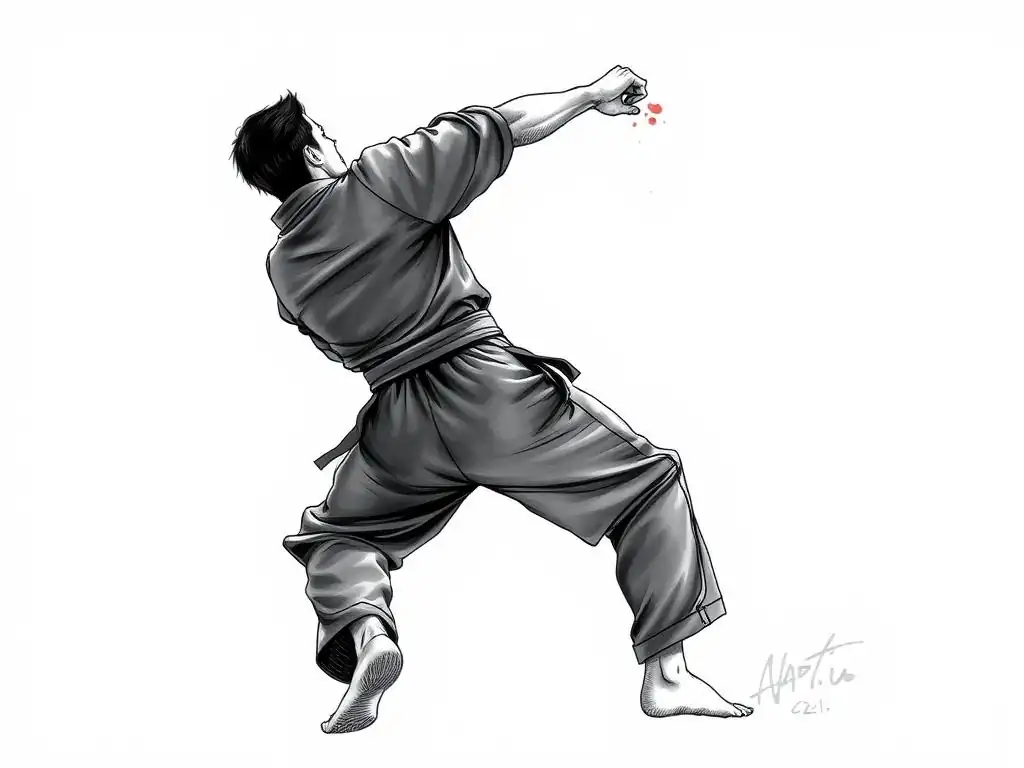
Utilizing Headbutts in a Rear Bear Hug Situation
In a rear bear hug with arms free, if you can tuck your chin and drop your weight effectively, you might create a slight angle or proximity where a headbutt becomes feasible. A headbutt can be directed backward towards the attacker's face (nose, mouth, forehead) or, if they are very close and low, potentially the sternum or jaw. To execute, tuck your chin tightly, protecting your own face, and drive the hardest part of your skull (the forehead, just above the eyebrows) into the target.
This is an advanced technique because it requires specific positioning and can carry a risk of injuring yourself if done incorrectly. However, a well-placed headbutt to the nose can be incredibly painful and disorienting, causing immediate watering of the eyes and pain, potentially forcing the attacker to release their grip reflexively. It's a high-impact, high-pain technique aligned with Krav Maga's principle of targeting vulnerable areas, used when other options like elbow strikes might be less effective due to positioning.
Employing Knee Strikes After Creating Initial Space
Once you've created even a small amount of space by dropping your weight and shifting your hips, your knees become powerful weapons. While still in the bear hug, you can lift a knee and drive it backward into the attacker's groin or thigh. This requires you to maintain balance on one leg while striking with the other, reinforcing the importance of the initial stable stance.
Knee strikes are particularly effective when the attacker is pressing their hips tightly against you. Lifting your knee and driving it straight back into their pelvic area or inner thigh can cause significant pain and disrupt their lower body stability. This technique works well in conjunction with elbow strikes and stomps, creating a multi-pronged attack designed to overwhelm the attacker's ability to maintain the hold and facilitating your Krav Maga rear hug escape.
Integrating Environmental Awareness into Your Escape Strategy
Effective self-defense in Krav Maga always includes environmental awareness. In a rear bear hug situation, look for opportunities to use your surroundings to your advantage. If there is a wall behind you, drive yourself and the attacker backward into it, potentially pinning their arms or body against the hard surface and disrupting their hold. Repeatedly slamming backward into a wall can be surprisingly effective in causing discomfort and forcing a release.
Similarly, if there are objects nearby – a table, a railing, a car – you can attempt to maneuver towards them to use them for support or to create obstacles for the attacker. Driving the attacker into a sharp corner or edge can also inflict pain. Incorporating the environment turns a simple escape technique into a dynamic, adaptable response, increasing the chances of a successful Krav Maga rear hug escape.
Training Drills for Mastering the Krav Maga Rear Bear Hug Escape
Consistent training is essential for making the Krav Maga rear hug escape technique instinctive under pressure. Drills should focus on speed, power generation, and seamless transitions between steps.
Partner Drills for Developing Speed and Accuracy
Partner drills are crucial for simulating the feeling of being held and reacting under pressure. Begin slowly, with a partner applying a moderate rear bear hug (arms free). Practice the sequence: drop weight/widen base, create space, execute elbow strikes, perform foot stomps, and then pivot out. Gradually increase the speed and resistance.
- Static Hold Drill: Partner applies hold, defender practices dropping weight and striking multiple times (elbows/stomps) before the escape turn. Focus on power and targeting.
- Reaction Drill: Partner applies hold suddenly. Defender reacts instantly with base, space creation, and immediate strikes/stomp before escaping. Focus on speed and reaction time (aim for reaction within 1-2 seconds).
- Resisted Escape Drill: Partner applies a strong hold and tries to maintain it while the defender executes the escape techniques. Focus on generating enough force to break a determined grip.
Solo Drills for Muscle Memory and Technique Refinement
Even without a partner, you can significantly improve your technique through solo practice. These drills focus on the mechanics and sequencing of the movements.
- Practice dropping into a low, wide stance rapidly from standing.
- Simulate creating space by driving hips forward while maintaining posture.
- Practice the rear elbow strike motion, focusing on hip rotation and snapping the elbow back. Use a wall or heavy bag to practice striking with power.
- Practice the foot stomp motion, emphasizing driving the heel down with force. You can stomp on a piece of wood or a mat to simulate impact.
- Practice the pivot turn, ensuring it's a fast, tight rotation out of an imaginary hold.
- Combine the movements: stance, space, strike, stomp, turn, and simulated sprint away.
Scenario-Based Training for Realistic Application
Integrating the Krav Maga rear hug escape into realistic scenarios helps bridge the gap between isolated technique practice and real-world application. These drills involve an element of surprise and require the practitioner to react appropriately based on the situation.
- Start in a relaxed posture (e.g., standing talking to someone, walking). A partner initiates a sudden rear bear hug. The defender reacts instantly with the escape sequence.
- Vary the environment (e.g., practice near a wall, near a hypothetical obstacle) to encourage the use of environmental awareness.
- Include follow-up actions: after escaping, practice immediately transitioning into a combative stance or simulating running to a designated safe point.
- Introduce varying levels of attacker resistance and types of holds (e.g., higher vs. lower grip) to build adaptability in performing the Krav Maga rear hug escape.
Common Mistakes to Avoid When Escaping a Rear Bear Hug (Arms Free)
Successfully executing a Krav Maga rear hug escape often depends on avoiding common pitfalls that can compromise the technique.
Maintaining Proper Stance and Balance
One of the most frequent mistakes is failing to establish and maintain a low, wide, stable base immediately upon being grabbed. If you remain standing tall with your feet close together, the attacker can easily lift or unbalance you, making strikes and the final escape pivot much less effective. Losing your balance shifts the attacker's control from a simple hold to potentially slamming you to the ground, a far more dangerous situation. Always prioritize dropping your weight and widening your stance as the very first reaction.
Avoiding Telegraphing Your Movements
Telegraphing your intended strikes or escape movements gives the attacker a chance to react and tighten their grip or adjust their position. For instance, winding up too obviously for an elbow strike or shifting weight too much before a stomp can signal your intentions. The strikes and subsequent turn should be sudden, explosive, and delivered with minimal preparatory movement. In Krav Maga, efficiency and surprise are key, especially during a rear bear hug escape. Execute strikes and the pivot decisively and without hesitation.
Generating Sufficient Power in Your Strikes
Another critical error is delivering weak or hesitant strikes. A gentle elbow tap or a soft foot stomp will not provide enough pain or disruption to force the attacker to loosen their hold. Each strike must be delivered with full commitment and power, targeting the vulnerable areas discussed.
Even if you feel restricted, focus on snapping your hips and torso into the elbow strike and driving your heel down with maximum force in the stomp. Insufficient power means the attacker can simply absorb the strikes and maintain or tighten their grip, rendering your Krav Maga rear hug escape attempts ineffective.
The Psychology of Self-Defense: Staying Calm Under Pressure
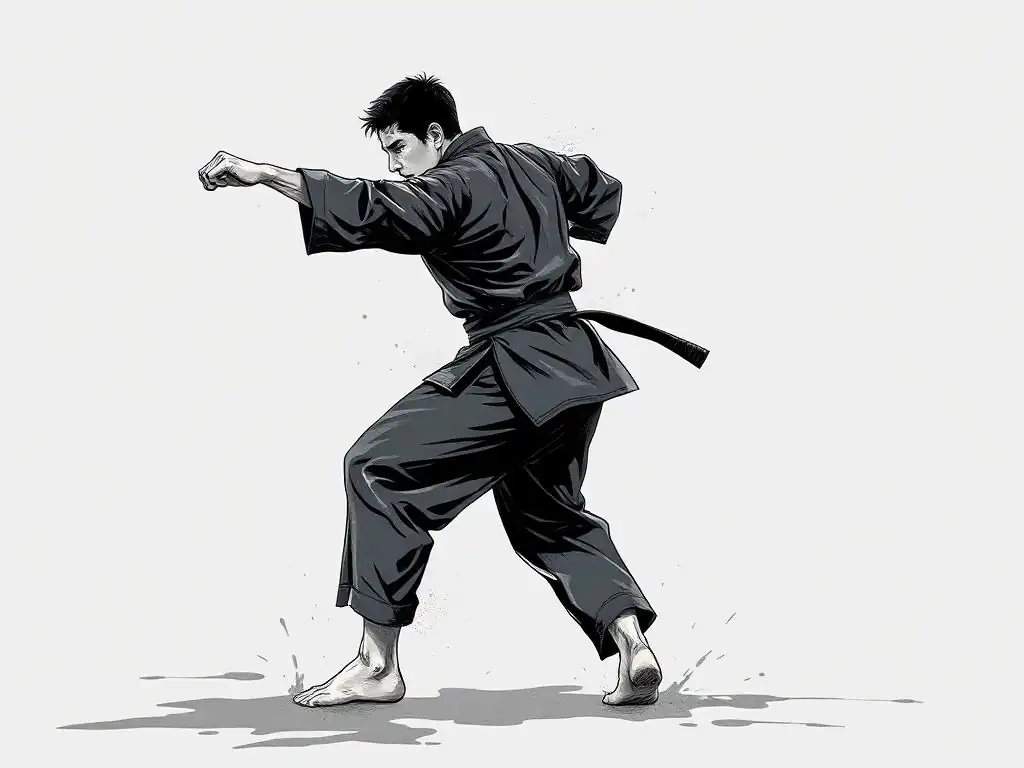
Effective self-defense is not just about physical techniques; it's also about the mental game. Staying calm under the extreme pressure of an attack like a rear bear hug is incredibly challenging but vital for survival.
Managing Fear and Adrenaline During an Attack
An attack triggers the body's "fight or flight" response, flooding your system with adrenaline. This can cause tunnel vision, impaired fine motor skills, and panic. Recognizing these physiological responses is the first step. Instead of being overwhelmed by the fear, try to channel the adrenaline into forceful, aggressive action.
Focus on the immediate, simple steps of the Krav Maga rear hug escape sequence rather than the totality of the threat. Training under stress (scenario drills) helps condition your body and mind to function effectively even when your heart is pounding and your thoughts are racing. Practice helps make the necessary actions automatic, overriding the panic response.
Projecting Confidence to Deter Potential Attackers
While a bear hug is already in progress, the principle of projecting confidence still has relevance in the broader self-defense context and potentially immediately after the escape. Attackers often target individuals they perceive as weak or easy targets. While trapped in the hold, your focus is survival, but maintaining a determined mindset and fighting back aggressively sends a signal. Post-escape, if confrontation is unavoidable, a strong, assertive posture and verbal commands ("Stay back!") can deter a hesitant attacker from pursuing further. This mental resilience, cultivated through training, enhances the physical techniques of the Krav Maga rear hug escape.
Krav Maga Principles Applied to Rear Bear Hug Escapes
The Krav Maga rear hug escape technique embodies several core principles of the system, making it more than just a series of movements.
Aggression and Determination in Self-Defense
Krav Maga emphasizes controlled aggression – not rage, but the determined will to survive and fight back fiercely. In a rear bear hug, this means not passively waiting for the attacker to make the next move, but immediately initiating your defense with powerful, relentless strikes and a decisive escape. Hesitation or half-hearted efforts are unlikely to succeed against a determined attacker. The mindset is to inflict maximum pain and disruption now to facilitate your escape, embodying the principle of neutralizing the threat as quickly as possible.
Continuous Evaluation and Adaptation
During the escape, you must continuously evaluate the attacker's reaction and adapt your actions. Are they loosening their grip from the elbow strikes? Does the stomp have an effect?
If one technique isn't working as planned, you might need to immediately transition to another or repeat the effective ones. For example, if elbow strikes aren't creating enough space, perhaps focus more intensely on repeated stomps or attempt a headbutt if the opportunity arises. This fluid, non-dogmatic approach is central to Krav Maga; there isn't one single prescribed escape, but rather a set of tools to be applied and adapted based on the live response of the attacker during the Krav Maga rear hug escape.
The Importance of Situational Awareness
Situational awareness extends beyond the initial moments of the attack. While you are executing the Krav Maga rear hug escape, maintain awareness of your surroundings. Is there an escape route? Are there potential weapons or tools you could use (as mentioned in environmental awareness)? Are there other threats or potential helpers nearby? After the escape, this awareness is critical for deciding whether to run, seek cover, or prepare for a follow-up engagement. Good situational awareness before, during, and after the rear bear hug defense significantly increases your chances of survival.
Conclusion: Mastering the Krav Maga Rear Bear Hug Escape for Self-Protection
Mastering the Krav Maga rear hug escape with arms free is a vital component of a comprehensive self-defense skill set. This technique, rooted in the practical and effective principles of Krav Maga, provides a systematic approach to dealing with a dangerous and common street attack. By understanding the threat, reacting instantly with a stable base, and aggressively targeting vulnerable areas with elbows and stomps before a decisive turn and escape, individuals can dramatically increase their chances of survival.
Integrating This Technique Into Your Overall Self-Defense Skillset
The rear bear hug escape is not a standalone solution but fits within the broader framework of Krav Maga training. The principles learned here – immediate reaction, targeting vulnerabilities, aggression, environmental awareness, and continuous adaptation – are applicable to countless other self-defense scenarios. By practicing this specific escape, you reinforce core Krav Maga tenets that will serve you in defending against other grabs, strikes, and threats. It enhances your overall ability to react effectively under stress and fight back decisively when necessary, making your self-protection capabilities more robust.
Continuous Practice and Refinement for Long-Term Proficiency
Like any physical skill, proficiency in the Krav Maga rear hug escape requires consistent and dedicated practice. Muscle memory is built through repetition, allowing your body to react instinctively under the shock of an attack. Regular training, including solo drills, partner work with increasing resistance, and scenario-based practice, is crucial for maintaining readiness. Refining the timing of your strikes, the power in your stomp, and the speed of your turn ensures that this vital Krav Maga rear hug escape remains an effective tool in your self-defense arsenal for the long term.
Frequently Asked Questions
What is the primary goal of a Krav Maga rear bear hug escape when your arms are free?
The primary goal is to create space and disrupt the attacker's balance, allowing you to employ further defensive or offensive techniques. This is achieved through specific movements.
Why are elbows and stomps emphasized in the Krav Maga rear bear hug escape from MartialArtsMastery.org?
Elbows and stomps are powerful, close-range strikes that can quickly inflict pain and create an opportunity to break the attacker's grip. They are essential tools in close-quarters combat.
How does turning the body assist in escaping a rear bear hug in Krav Maga?
Turning creates momentum and leverage, weakening the attacker's hold and making it easier to break free. It also helps to off-balance the attacker.
Is the Krav Maga rear bear hug escape technique described on MartialArtsMastery.org suitable for all body types and sizes?
While the core principles remain the same, adjustments may be needed. Adaptation is key in Krav Maga; consider your own size and strength when applying the techniques.
Where can I find more detailed information and training resources on Krav Maga techniques beyond the rear bear hug escape?
MartialArtsMastery.org offers a wealth of knowledge on various martial arts disciplines, including Krav Maga, with detailed training tips, historical context, and practical self-defense strategies.
Final Reflection: Embracing Empowerment Through Self-Defense
The techniques explored in this article, focusing on the Krav Maga rear bear hug escape, are not merely a collection of movements; they represent a powerful assertion of personal safety and resilience. In a world where vulnerability can feel pervasive, mastering these skills offers a tangible sense of control and the confidence to navigate potentially dangerous situations. This is more than just self-defense; it's about reclaiming agency over one's own well-being.
The impact of learning Krav Maga, and specifically these escape techniques, extends far beyond the physical realm. It fosters a deeper understanding of situational awareness, cultivates mental fortitude, and empowers individuals to stand tall in the face of adversity. This newfound confidence ripples outwards, influencing how we interact with the world and how we perceive our own capabilities. The best fight is the one you avoid,
as the saying goes, but knowing you possess the skills to defend yourself provides an invaluable peace of mind.
Now, I invite you to consider how you can integrate this spirit of proactive self-preservation into your own life. Whether you choose to pursue formal Krav Maga training, practice these techniques regularly, or simply cultivate a heightened awareness of your surroundings, remember that your safety is paramount. Embrace the power within you, and let the lessons learned here serve as a constant reminder of your inherent strength and resilience.
Unleash Your Inner Defender: Take Action Now!
Thanks for diving into the world of Krav Maga and rear bear hug escapes! Now that you’ve learned some powerful techniques, it's time to put that knowledge into action.
- Practice the elbow strikes, stomps, and turns demonstrated in this article. Repetition is key to building muscle memory and reacting instinctively in a real-world situation. This is the most important step to building your skills.
- Discuss these techniques with a training partner or instructor. Sharing insights can deepen your understanding and improve your execution.
- Explore other self-defense scenarios and techniques on Martial Arts Mastery to broaden your knowledge and preparedness.
What specific drills will you incorporate into your training to perfect your rear bear hug escape?