
Targeting Strategies: Where to Aim Your Kicks in Taekwondo Sparring

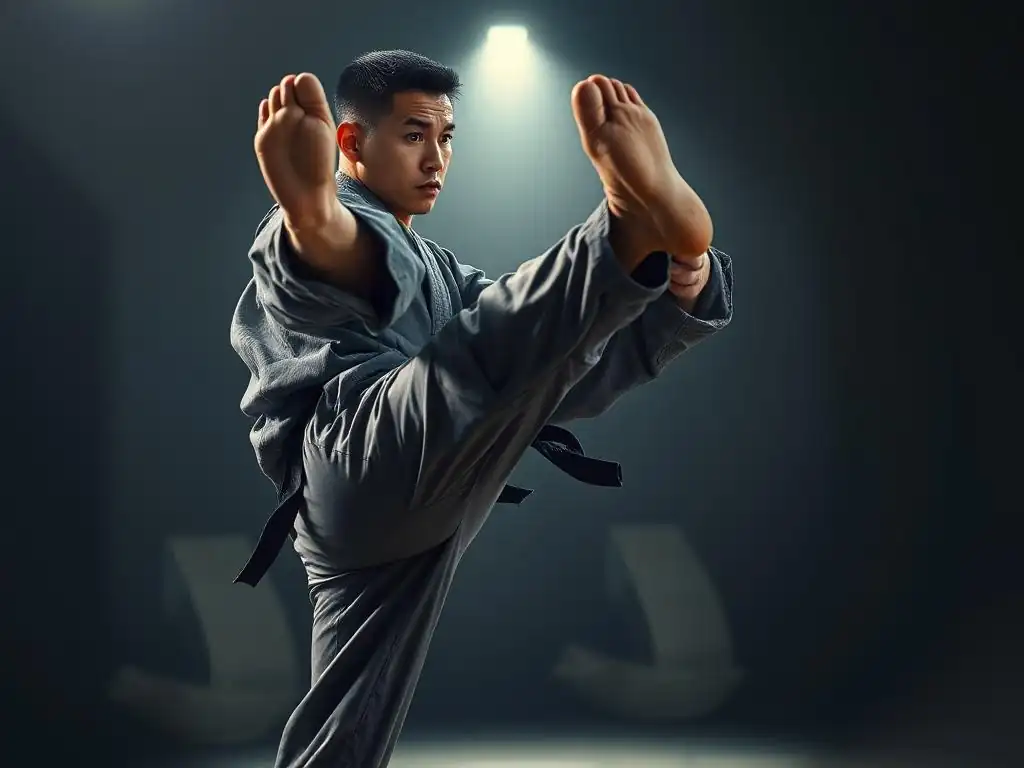
Welcome to Martial Arts Mastery, your gateway to unlocking the secrets of combat! Ever wondered how to truly dominate in the ring? This week, we delve into the precise art of Taekwondo sparring, specifically exploring the crucial targeting techniques that can give you the edge. Prepare to refine your accuracy and power – but first, let's uncover the strategic brilliance behind knowing exactly where to aim your kicks.
- Introduction to Taekwondo Sparring Targeting
- Fundamental Taekwondo Sparring Targeting Techniques
- Advanced Taekwondo Sparring Targeting Concepts
- Tactical Targeting in Taekwondo Sparring: Adapting to Your Opponent
- Footwork and Positioning for Optimal Targeting
- Defensive Considerations When Targeting
- Drills and Exercises for Improving Taekwondo Sparring Targeting Accuracy
- Mental Strategies for Effective Targeting
- Conclusion: Mastering Taekwondo Sparring Through Intelligent Targeting
- Frequently Asked Questions
- Final Reflection: The Art of Precision in Taekwondo
- Ignite Your Sparring: Master the Art of Precision Kicks!
Introduction to Taekwondo Sparring Targeting
The Importance of Strategic Targeting in Kyorugi
In the dynamic and fast-paced world of Taekwondo sparring, or kyorugi, simply throwing kicks is not enough. Success hinges significantly on the strategic targeting of your techniques. Effective Taekwondo sparring targeting techniques differentiate a novice from a seasoned competitor, allowing practitioners to maximize points, disrupt an opponent's balance, and create openings for follow-up attacks. A well-placed kick, even if not delivered with maximum power, can score crucial points or force an opponent into a defensive posture, shifting the momentum of the match.
Strategic targeting also involves understanding your opponent's strengths, weaknesses, and tendencies. By observing their stance, guard, and movement patterns, a competitor can identify vulnerable areas. For instance, an opponent who consistently drops their guard after a specific movement might be susceptible to a quick head shot. This level of tactical awareness, combined with precise execution of Taekwondo sparring targeting techniques, is paramount for achieving victory in competitive kyorugi. It's less about brute force and more about intelligent application of power and accuracy.
Understanding Legal Target Areas in Taekwondo Sparring
World Taekwondo (WT) rules clearly define the legal scoring areas on a competitor's body. The primary legal targets are the trunk (covered by the body protector, or hogu) and the head (including the face and sides of the head, but excluding the back of the head and neck). Strikes to these areas with permitted techniques (primarily kicks, though punches to the hogu are also legal but score fewer points) are awarded points.
Targeting the hogu generally yields 2 points for a turning kick and 1 point for a straight kick. Kicks connecting with the head are typically awarded 3 points, with additional points for spinning kicks to either the hogu (4 points) or the head (5 points). Understanding these scoring zones and the point values associated with different targeting techniques is fundamental to developing an effective Taekwondo sparring targeting strategy. Competitors must train extensively to consistently land kicks within these specific areas under pressure.
Fundamental Taekwondo Sparring Targeting Techniques
Body Protector (Hogu) Targeting Strategies
Targeting the hogu is the most common strategy in Taekwondo sparring due to its accessibility and relative safety compared to head shots. While point values are lower, consistently landing kicks to the trunk can quickly accumulate points and wear down an opponent. Effective Taekwondo sparring targeting techniques for the hogu involve mastering accuracy and speed, often aiming for specific sections of the protector to maximize impact or disrupt balance.
Competitors often aim for the center mass of the hogu, where the impact is most likely to be registered by electronic scoring systems. However, targeting the sides or even slightly lower on the hogu can sometimes bypass an opponent's guard more easily. Training for precision targeting, ensuring the foot connects flat against the protector rather than just the toes, is crucial for both scoring and preventing injury.
Front Kick (Ap Chagi) Targeting for Maximum Score
The front kick ( ap chagi) is a fundamental technique often used for distance management, breaking rhythm, or setting up other attacks. While it typically scores only 1 point to the hogu, accurate and powerful front kicks can still be valuable. Targeting the hogu with an ap chagi is most effective when aimed directly at the center, pushing through the opponent's guard.
To maximize the score or impact with an ap chagi, focus on extending fully and driving the heel or ball of the foot into the target. Training drills often involve targeting specific markers on a stationary bag or partner's hogu to improve accuracy. While less flashy, mastering this basic Taekwondo sparring targeting technique provides a solid foundation for more complex strategies.
Roundhouse Kick (Dollyo Chagi) Placement and Power
The roundhouse kick ( dollyo chagi) is arguably the most iconic and frequently used scoring technique in Taekwondo sparring. It scores 2 points to the hogu and 3 points to the head, making it a versatile weapon. Effective dollyo chagi targeting involves aiming for the sides of the hogu, just under the armpit or around the waistline, where the ribs are less protected and the impact can be significant.
Placement is key; a perfectly placed dollyo chagi with moderate power can score, whereas a powerful but poorly aimed kick might miss or be blocked. Training focuses on snapping the kick through the target with speed and accuracy, often using the instep or ball of the foot. Practicing combinations where a feint or step-through creates an opening for a precisely targeted dollyo chagi is a common Taekwondo sparring targeting technique drill.
Effective Side Kick (Yeop Chagi) Targeting in Sparring
The side kick ( yeop chagi) is known for its linear power and ability to push opponents back. While often used defensively or for creating distance, it can also be a potent offensive weapon when targeting the hogu. Aiming a yeop chagi at the side or even the back of a retreating opponent's hogu can score points and disrupt their movement.
Effective yeop chagi targeting requires precise body alignment and hip rotation to drive the heel into the target. It is particularly useful against opponents who square up or move laterally. Training involves developing the balance and core strength needed to deliver this powerful kick accurately while maintaining stability, making it a valuable addition to a competitor's repertoire of Taekwondo sparring targeting techniques.
Head Targeting Techniques in Taekwondo Sparring
Targeting the head offers the highest point values in Taekwondo sparring, but also carries higher risks, including potential counter-attacks and the need for precise timing and execution. Head shots require exceptional flexibility, speed, and accuracy, often targeting the sides of the head or the forehead area.
Successful head targeting relies heavily on setting up the attack. This might involve feinting a body shot to draw the opponent's guard down or using footwork to create an angle where the head is exposed. While high-reward, these Taekwondo sparring targeting techniques demand extensive practice and confidence.
Targeting the Head with Roundhouse Kicks: Risks and Rewards
Landing a roundhouse kick ( dollyo chagi) to the head is often a match-defining moment, scoring 3 points. The reward is high, but so is the risk. Opponents are typically well-trained to block or evade head attacks. A missed or blocked head kick can leave the attacker off-balance and vulnerable to a counter-attack.
To mitigate the risks, competitors focus on speed and deception. Kicking to the head immediately after a body shot or using a step-through dollyo chagi to close distance quickly are common strategies. Accuracy is paramount; aiming for the sweet spot on the side of the head requires significant practice, often involving targeting drills on paddles or focus mitts held at head height. Mastering this advanced Taekwondo sparring targeting technique is a key goal for competitive athletes.
Utilizing Back Kicks (Dwi Chagi) for Head Shots
The back kick ( dwi chagi) is a powerful spinning technique that can score 3 points to the head (or 4 to the hogu, 5 to the head if fully spinning). It is a high-risk, high-reward kick that is most effective when an opponent is pressing forward or is momentarily off-balance. Targeting the head with a dwi chagi requires excellent spatial awareness and timing.
The technique involves turning the back to the opponent, looking over the shoulder, and driving the heel straight back. The key is to catch the opponent by surprise. Practicing the turn and kick sequence repeatedly, initially slowly and then building speed, is essential. While less frequently used than the roundhouse kick, a well-executed dwi chagi to the head is a spectacular and highly effective Taekwondo sparring targeting technique.
Defensive Considerations When Targeting the Head
Attacking the head leaves you exposed. When attempting a head kick, a competitor must be prepared for immediate counter-attacks. Common counters include a quick body shot as the leg extends or a punch or ridge-hand strike (though these are less common in WT rules) if the opponent is close.
Maintaining balance is critical. If the head kick is blocked or misses, recovering quickly is essential to avoid being scored upon. Training should include drills that focus on quickly returning to a stable stance after executing head kicks. Developing a strong defensive posture and awareness of the opponent's position during the kick is a crucial part of mastering these high-level Taekwondo sparring targeting techniques.
Advanced Taekwondo Sparring Targeting Concepts
Targeting the Floating Ribs: A High-Risk, High-Reward Strategy
Targeting the floating ribs, located lower on the sides of the trunk just above the waistline, falls within the legal hogu area but offers a unique advantage. A solid impact here, particularly with a roundhouse or side kick, can be extremely painful and temporarily incapacitate an opponent by affecting their breathing. This is a high-risk maneuver as the area is smaller and potentially guarded, but the reward of disrupting an opponent's performance is significant.
Precision is key for this Taekwondo sparring targeting technique. It requires aiming slightly lower and often necessitates using footwork to create an angle that bypasses the opponent's elbow guard. Training involves focusing on hitting a specific, small area on the hogu with speed and power, often integrated into combination attacks where an initial feint draws the guard upwards.
Targeting the Solar Plexus for Breath Control Disruption
Another advanced hogu targeting strategy involves aiming for the solar plexus, the area just below the sternum. While still part of the legal scoring zone, a strong impact here can 'wind' an opponent, severely disrupting their breathing and ability to continue fighting effectively. This isn't about scoring maximum points instantly, but about gaining a tactical advantage by impairing the opponent's physical capacity.
Executing this Taekwondo sparring targeting technique typically involves a sharp, driving kick like a front kick or a fast roundhouse kick aimed directly at the center of the upper hogu. It often requires surprising the opponent or catching them while they are inhaling. Practicing precise, linear strikes to this specific point on a focus pad or body protector is crucial for developing the accuracy and power needed for this advanced tactic.
Targeting the Thighs for Mobility Reduction
While not a legal scoring area in World Taekwondo sparring (points are not awarded for kicks to the legs), targeting the thighs can be a highly effective tactical maneuver for mobility reduction. Repeated, sharp kicks to the lead thigh can significantly slow down an opponent's movement, reduce their kicking power, and make them more susceptible to scoring attacks to legal areas. This is a common strategy in styles with different rulesets, but in WT, it's a tool for setting up legal points rather than scoring directly.
Training for this involves developing powerful low kicks, typically using the shin or instep, aimed at the outer or inner thigh. While not scoring points, integrating a few well-placed low kicks can change the opponent's stance or reaction time, creating openings for subsequent hogu or head shots. This Taekwondo sparring targeting technique is a strategic investment, sacrificing potential points on the kick itself for a later advantage.
Tactical Targeting in Taekwondo Sparring: Adapting to Your Opponent
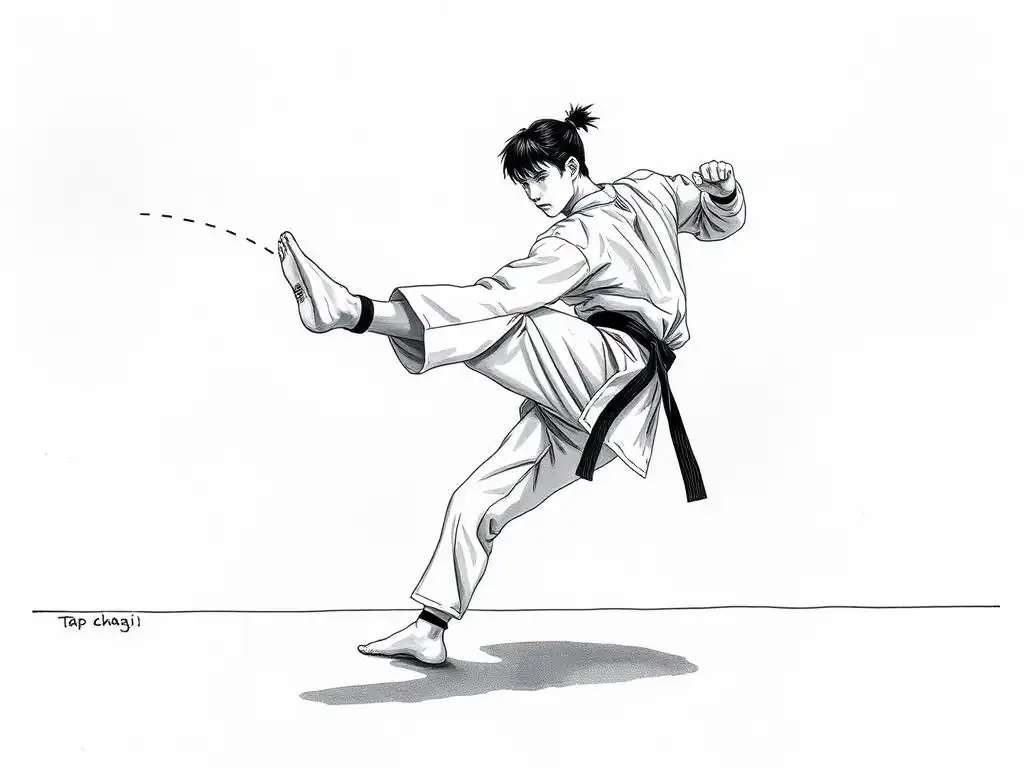
Successful Taekwondo sparring targeting is not static; it requires constant adaptation based on the opponent's actions and reactions. A competitor must be able to analyze their opponent's fighting style in real-time and adjust their targeting strategy accordingly. This involves observing their guard, footwork, preferred techniques, and defensive habits.
For example, if an opponent consistently keeps a low guard, targeting the head becomes a higher priority. Conversely, if they have a strong head defense but a weaker body guard, focusing on hogu targets might be more fruitful. This dynamic assessment and adjustment of Taekwondo sparring targeting techniques is a hallmark of experienced competitors.
Analyzing Opponent Stance and Weaknesses for Targeting
An opponent's stance provides valuable clues for targeting. A wide stance might indicate slower lateral movement but potentially stronger defense against straight kicks. A narrow stance might suggest faster footwork but less stability, making them vulnerable to pushes or kicks that disrupt balance. Observing which leg is forward (lead leg) also informs targeting; the lead leg side is often the most accessible target area.
Analyzing weaknesses goes beyond stance. Does the opponent drop their hands when they kick? Do they lean back excessively? Do they favor one side? Identifying these habits allows a competitor to tailor their Taekwondo sparring targeting techniques. For instance, an opponent who leans back from head kicks might be vulnerable to a quick front kick to the hogu as they retreat.
Exploiting Openings in Opponent's Guard
No guard is impenetrable, and effective Taekwondo sparring targeting techniques capitalize on the momentary openings that inevitably appear. These openings can occur when an opponent is kicking, moving, or even just adjusting their position. The key is to recognize these fleeting opportunities and react instantly.
For example, as an opponent extends their leg for a kick, their hogu on the opposite side might be exposed. A quick counter-kick targeting this opening can score points. Similarly, if an opponent's hands drop slightly after a combination, a fast head kick might connect. Training focuses on developing the awareness and speed needed to exploit these tiny windows for effective Taekwondo sparring targeting.
Using Feints and Deception to Create Targeting Opportunities
Feints and deceptive movements are crucial tools for creating targeting opportunities in Taekwondo sparring. A feint is a false attack or movement designed to elicit a reaction from the opponent, revealing an opening or drawing their defense away from the intended target. This is a sophisticated application of Taekwondo sparring targeting techniques.
For instance, a competitor might feint a body shot to encourage the opponent to drop their guard slightly, then immediately follow with a fast head kick. Or they might step forward as if to attack, causing the opponent to brace, and then quickly shift laterally to attack an exposed side. Mastering feints requires practice to make them look realistic enough to deceive the opponent without committing so much that the attacker is left vulnerable if the feint doesn't work as intended.
Footwork and Positioning for Optimal Targeting
Effective Taekwondo sparring targeting techniques are inextricably linked with skillful footwork and positioning. Simply having powerful kicks is insufficient; a competitor must be in the right place at the right time to deliver them effectively. Footwork allows a competitor to control distance, create angles, and maneuver the opponent into vulnerable positions.
Maintaining proper distance is fundamental. Being too far away makes scoring difficult, while being too close limits the power and range of kicks. Footwork drills are essential for developing the ability to move in and out of range smoothly and efficiently, setting up opportunities for precise Taekwondo sparring targeting.
Maintaining Proper Distance for Effective Kicking Range
Finding and maintaining the optimal distance from the opponent is a continuous process throughout a Taekwondo sparring match. This distance should allow the competitor to launch their preferred kicks with full extension and power without being so close that they are jammed or easily countered. For most competitors, this means being just outside the opponent's effective kicking range, ready to step in quickly to attack.
Practicing distance control involves drills focusing on moving forward, backward, and laterally while keeping a consistent space relative to a partner or target. Understanding the range of your own kicks, such as the optimal distance for a powerful dollyo chagi or a quick ap chagi, is key to effective Taekwondo sparring targeting.
Utilizing Lateral Movement to Create Angles for Targeting
Moving side-to-side, or laterally, is a powerful tool for creating angles that expose the opponent's vulnerable sides. Most opponents are strongest defending attacks coming directly from the front. By shifting left or right, a competitor can find a clearer path to the hogu or head, bypassing the opponent's primary guard.
Lateral movement can also disrupt an opponent's balance and timing, making their defenses less effective. For example, a quick step to the side might open up a clear shot to the opponent's unprotected side hogu. Integrating lateral footwork into attack sequences is an advanced aspect of Taekwondo sparring targeting techniques that requires agility and spatial awareness.
Ring Control and Cornering Strategies for Targeted Attacks
Controlling the space within the sparring ring is a tactical advantage that directly impacts targeting opportunities. By using footwork to maneuver the opponent towards the edge or corner of the ring, a competitor can limit their movement options and make them easier to target. A cornered opponent has fewer angles to escape, making them more predictable.
Cornering an opponent allows for more committed attacks with less risk of the opponent evading completely. It also provides opportunities to chain multiple Taekwondo sparring targeting techniques together. Practicing ring generalship and cornering drills is essential for competitors looking to dominate the competitive space and dictate the flow of the match.
Defensive Considerations When Targeting
While focusing on offense and targeting is crucial, it's equally important to consider defense while attacking. Every offensive action carries a degree of risk, and a competitor must be prepared for the opponent's reaction. Ignoring defensive considerations can lead to being countered and losing points or even the match.
Thinking defensively while implementing Taekwondo sparring targeting techniques involves anticipating the opponent's most likely responses and having a plan to deal with them. This might mean having a quick retreat strategy, preparing a block, or setting a trap for a counter-counter.
Anticipating Counter-Attacks and Setting Traps
A skilled opponent will rarely stand still and absorb hits; they will look for opportunities to counter-attack. When executing a kick aimed at a specific target, anticipate how the opponent might respond. If you throw a head kick, are they likely to counter with a body shot? If you attack the hogu, will they try a fast head kick over your leg?
Setting traps involves deliberately creating an opening or performing a feint to bait the opponent into a predictable counter-attack, which you are then prepared to defend against or counter yourself. For example, you might slightly expose your hogu to invite a body shot, then use a fast block and immediate counter-attack to the head. This requires a sophisticated understanding of Taekwondo sparring targeting techniques and defensive reactions.
Blocking and Evading Techniques to Protect Yourself
When targeting, especially with high-risk kicks like head shots, having solid defensive techniques ready is vital. If the opponent attempts to counter, you need to be able to block or evade effectively. This might involve using arm blocks ( makgi) to defend against punches or ridge-hand strikes (though punches to the head are illegal in WT, accidental contact can occur, and some rulesets allow them), or using leg blocks to defend against incoming kicks.
Evading involves using footwork and body movement to avoid the incoming attack altogether. This could be a quick step back, a lateral shift, or a lean away from the strike. Integrating defensive movements seamlessly with offensive Taekwondo sparring targeting techniques is a sign of a well-rounded competitor.
Maintaining Balance and Stability During and After Kicks
Executing powerful kicks, especially spinning or high kicks, can compromise balance. Losing balance during or immediately after a kick leaves a competitor vulnerable to follow-up attacks from the opponent. Maintaining stability is therefore a critical defensive consideration when targeting.
Training should emphasize core strength and balance drills. The ability to quickly regain a stable fighting stance after delivering a kick, regardless of whether it landed, was blocked, or missed, is essential. This allows the competitor to either defend against a counter or immediately follow up with another attack, ensuring their Taekwondo sparring targeting techniques don't inadvertently create defensive liabilities.
Drills and Exercises for Improving Taekwondo Sparring Targeting Accuracy
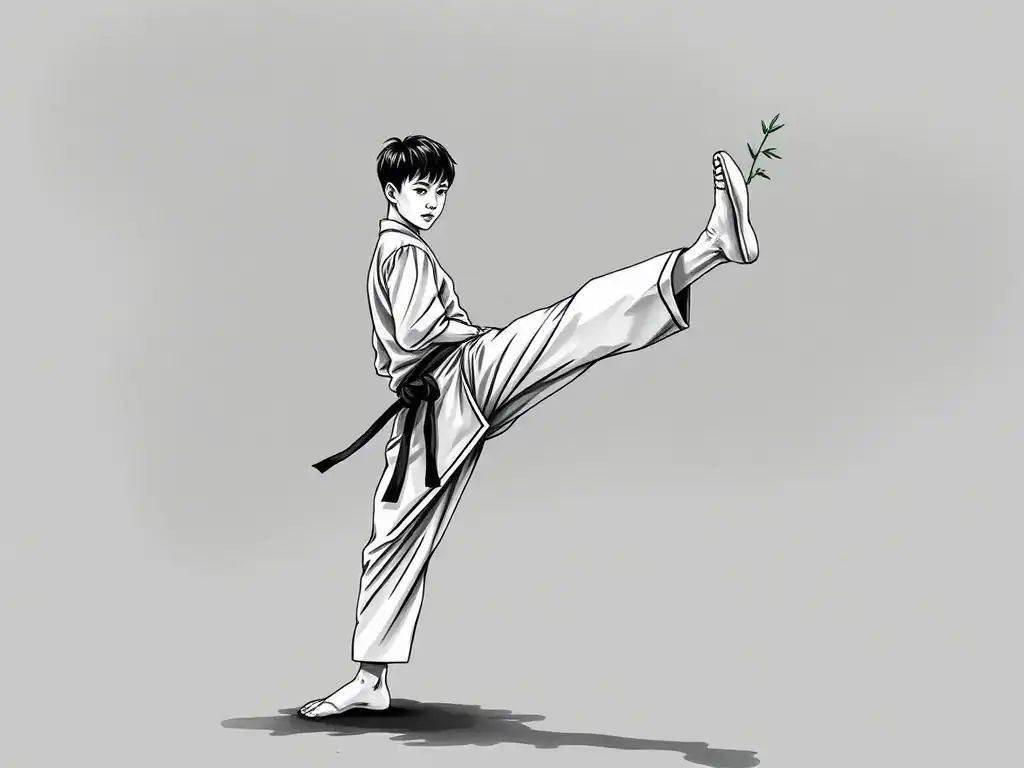
Consistent, focused practice is the only way to improve Taekwondo sparring targeting accuracy. Drills should simulate sparring conditions as closely as possible, allowing practitioners to refine their technique and aim under pressure. A variety of exercises targeting different aspects of accuracy are necessary.
These drills should progress from static targets to moving targets and eventually to live sparring scenarios with specific targeting objectives. Incorporating variations of Taekwondo sparring targeting techniques into daily training is key to making precise aiming instinctive during a match.
Shadow Kicking Drills for Refining Target Placement
Shadow kicking, practicing techniques in the air without a physical target, is a fundamental drill for refining form, balance, and target placement. While there's no physical impact, visualizing the opponent and the intended target area (e.g., the left side of the hogu, the opponent's forehead) is crucial.
Practitioners should perform kicks slowly at first, focusing on the exact trajectory and extension needed to hit an imaginary target. As accuracy improves, speed can be increased. Task list:
- Visualize opponent stance and guard.
- Mentally mark the intended target area (e.g., top right quadrant of hogu).
- Execute the kick with proper form, ensuring the foot/instep ends precisely where the target would be.
- Focus on hip rotation and snap for power and accuracy.
- Practice different kicks and combinations, visualizing specific Taekwondo sparring targeting techniques.
Partner Drills for Realistic Sparring Scenarios
Partner drills provide a more realistic simulation of sparring than shadow kicking. Using focus mitts, paddles, or a body protector held by a partner allows practitioners to practice hitting a physical target that might move or react. These drills can focus on specific targeting scenarios.
For instance, a partner might hold a paddle at head height and move it slightly, requiring the practitioner to adjust their dollyo chagi to track the target. Or the partner might wear a hogu and simulate blocking, forcing the attacker to find openings for their Taekwondo sparring targeting techniques. This provides crucial feedback on distance, timing, and accuracy against a semi-predictable target.
Sparring Simulations with Specific Targeting Objectives
Full sparring provides the most realistic training environment, but it can be beneficial to introduce specific targeting objectives. Instead of just trying to score points generally, competitors might focus on only attempting head shots for a round, or only targeting the left side of the hogu, or only trying to land kicks after a specific feint.
This focused sparring allows practitioners to practice implementing specific Taekwondo sparring targeting techniques under live pressure without the overwhelming pressure of a full match where all options are open. It helps build confidence and proficiency in executing particular strategies in a dynamic environment.
Mental Strategies for Effective Targeting
Beyond physical technique and tactical understanding, mental preparation plays a significant role in effective Taekwondo sparring targeting. The ability to stay focused, visualize success, and adapt under pressure is crucial in the high-stress environment of competition.
Mental strategies help competitors maintain composure, make clear decisions about targeting, and execute their techniques accurately even when fatigued or facing a challenging opponent. These are often overlooked but vital components of mastering Taekwondo sparring targeting techniques.
Visualizing Successful Kicks and Target Acquisition
Visualization is a powerful mental tool. Before a match or even before executing a specific kick, a competitor can mentally rehearse the technique, vividly imagining the kick landing cleanly on the intended target (e.g., the crack of the instep on the hogu, the satisfying snap of the foot on the headgear).
This practice helps program the mind and body for success, improving confidence and focus on the specific Taekwondo sparring targeting technique they are about to attempt. Regular visualization can make the desired outcome feel more achievable and reduce hesitation.
Maintaining Focus and Concentration Under Pressure
Sparring is mentally demanding. Distractions, fatigue, the opponent's attacks, and the pressure of the situation can all detract from focus and lead to missed targeting opportunities or inaccurate kicks. Maintaining concentration is essential for identifying openings and executing techniques precisely.
Techniques like deep breathing, mindfulness, and developing pre-competition routines can help manage stress and maintain focus. During the match, compartmentalizing distractions and staying present, focusing solely on the opponent and the current strategic objective for Taekwondo sparring targeting, is paramount.
Adapting Your Targeting Strategy During the Match
A pre-game targeting strategy is a good starting point, but it must be adaptable. The opponent might fight differently than expected, or the initial strategy might prove ineffective. The ability to recognize this and adjust targeting on the fly is a key mental skill.
This requires staying observant, analyzing the opponent's reactions to different attacks, and being willing to switch focus – perhaps moving from head hunting to body targeting if the head defense is too strong, or changing the angle of attack. Flexibility in applying Taekwondo sparring targeting techniques based on the evolving situation is a sign of mental maturity in a competitor.
Conclusion: Mastering Taekwondo Sparring Through Intelligent Targeting
The Path to Becoming a Strategic Taekwondo Sparring Competitor
Mastering Taekwondo sparring targeting techniques is a continuous journey that requires dedication to physical training, tactical understanding, and mental discipline. It moves beyond simply kicking hard or fast, focusing instead on where and when to apply techniques for maximum impact and scoring potential. A strategic competitor understands the point values, the legal target areas, their own strengths, their opponent's weaknesses, and how to use footwork and deception to create opportunities.
The path involves countless hours of drilling, sparring, and analyzing both successes and failures. It means refining fundamental techniques while also exploring advanced concepts and tactical applications. Becoming proficient in Taekwondo sparring targeting techniques is about developing a holistic approach that integrates every aspect of training into intelligent, effective application in the ring.
Continuous Improvement and Adaptability in Targeting
The landscape of Taekwondo sparring is always evolving, with competitors constantly developing new techniques and strategies. Therefore, continuous improvement and adaptability in targeting are essential for long-term success. What works against one opponent might not work against another, and what is effective today might be countered tomorrow.
Staying ahead requires constant learning – watching high-level matches, experimenting with new drills, seeking feedback from coaches, and analyzing one's own performance. The most successful Taekwondo sparring competitors are those who are not only skilled in executing targeting techniques but also possess the mental agility to adapt their strategy, learn from each match, and continually refine their approach to hitting the mark.
Frequently Asked Questions
How important is targeting in Taekwondo sparring?
Targeting is crucial for success. Effective targeting allows you to score points and control the match by exploiting weaknesses in your opponent's defense.
What are the primary target areas in Taekwondo sparring?
The main target areas are the trunk (hogu) and the head. While other areas are permitted, these offer the most consistent scoring opportunities.
What are some effective kicks for targeting the trunk?
Popular kicks for targeting the trunk include the roundhouse kick, side kick, and back kick. These kicks offer power and range, essential for scoring.
How can I improve my accuracy when targeting the head?
Practice precise footwork and timing. Drills focusing on head-height kicks with controlled power are essential for improving accuracy.
What strategies can I use to set up my targeting opportunities?
Use feints and combinations to disrupt your opponent's guard. Varying your attacks keeps them guessing and creates openings for targeted strikes.
Final Reflection: The Art of Precision in Taekwondo
The precision and strategy discussed throughout this article, focusing on "Taekwondo sparring targeting techniques," are not merely theoretical exercises; they represent the very essence of effective combat and self-improvement. In a world that often rewards brute force, the art of targeted striking reminds us that calculated action, born from understanding and discipline, is the true path to mastery. This approach extends far beyond the dojang, influencing how we approach challenges in all aspects of life.
The principles of targeting, of understanding vulnerabilities and exploiting opportunities, resonate deeply within the cultural landscape of martial arts and beyond. This pursuit of precision, of knowing where to aim, has personally reinforced the importance of thoughtful planning and strategic execution in all my endeavors. The successful warrior is the average man, with laser-like focus.
- Bruce Lee. This quote encapsulates the power of focused intent, a principle that transcends the physical realm and shapes our mental and emotional landscapes.
Now, as you step back from this exploration of Taekwondo sparring targeting techniques, consider how you can apply these principles of precision and strategy in your own life. Where are your targets? What are your vulnerabilities? How can you cultivate the discipline and focus necessary to achieve your goals with unwavering accuracy? Let the lessons learned here inspire you to aim higher, strike smarter, and ultimately, become a more effective and empowered version of yourself.
Ignite Your Sparring: Master the Art of Precision Kicks!
Thank you for diving into the world of Taekwondo sparring! We hope you've gained valuable insights into refining your kicking strategies. Now, let's put that knowledge into action and elevate your game.
Here are a few things you can do right now:
- Prioritize perfecting your body kick to the midsection during your next sparring session. Focus on accuracy and speed.
- Experiment with feinting a head kick to set up a scoring opportunity to the body. See if it works!
- Share this article with your Taekwondo training partners and discuss your favorite target strategies.
Ready to transform your sparring technique and land those game-changing kicks? What's one specific kicking drill you'll incorporate into your next training session to improve your targeting accuracy?