
Sanchin Kata: Common Mistakes and How to Correct Them for Optimal Form

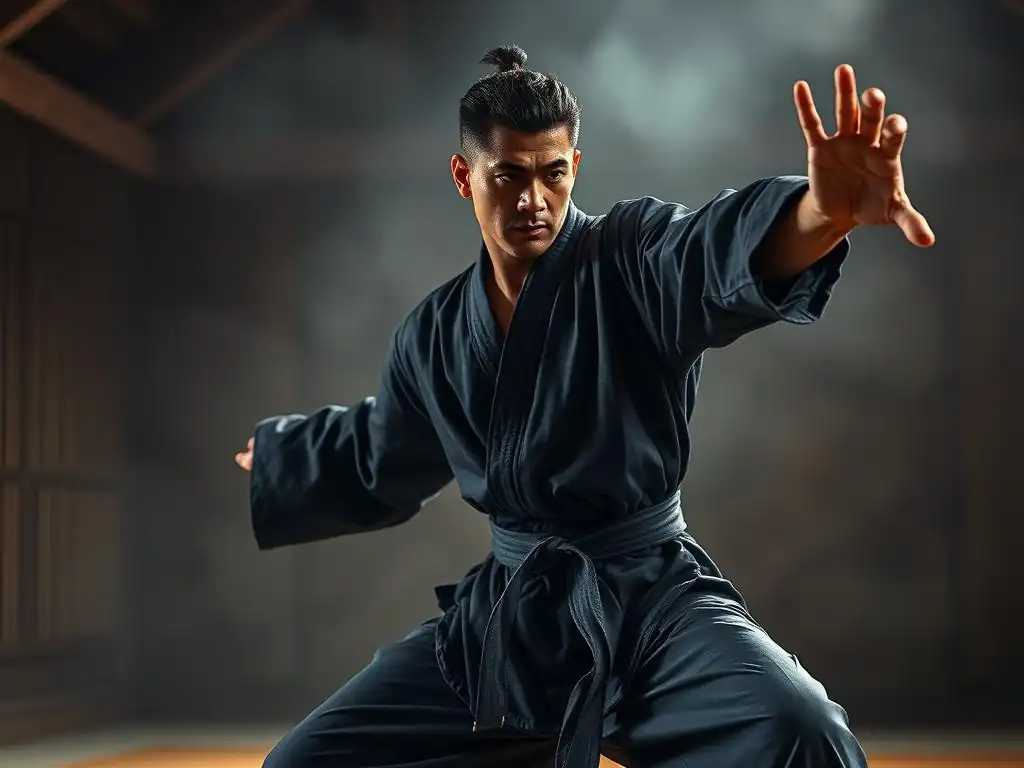
Welcome to Martial Arts Mastery, your gateway to the profound world of combat disciplines! Delve into the intricacies of Sanchin kata, a cornerstone of many martial arts, and discover how to avoid the common mistakes that can hinder your progress. Are you unknowingly sabotaging your form? Uncover the secrets to perfecting this foundational kata and unlock its hidden power.
- Introduction to Sanchin Kata in Goju-Ryu Karate
- Common Stance Mistakes in Sanchin Kata and Their Corrections
- Breathing Mistakes in Sanchin Kata and Their Impact
- Tension and Relaxation Errors During Sanchin Kata
- Improper Hand and Arm Techniques in Sanchin Kata
- Common Timing and Coordination Issues in Sanchin
- Drills to Improve Sanchin Kata Form and Correct Mistakes
- Conclusion: Mastering Sanchin Kata Through Diligence and Correction
-
Frequently Asked Questions
- What is Sanchin Kata and why is it important?
- What are some of the most common mistakes practitioners make in Sanchin Kata?
- How does incorrect stance width affect the performance of Sanchin Kata?
- Why is proper breathing so crucial in Sanchin Kata?
- What are some practical tips for correcting common Sanchin Kata mistakes?
- Final Reflection: Mastering the Essence of Sanchin
- Refine Your Sanchin: Take the Next Step!
Introduction to Sanchin Kata in Goju-Ryu Karate
Understanding the Importance of Correct Form in Sanchin Kata
Sanchin kata is often referred to as the bedrock of Goju-Ryu karate. Its name, meaning "three battles" (body, mind, and spirit), hints at its deep complexity and foundational nature. Mastering Sanchin is not merely about memorizing a sequence of movements; it is about cultivating internal power, stability, and a resilient spirit. Correct form is paramount because deviations, even slight ones, can compromise structural integrity, reduce the effectiveness of techniques, and even lead to injury over time. Addressing Sanchin kata common mistakes is crucial for any serious practitioner aiming for genuine understanding and development.
The meticulous attention to detail required in Sanchin form directly translates to improved performance in all other aspects of Goju-Ryu, from basic techniques (kihon) to sparring (kumite). A poorly executed Sanchin, characterized by common errors like incorrect stance or breathing, represents a fundamental weakness that will undermine more advanced training.
For instance, a lack of proper grounding developed in Sanchin Dachi will negatively impact hip rotation and power generation in a simple punch or kick. Therefore, diligently identifying and correcting Sanchin kata common mistakes is the most effective path to unlocking the kata's true potential and building a strong martial arts foundation.
The Essence of Sanchin: Foundation of Goju-Ryu Training
Sanchin kata embodies the core principles of Goju-Ryu: hard (Go) and soft (Ju). While outwardly appearing simple and linear, its depth lies in the internal cultivation of tension, relaxation, and breath control (Ibuki). It serves as a moving meditation, a physical conditioning exercise, and a practical demonstration of generating power from a stable core. Practitioners often spend years, sometimes decades, refining their Sanchin, understanding that each repetition reveals new layers of insight into body mechanics, energy flow (ki), and mental fortitude.
This kata teaches the practitioner to unify mind, body, and spirit into a single, powerful unit. It is the primary method for developing kime (focus of power) and muchimi (heavy, sticky body/limbs). Without a solid grasp of Sanchin's essence, advanced Goju-Ryu techniques lack depth and efficacy. For example, the whipping power found in movements from Seipai or Kururunfa kata stems directly from the grounded stability and internal connection forged through dedicated Sanchin practice. Recognizing and correcting Sanchin kata common mistakes ensures that this vital foundation is built correctly from the start.
Common Stance Mistakes in Sanchin Kata and Their Corrections
Incorrect Foot Placement in Sanchin Dachi: Stability Issues
Sanchin Dachi, the primary stance used throughout the kata, is designed for maximum stability and rooting. A common Sanchin kata common mistake involves improper foot placement. Often, practitioners place their feet too wide, too narrow, or fail to turn the toes inward sufficiently. For instance, placing feet wider than shoulder-width compromises the inward tension needed for stability, while placing them too close reduces the base of support. Incorrect toe angle, such as pointing straight forward or outward, prevents the creation of the necessary tension throughout the legs and hips, leading to a weak, easily unbalanced posture.
This instability makes it difficult to generate power effectively and leaves the practitioner vulnerable. Imagine trying to push a heavy object from a wobbly base – the force is dissipated. Similarly, in Sanchin, if the feet are not correctly positioned and engaged, the power generated from the core and hips cannot efficiently transfer through the legs to the ground or outwards through techniques.
A typical error seen in beginners is feet pointing almost straight ahead, reducing the 'gripping' action on the floor and the internal rotation necessary for the stance's integrity. This is a fundamental Sanchin kata common mistake that must be addressed early.
Correction: Achieving Proper Foot Alignment for a Strong Base
To correct improper foot placement in Sanchin Dachi, focus on a few key points. Start with feet approximately shoulder-width apart. Pivot on the heels, turning the toes inward. The exact angle can vary slightly depending on the practitioner's build, but a common guideline is for the lines from the big toes to the heels to form an angle of roughly 45 degrees. The feet should feel as though they are gripping the floor, creating tension up the legs.
- [ ] Stand with feet parallel, shoulder-width apart.
- [ ] Pivot heels outwards, keeping toes in place.
- [ ] Adjust until toes point inwards, forming a stable, rooted base.
- [ ] Ensure feet feel 'gripped' to the floor.
Practice standing in this position for extended periods, focusing on feeling the tension in the inner thighs and the connection to the ground. Use a partner to gently try pushing you off balance from different angles; if your stance is correct, you should feel rooted and stable. This drill helps identify if the feet are too wide, too narrow, or if the inward tension is insufficient – all critical Sanchin kata common mistakes to fix.
Knee Position Errors: Avoiding Injury and Maximizing Power
Another frequent Sanchin kata common mistake relates to knee position. Knees should be bent and directed slightly inwards, aligning roughly over the big toe or just inside. Common errors include knees collapsing inward excessively (valgus collapse), pointing directly forward, or being locked straight. Knees pointing straight forward or locked prevent the engagement of the inner thigh muscles and reduce the ability to absorb force or generate upward drive from the ground. Excessive inward collapse puts undue strain on knee ligaments, increasing the risk of injury, especially under tension.
The correct inward tension of the knees in Sanchin Dachi is vital for creating the 'spring' or 'coiling' effect in the lower body. This tension, combined with proper hip alignment, allows for efficient transfer of power from the ground up through the core and into techniques. When knees are incorrectly positioned, this kinetic chain is broken. For instance, if the knees are too straight, the ability to drop weight and generate power upwards is severely limited, making techniques feel weak or disconnected. Addressing these knee position Sanchin kata common mistakes is essential for both performance and safety.
Correction: Maintaining Correct Knee Alignment and Bend
To correct knee position errors, ensure the knees are bent sufficiently so that the kneecaps are roughly over the big toe or slightly inside, pointing in the same general direction as the feet. Actively engage the inner thigh muscles to create the inward tension without allowing the knees to collapse past the midline. A useful cue is to imagine squeezing a ball between your knees, though the actual angle is wider than that.
- [ ] Enter Sanchin Dachi with correct foot placement.
- [ ] Bend knees, ensuring they track towards the big toe or slightly inward.
- [ ] Engage inner thighs to maintain inward tension.
- [ ] Avoid locking the knees or letting them collapse excessively inward.
Practice holding the stance while focusing on the feeling in the knees and thighs. Use a mirror to check alignment. A simple test is to ensure you can't easily push one knee outward. Consistent practice, perhaps holding the stance for 1-2 minutes per session initially, helps build the necessary muscle strength and proprioception to maintain the correct knee position and correct these Sanchin kata common mistakes.
Posture Problems: Achieving a Straight and Aligned Spine
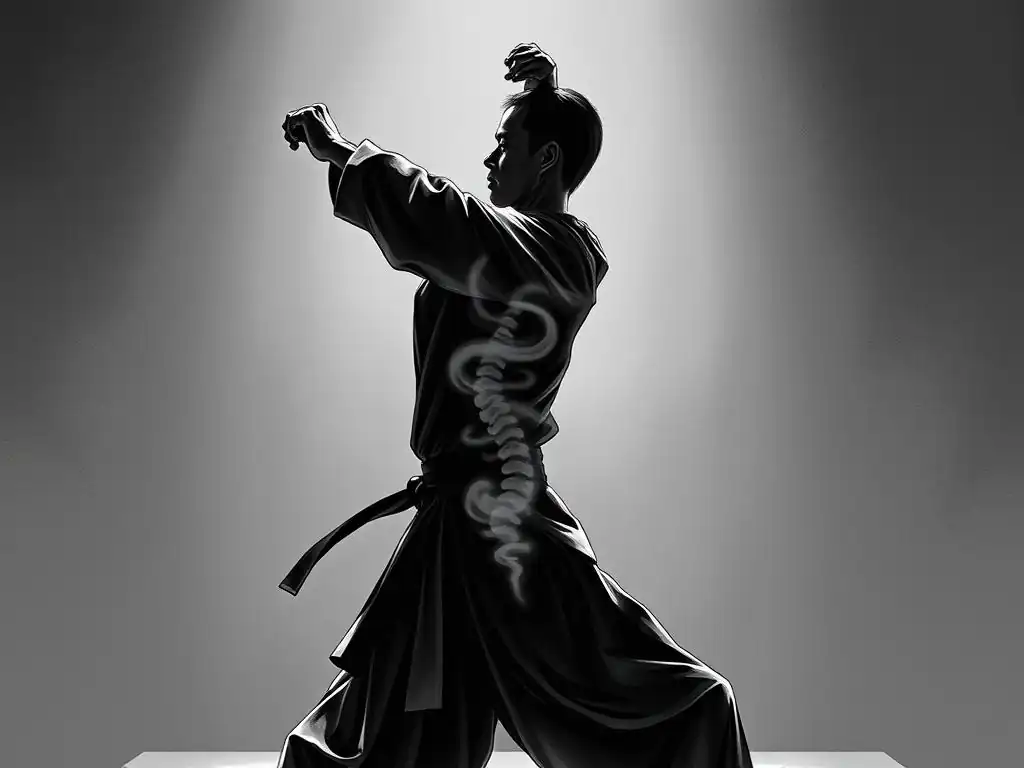
Posture is foundational to Sanchin, yet poor spinal alignment is a frequent Sanchin kata common mistake. This includes slouching, arching the lower back excessively, or leaning too far forward or backward. The spine should be erect, with the shoulders relaxed and pulled slightly back, and the head held naturally as if suspended by a string. A misaligned spine disrupts the body's center of gravity, impairs breathing, and prevents the effective generation and channeling of internal power.
Incorrect posture disconnects the upper body from the lower body's stable base. For example, if the shoulders are slumped forward, the chest is compressed, restricting the deep, powerful Ibuki breathing characteristic of Sanchin. An arched lower back strains the lumbar spine and prevents the proper engagement of the core muscles necessary for stability and power transfer. These postural Sanchin kata common mistakes undermine the entire structure and purpose of the kata, turning it into a mere physical exercise rather than a holistic practice.
Correction: Engaging Core Muscles for Proper Posture
To correct posture problems, focus on aligning the body vertically. Imagine a line running from the crown of your head down through your spine to your tailbone, and further down between your feet. Engage your core muscles slightly, as if bracing for a gentle push. Tuck the tailbone slightly under to avoid excessive lumbar arch. Relax the shoulders down, avoiding tension in the neck and upper back.
- [ ] Stand in Sanchin Dachi.
- [ ] Imagine a string pulling you up from the crown of your head.
- [ ] Gently tuck tailbone under to align pelvis.
- [ ] Engage core muscles without becoming rigid.
- [ ] Relax shoulders down and back.
Practice standing against a wall, ensuring your heels, calves, glutes, upper back, and the back of your head touch the wall (adjusting for natural spinal curves). This provides tactile feedback for correct vertical alignment. Incorporate exercises like planks or cat-cow stretches to improve core strength and spinal mobility, which support better posture and help avoid these Sanchin kata common mistakes.
Breathing Mistakes in Sanchin Kata and Their Impact
Shallow Breathing: Limiting Power and Endurance
Shallow breathing is a significant Sanchin kata common mistake that severely limits the practitioner's ability to generate power and sustain effort. Sanchin utilizes a specific type of diaphragmatic breathing called Ibuki, characterized by deep inhalation and a strong, controlled exhalation often accompanied by sound. Shallow chest breathing, common in daily life but incorrect for Sanchin, does not fully engage the diaphragm or the core muscles. This results in insufficient oxygen intake, reduced energy levels, and an inability to build and release internal pressure effectively.
The power in Sanchin techniques comes not just from muscle contraction but from the unified force generated by grounding, posture, and breath. Shallow breathing prevents this unification. It's like trying to blow up a balloon with weak puffs of air instead of a full, sustained breath. Without the internal pressure built by deep Ibuki, strikes and blocks lack the characteristic 'heaviness' or 'muchimi' of Goju-Ryu. Addressing this shallow breathing Sanchin kata common mistake is fundamental to unlocking the kata's internal power aspects.
Correction: Implementing Ibuki Breathing for Enhanced Performance
To correct shallow breathing, consciously practice deep, diaphragmatic breathing. Inhale slowly and deeply through the nose, feeling the abdomen expand first, followed by the lower rib cage. Exhale slowly and forcefully through the mouth, often with a controlled sound (like a hiss or grunt), pulling the abdomen inward to expel all air. The exhalation should be sustained and controlled, lasting approximately twice as long as the inhalation in some variations.
- [ ] Practice diaphragmatic breathing while lying down or sitting.
- [ ] Inhale deeply through the nose, feeling abdomen expand.
- [ ] Exhale slowly and forcefully through the mouth, contracting abdomen.
- [ ] Integrate this deep breathing into Sanchin movements, focusing on the controlled exhalation during techniques.
Begin by practicing Ibuki breathing separately from the kata, focusing solely on the breath mechanics. Use your hands on your abdomen and chest to feel the movement and ensure the diaphragm is engaged. Once comfortable, integrate the deep inhalation during preparatory movements or transitions and the powerful, controlled exhalation during strikes and blocks. This deliberate practice helps correct the shallow breathing Sanchin kata common mistake.
Holding the Breath: Risks and Alternatives
Holding the breath unnecessarily is another common Sanchin kata common mistake, often stemming from tension or a misunderstanding of the timing. While Ibuki involves controlled tension and pressure, it does not mean holding the breath rigidly, especially during sustained positions or transitions. Holding the breath increases internal pressure dramatically but can also cause lightheadedness, spike blood pressure, and prevent the smooth flow of movement and energy. It indicates a lack of relaxation and proper breath control.
Holding the breath rigidly during the entire sequence of a movement, rather than exhaling with focused power at the point of impact or during a transition, disrupts the natural rhythm of the kata. It also prevents the body from receiving adequate oxygen, limiting endurance. Furthermore, releasing held breath suddenly can dissipate power rather than focusing it. This Sanchin kata common mistake hinders both the physical and internal benefits of the practice.
Correction: Rhythmic Breathing Techniques for Sanchin Kata
The correction for holding the breath involves developing a conscious, rhythmic breathing pattern synchronized with the movements. Instead of holding, focus on the controlled, sustained exhalation of Ibuki during the main parts of techniques (like the forward punch or open-hand block). Inhale during the preparatory stages or transitions between movements. The breath should flow, albeit with control and tension, not be locked.
- [ ] Identify the key points for inhalation (transitions, drawing hands back).
- [ ] Identify the key points for controlled exhalation (strikes, blocks, sustained tension).
- [ ] Practice coordinating the breath with the movement, ensuring breath flows.
- [ ] Avoid tensing the throat or chest unnecessarily; focus tension in the core and limbs.
Use internal cues or external guidance (like a senior student or instructor counting the rhythm) to help time the breath. Recognize that Ibuki is a controlled release of air under tension, not a rigid holding. Practice slow, deliberate repetitions of the kata, focusing solely on the breath timing until it becomes natural. This conscious effort helps eliminate the Sanchin kata common mistake of holding the breath.
Incorrect Timing of Breathing with Movements
Misaligning the breath with the physical movements is a very common Sanchin kata common mistake. The power generation in Goju-Ryu, particularly in Sanchin, relies heavily on the precise synchronization of muscle contraction, structural alignment, and breath (kiai or Ibuki sound often marking the peak). Exhaling too early, too late, or inhaling when you should be exhaling significantly reduces the impact and internal feeling of the technique.
For example, exhaling before the punch reaches its target point or continuing to exhale after the technique is finished wastes energy and disconnects the power. Similarly, inhaling during a phase where tension is required breaks the internal connection. The breath is the engine of the power generation in Sanchin; if its timing is off, the engine misfires, leading to weak, disjointed movements, a clear sign of Sanchin kata common mistakes related to timing.
Correction: Synchronizing Breath and Movement for Optimal Power Generation
Correcting breath timing requires diligent practice and awareness. The general principle in Sanchin is to inhale during the preparation or retraction phase of a movement and exhale powerfully and controllably during the execution phase (the strike, block, or point of isometric tension). The peak of the exhalation and the peak of the physical technique should ideally coincide.
- [ ] Break down Sanchin into individual movements.
- [ ] Practice each movement slowly, identifying the inhalation and exhalation phases.
- [ ] Focus on starting the exhalation as the technique begins its forward or outward motion.
- [ ] Ensure the peak of the controlled exhalation occurs at the peak of the physical technique (e.g., full extension of punch).
Practice the kata at a very slow pace initially, consciously linking each breath phase to the corresponding physical action. Use a partner to provide feedback on timing. Some dojos use specific counts or verbal cues for each movement and breath segment within Sanchin, which can be invaluable for learning the correct rhythm and correcting these Sanchin kata common mistakes.
Tension and Relaxation Errors During Sanchin Kata
Excessive Tension: Blocking Energy Flow and Causing Strain
One of the most pervasive Sanchin kata common mistakes is excessive, rigid tension throughout the entire body. While Sanchin requires controlled tension (shime), it should not be a state of constant, maximum rigidity. Over-tensioning muscles that are not actively involved in a specific movement or maintaining high tension during transitions blocks the smooth flow of energy (ki), restricts movement, and leads to rapid fatigue and muscle strain.
Think of a garden hose: if you kink it (excessive tension), water flow stops. Similarly, if your shoulders, neck, or non-working limbs are locked with tension, the power generated from your core and legs cannot efficiently travel through the body to the point of application. This also prevents the necessary slight relaxation or 'release' that allows for dynamic movement and power generation in subsequent techniques. This constant, unnecessary tension is a common Sanchin kata common mistake seen in practitioners who misunderstand the concept of shime.
Correction: Finding the Balance Between Tension and Relaxation
The key to correcting excessive tension is understanding shime as focused, dynamic engagement rather than static rigidity. Tension should be applied specifically to the muscles required for a movement or posture and released (relatively speaking, as Sanchin always maintains a degree of internal engagement) during transitions or preparatory phases. Practice conscious body scanning during the kata to identify areas holding unnecessary tension.
- [ ] Perform the kata slowly, focusing on feeling tension levels in different body parts.
- [ ] Actively try to relax muscles not directly involved in the current movement.
- [ ] Practice 'pulsing' tension – engaging fully at the peak of a technique and slightly releasing (but not collapsing) during transitions.
- [ ] Use guided meditation or body awareness exercises to improve kinesthetic sense.
A helpful analogy is the difference between a steel rod (rigid, unbreakable but inflexible) and a tightly coiled spring (strong, resilient, and capable of dynamic release). Sanchin tension should be more like the coiled spring. Consciously releasing tension from areas like the jaw, neck, and upper back during practice helps find this balance and corrects this Sanchin kata common mistake.
Lack of Engagement: Reduced Power and Ineffective Technique
Conversely, a lack of sufficient engagement or tension is another significant Sanchin kata common mistake. This manifests as 'floppy' movements, a weak stance, and an inability to generate palpable internal power. While excessive tension is detrimental, insufficient tension means the body is not connected as a single unit. Muscles are not braced correctly, joints are not stabilized, and the kinetic chain necessary for power generation is broken.
Without proper engagement, Sanchin becomes a series of disconnected, weak movements resembling tai chi performed incorrectly. The core is not activated, the legs are merely standing rather than rooting and driving, and the arms move listlessly. This lack of shime prevents the development of internal pressure and the 'muchimi' quality. The resulting techniques lack focus ( kime) and impact, rendering the kata ineffective as a training tool for developing martial power. This is a critical Sanchin kata common mistake to overcome.
Correction: Activating the Correct Muscles at the Right Time
To correct a lack of engagement, focus on consciously activating the specific muscle groups involved in each movement and the stance. In Sanchin Dachi, this means engaging the inner thighs, glutes, and core. During a punch, it means engaging the core, back, shoulder, and arm muscles, culminating in focused tension at the point of impact. The engagement should be internal and coordinated, not just outward stiffness.
- [ ] Focus on the feeling of 'connecting' your body to the ground through your legs.
- [ ] Practice isometric exercises that mimic Sanchin positions (e.g., holding Sanchin Dachi against a wall).
- [ ] During techniques, consciously engage the core and feel the power originating there.
- [ ] Perform movements slowly, exaggerating the feeling of muscle engagement at the peak.
A useful drill is to have a partner apply gentle resistance to your movements or posture. If there's a lack of engagement, you'll feel unstable or easily moved. The resistance helps you identify which muscles need to be activated. Consistent practice with this focus helps build the necessary body awareness and strength to correct this Sanchin kata common mistake.
Identifying Points of Unnecessary Tension in the Body
Many Sanchin kata common mistakes related to tension stem from unconscious habits. Common areas where practitioners hold unnecessary tension include the jaw, neck, shoulders, fingers (when not in a fist), and even the toes. This tension is often a result of stress, trying too hard, or misunderstanding the kata's requirements. It diverts energy, hinders smooth movement, and detracts from the focused engagement required elsewhere.
For instance, clenching the jaw or tensing the neck during the entire kata serves no purpose and restricts breathing. Holding excessive tension in the shoulders prevents the arms from moving freely and powerfully, often leading to 'chicken wing' posture during punches. Unnecessary tension in the feet and toes, beyond the required gripping action, can make the stance rigid rather than rooted and flexible. These are subtle yet significant Sanchin kata common mistakes.
Correction: Release Tension through Conscious Awareness and Practice
Identifying and releasing unnecessary tension requires conscious awareness and deliberate practice. Regularly scan your body during the kata, from head to toe, checking for areas that feel overly tight or rigid. Exhale consciously and try to soften those areas while maintaining the necessary engagement in the working muscles.
- [ ] Before starting Sanchin, shake out your limbs and consciously relax your shoulders, neck, and jaw.
- [ ] During the kata, periodically check in with different body parts (e.g., "Are my shoulders relaxed? ", "Is my jaw clenched? ").
- [ ] Focus your Ibuki exhalation on releasing tension from non-working areas while channeling power into working areas.
- [ ] Practice relaxation techniques outside of the dojo to improve overall body awareness and tension release.
Regular self-correction and feedback from an instructor are invaluable here. An instructor can often spot areas of unnecessary tension that you might not feel yourself. Over time, this conscious effort becomes more automatic, leading to a more efficient and powerful Sanchin form, correcting these common Sanchin kata common mistakes.
Improper Hand and Arm Techniques in Sanchin Kata
Weak or Incorrect Hand Formations
The specific hand formations in Sanchin, primarily the Seiken (forefist) and Nukite (spear hand), are crucial for both technique execution and developing physical conditioning. A common Sanchin kata common mistake is using weak or improperly formed hands. For example, a loose fist with misaligned knuckles or a spear hand with bent fingers not held tightly together reduces impact force and risks injury to the hand.
Proper hand formation ensures that force is transmitted effectively through the strongest parts of the hand and wrist. A weak fist can collapse on impact, potentially breaking fingers or the wrist. A floppy spear hand will bend and be ineffective as a striking tool. Furthermore, holding the correct tension and alignment in the hands contributes to the overall shime and connection throughout the body, a key aspect of Sanchin's internal training. Addressing these Sanchin kata common mistakes in hand formation is vital.
Correction: Achieving Correct Fist and Open Hand Positions
To correct hand formations, focus on the specific mechanics of each position. For Seiken, curl fingers tightly into the palm, then wrap the thumb around the index and middle fingers. The wrist should be straight and locked, aligning the forearm bone directly behind the striking surface (the knuckles of the index and middle fingers). For Nukite, keep fingers straight and pressed tightly together, thumb tucked firmly against the palm side of the hand. The wrist should be straight and firm.
- [ ] Practice making a firm Seiken fist, ensuring fingers are tight and wrist is straight.
- [ ] Practice making a strong Nukite, keeping fingers straight and together, thumb tucked.
- [ ] Perform exercises like knuckle push-ups (on a soft surface initially) to condition the fists.
- [ ] Practice holding the hand positions under slight tension for extended periods.
Regularly checking your hand formation during practice and asking an instructor for feedback are the best ways to ensure correctness. Strengthening exercises for the hands, wrists, and forearms also help maintain the required tension and structure throughout the kata, correcting these Sanchin kata common mistakes.
Incorrect Arm Positioning During Movements
Arm positioning in Sanchin is precise, dictating the lines of defense and attack and contributing to the kata's internal dynamics. Common Sanchin kata common mistakes include holding arms too far from the body, allowing elbows to flare out, or failing to maintain the correct angles during blocks and strikes. For instance, the inward tension felt through the forearms during the Uchi Uke (inside block) motion is critical; if the arms are too wide or the elbows unlocked, this tension is lost.
Incorrect arm positioning reduces the efficiency of movement and diminishes power. Arms held too far out create large, easily defended gaps and require more muscular effort to control. Flaring elbows weaken blocks and punches by breaking the structural connection to the core. These errors prevent the body from moving as a unified structure, a core principle of Sanchin and Goju-Ryu power generation. Correcting arm positioning is key to effective Sanchin kata.
Correction: Maintaining Proper Arm Angles and Alignment
To correct arm positioning, focus on keeping the arms relatively close to the body (without being stiff or glued) and maintaining specific angles at the elbow and shoulder during each technique. During the forward punch, the elbow should track close to the body. During the Uchi Uke, the forearms should create a sense of inward tension and connection to the core.
- [ ] Practice movements slowly, paying attention to the path and angle of the arms.
- [ ] Use visual cues, like imagining a narrow channel the arms must move through.
- [ ] Focus on the feeling of connection between the arms, shoulders, and core.
- [ ] Ask a partner or instructor to check your arm angles and proximity to the body.
Performing movements against a wall or with a partner applying gentle pressure can help identify where arm positioning is incorrect. For example, a partner gently pushing inwards on your elbows during an Uchi Uke preparation can highlight a lack of inward tension. Consistent practice with this focus helps embed the correct muscle memory and corrects these Sanchin kata common mistakes.
Lack of Power Generation in Strikes and Blocks
Even with correct stance and hand form, a significant Sanchin kata common mistake is the lack of palpable power ( kime and muchimi) in the strikes and blocks. This isn't just about speed; it's about the feeling of focused energy and 'heaviness'. This often stems from a disconnection between the lower body, core, and upper body, a failure to utilize body weight, or incorrect application of tension and breath.
Movements might look superficially correct but lack the internal drive. A punch might extend fully but feel light and easily deflected. A block might be in the right position but lack the necessary force to genuinely deflect an attack. This indicates that the practitioner is using isolated muscle strength rather than unifying their entire body's structure and power. This lack of integrated power is a fundamental Sanchin kata common mistake that undermines its purpose.
Correction: Utilizing Body Mechanics for Powerful Techniques
Correcting the lack of power generation involves integrating all the elements of Sanchin: rooting from the ground, engaging the core, maintaining proper posture, and synchronizing breath with movement. Power originates from the ground, travels up through the stable legs and hips, is amplified by the core, and channeled outward through the arms and hands, culminating in kime at the point of impact, supported by the Ibuki exhalation.
- [ ] Focus on the feeling of pushing off the ground with your feet in Sanchin Dachi.
- [ ] Engage your core strongly during every movement, feeling it initiate or support the action.
- [ ] Practice generating power from hip rotation and forward drive, not just arm strength.
- [ ] Ensure your Ibuki exhalation is powerful and timed precisely with the peak of the technique.
Drills focusing on generating power from the ground up, such as simple stomping exercises or practicing punches with exaggerated hip movement, can help. Partner drills where a partner receives a technique (with padding!) can provide feedback on the 'heaviness' or 'muchimi'. Consistent focus on connecting the entire body in each movement is key to overcoming this Sanchin kata common mistake.
Common Timing and Coordination Issues in Sanchin
Rushing Through the Kata: Sacrificing Form for Speed
Rushing through Sanchin is a very common Sanchin kata common mistake, especially among less experienced practitioners eager to finish or who misunderstand the kata's pace. Sanchin is meant to be performed slowly and deliberately, allowing time to build tension, focus the mind, and coordinate breath with movement. Rushing leads to sloppy form, disconnected movements, and prevents the development of internal strength and awareness.
When rushed, details like precise foot placement, correct knee tension, proper hand formation, and synchronized breathing are sacrificed. The kata becomes a blur of motion rather than a focused, powerful sequence. This not only detracts from the training benefits but also reinforces bad habits, making it harder to correct Sanchin kata common mistakes later. The goal is mastery of form and internal connection, not speed.
Correction: Emphasizing Slow, Deliberate Movements for Mastery
To correct rushing, consciously slow down the pace of the kata. Focus on making each movement distinct, powerful, and controlled. Pay attention to the transitions between techniques, ensuring they are smooth but deliberate. The slow pace allows you to focus on the internal feeling of tension, grounding, and breath synchronization.
- [ ] Perform Sanchin at half or even quarter speed.
- [ ] Break the kata down into segments and practice each segment slowly and deliberately.
- [ ] Focus on the feeling of resistance or pushing against air during movements to build tension.
- [ ] Use a slow count or a metronome set to a very low tempo (e.g., 40-60 bpm) to maintain a consistent, slow rhythm.
Initially, performing Sanchin slowly can feel awkward or physically demanding, as it requires sustained muscular engagement. However, this deliberate pace is where the true internal strength and body control are developed. Prioritize form and internal feeling over speed to correct this Sanchin kata common mistake.
Poor Coordination Between Limbs: Lack of Unity
Poor coordination, where different parts of the body move independently rather than as a unified whole, is a clear Sanchin kata common mistake. For instance, the arms might move without the support of the core and legs, or the breath might be out of sync with the physical action. This leads to disjointed movements that lack power and efficiency.
Sanchin teaches the body to act as a single, integrated unit. Power is generated from the ground up and channeled through a connected structure. When limbs move in isolation, this connection is lost. A common example is the forward punch where only the arm moves, instead of the power originating from the legs and core, rotating the hips, and driving the punch forward. This lack of coordination is a major Sanchin kata common mistake preventing effective technique.
Correction: Practicing Individual Movements Before Combining Them
To improve coordination, break down the kata into its constituent movements and practice them individually, focusing on the connection between the lower body, core, and the working limbs. For example, practice just the forward punch motion, ensuring the hip rotation and core engagement are synchronized with the arm extension and breath.
- [ ] Isolate specific movements (e.g., punch, block, turn).
- [ ] Practice the movement focusing on the coordinated action of legs, hips, core, and arms.
- [ ] Perform 'shadow boxing' versions of techniques from Sanchin Dachi, emphasizing full-body integration.
- [ ] Gradually combine movements, ensuring the coordination is maintained in transitions.
Partner drills can also help; for example, a partner holding focus mitts can provide feedback on whether the power is coming from the whole body or just the arm. Consciously linking the breath to the coordinated physical action is also vital. This deliberate practice helps build the neurological pathways for better coordination and corrects this Sanchin kata common mistake.
Difficulty Maintaining Rhythm and Flow
While Sanchin is slow and deliberate, it should still possess a certain rhythm and flow, a continuous thread connecting each movement. Difficulty maintaining this rhythm, characterized by jerky stops and starts or an inconsistent pace, is a Sanchin kata common mistake. This often stems from a lack of understanding of the transitions between movements or insufficient practice to internalize the sequence and timing.
A lack of rhythm disrupts the internal energy flow and makes the kata feel mechanical rather than dynamic and powerful. It indicates that the practitioner is still thinking about each individual step rather than performing the kata as a cohesive form. Maintaining a consistent, albeit slow, rhythm is essential for the meditative and conditioning aspects of Sanchin.
Correction: Practicing to a Metronome or Drumbeat
To correct difficulty maintaining rhythm, practice the kata using an external timing aid like a metronome or a slow drumbeat. Assign specific movements or phases of movements to the beats. This provides a consistent external cue to help regulate your pace and smooth out the transitions.
- [ ] Set a metronome to a slow tempo (e.g., 50 bpm).
- [ ] Assign key points of the kata to specific beats (e.g., inhale on one beat, start exhalation/movement on the next, finish technique on a third).
- [ ] Practice the entire kata repeatedly at this slow, consistent tempo.
- [ ] Gradually increase the tempo very slightly as your rhythm improves, but always prioritize form over speed.
Using a count (like the traditional Okinawan count used in some dojos) during practice can also help internalize the rhythm. The goal is for the external timing aid to eventually become unnecessary as you internalize the correct pace and flow, overcoming this Sanchin kata common mistake.
Drills to Improve Sanchin Kata Form and Correct Mistakes
Stance Correction Drills for Sanchin Dachi
Correcting Sanchin Dachi is fundamental to fixing many Sanchin kata common mistakes. Specific drills can isolate and improve stance issues. One effective drill is simply holding Sanchin Dachi for increasingly longer periods, focusing intensely on foot placement, knee position, and core engagement. Start with 30 seconds and gradually build up to 2-3 minutes or longer.
Another drill involves having a partner gently try to push you off balance from various directions (front, sides, back). Your focus is solely on maintaining your rooted stability without moving your feet. This provides immediate feedback on where your stance is weak (e.g., if you sway backward easily, your core might not be engaged or your weight distribution is off). Practicing entering and exiting the stance repeatedly, emphasizing the precise foot and knee movements, also helps build correct muscle memory.
Breathing Exercises for Ibuki and Sanchin Synchronization
Improving Ibuki breathing and its synchronization with Sanchin movements is crucial. Practice isolated Ibuki breathing exercises: sitting or standing, inhale deeply through the nose (abdomen first), and exhale slowly and forcefully through the mouth with a controlled sound, pulling the abdomen in. Time the exhalation to last for a count of 8-10 seconds.
Integrate this into movement drills. Practice a single Sanchin punch: inhale as you draw the hand back, and exhale powerfully and controllably throughout the forward motion of the punch, ending the exhalation precisely as the punch reaches its target. Repeat this single movement many times, focusing solely on the breath timing and quality. Using a mirror to observe abdominal movement during Ibuki can also be helpful in correcting shallow breathing Sanchin kata common mistakes.
Partner Drills for Correcting Tension and Alignment
Partner drills are excellent for identifying and correcting Sanchin kata common mistakes related to tension and alignment. For posture and core engagement, have a partner stand behind you in Sanchin Dachi and place their hands gently on your back or shoulders, providing tactile feedback if you are slouching or overly tense. They can also gently try to push your shoulders forward to test core stability.
For arm tension and connection, a partner can gently resist your movements. For example, during an Uchi Uke preparation, they can place light resistance on your forearms, and you push against it, focusing on the inward tension. During a punch, they can hold a focus mitt, allowing you to feel the impact and whether the power feels connected from your core and legs or just from your arm. This external feedback highlights areas of insufficient engagement or excessive, misplaced tension.
Conclusion: Mastering Sanchin Kata Through Diligence and Correction
The Path to Sanchin Mastery: Consistency and Attention to Detail
Mastering Sanchin kata is a lifelong journey that requires unwavering consistency and meticulous attention to detail. It is not about achieving perfection overnight but about continuous refinement. Recognizing and actively working to correct Sanchin kata common mistakes is the engine of progress. Each repetition, when performed with focus and awareness, offers an opportunity to deepen understanding and improve execution.
The path involves breaking down the kata, isolating problem areas (stance, breath, tension, timing, techniques), and using targeted drills for correction. It requires patience, perseverance, and humility to accept and work on one's flaws. Seeking feedback from experienced instructors and training partners is invaluable, as they can often spot errors you might miss. This diligent, iterative process of identifying and correcting Sanchin kata common mistakes is what transforms a superficial performance into a truly powerful and internally rich Sanchin.
The Benefits of Correct Sanchin Form for Overall Martial Arts Development
The benefits of dedicating time and effort to correcting Sanchin kata common mistakes extend far beyond the kata itself. A correctly performed Sanchin builds a powerful, stable, and connected body, develops focused breath control, and cultivates mental discipline and resilience. These qualities are transferable and enhance performance in every other aspect of martial arts training.
Improved Sanchin form leads to more rooted and powerful stances in kumite, more effective and integrated techniques in other kata, and greater endurance and focus in training. The internal strength ( kime, muchimi) developed in Sanchin provides a tangible power that complements external technique. Furthermore, the mental discipline required to focus on the subtle details of Sanchin helps develop concentration and perseverance applicable to all challenges, both inside and outside the dojo. Addressing Sanchin kata common mistakes is not just about one kata; it's about forging the fundamental physical and mental attributes of a skilled martial artist.
Frequently Asked Questions
What is Sanchin Kata and why is it important?
Sanchin Kata is a fundamental breathing and conditioning exercise found in many Okinawan karate styles. Its importance lies in developing core strength, stability, and proper breathing techniques.
What are some of the most common mistakes practitioners make in Sanchin Kata?
Common mistakes include incorrect stance width, improper breathing, and tension in the shoulders and neck. These errors hinder the kata's effectiveness and can lead to injury.
How does incorrect stance width affect the performance of Sanchin Kata?
A stance that's too wide or too narrow compromises stability and power generation. The correct width allows for efficient transfer of energy and a strong foundation.
Why is proper breathing so crucial in Sanchin Kata?
Correct breathing, often using ibuki breathing, synchronizes with movements to maximize power and internal energy flow. It also helps to regulate blood pressure and reduce tension.
What are some practical tips for correcting common Sanchin Kata mistakes?
Focus on consistent practice, seeking guidance from a qualified instructor, and recording yourself to identify areas for improvement. Pay close attention to body alignment and breath control.
Final Reflection: Mastering the Essence of Sanchin
The pursuit of perfection in martial arts, particularly in foundational forms like Sanchin kata, is a journey without end. Understanding and correcting common mistakes is not merely about achieving aesthetic precision; it's about unlocking the deeper principles of power generation, stability, and mental fortitude that Sanchin embodies. The ability to identify and rectify these errors allows practitioners to transcend superficial movements and tap into the true potential of this ancient practice.
The influence of Sanchin kata extends far beyond the dojo. Its emphasis on grounding, breath control, and unwavering focus cultivates resilience and self-awareness that permeates all aspects of life. The discipline required to correct even the smallest flaw in form translates into a heightened ability to overcome challenges and maintain composure under pressure. The ultimate aim of Karate lies not in victory nor defeat, but in the perfection of the character of its participants.
- Gichin Funakoshi. This quote encapsulates the spirit of Sanchin, where the true reward lies not in outward displays of strength, but in the inner transformation achieved through dedicated practice.
Now, consider your own journey. Have you truly examined the foundations upon which you build your skills? Are you willing to confront your own imperfections and embrace the challenge of continuous improvement? Let this exploration of Sanchin kata's common mistakes serve as a catalyst for deeper self-reflection and a renewed commitment to mastering not just the form, but the underlying principles that empower you to become the best version of yourself.
Refine Your Sanchin: Take the Next Step!
Thanks for diving deep into Sanchin Kata with us. We hope this guide has given you valuable insights into correcting common mistakes and achieving optimal form. Now, it's time to put that knowledge into action!
Here's how you can continue your Sanchin journey:
- Dedicate your next training session entirely to focusing on one specific correction from this article. Slow down, be mindful, and feel the difference.
- Film yourself performing Sanchin, then compare it to the points discussed – you might spot new areas for improvement!
- Share your biggest Sanchin breakthrough or question in the comments below! Let's learn from each other at Martial Arts Mastery!
What single correction from this guide will you prioritize in your next training session?