
The Evolution of Takedowns in Modern Freestyle and GrecoRoman Wrestling


Welcome to Martial Arts Mastery, your gateway to the world's fighting traditions!
Dive deep into the evolution of combat, beginning with our exploration of the evolution of takedowns in modern freestyle and Greco-Roman wrestling. Discover how these essential skills have transformed, adapted, and become crucial for success in today's competitive arena. Ready to grapple with the details?
- Introduction: Understanding Modern Wrestling Takedowns
- A Historical Overview of Wrestling Takedown Techniques
- Key Differences in Takedown Approaches: Freestyle vs. Greco-Roman
- Modern Wrestling Takedown Techniques: A Detailed Analysis
- Drills and Training Methods for Wrestling Takedowns
- The Future of Wrestling Takedown Techniques
- Conclusion: Mastering the Art of the Takedown
-
Frequently Asked Questions
- What are some key differences between takedown techniques in Freestyle and Greco-Roman wrestling?
- How has the emphasis on athleticism influenced modern wrestling takedown techniques?
- What role does video analysis play in the development of modern wrestling takedown techniques?
- How have rule changes affected the evolution of takedown techniques in modern wrestling?
- What are some common training drills used to improve modern wrestling takedown techniques?
- Final Reflection: Embracing the Dynamic Art of Takedowns
- Unleash Your Inner Champion: Step Onto the Mat!
Introduction: Understanding Modern Wrestling Takedowns
Wrestling stands as one of the oldest combat sports known to humanity, with its core objective often revolving around securing control of an opponent, frequently culminating in a takedown. In the context of modern competitive wrestling, particularly in the styles of Freestyle and Greco-Roman, the execution and defense of takedowns have become highly refined arts, representing the primary scoring opportunities and often determining the outcome of a match. Understanding the nuances of modern wrestling takedown techniques requires appreciating their historical roots, the distinct rules governing each style, and the continuous evolution driven by athletic performance and strategic innovation.
This article delves into the fascinating journey of wrestling takedowns, tracing their development from foundational techniques to the sophisticated maneuvers seen on international stages today. We will explore the unique characteristics that define takedowns in Freestyle and Greco-Roman wrestling, analyze key modern wrestling takedown techniques within each discipline, and touch upon the training methods employed by elite athletes to master these critical skills. The ability to execute effective takedowns is paramount, demanding a blend of strength, speed, timing, and technical precision, making the study of modern wrestling takedown techniques a deep dive into the strategic heart of the sport.
A Historical Overview of Wrestling Takedown Techniques
Early Wrestling Takedowns: Foundational Techniques
The earliest forms of wrestling, dating back thousands of years to ancient civilizations like Egypt, Greece, and Persia, featured fundamental takedown techniques centered on leverage, balance disruption, and raw strength. Depictions on ancient artifacts show holds resembling throws, trips, and body locks aimed at bringing an opponent to the ground. These rudimentary techniques were largely universal, driven by the simple goal of gaining a superior position or ending the contest by putting the opponent down. The focus was on direct application of force and exploiting basic biomechanics.
Competitions in ancient Greece, particularly during the Olympic Games, standardized some techniques, emphasizing throws and ground control. While specific names for many ancient takedowns are lost to time, the underlying principles – disrupting footing, using body weight, and applying pressure – formed the bedrock upon which all subsequent wrestling takedown techniques were built. These early methods were less about intricate setups or complex chains of moves and more about powerful, decisive actions to take the opponent off their feet.
The Development of Freestyle Takedowns
Freestyle wrestling, as it evolved in the 19th and 20th centuries, particularly influenced by catch-as-catch-can wrestling from Great Britain and the United States, introduced a significant emphasis on leg attacks. This style permitted attacks below the waist, opening up a vast new array of wrestling takedown techniques. Early Freestyle saw the development of basic single and double leg attacks, trips, and ankle picks, often executed with less penetration and more reliance on strength compared to modern techniques.
The continuous evolution of Freestyle rules and athletic training has pushed the development of increasingly dynamic and explosive modern wrestling takedown techniques. Techniques like the penetration step double leg and high-level single legs became staples. Athletes began integrating setups using hand fighting, snap downs, and feints to create openings. The allowance of leg attacks fundamentally shaped Freestyle into a style characterized by rapid exchanges, scrambles, and a wide variety of ways to score via takedown.
The Development of Greco-Roman Takedowns
Greco-Roman wrestling formalized in the 19th century, notably excluding attacks below the waist and any holds involving the legs. This restriction drastically limited the available wrestling takedown techniques compared to Freestyle, forcing development in the upper body. Early Greco-Roman takedowns focused heavily on throws originating from clinch positions, such as body locks, arm throws, and headlocks. The emphasis was on lifting and rotating the opponent rather than driving through their base.
Over time, Greco-Roman takedown techniques became incredibly sophisticated within the upper-body constraint. Clinch fighting evolved into a complex strategic battle, with athletes vying for dominant tie-ups like underhooks and overhooks. Techniques like the gut wrench and suplex became iconic, requiring immense core strength and precise timing. The development of lifts, such as the bodylock lift to a throw, showcases the style's unique reliance on upper body power and leverage to score crucial points through modern wrestling takedown techniques.
Key Differences in Takedown Approaches: Freestyle vs. Greco-Roman
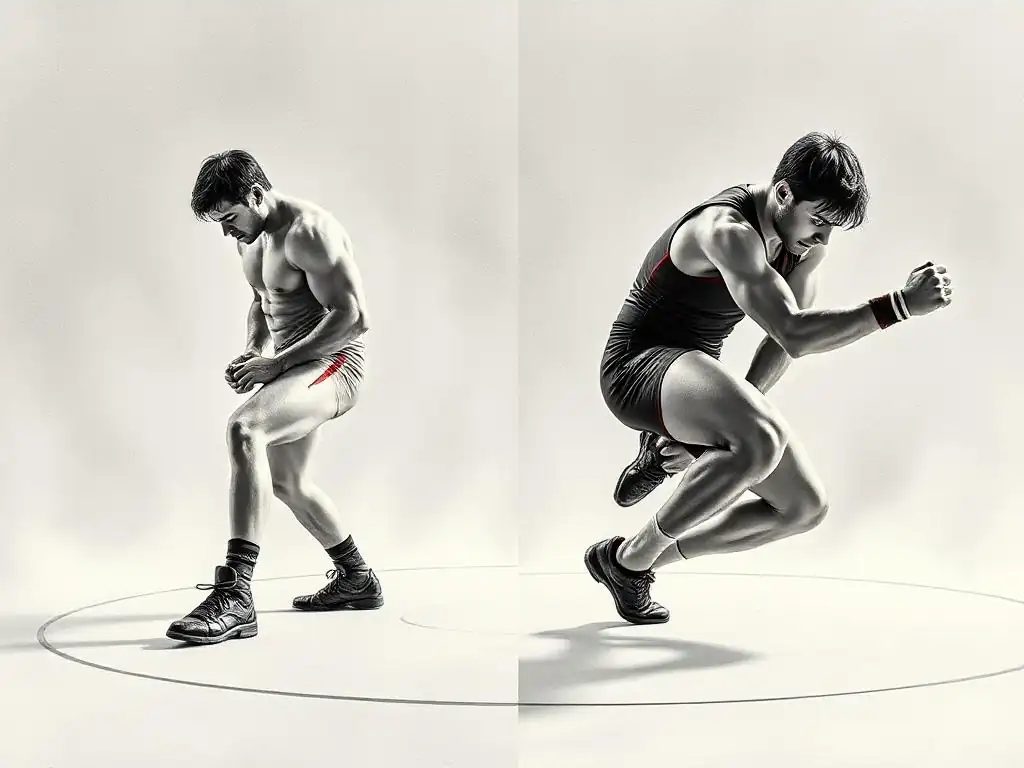
Freestyle Wrestling: Dynamic Leg Attacks and Scrambles
Freestyle wrestling is characterized by its dynamic nature, largely due to the legality of attacking the legs. This allows for rapid, explosive shots like single legs and double legs, which are foundational modern wrestling takedown techniques in this style. The ability to target the lower body means wrestlers must develop strong penetration steps, change of direction, and finishes that can overcome an opponent's defense. A successful takedown in Freestyle often involves driving through the opponent's defense or converting a shot into a dominant position.
Furthermore, Freestyle takedown attempts frequently lead to intense "scrambles," chaotic exchanges where both wrestlers fight to gain or regain control and avoid being taken down. Mastering scrambling is a critical skill, as a failed takedown attempt can easily turn into the opponent scoring. Techniques like leg lace turns and exposures often arise from these scramble situations, highlighting the style's emphasis on continuous action and the fluid transition between offense and defense in modern wrestling takedown techniques.
Greco-Roman Wrestling: Upper Body Dominance and Throws
In stark contrast, Greco-Roman wrestling centers entirely on upper-body control and takedowns. This means techniques below the waist are illegal, compelling wrestlers to develop incredible strength, leverage, and timing in throws and lifts. Clinch fighting is paramount, with wrestlers constantly battling for dominant hand fighting and tie-ups like double underhooks, which can lead directly to high-scoring throws such as suplexes or lateral drops. The setup for a Greco-Roman takedown often involves breaking an opponent's posture or creating an off-balance situation from a standing clinch.
Greco-Roman takedowns are often characterized by their spectacular nature, involving lifting an opponent off the mat and throwing them. Techniques like the body lock suplex require immense strength and coordination to execute safely and effectively. The style demands patience and precision in the clinch, waiting for the exact moment to commit to a throw. Defense involves maintaining strong posture, understanding leverage, and preventing opponents from securing deep tie-ups, making upper-body control the cornerstone of modern wrestling takedown techniques in Greco-Roman.
Modern Wrestling Takedown Techniques: A Detailed Analysis
Freestyle: Advanced Takedown Strategies
Freestyle wrestling features a wide array of modern wrestling takedown techniques, focusing heavily on attacking the legs. Success often depends on explosive entry and secure finishing.
- Single Leg Variations:
- High Single Leg: Targets the thigh or hip area. It's often used when an opponent squares up or steps forward. A key finish involves driving across the body or elevating the leg to break balance. Wrestlers like Jordan Burroughs have perfected finishes that transition directly into leg lace turns.
- Low Single Leg: Targets the ankle or calf. This requires extreme flexibility and speed to get low quickly. It's effective against opponents with wide stances. Finishing often involves sweeping the opponent's other leg or driving them down.
- Inside/Outside Single Leg: Refers to attacking the leg on the inside or outside relative to your stance. An inside single can be quicker but might require more head positioning, while an outside single often uses penetration and driving motion.
- Double Leg Variations:
- Penetration Step Double Leg: The quintessential double leg. It involves a deep penetration step, driving the knee between the opponent's legs, and securing both legs to drive through. Speed and a low level change are critical.
- Power Double Leg: Relies more on brute force and driving through an opponent's resistance after securing the legs. Often used when the opponent is backing up or squared up.
- Running the Pipe: A finishing technique for a double leg where the wrestler drives the opponent's legs to one side, turning their hips and running their feet in a circle to flatten them out.
- Other Common Freestyle Takedowns:
- Head Outside Single: Similar to a single leg, but the head is on the outside of the opponent's leg. This can lead to finishes like the high crotch or tree top.
- Ankle Picks: Quick, low attacks targeting the opponent's ankle to trip or pull them off balance. Requires excellent timing and hand speed.
- Snap Downs to Front Headlock: Not a takedown in itself, but a common setup. Snapping the opponent's head down breaks their posture, often leading to a go-behind takedown or transitioning into a front headlock series which can include various finishes like the crackdown.
Greco-Roman: Advanced Takedown Strategies
Greco-Roman wrestling's modern wrestling takedown techniques are defined by upper body control and throws, demanding immense strength and technical precision.
- Throws:
- Suplex Variations (Gut Wrench, Bodylock Suplex): The suplex involves lifting an opponent and throwing them over your head or to the side, landing them on their back for exposure points. The gut wrench is a turn from par terre (ground position), but bodylock suplexes are common from standing. Aleksandr Karelin's reverse lift (a form of suplex) was legendary.
- Headlock Throws: Applied from a headlock position, using hip leverage and rotation to throw the opponent to the mat. Can be high-risk, high-reward.
- Arm Throws: Techniques like the arm drag to a throw or an arm spin utilize the opponent's arm position to generate momentum for a throw.
- Clinch Work and Takedowns:
- Underhook Series: Securing an underhook (your arm under the opponent's armpit) provides significant control and leverage for throws like the lateral drop or setting up body locks.
- Overhook Series: An overhook (your arm over the opponent's arm) can be used to control distance, break posture, and set up throws or trips, though it often provides less offensive leverage than an underhook.
- Two-on-One Takedowns: Controlling one of the opponent's arms with both of yours (often called a "wrist and elbow" tie) allows for off-balancing and setting up trips or throws.
- Lifts and Dumps:
- Bodylock Lift: Securing a bodylock around the opponent's torso allows for lifting them off the ground, which can transition into a throw or a "dump" where they are driven straight down to the mat.
- Lateral Drop: Executed from an underhook or bodylock, this involves stepping across the opponent and using hip torque to drop them to the side.
Drills and Training Methods for Wrestling Takedowns
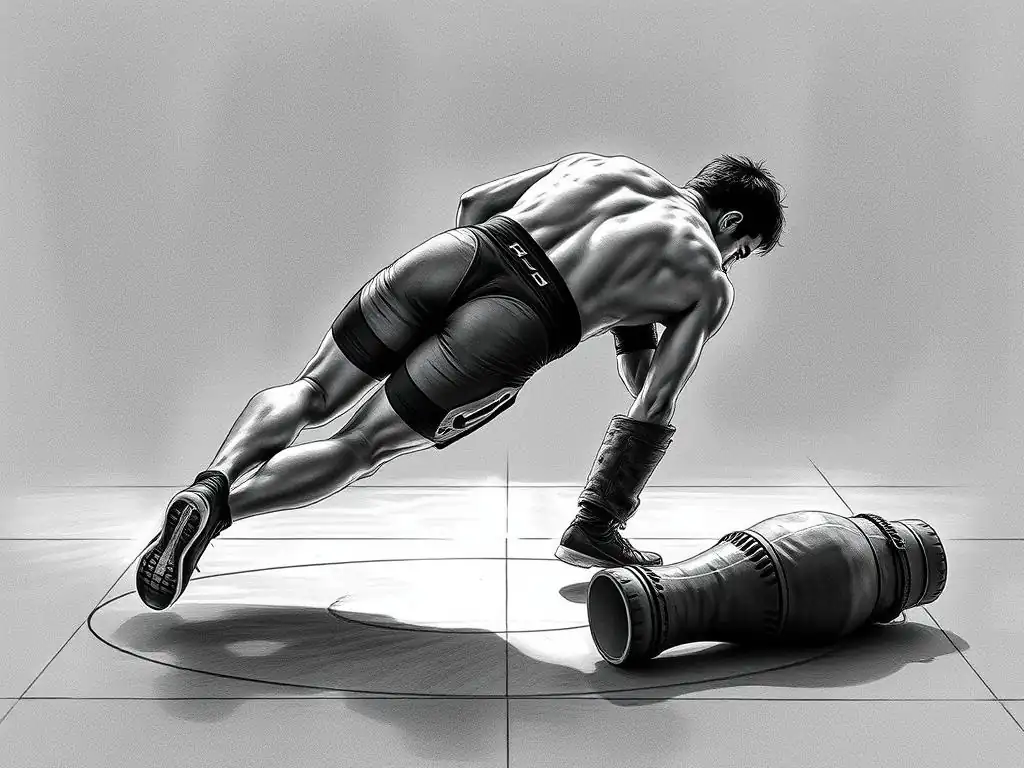
Developing proficiency in modern wrestling takedown techniques requires dedicated practice incorporating various training methods.
Developing Explosiveness and Agility for Takedowns
Executing effective takedowns demands explosive power, particularly in the legs and hips, and the agility to change direction quickly. Training regimens often include plyometrics such as box jumps, broad jumps, and squat jumps to build lower body power. Sprinting and change-of-direction drills improve speed and agility crucial for penetration steps and reacting to an opponent's movements. Weightlifting programs focus on compound movements like squats, deadlifts, and power cleans to build overall strength necessary for driving through shots and executing throws.
Core strength is also vital for maintaining posture, finishing shots, and executing lifts and throws in Greco-Roman. Exercises like planks, medicine ball twists, and various abdominal exercises are standard. Developing flexibility and mobility, especially in the hips and ankles, is essential for achieving deep penetration steps and recovering from defensive positions during scrambles. A well-rounded physical conditioning program forms the base for mastering modern wrestling takedown techniques.
Takedown Specific Drills
Specific drills are the cornerstone of learning and refining wrestling takedown techniques. Drilling involves practicing individual techniques repeatedly with a partner, often starting slowly and gradually increasing speed and resistance. Examples include drilling penetration steps, finishing mechanics for single and double legs, executing specific throws from various tie-ups, and practicing transitions from setups to shots. Shadow wrestling, practicing movements and techniques without a partner, helps develop muscle memory and visualization.
Chain drilling involves linking multiple techniques together, such as a snap down to a go-behind, or an underhook to a lateral drop attempt. This helps wrestlers flow between moves and react to an opponent's defense. Situational drilling focuses on specific scenarios, like drilling takedowns from a particular tie-up or practicing finishing a shot when the opponent is defending in a specific way. These targeted drills help athletes internalize the mechanics and timing required for effective modern wrestling takedown techniques.
Live Sparring and Takedown Application
Live sparring, or "live wrestling," is crucial for applying learned wrestling takedown techniques in a dynamic, unpredictable environment. Starting rounds from the feet ("going live from the feet") allows wrestlers to practice setups, entries, finishes, and defenses against a resisting opponent. This is where timing, strategy, and the ability to react instinctively are honed. Sparring partners provide resistance, forcing wrestlers to adapt and problem-solve in real-time.
Specific live situations can also be drilled, such as starting in a clinch to practice Greco-Roman takedowns, or starting with one wrestler having a dominant tie-up. "King of the mat" or "shark tank" drills involve a wrestler staying in the center and wrestling short rounds against multiple fresh opponents, forcing them to continuously apply their modern wrestling takedown techniques under fatigue. These intense practices simulate competition conditions and are vital for developing the mental toughness and tactical awareness needed to score takedowns when it counts.
The Future of Wrestling Takedown Techniques
Emerging Trends in Takedown Offense and Defense
The landscape of modern wrestling takedown techniques is constantly evolving. One trend is the increasing integration of techniques across styles, particularly in Freestyle, where elements like upper-body control and trips historically more associated with folkstyle or even Greco-Roman are being incorporated into setups for leg attacks. Athletes are developing more unpredictable entries and finishes, moving beyond traditional linear attacks to incorporate more circular motion and misdirection.
Defensively, there's a growing emphasis on hip control and scrambling prowess. Wrestlers are becoming incredibly adept at defending shots and immediately transitioning into offensive opportunities during the ensuing scramble. Techniques like re-shots (immediately attempting a takedown after defending one) and positional awareness in leg defense are becoming more refined. The continuous analysis of international competition drives innovation, as coaches and athletes identify successful new approaches and counters, pushing the boundaries of modern wrestling takedown techniques.
The Role of Technology in Takedown Training
Technology is beginning to play a more significant role in the development and analysis of wrestling takedown techniques. Video analysis software allows coaches and athletes to break down match footage frame-by-frame, identifying strengths, weaknesses, and patterns in both their own and their opponents' takedown attempts and defenses. This granular analysis helps in tailoring training programs and developing specific game plans.
Wearable technology and motion capture systems are also being explored to provide data on explosiveness, angles, and efficiency of movement during takedown execution. While not yet widespread, these tools have the potential to offer objective feedback on technique mechanics. Furthermore, online resources and video platforms allow for rapid dissemination of new techniques and training methods globally, accelerating the evolutionary process of modern wrestling takedown techniques across different countries and coaching philosophies.
Conclusion: Mastering the Art of the Takedown
The evolution of takedowns in modern Freestyle and Greco-Roman wrestling is a testament to the sport's dynamic nature and the continuous pursuit of technical excellence. From the foundational trips and throws of antiquity to the complex, explosive modern wrestling takedown techniques seen today, each style has carved out a unique path driven by its rules and strategic emphasis. Freestyle thrives on dynamic leg attacks and scrambles, while Greco-Roman demands mastery of upper-body control and powerful throws.
Mastering modern wrestling takedown techniques requires not only learning the mechanics of individual moves but also developing the requisite physical attributes – explosiveness, strength, agility – and the strategic understanding to apply techniques effectively against a resisting opponent. Dedicated drilling, situational practice, and live sparring are essential components of training. As the sport continues to evolve, influenced by innovative athletes, coaches, and emerging technology, the art of the takedown will undoubtedly reach new levels of sophistication, remaining the critical battleground in the competitive wrestling arena.
Frequently Asked Questions
What are some key differences between takedown techniques in Freestyle and Greco-Roman wrestling?
Freestyle wrestling allows leg attacks, which are prohibited in Greco-Roman. Greco-Roman focuses solely on upper-body takedowns using holds above the waist. This fundamental difference impacts the strategic approach to takedowns.
How has the emphasis on athleticism influenced modern wrestling takedown techniques?
Modern wrestling prioritizes explosive power and agility, leading to quicker, more dynamic takedown attempts. The focus has shifted from purely technical execution to incorporating athletic prowess in takedown strategies.
What role does video analysis play in the development of modern wrestling takedown techniques?
Video analysis allows coaches and wrestlers to study opponents’ tendencies and refine their own techniques. It also aids in identifying areas for improvement and adapting to evolving takedown trends.
How have rule changes affected the evolution of takedown techniques in modern wrestling?
Rule changes often incentivize specific takedown styles or penalize others, driving innovation and adaptation. The need to score points within new parameters forces wrestlers to develop new approaches.
What are some common training drills used to improve modern wrestling takedown techniques?
Common drills include sprawl drills for defense, penetration step drills for offense, and live wrestling scenarios to apply techniques under pressure. These drills build the necessary muscle memory and reaction time.
Final Reflection: Embracing the Dynamic Art of Takedowns
The journey through the evolution of takedowns in modern freestyle and Greco-Roman wrestling reveals more than just technical advancements; it highlights the unyielding spirit of innovation and adaptation that defines the sport. What began as a study of specific techniques has blossomed into an appreciation for the constant refinement and strategic thinking that elevates wrestling to an art form, a dance of power and precision.
This evolution has profoundly shaped the cultural landscape of wrestling, influencing training methodologies and competitive strategies worldwide. The relentless pursuit of the perfect takedown, a quest for leverage and control, mirrors our own struggles for mastery in any field. The ultimate goal of wrestling is to control your opponent, and the takedown is the first step in achieving that control.
This quote encapsulates the essence of wrestling, and its relevance extends far beyond the mat, reminding us that control often begins with a single, decisive action.
Now, as you step away from this exploration of modern wrestling takedown techniques, consider how the principles of adaptation and innovation apply to your own life. Just as wrestlers constantly refine their craft, seek out new advantages, and adapt to evolving challenges, so too can you embrace change, learn from your experiences, and strive for continuous improvement. The mat is a microcosm of life; may the lessons learned here inspire you to approach your own challenges with the same dedication, strategy, and unwavering spirit.
Unleash Your Inner Champion: Step Onto the Mat!
Thank you for diving deep into the evolution of takedowns! We hope you've gained valuable insights into refining your grappling game. Now, it's time to transform knowledge into action.
Here's how you can continue your journey to wrestling mastery:
- Master one new takedown variation this week. Spend focused training sessions drilling the technique until it becomes second nature.
- Share this article with your wrestling team or coach, sparking a discussion on modern strategies.
- Explore related articles on Martial Arts Mastery about strength training drills to enhance your takedown power.
What's one small adjustment you can make today to elevate your takedown game?