
Yang Style's "Large Frame": Understanding Its Significance in Form Practice

Welcome to Martial Arts Mastery, your gateway to the profound world of combat traditions! Ever wondered about the elegant yet powerful foundation of Tai Chi? Dive into our exploration of Yang Style's "Large Frame" and unlock the secrets behind its significance in form practice. Discover how this foundational structure shapes movement, cultivates internal energy, and connects you to a lineage of martial arts excellence. Intrigued? Let's begin!
- Yang Style Tai Chi: Exploring the Traditional Large Frame (Da Jia)
- Introduction to Yang Style Tai Chi and Frame Variations
- Defining the Traditional Large Frame (Da Jia) in Yang Style
- Historical Context of Yang Style Large Frame Development
- The Core Principles of Yang Style Large Frame Practice
- Benefits of Practicing the Yang Style Large Frame
- Key Differences Between Yang Style Large Frame and Other Tai Chi Styles
- Common Mistakes to Avoid in Yang Style Large Frame Training
- Advanced Applications of Yang Style Large Frame Principles
- Learning Resources for Yang Style Large Frame
- Conclusion: The Enduring Value of Yang Style Large Frame
-
Frequently Asked Questions
- What exactly is the "Large Frame" in Yang Style Tai Chi?
- Why is the "Large Frame" considered significant in Yang Style Tai Chi practice?
- Is the "Large Frame" suitable for beginners in Yang Style Tai Chi?
- How does the "Large Frame" differ from other frames or styles within Yang Style Tai Chi?
- What are some potential benefits of consistently practicing the "Large Frame" in Yang Style?
- Final Reflection: Embracing the Legacy of Yang Style's Large Frame
- Unleash Your Inner Balance: Begin Your Yang Journey Today!
Yang Style Tai Chi: Exploring the Traditional Large Frame (Da Jia)
Introduction to Yang Style Tai Chi and Frame Variations
The Core Principles of Yang Style Tai Chi Chuan
Yang Style Tai Chi Chuan, as codified and popularized by masters like Yang Luchan, Yang Jianhou, and especially Yang Chengfu, is renowned for its gentle, flowing movements and emphasis on relaxation and internal cultivation. At its heart lie principles such as maintaining an upright posture, relaxing the joints, sinking the weight, and coordinating movement with breath.
These principles are not merely physical instructions but are deeply intertwined with the cultivation of internal energy, known as Qi, and the development of mental tranquility and focus. The practice aims to unify mind, body, and spirit through slow, deliberate motions that embody the philosophical tenets of Yin and Yang.
Another fundamental principle is the concept of rootedness – establishing a stable connection to the ground through the feet, allowing for powerful yet yielding movements. This rootedness is crucial for generating force from the legs and transmitting it through the body, a core idea in martial applications and internal energy cultivation.
The continuous, circular nature of the movements, avoiding abrupt stops or starts, further emphasizes the flow of energy and the interconnectedness of all parts of the body. Mastery of these principles forms the foundation for effective practice in any Yang style frame, including the distinctive Yang style large frame.
Understanding Frame Size in Tai Chi Practice
In Tai Chi Chuan, the term "frame" or Jia refers to the size and shape of the postures and movements within a specific style or lineage. Different frame sizes exist, typically categorized as Large Frame ( Da Jia), Medium Frame ( Zhong Jia), and Small Frame ( Xiao Jia). These variations primarily differ in the extent of the limb movements, the height of the stances, and the overall compactness or expansiveness of the form. A larger frame generally involves wider stances and more expansive arm movements, while a smaller frame features narrower stances and more compact movements.
Understanding frame size is important because it influences the physical demands, the focus of training, and the potential applications of the form. For instance, a large frame often requires greater flexibility and balance due to wider stances and larger movements, while a small frame might emphasize rootedness and subtle internal adjustments. While the underlying principles of Tai Chi remain consistent across frames within a style, the specific expression and training methodologies adapt to the chosen frame size. The Yang style large frame is perhaps the most widely recognized and practiced variation of Yang style Tai Chi today.
Defining the Traditional Large Frame (Da Jia) in Yang Style
Characteristics of the Yang Style Large Frame Form
The Yang style large frame, or Da Jia, is characterized by its expansive, open postures and slow, even tempo. Stances are typically wide and relatively low, promoting strong leg development and stability. Arm movements are broad and circular, extending outwards from the body, requiring significant flexibility and coordination. The form emphasizes the continuous flow of movement, with transitions between postures being smooth and deliberate, reflecting the principle of uninterrupted energy flow. This emphasis on large, clear movements makes the Yang style large frame visually distinct and highly accessible for beginners learning the basic shapes and principles.
Key characteristics also include maintaining a consistently upright torso, sinking the weight into the legs, and relaxing the upper body. The movements often involve significant shifting of weight from one leg to the other, which helps develop balance and coordination. For example, in the movement "Single Whip," the stance is wide, and the arm movements are broad arcs.
This expansive nature not only aids in understanding the physical mechanics but also facilitates the cultivation of Qi by allowing energy to circulate freely through the extended limbs and open joints. The standardized Yang style large frame form, particularly the 85/88-movement sequence attributed to Yang Chengfu, exemplifies these characteristics.
Distinguishing Large Frame from Other Frame Variations
While all Yang style frames share core principles, the large frame is clearly distinguished by its scale. The Medium Frame ( Zhong Jia) typically features stances that are narrower and higher than Da Jia, with arm movements that are less expansive. It often represents a transition or an intermediate level of practice, perhaps focusing more on internal connections rather than outward physical expression. The Small Frame ( Xiao Jia) is the most compact, with high, narrow stances and minimal external movement, placing a strong emphasis on internal mechanics, subtle energy circulation, and refined rooting.
Historically, the Yang family practiced different frames depending on the practitioner's level and focus. Yang Luchan's original form was said to be quite compact, perhaps closer to a small or medium frame, reflecting its martial efficiency. His sons and grandsons, particularly Yang Chengfu, gradually modified the form, making it more expansive and accessible, leading to the development of the widely practiced Yang style large frame. This evolution wasn't about changing the fundamental principles but about adapting the physical expression for different training goals, making the large frame particularly suitable for health and introductory purposes.
Historical Context of Yang Style Large Frame Development
The Origins of Da Jia in the Yang Family Tradition
The origins of the Yang style large frame are deeply rooted in the Yang family's development of Tai Chi Chuan. Yang Luchan (1799-1872), the founder, learned the art from the Chen family and subsequently developed his own unique style. His initial practice was reportedly focused on martial application and internal power, likely featuring a more compact frame ( Xiao Jia or Zhong Jia) suited for combat efficiency. Historical accounts suggest his early form was challenging and less visually open than what is commonly seen today.
As Yang Luchan taught and his sons, Yang Banhou (1837-1892) and Yang Jianhou (1839-1917), continued the tradition, the form evolved. Yang Jianhou, known for his versatility, taught various frames, including a large frame. His son, Yang Chengfu (1883-1936), is credited with standardizing and popularizing the Yang style large frame form that is most widely practiced globally today. His motivation was to make Tai Chi accessible to a broader audience for health and self-cultivation, leading to a more open, gentle, and less overtly martial expression compared to earlier family forms.
Yang Chengfu's Influence on the Large Frame Style
Yang Chengfu was a pivotal figure in the history of Yang style Tai Chi, particularly in the standardization and popularization of the large frame. Recognizing the growing interest in Tai Chi for health benefits among the general public, he refined his family's form to be smoother, more uniform, and easier to learn than the more martial, compact versions. He emphasized relaxation, even movement, and maintaining an upright body, codifying these principles in his influential books, such as "The Complete Book of Yang Style Tai Chi Chuan" (太極拳術), published in 1934.
Yang Chengfu's teachings and the form he promoted became the blueprint for the modern Yang style large frame. His students spread his teachings widely, establishing lineages that continue to practice his standardized form. This version features clear, well-defined postures and transitions, making it ideal for learning the fundamental principles of Tai Chi. While some variations exist among different lineages stemming from Yang Chengfu's students, the core characteristics of the Yang style large frame as he defined them remain consistent, ensuring its enduring legacy.
The Core Principles of Yang Style Large Frame Practice
Posture and Alignment in Da Jia
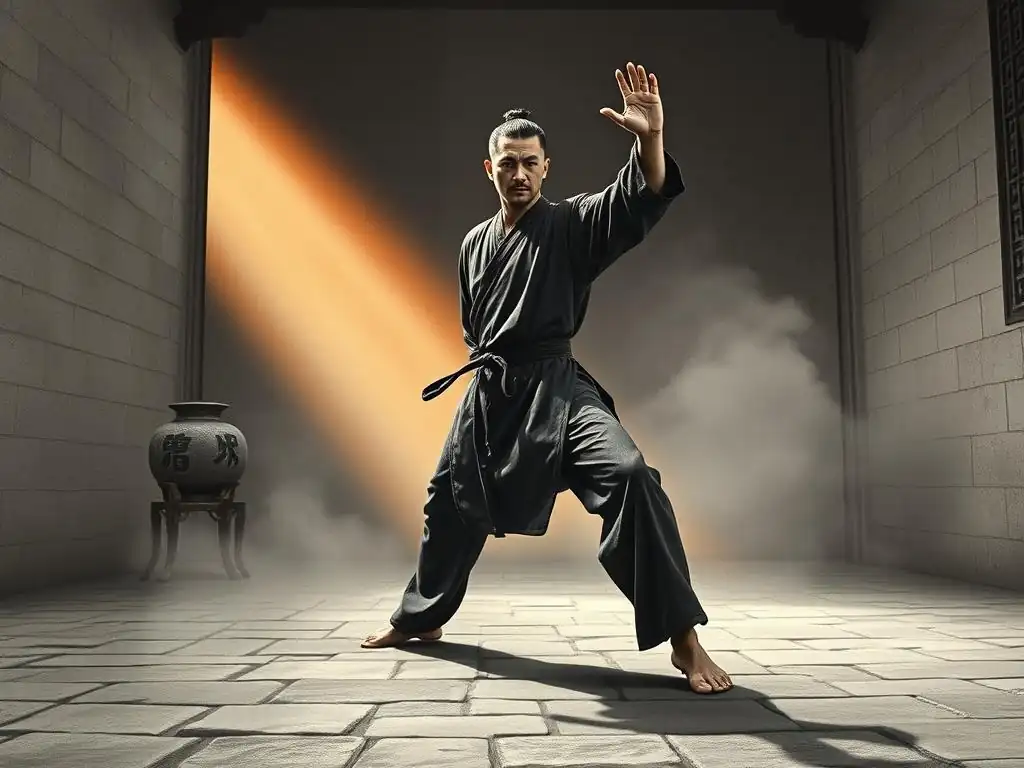
Maintaining correct posture and alignment is paramount in Yang style large frame practice. The head should be suspended as if pulled by a string from above, keeping the neck relaxed and the chin slightly tucked. The shoulders and elbows must be relaxed and sunk, allowing energy to flow freely. The chest should be slightly hollowed, and the back rounded, facilitating the sinking of Qi to the Dantian (lower abdomen). The waist is the central axis, directing all movements, and the hips should be relaxed to allow for rotation and sinking.
In the stances characteristic of the Yang style large frame, the knees are bent, and the weight is primarily supported by the legs, but without locking the joints. The feet are rooted, with the weight distributed appropriately according to the movement, ensuring stability. For example, in "Bow Stance," the front knee is bent directly over the foot, and the back leg is extended but not locked, with the foot angled outwards.
This alignment ensures that the skeletal structure supports the body weight efficiently, allowing the muscles to relax and facilitating the smooth flow of blood and Qi. Proper alignment in the Yang style large frame is not static but dynamic, constantly adjusting with each transition.
Movement and Transition Techniques
Movement in the Yang style large frame is characterized by its continuity, smoothness, and even pace. Each movement flows seamlessly into the next, without interruption or jerking. The principle of "movement like silkworm drawing silk" applies, emphasizing a gentle, continuous, and even force throughout the body. All movements originate from the waist and are directed by the mind ( Yi). The limbs follow the movement initiated by the core, ensuring coordinated and integrated action.
Transitions between postures are crucial in the Yang style large frame and require careful attention to weight shifting. Weight is transferred gradually and smoothly from one leg to the other, maintaining balance and control throughout the process. For example, transitioning from "Ward Off" to "Roll Back" involves a precise shift of weight, rotation of the waist, and coordinated movement of the arms. This fluid weight shifting, combined with the large, open movements, trains balance, coordination, and the ability to direct force effectively, even in the context of a slow, gentle form.
Breath Control and Internal Energy (Qi) Cultivation
Breath control is integral to practicing the Yang style large frame. Breathing should be natural, deep, and abdominal, coordinated with the movements. Generally, inhalation occurs during expansive or receiving movements, and exhalation occurs during contracting or issuing movements. The breath should be slow, quiet, and even, matching the unhurried pace of the form. Over time, the breath becomes longer and deeper, settling into the lower abdomen, which is linked to the cultivation of Qi.
The large, open postures and slow, continuous movements of the Yang style large frame are specifically designed to facilitate the circulation of Qi. Relaxing the joints, maintaining proper alignment, and moving from the waist help to open the channels ( Jingluo) through which Qi flows. The expansive nature of the movements allows Qi to extend to the extremities.
Cultivating Qi is not a mystical concept but relates to developing heightened body awareness, improving circulation, and integrating the mind and body. Consistent practice of the Yang style large frame, with attention to breath and internal principles, is believed to enhance vitality and overall well-being.
Benefits of Practicing the Yang Style Large Frame
Physical Benefits: Strength, Flexibility, and Balance
Practicing the Yang style large frame offers significant physical benefits. The wide stances and low postures build strength in the legs, core, and back muscles. Holding these postures for extended periods, even in slow motion, creates isometric strength and muscular endurance. The expansive arm movements improve flexibility in the shoulders, elbows, and wrists, while the deep bending and stretching involved in transitions enhance flexibility in the hips, knees, and ankles.
Perhaps one of the most widely recognized physical benefits is the improvement of balance. The constant, controlled weight shifts and the requirement to maintain stability in wide stances challenge and strengthen the muscles responsible for balance and proprioception. Studies have shown that regular Tai Chi practice, including the Yang style large frame, can significantly reduce the risk of falls in older adults, with some research indicating improvements in balance measures by as much as 50% after several months of consistent training (e.g., studies published in journals like the New England Journal of Medicine or Archives of Internal Medicine).
Mental Benefits: Focus, Concentration, and Mindfulness
Beyond the physical, the Yang style large frame is a powerful tool for mental cultivation. The slow, deliberate nature of the practice requires sustained focus and concentration to remember the sequence of movements, coordinate breath with motion, and maintain correct posture. This intense mental engagement helps to quiet the "monkey mind" and develop the ability to concentrate for extended periods. The repetitive yet intricate nature of the form trains mental discipline and patience.
Tai Chi is often described as "meditation in motion," and the Yang style large frame embodies this concept. The focus on the present moment – the feeling of weight shifting, the position of the limbs, the rhythm of the breath – cultivates mindfulness. Practitioners learn to observe their thoughts and sensations without judgment, fostering a state of calm awareness. Regular practice can lead to reduced anxiety, improved mood, and enhanced cognitive function, including better memory and attention span, as indicated by various psychological studies on Tai Chi.
Health Benefits: Circulation, Digestion, and Stress Reduction
The gentle, continuous movements of the Yang style large frame stimulate circulation throughout the body. The rhythmic expansion and contraction of the muscles, combined with deep abdominal breathing, act like a gentle internal massage, promoting blood flow and lymphatic drainage. This can help improve cardiovascular health and boost the immune system. The twisting and turning motions from the waist can also stimulate internal organs, potentially aiding digestion and elimination.
One of the most significant health benefits is stress reduction. The slow pace, focus on breath, and meditative quality of the practice activate the body's relaxation response, lowering cortisol levels and reducing the physiological effects of stress. Regular practice of the Yang style large frame provides a dedicated time for relaxation and mental release, helping to alleviate tension accumulated from daily life. This comprehensive approach to well-being makes the Yang style large frame a valuable practice for holistic health.
Key Differences Between Yang Style Large Frame and Other Tai Chi Styles
Comparison with Chen Style Tai Chi
Chen Style Tai Chi, the oldest known style, differs significantly from the Yang style large frame. Chen style is characterized by alternating slow, soft movements with bursts of explosive power ( Fa Jin), spiral force ( Chan Si Jin), and low, demanding stances. While the Yang style large frame emphasizes uniform speed and gentle flow, Chen style incorporates more dynamic changes in tempo and tension. For instance, Chen style forms often include jumping, stamping, and rapid strikes, elements largely absent in the standardized Yang style large frame form.
Physically, Chen style stances are often lower and wider than even the Yang style large frame, requiring greater leg strength and flexibility. The spiral movements are more pronounced and central to generating power in Chen style. While both styles share underlying principles of rootedness, using the waist, and cultivating Qi, their outward expression and training methodologies diverge considerably. The Yang style large frame is generally seen as softer and more focused on health and relaxation, while Chen style retains a stronger emphasis on martial applications and dynamic power generation.
Wu Style Tai Chi (specifically the style of Wu Jianquan, distinct from Wu/Hao style) also presents notable differences from the Yang style large frame. Wu style is characterized by a more compact frame, leaning slightly forward, and emphasizing subtle, internal adjustments and precise weight distribution. The movements are generally smaller and more contained than in the Yang style large frame, with a focus on yielding and neutralization.
Stances in Wu style are often narrower than in the Yang style large frame, with a greater emphasis on balancing on one leg for extended periods. The forward lean, while controversial to some, is a characteristic of this style, linked to its emphasis on neutralizing incoming force. While both styles prioritize relaxation and rootedness, the external appearance and specific techniques for applying principles differ. The Yang style large frame's expansive movements contrast with Wu style's more subtle, internal focus and compact structure.
Unique Aspects of Yang Style Da Jia
The Yang style large frame's unique aspects stem primarily from Yang Chengfu's standardization efforts. Its defining features include:
- Uniformity of Speed: The form is practiced at a consistently slow and even pace, promoting relaxation and internal awareness.
- Open and Expansive Postures: Wide stances and broad arm movements facilitate physical relaxation and Qi circulation.
- Emphasis on Health and Relaxation: While retaining martial roots, the primary focus in modern Da Jia practice is on physical and mental well-being.
- Accessibility: The clear, standardized structure and gentle nature make it the most widely taught and accessible Tai Chi form for beginners globally.
- Upright Posture: Strong emphasis on maintaining a naturally upright torso without leaning, promoting good alignment.
These characteristics distinguish the Yang style large frame not only from other Tai Chi styles but also from earlier, more martial versions of Yang style itself. It represents a deliberate evolution towards a form optimized for health, relaxation, and broad public appeal, contributing significantly to Tai Chi's global popularity.
Common Mistakes to Avoid in Yang Style Large Frame Training
Posture Errors and Corrections
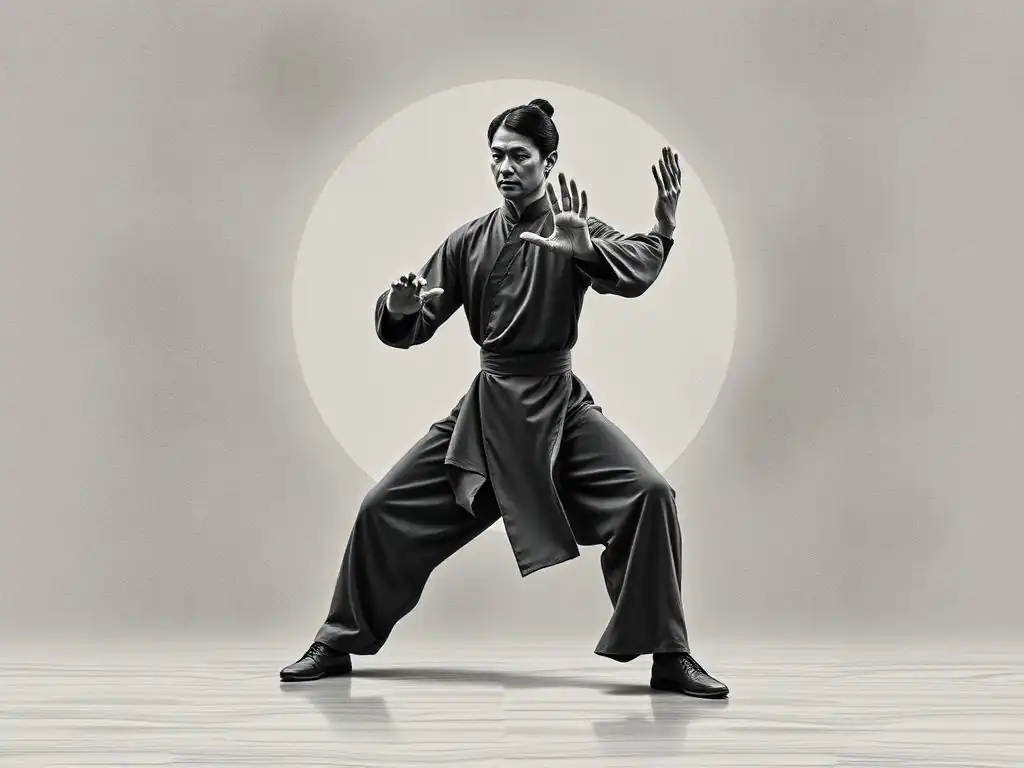
Common posture errors in the Yang style large frame include raising the shoulders, locking the knees, collapsing the chest, and failing to keep the head suspended. Raising the shoulders creates tension that impedes Qi flow and relaxation. Locking the knees strains the joints and prevents proper weight sinking. A collapsed chest restricts breathing, while failing to suspend the head disrupts the alignment of the spine and neck.
Correcting these errors requires constant self-awareness and mindful practice. A teacher can provide external feedback, but the practitioner must cultivate internal sensitivity. For example, to correct raised shoulders, focus on the feeling of the shoulder blades sliding down the back. To avoid locked knees, maintain a slight bend and the feeling of elasticity. Consciously checking key points like the head, shoulders, chest, waist, and hips throughout the form helps reinforce correct alignment. Many practitioners use mental checklists during practice to identify and correct these habitual errors.
Improper Weight Shifting and Balance Issues
Improper weight shifting is another frequent mistake. This often manifests as jerky transitions, losing balance, or failing to fully commit weight to one leg before moving the other. This can stem from rushing the movements, lack of awareness of the feet and legs, or insufficient leg strength. Forgetting the principle that "the weight must be 100% on one leg before the other moves" is a common pitfall.
Improving weight shifting involves slowing down the transitions even further and paying close attention to the feeling of the weight sinking into the supporting foot. Practice drills focusing specifically on shifting weight back and forth between stances can be beneficial. Strengthening the legs through holding stances ( Zhan Zhuang) also improves the ability to support the body's weight during transitions, reducing balance issues. Practicing on slightly uneven surfaces under supervision can also help improve proprioception and stability.
Tension and Rigidity in Movement
Perhaps the most fundamental error, and one that contradicts the core principles, is tension and rigidity. This can appear as stiff arms, tight fists, clenched jaw, or a rigid torso. Tension blocks the flow of Qi, prevents relaxation, and makes movements appear wooden and disconnected. It often arises from trying too hard, focusing too much on the external shape, or holding onto muscle tension from daily activities.
Overcoming tension requires conscious effort to relax the entire body, joint by joint, from head to toe, before and during the form. The concept of "Song" (松 - relaxation) is central. Focusing on the feeling of looseness in the joints and the sensation of Qi flowing can help.
Beginning practitioners often benefit from practicing the form very slowly, almost to the point of stillness, to identify areas of tension. Visualizations, such as imagining the body is filled with water or that the limbs are heavy ropes, can also aid in cultivating relaxation and fluidity in the Yang style large frame.
Advanced Applications of Yang Style Large Frame Principles
Self-Defense Applications of the Large Frame Form
While the modern Yang style large frame is primarily practiced for health, it retains the underlying principles of self-defense. Every posture and transition has potential martial applications, though they are often subtle and not explicitly taught in health-focused classes. The large, open movements, for example, teach principles of yielding, redirecting force, and generating power from the ground through the waist. The expansive postures provide a large base for stability and leverage.
For instance, the movement "Grasp the Sparrow's Tail" contains principles of warding off, rolling back, pressing, and pushing – fundamental actions for neutralizing and responding to an opponent's force. The controlled weight shifts build the ability to move off the line of attack and maintain balance while applying force.
While the slow speed isn't for combat itself, it trains the body mechanics and internal connections necessary for effective application, which would be performed with speed and intention in a real situation. Understanding these applications requires specific instruction from a teacher experienced in the martial aspects of the Yang style large frame.
Integrating Large Frame Principles into Pushing Hands (Tui Shou)
Pushing Hands ( Tui Shou) is a two-person drill that applies the principles of Tai Chi in a dynamic interaction. The principles learned in the Yang style large frame form – rootedness, relaxation, yielding, adhering, listening energy ( Ting Jin), and generating power from the waist – are directly applied in Tui Shou. The large frame's emphasis on maintaining a large, stable structure and moving from the core is crucial for effectively neutralizing an opponent's force and applying one's own.
In Tui Shou, practitioners use the skills developed through the expansive movements and stable stances of the Yang style large frame to maintain their balance while disrupting their partner's. The ability to sink and root, developed through the form's low stances, allows practitioners to absorb and redirect force.
The principle of moving from the waist, central to the large frame, enables the practitioner to generate power through the whole body, rather than relying on isolated limb strength. Tui Shou is a practical method for testing and refining the internal principles learned through the solo practice of the Yang style large frame.
Application to Sword Form (Jian)
The principles of the Yang style large frame are also foundational for practicing Yang style sword form ( Jian). While wielding a weapon introduces new dynamics, the core body mechanics, rootedness, waist-driven movement, and coordination of mind and body remain essential. The expansive nature of the large frame translates into large, flowing movements of the sword, requiring significant balance and control.
The stances and transitions used in the Yang style sword form are often derived from the hand form, adapted for wielding the sword. The principle of Yi (intention) leading Qi and Qi leading the body is extended to leading the sword. The relaxation and fluidity cultivated in the large frame hand form allow the practitioner to move the sword with grace and power, without relying on brute force. Practicing the Yang style large frame hand form provides the necessary internal foundation and physical conditioning for effective sword practice.
Learning Resources for Yang Style Large Frame
Finding Qualified Instructors for Da Jia
Finding a qualified instructor is crucial for learning the Yang style large frame correctly. Look for teachers with a clear lineage tracing back to Yang Chengfu, as lineage indicates a direct transmission of knowledge and principles. Experienced instructors possess deep understanding not only of the movements but also of the underlying internal principles, corrections for common errors, and the nuances of the form.
Consider visiting local Tai Chi schools or community centers that offer Yang style classes. Observe a class if possible, and talk to the instructor and current students. A good instructor emphasizes fundamental principles like relaxation, sinking, and proper alignment, rather than just teaching the sequence of movements. They should be able to explain the purpose of different movements and provide personalized corrections. Online resources can supplement learning but cannot replace the direct guidance and hands-on correction provided by a qualified teacher in the Yang style large frame.
Recommended Books and Videos on Yang Style Large Frame
Several classic and contemporary resources can supplement in-person instruction in the Yang style large frame. Yang Chengfu's own book, "The Complete Book of Yang Style Tai Chi Chuan," is a foundational text, providing descriptions and photographs of the postures he standardized. While the text can be dense, it offers invaluable insight into the principles he emphasized.
Other notable authors include students and descendants of Yang Chengfu, such as Fu Zhongwen, whose book "Yang Style Tai Chi Chuan" is highly regarded for its clarity and detailed explanations. Many instructional videos are also available, ranging from basic form demonstrations to detailed breakdowns of movements and principles. When choosing resources, look for those that clearly demonstrate the slow, open movements and emphasize the core principles characteristic of the Yang style large frame. However, remember that books and videos are learning aids, not replacements for hands-on correction from a teacher.
Yang Family Tai Chi Associations and Lineages
Many organizations and associations exist globally that are dedicated to preserving and promoting the Yang style large frame as taught by Yang Chengfu. These often represent specific lineages tracing back to his prominent students. Joining such an association can provide access to certified instructors, workshops, and a community of fellow practitioners.
Examples include organizations founded by the descendants of Yang Chengfu, such as the International Yang Family Tai Chi Chuan Association, which maintains a global network of centers and certified instructors teaching a standardized curriculum. Other lineages stem from students like Fu Zhongwen, Dong Yingjie, Cheng Manching (whose form is a shorter, modified version of the large frame), and others. Exploring these associations can help practitioners find a lineage and teaching style that resonates with them and ensures they are learning an authentic version of the Yang style large frame.
Conclusion: The Enduring Value of Yang Style Large Frame
Summarizing the Benefits and Significance of Da Jia
The Yang style large frame ( Da Jia) holds significant value in the world of Tai Chi Chuan. Its expansive movements and slow, even tempo make it an accessible and effective practice for cultivating physical health, mental tranquility, and internal energy. The documented benefits in improving balance, flexibility, strength, reducing stress, and promoting overall well-being contribute to its widespread popularity. As codified by Yang Chengfu, the Yang style large frame standardized a powerful internal art, making its principles available to millions.
Beyond its health benefits, the Yang style large frame provides a solid foundation for understanding the deeper principles of Tai Chi, including rootedness, relaxation, waist control, and the coordination of mind and body. While its martial applications are often subtle in modern practice, the form trains the fundamental body mechanics necessary for effective self-defense. Its enduring significance lies in its ability to harmonize the body, mind, and spirit through graceful, flowing movement.
Encouraging Further Exploration of Yang Style Tai Chi
For those interested in delving deeper into the art of Tai Chi Chuan, exploring the Yang style large frame is an excellent starting point. Its clarity and emphasis on core principles provide a strong foundation for further study. Continued practice offers ongoing benefits and deeper insights into the nuances of internal movement and energy cultivation.
Whether one seeks improved health, stress relief, mental focus, or a deeper understanding of internal martial arts, the Yang style large frame offers a rich and rewarding path. Seek out qualified instructors, dedicate time to consistent practice, and explore the vast resources available to deepen your understanding. The journey through the Yang style large frame is one of continuous learning and self-discovery, offering profound benefits that extend far beyond the physical movements themselves.
Frequently Asked Questions
What exactly is the "Large Frame" in Yang Style Tai Chi?
The "Large Frame" refers to a specific way of performing Yang Style Tai Chi forms, characterized by expansive movements and a focus on posture. It emphasizes full extension of the limbs.
Why is the "Large Frame" considered significant in Yang Style Tai Chi practice?
The "Large Frame" is crucial for developing body awareness, proper alignment, and internal energy flow. It helps build a strong foundation for more advanced techniques.
Is the "Large Frame" suitable for beginners in Yang Style Tai Chi?
Yes, the "Large Frame" is generally recommended for beginners as it promotes fundamental understanding and avoids the complexities of smaller, more intricate movements. It's a foundational element.
How does the "Large Frame" differ from other frames or styles within Yang Style Tai Chi?
Other frames, like the "Medium Frame" or "Small Frame," involve smaller, more compact movements. The Large Frame emphasizes expansive posture and full range of motion compared to these.
What are some potential benefits of consistently practicing the "Large Frame" in Yang Style?
Consistent practice can lead to improved balance, coordination, and internal energy cultivation. It also enhances body mechanics and overall health benefits.
Final Reflection: Embracing the Legacy of Yang Style's Large Frame
The exploration of Yang Style's "Large Frame" practice reveals more than just a physical exercise; it unveils a profound philosophy of movement and mindfulness. This connection between form and inner peace resonates deeply in our increasingly fast-paced world, offering a pathway to groundedness and self-awareness. By understanding the nuances of this foundational style, we gain access to a timeless tradition that continues to offer invaluable lessons in balance, posture, and the cultivation of qi.
The enduring appeal of Yang Style's Large Frame lies in its accessibility and adaptability. Its emphasis on natural movement and mindful intention allows practitioners of all ages and abilities to benefit from its therapeutic effects. The essence of Taijiquan is not in the complexity of the movements, but in the simplicity of the principles.
This quote perfectly encapsulates the beauty of the Large Frame, reminding us that true mastery lies in understanding and embodying the fundamental principles of balance, relaxation, and connection. The Large Frame isn't just a physical form; it's a living embodiment of these principles, shaping not only our bodies but also our minds and spirits.
As you step forward, consider the lessons learned from the Yang Style Large Frame. Let its principles of balance, relaxation, and mindful movement guide your actions, both on and off the mat. Embrace the journey of self-discovery that this practice offers, and allow its wisdom to enrich your life, fostering a deeper connection to yourself and the world around you. The legacy of Yang Style's Large Frame is waiting to be discovered within you.
Unleash Your Inner Balance: Begin Your Yang Journey Today!
Thank you for exploring the profound depths of Yang Style's Large Frame with us! Now that you understand its significance, it’s time to translate that knowledge into action and feel the benefits for yourself.
- Commit to practicing just one new movement from the Yang Style Large Frame each day for the next week. Feel the difference in your body awareness and balance.
- Share your biggest takeaway from this article with a fellow Tai Chi enthusiast – sparking discussion is a great way to deepen your understanding!
- Consider exploring other Tai Chi styles – broadening your horizons can enrich your appreciation for the Yang Style.
What small adjustment will you make in your Tai Chi practice today to better embody the principles of the Large Frame?