
Sharpening Your Tools: Solo Drills for Honing Muay Thai Techniques Anywhere

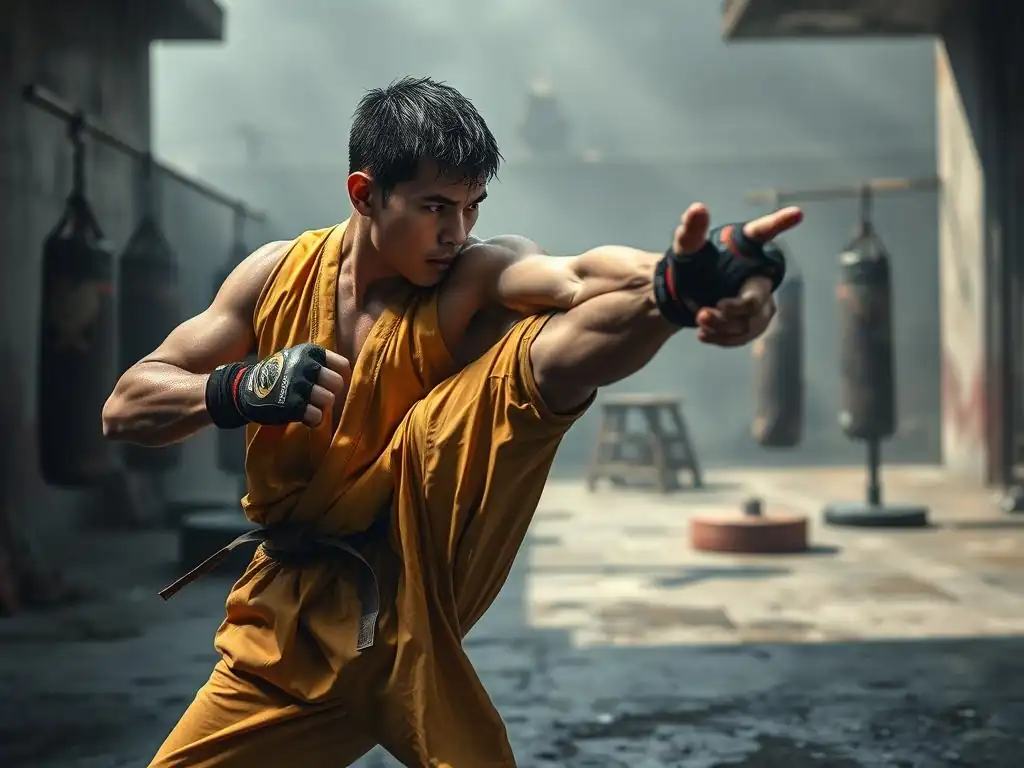
Welcome to Martial Arts Mastery, your ultimate resource for delving into the world's diverse fighting traditions.
Ever wondered how Muay Thai fighters achieve such devastating power and precision? Beyond the ring, a secret lies in rigorous solo practice. This time, we unlock the power of Muay Thai solo drills, revealing how you can hone your techniques and build fight-ready conditioning, even without a partner. Prepare to sharpen your skills and unlock the secrets to mastering the art of eight limbs... let's begin!
- Enhancing Striking Skills: Solo Drills for Muay Thai Excellence
- Introduction to Solo Muay Thai Training: Building a Strong Foundation
- Honing Fundamental Muay Thai Strikes Through Solo Practice
- Developing Powerful Kicks: Muay Thai Kicking Drills for Solo Training
- Advanced Muay Thai Solo Drills for Conditioning and Fight IQ
- Integrating Muay Thai Defense into Your Solo Training Program
- Sample Muay Thai Solo Training Routine: A Structured Approach
- Common Pitfalls in Muay Thai Solo Training and Solutions
- The Power of Visualization in Muay Thai Solo Training
- Conclusion: Maximize Your Muay Thai Potential with Dedicated Solo Training.
-
Frequently Asked Questions
- What are Muay Thai solo drills and why are they important?
- What are some examples of effective Muay Thai solo drills?
- How often should I incorporate solo drills into my Muay Thai training?
- Can solo drills replace partnered training in Muay Thai?
- What are the key benefits of focusing on solo drills in Muay Thai?
- Final Reflection: The Solitary Path to Muay Thai Mastery
- Elevate Your Game: Unleash Your Inner Muay Thai Warrior!
Enhancing Striking Skills: Solo Drills for Muay Thai Excellence
Introduction to Solo Muay Thai Training: Building a Strong Foundation
Why Solo Drills are Crucial for Muay Thai Improvement
Engaging in Muay Thai solo drills is not merely an optional add-on but a fundamental component of a fighter's development. While partner work and sparring are essential for learning timing and reaction, solo training allows for focused repetition without the pressure of an opponent. This dedicated practice time is invaluable for solidifying technique, building muscle memory, and identifying subtle flaws in execution that might be overlooked in dynamic partner exchanges. It's the laboratory where the foundational elements of your art are meticulously refined.
Consider the sheer volume of repetitions required to engrain proper striking mechanics. A single training session with a partner might offer dozens of reps of a specific technique like the roundhouse kick, but a dedicated solo session can easily quadruple that number. This high-volume, low-distraction environment makes Muay Thai solo drills exceptionally effective for automating movements, ensuring that when you perform a strike or defense under pressure, the correct form is instinctive. Legendary trainers often emphasize that mastery comes not just from understanding a technique, but from being able to execute it perfectly thousands of times.
Advantages of Individual Muay Thai Practice: Reflexes, Stamina, and Technique
Individual Muay Thai practice offers a unique blend of benefits that complement group training. Firstly, it significantly enhances reflexes and reaction time, particularly through dynamic shadow boxing where you simulate various scenarios and respond instantaneously. While not interacting with a live partner, the mental simulation sharpens your ability to anticipate and react based on perceived threats or opportunities, building a crucial neural pathway for rapid decision-making in combat.
Secondly, solo training is a powerful tool for building fight-specific stamina and endurance. Sustained rounds of shadow boxing or repetitive striking drills can push your cardiovascular system and muscular endurance in ways that differ from pad work or sparring. For example, performing 100 consecutive low kicks on an air shield or heavy bag during a solo session builds a distinct type of fatigue and resilience compared to throwing kicks in sparring.
This focused endurance training, often integrated into Muay Thai solo drills, directly translates to maintaining power and technique deep into later rounds of a fight. Furthermore, the ability to pause, analyze, and correct technique without holding up a partner allows for deeper technical refinement, ensuring that each movement is executed with maximum efficiency and power.
Honing Fundamental Muay Thai Strikes Through Solo Practice
Jab Mastery: Solo Drills for Speed, Precision, and Range
Mastering the jab is paramount in Muay Thai, serving as a range finder, setup tool, and disruptive strike. Solo drills for the jab focus on developing lightning speed, pinpoint accuracy, and understanding your effective striking distance. A simple yet effective drill involves standing in front of a wall or marked target and throwing hundreds of jabs, focusing solely on extending fully, rotating the fist correctly, and snapping the punch back quickly. Aim for sets of 50-100 repetitions per arm, prioritizing form over speed initially, then gradually increasing tempo while maintaining technical integrity.
To enhance precision, try marking several small targets at different heights and distances on a wall. Practice switching between these targets rapidly, ensuring each jab lands precisely on the intended spot. This variation of Muay Thai solo drills not only improves accuracy but also develops the ability to adjust range and angle quickly. Incorporating forward and backward steps with each jab helps integrate footwork, ensuring your jab is effective while moving and maintaining balance, a critical skill for controlling distance in a fight.
Cross Punch Power Generation: Solo Training for Rotation and Impact
The cross punch is a primary power strike in Muay Thai, deriving its force from hip and shoulder rotation. Solo training for the cross focuses on maximizing this rotational power and channeling it effectively through the strike. A key drill involves standing with proper fighting stance and throwing the cross with exaggerated hip and shoulder turn, ensuring the rear heel pivots off the ground. Practice this motion slowly at first, feeling the torque generated from the ground up, then gradually increase speed, focusing on the snap at the end of the punch.
To further develop power and snap, utilize resistance bands anchored behind you. Loop the band around your punching hand and practice throwing the cross against the resistance. This specific Muay Thai solo drill variant forces your muscles to work harder through the full range of motion, building explosive power and improving the retraction speed of the punch. Perform sets of 15-20 repetitions per side, focusing on powerful, controlled movements. Integrating this with the jab drill creates effective solo combinations, such as jab-cross repetitions, simulating basic offensive sequences.
Hook Punch Development: Solo Drills for Angle, Timing, and Power
The hook is a versatile strike used at medium to close range, requiring precise timing and powerful hip rotation. Solo drills for the hook emphasize developing the correct circular trajectory, generating force from the hips, and understanding the optimal angle for impact. Practice throwing hooks at different levels (head, body) while focusing on keeping the elbow bent at approximately 90 degrees and pivoting the lead foot (for a lead hook) or rear foot (for a rear hook) to generate power. Imagine hitting a target just beyond your reach to ensure full extension and rotation.
A useful solo drill involves standing close to a wall or heavy bag (without hitting it initially) and practicing the hook motion, focusing on the arc and hip turn. Once comfortable with the mechanics, move to a heavy bag if available, or continue shadow boxing, visualizing an opponent's head or body. Practice throwing hooks in combination, such as jab-cross-hook or double hooks, to improve flow and timing. Incorporating footwork like stepping off-line with the hook enhances the angle of attack, a crucial element developed through focused Muay Thai solo drills.
Uppercut Refinement: Solo Practice for Close-Range Combat
Uppercuts are devastating close-range weapons in Muay Thai, effective for attacking the chin or body when inside an opponent's guard. Solo practice for the uppercut focuses on generating power from the legs and hips in a vertical motion and delivering the strike with accuracy in tight spaces. Stand in your fighting stance and practice the motion of dropping your weight slightly, then exploding upwards through the strike, rotating your hips and shoulders to add force. Ensure the punch travels in a vertical or slightly angled path, not a wide scoop.
Visualize striking an opponent who is close in, perhaps leaning forward. Practice throwing single uppercuts and double uppercuts (lead and rear) in quick succession. A helpful solo drill involves imagining an opponent's guard and practicing slipping under it slightly before exploding with the uppercut, simulating a common setup. Focus on keeping the non-punching hand up to guard your face. Refining this close-range technique through dedicated Muay Thai solo drills is essential for effectiveness in the clinch or infighting scenarios.
Developing Powerful Kicks: Muay Thai Kicking Drills for Solo Training
Teep (Push Kick) Precision: Solo Drills for Accuracy and Control
The teep is a foundational kick in Muay Thai, used for maintaining distance, disrupting an opponent's balance, and attacking the body or legs. Solo drills for the teep focus on developing precision, balance, and the ability to extend the leg fully with force. Stand in your stance and practice throwing the teep repeatedly, focusing on lifting the knee, extending the foot, and pushing through a hypothetical target. Ensure your base leg is stable and your hands are up for balance and defense.
To improve accuracy and control, practice teeping towards specific small targets marked on a wall or post. Aim to hit the target with the ball of your foot. This variation of Muay Thai solo drills forces you to control the trajectory and force of the kick. Practice teeping while moving forward and backward, simulating controlling distance. Performing sets of 30-50 teeps per leg, focusing on snapping the leg out and back quickly, builds the necessary hip flexor strength and coordination.
Roundhouse Kick Power: Solo Training for Conditioning and Technique
The roundhouse kick is arguably the most iconic and powerful strike in Muay Thai. Solo training for the roundhouse kick is crucial for building the explosive power, hip flexibility, and conditioning required for repeated, forceful execution. Practice throwing roundhouse kicks in the air, focusing on pivoting the standing foot, driving the hip through, and hitting with the shin. Ensure your hands are in the correct guard position and your torso rotates with the kick. Perform numerous repetitions, aiming for fluidity and power.
For conditioning, utilize a heavy bag if available. Throw rounds of roundhouse kicks (e.g., 3-minute rounds), focusing on maintaining power and technique as fatigue sets in. If a heavy bag isn't available, use an air shield or simply practice air kicks with resistance bands looped around your kicking leg and anchored to a stable object. This type of Muay Thai solo drill builds the specific muscular endurance needed for high-volume kicking and strengthens the core and hips. Aim for sets of 20-30 powerful kicks per leg initially, gradually increasing volume.
Knee Strike Development: Solo Drills for Targeting and Timing
Knee strikes are powerful weapons in the clinch or at close range in Muay Thai. Solo drills for the knee focus on generating force from the hips and core, achieving maximum height and penetration, and practicing targeting. Stand in your stance and practice lifting the knee forcefully, driving the hip forward as if striking a target directly in front of you. Visualize pulling down on an opponent's head or collar ties as you drive the knee up.
Practice different knee variations, such as straight knees, diagonal knees, and curving knees, focusing on the specific hip movement required for each. A simple solo drill involves practicing sets of 20-30 knees per leg, focusing on explosive power and height. If you have access to a heavy bag, practice driving knees into it, simulating clinch range. This type of Muay Thai solo drill helps develop the necessary hip flexor strength and explosive power essential for effective knee strikes.
Elbow Strike Refinement: Solo Shadow Boxing for Form and Speed
Elbow strikes are devastating close-range tools in Muay Thai, often used in the clinch or when opponents crowd in. Solo practice for elbow strikes focuses on developing the correct short, sharp motion and generating power through body rotation. Practice different elbow variations in shadow boxing, such as horizontal, diagonal (up and down), and uppercut elbows. Focus on rotating your body powerfully and snapping the elbow through the intended target area.
Visualize an opponent's head or body at close range and practice throwing combinations incorporating elbows. For example, practice slipping inside and throwing a diagonal elbow upwards, or entering the clinch range and throwing horizontal elbows. The key in these Muay Thai solo drills is the sharp, sudden rotation and extension of the elbow, not a wide, sweeping motion. Practice sets of 20-30 repetitions per arm, focusing on speed and snap.
Advanced Muay Thai Solo Drills for Conditioning and Fight IQ
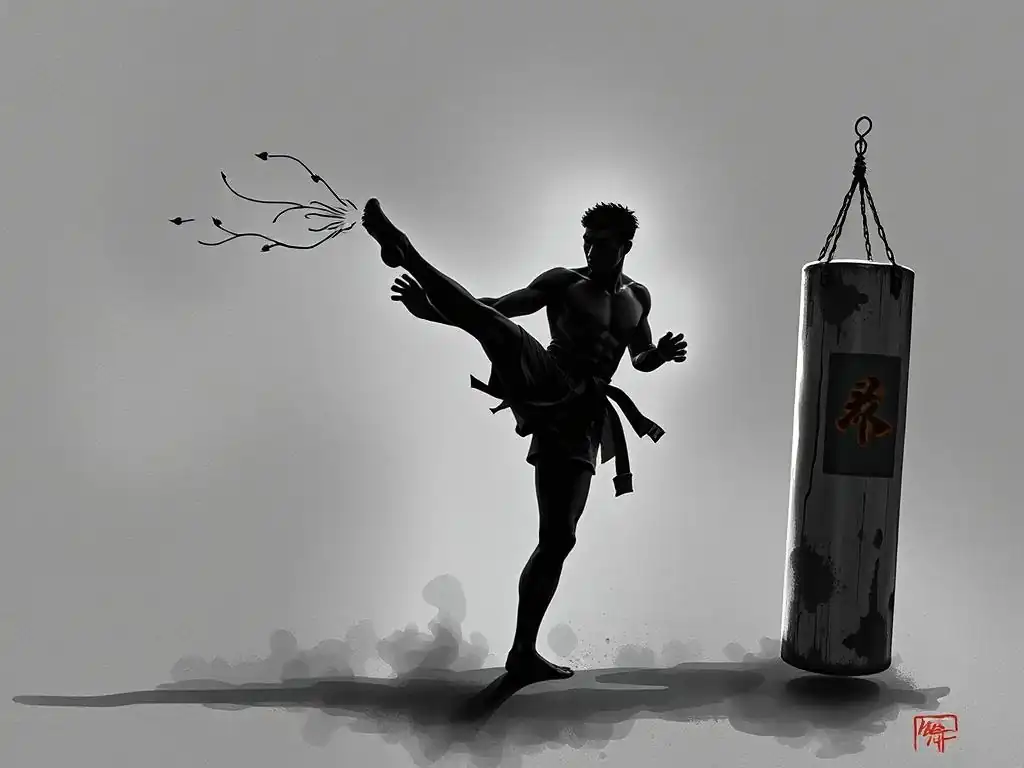
Shadow Boxing with Purpose: Visualizing Opponents and Tactics
Shadow boxing is perhaps the most versatile of all Muay Thai solo drills. Beyond simply practicing techniques, advanced shadow boxing involves actively visualizing an opponent, their movements, and specific fight scenarios. This transforms it from a physical exercise into a mental and tactical one. Spend rounds imagining fighting different types of opponents – a pressure fighter, an out-boxer, a southpaw – and practice implementing strategies against them.
Focus on defensive reactions, counter-striking opportunities, and setting up combinations. For instance, visualize an opponent throwing a specific strike and practice slipping or blocking it, then immediately launching a counter. This type of purposeful shadow boxing, a core component of advanced Muay Thai solo drills, significantly enhances your fight IQ, reaction speed, and ability to think under simulated pressure, translating mental preparation into physical readiness.
Resistance Band Training: Simulating Bag Drills for Power and Endurance
Resistance bands are an excellent tool for adding intensity to Muay Thai solo drills, simulating the resistance of hitting a bag or pads. They are particularly useful for developing explosive power and muscular endurance in strikes. Attach bands to a sturdy anchor point and loop them around your wrists or ankles. Practice throwing punches and kicks against the resistance, focusing on powerful extension and quick retraction.
For example, perform sets of 15-20 power punches or kicks per side against moderate band resistance. You can also use bands for defensive movements, such as attaching a band to your head and practicing slipping punches against the tension. This form of Muay Thai solo drill provides continuous tension throughout the movement, building strength in a sport-specific manner and adding a conditioning element that air techniques lack.
Footwork Agility Drills: Enhancing Movement and Balance
Effective footwork is the foundation of all offense and defense in Muay Thai. Solo footwork drills focus on developing agility, balance, and the ability to move efficiently in all directions. Set up cones or markers in a square, triangle, or circle pattern and practice moving around them using proper fighting stance steps (shuffling, pivoting, angle steps). Focus on staying light on your feet and maintaining a stable base.
Include drills like ladder drills for quick foot placement, cone drills for changing direction rapidly, and simply practicing moving forward, backward, and laterally while maintaining guard. Incorporating feints and level changes into these movements enhances realism. Consistent practice of these Muay Thai solo drills dedicated to footwork improves your ability to control distance, create angles, and evade attacks, making you a harder target and a more effective striker.
Clinch Entry Practice: Shadow Clinching for Technique and Control
While the full clinch requires a partner, solo practice can significantly improve your entries and initial positioning. Shadow clinching involves practicing the movements and hand fighting techniques used to gain dominant control in the clinch. Stand in your stance and practice stepping in, achieving head control, and securing collar ties or plum grips on an imaginary opponent.
Focus on posture, maintaining a strong base, and using your body weight effectively. Practice breaking posture and driving knees while maintaining your grip. Although you can't replicate the resistance of a partner, this type of Muay Thai solo drill helps engrain the correct movement patterns and hand fighting techniques needed for successful clinch entries and initial control, making you more effective when you do train with a partner.
Integrating Muay Thai Defense into Your Solo Training Program
Blocking and Parrying Drills: Solo Practice for Reaction Speed
Effective defense is as crucial as potent offense in Muay Thai. Solo drills for blocking and parrying focus on developing quick hand speed and accurate positioning to deflect incoming strikes. Stand in your guard and practice quickly lifting your arms to block hypothetical punches to the head or body. Visualize punches coming from different angles and react accordingly, ensuring your blocks are tight and effective.
For parrying, practice using a sharp hand motion to deflect imaginary punches, moving them slightly off-line. A useful solo drill involves rapid-fire blocking and parrying sequences, simulating a flurry of punches. Aim to perform these defensive actions quickly and return your hands to guard immediately. Integrating blocking and parrying into your Muay Thai solo drills builds essential defensive reflexes and muscle memory.
Evasion and Head Movement Training: Enhancing Agility and Awareness
Evasion and head movement are key defensive skills for avoiding strikes entirely. Solo drills for evasion focus on developing agility and the ability to move your head and torso off the center line. Practice slipping punches by moving your head slightly to either side while bending at the knees and waist. Focus on keeping your eyes on the imaginary opponent and returning to your stance quickly.
Include drills like rolling under punches by bending at the knees and waist in a U-shaped motion. Set up a rope or stick at head height and practice slipping and rolling under it repeatedly. Incorporating feints and defensive footwork, like stepping off-line or pivoting, into these Muay Thai solo drills enhances your ability to avoid damage and create counter-striking opportunities.
Counter-Striking Practice: Simulating Attacks and Defensive Responses
True mastery in Muay Thai often lies in the ability to counter effectively after defending. Solo drills for counter-striking combine defensive movements with immediate offensive responses. Visualize an opponent throwing a specific strike – say, a jab. Practice slipping that jab and immediately throwing a cross or a lead hook. Visualize a roundhouse kick and practice checking it, then immediately stepping in with a knee or elbow.
This type of integrated solo training builds the crucial link between defense and offense. Practice sequences where you visualize defending multiple strikes and countering after each one or after a series. This sophisticated form of Muay Thai solo drills improves your timing, reaction speed, and ability to transition seamlessly from defense to attack, making you a more dangerous and unpredictable fighter.
Sample Muay Thai Solo Training Routine: A Structured Approach
Dynamic Warm-up Exercises for Muay Thai
A proper warm-up is essential before any training session, including Muay Thai solo drills, to prepare the muscles and prevent injury. Begin with 5-10 minutes of light cardio, such as jogging in place, jumping jacks, or skipping rope (even without a rope). Follow this with dynamic stretching exercises targeting the major muscle groups used in Muay Thai:
- Arm circles (forward and backward, 10-15 reps each direction)
- Leg swings (forward/backward and side-to-side, 10-15 reps per leg)
- Hip circles (10-15 reps each direction)
- Torso twists (10-15 reps each side)
- Knee raises and ankle rotations.
- Light shadow boxing focusing on fluid movement rather than power.
This prepares the body for the more intense movements of the solo drills to follow.
Round-Based Solo Drill Structure: 3-Minute Rounds with 1-Minute Rest
Structuring your Muay Thai solo drills into rounds, similar to a fight or gym session, helps build fight-specific endurance and simulates the ebb and flow of combat. A common structure is 3-minute rounds with 1-minute rest periods, mirroring amateur or professional fight durations. Dedicate each round to a specific focus or combination of focuses:
- Round 1: Footwork and movement drills.
- Round 2: Jab and cross practice, focusing on speed and precision.
- Round 3: Hook and uppercut practice, focusing on rotation and power.
- Round 4: Teep and roundhouse kick practice, focusing on technique and power.
- Round 5: Knee and elbow strike practice, focusing on targeting and explosiveness.
- Round 6: Defensive drills (blocking, parrying, slipping).
- Round 7: Counter-striking combinations.
- Rounds 8-10: Purposeful shadow boxing, integrating all elements and visualizing fight scenarios.
Adjust the number of rounds and their focus based on your goals and available time, but maintaining the 3-minute work, 1-minute rest structure for at least 6-10 rounds is highly beneficial for conditioning.
Static Stretching and Cool-Down for Recovery
After completing your Muay Thai solo drills, a proper cool-down and static stretching routine are crucial for promoting muscle recovery, improving flexibility, and reducing stiffness. Spend 5-10 minutes gradually lowering your heart rate with light movement like walking around. Follow this with static stretches, holding each stretch for 20-30 seconds without bouncing.
Focus on stretching the major muscle groups worked: hamstrings, quadriceps, hip flexors, calves, shoulders, chest, and back. Examples include hamstring stretches (seated or standing), quad stretches, hip flexor stretches (like a lunge stretch), calf stretches against a wall, and shoulder/triceps stretches. This post-training routine, often overlooked in solo practice, is vital for long-term mobility and injury prevention, complementing your dedicated Muay Thai solo drills.
Common Pitfalls in Muay Thai Solo Training and Solutions
Maintaining Proper Form Without a Training Partner
One significant challenge in Muay Thai solo drills is ensuring your technique remains correct without the immediate feedback of a coach or partner. Without someone to correct you, bad habits can easily form. The solution lies in diligent self-monitoring and utilizing available resources. Film yourself performing drills using a smartphone or camera. Review the footage critically, comparing your form to instructional videos or mental images of proper technique.
Another strategy is to use mirrors if available. Practice in front of a mirror to get real-time visual feedback on your stance, guard, body rotation, and limb extension. While mirrors don't show power or impact, they are excellent for checking structural alignment. Regularly reviewing your technique, perhaps once a week or every few solo sessions, is key to maintaining high standards in your Muay Thai solo drills.
Preventing Overtraining: Structuring Your Training Schedule
The freedom of solo training can sometimes lead to overtraining, especially when you are highly motivated. Pushing too hard, too often, without adequate rest, can lead to fatigue, decreased performance, and increased risk of injury. Preventing overtraining in your Muay Thai solo drills requires a structured approach to your training schedule.
Listen to your body and recognize signs of fatigue, persistent soreness, or decreased motivation. Incorporate rest days into your weekly routine – aim for at least one or two full rest days per week. Vary the intensity and focus of your solo sessions; some days can be lighter technical work, while others focus on higher intensity or volume. Periodization, planning your training in blocks with varying goals and intensities, can also help ensure you peak when needed and allow for recovery phases within your Muay Thai solo drills schedule.
Staying Focused: Setting Realistic Goals and Measuring Progress
Maintaining focus during repetitive Muay Thai solo drills can be challenging without the external motivation of a training partner or coach. Distractions are common when training alone. To combat this, set clear, realistic goals for each solo session. Instead of just "practice kicks," aim to "throw 100 powerful roundhouse kicks per leg, focusing on hip rotation" or "complete 5 rounds of shadow boxing visualizing defensive counters."
Measuring progress, even in solo work, helps maintain motivation. This could involve timing how quickly you can perform a certain combination, counting how many consecutive techniques you can do with perfect form, or using physical markers like how high you can lift your knee for a teep. Tracking these small improvements in your Muay Thai solo drills provides tangible evidence of progress, keeping you engaged and focused on the journey towards mastery.
The Power of Visualization in Muay Thai Solo Training
Mental Imagery: Visualizing Successful Execution
Visualization, or mental imagery, is a potent tool that significantly enhances the effectiveness of Muay Thai solo drills. It involves creating detailed mental pictures of yourself performing techniques perfectly, executing strategies successfully, and achieving your training goals. This mental rehearsal activates similar neural pathways in the brain as physical practice, helping to reinforce correct movements and build confidence.
Spend time before, during, or after your solo sessions visualizing specific scenarios. Picture yourself throwing a lightning-fast jab that lands perfectly, defending against a powerful kick and immediately countering, or moving fluidly around an imaginary ring. Focus on the feeling of the movement, the sound of impact (even in air), and the desired outcome. Consistent use of mental imagery amplifies the benefits derived from your physical Muay Thai solo drills.
Incorporating Visualization Techniques into Drills
Integrating visualization directly into your physical Muay Thai solo drills makes the practice more purposeful and realistic. When performing shadow boxing, don't just throw techniques randomly; actively visualize an opponent and react to their imagined actions. See them throw a punch, feel yourself slip it, and visualize your counter connecting.
When practicing specific strikes, visualize the target area on an opponent and imagine the impact. For example, when practicing roundhouse kicks, visualize hitting the opponent's thigh or ribs and imagine the force transferring. This active visualization during your Muay Thai solo drills makes the movements less abstract and more connected to actual combat application, improving timing, targeting, and overall fight readiness, even without a physical partner.
Conclusion: Maximize Your Muay Thai Potential with Dedicated Solo Training.
Frequently Asked Questions
What are Muay Thai solo drills and why are they important?
Muay Thai solo drills are exercises performed without a partner to improve technique, conditioning, and muscle memory. They are important because they allow you to practice consistently anywhere, reinforcing proper form and building stamina.
What are some examples of effective Muay Thai solo drills?
Effective drills include shadow boxing to refine striking, bag work for power and endurance, and skipping rope for footwork and cardiovascular fitness. Clinch drills against a wall can also improve your grip and control.
How often should I incorporate solo drills into my Muay Thai training?
Ideally, you should incorporate solo drills multiple times per week, even on days you don't have formal training. Aim for at least 20-30 minutes per session to see noticeable improvements.
Can solo drills replace partnered training in Muay Thai?
No, solo drills are not a replacement for partnered training. They are a supplement to refine individual skills and build a foundation, but sparring and pad work are crucial for applying techniques in a dynamic environment.
What are the key benefits of focusing on solo drills in Muay Thai?
Solo drills offer benefits such as improved technique, increased stamina, enhanced muscle memory, and the ability to train independently, fostering self-discipline and accelerated progress.
Final Reflection: The Solitary Path to Muay Thai Mastery
The journey of a Muay Thai fighter is often perceived as one of intense sparring and rigorous group training, but the true path to mastery lies in the dedication to individual practice. The power of Muay Thai solo drills, as we've explored, is not just about physical conditioning, but about cultivating a deep understanding of movement and technique that transcends the confines of the gym. This understanding is more relevant than ever, as accessibility to training spaces can fluctuate, making the ability to train independently a crucial asset.
The impact of consistent solo practice extends far beyond simply improving physical prowess. It fosters discipline, self-awareness, and a profound connection to the art of Muay Thai. This connection, forged in the solitude of personal training, is what truly elevates a fighter from a practitioner to an artist. As Bruce Lee famously said, I fear not the man who has practiced 10,000 kicks once, but I fear the man who has practiced one kick 10,000 times.
This sentiment perfectly encapsulates the transformative power of repetitive, focused solo drills.
Now, consider the tools you've gained from this exploration of Muay Thai solo drills. Don't let them gather dust. Embrace the opportunity to refine your techniques, strengthen your mind, and deepen your understanding of this ancient art. Step onto your own solitary path, and discover the boundless potential that lies within you. The journey to mastery begins with a single step, a single drill, practiced with unwavering focus and dedication.
Elevate Your Game: Unleash Your Inner Muay Thai Warrior!
Thank you for diving deep into the world of solo Muay Thai drills! We hope you've gained valuable insights into how to sharpen your techniques, even without a partner or gym. Now, it’s time to transform knowledge into action and truly own your training.
Here's how you can continue your Muay Thai journey:
- Commit to 15 minutes of daily practice: Choose 2-3 drills from this article and make them a non-negotiable part of your routine. Consistency is key to mastery.
- Film yourself performing these drills. Review your technique critically, or even better, share it in a Muay Thai forum for feedback and inspire others on their training journey!
- Experiment with modifying drills to target specific weaknesses. Can you add resistance? Increase the intensity? Discover creative ways to push your limits and personalize your training.
Which drill are you most excited to incorporate into your routine, and how do you plan to track your progress this week?