
Overcoming SelfDoubt: Silencing Your Inner Critic Before Stepping onto the Mat


Welcome to Martial Arts Mastery, where we delve into the depths of combat, culture, and self-improvement. But true mastery begins not just with physical prowess, but with mental fortitude. Are you ready to silence your inner critic and unlock your full potential? Our featured article, "Overcoming Self-Doubt: Silencing Your Inner Critic Before Stepping onto the Mat," explores precisely how to do just that. Discover how to conquer self-doubt and enhance your performance, not just in Martial Arts Competitions & Sports, but in all aspects of your life. Intrigued? Let's begin.
- Overcoming Self-Doubt: Silencing Your Inner Critic in Brazilian Jiu-Jitsu
- Understanding the Inner Critic in Brazilian Jiu-Jitsu Training
- Strategies to Silence Your Inner Critic: Mental Toughness for BJJ Practitioners
- Practical Techniques to Combat Self-Doubt During BJJ Training
- Building Resilience: Long-Term Strategies for Overcoming Self-Doubt in BJJ
- The Role of Physical Conditioning in Boosting Mental Confidence for BJJ Practitioners
- Maintaining a Positive Mindset: A Continuous Journey in BJJ
- Conclusion: Mastering Your Mind for BJJ Success
-
Frequently Asked Questions
- How does the inner critic manifest in martial arts training?
- Why is it important to silence the inner critic in martial arts?
- What are some practical strategies for managing the inner critic during training?
- How can understanding the philosophical underpinnings of martial arts help combat self-doubt?
- Does the article "Overcoming Self-Doubt: Silencing Your Inner Critic Before Stepping onto the Mat" from MartialArtsMastery.org offer specific techniques for dealing with this issue?
- Final Reflection: Embracing Confidence on and off the Mat
- Ignite Your Inner Champion: Conquer Doubt, Own the Mat!
Overcoming Self-Doubt: Silencing Your Inner Critic in Brazilian Jiu-Jitsu
Understanding the Inner Critic in Brazilian Jiu-Jitsu Training
Identifying Your Inner Critic: Recognizing Negative Self-Talk in Rolling
The inner critic is that persistent voice in your head that undermines your confidence and highlights your perceived flaws. In the demanding environment of Brazilian Jiu-Jitsu, this voice can become particularly loud. It often manifests during rolling sessions or after being submitted, whispering thoughts like, "You're not learning fast enough," "Everyone else is better than you," or "You'll never get your stripes/belt." Recognizing these negative self-talk patterns is the first step to addressing them. Pay attention to the thoughts that arise when you feel challenged or discouraged on the mat.
This negative self-talk isn't just annoying; it's detrimental. It creates a cycle of doubt that can prevent you from fully engaging in training. Common triggers in BJJ include failing to execute a technique you've drilled extensively, being repeatedly tapped by training partners, or comparing your progress unfavorably to others, especially those who started around the same time. This internal monologue can lead to physical manifestations like hesitation before attempting a sweep or passing guard, or tension in your muscles that hinders fluidity. Understanding how this inner critic operates in martial arts training is crucial for growth.
The Impact of Self-Doubt on BJJ Performance and Competition
Self-doubt has a direct and significant impact on performance in BJJ, both in regular training and during competition. When you doubt your abilities, you're less likely to commit fully to techniques, leading to failed attempts and reinforcing the negative cycle. Hesitation becomes your default, slowing down reaction times and making you predictable to opponents. It's estimated, based on anecdotal evidence from the BJJ community, that perhaps 60% or more of practitioners struggle with self-doubt at some point, significantly impacting their consistency and enjoyment of the art.
In a competition setting, the impact of the inner critic is amplified. The pressure of a tournament can bring dormant self-doubt to the surface, causing athletes to freeze up, make poor strategic decisions under stress, or abandon their game plan entirely. The inner critic in martial arts competition can be the difference between performing to your potential and being overwhelmed by anxiety. Many talented athletes have experienced underperformance not due to a lack of physical skill or preparation, but because their mental game, dominated by self-doubt, faltered under pressure.
Strategies to Silence Your Inner Critic: Mental Toughness for BJJ Practitioners
Cultivating Self-Compassion: A Counterbalance to the Inner Critic in BJJ
Self-compassion is a powerful antidote to the harshness of the inner critic. It involves treating yourself with the same kindness, understanding, and acceptance you would offer a close friend who is struggling. In the context of BJJ, this means acknowledging that tapping is part of the learning process, that mistakes are inevitable, and that progress is rarely linear. Instead of berating yourself after a tough roll or a failed technique, practice acknowledging the difficulty of the situation and your effort.
Practicing self-compassion on the mat can involve simple acts like taking a deep breath after being submitted and telling yourself, "Okay, that happened. What can I learn?" rather than "I'm so bad, I got tapped again." It means recognizing that everyone has bad days or struggles with certain techniques. By extending grace to yourself, you create a more supportive internal environment that weakens the power of the inner critic and allows for more resilient learning.
Positive Self-Talk Techniques for BJJ: Rewriting Your Internal Narrative on the Mat
Actively replacing negative self-talk with positive affirmations is a fundamental technique for silencing the inner critic. This isn't about unrealistic boasting, but about crafting realistic, encouraging internal statements. For example, instead of thinking, "I'm terrible at passing guard," you can consciously shift your internal narrative to, "I am focusing on improving my guard passing," or "Every roll is an opportunity to practice my passing."
Consistency is key to making positive self-talk effective. Make it a practice to consciously inject positive statements at specific times, such as before stepping onto the mat, after drilling a challenging technique, or when you feel frustrated during rolling. Reinforcing positive beliefs about your capabilities and progress helps to rewrite the ingrained negative scripts of the inner critic in martial arts practice, building a more constructive internal dialogue over time.
Visualization and Mental Rehearsal: Building Confidence Before BJJ Tournaments
Visualization is a technique where you mentally picture yourself performing successfully. For BJJ, this involves imagining specific scenarios: executing your favorite sweep, defending a common submission, navigating a challenging position, or successfully implementing your game plan against different types of opponents. Focus on the feeling of confidence, control, and effective movement.
Mental rehearsal takes visualization a step further by mentally practicing entire sequences or matches. Before a BJJ tournament, you can mentally walk through your warm-up, visualize your walkout, and mentally spar with hypothetical opponents, practicing how you will react to various situations, including adversity. This process prepares your mind for the actual event, reducing anxiety by making the unfamiliar feel more familiar and boosting confidence by reinforcing your ability to handle different scenarios, effectively countering the inner critic's pre-competition jitters.
Practical Techniques to Combat Self-Doubt During BJJ Training
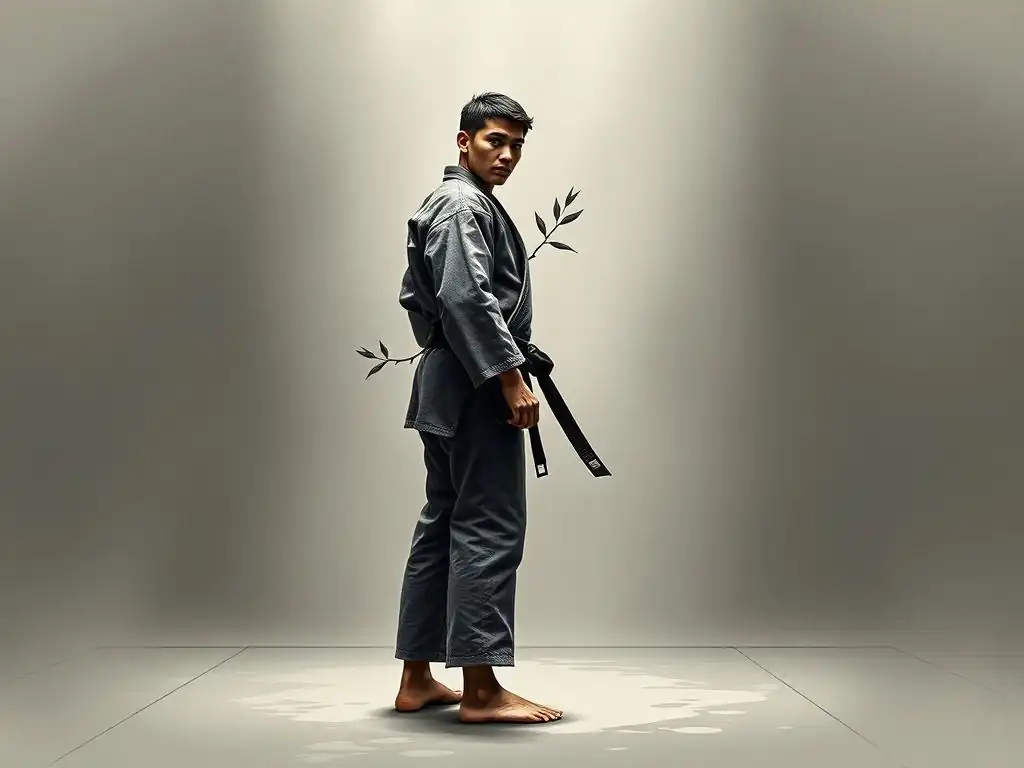
Focusing on Progress, Not Perfection: A Mindset Shift for BJJ Mastery
Perfectionism is a significant fuel source for the inner critic in BJJ. The belief that you should instantly master techniques or never make mistakes sets an impossible standard. BJJ is an art that requires years, often a decade or more, to truly develop mastery across its vast curriculum. Focusing on perfection leads to constant disappointment and self-criticism.
A healthier mindset is to focus on progress. Acknowledge small improvements: successfully holding a position for a few extra seconds, understanding a concept better, or executing a small detail of a technique correctly, even if the overall attempt fails. It's estimated that while basic mechanics can be grasped relatively quickly, mastering a complex BJJ game involves accumulating thousands of hours of practice and refining countless details. Shifting your focus to this incremental growth journey starves the inner critic of its primary weapon – the impossible standard of perfection.
Setting Realistic Goals: Managing Expectations and Reducing Self-Criticism in BJJ
Unrealistic expectations are closely linked to perfectionism and significantly contribute to self-doubt. Expecting to tap experienced practitioners as a white belt or master complex leg locks after only a few months is setting yourself up for disappointment and providing ample ammunition for your inner critic.
Setting small, measurable, achievable, relevant, and time-bound (SMART) goals is a practical way to manage expectations and build confidence. Examples include: "Attend class three times this week," "Drill closed guard hip bumps for 10 minutes after class," or "Focus on maintaining posture in guard during rolling for the next two weeks." Achieving these smaller goals provides regular successes that build confidence and counteract the negative voice that tells you you're not doing enough or learning fast enough.
Mindfulness and Present Moment Awareness: Breaking the Cycle of Negative Thoughts While Rolling
Mindfulness is the practice of paying attention to the present moment without judgment. In BJJ, this means focusing on the physical sensations, the opponent's movements, the feel of the gi, and your own breath, rather than getting lost in thoughts about past mistakes or future anxieties. The inner critic thrives on pulling you out of the present moment, dwelling on perceived failures or worrying about potential outcomes.
During rolling, practicing mindfulness helps you observe the thoughts of your inner critic without getting swept away by them. You can notice the thought "I'm going to get tapped here" but choose to refocus on your defense and breathing instead of panicking. Being fully present in the roll allows you to react more effectively and reduces the mental space for negative self-talk to take hold, directly countering the inner critic in martial arts training.
Building Resilience: Long-Term Strategies for Overcoming Self-Doubt in BJJ
Embracing Failure as a Learning Opportunity: Reframing Taps in BJJ
Tapping out is an integral and unavoidable part of Brazilian Jiu-Jitsu. However, the inner critic often interprets a tap as proof of inadequacy or failure. Learning to reframe taps as valuable learning opportunities is essential for long-term resilience. Each tap provides information: where your defense was weak, where your opponent was strong, or where you made a technical error.
Instead of dwelling on the perceived failure of tapping, make it a habit to analyze why you were submitted. Ask your partner what they felt or what you could have done differently. Common submissions like the triangle choke or armbar might lead to hundreds of taps over a practitioner's journey, each one refining their understanding of defense and escape. Embracing this feedback loop builds resilience and denies the inner critic the power to define your worth by your tap count.
Seeking Support from Coaches and Training Partners: Building a Positive BJJ Community
You don't have to battle your inner critic alone. Your BJJ academy should be a supportive community. Coaches are invaluable resources for objective feedback on your technical progress and can often help identify if self-doubt is hindering your learning. They've likely seen many students struggle with similar issues.
Training partners also play a crucial role. Sharing your experiences with trusted teammates can normalize feelings of self-doubt and provide encouragement. A positive gym environment where practitioners support each other, offer constructive feedback, and celebrate each other's successes actively counters the isolation and negativity that the inner critic thrives on. Leaning on this community strengthens your mental fortitude against the inner critic in martial arts.
Developing a Pre-Competition Ritual: Managing Anxiety and Boosting Confidence Before a Match
A pre-competition ritual is a sequence of actions performed consistently before every match. This ritual helps create a sense of control and familiarity in the often chaotic environment of a tournament. It can include specific warm-up drills, visualization exercises, listening to a particular playlist, reviewing your game plan, or even just a simple routine like tying your belt a certain way.
Having a consistent ritual helps quiet the inner critic's last-minute doubts and anxieties. By focusing on the familiar steps of your routine, you redirect nervous energy and reinforce a sense of preparedness. This mental anchor provides stability and boosts confidence right before you step onto the mat to compete, helping you manage the pressure and perform closer to your potential.
The Role of Physical Conditioning in Boosting Mental Confidence for BJJ Practitioners
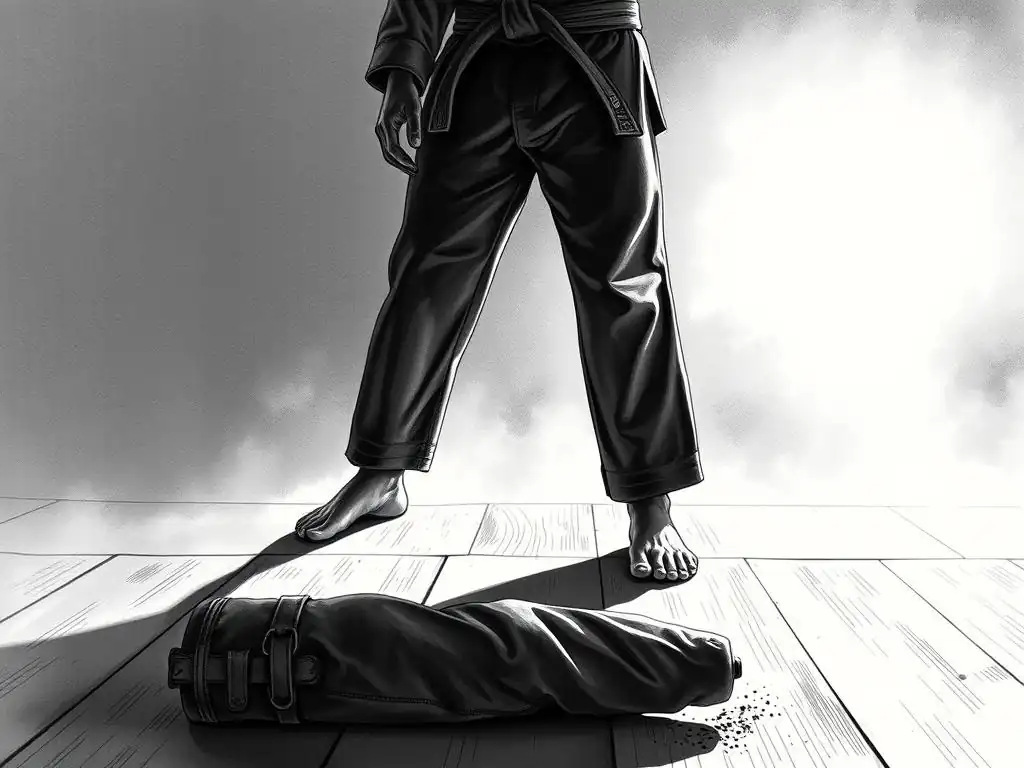
How Consistent Training Reduces Anxiety and Fuels Self-Belief in BJJ
Consistent physical training in BJJ goes beyond just learning techniques; it significantly impacts mental well-being and confidence. Regular exercise is known to reduce stress hormones like cortisol and release endorphins, which have mood-boosting effects. Being physically prepared reduces anxiety about your ability to handle the physical demands of rolling or competition.
Knowing you have the stamina to survive tough rounds or the strength to execute techniques effectively directly fuels self-belief. The fear of gassing out or being physically overpowered, common triggers for the inner critic, is significantly diminished when you are consistently engaging in physical conditioning alongside your technical training. This preparedness builds a foundation of confidence that makes you less susceptible to self-doubt.
The Mind-Body Connection: Utilizing Physical Strength to Overcome Mental Barriers in Grappling
The physical challenges faced and overcome in BJJ training build mental resilience. Pushing through fatigue during a tough roll, enduring discomfort in a difficult position, or completing a demanding conditioning session demonstrates physical fortitude that reinforces mental toughness. This shows you that you can persevere even when things are hard.
This physical resilience translates directly to overcoming mental barriers like self-doubt. The physical proof of your ability to push through discomfort provides concrete evidence that you can handle challenges. When the inner critic whispers that you're not strong enough or can't endure, your body's experience of overcoming physical hardship provides a powerful counter-argument, strengthening your resolve against the inner critic in martial arts.
Maintaining a Positive Mindset: A Continuous Journey in BJJ
Regularly Evaluating and Adjusting Your Mental Training Strategies
Managing the inner critic and maintaining a positive mindset in BJJ is not a destination but an ongoing journey. Just as you periodically evaluate and adjust your physical training based on your progress and goals, you should do the same for your mental training strategies. What worked last month might need tweaking this month.
Take time to reflect on your experiences. Are certain situations or partners triggering your inner critic more than others? Are the positive self-talk techniques you're using still effective? Consider journaling about your mental state or discussing specific challenges with your coach or a trusted training partner. Continuously assessing and adapting your approach ensures you have the most effective tools to combat self-doubt as you progress in BJJ.
Celebrating Small Victories: Recognizing and Reinforcing Positive Self-Perception in BJJ
The inner critic tends to focus exclusively on failures and shortcomings. To counteract this, it's vital to actively recognize and celebrate your small victories along the way. This isn't about having an inflated ego, but about building a balanced and accurate self-perception.
Small victories could be anything from successfully executing a sweep you've been drilling in live rolling, surviving a tough position longer than before, finally understanding a complex concept, or simply showing up consistently for class during a busy or stressful period in your life. Acknowledging these achievements, no matter how minor they seem, provides positive reinforcement that directly opposes the negative narrative of the inner critic and reinforces a positive self-perception in BJJ.
Travis Stevens' Approach to Mental Toughness in BJJ and Judo
Travis Stevens, an Olympic silver medalist in Judo and a high-level BJJ black belt, is widely recognized for his emphasis on mental preparation and toughness. While specific details of his personal mental strategies are extensive, a core principle often attributed to his approach is the unwavering belief in the power of consistent, hard work and preparation.
His philosophy, as observed through interviews and his teachings, suggests that confidence isn't built on natural talent alone, but on the irrefutable evidence of dedicated effort. By consistently putting in the hours, embracing challenging training sessions, and meticulously preparing, an athlete builds an inner knowing that they have done everything possible to be ready. This deep-seated confidence, forged through diligent preparation, serves as a powerful shield against the doubts the inner critic might try to introduce, whether in Judo or BJJ.
Conclusion: Mastering Your Mind for BJJ Success
Frequently Asked Questions
How does the inner critic manifest in martial arts training?
The inner critic often appears as self-doubt and negative self-talk, hindering your ability to learn new techniques or perform effectively. It can lead to fear of failure and reluctance to spar or compete.
Why is it important to silence the inner critic in martial arts?
Silencing the inner critic is crucial for optimal learning and performance. It allows you to focus on improving your skills without being held back by negativity and self-doubt.
What are some practical strategies for managing the inner critic during training?
Focus on positive self-talk and realistic goal setting. Practice mindfulness to stay present and avoid dwelling on past mistakes. Celebrate small victories and focus on progress, not perfection.
How can understanding the philosophical underpinnings of martial arts help combat self-doubt?
Many martial arts emphasize discipline, perseverance, and self-improvement. Embracing these principles can foster resilience and a more positive mindset, diminishing the power of the inner critic.
Does the article "Overcoming Self-Doubt: Silencing Your Inner Critic Before Stepping onto the Mat" from MartialArtsMastery.org offer specific techniques for dealing with this issue?
Yes, the article provides practical techniques focused on reframing negative thoughts, building self-compassion, and implementing mindfulness practices specifically tailored for martial arts training.
Final Reflection: Embracing Confidence on and off the Mat
The journey of mastering martial arts is as much about conquering the inner landscape as it is about perfecting physical techniques. The insidious voice of self-doubt, the inner critic, can be a formidable opponent, capable of paralyzing even the most skilled practitioner. Understanding and silencing this inner critic is not merely a supplementary skill, but a fundamental requirement for unlocking true potential, both in the dojo and in life.
The battle against self-doubt is a deeply personal one, yet its impact reverberates far beyond the individual. Recognizing the universality of this struggle, and learning to cultivate self-compassion, is crucial for building a more supportive and empowering community, both within and outside the martial arts world. Our doubts are traitors, and make us lose the good we oft might win, by fearing to attempt.
- William Shakespeare. This quote reminds us that the risks of inaction, fueled by self-doubt, often outweigh the potential for failure.
Now, as you step off the mat and back into the world, carry with you the lessons learned about silencing your inner critic. Remember the power of self-compassion, the importance of focusing on progress over perfection, and the strength that comes from embracing vulnerability. Let the discipline and resilience you cultivate in martial arts serve as a constant reminder that you are capable of overcoming any challenge, both internal and external. Embrace your potential, silence the doubt, and step confidently into the future you deserve.
Ignite Your Inner Champion: Conquer Doubt, Own the Mat!
Thank you for exploring the path to mental fortitude with us! You've now gained valuable insights into silencing that inner critic and stepping onto the mat with confidence. Now, let's translate that knowledge into action.
- Take the Leap: Dedicate just 5 minutes before your next training session to actively challenge one negative thought with a positive affirmation. Feel the difference!
- Reflect & Refine: Journal about your pre-training anxieties and identify recurring patterns. Understanding is the first step to overcoming.
- Spread the Strength: Share this article with a fellow martial artist who might be struggling with self-doubt. Support strengthens the community!
What small, empowering ritual will you incorporate into your pre-training routine to silence self-doubt and unleash your full potential on the mat?