
The Deadly Dance: Understanding Movement, Evasion & Timing in Eskrima


Welcome to Martial Arts Mastery, where we delve into the world's most fascinating combat systems. Ever wondered how a seemingly simple stick can become an extension of your will, a blur of controlled power and precision? Today, we unlock the secrets of Eskrima movement evasion timing in our featured article. Discover the deadly dance of angles, footwork, and anticipation that makes this Filipino martial art so effective – and leaves opponents wondering what just happened. Intrigued? The journey into Eskrima's intricacies begins now...
- Eskrima: Mastering the Art of Motion and Timing
- The Foundation of Eskrima: Footwork and Agile Movement
- Evasion Techniques in Eskrima: Avoiding the Strike
- Timing in Eskrima: The Key to Effective Striking and Defense
- The Eskrima Dance: Integrating Movement, Evasion, and Timing
- Advanced Eskrima Movement: Beyond the Basics
- Training Drills to Sharpen Eskrima Evasion Skills
- Refining Eskrima Timing: From Reaction to Anticipation
- Applying Eskrima Movement Evasion Timing in Real-World Scenarios
- Conclusion: The Continuous Evolution of Eskrima Movement, Evasion and Timing
-
Frequently Asked Questions
- How crucial is movement in Eskrima compared to other martial arts?
- What are some key evasion techniques used in Eskrima?
- How does timing affect the effectiveness of Eskrima techniques?
- What role does footwork play in achieving proper timing and evasion in Eskrima?
- How can I improve my movement, evasion, and timing skills in Eskrima?
- Final Reflection: Mastering the Flow of Eskrima
- Ignite Your Eskrima Journey!
Eskrima: Mastering the Art of Motion and Timing
Eskrima, also known as Arnis or Kali, is a martial art originating from the Philippines that places a profound emphasis on weapon-based combat, though its principles extend effectively to empty-hand applications. Unlike many martial arts that focus heavily on blocking and static defense, Eskrima thrives on dynamic movement, deceptive evasion, and precise timing.
The practitioner is often described as being in a perpetual state of motion, constantly adjusting position to gain advantageous angles while simultaneously avoiding incoming attacks. This fluid, almost dance-like quality, is fundamental to survival in a system designed for close-quarters duels and battlefield engagements where a single missed beat or poor step could be fatal.
Mastering the intricate relationship between movement, evasion, and timing is paramount for anyone seeking proficiency in Eskrima. It's not enough to merely possess striking power; the ability to control distance, dictate the rhythm of the engagement, and disappear from the line of attack is what separates a novice from a skilled practitioner.
This synergy, often referred to as "Eskrima movement evasion timing," allows the practitioner to turn defense into offense seamlessly, using the opponent's momentum against them. Developing this requires dedicated practice, focusing not just on techniques but on the underlying principles of spatial awareness, reaction speed, and anticipatory judgment.
The Foundation of Eskrima: Footwork and Agile Movement
Effective footwork is the bedrock upon which all other Eskrima skills are built. It dictates distance, generates power for strikes, facilitates evasion, and allows the practitioner to constantly seek superior angles relative to the opponent. Without solid, agile footwork, even the most powerful strikes or sophisticated evasion techniques will be ineffective. Filipino Martial Arts (FMA) footwork is characterized by its fluidity, quick directional changes, and emphasis on diagonal and triangular patterns, reflecting the need to navigate chaotic, multi-directional threats.
Agile movement in Eskrima is not just about moving quickly; it's about moving efficiently and purposefully. Every step should serve a strategic function, whether it's closing distance to strike, widening distance to evade, shifting off the center line, or circling to the opponent's flank. The goal is to be a difficult target to hit while simultaneously positioning oneself for maximum offensive impact. This constant state of dynamic balance and controlled motion is what allows Eskrima practitioners to engage effectively with weapons like sticks and knives, where the stakes are inherently high.
Fundamental Footwork Patterns in Filipino Martial Arts (FMA)
FMA footwork patterns are designed for adaptability and efficiency in combat. One of the most fundamental is the triangular step, which involves moving forward or backward along the sides of an imaginary triangle, allowing for quick changes in angle relative to the opponent without crossing the feet. This maintains balance and readiness.
Another core pattern is the diagonal step or passing step, where one foot steps across the body or diagonally forward/backward, often used to close distance rapidly or angle off the line of attack. Unlike linear movements, these diagonal and triangular steps allow practitioners to flank opponents or create openings. Historically, these patterns were crucial for survival in chaotic melees, enabling warriors to navigate complex combat environments and avoid multiple attackers simultaneously. Mastering these basic patterns is the first step towards developing effective Eskrima movement evasion timing.
The Importance of Stance and Balance in Eskrima
In Eskrima, stance is dynamic rather than static. While there are foundational ready stances, the practitioner is rarely held rigidly in one position for long. Instead, stances flow organically from movement and transition seamlessly between offensive and defensive postures. A stable, balanced stance, however fleeting, is critical for generating power in strikes and maintaining control during rapid movements or evasions.
Loss of balance is an invitation for attack. Therefore, maintaining a low center of gravity and keeping the feet ready to move in any direction are paramount. The weight distribution often shifts depending on the intended action – forward for attack, backward for evasion, centered for readiness. The ability to regain balance instantly after a sudden movement or impact is a key indicator of a practitioner's skill in Eskrima movement evasion timing. Proper stance ensures that power is grounded and transferred effectively from the legs through the core to the weapon or hand.
Integrating Footwork Drills for Improved Eskrima Performance
Integrating dedicated footwork drills into training is essential for building the necessary agility, speed, and endurance required for Eskrima. Simple drills like stepping forward and backward in various stances, practicing triangular steps around a stationary object, or performing diagonal steps across the training area help build muscle memory and coordination.
More advanced drills involve combining footwork with weapon movements, such as performing basic striking patterns while executing triangular or diagonal steps. Drills like "Heaven and Earth" (upward and downward strikes) combined with continuous forward/backward triangular stepping or "Figure 8" (ochos) combined with lateral movement are common examples. Practicing these drills for several minutes each session, perhaps 5-10 minutes focusing purely on footwork patterns and then another 10-15 minutes combining footwork with basic strikes, significantly enhances a practitioner's ability to move effectively under pressure and improves their overall Eskrima movement evasion timing.
- [ ] Practice triangular stepping drill for 5 minutes.
- [ ] Practice diagonal stepping drill for 5 minutes.
- [ ] Combine triangular stepping with basic strikes (e.g., 12 angles) for 10 minutes.
- [ ] Combine diagonal stepping with flow drills like Sinawali for 10 minutes.
Evasion Techniques in Eskrima: Avoiding the Strike
Evasion is often prioritized over direct blocking in Eskrima, especially when dealing with edged weapons or powerful impacts from sticks. The principle is simple: it's better to not be there when the attack arrives. Eskrima teaches practitioners to move off the line of attack, making themselves a difficult target while simultaneously positioning for a counter-attack. This differs from hard blocks, which can potentially damage the practitioner's weapon or limb and absorb significant force.
Effective evasion relies heavily on timely movement and understanding the geometry of combat. By subtly shifting position, angling the body, or taking a quick step, an Eskrima practitioner can cause an opponent's strike to miss entirely or land with significantly reduced force on a non-vital area. This constant micro-adjustment and strategic positioning are integral components of mastering Eskrima movement evasion timing.
Understanding Angles of Attack and Defense
Eskrima systems often categorize attacks into a specific number of angles, commonly 12, though some systems use more or less. Understanding these angles is crucial for both offensive and defensive strategy. Each angle represents a likely trajectory of an incoming strike, whether it's a diagonal slash to the head (Angle 1 or 2), a horizontal strike to the body (Angle 3 or 4), a thrust (Angle 5), or a low strike to the legs (Angle 7 or 8).
Knowing the angle of an incoming attack allows the practitioner to select the most appropriate evasion technique. For example, a diagonal strike to the head might be evaded by stepping diagonally backward and offline, whereas a thrust might require a lateral step. Defensively, understanding angles enables the practitioner to predict the opponent's likely targets and position themselves preemptively. This predictive capability is a core aspect of developing superior Eskrima movement evasion timing.
Sidestepping and Angling: Key Evasion Strategies
Sidestepping and angling are primary methods of evasion in Eskrima. A simple sidestep moves the practitioner directly off the line of attack, taking them out of the trajectory of a linear strike or thrust. Angling involves moving diagonally forward or backward relative to the opponent, changing the relationship between the two combatants and making the practitioner a less predictable target.
For instance, an opponent launching a straight thrust (Angle 5) can often be evaded by a quick lateral step to either side, coupled with a slight rotation of the body. If the opponent swings a diagonal strike (Angle 1), the practitioner might angle into the attack's blind side, stepping diagonally forward and to the outside of the opponent's attacking arm. This not only evades the strike but also puts the practitioner in a dominant position to counter. These techniques are fundamental to the fluid nature of Eskrima movement evasion timing.
Deflection and Redirection: Controlling the Blade or Stick
While direct blocking is often avoided, deflection and redirection are common defensive tactics. Instead of meeting force with force, the practitioner uses their weapon or empty hand to guide the opponent's attack away from their body. This requires precise timing and understanding of the opponent's momentum.
A common technique is a deflection-check, where a light contact is made with the incoming weapon to slightly alter its trajectory while simultaneously checking the opponent's limb to control their structure and prevent follow-up attacks. For example, deflecting an incoming stick strike with one's own stick while using the free hand to check the opponent's arm near the elbow. This redirection minimizes the impact absorbed and often creates an opening for a counter-strike, demonstrating the defensive and offensive synergy inherent in Eskrima movement evasion timing.
The art of Eskrima is not about stopping the force, but about guiding it away from you.
- A common principle taught in many FMA systems.
Timing in Eskrima: The Key to Effective Striking and Defense

Timing in Eskrima is arguably the most critical element, binding movement and technique together. It's the ability to initiate action at the precise moment for maximum effect, whether launching an attack when an opening appears or evading just as a strike is about to land. Good timing allows a smaller or weaker practitioner to overcome a larger or stronger opponent by capitalizing on their mistakes and exploiting windows of vulnerability.
Developing superior timing requires a deep understanding of combat dynamics, including the opponent's intentions, rhythm, and physical tells. It's a skill honed through countless hours of focused practice, sparring, and real-world application. Mastery of Eskrima movement evasion timing ultimately rests on the ability to act and react with impeccable timing.
Recognizing and Exploiting Openings
Recognizing openings is a core timing skill. An opening is a moment or position where an opponent is vulnerable to attack, perhaps after committing to a strike, while shifting weight, or during a transition. These openings can be fleeting, lasting only a fraction of a second.
Exploiting an opening requires the ability to launch a strike or combination instantly and accurately. This isn't just about speed; it's about timing the attack to arrive precisely when the opponent is most exposed and least able to defend. For example, striking the opponent's hand as they are initiating their own strike (a technique known as de cadena or chaining) is a classic example of exploiting a tiny window of vulnerability. This requires exceptional timing, often developed through sensitivity drills.
Developing a Sense of Rhythm and Cadence in Combat
Combat, particularly in weapon arts like Eskrima, often has a discernible rhythm or cadence. Opponents will typically fall into patterns of attack and defense, with pauses, feints, and bursts of activity. Developing a sense of this rhythm allows the practitioner to anticipate the flow of the fight.
By understanding the opponent's cadence, a skilled practitioner can disrupt it, either by attacking during a pause, feinting to draw a reaction, or changing their own rhythm to create surprise. Controlling the fight's rhythm is a powerful form of timing control. Think of a boxer who changes tempo to confuse their opponent; Eskrima applies this principle with weapons. This manipulation of rhythm is a sophisticated aspect of Eskrima movement evasion timing.
Using Timing to Control Distance and Initiative
Timing is inextricably linked to distance management and controlling the initiative. By timing one's steps and movements precisely, a practitioner can enter striking range at the optimal moment or retreat just as an opponent advances.
For example, stepping in with a strike precisely as the opponent is stepping back can catch them off balance and extend the effective range. Conversely, timing a backward step with a parry or deflection can neutralize an incoming attack while maintaining a safe distance. Controlling the initiative means dictating the pace and flow of the engagement, forcing the opponent to react to your actions rather than the other way around. This proactive use of timing is a hallmark of advanced Eskrima movement evasion timing.
Timing is everything:
- [x] Recognize opponent's rhythm.
- [x] Identify moments of vulnerability.
- [x] Launch attacks when opponent is unprepared.
- [x] Evade just before impact.
- [x] Use feints to manipulate timing.
The Eskrima Dance: Integrating Movement, Evasion, and Timing
The true art of Eskrima emerges when movement, evasion, and timing are seamlessly integrated into a single, fluid system. It's not about performing separate techniques but about reacting and acting as a unified entity. The practitioner moves, evades, and strikes almost simultaneously, their actions flowing from one to the next without hesitation. This integration is what gives Eskrima its characteristic "dance-like" quality, a dynamic interplay of offense and defense.
Achieving this level of integration requires dedicated practice that goes beyond isolated drills. It necessitates training methods that force the practitioner to combine these elements under increasing levels of pressure and unpredictability. The goal is for correct Eskrima movement evasion timing to become an instinctive response, not a conscious decision.
Blending Footwork, Evasion, and Striking into a Fluid System
Blending these elements means that a step is not just a step; it's a step taken at the right time to evade an incoming attack while simultaneously setting up the body for a counter-strike. A strike is not just a strike; it's a strike delivered while moving to maintain position or create a new angle, timed to land when the opponent is vulnerable.
Consider defending against a forehand strike (Angle 1). Instead of a static block, the Eskrima practitioner might execute a diagonal backward step while simultaneously deflecting the incoming strike and launching a rapid follow-up strike to the opponent's hand or head. This complex sequence happens in a fraction of a second, demonstrating the tight integration of footwork, evasion (via deflection and movement), and timing (acting during the opponent's commitment). This seamless flow is the essence of effective Eskrima movement evasion timing.
Drills for Developing Integrated Eskrima Skills
Integrated drills are crucial for moving beyond isolated techniques. Flow drills like Sinawali (weaving patterns with two weapons) inherently combine movement, striking, and timing. While often taught initially as set patterns, advanced Sinawali involves variations in speed, level, and incorporating footwork to move around an opponent.
Another excellent integrated drill is Hubud-Lubad, a continuous flow drill that practices trapping, locking, striking, and disarming. This drill forces practitioners to react instantly to their partner's actions, constantly shifting weight, changing angles, and timing their responses. Practicing Hubud-Lubad for even 5-10 minutes daily significantly improves sensitivity, reaction time, and the ability to integrate movement, evasion, and timing under pressure.
Partner Training Exercises to Enhance Reflexes and Timing
Partner drills are indispensable for developing real-time reflexes and timing. Simple exercises like having a partner throw strikes at varying speeds and angles while the practitioner focuses only on evading using footwork and angling off the line of attack build crucial reactive speed.
More complex partner drills involve sparring with specific constraints, such as "no blocking, only evasion and counter-striking." This forces the practitioner to rely entirely on their Eskrima movement evasion timing to survive and create offensive opportunities. Practicing these drills for rounds of 2-3 minutes, focusing intensely on reacting in time to the opponent's actions, is far more effective than static practice for developing practical combat skills.
Advanced Eskrima Movement: Beyond the Basics
Once the fundamental footwork, evasion techniques, and timing principles are understood, practitioners can explore more advanced movement strategies. These often involve more complex spatial manipulation, deceptive tactics, and adapting movement to specific combat scenarios or weapon types. Advanced Eskrima movement is less about learning new steps and more about applying the foundational principles with greater sophistication and adaptability.
This level of mastery allows practitioners to not only react effectively but to proactively control the combat space and the opponent's actions. Advanced Eskrima movement evasion timing is characterized by subtlety, efficiency, and a high degree of adaptability to unpredictable situations.
Incorporating Circular Footwork for Dynamic Positioning
While triangular and diagonal footwork are foundational, incorporating circular movement adds another layer of complexity and effectiveness. Circling around an opponent can exploit their blind spots, make them pivot repeatedly (which is tiring and creates openings), and allow the practitioner to attack from unexpected angles.
Circular footwork can be used offensively to continually flank a stationary opponent or defensively to avoid linear attacks and maintain distance. For example, slowly circling away from an aggressive opponent while maintaining a safe distance can frustrate their attack and create opportunities to counter when they overcommit. This dynamic use of space is a key element of advanced Eskrima movement evasion timing.
Using Deception and Feints to Manipulate Timing
Deception is a powerful tool in Eskrima, often employed through feints and false tells. A feint is a simulated attack designed to elicit a defensive reaction from the opponent, creating a momentary opening that can then be exploited with a real attack. For example, a quick, slightly short strike to the head might cause the opponent to raise their guard, leaving their body open for a follow-up strike.
Timing is critical for effective feints. The feint must look convincing enough to draw a reaction but be controlled enough to transition instantly into the real attack. By manipulating the opponent's timing and reactions through deception, the Eskrima practitioner gains a significant advantage. This psychological aspect of Eskrima movement evasion timing is as important as the physical techniques.
Adapting Movement Strategies to Different Weapon Lengths
The principles of Eskrima movement evasion timing must be adapted depending on the weapons being used. Fighting with a long stick (like a baston) requires more emphasis on maintaining longer range and using linear or broad circular steps. Combat with a short stick or knife necessitates much closer range engagement, relying more on rapid, small angular movements and evasive footwork within tight quarters.
Empty-hand Eskrima (Panantukan) uses similar footwork principles but integrates body mechanics like ducking, weaving, and bobbing more prominently to evade strikes. Understanding the effective range and typical attack patterns of different weapons allows the Eskrima practitioner to select the most appropriate movement and evasion strategies, optimizing their Eskrima movement evasion timing for the specific scenario.
Training Drills to Sharpen Eskrima Evasion Skills
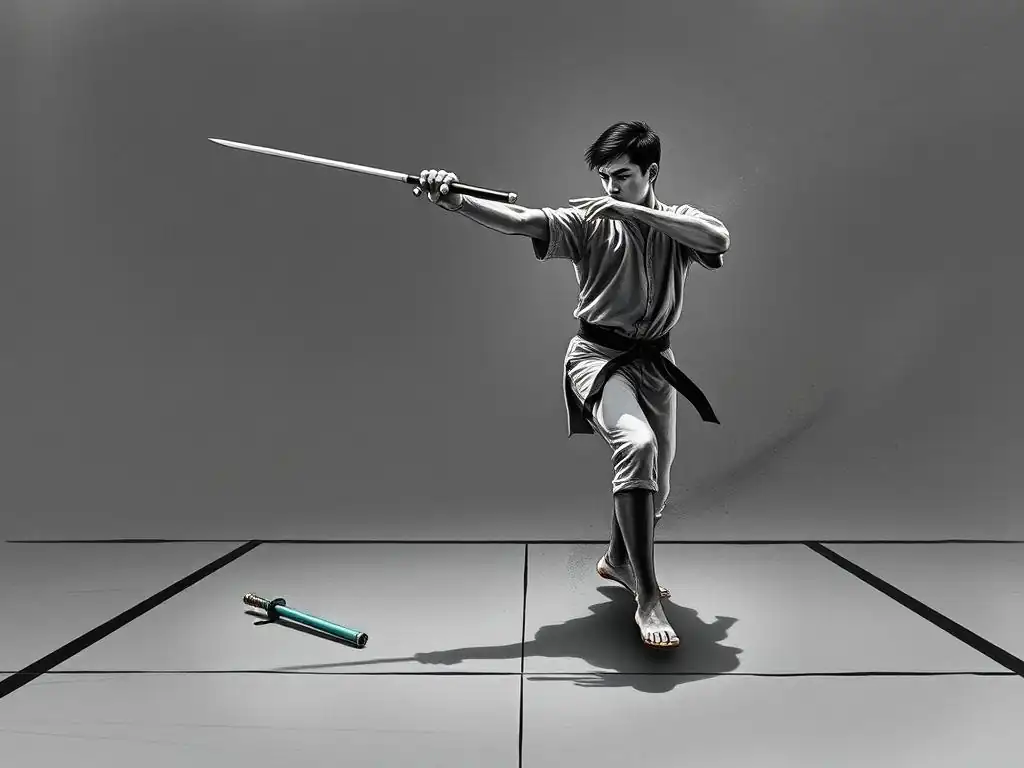
Dedicated drills are essential for isolating and improving evasion skills. While evasion is integrated into sparring, specific drills allow practitioners to focus solely on avoiding incoming force, building muscle memory for rapid, efficient movement off the line of attack. These drills help engrain the reactive components of Eskrima movement evasion timing.
Consistency in these drills, even for short periods daily, can dramatically improve a practitioner's ability to avoid being hit, a fundamental survival skill in any martial art, especially weapon-based ones.
Reaction Drills for Enhancing Defensive Capabilities
Reaction drills focus on improving the speed and appropriateness of evasive responses to incoming attacks. A simple drill involves a partner throwing strikes at a moderate pace from various angles while the practitioner's only goal is to evade using footwork – no blocking, no counter-striking. The partner gradually increases the speed and unpredictability of the attacks.
Another drill uses targets held by a partner (like focus mitts or padded sticks). The partner rapidly presents targets simulating attack angles, and the practitioner must quickly move to an evasive position relative to the perceived attack line. These drills train the body to react instantly to visual cues, refining the timing aspect of evasion.
Sparring Scenarios to Test Evasion Under Pressure
Sparring is the ultimate test of integrated skills, but specific sparring scenarios can isolate evasion. Light stick sparring with protective gear where practitioners are encouraged not to block but only to evade and counter-strike forces reliance on movement and timing.
Setting rules like "first person hit loses" or "only headshots count" in padded stick sparring can emphasize the importance of head evasion through angling and level changes. These pressure-testing scenarios highlight weaknesses in a practitioner's Eskrima movement evasion timing under realistic stress.
Hubud-Lubad: Continuous Flow Evasion Drill
As mentioned earlier, Hubud-Lubad is a powerful drill for developing sensitivity, timing, and flow. While it includes striking and trapping, a core component is the constant need to evade your partner's actions and transitions. As your partner attempts a lock or a disarm, you must evade it instantly by shifting your weight, stepping, or changing the angle of your body.
Practicing Hubud-Lubad emphasizes reacting to subtle cues and maintaining continuous motion, embodying the principle of being a "moving target." It directly trains the reactive and anticipatory aspects of Eskrima movement evasion timing in a dynamic, non-choreographed manner.
Sinawali with Evasion: Weaving and Dodging
Basic Sinawali is a set pattern, but applying evasion makes it a dynamic drill. Instead of staying static, practitioners incorporate footwork to move around each other while performing the weaving patterns. They might step offline to avoid an imaginary counter-attack or change levels.
A more advanced version involves one partner performing Sinawali strikes while the other partner's primary goal is only to evade the strikes using footwork and body angling, occasionally using a light deflection if absolutely necessary. This forces the evading partner to constantly read the incoming pattern and move accordingly, sharpening their reactive Eskrima movement evasion timing.
Refining Eskrima Timing: From Reaction to Anticipation
Moving from simply reacting quickly to attacks to anticipating them is a significant leap in skill. Anticipatory timing allows a practitioner to initiate their action before the opponent's attack fully develops, often neutralizing it or exploiting an opening they haven't even fully realized exists yet. This level of timing mastery is a hallmark of expert Eskrima practitioners.
Refining timing involves developing predictive abilities based on observation, understanding human kinetics, and even using psychological tactics to control the opponent's timing.
Developing Predictive Timing Through Observation
Predictive timing is honed by observing opponents closely. Experienced practitioners learn to read subtle cues: a shift in weight, a tensing of muscles, a change in breathing, or even a flicker in the eyes can signal an impending attack. By recognizing these "pre-fight indicators," a practitioner can begin their defensive or offensive action milliseconds before the opponent's strike is launched.
This observational skill is developed through dedicated partner work and sparring, specifically focusing on watching the opponent's body language rather than just their weapon. Over time, the practitioner builds a mental database of these cues, allowing for increasingly accurate predictions and refined Eskrima movement evasion timing.
Using Intention and Preemptive Actions to Control the Flow
Advanced timing involves not just reacting to the opponent but controlling the flow of the fight through one's own intention and preemptive actions. By demonstrating clear intent (even if it's a feint), a practitioner can often force the opponent into a reactive mode, giving the practitioner control over the timing.
Preemptive actions, such as launching a strike at the same time the opponent shows their first indicator of attack, are powerful timing strategies. This is the principle behind techniques like the pasunod (following) or saksak (thrusting) counters that target the opponent's hand or arm as they are extending to strike. Executing these requires exceptional timing, effectively disrupting the opponent's intended sequence.
Disarming Drill: Timing the Weapon Grab
Disarming is a common component of Eskrima, and successful disarms are almost entirely dependent on precise timing. A common drill involves a partner making a slow to moderate speed strike, and the practitioner's goal is to disarm them at a specific point in the trajectory – often just as the weapon is extended and slightly committed, but before the force fully develops.
This drill trains the timing required to intercept the weapon at its most vulnerable point, often combining a deflection or control with a grab or twist. Practicing this timing against various angles and speeds refines the practitioner's ability to act decisively in the critical moment.
Counter-for-Counter: Immediate Response Drill
The counter-for-counter drill involves partners taking turns initiating attacks and responding immediately with a pre-determined counter-attack. While somewhat structured, it forces rapid transitions between offensive and defensive mindsets and hones the timing of immediate responses.
A variation involves less pre-determination, where practitioners react with any appropriate counter upon receiving an attack. This emphasizes reading the opponent's action and timing the counter-attack to land effectively, often leveraging the opponent's momentum against them. This drill is fundamental for developing the reactive speed and timing crucial for Eskrima movement evasion timing.
Applying Eskrima Movement Evasion Timing in Real-World Scenarios
While Eskrima training often uses traditional weapons like sticks and knives, the principles of Eskrima movement evasion timing are highly applicable to real-world self-defense situations, which may involve improvised weapons or empty hands. The core concepts of managing distance, moving off the line of attack, and acting with precise timing remain universal for survival.
Understanding how to adapt these principles to unpredictable and potentially life-threatening situations is a key aspect of advanced training.
Adapting Eskrima Principles to Self-Defense Situations
In a self-defense scenario, the "weapon" might be a bottle, a chair, or simply an attacker's fists and feet. The Eskrima practitioner adapts their footwork and evasion to the nature of the threat. Against a wild, untrained attacker, the structured footwork might become more fluid, emphasizing simply getting out of the way of large, telegraphic movements.
The principle of angling off the line of attack is critical against punches or kicks, allowing the defender to evade the force while positioning for a counter-attack or escape. Timing remains paramount; evading a punch fractions of a second too early or too late can result in being hit. Applying Eskrima movement evasion timing means using these principles flexibly based on the specific threat and environment.
Defending Against a Knife Attack: Utilizing Angling and Disarms
Eskrima is renowned for its knife defense principles. Against a knife, evasion is even more critical than against a stick, as contact can be devastating. The Eskrima approach heavily favors moving offline, often angling into the attacker to control the weapon-bearing limb and gain a dominant position, rather than stepping straight back which keeps you in the line of fire.
Timing the evasion and simultaneous control/disarm is incredibly difficult and requires extensive, realistic training. The goal is to evade the initial thrust or slash by angling off the line, controlling the knife hand at the same time the evasion is happening, and then executing a disarm or control technique. This complex coordination of Eskrima movement evasion timing is essential for surviving a knife encounter.
Stick vs. Stick Combat Strategies: Controlling Range and Timing
In a stick-versus-stick scenario, controlling range and timing becomes a dynamic dance. Practitioners constantly adjust their distance, using footwork to stay just outside the opponent's effective range while looking for opportunities to step in and strike at the opportune moment.
Timing attacks to coincide with the opponent's retreats, advances, or transitions between guards allows the practitioner to land blows when the opponent is most vulnerable. Evasion is used to frustrate the opponent's attacks and create openings. The entire engagement is a continuous interplay of Eskrima movement evasion timing, where spatial control and temporal precision dictate the outcome.
Conclusion: The Continuous Evolution of Eskrima Movement, Evasion and Timing
Eskrima is a dynamic and adaptive martial art, and the mastery of Eskrima movement evasion timing is not a destination but a continuous journey. As practitioners gain experience, their footwork becomes more efficient, their evasion more subtle, and their timing more intuitive. They move from consciously applying techniques to reacting and acting instinctively, their body having internalized the complex interplay of distance, angle, speed, and rhythm.
The "deadly dance" of Eskrima is a testament to the sophistication of Filipino martial arts, where survival in combat is achieved not just through force, but through intelligent motion, timely avoidance, and precise action. Continued training, focusing on integrated drills, partner work, and pressure testing, is essential for refining these crucial skills and fully embodying the dynamic essence of Eskrima movement evasion timing.
Frequently Asked Questions
How crucial is movement in Eskrima compared to other martial arts?
Movement in Eskrima is absolutely fundamental. It's not just about footwork; it's about creating angles and avoiding direct confrontation to maximize offensive and defensive capabilities.
What are some key evasion techniques used in Eskrima?
Eskrima evasion involves techniques like deflection, redirection, and strategic footwork to move out of the line of attack. This allows you to counter-attack effectively while minimizing risk.
How does timing affect the effectiveness of Eskrima techniques?
Precise timing is essential for success in Eskrima. Knowing when to strike, block, or evade can completely change the outcome of an encounter.
What role does footwork play in achieving proper timing and evasion in Eskrima?
Footwork is the foundation of timing and evasion. Proper footwork allows you to control distance, create angles, and execute techniques with maximum efficiency and impact.
How can I improve my movement, evasion, and timing skills in Eskrima?
Consistent practice through drills, sparring, and partner work is crucial. Focus on developing a strong foundation in footwork and understanding the principles of distance and timing.
Final Reflection: Mastering the Flow of Eskrima
The principles of movement, evasion, and timing, so meticulously dissected within the context of Eskrima, are not merely martial techniques; they are fundamental life skills applicable far beyond the training hall. Just as a skilled Eskrimador anticipates and deflects an opponent's attack, we too can learn to navigate the complexities of life with greater grace and resilience by understanding and mastering these core concepts.
The art of Eskrima, with its emphasis on fluidity and adaptability, has profoundly shaped my understanding of conflict resolution and personal growth. It's a constant reminder that rigidity leads to vulnerability, while embracing the flow allows for both defense and opportunity. Adapt what is useful, reject what is useless, and add what is specifically your own.
- Bruce Lee. This quote perfectly encapsulates the essence of Eskrima's dynamic nature and its relevance to personal development.
Now, I invite you to consider how the principles of movement, evasion, and timing can be applied to your own life. Reflect on the challenges you face and ask yourself: How can I move more strategically? How can I evade unnecessary conflict? And how can I better time my actions to achieve my goals? Embrace the deadly dance of life with the same focus and determination you would bring to an Eskrima match, and you will find yourself navigating its complexities with newfound confidence and skill.
Ignite Your Eskrima Journey!
Thank you for exploring the art of Eskrima with us! We hope this article has deepened your understanding of movement, evasion, and timing, crucial elements in mastering this dynamic martial art. Now, it's time to put that knowledge into action and truly unlock your potential.
Here’s how you can continue your Eskrima journey:
- Immediately practice the evasion drills described in the article for at least 15 minutes. Repetition is key to building muscle memory!
- Share this article with fellow martial artists who might benefit from learning about Eskrima. Spread the knowledge!
- Research the different styles of Eskrima. Which one resonates with you the most, and why?
What specific timing drill are you most excited to incorporate into your next Eskrima practice?