
Sambo vs. BJJ: Comparing Leg Lock Systems, Gi vs. Kurtka, and Philosophies

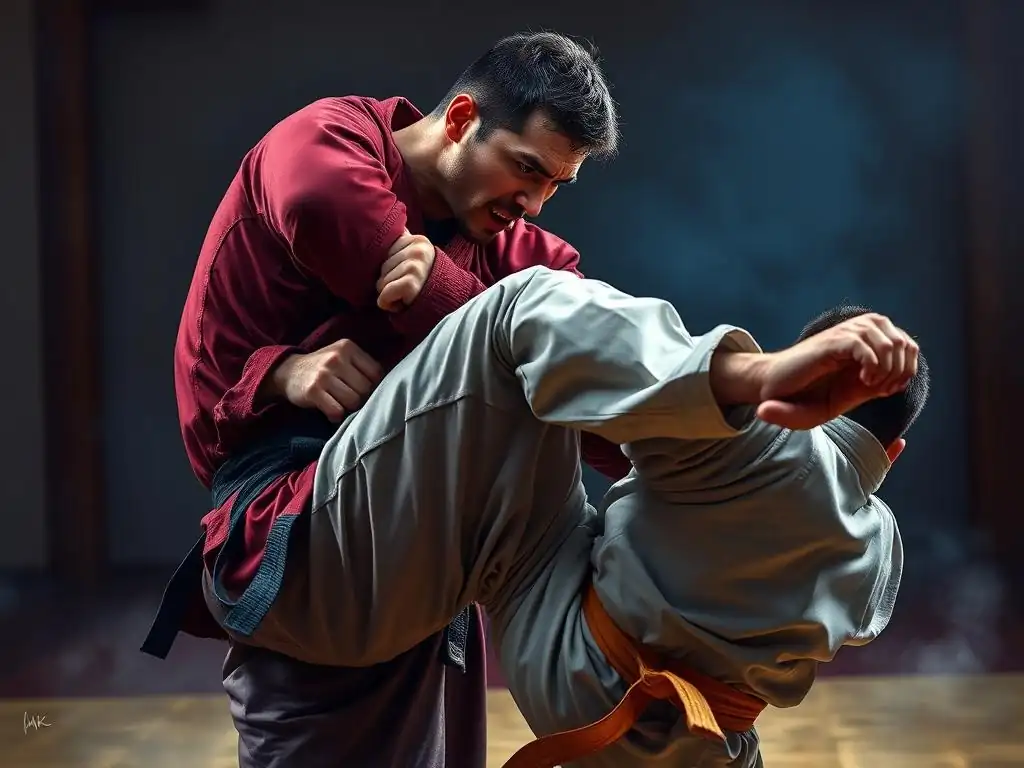
Welcome to Martial Arts Mastery, where we delve into the fascinating world of combat disciplines. Ever wondered how different grappling systems approach the same problem? This week, we're unlocking the secrets of leg locks, comparing the distinct styles of Sambo and BJJ, specifically examining how the Sambo BJJ leg lock differs in technique, philosophy, and practical application, considering the unique advantages of the Gi versus the Kurtka. Intrigued? The journey to understanding these powerful submissions starts now...
- Sambo vs. BJJ: A Deep Dive into Leg Lock Systems, Gi vs. Kurtka, and Philosophies
- Introduction: Sambo and Brazilian Jiu-Jitsu - A Comparative Overview
- Leg Lock Systems: Sambo's Aggressiveness vs. BJJ's Positional Dominance
- Gi vs. Kurtka: Uniform Differences and Their Impact on Grappling
- Philosophical Underpinnings: Aggression vs. Adaptation
- Training Methodologies: Drilling, Sparring, and Competition
- Conclusion: Finding the Right Grappling Style for You
-
Frequently Asked Questions
- What are the key differences in leg lock techniques between Sambo and BJJ?
- How does the gi in BJJ affect leg lock application compared to the kurtka in Sambo?
- What are the philosophical differences regarding leg locks in Sambo and BJJ training?
- Which martial art (Sambo or BJJ) offers a more comprehensive leg lock system for self-defense?
- Where can I find more information on Sambo and BJJ leg lock training techniques from MartialArtsMastery.org?
- Final Reflection: The Intertwined Destinies of Sambo and BJJ
- Unlock Your Grappling Potential: Dive Deeper into Sambo and BJJ!
Sambo vs. BJJ: A Deep Dive into Leg Lock Systems, Gi vs. Kurtka, and Philosophies
Introduction: Sambo and Brazilian Jiu-Jitsu - A Comparative Overview
The Rising Popularity of Sambo and BJJ in Modern Grappling
The landscape of martial arts and combat sports has witnessed a significant shift over the past few decades, with grappling arts like Sambo and Brazilian Jiu-Jitsu (BJJ) moving from niche disciplines to mainstream prominence. This surge in popularity is largely attributed to their effectiveness in mixed martial arts (MMA), where fighters utilizing these systems have achieved remarkable success. BJJ, in particular, gained initial global recognition through the early Ultimate Fighting Championship (UFC) events, showcasing the power of ground fighting and submissions against striking-focused styles.
Sambo, while perhaps less globally recognized than BJJ in pure grappling circuits until more recently, has a strong history in Eastern Europe and has produced world-class athletes who have excelled in judo, wrestling, and MMA. The cross-pollination of techniques and philosophies between these arts, particularly the intense focus on submissions, including the controversial yet highly effective leg locks, has fueled interest and participation worldwide. Gyms offering Sambo or BJJ, or even hybrid grappling programs, are now commonplace, reflecting the growing appreciation for these dynamic and intricate fighting systems.
Defining Sambo: Origins, Goals, and Core Principles
Sambo, an acronym derived from the Russian phrase "SAMozashchita Bez Oruzhiya" (самозащита без оружия), meaning "self-defense without weapons," is a martial art and combat sport developed in the Soviet Union in the early 20th century. Its creation was a synthesis of various national wrestling styles of the Soviet Union (like Armenian Koch, Georgian Chidaoba, Moldavian Trîntă, Uzbek Kurash, and others), combined with elements from judo, savate, and other martial systems. The primary goal was to create a robust system for military and police hand-to-hand combat.
The core principles of Sambo emphasize practical self-defense and combat readiness. It is traditionally divided into two main competitive formats: Sport Sambo and Combat Sambo. Sport Sambo is akin to judo or wrestling, focusing on throws, takedowns, ground control, and submissions, with a significant emphasis on leg locks. Combat Sambo incorporates striking (punches, kicks, elbows, knees) and more varied submissions, including chokes and joint locks on the arms and legs, making it closer to modern MMA. The philosophy is rooted in adapting techniques to neutralize an opponent quickly and effectively.
Defining Brazilian Jiu-Jitsu (BJJ): Origins, Goals, and Core Principles
Brazilian Jiu-Jitsu originated in Brazil in the early 20th century, evolving from Kodokan Judo through Mitsuyo Maeda, a Japanese judoka who emigrated to Brazil. Carlos Gracie learned judo from Maeda and later adapted it, focusing on ground fighting techniques.
His brother Hélio Gracie further refined the system, emphasizing leverage and technique over strength and size, making it effective for smaller individuals against larger opponents. BJJ's philosophy centers on the principle that a smaller, weaker person can successfully defend against a larger, stronger assailant by using proper technique, leverage, and most notably, taking the fight to the ground to apply joint locks and chokeholds.
BJJ's primary goal in competition is to achieve a dominant position and force an opponent to submit through a joint lock or choke. The system is characterized by its intricate guard positions, sweeps, positional hierarchy (mount, back control, side control), and a vast array of submissions. While BJJ initially focused heavily on upper-body submissions and chokes, the evolution of the art, particularly in no-gi competition and MMA, has seen a significant increase in the study and application of leg locks, creating interesting parallels and distinctions when compared to the Sambo BJJ leg lock approaches.
Leg Lock Systems: Sambo's Aggressiveness vs. BJJ's Positional Dominance
Sambo's Leg Lock Focus: Speed and Direct Attacks
Sambo has historically placed a strong emphasis on leg locks, viewing them as high-percentage submission opportunities, especially when transitioning from throws or scrambles. The rules in Sport Sambo generally allow a wider range of leg attacks than traditional judo or early BJJ, leading to a distinct tactical approach. Sambo players are often trained to attack the legs aggressively and directly, sometimes even sacrificing positional control momentarily for a quick submission attempt. This contrasts with the more positional-based approach often seen in traditional BJJ.
The focus on rapid leg attacks in Sambo stems from its origins in self-defense and combat, where quickly incapacitating an opponent was paramount. Sambo practitioners are adept at transitioning from standing throws directly into leg entanglements and submissions. They are also comfortable attacking legs from less dominant positions on the ground, relying on speed and surprise. This aggressive mindset towards the lower body is a hallmark of Sambo grappling and significantly influences the Sambo BJJ leg lock dynamic when practitioners from both arts face off.
Key Sambo Leg Lock Techniques: Heel Hooks, Knee Bars, and Ankle Locks
Sambo's arsenal of leg locks is extensive and includes techniques that are highly effective but carry significant risk if applied incorrectly. Heel hooks are a prominent part of Sambo's leg attack system, targeting the opponent's heel and twisting the knee joint. Sambo practitioners are often introduced to heel hooks relatively early in their training compared to many traditional BJJ schools.
Knee bars (hyper-extending the knee joint) and various ankle locks (like the straight ankle lock or toe hold) are also fundamental Sambo techniques. The application often involves dynamic entries and transitions, frequently initiated during or immediately after a takedown. For example, a Sambo player might transition from a hip throw directly into a knee bar setup or attack an ankle lock during a scramble on the ground. This directness and willingness to attack the legs from diverse positions defines the Sambo approach to leg submissions.
Sambo Leg Lock Entries: Inside Sankaku, Kesa Gatame Entry to Leg Locks
Sambo players utilize a variety of entries to secure leg locks, often leveraging their strong takedown game. One common entry involves transitioning from a throw or sweep directly into a leg entanglement like the inside sankaku (similar to the BJJ "inside heel hook" or "ashi garami" positions). As an opponent falls, the Sambo player might secure a leg and immediately begin working for a heel hook or knee bar.
Another characteristic Sambo entry involves transitioning from pins or control positions. For instance, a Sambo practitioner might transition from kesa gatame (scarf hold) or a similar side control position by rolling through to attack the opponent's far leg with a knee bar or ankle lock. This demonstrates the Sambo philosophy of constantly seeking submission opportunities, even from positions that might be used purely for control in other arts. The fluidity between standing, transitions, and leg attacks is a key feature of the Sambo BJJ leg lock comparison.
BJJ's Approach to Leg Locks: Positional Control and Submission Setups
Traditional Brazilian Jiu-Jitsu historically placed less emphasis on leg locks compared to Sambo, partly due to competition rules that restricted certain techniques like heel hooks for safety reasons, particularly at lower belt levels. The focus was primarily on achieving dominant positions (guard pass, side control, mount, back control) and finishing with upper-body submissions (chokes, arm locks). However, influenced by no-gi grappling, MMA, and arts like Sambo, BJJ's approach to leg locks has evolved dramatically. Modern BJJ, especially at the elite level and in no-gi competition, features sophisticated leg attack systems.
Unlike Sambo's often direct attacks, BJJ's contemporary approach to leg locks frequently involves establishing specific leg entanglement positions first. These positions, often referred to as "ashi garami" variations, are designed to control the opponent's leg, limit their mobility, and create angles for submission finishes while minimizing the opponent's ability to counter-attack or escape effectively. The emphasis is on control leading to the submission, rather than attacking the submission directly from a scramble, though rapid entries certainly exist in modern BJJ as well.
BJJ Leg Lock Positional Hierarchy: Inside and Outside Ashi Garami
In modern BJJ, leg locks are often approached through a system of positional control centered around various ashi garami (leg entanglement) positions. The outside ashi garami (basic leg entanglement) controls one of the opponent's legs, often leading to straight ankle locks or toe holds. The inside ashi garami, where the attacker's leg is inside the opponent's leg triangle, is a powerful position for attacking the heel hook and knee bar, offering significant control over the opponent's knee line.
More complex entanglements like the Saddle (inside sankaku) or 50/50 guard are utilized to isolate the opponent's leg and create finishing opportunities. The BJJ approach emphasizes understanding the nuances of these positions – how to enter them, maintain control, transition between them, and finally execute the submission. This systematic, positional hierarchy for leg attacks is a defining characteristic of the modern BJJ Sambo BJJ leg lock dynamic.
BJJ Leg Lock Finishes: Toe Holds, Straight Ankle Locks
BJJ practitioners utilize a range of leg lock finishes, depending on the leg entanglement and the specific ruleset. The straight ankle lock, a fundamental technique, is often attacked from outside ashi garami and is legal in most BJJ competitions across belt levels. It targets the ankle joint's flexion.
Toe holds, which attack the ankle joint by twisting the foot, are also common BJJ leg locks, often applied from positions like knee shield guard or during scrambles. While heel hooks are highly effective and widely used in no-gi BJJ and allowed at black belt in many gi competitions, their legality varies significantly across different BJJ federations and belt levels, reflecting a historical caution within the art compared to Sambo's more permissive ruleset in this area.
Sambo BJJ Leg Lock Comparison: Risk vs. Reward
Comparing the Sambo BJJ leg lock approaches highlights distinct philosophies regarding risk and reward. Sambo's aggressive, often opportunistic leg attacks can lead to quick finishes but may also put the attacker in vulnerable positions if the submission attempt fails. For example, diving for a heel hook from a scramble without securing a strong control position carries a higher risk of being passed or countered.
BJJ's modern, positional leg lock system, while requiring more setup, aims to provide greater control and reduce the risk of counter-attacks once the entanglement is established. Positions like the Saddle or Inside Ashi Garami are designed to neutralize the opponent's ability to escape or counter effectively before the submission is applied. This contrast between Sambo's directness and BJJ's positional emphasis is a key aspect of the Sambo BJJ leg lock debate.
Leg Lock Ruleset Differences in Sambo and BJJ Competitions
The rules governing leg locks are perhaps the most significant difference between Sambo and traditional BJJ competition, directly shaping the techniques and strategies employed. In Sport Sambo, heel hooks, knee bars, and ankle locks are generally legal, provided they are applied to the leg and not the hip or spine. This broad legality encourages Sambo players to constantly look for and attack the legs.
In contrast, traditional gi BJJ rulesets (like IBJJF) have historically been much more restrictive. Heel hooks are often illegal until the black belt level, and straight ankle locks are typically the only leg locks permitted at white belt. Knee bars and toe holds become legal at intermediate belt levels. No-gi BJJ rulesets (like ADCC) are much closer to Sambo, allowing heel hooks and a wider array of leg attacks, which has significantly influenced the evolution of BJJ leg lock techniques. These ruleset differences are fundamental to understanding the distinct development paths of the Sambo BJJ leg lock game.
Advantages and Disadvantages of Each Leg Lock Style
The Sambo style of leg locking offers the advantage of speed and surprise. Sambo players can launch attacks from positions where a BJJ player might be focused purely on control or transitions. This unpredictability can be highly effective, particularly against opponents unfamiliar with aggressive leg attacks. However, a disadvantage is the potential for losing position or being swept if the attack is defended or escaped, as the initial entry might prioritize the submission over stable control.
The BJJ style, particularly the modern positional approach, offers the advantage of control and higher finishing percentage once the entanglement is secured. By establishing dominant leg entanglement positions, the BJJ player minimizes the opponent's options and creates clearer paths to submission. The disadvantage can be the time and effort required to enter these controlling positions, potentially allowing the opponent more opportunities to defend or escape before the final attack is launched. Understanding these pros and cons is crucial for anyone studying the Sambo BJJ leg lock dynamic.
Gi vs. Kurtka: Uniform Differences and Their Impact on Grappling
The Sambo Kurtka: Design and Functionality
The Sambo uniform, known as the Kurtka (куртка), differs significantly from the BJJ gi. The Kurtka is a jacket, typically red or blue, made of sturdy material, but unlike the BJJ gi, it lacks stiff lapels. It features shoulder straps and belt loops to secure the belt, which is usually a simple rope or fabric belt. The Kurtka is shorter than a BJJ gi jacket, often ending around the hip. Sambo players also wear shorts (often the same color as the kurtka) and wrestling-style shoes, which provide grip on the mat.
The design of the Kurtka is functional, reflecting Sambo's emphasis on throws and dynamic transitions. The lack of stiff lapels means that lapel chokes, a staple of BJJ, are not possible. The shorter jacket makes it harder to use deep, controlling grips on the skirt. The material, while strong, allows for different types of grips than the thicker BJJ gi. The shoes are also a critical element, providing traction for powerful takedowns and preventing foot injuries during dynamic leg locks and throws.
How the Kurtka Influences Grips and Throws
The design of the Kurtka dictates the types of grips available in Sambo. Grips are primarily taken on the sleeves, the body of the jacket (often near the chest or shoulder), the shoulder straps, or the belt. The absence of stiff lapels removes a major avenue for control and submission compared to BJJ. This forces Sambo players to rely more on sleeve grips, body grips, and control of the opponent's posture through the upper back and shoulders.
The grip fighting in Sambo is heavily geared towards setting up throws and takedowns. Grips are used to break posture, create off-balance (komi), and execute dynamic standing techniques. The shoes allow for explosive footwork and driving motion during throws. The focus remains on manipulating the opponent's body through the jacket and belt to achieve a successful throw, often aiming to transition immediately to ground control or leg attacks upon landing.
Sambo Grip Fighting Strategies with the Kurtka
Sambo grip fighting is characterized by its dynamism and focus on establishing dominant grips for throwing. Common strategies involve securing sleeve grips to control the opponent's arms and posture, or jacket grips around the chest or back to set up hip throws or body lock techniques. Shoulder straps provide a strong handle for controlling the upper body.
Because lapel grips are not available, Sambo players develop sophisticated methods for controlling the opponent's upper body using sleeve and jacket grips, often chaining grip breaks and re-grips rapidly. The goal is usually to disrupt the opponent's balance and create an opening for a throw or sweep, rather than establishing the long-term, posture-breaking lapel grips common in BJJ.
The BJJ Gi: Design and Functionality
The Brazilian Jiu-Jitsu gi (or kimono) consists of a jacket and pants made of durable cotton or cotton-blend fabric. The jacket features thick, stiff lapels, a skirt that extends below the hips, and reinforced seams. The pants are typically drawstring. BJJ is traditionally practiced barefoot, though some practitioners wear grappling-specific shoes in certain contexts (like wrestling shoes for takedown training, though not usually for gi rolling).
The design of the BJJ gi is integral to the art's focus on grips, control, and submissions on the ground. The stiff lapels are arguably the most distinctive feature, providing a powerful handle for control, breaking posture, setting up chokes, and sweeping from the guard. The length of the jacket allows for grips on the skirt, useful for controlling distance and setting up techniques. The durable fabric is designed to withstand the pulling, gripping, and friction inherent in BJJ ground fighting.
How the Gi Influences Grips and Submissions
The BJJ gi significantly influences the types of grips and submissions used. Lapel grips are fundamental, enabling practitioners to control the opponent's posture, execute various chokes (e.g., cross collar choke, baseball bat choke), and set up sweeps and passes. Sleeve and pant grips are also crucial for control, limiting movement, and setting up joint locks and sweeps.
The gi allows for a wide array of friction-based controls and submissions that are not possible in no-gi or Sambo Kurtka. For example, using the gi fabric to create friction for controls like the "gi choke" or wrapping body parts with the gi skirt are unique to gi grappling. This reliance on fabric grips creates a different tactical game compared to Sambo.
BJJ Grip Fighting Strategies with the Gi
BJJ gi grip fighting is an intricate part of the art, often involving strategic battles for dominant grips. Practitioners aim to establish strong lapel, sleeve, or pant grips while preventing the opponent from doing the same. Common strategies include 'breaking' the opponent's grips, establishing multiple grips simultaneously (e.g., collar and sleeve), and using grips to control distance and posture.
The objective of BJJ grip fighting is typically to establish control that facilitates guard passing, maintaining guard, sweeping, or setting up submissions, especially chokes. Unlike Sambo, where grip fighting is primarily a means to a throw, in BJJ, grip fighting is fundamental to the entire grappling exchange, from standing to ground.
Kurtka vs. Gi: Comparing Grip Options and Movement
The difference between the Sambo Kurtka and the BJJ Gi leads to significant variations in grip options and the nature of movement. The Kurtka, with its lack of stiff lapels and shorter cut, encourages grips focused on dynamic control for throws and transitions. Movement can be slightly freer on the ground due to fewer restrictive fabric grips being readily available compared to the gi.
The BJJ gi, with its substantial fabric and stiff lapels, allows for powerful, constricting fabric grips that can severely limit movement and posture. This facilitates the positional control and slower, more strategic ground battles often seen in gi BJJ. While gi grappling can be dynamic, the ability to secure deep, controlling grips on the fabric creates a different rhythm than the Sambo Kurtka.
Impact of the Uniform on Leg Lock Applications
The uniform differences also subtly impact leg lock applications. In Sambo, the shoes provide traction for explosive entries into leg entanglements and finishes. The Kurtka doesn't offer many opportunities for fabric grips on the legs themselves, meaning leg locks are primarily applied joint-to-joint or bone-on-bone, focusing on mechanics rather than fabric leverage.
In BJJ gi, while leg locks are often applied directly, there can be instances where gi fabric is used to enhance control or submission pressure in leg entanglements, though this is less common than using the gi for upper body controls. The absence of shoes in BJJ means footwork and base during leg attacks or defense rely purely on the feet and the mat surface. This impacts entries, escapes, and the ability to drive through opponents. The Sambo BJJ leg lock game is thus influenced not just by technique, but by footwear and jacket design.
No-Gi Leg Lock Adaptations
The rise of no-gi grappling, particularly influenced by wrestling and Sambo, has led to significant adaptations in BJJ leg lock techniques. Without the gi, practitioners rely solely on body grips, hand-to-hand grips, and friction from the skin and clothing (rash guards/shorts). This shifts the focus to achieving and maintaining leg entanglements through body mechanics and control of limbs, rather than fabric grips.
Many of the aggressive entries and finishes common in Sambo leg locking translate more directly to no-gi BJJ than to gi BJJ. The emphasis on control through body positioning (like the various Ashi Garami configurations) becomes paramount. No-gi grappling has effectively become a common ground where Sambo and BJJ leg lock systems have met and cross-pollinated extensively.
Philosophical Underpinnings: Aggression vs. Adaptation
Sambo's Philosophy: Practical Self-Defense and Combat Effectiveness
Sambo's philosophy is deeply rooted in practical self-defense and combat effectiveness. Developed for military and law enforcement, its primary aim was to provide a robust system for neutralizing threats quickly and decisively. This led to an emphasis on effective takedowns, control, and submissions that could incapacitate an opponent. The system is inherently aggressive, prioritizing forward pressure and seeking immediate opportunities to finish the fight.
The adaptability of Sambo is also a key philosophical tenet. Its creators synthesized techniques from numerous fighting styles, constantly evolving the system based on effectiveness. This pragmatic approach means Sambo is less bound by tradition than some older martial arts; techniques are included or discarded based on their proven utility in real-world or competitive scenarios. This focus on practical application shapes everything from training methods to the competitive ruleset, including the emphasis on the Sambo BJJ leg lock strategies.
The Influence of Soviet Military Training on Sambo
The development of Sambo was heavily influenced by Soviet military and police training requirements. The system needed to be relatively quick to learn, effective against various opponents, and adaptable to different situations, including fighting in diverse environments or against armed opponents (in Combat Sambo). This necessitated a direct, no-nonsense approach to combat.
Techniques were selected and refined based on their efficiency in achieving control, inflicting pain (for compliance), or causing submission. The inclusion of dynamic throws, joint locks (especially leg locks), and later, striking, reflects this emphasis on practical application for personnel who might face unpredictable and dangerous situations. The requirement for effectiveness under pressure is ingrained in Sambo's training methodologies and competitive spirit.
Sambo's Emphasis on Takedowns and Rapid Submissions
A defining characteristic of Sambo is its strong emphasis on takedowns, often transitioning directly into ground fighting and rapid submission attempts. Points are awarded for successful throws, and many techniques are designed to flow seamlessly from standing to the ground. This contrasts with some grappling arts that might spend more time establishing ground position before attacking submissions.
Once on the ground, Sambo players are often trained to look for immediate submission opportunities, particularly leg locks, which can be accessed quickly from many positions, including during scrambles or transitions. This reflects the philosophy of finishing the fight efficiently, preventing the opponent from recovering or mounting their own offense. This drive for rapid finishes is a key difference in the Sambo BJJ leg lock approaches.
BJJ's Philosophy: Leverage, Technique, and Positional Dominance
Brazilian Jiu-Jitsu's philosophy centers on the principle of leverage and technique overcoming strength and size. This was a core innovation by the Gracie family, particularly Hélio Gracie, who adapted judo techniques to be effective for a smaller, weaker person against a larger, stronger opponent. The system emphasizes taking the fight to the ground, where leverage and technique are often more decisive than raw power.
Positional dominance is a cornerstone of BJJ strategy. The art teaches a hierarchy of positions (guard, side control, mount, back control), emphasizing the importance of achieving and maintaining control before attempting submissions. This reduces the opponent's ability to escape or counter and maximizes the attacker's leverage and finishing potential. The BJJ approach is often described as a strategic game of chess, where positional advantage is built methodically.
The Gracie Family's Influence on BJJ
The Gracie family's development and promotion were central to shaping BJJ's philosophy and global spread. Carlos Gracie initially adapted Maeda's judo, but it was Hélio Gracie's focus on leverage and survival that defined the art's core principles of effectiveness for the smaller person. Their challenge matches ("Gracie Challenge") against practitioners of other martial arts demonstrated BJJ's efficacy and cemented its reputation.
The Gracie curriculum and teaching methodology, emphasizing drilling techniques and sparring from specific positions, reinforced the philosophy of positional control and technical proficiency. The family's influence established the belt system and competition formats that define BJJ today, shaping its evolution and its distinct approach compared to arts like Sambo, including the historical perspective on the Sambo BJJ leg lock game within BJJ.
BJJ's Emphasis on Ground Control and Strategic Submissions
BJJ places a strong emphasis on controlling the opponent on the ground. Achieving a dominant position is often seen as a prerequisite for attempting a submission. This is reflected in the point system of BJJ competitions, which heavily rewards positional advancements (passing the guard, achieving mount, taking the back) before submissions.
Submissions in BJJ are often approached strategically, set up from secure positions. While opportunistic submissions occur, the core methodology involves patiently working to a dominant position where the opponent's options are limited, and the submission can be applied with maximum leverage and safety. This methodical approach to ground fighting and submissions contrasts with Sambo's more immediate, often scramble-based attacks.
Comparing the Philosophies: Direct Engagement vs. Positional Advantage
Comparing the philosophies of Sambo and BJJ reveals a core difference: Sambo prioritizes direct engagement and rapid resolution, while BJJ emphasizes strategic positional advantage leading to submission. Sambo is geared towards quickly neutralizing an opponent, often through dynamic throws and immediate, high-percentage submissions like leg locks.
BJJ, conversely, focuses on controlling the opponent on the ground, patiently working through a hierarchy of positions to achieve a dominant state before applying a submission. This difference is evident in their approaches to leg locks; Sambo often attacks them directly from scrambles or transitions, while BJJ (especially modern BJJ) builds to them through specific leg entanglement control positions. Both philosophies are effective, but they lead to distinct tactical approaches and training methodologies.
Training Methodologies: Drilling, Sparring, and Competition
Sambo Training Methods: Stand-Up Focus, Fast-Paced Sparring
Sambo training typically begins with a significant emphasis on stand-up grappling, including throws, sweeps, and takedown defense, reflecting its roots in wrestling and judo and its self-defense objectives. Warm-ups often include dynamic stretching and strength exercises relevant to throws. Drilling involves practicing specific takedown techniques and transitions from standing to the ground.
Sparring (known as borba) in Sport Sambo is often fast-paced, with rounds frequently starting from standing. Ground work is typically limited to a set amount of time (e.g., 30 seconds to 1 minute) after a takedown or transition, encouraging practitioners to work quickly for a submission or control points before being stood up. This time limit reinforces the Sambo philosophy of rapid resolution and contributes to the dynamic nature of Sambo BJJ leg lock exchanges when they occur.
BJJ Training Methods: Positional Drilling, Submission-Oriented Sparring
BJJ training traditionally places a strong emphasis on ground work. While takedowns are part of the curriculum, a significant portion of training time is dedicated to practicing techniques from various ground positions. Drilling often involves practicing sequences of techniques from a specific position, such as guard passes, sweeps from guard, or transitions between control positions.
Sparring (known as rolling) in BJJ typically starts from kneeling or sitting, especially for beginners, though standing starts are common in advanced classes or competition training. Ground sparring rounds are usually longer than in Sambo (often 5-10 minutes), allowing practitioners time to work through positional hierarchies and set up submissions. There is often specific "positional sparring" where training partners start from a predetermined position (e.g., side control, closed guard) to focus on techniques from that situation.
Cross-Training Benefits: Combining Sambo and BJJ for Enhanced Grappling
Many grapplers today cross-train in both Sambo and BJJ to enhance their overall grappling skills. Combining the arts allows practitioners to develop a more complete game, integrating effective techniques and strategies from both systems. Sambo's strong stand-up game and aggressive leg attacks can significantly improve a BJJ practitioner's takedowns and leg lock offense/defense. Conversely, BJJ's intricate ground control and diverse submission arsenal can complement a Sambo player's ground game.
Cross-training can expose practitioners to different training methodologies and competitive experiences, leading to a more well-rounded understanding of grappling principles. A BJJ player training Sambo might become more comfortable with dynamic entries and the speed of leg attacks, while a Sambo player training BJJ might develop a deeper appreciation for positional control and a wider range of upper-body submissions.
Adapting Sambo Leg Locks to BJJ and Vice Versa
Adapting Sambo leg locks to BJJ (especially no-gi) can be highly effective. Sambo's direct entries and powerful finishing mechanics for heel hooks and knee bars can be integrated into a BJJ player's game. Learning to attack legs immediately after a takedown or during a scramble, as is common in Sambo, can add a dangerous dimension to a BJJ practitioner's repertoire.
Conversely, a Sambo player can benefit from learning BJJ's systematic approach to leg entanglements. Understanding how to establish and maintain control in positions like Inside Ashi Garami or the Saddle allows for more secure and higher-percentage finishing opportunities compared to relying solely on speed and opportunism. BJJ's defensive strategies against leg locks, which often involve specific positional escapes and counter-attacks, are also invaluable for Sambo players. The Sambo BJJ leg lock exchange is a fertile ground for technical cross-pollination.
Cross-Training for Leg Lock Defense
Cross-training is particularly beneficial for developing robust leg lock defense. Exposure to Sambo's aggressive, dynamic leg attacks teaches a grappler to recognize and react quickly to sudden threats. Learning to defend against heel hooks and knee bars, which are fundamental in Sambo but sometimes introduced later in BJJ, provides crucial defensive skills.
Similarly, BJJ's emphasis on positional escapes and understanding the mechanics of various leg entanglements offers valuable defensive insights for Sambo players. Learning the nuances of hand fighting, body positioning, and transitions to escape specific BJJ leg entanglements complements the Sambo focus on explosive escapes. Training in both arts provides a comprehensive understanding of both attacking and defending the Sambo BJJ leg lock game.
Conclusion: Finding the Right Grappling Style for You
Sambo BJJ leg lock: Key Takeaways
Comparing Sambo and BJJ, particularly their approaches to leg locks, uniform usage, and underlying philosophies, reveals two distinct yet complementary grappling systems. Sambo, with its roots in combat and self-defense, emphasizes dynamic throws, aggressive leg attacks (like heel hooks and knee bars), and rapid finishes, facilitated by the Kurtka and wrestling shoes. Its philosophy is pragmatic and focused on combat effectiveness, making the Sambo BJJ leg lock difference quite pronounced.
Brazilian Jiu-Jitsu, evolving from judo with a focus on leverage for the smaller person, emphasizes ground control through positional hierarchy and strategic submissions, traditionally favoring chokes and upper-body joint locks, though modern BJJ has embraced sophisticated leg lock systems. The BJJ gi facilitates specific fabric grips and control. While distinct, both arts are incredibly effective and continue to evolve, influencing each other, especially in the realm of leg attacks.
The Future of Sambo and BJJ in the Martial Arts Landscape
The future of Sambo and BJJ appears bright, both as independent competitive sports and as foundational elements for mixed martial arts. The increasing popularity of grappling tournaments, including those with rulesets that encourage submissions like leg locks (e.g., ADCC, EBI), provides platforms for both arts to showcase their techniques.
Cross-training between Sambo and BJJ is likely to become even more common, leading to the development of more complete grapplers. The technical exchange, particularly concerning the Sambo BJJ leg lock game, will continue to push the boundaries of grappling technique and strategy. Both arts offer valuable skills for self-defense, physical fitness, and competitive sport, ensuring their continued relevance in the global martial arts landscape.
Resources for Further Learning in Sambo and BJJ
For those interested in learning more about these fascinating grappling arts, numerous resources are available.
- Academies: Look for reputable Sambo or BJJ academies in your area. Hands-on training is the best way to understand the nuances of each art.
- Books and Instructional Videos: Many legendary practitioners and coaches from both Sambo and BJJ have published books and created video instructionals covering techniques, philosophy, and training methods.
- Competitive Events: Watching Sambo competitions (like the FIAS World Championships) and BJJ competitions (like the IBJJF World Championships, ADCC, or Who's Number One) provides insight into how techniques are applied at the highest level, showcasing different Sambo BJJ leg lock strategies in action.
- Online Communities: Forums and social media groups dedicated to Sambo and BJJ offer opportunities to connect with practitioners, ask questions, and discuss techniques and training.
By exploring these resources, enthusiasts can deepen their understanding of the rich history, diverse techniques, and evolving landscape of Sambo and Brazilian Jiu-Jitsu.
Frequently Asked Questions
What are the key differences in leg lock techniques between Sambo and BJJ?
Sambo emphasizes straight ankle locks and knee bars from a standing position, while BJJ utilizes a broader range, including heel hooks and toe holds, often from guard positions. Sambo prioritizes speed and direct attacks.
How does the gi in BJJ affect leg lock application compared to the kurtka in Sambo?
The gi offers more gripping options in BJJ, influencing control and transition into leg lock positions. The kurtka, while offering some grip, emphasizes throws and grappling, leading to different entries into leg lock attacks.
What are the philosophical differences regarding leg locks in Sambo and BJJ training?
Sambo views leg locks as a primary weapon for takedowns and submissions, reflecting its combat focus. BJJ historically viewed leg locks with more reservation, though modern BJJ embraces them, often focusing on control and positional dominance before submission.
Which martial art (Sambo or BJJ) offers a more comprehensive leg lock system for self-defense?
This is subjective. Sambo's emphasis on quick submissions can be advantageous in self-defense. BJJ's focus on control and positional dominance might be more sustainable against multiple attackers.
Where can I find more information on Sambo and BJJ leg lock training techniques from MartialArtsMastery.org?
Visit MartialArtsMastery.org and navigate to the "Martial Arts Disciplines" section, then select either "Sambo" or "BJJ". Search for articles tagged with "Leg Locks," "Sambo," and "BJJ" for detailed guides.
Final Reflection: The Intertwined Destinies of Sambo and BJJ
The exploration of Sambo and BJJ leg lock systems reveals more than just technical differences; it highlights the shared pursuit of grappling mastery that binds these martial arts together. While the gi versus kurtka debate and philosophical nuances offer distinct identities, the underlying quest for effective submission techniques underscores a common ground, a testament to the universal language of grappling.
This exploration has profoundly influenced my understanding of martial arts, revealing the interconnectedness of seemingly disparate disciplines. It's a reminder that innovation often arises from cross-pollination, and that true mastery lies in understanding the principles that transcend stylistic boundaries. The best fighter is never angry.
- Bruce Lee. This quote encapsulates the calm, strategic approach required in both Sambo and BJJ, emphasizing the importance of technique and control over brute force.
Now, consider how these insights apply to your own journey, whether in martial arts or any other pursuit. Embrace the opportunity to learn from diverse perspectives, to challenge your assumptions, and to appreciate the shared humanity that underlies all endeavors. Let the spirit of continuous improvement, evident in both Sambo and BJJ, inspire you to push your own boundaries and to seek mastery in your chosen field.
Unlock Your Grappling Potential: Dive Deeper into Sambo and BJJ!
Thanks for exploring the fascinating world of Sambo and BJJ with us! We hope this article has given you a clearer understanding of their unique leg lock systems, approaches to training attire, and philosophical underpinnings. Now, let's put that knowledge to work!
- Commit to learning one new leg lock technique from either Sambo or BJJ this week. Dedicate time to research, visualize, and practice it safely.
- Explore the history of either Sambo or BJJ further. What are the roots of the styles and who are some of the influential figures?
- Share this article with a fellow martial artist and discuss your favorite aspects of each style!
Which aspect of Sambo or BJJ will you integrate into your training first?