
Think Like a Champion: Strategic Use of Basic Punches and Footwork

Welcome to Martial Arts Mastery, your ultimate resource for exploring the captivating world of combat.
Delve into the intricacies of martial arts, from ancient philosophies to cutting-edge training techniques. This week, we're unlocking the secrets to Strategic Basic Punch Footwork Training. Curious how simple footwork can elevate your punching power and tactical advantage? Prepare to refine your foundational skills and discover how the basics can make you a champion. Let's begin!
- Introduction to Strategic Basic Punch Footwork Training in Boxing
- Understanding the Core Boxing Punches for Strategic Advantage
- Footwork Fundamentals for Strategic Positioning and Movement
- Integrating Punches and Footwork for Strategic Combinations
- Strategic Applications of Basic Punches and Footwork in Boxing
- Advanced Drills for Mastering Strategic Basic Punch Footwork
- Conclusion: Elevating Your Boxing Game Through Strategic Fundamentals
-
Frequently Asked Questions
- What is the significance of Strategic Basic Punch Footwork Training in martial arts?
- How does this type of training differ from regular punching bag workouts?
- What are some key footwork drills that improve the effectiveness of basic punches?
- How can I incorporate Strategic Basic Punch Footwork Training into my existing martial arts routine?
- What are the benefits of mastering Strategic Basic Punch Footwork Training for self-defense?
- Final Reflection: Mastering the Fundamentals for Enduring Success
- Unleash Your Inner Warrior: Transform Your Stance Today!
Introduction to Strategic Basic Punch Footwork Training in Boxing
The Importance of Fundamental Techniques in Martial Arts Mastery
Mastery in any martial art, including the disciplined art of boxing, hinges significantly on a profound understanding and execution of its fundamental techniques. While flashy moves and complex combinations often capture the spectator's eye, it is the consistent and strategic application of basics that forms the bedrock of a fighter's capability.
This principle is universally true across disciplines, from the foundational stances of Karate to the grappling postures of Brazilian Jiu-Jitsu, but it holds a particularly critical weight in boxing where the margin for error is often measured in inches and split seconds. A fighter who possesses superior fundamental technique can leverage this advantage to control distance, dictate pace, and manage risk effectively throughout a bout, regardless of their opponent's skill level or style.
The strategic use of basic punches and footwork allows a practitioner to build a robust defensive shell while simultaneously creating offensive opportunities. Consider the simple jab: it's not merely an attack, but a tool for measuring distance, disrupting an opponent's rhythm, and setting up more powerful strikes. Similarly, basic footwork isn't just about moving around; it's about positioning, creating angles, and escaping danger.
Neglecting these core elements in favor of advanced techniques is akin to building a house without a foundation – it might look impressive initially, but it lacks stability and resilience under pressure. Therefore, dedicated strategic basic punch footwork training is paramount for anyone aspiring to true mastery in boxing.
Why Mastering Basic Punches and Footwork is Crucial for Boxing Success
Mastering basic punches and footwork is not just a preliminary step in boxing; it is a continuous process crucial for sustained success at all levels, from amateur competition to professional ranks. These fundamental skills provide the essential toolkit for every scenario encountered in the ring. Without a solid grasp of how to execute a proper jab, cross, hook, or uppercut, a boxer lacks the primary means to score points, inflict damage, or defend themselves.
Furthermore, ineffective footwork leads to poor balance, making punches less powerful, defense less effective, and the boxer vulnerable to counter-attacks. The ability to move efficiently and strategically is often the deciding factor in a close match, allowing a fighter to conserve energy, escape tight spots, and capitalize on fleeting openings.
The strategic application of these basics elevates a boxer from merely performing actions to fighting intelligently. For instance, a boxer might use persistent lateral footwork combined with sharp jabs to frustrate an aggressive opponent who prefers fighting on the inside. Conversely, against a defensive fighter, strategic forward pressure using controlled steps and feints followed by a well-timed cross can break through their guard.
Statistics from professional boxing often show that fighters with high ring IQ, which includes exceptional fundamental technique and strategic movement, tend to have longer and more successful careers, adapting to various opponents rather than relying solely on power or speed. This underscores why dedicated strategic basic punch footwork training is non-negotiable for achieving and maintaining a competitive edge.
Understanding the Core Boxing Punches for Strategic Advantage
The Jab: A Foundation for Offense and Defense
The jab, thrown with the lead hand, is arguably the most important punch in boxing. It is fast, economical, and versatile, serving equally well as an offensive weapon and a defensive tool. Strategically, the jab is used to establish distance, gauge an opponent's reactions, disrupt their rhythm, and score points.
It requires minimal commitment, allowing the boxer to quickly recover and defend or follow up. Professional boxers often throw hundreds of jabs per round; for example, a study of top-level bouts might show a fighter landing 20-30% of their total jabs thrown, highlighting its frequency and importance despite not always being a knockout punch.
Beyond its offensive capabilities, the jab is a critical defensive element. A well-timed jab can intercept an opponent's attack before it fully develops, breaking their posture or forcing them to reconsider their approach. It can also be used to blind an opponent momentarily, creating an opportunity to move or set up a different punch. The simplicity and speed of the jab make it an indispensable tool in strategic basic punch footwork training, allowing boxers to control the flow of the fight from the outside.
Mastering the Jab for Distance Control and Setup Punches
Mastering the jab involves more than just extending the arm. It requires proper body mechanics, including a slight rotation of the torso and shoulder, extension from the leg and hip on the lead side, and snapping the punch back quickly. This ensures maximum speed and minimal telegraphing. A key strategic application is using the jab to control distance. By constantly flicking the jab out, a boxer can keep an opponent at bay, preventing them from closing the distance effectively. This is particularly useful against infighters who thrive in close quarters.
Furthermore, the jab is the ultimate setup punch. It can draw a reaction from the opponent, revealing openings or defensive tendencies. For instance, if an opponent consistently covers up high when jabbed, it might open up opportunities for body shots or uppercuts. If they lean back, a follow-up cross might be effective. Strategic basic punch footwork training emphasizes using the jab not just to score, but as reconnaissance – gathering information about the opponent's defense and preparing the way for power shots.
Strategic Jab Variations: Power Jab, Double Jab, Flick Jab
Strategic basic punch footwork training incorporates various jab variations to keep the opponent guessing and maximize effectiveness. The standard flick jab is light, quick, and used primarily for scoring, range finding, and disruption. It's thrown with less body weight, focusing on speed and retraction.
The power jab, however, utilizes more body mechanics – a stronger rotation of the hips and shoulders, stepping forward with the lead foot – to deliver a punch with more force, capable of rocking an opponent or even scoring a knockdown if timed perfectly. The double jab involves throwing two jabs in rapid succession, sometimes to the same target or varying high and low. This can overwhelm an opponent's guard, create a momentary pause, or set up a powerful follow-up like a cross or hook. Each variation serves a distinct strategic purpose, adding layers to the basic technique.
The Cross (Right Straight): Delivering Power and Precision
The cross, or straight right hand for an orthodox fighter (left straight for a southpaw), is typically the most powerful straight punch thrown. It travels across the body from the rear hand and is delivered with significant rotation of the hips, torso, and shoulder, transferring body weight into the punch. Its power comes from this full-body engagement, making it a primary weapon for scoring knockouts or significant damage. Precision is key with the cross, as it often targets the chin or temple, requiring accurate aiming and timing to land cleanly through or around the opponent's guard.
While powerful, the cross requires more commitment than the jab, leaving the boxer slightly more exposed during and immediately after the punch. Thus, its strategic use is paramount. It's often thrown after a setup punch, like the jab, which occupies the opponent's guard or creates an opening. Strategic basic punch footwork training emphasizes throwing the cross while maintaining balance and ensuring quick recovery to a defensive stance, mitigating the vulnerability inherent in the power generation.
Proper Body Mechanics for a Devastating Cross
Generating maximum power in the cross relies on sequential body mechanics, starting from the ground up. As the punch is initiated, the rear foot pivots, driving energy up the leg and through the hip. The hip rotates powerfully, followed by the torso and shoulder. The rear hand is thrown straight, extending fully with the knuckles aligned. Crucially, the lead hand remains up to protect the face.
This coordinated movement ensures that the force generated from the legs and core is transferred efficiently into the punch. A common error is punching just with the arm, which significantly reduces power and makes the punch easier to block or evade. Strategic basic punch footwork training drills focus on integrating this full-body rotation with the punch, ensuring the boxer can deliver a devastating cross while maintaining balance and preparing for a follow-up or defense.
Using the Cross as a Counterpunch and Offensive Weapon
The cross is exceptionally effective as both an offensive weapon and a counterpunch. Offensively, it's often the second punch in the classic Jab-Cross combination, leveraging the jab to create an opening or distract the opponent. It can also be thrown as a lead straight, particularly against opponents who drop their lead hand or are moving directly towards the boxer.
As a counterpunch, the cross is devastatingly effective against an opponent who is advancing or throwing their own lead hand punch (like a jab). By timing the cross to land as the opponent is coming forward or is extended, the impact is amplified. Think of counter-punchers like Floyd Mayweather Jr., who masterfully used his straight right to punish opponents lunging in. Strategic basic punch footwork training emphasizes timing and positioning to land this powerful punch effectively, whether initiating an attack or responding to one.
The Hook: Utilizing Angles and Leverage for Maximum Impact
The hook is a curved punch thrown with the lead or rear hand, targeting the side of the opponent's head or body. Its power comes from rotational force generated by the hips and torso, often involving a pivot on the lead foot for a lead hook or the rear foot for a rear hook. The hook is particularly effective in close to medium range, where its curved trajectory can bypass the opponent's straight guard. Strategic use of the hook involves exploiting angles created by footwork or combinations, making it a powerful tool for finishing exchanges or attacking vulnerable areas.
Hooks can be thrown at different levels – to the head or the body – and with varying trajectories (short, tight hooks or wider, looping hooks). The short, tight hook is generally faster and more powerful, traveling a shorter distance. Strategic basic punch footwork training integrates hook practice with lateral movement and pivots, enabling boxers to step around an opponent's guard and land this concussive punch from an unexpected angle.
Inside and Outside Hooks: Strategic Application
Hooks can be broadly categorized as "inside" or "outside" hooks depending on the angle relative to the opponent. An inside hook (often a lead hook) is thrown around the inside of the opponent's guard, typically targeting the side of the head or ribs when they are squared up or slightly turned away. This requires getting relatively close.
An outside hook (often a rear hook, or a lead hook thrown with significant lateral movement) is thrown around the outside of the opponent's guard or arm. This is particularly effective when the boxer has created an angle by stepping outside the opponent's lead foot, allowing the hook to land on the exposed side. Strategic application involves reading the opponent's stance and guard to determine which type of hook is most likely to land, often set up by strategic basic punch footwork training that creates the necessary angles.
Generating Power from the Legs and Core for Effective Hooks
Like the cross, the power in a hook originates from the lower body and core, not just the arm. For a lead hook, the weight shifts to the lead leg, and the lead foot pivots, driving rotational force up through the hip and torso. The arm forms a roughly 90-degree angle, and the punch is delivered by rotating the body powerfully. The rear hand stays up for defense.
For a rear hook, the process is similar but involves the rear leg and foot pivot, driving rotation through the core. The strategic aspect is timing this rotation with the opponent's movement or guard opening. Strategic basic punch footwork training focuses on drills that synchronize the pivot and weight transfer with the punch, ensuring maximum power and balance, allowing boxers to deliver impactful hooks that can change the course of a fight.
The Uppercut: Exploiting Defensive Gaps with Vertical Force
The uppercut is a vertical punch thrown upwards, typically targeting the opponent's chin or solar plexus when fighting at close range. It's a potent punch for breaking through an opponent's high guard or punishing them when they lean forward. The uppercut is often seen in infighting exchanges or as a counterpunch against an opponent who is ducking or coming forward with their head low. Its strategic value lies in its ability to exploit the vertical gaps that straight punches and hooks might miss.
Because uppercuts are thrown from a lower position, they often require the boxer to be relatively close to their opponent. This makes strategic positioning through footwork crucial. The uppercut also leaves the boxer potentially vulnerable if missed or blocked, as their hands are often brought down slightly during the punch. Strategic basic punch footwork training includes practicing uppercuts in combinations and understanding when the risk is worth the potential reward, often using footwork to create the necessary close-range engagement safely.
Targeting the Chin and Body with the Uppercut
The primary targets for the uppercut are the chin (a knockout target) and the solar plexus or ribs (body shots that can wear down an opponent). Targeting the chin with an uppercut is particularly effective when an opponent is trying to clinch, is slightly bent over, or is retreating with their head down. A well-timed uppercut to the chin can cause significant damage or a knockout.
Targeting the body with an uppercut, specifically the solar plexus or liver area, can be highly effective in draining an opponent's energy and forcing them to drop their guard, creating openings for head shots. This is often done in the middle of an exchange or when an opponent is trying to cover up. Strategic basic punch footwork training emphasizes delivering uppercuts with power generated from the legs and hips, driving the force upwards, and knowing when to target the head versus the body based on the opponent's posture and defense.
Setting Up the Uppercut with Feints and Combinations
Uppercuts are rarely thrown in isolation; they are most effective when set up with other punches or feints. A common strategy is to throw a combination of hooks or straight punches to force the opponent to cover up high, leaving their body or chin exposed for an uppercut. For instance, a Hook-Uppercut combination can be very effective in close range.
Feints are also critical in setting up the uppercut. A feinted jab or hook can cause the opponent to react, potentially creating the vertical opening needed for the uppercut. Strategic basic punch footwork training incorporates drills that practice setting up uppercuts using various combinations and feints, often combined with subtle forward or lateral movements to close distance or create the optimal angle.
Footwork Fundamentals for Strategic Positioning and Movement
The Stance: Building a Solid Foundation for Mobility and Balance
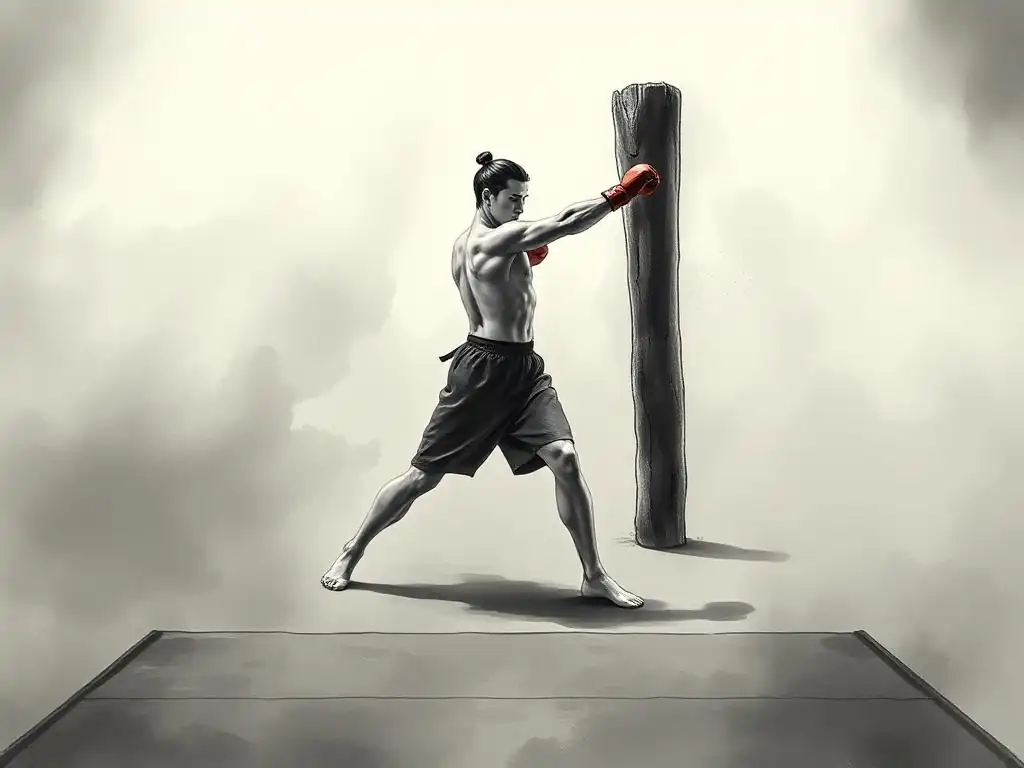
The boxing stance is the fundamental starting position from which all punches and movements originate. A proper stance provides balance, mobility, power generation capability, and defensive readiness. For an orthodox fighter, this typically involves the left foot forward, slightly outside shoulder width, with the rear foot back and slightly to the side. The knees are slightly bent, the weight is distributed evenly or slightly more on the balls of the feet, and the hands are up to protect the face and body. This posture allows for quick movements in any direction and efficient transfer of weight for punching.
An incorrect stance compromises everything. If the feet are too close, balance is poor. If they are too wide, mobility is restricted. If the weight is on the heels, forward movement is slow. Strategic basic punch footwork training begins with mastering the stance, ensuring it provides a stable yet mobile base, ready for both offense and defense. This fundamental positioning is key to executing effective strategic basic punch footwork training.
Weight Distribution and Balance for Optimal Footwork
Correct weight distribution is paramount for optimal footwork. In a standard stance, weight is typically balanced evenly or slightly favoring the lead leg (around 50/50 or 60/40 lead/rear). This allows for quick shifts to generate power for punches or initiate movement in any direction. Being too far forward or backward on the feet (on heels or toes) hinders mobility and makes the boxer susceptible to being pushed off balance.
Maintaining balance while moving is also critical. Footwork should involve short, controlled steps, always keeping the feet relatively under the body and quickly returning to a balanced stance after each movement. Strategic basic punch footwork training emphasizes drills that challenge balance during movement, teaching the boxer to recover quickly and maintain their base, ensuring they can punch or defend effectively at any moment.
Adjusting Your Stance for Different Opponents and Situations
While there is a standard stance, strategic basic punch footwork training includes learning to subtly adjust it based on the opponent's style and the situation. Against a taller opponent, a slightly wider stance might offer more stability against their reach. Against a shorter, aggressive opponent, a slightly longer stance might help maintain distance.
In specific situations, like when moving backward under pressure, the stance might naturally lengthen slightly to maintain balance. When preparing for a powerful rear hand punch, more weight might shift to the rear leg temporarily. These adjustments are subtle but important for strategic basic punch footwork training, allowing the boxer to adapt their foundational base to maximize effectiveness and safety in diverse scenarios.
Forward and Backward Movement: Controlling Distance and Pace
Moving forward and backward is the most basic form of footwork, but its strategic importance is immense. Forward movement is used to close distance, apply pressure, and initiate attacks. Backward movement is used to create distance, evade punches, and reset. The key is to move efficiently and maintain balance. This is achieved through a "push-and-slide" or "step-drag" method: the foot in the direction of movement steps first, and the other foot follows quickly, maintaining the distance between the feet.
Strategic basic punch footwork training incorporates drills focusing on controlled forward and backward movement. This allows a boxer to dictate the range of the fight – staying on the outside against an infighter or pressing forward against an out-boxer. Controlling distance also helps manage energy levels and prevent the opponent from fighting at their preferred range.
Maintaining Balance While Moving Forward and Backward
Maintaining balance during forward and backward movement prevents the boxer from becoming unstable or easily pushed off balance. The step-drag method is crucial here; the trailing foot should drag or slide, not cross over or lag too far behind. This ensures the feet remain under the body's center of gravity.
Leaning too far forward or backward while moving also compromises balance. The body should remain relatively upright, with knees bent, allowing for agile adjustments. Strategic basic punch footwork training includes exercises like rope skipping and ladder drills that enhance coordination and balance specifically for forward and backward movement, vital for effective strategic basic punch footwork training.
Strategic Retreating and Advancing Techniques
Strategic advancing involves more than just walking forward; it's about cutting off the ring and pressuring the opponent intelligently. This might involve slight angles or feints while moving forward to guide the opponent where you want them. Strategic retreating isn't just running away; it's creating distance to reset, counter, or draw the opponent onto a punch.
For example, a boxer might use quick backward steps to create just enough space to land a counter cross as the opponent follows. Or they might advance with probing jabs, testing the opponent's defense and positioning before committing to a power punch. These techniques are refined through dedicated strategic basic punch footwork training, allowing boxers to control the ring space and manipulate the opponent's movement.
Lateral Movement (Sidestepping): Creating Angles and Avoiding Attacks
Lateral movement, or sidestepping, involves moving from side to side relative to the opponent. This is a crucial element of strategic basic punch footwork training as it allows a boxer to create angles, escape the line of attack, and reposition themselves offensively or defensively. Moving laterally takes the boxer out of the direct path of straight punches and allows them to attack the opponent's exposed side.
Effective sidestepping requires pushing off the opposite foot of the direction you want to move and dragging the trailing foot. Like forward/backward movement, the feet should not cross. Strategic lateral movement can frustrate opponents who rely on linear attacks and open up opportunities for hooks and angled straight punches.
Pivoting and Shifting for Effective Sidestepping
Pivoting is often combined with sidestepping to create more dynamic angles. A pivot involves rotating the body around one foot (usually the lead foot), changing the angle relative to the opponent without necessarily covering much linear distance. A quick pivot combined with a sidestep can completely change the offensive or defensive situation.
Shifting involves changing from an orthodox stance to a southpaw stance or vice versa, often as part of a lateral movement or combination. This can confuse an opponent and provide new angles of attack. Strategic basic punch footwork training integrates these techniques, allowing boxers to flow smoothly from linear movement to lateral movement and pivots, creating a complex and unpredictable movement pattern.
Using Lateral Movement to Set Up Punches and Control the Ring
Strategic lateral movement is a primary method for setting up power punches. By sidestepping, a boxer can move outside the opponent's lead foot, creating an "outside angle." From this position, the rear hand (cross or hook) has a clear path to the opponent's head or body, often bypassing their guard. This was a signature tactic of fighters like Sugar Ray Robinson.
Lateral movement also helps control the ring. By moving sideways along the ropes, a boxer can prevent being cornered. By moving laterally in the center, they can force the opponent to follow, dictating where the fight takes place. This strategic use of lateral movement is a key component of advanced strategic basic punch footwork training.
Pivoting: Changing Angles and Creating Offensive Opportunities
Pivoting is the act of rotating the body around a stationary foot, typically the lead foot, to change the angle of attack or defense. A quick pivot can take a boxer out of danger or put them in a superior position to land a punch. For example, pivoting off the lead foot to the left (for an orthodox fighter) creates an angle where the opponent is squared up or slightly turned away, making them vulnerable to a rear hand punch.
Pivoting is essential for escaping the ropes or corners. A fighter trapped on the ropes can use a pivot to turn the tables, moving off the ropes and forcing the opponent into them. Strategic basic punch footwork training emphasizes practicing pivots in various directions and integrating them seamlessly into movement patterns.
Executing Smooth and Efficient Pivots
Executing a smooth and efficient pivot requires balance and coordination. The weight should be on the ball of the pivot foot, allowing for quick rotation. The other foot lifts slightly and moves to the new position. The body rotates as a unit, maintaining the defensive guard. A common drill involves practicing pivots in different directions from the stance, focusing on speed and returning to a balanced position.
Efficiency in pivoting means using the minimum movement necessary to achieve the desired angle. Over-pivoting can leave a boxer off-balance or facing away from the opponent. Strategic basic punch footwork training refines this skill, making pivots almost instantaneous reactions to the opponent's movement.
Combining Pivots with Punches for Dynamic Attacks
Combining pivots with punches creates highly dynamic and effective attacks. A classic example is the Jab-Pivot-Cross. The jab occupies the opponent, the pivot creates an angle, and the cross lands from the new position. Another is pivoting out after throwing a combination to avoid a counter-attack.
By pivoting while or immediately after punching, a boxer can make themselves a difficult target while simultaneously landing strikes from unexpected angles. This integration of strategic basic punch footwork training with punching techniques is a hallmark of skilled boxers, allowing them to maximize offensive impact while minimizing defensive risk.
Integrating Punches and Footwork for Strategic Combinations
Developing Effective Boxing Combinations
Effective boxing combinations are not just sequences of punches; they are strategic sequences designed to achieve a specific goal, whether it's breaking down a guard, creating an opening, scoring points, or finishing a fight. Combinations leverage the strengths of different punches, often starting with a setup punch (like a jab) followed by power shots (cross, hooks, uppercuts). The strategic element comes from choosing the right combination for the situation and the opponent.
Developing these combinations requires practice, understanding the flow between punches, and crucially, integrating footwork. A combination thrown from a stationary position is less effective than one thrown while simultaneously moving to an advantageous angle or position. Strategic basic punch footwork training emphasizes practicing combinations while moving, making them far more impactful.
Jab-Cross: The Classic Combination for Control and Power
The Jab-Cross (often called the "one-two") is the most fundamental and widely used combination in boxing. It's effective because the jab serves as an excellent range-finder and setup punch, often causing the opponent to react by raising their guard or leaning back, creating an opening for the powerful follow-up cross.
Strategically, this combination can be used to score points from the outside, keep an opponent honest, or initiate a more complex exchange. It's also effective when advancing, using a slight step forward with the jab and driving off the rear foot for the cross. Strategic basic punch footwork training ensures this combination is thrown with proper balance and weight transfer, maximizing both speed and power.
Hook-Cross-Hook: A Dynamic Combination for Aggression
The Hook-Cross-Hook is a dynamic combination often used in mid-range exchanges to apply pressure and overwhelm the opponent's guard. It typically starts with a lead hook (often to the head or body), followed by a rear cross, and finished with another lead hook. This sequence attacks from different angles and can be very difficult to defend against if thrown with speed and power.
This combination often requires slight adjustments in footwork, such as pivoting or stepping slightly to get the right angle for the hooks. Strategic basic punch footwork training for this combination focuses on smooth transitions between punches and coordinating body rotation for maximum impact throughout the sequence.
Incorporating Footwork into Punch Combinations for Enhanced Mobility
Truly effective combinations integrate footwork seamlessly. Instead of throwing a Jab-Cross while standing still, a boxer might step with the jab, then pivot slightly as they throw the cross to create an angle. When throwing a Hook-Cross-Hook, they might use lateral movement to step outside the opponent's lead foot before initiating the sequence.
This incorporation of strategic basic punch footwork training into combinations allows the boxer to attack while moving to a safer or more advantageous position, making them harder to hit and their attacks more potent. It transforms combinations from simple sequences into fluid, strategic maneuvers.
Adaptive Footwork Drills for Improved Agility and Reflexes
Developing strategic basic punch footwork training requires drills that improve not just technique but also agility, speed, and the ability to react instinctively. Adaptive footwork drills focus on moving in response to stimuli or changing conditions, mimicking the unpredictable nature of a real fight.
Examples include reaction drills where a partner calls out directions or targets, or drills using cones or markers to practice navigating space efficiently. These drills build muscle memory for strategic movement, allowing the boxer to react quickly and appropriately under pressure.
Shadow Boxing Drills for Enhancing Footwork and Coordination
Shadow boxing is a cornerstone of strategic basic punch footwork training. It involves practicing punches and movement without an opponent, allowing the boxer to focus entirely on form, balance, and strategy. Shadow boxing should not be static; it should involve constant movement – advancing, retreating, sidestepping, pivoting – as if engaging a real opponent.
By visualizing an opponent and practicing combinations while moving around an imaginary ring, boxers can refine the coordination between their punches and footwork. This helps build the muscle memory needed for strategic basic punch footwork training to become second nature in a fight.
Sparring Drills for Implementing Strategic Punch Footwork Training
Sparring is where strategic basic punch footwork training is put to the test against a live opponent. Specific sparring drills can focus on particular aspects, such as defensive footwork (practicing evading punches using movement), offensive footwork (practicing cutting off the ring or creating angles), or combining specific punches with movement (e.g., practicing the Jab-Pivot-Cross while sparring).
These drills allow boxers to implement their strategic basic punch footwork training in a controlled environment, receiving feedback and adapting their techniques based on the opponent's reactions. It's the crucial step in translating theoretical knowledge into practical fighting skill.
Strategic Applications of Basic Punches and Footwork in Boxing
Controlling the Center of the Ring with Strategic Footwork
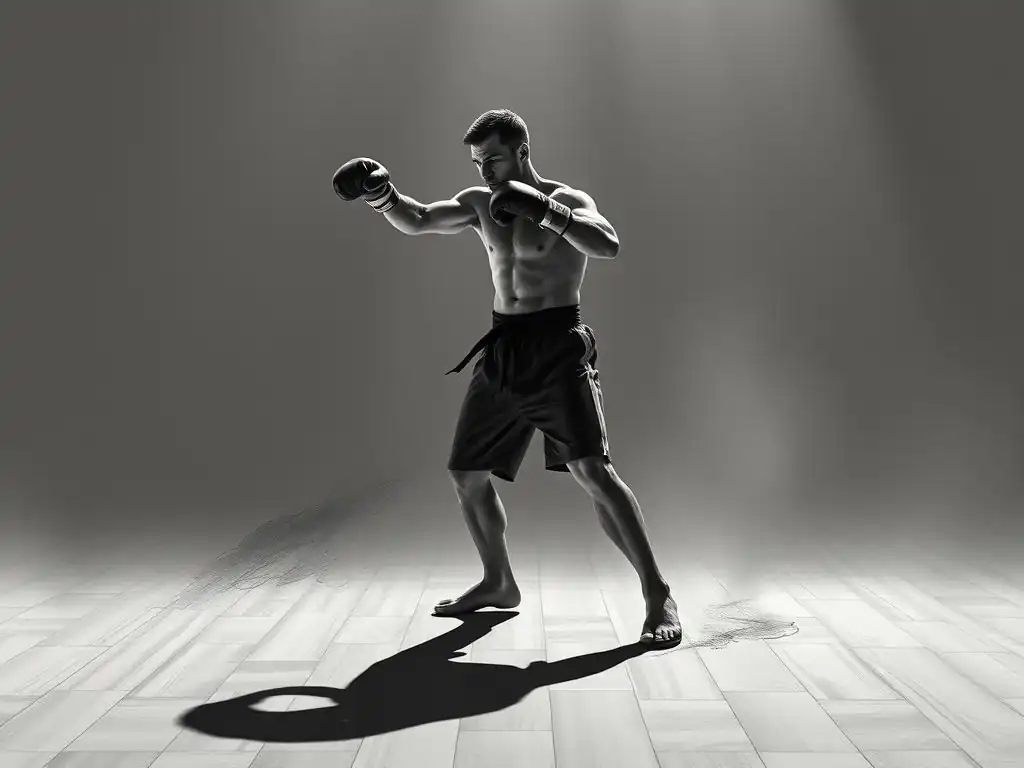
Controlling the center of the ring is a key strategic advantage in boxing. The fighter in the center has more space to move, can dictate the range, and forces the opponent towards the ropes or corners. Strategic basic punch footwork training emphasizes learning how to maintain this dominant position. This involves intelligent forward movement to pressure the opponent towards the perimeter and lateral movement to prevent being pushed back or circled out of the center.
By using efficient footwork to cut off angles and maintain central ring position, a boxer limits the opponent's mobility and options, making their own offense and defense more effective. This is a high-level application of fundamental footwork.
Using Footwork to Create Angles and Openings for Punches
As discussed earlier, strategic basic punch footwork training is essential for creating angles. Moving laterally or pivoting takes the boxer off the direct line of attack and positions them to hit the opponent from a side angle where their guard is weaker. For instance, stepping outside the opponent's lead foot creates an angle for a powerful rear hand shot.
These angles don't just make punches easier to land; they make them harder to see and defend against. A punch coming from an unexpected angle is far more likely to land cleanly and with power. Developing the ability to constantly adjust position with footwork to create these strategic angles is a hallmark of an advanced boxer.
Adapting Your Strategy Based on Your Opponent's Style
A key aspect of strategic basic punch footwork training is learning to adapt your fundamental techniques based on your opponent's style. Against an aggressive infighter, strategic footwork involves using backward and lateral movement to maintain distance and counter as they come in. The jab becomes crucial for keeping them at bay.
Against an out-boxer who relies on distance and movement, strategic footwork involves cutting off the ring with intelligent forward and lateral steps, preventing them from moving freely. The cross and body shots become more important in breaking down their defense. Being able to dynamically adjust your application of basic punches and footwork is essential for fighting diverse opponents.
Defensive Footwork Techniques for Avoiding Punches and Maintaining Distance
Footwork is not just for offense; it's a primary defensive tool. Strategic basic punch footwork training includes techniques specifically for defense, such as:
- Stepping back: Creating distance to evade punches.
- Sidestepping: Moving off the line of attack.
- Pivoting: Turning out of a corner or away from an attack.
- Circling: Moving around the opponent to avoid being trapped.
These techniques, combined with head movement and blocking, form a robust defensive system. Effective defensive footwork allows a boxer to avoid taking damage, conserve energy, and create opportunities to counter-attack. Maintaining the correct distance using footwork also prevents the opponent from landing their most powerful shots.
Advanced Drills for Mastering Strategic Basic Punch Footwork
Shadow Boxing with Focus on Strategic Movement
Advanced shadow boxing takes the basic practice further by incorporating specific strategic goals. Instead of just throwing punches and moving generally, the boxer might focus on:
- Cutting off the ring against an imaginary out-boxer.
- Maintaining distance and countering against an imaginary infighter.
- Creating specific angles for power shots.
- Practicing escapes from imaginary corners or ropes.
This level of strategic basic punch footwork training in shadow boxing requires visualization and tactical thinking, transforming it from a warm-up into a sophisticated strategic practice tool.
Heavy Bag Drills Incorporating Footwork and Combinations
Heavy bag work is excellent for developing power and endurance, but it's also vital for strategic basic punch footwork training. Instead of standing still, heavy bag drills should involve constant movement around the bag – stepping in and out, circling, pivoting – while throwing combinations.
Specific drills can include:
- Throwing a combination while circling left, then right.
- Stepping in with a jab, throwing a cross, then pivoting out.
- Practicing body-head combinations while moving close to the bag.
These drills build the coordination and stamina needed to integrate strategic basic punch footwork training with power punching in a sustained manner.
Partner Drills for Practicing Defensive Footwork and Evasion
Partner drills are crucial for practicing defensive footwork in a reactive environment. These don't necessarily involve hard hitting but focus on timing and movement. Examples include:
- One partner throws slow, predictable punches while the other focuses solely on evading using backward or lateral steps.
- One partner tries to cut off the ring while the other practices using pivots and lateral movement to escape and maintain distance.
- Mirror drills, where one partner moves and the other mirrors their footwork precisely, improving responsiveness and coordination.
These drills provide essential reactive strategic basic punch footwork training, preparing the boxer to apply their movement skills under pressure.
Conclusion: Elevating Your Boxing Game Through Strategic Fundamentals
The Power of Consistent Practice and Refinement
The journey to mastering strategic basic punch footwork training is one of consistent practice and continuous refinement. The basic punches and footwork movements, while simple in concept, require thousands of repetitions to become truly fluid, powerful, and instinctive. Elite boxers spend years perfecting these fundamentals, constantly drilling and analyzing their technique. It is through this dedicated practice that the basics become tools for strategic thinking and execution in the heat of battle.
Refinement involves paying attention to the subtle details – the angle of the foot, the degree of hip rotation, the timing of a step relative to a punch. Coaches and experienced partners play a crucial role in identifying areas for improvement. Embracing this process of consistent practice and refinement is essential for anyone serious about elevating their boxing game through strategic basic punch footwork training.
Embracing the Art and Science of Strategic Basic Punch Footwork Training
Ultimately, strategic basic punch footwork training is both an art and a science. The science lies in understanding the biomechanics of movement and punching, the physics of force, and the physiological demands of the sport. The art lies in the creative application of these fundamentals – reading an opponent, anticipating their moves, and choosing the perfect combination of steps and punches at the right moment.
By embracing this dual nature, boxers can move beyond simply performing techniques to fighting intelligently and strategically. The strategic use of basic punches and footwork is not just about winning; it's about fighting efficiently, safely, and with mastery. It is the foundation upon which champions are built.
Frequently Asked Questions
What is the significance of Strategic Basic Punch Footwork Training in martial arts?
It's crucial for effective striking and defensive maneuvering. Mastering it allows you to control distance, create angles, and generate power more efficiently.
How does this type of training differ from regular punching bag workouts?
It emphasizes coordinated movement between punches and footwork, not just raw power. It focuses on tactical positioning and creating openings, rather than simply hitting a target.
What are some key footwork drills that improve the effectiveness of basic punches?
Drills like the shuffle step, pivot, and lateral movement are essential. These movements facilitate power generation and evasive maneuvers, enhancing punch effectiveness.
How can I incorporate Strategic Basic Punch Footwork Training into my existing martial arts routine?
Begin by focusing on isolated footwork drills. Then, gradually integrate punches, focusing on maintaining balance and proper technique throughout the combined movement.
What are the benefits of mastering Strategic Basic Punch Footwork Training for self-defense?
It enables you to control the engagement distance, evade attacks, and deliver effective counter-strikes with greater precision and power in real-world situations.
Final Reflection: Mastering the Fundamentals for Enduring Success
The journey through strategic basic punch and footwork training reveals a truth that resonates far beyond the boxing ring: mastery of the fundamentals is the bedrock of exceptional performance in any field. Just as a fighter's success hinges on the precision and efficiency of their basic movements, so too does our success in life depend on the consistent application of core principles. The article has illuminated how even seemingly simple techniques, when honed with intention and strategic application, can unlock extraordinary potential.
This focus on fundamental skills has profoundly influenced my perspective on learning and growth. It's a reminder that progress isn't always about chasing the complex or the novel, but rather about deepening our understanding and execution of the basics. As Bruce Lee wisely stated: I fear not the man who has practiced 10,000 kicks once, but I fear the man who has practiced one kick 10,000 times.
This quote perfectly encapsulates the power of dedicated practice and the unwavering pursuit of fundamental excellence.
Now, consider how you can apply this principle of strategic basic training to your own life. What are the fundamental skills in your profession, your hobbies, or your personal relationships? Dedicate yourself to mastering these basics, and you'll find that the path to achieving your goals becomes clearer, more efficient, and ultimately, more rewarding. Embrace the power of the fundamentals, and unlock the champion within.
Unleash Your Inner Warrior: Transform Your Stance Today!
Thank you for delving into the fundamentals of champion-level striking! We hope this article has empowered you with a fresh perspective on the power of basic punches and strategic footwork. Now, it's time to translate knowledge into action!
- Commit to 15 minutes of daily practice focusing solely on mastering your jab and footwork. Imagine the transformation in just one week!
- Record yourself sparring or training, and analyze your footwork and punch technique for areas of improvement. Become your own best coach!
- Share one key takeaway from this article with a training partner and discuss how you can both implement it in your next session. Knowledge shared is power multiplied.
What small adjustment to your stance will you focus on perfecting this week to elevate your striking game?