
MMA Sparring Demystified: How to Train for Unpredictable Combat Scenarios

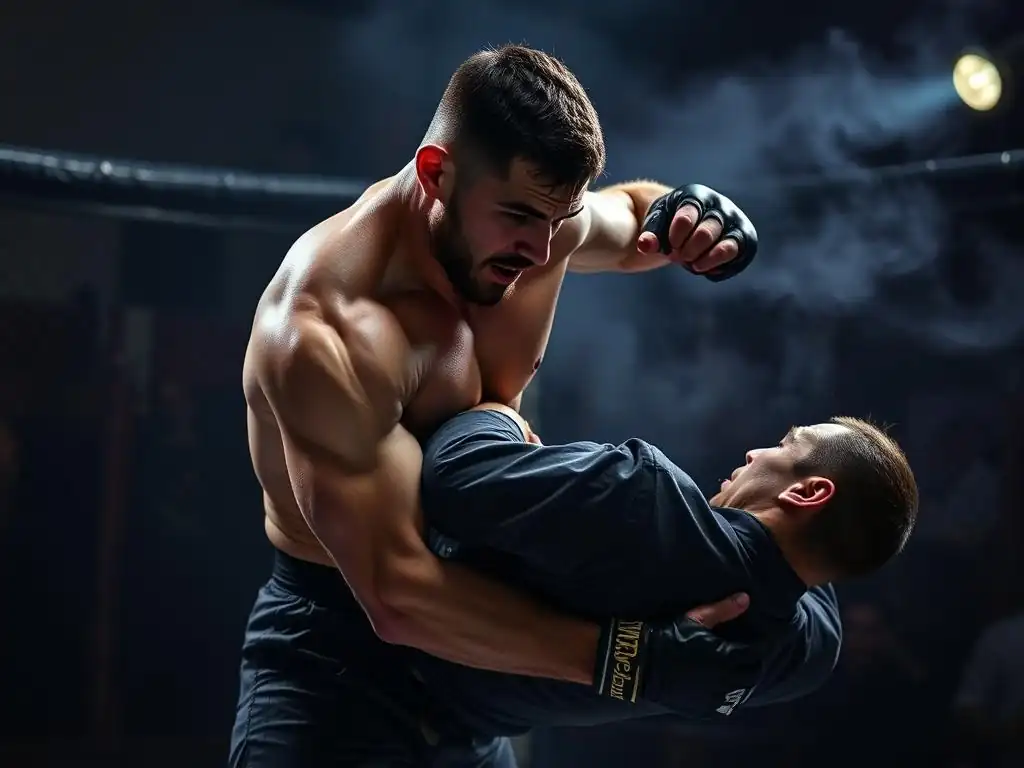
Welcome to Martial Arts Mastery, your gateway to the world's fighting arts! Ever wondered how to bridge the gap between disciplined technique and the chaotic reality of a real fight? Dive into our latest article as we demystify MMA sparring training techniques, revealing the secrets to honing your skills for unpredictable combat scenarios. Prepare to unlock a deeper understanding of effective training methodologies and elevate your martial arts journey!
- Understanding MMA Sparring: Preparing for Real-World Scenarios
- Essential MMA Sparring Training Techniques and Drills
- Advanced MMA Sparring Strategies for Unpredictable Combat
- Equipment and Safety Considerations for MMA Sparring
- Designing Effective MMA Sparring Sessions: A Step-by-Step Approach
- Beyond Technique: The Mental Aspect of MMA Sparring
- Improving Your MMA Sparring: Common Mistakes and How to Avoid Them
- The Evolution of MMA Sparring: Future Trends and Innovations
-
Frequently Asked Questions
- What is the primary focus of MMA Sparring Demystified?
- Why is sparring so important in MMA training?
- What kinds of training techniques are emphasized in the article?
- Does the article cover specific drills for improving sparring performance?
- Where can I find more information about MMA training and related topics?
- Final Reflection: Embracing the Chaos of Sparring
- Ignite Your Inner Warrior: Train Smarter, Fight Harder!
Understanding MMA Sparring: Preparing for Real-World Scenarios
The Importance of Sparring in Mixed Martial Arts Training
Sparring is unequivocally the cornerstone of effective mixed martial arts training, serving as the bridge between theoretical knowledge and practical application under pressure. It allows practitioners to test techniques learned in isolation against a live, resisting opponent, simulating the dynamic and unpredictable nature of an actual fight. Through consistent sparring, fighters develop crucial attributes like timing, distance management, reaction speed, and the ability to think under duress – skills that cannot be replicated through bag work or drilling alone. It’s in sparring where the true effectiveness of an MMA sparring training technique is validated.
Furthermore, sparring provides invaluable feedback on a fighter's strengths and weaknesses. By engaging in controlled combat, athletes can identify which techniques land effectively, where their defenses are vulnerable, and how their body and mind react to stress. This self-awareness is critical for targeted improvement. While exact statistics vary widely based on the gym and fighter's level, professional MMA fighters often dedicate a significant portion of their training week, sometimes 30% to 50% of mat time, specifically to various forms of sparring to hone their MMA sparring training techniques and strategies.
Differentiating MMA Sparring from Other Martial Arts Sparring
MMA sparring stands apart from sparring in single-discipline martial arts primarily due to its integrated nature. Unlike boxing sparring, which focuses solely on punches, or Brazilian Jiu-Jitsu rolling, which centers on grappling, MMA sparring requires the seamless transition between striking, wrestling, and grappling exchanges. This multi-faceted environment necessitates a broader skillset and a different tactical approach, as a successful strike might lead to a clinch, or a failed takedown attempt could result in a scramble on the ground.
The rules and gear also differentiate MMA sparring. While traditional martial arts like Karate might use light contact point fighting, or Muay Thai involves heavy leg kicks and clinch work, MMA sparring encompasses all ranges. Gear is typically heavier than competition gear to prioritize safety (e.g., 14-16 oz gloves compared to 4 oz fight gloves), and specific rules are often implemented to manage intensity and prevent injury, such as no illegal blows, controlled ground and pound, and mandatory tapping. This comprehensive approach to MMA sparring training techniques prepares athletes for the full spectrum of possibilities in a real fight.
Key Elements of Effective MMA Sparring Training
Effective MMA sparring training hinges on several interconnected elements. Firstly, technical proficiency is paramount; fighters must possess a solid foundation in striking, wrestling, and grappling to execute techniques safely and effectively. However, technique alone is insufficient without the ability to apply it in a dynamic situation. This is where timing and distance management become critical – knowing when to strike, when to close the distance for a takedown, or when to create space are skills honed through live practice.
Secondly, defensive reactions are a core component of MMA sparring training techniques. Learning to block, parry, slip punches, sprawl takedowns, and escape submissions under pressure is vital for survival and setting up offensive opportunities. Mental composure and 'fight IQ' are equally important. A good sparring partner learns to stay calm under pressure, read their opponent's intentions, make quick decisions, and adapt their strategy on the fly. Integrating these physical and mental aspects is key to maximizing the benefits of MMA sparring.
Essential MMA Sparring Training Techniques and Drills
Mastering Fundamental Striking Techniques for Sparring
Mastering fundamental striking techniques is the foundation for effective MMA sparring. This includes the jab, cross, hooks, uppercuts, and various kicks (leg kicks, body kicks, head kicks). In sparring, the focus shifts from merely executing these techniques to applying them in combinations, using footwork to control distance and angles, and integrating them with feints and defensive movements. For example, a simple jab in sparring isn't just a punch; it can be used to gauge distance, set up a power shot, disrupt an opponent's rhythm, or even disguise a level change for a takedown attempt.
Sparring drills often isolate specific striking exchanges to improve proficiency. Partner drills focusing on jab-cross combinations while moving, or defensive drills like slipping and countering hooks, build muscle memory and reaction time in a semi-live setting. Incorporating kicks safely requires control and communication; practicing low kicks to the thigh during sparring is common, while head kicks might be thrown with reduced power or as part of specific, agreed-upon drills. Consistent repetition of these MMA sparring training techniques in a controlled environment is crucial before attempting them at higher intensity.
Implementing Grappling and Clinch Work in MMA Sparring
Grappling and clinch work are integral parts of MMA sparring and require dedicated training techniques. Clinch sparring focuses on controlling posture, landing short strikes (dirty boxing, knees), defending against strikes, and setting up takedowns or creating space to exit. Drills might involve starting from a collar-tie, over-under position, or Thai plum, working on sweeps, trips, and transitions within the clinch. The ability to effectively operate in this close range is a significant advantage in unpredictable combat scenarios.
Ground sparring, or rolling with strikes (controlled ground and pound), is also essential. This involves practicing positional control (mount, side control, back control), transitions (passing guard, sweeping), submission attempts, and defending against all of these, while also incorporating safe, controlled strikes from dominant positions. Drills could include starting in side control with one partner defending strikes while the other maintains position and throws controlled punches, or working on escaping mount while the top person applies light ground and pound. These MMA sparring training techniques prepare fighters for the complex ground exchanges typical in MMA.
Developing Takedown Defense and Offense for Sparring
Takedown defense and offense are critical skills honed through specific MMA sparring training techniques. Offensively, this involves practicing various takedown entries like single legs, double legs, body locks, and trips, often chaining attempts together if the initial shot is defended. Sparring allows fighters to practice timing their entries, using striking setups (like a fake jab followed by a level change), and finishing the takedown against live resistance. Positional sparring starting from standing, with the goal solely being a successful takedown, is a common drill.
Defensively, developing a strong sprawl is paramount to stuffing shots. Sparring helps fighters react quickly to level changes, sprawl effectively, and immediately work to secure a front headlock or transition to a dominant position. Drills might focus specifically on sprawl defense followed by circling out or attempting a submission from the front headlock. Furthermore, learning to defend against takedowns against the cage is vital, as this is a frequent scenario in MMA; practicing cage defense, underhooks, and hip pressure during sparring is a key MMA sparring training technique.
Integrating Ground and Pound in Sparring Sessions
Ground and pound is a distinctive element of MMA and requires careful integration into sparring sessions for safety. While full-power ground strikes are generally prohibited, controlled ground and pound drills are essential MMA sparring training techniques. This typically involves the fighter in a dominant position (e.g., mount, side control, back control) throwing light, controlled punches or elbows, often agreed upon beforehand (e.g., only straight punches to the body or head with open hands or very light contact).
The primary goal of integrating ground and pound in sparring is not to inflict damage but to practice maintaining positional control while striking, creating openings for strikes, and forcing the bottom person to react defensively. The bottom person practices defensive postures, covering up, creating frames, and attempting escapes while under simulated attack. These drills help fighters become comfortable and effective in positions where ground and pound is a threat, preparing them for the realities of an MMA fight while minimizing injury risk in training.
Advanced MMA Sparring Strategies for Unpredictable Combat
Adapting to Different Fighting Styles in Sparring
Adapting to different fighting styles is a crucial advanced MMA sparring strategy. A fighter might encounter a pressure boxer, a tricky southpaw, a high-level wrestler, or a dangerous jiu-jitsu player. Sparring with a variety of partners who possess different strengths is key to developing this adaptability. For instance, against a strong wrestler, a fighter might focus on keeping the distance, defending takedown attempts, and using strikes to create opportunities. Against a skilled striker, the focus might shift to closing distance safely, securing the clinch, or taking the fight to the ground.
Specific sparring rounds can be dedicated to practicing against a particular style. For example, a coach might instruct a fighter to "only grapple" against a striking specialist partner for a round, or "only use defensive striking" against a pressure fighter. This targeted approach helps fighters develop specific MMA sparring training techniques tailored to different opponents, enhancing their overall versatility and preparedness for unpredictable combat scenarios.
Utilizing Feints and Setups for Striking Opportunities
Effective use of feints and setups is an advanced MMA sparring training technique that creates openings for strikes or takedowns. A feint is a deceptive movement designed to elicit a reaction from the opponent, while a setup involves using one technique to make another more effective. For instance, a fighter might feint a jab to draw a block, then immediately follow with a cross over the top. Or they might throw a low kick to make the opponent drop their hands, creating an opening for a head punch.
Incorporating feints and setups into sparring requires conscious effort and practice. Fighters can dedicate rounds to focusing specifically on setting up their techniques. A common setup drill involves using a specific strike, like a leg kick, to open up another technique, like a straight punch or a takedown attempt. Mastering these deceptive movements in sparring makes a fighter's offense less predictable and significantly increases the effectiveness of their MMA sparring training techniques.
Employing Defensive Strategies to Avoid Damage During Sparring
Employing robust defensive strategies is paramount for longevity and effectiveness in MMA sparring. This goes beyond simple blocking and includes head movement (slipping, rolling), parrying strikes, using frames to create space in grappling, and maintaining defensive posture. In sparring, fighters practice reacting instinctively to incoming attacks, minimizing the impact of strikes, and avoiding dangerous positions on the ground. For example, practicing slipping a punch and immediately countering is a common sparring drill.
Defensive grappling during sparring involves techniques like maintaining guard, using frames to prevent posture, hip escapes to create space, and defending against submission attempts. The goal is to not just survive but to use defense as a setup for offense – creating opportunities to sweep, escape, or counter. Prioritizing defense in specific sparring rounds, perhaps by having one partner focus solely on offense while the other defends, is an effective MMA sparring training technique to build resilience and improve reaction time.
Developing Fight IQ and Decision-Making in Sparring
Developing fight IQ and decision-making abilities is a critical, albeit less tangible, aspect of advanced MMA sparring. It involves the ability to read an opponent's movements, anticipate their next actions, choose the most appropriate technique in the moment, manage energy levels, and adapt the game plan based on how the sparring session is unfolding. This is honed through extensive live practice under the guidance of experienced coaches.
During sparring, coaches often provide real-time feedback or set specific challenges to develop fight IQ. For instance, a coach might tell a fighter to recognize when their partner is hurt and capitalize, or to identify when their partner is trying to take them down and counter accordingly. Reflecting on sparring rounds, discussing decisions made (or not made) with coaches and partners, and watching footage are all MMA sparring training techniques that contribute to improving decision-making and overall fight intelligence.
Equipment and Safety Considerations for MMA Sparring
Choosing the Right Sparring Gear for Protection
Choosing the right sparring gear is non-negotiable for safe and productive MMA sparring. The most important pieces include high-quality sparring gloves, typically 14 oz to 16 oz (or even 18 oz for heavier individuals), which have extra padding compared to competition gloves to absorb impact and protect partners. Shin guards specifically designed for stand-up sparring with good padding over the shin and instep are also essential to prevent injuries during kicks.
A properly fitted mouthguard is critical for protecting teeth, gums, and preventing concussions. Headgear is highly recommended, especially during higher-intensity rounds, to reduce the risk of cuts and mitigate (though not eliminate) the impact of strikes. Male practitioners should always wear a groin protector. Investing in good quality, well-maintained gear is a fundamental aspect of safe MMA sparring training techniques.
Implementing Safety Protocols and Guidelines During Training
Implementing strict safety protocols and guidelines is vital for minimizing risks during MMA sparring. This starts with clear communication between partners and coaches before and during the session. Agreeing on the intensity level for the round (light, medium, hard) is crucial, and both partners must commit to maintaining that intensity. The concept of "leaving your ego at the door" is paramount – sparring is for learning, not winning or losing.
Respecting your partner's safety is key. This includes pulling punches and kicks, controlling ground and pound, and immediately stopping if a partner taps out or is in a dangerous position. Coach supervision is non-negotiable; an experienced coach can oversee rounds, provide instruction, stop the action if necessary, and ensure protocols are followed. These guidelines are foundational to any effective MMA sparring training techniques program.
Preventing Common Injuries in MMA Sparring
Preventing common injuries in MMA sparring requires a multi-faceted approach. Proper warm-up and cool-down routines are essential to prepare the body for activity and aid recovery. Focusing on technique over power, especially during higher-intensity rounds, significantly reduces the risk of sprains, strains, and impacts. Partners should work together to improve, not just try to dominate each other.
Listening to your body is also critical. Training through significant pain or fatigue dramatically increases injury risk. Common injuries like sprains (ankles, wrists), cuts (from gloves or headgear), bruises, and muscle soreness are frequent, but more serious injuries like concussions, joint dislocations, or ligament tears can occur, highlighting the importance of safety protocols, appropriate gear, and controlled intensity. Consistent focus on safe MMA sparring training techniques is the best prevention.
Importance of Qualified Coaches and Training Partners
The guidance of qualified coaches and the presence of trustworthy training partners are indispensable for effective and safe MMA sparring. A good coach can structure sparring sessions, provide targeted instruction, identify technical flaws, manage intensity, and ensure safety protocols are followed. They can match partners appropriately based on skill level and size, and offer insights into specific MMA sparring training techniques.
Training partners who are skilled, controlled, and respectful are equally important. Sparring is a cooperative effort focused on mutual improvement, not a fight. A good partner challenges you appropriately, communicates effectively, respects safety boundaries, and provides constructive feedback. Building trust with your training partners allows for more realistic and productive sparring, enabling the safe practice of advanced MMA sparring training techniques.
Designing Effective MMA Sparring Sessions: A Step-by-Step Approach
Planning and Structuring Sparring Rounds
Planning and structuring sparring rounds is fundamental to designing effective MMA sparring sessions. Rounds should mimic fight duration, typically 3 or 5 minutes, with appropriate rest periods in between to simulate fight conditions and allow for recovery and instruction. The number of rounds will vary depending on the training cycle and intensity, but sessions often include multiple rounds to build endurance and simulate the cumulative fatigue of a fight.
Crucially, the purpose and intensity of each round should be determined beforehand. Some rounds might be light, technical sparring focused on movement and defense ("flow rolling" with light striking). Others might be medium intensity, working on specific techniques or scenarios. Higher-intensity rounds are necessary to simulate fight pressure but should be used judiciously (e.g., 1-2 rounds per session, not every round) to manage injury risk and burnout. Clearly defined rounds are key to productive MMA sparring training techniques.
Implementing Specific Scenarios and Goals for Each Session
Implementing specific scenarios and goals for each sparring session makes the training more focused and beneficial. Instead of just "sparring," a session might be structured around a particular theme. Examples include:
- Positional Sparring: Starting in a specific position (e.g., guard, side control, standing against the cage) with a defined objective (e.g., escape, pass, take down).
- Situational Sparring: Focusing on transitions between ranges (e.g., striking to clinch, clinch to ground) or specific phases of a fight (e.g., first minute of a round).
- Goal-Oriented Sparring: One partner might have the goal of only attempting takedowns, while the other focuses solely on defense and countering.
Setting clear objectives for each round or session, such as "focus on getting into the clinch safely" or "work on defending leg kicks," helps practitioners hone specific MMA sparring training techniques and address weaknesses identified in previous training or fights. This targeted approach maximizes learning efficiency.
Analyzing Sparring Performance for Continuous Improvement
Analyzing sparring performance is a vital step for continuous improvement in MMA sparring. This involves getting feedback from coaches and training partners immediately after rounds and, ideally, reviewing footage of the sparring session. While recording every session might not be feasible for everyone, periodically filming sparring provides an objective look at technique execution, defensive reactions, tactical decisions, and energy management.
Reviewing footage allows fighters to see what worked, what didn't, and identify habits they might not be aware of, such as dropping hands after throwing a punch or telegraphing takedown attempts. Coaches can use the footage to provide specific, actionable feedback on MMA sparring training techniques. Discussing the session with training partners can also provide valuable insights into how your movements and techniques are perceived and reacted to by others. This analytical process transforms sparring from mere practice into a powerful learning tool.
Example Sparring Session: Focus on Clinch Entries and Exits
Here is an example structure for an MMA sparring session focused on improving clinch entries and exits:
- Warm-up: 10-15 minutes of dynamic stretching, light cardio, and movement drills relevant to clinch work (e.g., hip movement, pummeling).
- Round 1 (5 mins): Light Technical Sparring.: Focus on movement and using strikes to set up clinch entries. If the clinch is achieved, practice securing a dominant grip and immediately separating safely. No hard strikes or takedown attempts allowed.
- Round 2 (5 mins): Medium Intensity - Clinch Entry Focus.: Start standing. One partner's primary goal is to get into the clinch using various setups (strikes, level changes). The other partner focuses on defending the entry and preventing a secure grip. Once the clinch is achieved, the round restarts standing. Controlled strikes allowed during entry attempts.
- Round 3 (5 mins): Medium Intensity - Clinch Work & Exit Focus.: Start in a dominant clinch position (e.g., over-under). Work for 30-60 seconds on control and controlled strikes (knees to body, dirty boxing), then attempt a safe exit back to striking range. The partner defends control and attempts to maintain the clinch or counter-exit. Repeat entry/work/exit cycle.
- Round 4 (5 mins): Medium-Hard Intensity - Integrated Clinch.: Start standing. Live sparring focusing on flowing between striking, clinch entry, clinch work, and safe exits. Controlled takedown attempts from the clinch are allowed, but if the fight goes to the ground, stand back up quickly (e.g., after 10-15 seconds) to reset and practice transitions.
- Round 5 (5 mins): Light Cool-down Sparring or Specific Drill.: Optional light round focusing on recovery movement, or a specific drill identified during the session (e.g., practicing escaping a specific clinch grip).
- Cool-down: 5-10 minutes of static stretching and mobility work.
- Analysis: Brief discussion with coach and partner about observations, successes, and areas for improvement regarding clinch entries and exits.
This structured approach allows for focused practice of specific MMA sparring training techniques within a realistic context.
Beyond Technique: The Mental Aspect of MMA Sparring
Building Confidence and Mental Toughness through Sparring
Beyond the physical techniques, MMA sparring is a powerful tool for building confidence and mental toughness. Repeatedly engaging in controlled combat, facing resistance, and overcoming challenges within the sparring environment helps fighters become more comfortable with pressure. Each successful round, each defended takedown, and each landed combination builds confidence in their abilities. Conversely, facing adversity in sparring – getting hit, being taken down, getting caught in a submission – teaches resilience and the ability to persevere.
Overcoming the initial fear or anxiety associated with sparring is a significant mental hurdle that, once cleared, instills a deep sense of self-belief. It proves to the practitioner that they can handle being in uncomfortable situations and continue to perform. This mental fortitude developed through consistent MMA sparring training techniques is transferable beyond the gym, impacting a fighter's mindset in competition and other stressful situations.
Managing Fear and Pressure in Sparring Situations
Managing fear and pressure is a critical mental skill honed through MMA sparring. It's natural to feel apprehensive before or during sparring, especially when starting out or facing a more experienced partner. Sparring provides a safe environment to confront these feelings. By starting with light, controlled rounds and gradually increasing intensity, practitioners can build comfort and learn to function effectively while experiencing adrenaline and stress.
Techniques for managing fear in sparring include focusing on breathing, staying present in the moment, and focusing on executing specific MMA sparring training techniques rather than the outcome. Coaches play a vital role here, providing guidance, reassurance, and ensuring the environment remains safe and supportive. Over time, consistent exposure to the pressure of sparring desensitizes the fighter, enabling them to stay calm and make better decisions under the high-stakes conditions of a real fight.
Developing a Winning Mindset for MMA Competition
Developing a winning mindset for MMA competition is significantly influenced by consistent and effective sparring. Sparring teaches fighters to embrace challenges, learn from mistakes without being discouraged, and maintain focus on their goals. It shifts the perspective from simply "surviving" to actively seeking opportunities and imposing their game plan, even in a training environment.
A winning mindset in sparring involves seeing each round as a learning opportunity, regardless of whether they "won" the exchange. It's about identifying what worked, what didn't, and how to improve. This analytical and growth-oriented approach, cultivated through MMA sparring training techniques, translates directly to competition, where the ability to adapt, stay positive, and execute under pressure is paramount for victory.
Improving Your MMA Sparring: Common Mistakes and How to Avoid Them
Avoiding Over-Sparring and Burnout
One of the most common mistakes in MMA training is over-sparring, which can lead to physical burnout, increased injury risk, and mental fatigue. While sparring is essential, doing it too often or at excessively high intensity without adequate recovery is detrimental. Professional fighters carefully manage their sparring load, often limiting hard sparring to once or twice a week during fight camp, with lighter, more technical rounds supplementing this.
To avoid over-sparring, adhere to a structured training schedule that balances sparring with drilling, strength and conditioning, and recovery. Communicate with your coaches about how your body feels. Prioritize quality over quantity – a few rounds of focused, high-quality sparring are more beneficial than many rounds of unfocused, high-intensity grind. Listening to your body and taking rest days are essential MMA sparring training techniques for longevity.
Addressing Technical Flaws and Bad Habits
MMA sparring often exposes technical flaws and bad habits that don't appear during isolated drilling. Common examples include dropping hands after punching, failing to sprawl effectively, telegraphing techniques, or relying solely on athleticism rather than proper technique. Ignoring these issues in sparring allows them to become ingrained, making them difficult to correct later and vulnerable points in a real fight.
Addressing these flaws requires conscious effort and targeted training. Identify the bad habits through sparring analysis (personal reflection, coach feedback, video review). Then, dedicate specific drilling time to correct the faulty movement pattern in isolation. During subsequent sparring, consciously focus on implementing the corrected technique. For instance, if you drop your hand after a jab, spend time drilling the jab with hand recovery, then focus specifically on recovering your hand during light sparring rounds. This iterative process of identification, drilling, and conscious application in sparring is key to refining MMA sparring training techniques.
Prioritizing Recovery and Active Regeneration Post-Sparring
The physical and mental demands of MMA sparring necessitate prioritizing recovery and active regeneration. Sparring causes micro-trauma to muscles and joints, puts stress on the nervous system, and expends significant energy. Neglecting recovery hinders adaptation, increases injury risk, and diminishes performance in subsequent training sessions.
Effective recovery post-sparring includes proper nutrition (refueling with protein and carbohydrates), hydration, and adequate sleep (7-9 hours). Active recovery techniques like light stretching, foam rolling, cold baths or showers, and gentle movement (e.g., a light walk) can help reduce muscle soreness and promote blood flow. Scheduling sufficient rest days between hard sparring sessions is also crucial. Viewing recovery as an integral part of MMA sparring training techniques, rather than an optional add-on, is essential for long-term progress and health.
The Evolution of MMA Sparring: Future Trends and Innovations
Emerging Strategies: Integrating Data Analysis for Sparring Improvement
The integration of data analysis is an emerging trend that could significantly impact MMA sparring training techniques. While still in its early stages for many gyms, the principles of sports science are increasingly being applied. This could involve tracking metrics during sparring sessions, such as strike counts, strike accuracy, takedown attempts and success rates, time spent in dominant/disadvantageous positions, or even heart rate data to monitor intensity and conditioning.
Analyzing this data over time can provide objective insights into a fighter's progress, identify specific areas for improvement (e.g., lower takedown success rate on the left side, higher number of strikes absorbed in certain positions), and inform training adjustments. For example, if data shows a fighter is struggling to defend strikes from mount in sparring, coaches can design specific drills or positional sparring rounds to address this. This data-driven approach adds a layer of scientific analysis to traditional MMA sparring training techniques.
The Role of Wearable Technology in Enhancing Sparring Training
Wearable technology is another innovation poised to enhance MMA sparring training techniques. Devices like heart rate monitors, GPS trackers (for movement patterns, though less applicable in a small cage/ring), and even sensors embedded in gloves or headgear that measure impact force or strike speed are becoming more accessible. While ethical considerations and practical implementation in a live, dynamic environment like sparring are challenges, the potential benefits are significant.
For instance, heart rate data can help coaches monitor a fighter's conditioning and ensure they are training at the appropriate intensity zones during sparring rounds. Impact sensors could potentially provide feedback on striking power or, more importantly for safety, flag instances of excessive force. While not yet commonplace, these technologies offer potential avenues for objective measurement and data collection to refine MMA sparring training techniques and monitor fighter well-being.
The Future of MMA Sparring and its Impact on Fighter Development
The future of MMA sparring will likely see a continued emphasis on structured, scenario-based training, informed by both traditional coaching wisdom and emerging sports science data. The goal will remain the same: to simulate the unpredictable chaos of a real fight in a controlled environment, allowing fighters to pressure-test their MMA sparring training techniques and develop their physical and mental fortitude.
As understanding of sports science, injury prevention, and performance optimization grows, MMA sparring will likely become even more refined, potentially incorporating more individualized protocols based on a fighter's specific needs and data analysis. The evolution of MMA sparring will continue to be a driving force in fighter development, pushing the boundaries of physical skill, tactical intelligence, and mental resilience required to compete at the highest levels of mixed martial arts.
Frequently Asked Questions
What is the primary focus of MMA Sparring Demystified?
The article focuses on MMA sparring training techniques designed to prepare fighters for unpredictable combat scenarios within mixed martial arts. It aims to go beyond rigid routines.
Why is sparring so important in MMA training?
Sparring is crucial because it simulates real fight conditions, allowing practitioners to apply techniques under pressure and develop crucial fight IQ and adaptability.
What kinds of training techniques are emphasized in the article?
The article likely emphasizes techniques that promote dynamic movement, realistic scenario simulations, and the development of reflexes and instinctive reactions, rather than relying solely on pre-planned sequences.
Does the article cover specific drills for improving sparring performance?
While I don't have the article content directly, it likely suggests drills focusing on distance management, striking combinations, grappling transitions, and defensive maneuvers under duress.
MartialArtsMastery.org is a resource dedicated to martial arts, offering information on historical overviews, training tips, self-defense strategies, and profiles of legendary practitioners.
Final Reflection: Embracing the Chaos of Sparring
The techniques and strategies explored in this article highlight the critical importance of adaptability in MMA sparring training. In a world increasingly demanding resilience and quick thinking, the lessons learned within the controlled chaos of the sparring ring resonate far beyond the gym walls, offering a powerful metaphor for navigating life's unpredictable challenges.
The impact of effective MMA sparring training extends beyond physical prowess; it cultivates mental fortitude and strategic thinking. This journey of continuous learning and adaptation has profoundly shaped my understanding of combat sports and life itself, emphasizing the value of embracing discomfort and learning from every encounter. The ultimate measure of a man is not where he stands in moments of comfort and convenience, but where he stands at times of challenge and controversy.
- Martin Luther King, Jr. This quote perfectly encapsulates the spirit of sparring, where true growth emerges from confronting adversity head-on.
Now, I invite you to reflect on the principles discussed here and consider how you can apply them to your own life. Whether you're a seasoned fighter or simply seeking to enhance your resilience, embrace the unpredictable, learn from every exchange, and remember that the greatest victories often arise from the most challenging battles. Let the spirit of MMA sparring training empower you to face life's uncertainties with courage, adaptability, and unwavering determination.
Ignite Your Inner Warrior: Train Smarter, Fight Harder!
Thank you for diving into the world of MMA sparring with us! Now that you're armed with the knowledge to elevate your training, it's time to put it into action and truly master the art of unpredictable combat.
Here's how you can level up your sparring game today:
- Immediately schedule your next sparring session focusing specifically on reacting to unexpected attacks. Visualize specific scenarios beforehand to sharpen your reflexes and decision-making.
- Reflect on your most recent sparring session. What went well? Where did you struggle? Use these insights to craft a targeted training plan to address your weaknesses.
- Share this article with your training partners and start a discussion about implementing these techniques together for a more dynamic and challenging sparring environment.
What unexpected move will you prepare for in your next sparring session, and how will you turn it into an advantage?