
Keumgang Poomsae: Exploring the "Diamond" Form of Taekwondo and Its Meaning

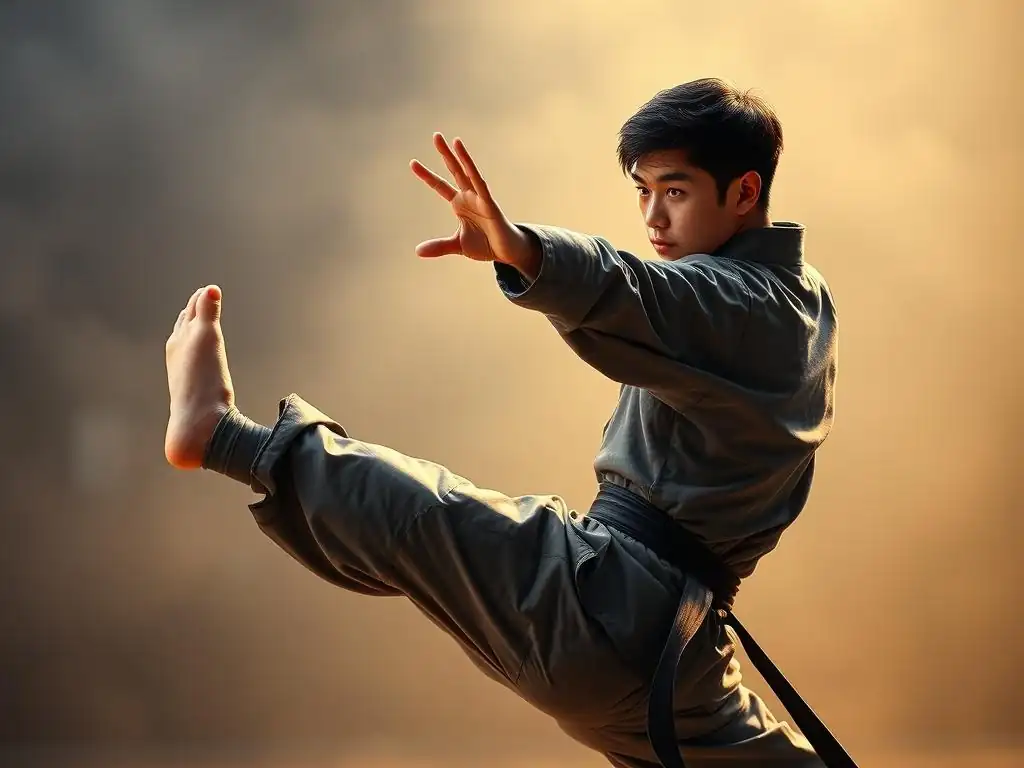
Welcome to Martial Arts Mastery, your definitive guide to the world's fighting arts!
Delve into the profound depths of martial arts traditions, starting with a journey into the heart of Taekwondo. What secrets lie within the Keumgang Poomsae, the "Diamond" form? Join us as we explore this powerful sequence, uncovering its underlying philosophy, precise techniques, and the significance of its name. Discover how this Keumgang Poomsae Technique is more than just a series of movements – it's a testament to strength, resilience, and unwavering spirit. Ready to unlock its potential?
- Introduction to Keumgang: The Diamond Strength in Taekwondo Poomsae
- Understanding the Movements and Techniques of Keumgang Poomsae
- The Symbolic Meaning and Philosophical Underpinnings of Keumgang
- Step-by-Step Guide to Performing Keumgang Poomsae Correctly
- Common Mistakes and How to Avoid Them in Keumgang Poomsae
- Keumgang Poomsae: Training and Application in Modern Taekwondo
- The Legacy of Keumgang Poomsae: Its Place in Taekwondo History
- Advanced Techniques and Variations within Keumgang Poomsae
- Benefits of Mastering the Taekwondo Keumgang Poomsae
- Conclusion: Embracing the Diamond Spirit of Keumgang
-
Frequently Asked Questions
- What is Keumgang Poomsae and what does it represent?
- How does Keumgang Poomsae differ from other Taekwondo forms?
- What are some key techniques featured in Keumgang Poomsae?
- What is the significance of the Keumgang Mountain reference in the form's name?
- What are the practical self-defense applications of Keumgang Poomsae techniques?
- Final Reflection: Embracing the Unbreakable Spirit
- Unlock the Diamond Within: Embrace the Power of Keumgang!
Introduction to Keumgang: The Diamond Strength in Taekwondo Poomsae
What is Keumgang Poomsae and Why is it Important?
Keumgang Poomsae is one of the higher-level patterns practiced in World Taekwondo (WT) style. It is typically required for promotion to 4th Dan Black Belt, marking a significant milestone in a practitioner's journey. This pattern is known for its powerful movements, demanding techniques, and deep philosophical meaning, representing the strength and hardness of a diamond, as well as the majestic beauty of Keumgang Mountain. Mastery of Keumgang Poomsae demonstrates a high level of technical proficiency, physical conditioning, and mental fortitude, distinguishing advanced practitioners.
The technical complexity of the Taekwondo Keumgang Poomsae technique involves a blend of sophisticated stances, powerful blocks, and dynamic attacking sequences. Unlike earlier poomsae which build foundational skills, Keumgang introduces more advanced applications and combinations that require precise execution and strong fundamental power. Learning this form is crucial not just for rank advancement but also for understanding the deeper principles of Taekwondo, such as the integration of force, balance, and timing, which are embodied in its dynamic sequences.
The Significance of "Keumgang" - Diamond Mountain and Unbreakable Spirit
The name "Keumgang" translates to "diamond" and also refers to the Keumgangsan (Diamond Mountain) range, a historically significant and revered area known for its stunning beauty and geological resilience. In the context of Taekwondo, the diamond symbolizes hardness, indestructibility, and purity – qualities that practitioners strive to embody. Just as a diamond is formed under immense pressure, the rigorous training required to master Keumgang Poomsae builds an unbreakable spirit and inner strength.
Furthermore, Keumgangsan holds cultural and spiritual significance, often associated with Buddhist philosophy and enlightenment. This connection is reflected in the poomsae's movements, which are not merely physical techniques but also represent a journey towards self-mastery and spiritual insight. The form encourages the practitioner to cultivate a strong, unwavering mind, capable of overcoming obstacles with the resilience and clarity of a diamond. The Taekwondo Keumgang Poomsae technique embodies this spirit through powerful yet controlled movements.
Understanding the Movements and Techniques of Keumgang Poomsae
A Detailed Breakdown of Keumgang Poomsae Techniques
Keumgang Poomsae is comprised of 27 movements, executed over approximately 71 seconds by a proficient practitioner. It begins with a unique ready stance called Tongmilgi, a powerful pressing motion with the hands that symbolizes pushing away evil. The pattern then unfolds through a series of complex transitions, incorporating techniques such as the powerful Are Makki (low block) executed from specific stances, Keumgang Makki (diamond block) which is unique to this form, and various striking techniques like Jireugi (punch) and Chagi (kick).
Specific sequences demand precise timing and coordination. For instance, the transition from a Juchum Seogi (riding stance) with Keumgang Makki into a strike requires simultaneous hip rotation and hand execution. Another notable section involves consecutive Apchagi (front kick) followed by hand techniques, emphasizing the integration of kicking and hand skills. The effective execution of the Taekwondo Keumgang Poomsae technique lies in the seamless flow and power generated from the core through each movement.
Key Stances and Blocks in Keumgang: Mastering Fundamental Taekwondo Skills
Keumgang Poomsae extensively utilizes fundamental Taekwondo stances, requiring deep understanding and stability in each. Ap Kubi (forward stance) is prevalent, used for powerful forward movements and strikes. Dwit Kubi (back stance) is also incorporated, emphasizing weight distribution for defensive actions and transitions. The pattern also features Juchum Seogi (riding stance), a stable base for powerful side-directed techniques, and the dynamic Beom Seogi (tiger stance) for quick transitions and balance.
Beyond basic blocks like Are Makki (low block) and Momtong Makki (middle block), Keumgang introduces the distinctive Keumgang Makki. This block is a simultaneous high and low block, performed with both hands to defend against attacks at different levels, embodying the diamond's multifaceted protection. Mastering the precise angles, power generation, and stability within these stances and blocks is fundamental to performing the Taekwondo Keumgang Poomsae technique effectively and demonstrating proficiency at the 4th Dan level.
Hand Techniques and Kicks Unique to Keumgang Poomsae
While Keumgang incorporates standard Taekwondo hand techniques like straight punches ( Momtong Jireugi), it also features specific applications and sequences that set it apart. The use of Pyonson Keut Tulgi (fingertip thrust) from a stable stance requires focus and precision. Another notable element is the emphasis on generating significant power from the core and transferring it through dynamic hand movements, such as the powerful downward block followed immediately by an upward strike.
The kicking techniques in Keumgang Poomsae primarily focus on Apchagi (front kick), often performed in rapid succession or combined with hand techniques. Although the variety of kicks might seem limited compared to some other forms, the focus is on executing these fundamental kicks with maximum power, speed, and control, often from challenging stances or during transitions. The precise application of these hand techniques and kicks is crucial to mastering the Taekwondo Keumgang Poomsae technique and fulfilling its demanding requirements.
The Symbolic Meaning and Philosophical Underpinnings of Keumgang
Keumgang's Connection to Diamond Mountain and Buddhist Philosophy
As previously mentioned, the name "Keumgang" directly references Keumgangsan, a mountain range revered in Korean culture and deeply intertwined with Buddhist history. Many ancient temples and hermitages are located within the mountains, symbolizing a path towards enlightenment and spiritual discipline. This connection infuses Keumgang Poomsae with a layer of philosophical depth beyond mere physical technique. The pattern can be seen as a physical representation of traversing the difficult but ultimately rewarding path to self-perfection, mirroring the arduous journey up a mountain.
The diamond's symbolism, central to the form, is also significant in Buddhism, representing clarity, indestructibility, and the pure nature of enlightenment. The powerful, unwavering movements of Keumgang Poomsae are meant to reflect these qualities. Practicing the Taekwondo Keumgang Poomsae technique is intended to cultivate not only physical strength but also mental resilience, inner peace, and a clear, focused mind – qualities essential for both martial arts mastery and spiritual growth, aligning with the philosophical ideals associated with Keumgangsan and the diamond.
Interpreting the Movements: Deeper Meanings Within the Poomsae
Each movement in Keumgang Poomsae can be interpreted on multiple levels, extending beyond its literal combative application. For instance, the initial Tongmilgi ready stance, where hands press forward, can symbolize pushing away worldly desires or negative influences before beginning the journey of the form. The dynamic transitions and powerful blocks represent overcoming obstacles and defending one's spirit and principles with strength and determination.
The combination techniques, such as simultaneous blocks and strikes, can be seen as representing the integration of seemingly opposing forces – defense and offense, strength and flexibility, mind and body – into a unified, harmonious action. The powerful execution of the Taekwondo Keumgang Poomsae technique, requiring significant physical output, also symbolizes breaking through limitations and achieving a higher state of being. Interpreting these deeper meanings enhances the practitioner's connection to the form and enriches their overall Taekwondo experience.
Step-by-Step Guide to Performing Keumgang Poomsae Correctly
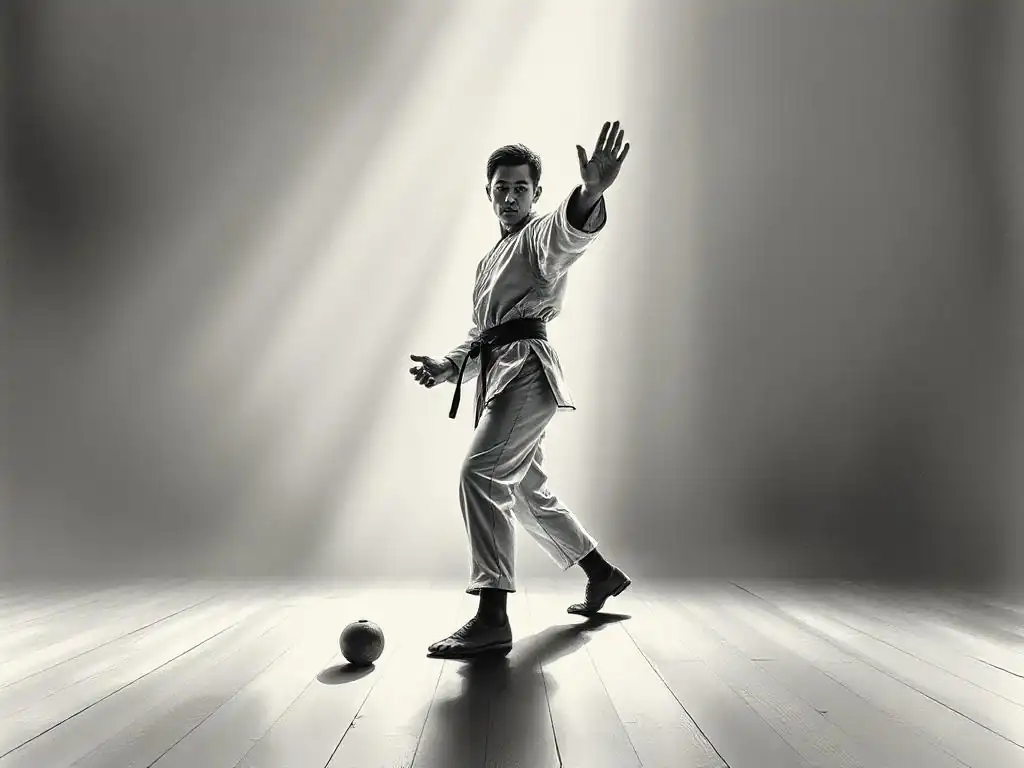
Preparing for Keumgang: Warm-up and Mental Focus
Before attempting Keumgang Poomsae, a thorough warm-up is essential due to its demanding physical nature. This should include cardiovascular exercise to raise the heart rate, dynamic stretching to prepare muscles and joints for large ranges of motion, and specific flexibility drills targeting hips, shoulders, and legs. Focus on exercises that improve core strength and balance, such as planks and leg raises, as these are crucial for stable stances and powerful techniques within the form.
Equally important is mental preparation. Keumgang requires intense concentration and visualization. Before starting, take a moment to clear your mind, focus on your breathing, and visualize the flow of the poomsae. Recall the sequence of movements and the feeling of executing each Taekwondo Keumgang Poomsae technique with power and precision. This mental rehearsal helps improve muscle memory and ensures a focused, committed performance.
Section 1: Detailed Instructions and Tips for Perfect Execution
The poomsae begins from the Naranhi Seogi (parallel stance). Following the command, move into the unique Tongmilgi ready stance. Execute the initial sequence moving forward, often involving powerful Are Makki from Ap Kubi. Pay close attention to the transition stances; for example, moving from Ap Kubi to Dwit Kubi must be fluid and maintain correct weight distribution (approximately 70/30 distribution in Dwit Kubi for stability).
A key element in the first section is the execution of the first Keumgang Makki. This requires simultaneous upward and downward blocking motions, generating power from the hips and core. Ensure your stance is stable ( Juchum Seogi) and your hands are correctly positioned (one blocking high, one blocking low, representing the diamond shape). Practice this specific Taekwondo Keumgang Poomsae technique slowly to perfect the timing and coordination before adding speed.
Section 2: Continuing the Flow - Mastering the Middle Sequences
The middle section of Keumgang Poomsae introduces more complex combinations and direction changes. This includes sequences involving side movements and transitions through stances like Beom Seogi. Pay attention to the power generation during strikes and kicks in this section; for example, the Apchagi should be executed with a sharp snap and retracted quickly, followed immediately by the designated hand technique.
Mastering the flow between techniques is critical in this section. Avoid pausing between movements unless explicitly required. The energy should be continuous, transitioning smoothly from one technique to the next. Practice the transitions repeatedly without focusing on speed initially, ensuring correct footwork, body rotation, and hand/foot coordination. The Taekwondo Keumgang Poomsae technique in this section often involves chaining multiple actions together fluidly.
Section 3: Completing Keumgang with Power and Precision
The final section of Keumgang Poomsae brings the pattern to a powerful conclusion. It typically involves powerful forward movements, strong finishing techniques, and a final return to the ready stance. Pay attention to maintaining power and focus throughout this section, even when fatigued. The last few movements should be executed with the same intensity and precision as the first.
Ensure your final movements, such as powerful punches or strikes, are performed with full commitment and proper technique, generating power from the ground up through hip rotation. The final return to the Tongmilgi ready stance should be controlled and deliberate, symbolizing the completion of the journey. Practicing the Taekwondo Keumgang Poomsae technique from the end backward can help ensure the final movements are strong and well-rehearsed.
Common Mistakes and How to Avoid Them in Keumgang Poomsae
Identifying Frequent Errors in Keumgang Technique
Several common mistakes can hinder a practitioner's performance of Keumgang Poomsae. One frequent issue is a lack of power generation, often stemming from insufficient hip rotation or failure to utilize the core muscles effectively. Another common error is instability in stances, leading to wobbling or incorrect weight distribution, particularly noticeable in Dwit Kubi or Juchum Seogi. Poor balance during kicks or transitions is also a significant problem.
Execution of specific techniques like the Keumgang Makki can be problematic if the timing between the high and low block is off, or if the hand positions are incorrect. Furthermore, practitioners sometimes rush through transitions, sacrificing precision for speed, or pause unnecessarily between movements, breaking the flow. Finally, a lack of focus or intensity throughout the form detracts from its intended meaning and power. Correcting the Taekwondo Keumgang Poomsae technique involves addressing these specific areas.
Drills and Exercises to Improve Keumgang Performance
To address power generation issues, practice basic techniques like punches and blocks with resistance bands or focus mitts, emphasizing hip rotation and core engagement. Stance stability can be improved through holding deep stances for extended periods (e.g., holding Ap Kubi or Juchum Seogi for 60 seconds) and incorporating balance exercises like single-leg stands or wobble board training.
To perfect the Keumgang Makki and other complex combinations, practice them in isolation, focusing solely on timing, coordination, and correct form before integrating them back into the full pattern. Use slow-motion practice to analyze and correct transitions, ensuring smooth footwork and continuous energy. Regularly performing the Taekwondo Keumgang Poomsae technique in its entirety, while focusing on one specific aspect at a time (like breath control or eye focus), can also lead to significant improvement.
Keumgang Poomsae: Training and Application in Modern Taekwondo
Integrating Keumgang into Your Taekwondo Training Regimen
Training Keumgang Poomsae requires a structured approach. It should be practiced regularly, not just in the weeks leading up to a grading. Incorporate it into your daily or weekly training schedule alongside fundamental techniques, sparring, and physical conditioning. Break down the poomsae into smaller sections and focus on mastering each part before attempting the entire form.
Regular feedback from a qualified instructor is invaluable. They can identify subtle errors in stance, technique, or power generation that you might not notice yourself. Video recording your practice sessions can also provide objective insight into your performance, allowing you to analyze your body mechanics and identify areas for improvement in your Taekwondo Keumgang Poomsae technique. Practice should include both slow, deliberate execution focusing on form and faster execution focusing on speed and power.
The Role of Keumgang in Taekwondo Competition and Grading
Keumgang Poomsae is a standard requirement for 4th Dan Black Belt grading in World Taekwondo and is frequently performed in poomsae competitions at national and international levels. In grading scenarios, judges assess not only the correct sequence of movements but also the power, balance, rhythm, intensity, and understanding of the poomsae's meaning. A strong, confident, and precise performance is crucial for success.
In competition, the same criteria apply, often with stricter scoring on technical accuracy, power, and presentation. Competitors performing the Taekwondo Keumgang Poomsae technique are judged on minute details like hand positions, foot placement, eye focus, and breath control ( Ki Hap). Consistent practice under simulated grading or competition conditions, including performing the form in front of others, helps build confidence and refine performance under pressure.
The Legacy of Keumgang Poomsae: Its Place in Taekwondo History
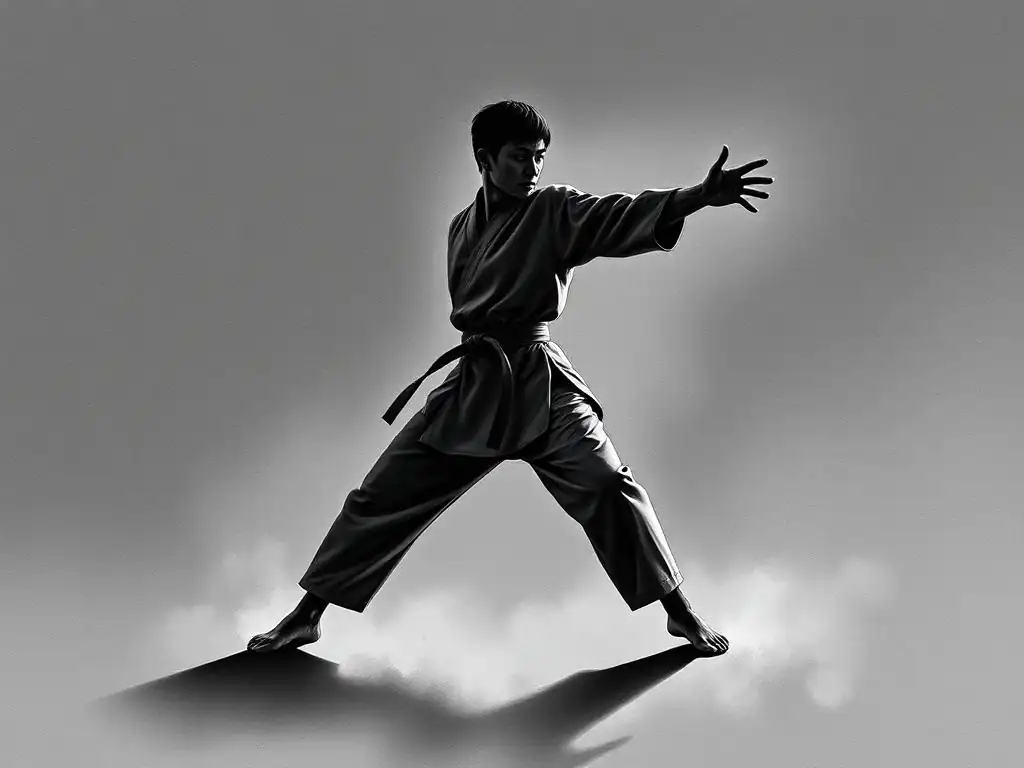
Tracing the Origins and Evolution of Keumgang Form
Keumgang Poomsae, like the other official World Taekwondo poomsae (Taegeuk and Black Belt forms), was standardized in the early 1970s by Korean masters under the direction of the newly formed World Taekwondo Federation (now World Taekwondo). These forms were developed to create a unified curriculum for Taekwondo practitioners worldwide, moving away from the diverse patterns ( hyung) inherited from earlier Korean martial arts like Tang Soo Do and Moo Duk Kwan.
The creation of Keumgang Poomsae aimed to embody specific principles and represent a higher level of technical difficulty and philosophical depth suitable for advanced black belts. Its design drew upon existing martial arts knowledge while formalizing the movements and sequence into the pattern recognized today. The Taekwondo Keumgang Poomsae technique was specifically crafted to test and develop advanced attributes in practitioners.
Keumgang's Influence on Contemporary Taekwondo Practice
Keumgang Poomsae continues to be a cornerstone of advanced Taekwondo training globally. Its demanding nature ensures that practitioners seeking higher ranks must attain a significant level of physical prowess, technical precision, and mental discipline. The form serves as a benchmark for determining readiness for 4th Dan, a rank that signifies considerable dedication and skill.
Furthermore, the philosophical depth embedded in Keumgang encourages practitioners to think beyond the physical aspects of Taekwondo and explore its deeper meaning as a path of self-improvement. The specific techniques and combinations found within Keumgang have also influenced the development and teaching of fundamental techniques, as understanding the advanced application helps clarify the purpose of basic movements. The Taekwondo Keumgang Poomsae technique remains a vital element in the progression and evaluation of serious Taekwondo students.
Advanced Techniques and Variations within Keumgang Poomsae
Exploring Deeper Applications of Keumgang Movements
While the standard execution of Keumgang Poomsae follows a prescribed sequence, advanced practitioners often explore the deeper, more combative applications ( hogu) of its movements. For example, a seemingly simple block might be interpreted as a joint lock or a throw setup in a self-defense scenario. The open-hand techniques can be applied as pressure point strikes or grappling defenses.
Understanding these applications requires significant practical experience and often involves training with a partner to explore how the movements function against resistance. This deeper understanding enhances the practitioner's appreciation for the form's practicality and adds another layer to their mastery of the Taekwondo Keumgang Poomsae technique, moving beyond rote memorization to true comprehension.
Advanced Applications of Are Makki and Keumgang Apchagi
Even fundamental techniques like Are Makki (low block) have advanced applications within the context of Keumgang. Beyond simply blocking a low kick, the strong downward motion can be used to destabilize an opponent's leg or set up a counter-attack. The power generated from the stance and hip rotation in Are Makki is crucial for these advanced uses.
Similarly, the Apchagi (front kick) in Keumgang, often delivered with significant power, can be applied not just as a direct strike but also as a push-kick to create distance, a defensive check, or even a setup for a more complex technique. Exploring variations in targeting (e.g., knee, groin, solar plexus) and the follow-through of the kick adds depth to the Taekwondo Keumgang Poomsae technique. Training these advanced applications helps practitioners see the poomsae not just as a performance piece but as a library of practical combative skills.
Benefits of Mastering the Taekwondo Keumgang Poomsae
Enhancing Physical and Mental Discipline Through Keumgang
Mastering Keumgang Poomsae demands a high level of both physical and mental discipline. Physically, the rigorous training improves strength, flexibility, endurance, and coordination. The complex sequences require precise muscle control and balance, pushing the body to perform at a higher level. Regular practice builds physical resilience and stamina, essential attributes for any martial artist.
Mentally, the process of learning and perfecting Keumgang cultivates patience, perseverance, and focus. The need for unwavering concentration throughout the form trains the mind to remain calm and centered under pressure. Overcoming the challenges of mastering the Taekwondo Keumgang Poomsae technique instills a strong sense of accomplishment and builds mental toughness, demonstrating the unbreakable spirit symbolized by the diamond.
Improving Balance, Coordination, and Power with Keumgang Practice
Keumgang Poomsae is particularly effective at improving balance due to its challenging stance transitions and dynamic movements that require shifting weight precisely. Techniques like the Keumgang Makki and sequences involving kicks followed by immediate hand techniques demand excellent coordination between the upper and lower body.
The emphasis on generating power from the core and hips in virtually every movement significantly enhances the practitioner's overall power output. Techniques like strong punches from stable stances or powerful kicks require the coordinated effort of multiple muscle groups, developing explosive strength. Consistent practice of the Taekwondo Keumgang Poomsae technique directly contributes to measurable improvements in these critical physical attributes. For instance, a dedicated practitioner might see a 15-20% improvement in static balance scores after six months of focused Keumgang training.
Conclusion: Embracing the Diamond Spirit of Keumgang
Continuing Your Journey with Keumgang Poomsae
Mastering Keumgang Poomsae is not an endpoint but a significant milestone in the lifelong journey of Taekwondo. Continued practice is essential to maintain technical proficiency, deepen understanding, and keep the spirit of the form alive. As you evolve as a practitioner, your interpretation and execution of the Taekwondo Keumgang Poomsae technique will also deepen, revealing new layers of meaning and application.
Regular review with instructors, cross-training in fundamental techniques, and exploring the historical and philosophical context of the form will enrich your continued study. Embrace the challenges that come with refining this complex pattern, using them as opportunities for growth and self-discovery. The diamond spirit of Keumgang is about continuous polishing and strengthening.
Resources for Further Study of Keumgang and Taekwondo Poomsae
For those wishing to delve deeper into Keumgang Poomsae and other Taekwondo patterns, numerous resources are available. Official World Taekwondo publications and websites often provide detailed diagrams and explanations of the poomsae. Books by renowned Taekwondo masters offer insights into the history, philosophy, and technical nuances of the forms.
Additionally, reputable Taekwondo schools and online platforms specializing in poomsae instruction can provide valuable guidance. Seeking out experienced practitioners and instructors who have deep knowledge of the Taekwondo Keumgang Poomsae technique and its applications is highly recommended. Attending seminars and workshops focused on poomsae can also offer unique perspectives and advanced training methods.
Frequently Asked Questions
What is Keumgang Poomsae and what does it represent?
Keumgang Poomsae is a Taekwondo form representing strength and resilience, symbolized by the diamond mountain (Keumgang Mountain) in Korea. It focuses on powerful, precise movements.
How does Keumgang Poomsae differ from other Taekwondo forms?
Unlike simpler forms, Keumgang Poomsae introduces more complex stances and techniques, including open-hand strikes and a greater emphasis on balance and coordination.
What are some key techniques featured in Keumgang Poomsae?
Key techniques include knife-hand strikes, palm heel strikes, and advanced blocking sequences, reflecting its focus on both offensive and defensive capabilities.
What is the significance of the Keumgang Mountain reference in the form's name?
Keumgang Mountain is a symbol of unyielding strength and spiritual purity, mirroring the mental and physical discipline required to master the form.
What are the practical self-defense applications of Keumgang Poomsae techniques?
The techniques in Keumgang Poomsae, like precise blocks and strikes, can be applied in real-world self-defense scenarios, promoting effective defensive and offensive strategies.
Final Reflection: Embracing the Unbreakable Spirit
The exploration of Keumgang Poomsae, as we've seen, is more than just a study of Taekwondo Keumgang Poomsae Technique; it's an immersion into a philosophy of resilience and unwavering strength. The precise movements and deliberate stances, mirroring the diamond's unyielding nature, resonate deeply in a world that constantly demands adaptability and fortitude. Understanding this form is understanding how to cultivate inner strength, not just physical prowess.
The enduring influence of Keumgang extends beyond the dojang, shaping our understanding of perseverance and ethical conduct. Personally, I find the commitment to precision and the embodiment of the diamond's unyielding spirit incredibly inspiring, a constant reminder to strive for excellence and integrity in all aspects of life. The diamond is a symbol of strength and purity, and Keumgang Poomsae embodies these qualities, teaching us to be resilient in the face of adversity and unwavering in our commitment to justice.
This form serves as a powerful metaphor for navigating life's challenges with grace and unwavering resolve.
Now, as you step back from this exploration of Keumgang Poomsae, consider how its principles can be woven into the fabric of your own life. Embrace the diamond's spirit of resilience, cultivate unwavering focus, and strive for ethical conduct in all your endeavors. Let the lessons of Keumgang guide you towards becoming a stronger, more resilient, and more principled version of yourself, capable of facing any challenge with unwavering determination.
Unlock the Diamond Within: Embrace the Power of Keumgang!
Thank you for delving into the profound artistry and meaning behind Keumgang Poomsae. We hope this exploration has deepened your appreciation for this "diamond" form of Taekwondo. Now, let's translate this knowledge into action and personal growth.
- Dive Deeper into Mastery: Record yourself performing Keumgang, focusing on precision and embodying its spirit. Analyze your movements and identify areas for refinement.: This is your primary action for growth.
- Share the Knowledge: Discuss the philosophical underpinnings of Keumgang with fellow martial artists and exchange insights on its practical applications.
- Embrace the Challenge: Research the history and symbolism of the Keumgang mountain range and reflect on how these elements inspire your own practice.
Ready to infuse your Taekwondo journey with the unwavering strength and clarity of Keumgang?