
Introduction to the Mook Yan Jong: Wing Chun's Silent Training Partner


Welcome to Martial Arts Mastery, your premier destination for unlocking the secrets of combat traditions worldwide. Ever wondered how a seemingly inanimate object could become a cornerstone of a martial art's deadliest form? Delve into the fascinating world of Wing Chun and discover how the Mook Yan Jong, Wing Chun's Silent Training Partner, forges precision, power, and unwavering focus. Prepare to uncover the history, techniques, and benefits of this iconic wooden dummy, and learn how it can elevate your martial arts journey.
- Introduction to Wing Chun's Training Dummy
- Understanding the Wing Chun Wooden Dummy
- History and Development
- Construction and Design
- Benefits of Training
- Forms and Drills
- Integrating Training
- Self-Defense Applications
- Maintenance and Care
- Choosing the Right Dummy
- Conclusion: Value of the Training Dummy
-
Frequently Asked Questions
- What is the Mook Yan Jong (Wooden Dummy) in Wing Chun?
- What are the primary benefits of training with the Mook Yan Jong?
- How does the Mook Yan Jong help in developing self-defense skills?
- Is the Mook Yan Jong only for advanced Wing Chun practitioners?
- Where can I find a Mook Yan Jong and learn how to use it?
- Final Reflection: Embracing the Silent Teacher
- Unlock Your Wing Chun Potential Now!
Introduction to Wing Chun's Training Dummy
Understanding the Wing Chun Wooden Dummy
The Importance of Dummy Training in Wing Chun
The Wing Chun wooden dummy, known as the Mook Yan Jong, is arguably the most iconic training tool in the system. Its importance lies in providing a fixed, yet dynamic, structure against which a practitioner can hone techniques learned in the solo forms (Siu Lim Tao, Chum Kiu, Biu Jee) and apply them in a simulated combat context.
Unlike training with a human partner, the dummy is tireless, consistent, and provides immediate, unforgiving feedback on structure, angle, and power delivery. It acts as a crucial bridge between solo practice and partner drills like Chi Sao, forcing the practitioner to apply principles of simultaneous block-and-strike, economy of motion, and centerline control against a solid object representing a human torso and limbs.
Training with the Mook Yan Jong is not merely about striking a piece of wood; it is about developing precise body mechanics, correct force vectors, and seamless transitions between techniques. Advanced practitioners spend countless hours on the dummy, refining their stances, footwork, and hand movements to flow around its structure, simulating deflecting and attacking simultaneously. The resistance offered by the dummy reveals weaknesses in structure or technique instantly, providing invaluable feedback for improvement. This dedicated practice on the Wing Chun silent training partner is considered essential for mastering the application aspects of the system.
Defining the Mook Yan Jong
The Mook Yan Jong translates literally from Cantonese as "wooden man post" or "wooden dummy." It is a static training apparatus typically constructed from wood, designed to simulate a human opponent's body and limb positions. The standard design features a main cylindrical body (representing the torso), three arms (two upper, one middle), and one leg (representing a bent knee or low kick). These components are strategically positioned to allow the practitioner to practice a wide range of Wing Chun movements, including blocks, strikes, parries, and footwork, against simulated limbs and body mass.
The specific configuration of the arms and leg forces the practitioner to navigate around obstacles, find openings, and apply techniques from various angles and distances, mimicking the complexities of real combat. The dummy is often mounted on a frame or set into the ground with flexible crossbeams, allowing it to absorb impact and provide a slight rebound, adding a dynamic element to the training.
It serves as a constant, patient Wing Chun silent training partner, offering consistent resistance and structure for repetitive drilling and the refinement of complex sequences, helping to embed the core principles of Wing Chun deep into the practitioner's muscle memory.
History and Development
Origins and Lineage
The exact historical origins of the Mook Yan Jong are shrouded in legend, typical of many traditional martial arts. According to popular Wing Chun lore, the dummy was developed in the Shaolin Temple or by the legendary founder Ng Mui, potentially to allow monks to practice techniques within confined spaces or to simulate fighting multiple opponents.
Another common narrative suggests it was adapted or refined by later masters within the Wing Chun lineage to codify and transmit specific principles and techniques of the evolving system. While precise historical documentation is scarce, the development of the dummy is closely tied to the refinement of Wing Chun's unique structure and combat philosophy.
Historical accounts and artifacts suggest that wooden dummy-like devices existed in various Chinese martial arts traditions long before Wing Chun. However, the specific design and application of the Mook Yan Jong, particularly its unique arrangement of arms and leg and its role in practicing the 108-move Wing Chun dummy form, are distinctive to the Wing Chun system as it evolved through masters like Leung Jan and Ip Man. The dummy became an integral part of the curriculum, passed down through generations, signifying a practitioner's progression and readiness to apply fundamental principles against a tangible, albeit non-living, opponent.
Role in Wing Chun's System
Within the Wing Chun system, training on the Mook Yan Jong represents a crucial stage in a student's development, typically introduced after they have achieved a degree of proficiency in the hand forms and basic partner drills. It serves as the primary tool for practicing the application of techniques in a structured, non-compliant environment. The dummy form, often comprising 108 movements (though variations exist), integrates elements from all three hand forms, applying them in sequences that simulate attacking and defending against an opponent's limbs and body.
The dummy challenges the practitioner to maintain proper structure, apply force efficiently, and move with precision around a fixed obstacle. It teaches concepts like simultaneous attack and defense, control of the centerline, managing distance, and developing explosive power (Fajing).
By practicing on the Wing Chun silent training partner, students learn to flow between techniques, correct their angles of attack and defense, and build the physical conditioning necessary for sustained application of Wing Chun principles. Mastery of the dummy form is often considered a prerequisite for learning the Biu Jee form and more advanced techniques, signifying a deep understanding of the system's core applications.
Design Evolution
The design of the Mook Yan Jong, while maintaining core principles, has seen some evolution over time, particularly in its mounting mechanism. Early or traditional dummies were often simply heavy logs buried partially in the ground, offering solid resistance but little give. This provided excellent feedback on structure but could be jarring. Later designs, particularly those popularized by the Ip Man lineage, incorporate crossbeams or a frame mounting system. This allows the dummy body to absorb impact and provide a slight spring or rebound effect, which is crucial for practicing certain techniques and developing sensitivity to returning forces.
Modern variations might use different types of wood, composite materials, or even metal frames, but the fundamental configuration of the body, arms, and leg remains largely consistent. Some designs feature adjustable arms or legs to cater to different practitioner heights or training focuses, though the classic dimensions are often preferred for adhering to traditional proportions. This evolution reflects a balance between maintaining traditional design principles and adapting the tool for safety, durability, and specific training nuances, ensuring the Wing Chun silent training partner remains relevant and effective for contemporary practitioners.
Construction and Design
Anatomy of the Dummy
A standard Mook Yan Jong consists of several key components meticulously arranged. The central element is the main body, typically a cylindrical or slightly tapered post, representing the opponent's torso. Protruding from the body are three arms: two upper arms set slightly apart and angled downwards, and one middle arm positioned lower and typically horizontal or slightly angled upwards. These arms simulate an opponent's limbs in various positions. Below the arms, a single leg piece extends downwards and usually bends outwards to one side, representing a bent knee, a low kick, or an obstacle to footwork.
The dimensions of these components are traditionally based on human anatomy and the principles of Wing Chun. For instance, the distance between the upper arms often approximates shoulder width, and their angle encourages the practitioner to stay within the dummy's "gate" or structure. The height of the arms and leg are set relative to a typical practitioner's height to facilitate practicing techniques at realistic levels. This carefully designed anatomy makes the Mook Yan Jong an effective Wing Chun silent training partner, providing a fixed structure to practice navigating around and applying techniques against simulated human points of contact.
Key Features: Arms, Leg, and Body
Each part of the Mook Yan Jong serves a specific training purpose. The main body provides a solid mass to practice striking, applying force, and maintaining structure. Hitting the body helps develop penetrative power and learn to align the skeletal structure behind strikes.
The three arms are crucial for practicing deflections, parries, traps, and simultaneous block-and-strike techniques. The upper arms force the practitioner to work within a narrow vertical space, emphasizing centerline control and directness. The middle arm allows practice against a horizontal obstacle, common in trapping hands and applying techniques like Pak Sao (slapping hand) or Lap Sao (grabbing hand).
The single leg is vital for developing footwork, angles, and techniques against lower obstacles. It forces the practitioner to step around, over, or through, practicing sweeps, low line attacks, and maintaining balance while engaging a lower target. The positioning of the leg encourages the development of agile and precise footwork, which is a hallmark of Wing Chun. Together, these features create a dynamic environment, despite the dummy's static nature, enabling comprehensive practice of Wing Chun's intricate movements and applications, making the Mook Yan Jong an indispensable Wing Chun silent training partner for refining combat skills.
Material Variations
Traditionally, Mook Yan Jong are constructed from sturdy hardwoods known for their durability and weight, such as Teak, Ironwood, or various types of Elm or Oak. The density and resilience of these woods provide the necessary resistance for effective training and ensure the dummy can withstand years of repeated impact. The choice of wood affects the dummy's weight, feel, and longevity. A heavier, denser wood offers more resistance and stability, while slightly lighter woods might be used for portability or different training focuses.
In modern times, dummies are also made from laminated wood, compressed wood, or even synthetic materials. Laminated wood can offer stability and prevent cracking, while synthetic materials might be used for affordability or specific environmental resistance. However, many practitioners still prefer traditional solid hardwood dummies for their authentic feel and durability.
The frame or mounting system is typically made of a strong, often flexible, wood or metal, designed to absorb shock and allow the dummy body to move slightly upon impact. Regardless of the specific material, the goal is always to create a robust and functional Wing Chun silent training partner that accurately simulates the structure and resistance needed for effective practice.
Benefits of Training
Developing Structure and Power
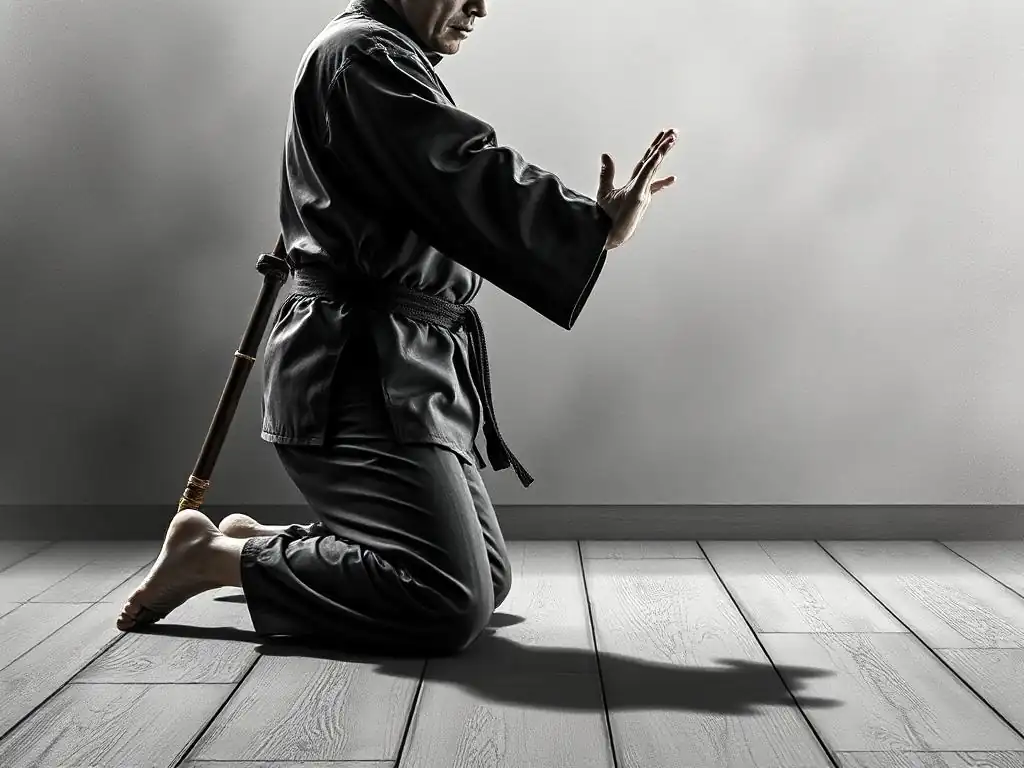
Training on the Mook Yan Jong is paramount for developing proper Wing Chun structure and generating effective power. When executing techniques against the dummy, any misalignment in the practitioner's stance, body posture, or skeletal structure is immediately evident. Hitting the solid wooden body or arms with incorrect structure results in force bouncing back, jarring the practitioner. This feedback loop teaches the body to align correctly, stacking joints and bones to channel force efficiently from the ground through the body and into the target.
Consistent practice helps build the muscular and tendon strength necessary to maintain this structure under pressure and to generate explosive, short-range power (Fajing). The resistance of the dummy forces the practitioner to rely on proper body mechanics and structural integrity rather than brute muscular force. Over time, this develops the ability to deliver powerful strikes and deflections with minimal effort, a key principle of Wing Chun. The Wing Chun silent training partner thus serves as an essential tool for internalizing the system's unique approach to force generation and structural stability.
Improving Techniques: Stances, Footwork, and Hand Forms
The Mook Yan Jong is invaluable for refining the techniques learned in the hand forms and applying them in a dynamic context. Every movement practiced on the dummy requires precise application of stance (like the neutral stance, or Yi Jee Kim Yeung Ma), footwork (stepping, shifting, circling), and hand techniques (blocks, strikes, traps). The dummy's fixed structure provides specific points of contact and obstacles that challenge the practitioner to execute movements with accuracy, timing, and correct angle.
Practicing the dummy form sequences reinforces the transitions between techniques and develops fluidity in movement. For example, practicing Pak Sao and Lap Sao against the dummy's arms helps refine sensitivity and control. Working around the leg improves stepping and low-line defense/offense. Repeated drilling on the Wing Chun silent training partner helps embed these complex movements and transitions into muscle memory, ensuring that techniques are not just understood intellectually but can be performed instinctively and effectively under pressure.
Enhancing Sensitivity and Coordination
While the Mook Yan Jong is a "silent" partner, training on it significantly enhances sensitivity, particularly to touch and structure. Feeling the resistance and feedback from the wooden limbs helps the practitioner understand how force is applied and received. This tactile feedback refines the ability to sense pressure, direction, and angle, skills that are directly transferable to Chi Sao (sticking hands) and sparring. The slight rebound from a well-mounted dummy further develops sensitivity to incoming force and the ability to react accordingly.
Furthermore, executing the complex sequences of the dummy form requires high levels of coordination between the hands, feet, and body. Techniques often involve simultaneous upper and lower body movements, intricate footwork around the dummy's leg, and rapid transitions between different hand positions. Practicing these coordinated movements against the dummy's structure improves overall body control, balance, and the ability to integrate different aspects of Wing Chun technique into a unified, flowing action. The Wing Chun silent training partner is therefore critical for developing the subtle tactile skills and coordination essential for advanced Wing Chun practice.
Building Conditioning and Endurance
Consistent training on the Mook Yan Jong provides a rigorous physical workout that builds specific conditioning and endurance relevant to Wing Chun. Executing the 108-move form multiple times requires sustained effort, working the muscles of the arms, shoulders, core, and legs. The repetitive movements build muscular endurance, while the dynamic footwork and constant adjustments improve cardiovascular fitness.
The impact involved in striking and deflecting against the solid wood also conditions the forearms, shins, and other striking surfaces, making them more resilient. This gradual conditioning prepares the body for the physical demands of Chi Sao and sparring. Regularly engaging with the Wing Chun silent training partner improves stamina, develops the ability to maintain structural integrity under fatigue, and builds the physical resilience needed for effective application of Wing Chun principles in real-world scenarios.
Forms and Drills
Common Forms: Overview
The primary method for training on the Mook Yan Jong is through the execution of a specific sequence of movements known as the Wooden Dummy Form. While variations exist between different Wing Chun lineages, the most widely known form, particularly within the Ip Man lineage, consists of 108 distinct movements. This comprehensive form integrates techniques from the three empty-hand forms – Siu Lim Tao, Chum Kiu, and Biu Jee – applying them against the dummy's structure.
The 108 movements are typically grouped into sections, each focusing on different principles such as entering the gate, controlling the centerline, simultaneous attack and defense, close-range striking, and footwork around the dummy's leg. Learning the form involves memorizing the sequence but, more importantly, understanding the underlying principles and applications of each movement. Mastering this form on the Wing Chun silent training partner is considered a significant milestone in a practitioner's journey, demonstrating proficiency in applying fundamental techniques in a simulated combat context.
Essential Training Drills
Beyond the complete 108-move form, practitioners also utilize specific drills on the Mook Yan Jong to focus on particular techniques or principles. These drills isolate movements or short sequences for repetitive practice, allowing for deeper refinement. Examples include:
- Entry Drills: Practicing stepping towards the dummy while simultaneously blocking and striking the arms.
- Trapping Drills: Focusing on controlling one or both of the dummy's upper arms using techniques like Pak Sao, Lap Sao, or Jut Sao.
- Leg Drills: Concentrating on footwork around the dummy's leg, combining steps with low-line blocks or kicks.
- Structure Drills: Holding specific positions against the dummy's resistance to test and strengthen structural alignment.
- Flow Drills: Practicing seamless transitions between a small set of related techniques.
These focused drills allow practitioners to break down the complexity of the full form and address specific areas of weakness or develop particular skills in depth. Regular practice of these essential drills on the Wing Chun silent training partner is crucial for building a strong foundation and refining the details of Wing Chun application.
Mastering Angles and Distances
A key benefit of training on the Mook Yan Jong is the development of an intuitive understanding of angles and distances in combat. The dummy's fixed structure provides constant reference points, forcing the practitioner to learn how to enter, maneuver, and apply techniques from optimal angles relative to the "opponent's" limbs and body. Practicing the form and various drills teaches the practitioner to recognize the correct distance for executing specific strikes and defenses effectively.
For example, certain strikes require being at "bridge distance," where contact can be made with minimal forward movement, while other movements involve stepping in or circling. The dummy's arms and leg create obstacles that must be navigated, teaching the practitioner to find the correct angles to bypass defenses and attack openings. Repeated interaction with the Wing Chun silent training partner internalizes this spatial awareness, allowing the practitioner to instinctively adjust their position and angle in relation to an opponent, a critical skill for effective self-defense.
Integrating Training
When to Introduce the Dummy
The Mook Yan Jong is typically introduced to a Wing Chun student after they have developed a solid foundation in the basic principles and techniques. This usually means achieving proficiency in the first empty-hand form, Siu Lim Tao, and having a foundational understanding of Chum Kiu and basic partner drills like single or double hand Chi Sao. Introducing the dummy too early, before the student has developed proper structure and basic technique, can lead to the development of bad habits and potential injury due to improper force application against the solid wood.
The dummy requires the student to apply techniques with intent and structure, which is built through the foundational forms and drills. A common point of introduction is when the student begins to learn the Chum Kiu form, as many of the stepping and bridging techniques in Chum Kiu are directly applied and refined on the dummy. The instructor's guidance is essential in determining the appropriate time, ensuring the student is physically and technically prepared to benefit from training on their Wing Chun silent training partner.
Progressing Techniques
Training on the Mook Yan Jong is not static; practitioners progress through stages of refinement. Initially, focus is placed on learning the sequence of movements and executing them with basic structure and timing. As proficiency grows, the focus shifts to developing power, fluidity, and precision. This involves paying meticulous attention to hand positions, footwork transitions, body alignment, and the coordinated application of force.
Advanced training involves refining the nuances of each movement, exploring variations, and practicing the form at different speeds – from slow, deliberate practice focusing on structure and energy flow, to faster, more explosive execution for developing speed and power. The dummy becomes a tool for continuous self-correction and refinement, revealing subtle flaws in technique that might not be apparent in solo practice or even some partner drills. This progression ensures the Wing Chun silent training partner remains a challenging and rewarding tool throughout a practitioner's journey.
Integrating with Chi Sao
Training on the Mook Yan Jong is deeply interconnected with Chi Sao (sticking hands) practice. While Chi Sao involves sensing and reacting to a live, compliant partner, the dummy provides a fixed, non-compliant structure that forces the practitioner to apply techniques with solid intention and correct angle. Skills developed on the dummy, such as maintaining structure under pressure, managing angles, and applying force correctly, are directly transferable to Chi Sao.
Conversely, insights gained from Chi Sao, such as sensitivity to force and timing, can inform and improve dummy training. For example, understanding how an opponent might yield or resist in Chi Sao helps the practitioner better simulate realistic scenarios when drilling on the dummy. Together, dummy training and Chi Sao form a powerful combination, with the dummy providing a consistent platform for structural application and the Wing Chun silent training partner aspect, while Chi Sao develops sensitivity and adaptability against a dynamic opponent. Integrating these two training methods is crucial for developing well-rounded Wing Chun skills.
Self-Defense Applications
Applying Principles to Scenarios
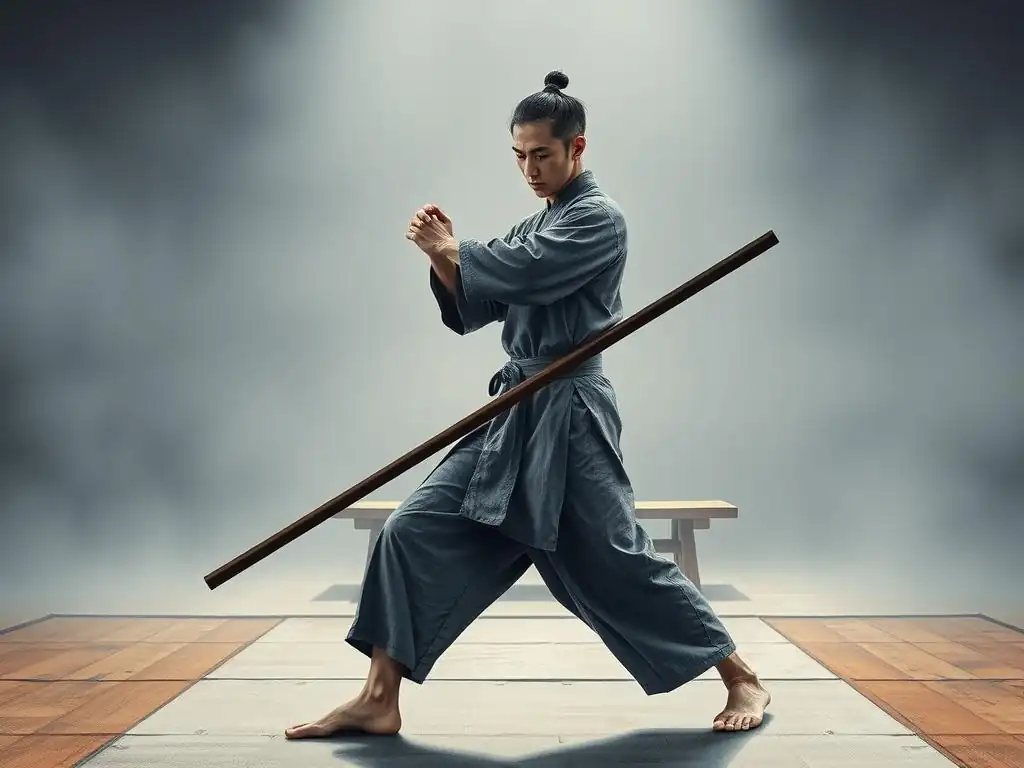
The techniques and principles practiced on the Mook Yan Jong are directly applicable to real-world self-defense scenarios. While the dummy is a static object, the movements practiced against it are designed to simulate the mechanics of engaging a human opponent. For instance, the techniques for entering the dummy's "gate" and controlling its arms translate to closing distance safely and managing an attacker's limbs.
Practicing simultaneous block-and-strike movements on the dummy develops the ability to defend and attack concurrently, a core principle for efficiency in a confrontation. The footwork practiced around the dummy's leg helps navigate obstacles, create angles, and maintain balance while engaging a moving target. By providing a consistent structure to apply techniques against, the Wing Chun silent training partner allows practitioners to internalize the physical mechanics of combat applications, making them more instinctive and effective when faced with a real threat.
Translating Skills to Sparring
Sparring provides a dynamic environment to test skills learned in solo forms, partner drills, and on the dummy. The structural integrity and power generation developed through dummy training are foundational for effective sparring. A practitioner who has trained extensively on the Mook Yan Jong will likely exhibit better balance, more efficient force delivery, and a clearer understanding of angles and distance.
While the dummy is non-compliant, the ability to execute techniques with precision and structure against its resistance translates to greater effectiveness against a moving, resisting opponent. The timing and flow practiced on the dummy also help in adapting to the unpredictable nature of sparring. The Wing Chun silent training partner builds the physical foundation and mechanical understanding that allows a practitioner to transition from drilling to the more complex and reactive environment of sparring, helping bridge the gap between practice and practical application.
Improving Combat Readiness
Regular and focused training on the Mook Yan Jong significantly improves overall combat readiness. It develops the physical attributes necessary for fighting, such as structural stability, power, and endurance. It refines the technical execution of Wing Chun movements, ensuring they can be performed effectively under pressure. Furthermore, it helps the practitioner develop the mental focus and concentration required to execute complex sequences and maintain principles during a confrontation.
The repetitive nature of dummy training, coupled with the immediate physical feedback, builds confidence in one's ability to apply Wing Chun techniques. This confidence, combined with the refined physical and technical skills, contributes significantly to a practitioner's readiness to face a self-defense situation. The Mook Yan Jong is more than just a training tool; it is a critical component in forging a practitioner's ability to effectively utilize Wing Chun for combat, making it an essential Wing Chun silent training partner on the path to practical mastery.
Maintenance and Care
Storage and Cleaning
Proper maintenance is essential to ensure the longevity of a Mook Yan Jong. Wooden dummies, especially those made from natural hardwoods, can be susceptible to environmental factors like humidity and temperature changes, which can cause cracking or warping. Storing the dummy in a stable environment, away from direct sunlight, excessive moisture, or extreme temperature fluctuations, is crucial. If stored outdoors, it should be protected from the elements.
Routine cleaning is also important. Dust and sweat can accumulate on the surface. Wiping down the dummy regularly with a dry or slightly damp cloth helps keep it clean. Avoid using harsh chemicals or excessive water, which can damage the wood. Periodically checking the tightness of the arms, leg, and any mounting bolts is also part of basic care to ensure the dummy remains stable and safe for training. A well-maintained Wing Chun silent training partner will serve the practitioner effectively for many years.
Addressing Issues and Repairs
Over time, a Mook Yan Jong may develop minor issues due to the constant impact it endures. Small dents or surface scratches are normal wear and tear. However, more significant issues like cracks in the body, arms, or leg, or loosening of the mounting structure, need to be addressed promptly. Minor cracks can sometimes be repaired using wood glue and clamps, depending on their severity and location.
Loose arms or legs can often be fixed by tightening bolts or wedges, or by reinforcing the joint if necessary. Damage to the mounting frame may require more complex repair or replacement of components. It is often advisable to seek the help of a skilled woodworker or the original manufacturer for significant repairs to ensure the structural integrity of the dummy is fully restored. Proactive inspection and timely repairs prevent small issues from becoming major problems, preserving the functionality of the Wing Chun silent training partner.
Ensuring Longevity
Ensuring the longevity of a Mook Yan Jong involves a combination of proper handling, storage, and timely maintenance. Beyond basic cleaning and repair, practitioners should also be mindful of how they train on the dummy. While it is designed to withstand impact, consistently hitting with excessive, uncontrolled force without proper structure can accelerate wear and tear, particularly on the joints and mounting system. Focusing on structural alignment and efficient force transfer, rather than brute power, is better for both the practitioner and the dummy.
Applying a suitable wood finish or wax periodically can help protect the wood from drying out or absorbing excessive moisture. The type of finish should be appropriate for the wood type and training usage. Regular inspection of all components – the body, arms, leg, and frame – for any signs of stress or damage allows for early intervention. By treating the dummy with care and respect, the practitioner ensures their Wing Chun silent training partner remains in good condition, providing a reliable training tool for a lifetime of practice.
Choosing the Right Dummy
Considerations for Choosing
Choosing the right Mook Yan Jong is an important decision for any dedicated Wing Chun practitioner. Several factors should be considered. The most crucial is the dummy's dimensions and proportions. These should ideally align with traditional specifications to ensure the angles and distances practiced are correct for Wing Chun application. Standard dimensions often include a body diameter of approximately 8-9 inches, upper arms spaced around 8-9 inches apart, and specific lengths and angles for all components relative to a typical human build.
The material of construction is another key consideration. Traditional hardwoods offer durability and a classic feel but can be more expensive. Laminated or composite options might be more budget-friendly or resistant to certain environmental conditions.
The mounting system is also vital – a free-standing or wall-mounted frame with flexible crossbeams is generally preferred over a rigid mount or a simple post in the ground, as it provides the necessary rebound and shock absorption. The practitioner's available space and budget will also play a significant role in the decision. Selecting an appropriate Wing Chun silent training partner tailored to one's needs enhances training effectiveness.
Exploring Models and Manufacturers
The market offers a variety of Mook Yan Jong models from numerous manufacturers, ranging from traditional craftsmen to larger martial arts suppliers. Researching different options is advisable. Traditional workshops often produce high-quality, handcrafted dummies from solid hardwoods, adhering closely to classic specifications. These may represent a significant investment but are often built to last generations.
Larger suppliers might offer more variety in materials, mounting options (like adjustable height or different base types), and price points. Online reviews, testimonials from other practitioners, and seeking advice from experienced instructors can help in evaluating the quality and suitability of different models and manufacturers. Visiting a supplier or seeing a dummy in person, if possible, allows for an assessment of its build quality, stability, and feel. Identifying a reputable source for your Wing Chun silent training partner ensures you acquire a durable and functional training tool.
Purchasing Considerations
Beyond the dummy itself, there are practical considerations when purchasing. The cost will vary significantly based on material, craftsmanship, and size. Shipping costs can also be substantial due to the weight and bulk of the dummy. It's important to factor these into the overall budget. Assembly requirements should also be checked; some dummies come fully assembled, while others require significant setup.
Space availability is a crucial factor. A free-standing dummy with a frame requires a certain footprint, allowing space to move 360 degrees around it. A wall-mounted dummy saves floor space but requires a sturdy wall and limits movement to primarily in front of the dummy. Understanding your training space limitations will guide the choice of mounting system. Finally, consider the return policy and warranty offered by the seller. Making an informed purchase ensures you acquire a suitable and long-lasting Wing Chun silent training partner that supports your training goals effectively.
Conclusion: Value of the Training Dummy
The Mook Yan Jong is far more than just a piece of equipment; it is a fundamental component of the Wing Chun system and an invaluable Wing Chun silent training partner. Its carefully designed structure provides a consistent and challenging platform for practitioners to apply and refine techniques learned in the empty-hand forms. Training on the dummy develops essential attributes such as structural integrity, power generation, precise footwork, and the critical ability to navigate angles and distances in combat.
From building physical conditioning and enhancing coordination to providing direct feedback on technique and structure, the benefits of regular dummy practice are profound. It bridges the gap between solo training and partner drills, preparing the practitioner for the dynamic challenges of Chi Sao and sparring. While requiring dedication and proper technique, the Mook Yan Jong remains an indispensable tool for anyone serious about mastering Wing Chun, offering a lifetime of challenging and rewarding practice.
Frequently Asked Questions
What is the Mook Yan Jong (Wooden Dummy) in Wing Chun?
The Mook Yan Jong is a wooden training device used in Wing Chun Kung Fu. It serves as a silent training partner to develop structure, power, and technique.
What are the primary benefits of training with the Mook Yan Jong?
Training with the Mook Yan Jong helps develop correct angles, power generation, and precision in Wing Chun techniques. It also improves stance, footwork, and coordination.
How does the Mook Yan Jong help in developing self-defense skills?
The Mook Yan Jong allows practitioners to practice realistic combat scenarios without a live partner. It helps refine reflexes and timing crucial for self-defense.
Is the Mook Yan Jong only for advanced Wing Chun practitioners?
While advanced practitioners benefit greatly, beginners can use the Mook Yan Jong under proper guidance. It helps ingrain correct movements from the start.
Where can I find a Mook Yan Jong and learn how to use it?
You can find Mook Yan Jongs at martial arts supply stores or online retailers. Seek instruction from a qualified Wing Chun instructor to learn proper usage.
Okay, here's a final reflection tailored for your article "Introduction to the Mook Yan Jong: Wing Chun's Silent Training Partner," designed to resonate with readers and encourage further exploration of the topic.
Final Reflection: Embracing the Silent Teacher
The journey into Wing Chun is a journey into self-discovery, and the Mook Yan Jong, the wooden dummy, stands as a powerful symbol of that introspective path. Its enduring presence in modern Wing Chun schools underscores its timeless value as a silent training partner, pushing practitioners beyond physical limitations and into the realm of mindful movement.
The Mook Yan Jong isn't just wood and pegs; it's a mirror reflecting our strengths and weaknesses. My own experience with the Jong has taught me the importance of patience, precision, and unwavering focus. It's a constant reminder that true mastery comes not from brute force, but from understanding the subtle nuances of technique. The best fighter is never angry.
This ancient wisdom, often attributed to martial arts masters, perfectly encapsulates the Jong's lesson: to remain calm, centered, and adaptable in the face of challenge.
Now, as you step away from this introduction to the Mook Yan Jong, consider how its principles can be applied beyond the martial arts. Embrace the challenges in your own life as opportunities for growth, cultivate patience in your pursuits, and strive for mindful action in all that you do. The silent teacher awaits, not just in the Wing Chun school, but within yourself.
Unlock Your Wing Chun Potential Now!
Thanks for delving into the world of the Mook Yan Jong! We hope you've gained a deeper appreciation for this incredible training tool and its role in Wing Chun. Ready to take the next step?
Here's how you can continue your journey:
- Start with the fundamentals: Before jumping into advanced techniques, dedicate time to perfecting your footwork and basic strikes on a stable surface. Proper form is key!
- Explore the history: Dive deeper into the history of the Wing Chun Dummy; research its origins and development and share your newfound knowledge with others in your martial arts community.
- Consider building your own: Explore local woodworking communities, and look at DIY alternatives, and consider commissioning your own Mook Yan Jong
What's one simple adjustment you can make to your stance today to improve your form on the Jong?