
Inasu, Nagasu, Noru: Mastering WadoRyu's Elusive Jujutsu Evasion Tactics

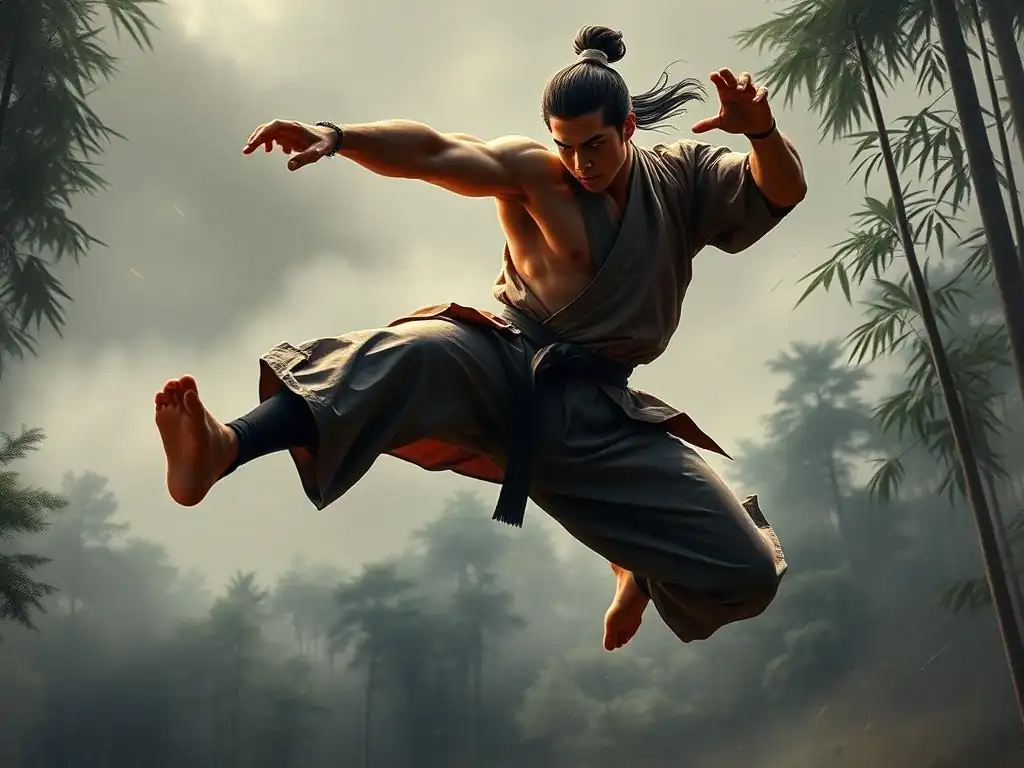
Welcome to Martial Arts Mastery, your gateway to the world's fighting arts!
Delve into the fascinating realm where tradition meets technique, and discover the secrets that separate the masters from the students. Ever wondered how to truly become untouchable? Prepare to unravel the elegant yet devastating defensive strategies of one of Japan's most refined martial arts. In this article, we'll explore the core principles behind WadoRyu Jujutsu evasion techniques, specifically focusing on Inasu, Nagasu, and Noru – concepts that promise not just defense, but a complete redirection of your opponent's force. Intrigued? Read on to unlock the secrets of masterful evasion.
- Mastering Wado-Ryu's Evasion: Inasu, Nagasu, Noru
- Understanding Wado-Ryu Evasion Techniques: An Introduction
- Deconstructing the Core Concepts: Inasu, Nagasu, Noru
- Wado-Ryu Evasion in Action: Practical Applications
- Advanced Concepts in Wado-Ryu Evasion
- Training Methodology for Mastering Wado-Ryu Evasion
- Case Studies: Analyzing Evasion in Practical Scenarios
- Common Mistakes in Learning Wado-Ryu Evasion
- The Legacy of Wado-Ryu Evasion
- Conclusion: Embracing Evasion in Wado-Ryu
-
Frequently Asked Questions
- What are Inasu, Nagasu, and Noru in the context of WadoRyu Jujutsu?
- How do WadoRyu Jujutsu evasion techniques differ from blocking?
- Why are evasion techniques so important in WadoRyu Jujutsu?
- Can these evasion techniques be used in self-defense scenarios?
- Where can I learn more about WadoRyu Jujutsu evasion techniques?
- Final Reflection: Embracing the Flow of Evasion
- Embrace the Art of Evasion: Unlock Your Wado Ryu Potential!
Mastering Wado-Ryu's Evasion: Inasu, Nagasu, Noru
Understanding Wado-Ryu Evasion Techniques: An Introduction
Wado-Ryu Karate: A Blend of Karate and Jujutsu
Wado-Ryu, founded by Hironori Otsuka, stands apart from many other karate styles due to its significant incorporation of Jujutsu principles. Otsuka Sensei, a highly accomplished practitioner of Shindo Yoshin Ryu Jujutsu before studying under Gichin Funakoshi, integrated the fluid, yielding movements and joint manipulation techniques of Jujutsu into the more linear, powerful framework of Okinawan karate.
This unique synthesis results in a style that emphasizes natural body movement, relaxation, and the principle of non-resistance, making Wado-Ryu Jujutsu evasion techniques a cornerstone of its defensive strategy. Unlike styles heavily reliant on meeting force with force, Wado-Ryu seeks to harmonize with an opponent's energy.
This blending is evident in Wado-Ryu's kihon (basics) and kumite (sparring). While powerful strikes like oi-tsuki (lunge punch) and mae-geri (front kick) are present, they are often delivered from dynamic stances and combined with evasive footwork ( tai sabaki) and body shifting. The Jujutsu influence introduces concepts like kuzushi (off-balancing), throws ( nage-waza), and joint locks ( kansetsu-waza), which are not typically found in pure Okinawan karate lineages. Mastering Wado-Ryu Jujutsu evasion techniques is therefore essential for effectively bridging these two martial arts traditions within the style.
The Central Role of Evasion in Wado-Ryu
Evasion is not merely a defensive option in Wado-Ryu; it is a fundamental principle that underpins the entire system. The philosophy is to avoid being hit or grabbed in the first place, rather than relying solely on blocks or powerful counters. This is rooted in the Jujutsu concept of yielding to incoming force, redirecting it, and using the opponent's own momentum against them. Effective Wado-Ryu Jujutsu evasion techniques minimize the risk of injury while creating openings for swift, decisive counter-attacks. The goal is to move out of the line of attack with minimal effort, conserving energy and maintaining balance.
This emphasis on evasion impacts everything from basic stances to advanced kumite strategy. Stances in Wado-Ryu are often higher and more mobile than in some other karate styles, facilitating quick shifts and pivots. Blocking techniques like jodan uke (upper block) or gedan barai (lower sweep) are frequently combined with simultaneous body evasion ( tai sabaki), ensuring that the block is a secondary line of defense after the initial body movement. This proactive approach to avoiding conflict makes Wado-Ryu Jujutsu evasion techniques particularly effective in dynamic situations.
Core Principles of Wado-Ryu Evasion: Harmony and Flow
The core principles guiding Wado-Ryu Jujutsu evasion techniques are harmony and flow, often summarized by the Japanese term Nagasu (流す - to flow, to stream). Instead of clashing with an opponent's force, the practitioner learns to blend with it, redirecting its energy like water flowing around an obstacle. This requires a relaxed body, acute awareness of distance ( maai) and timing, and the ability to react instinctively without tension. The ideal is to achieve a state where evasive movements are not conscious decisions but natural responses to incoming attacks.
Achieving this harmony and flow involves mastering specific body mechanics, including efficient footwork ( tai sabaki), subtle body shifts ( tai sabaki again, focusing on torso movement), and understanding how to release tension at the moment of impact or redirection. The three key concepts — Inasu, Nagasu, and Noru — embody different facets of this principle, providing a framework for understanding and practicing the nuanced Wado-Ryu Jujutsu evasion techniques. These techniques prioritize minimal effort for maximum effect, allowing a smaller or weaker person to effectively neutralize attacks from a larger or stronger opponent.
Deconstructing the Core Concepts: Inasu, Nagasu, Noru
Inasu: Receiving, Yielding, and Redirection
Inasu (いなす) is often translated as "to parry," "to evade," or "to yield and deflect." It involves a subtle movement of the body combined with a minimal action to deflect or redirect an incoming attack. Unlike a hard block that stops the force, Inasu guides the force past you. Think of it as stepping slightly off the line of attack while simultaneously using a hand or arm to subtly change the trajectory of the incoming technique, like a soft parry or a slight push. This is a key element of Wado-Ryu Jujutsu evasion techniques, emphasizing yielding over confrontation.
A prime example of Inasu is evading a straight punch ( choku-tsuki). Instead of a strong block, the practitioner might take a small step diagonally backward or to the side (perhaps just 30-50 cm) while simultaneously using the opposite hand in a sweeping motion to guide the punch slightly outwards or downwards. The timing must be precise, occurring just as the punch reaches its peak extension, allowing the opponent's momentum to carry the attack past the intended target. This subtle redirection, combined with efficient body movement, is the essence of this Wado-Ryu Jujutsu evasion technique.
Understanding Kuzushi in Inasu: Creating Imbalance
While Inasu is primarily defensive, it inherently contains the potential for kuzushi (崩し - off-balancing). By yielding and redirecting an opponent's attack, you are subtly disrupting their balance and structure. An attacker committed to a forward strike, when met with an Inasu that guides their arm past, will naturally have their weight shifted or their posture compromised. This brief moment of imbalance is the window of opportunity that Wado-Ryu Jujutsu evasion techniques aim to create.
For instance, if an opponent lunges forward with a punch and you Inasu by stepping back and guiding their arm, their forward momentum is not met with resistance but is instead allowed to carry them slightly past you, potentially pulling them off their center line. This disruption, even if only for a fraction of a second, makes them vulnerable. Recognizing and capitalizing on this kuzushi created through Inasu is crucial for transitioning from pure evasion to effective counter-attack in Wado-Ryu.
Drills for Developing Inasu Sensitivity and Technique
Developing effective Inasu requires sensitivity to an opponent's intention and momentum, as well as precise timing and minimal movement. Partner drills are essential. A basic drill involves one partner delivering slow, committed straight punches or front kicks while the other practices stepping off-line and using a soft hand motion to guide the technique past their body. The focus is on using the least amount of force and movement possible.
More advanced drills can involve varying the speed and angle of attack. A common practice is to stand just outside striking range and have the partner attack randomly. The defender must instantly recognize the attack and apply the appropriate subtle Inasu movement, focusing on feeling the partner's energy and redirecting it. Practicing against multiple attackers from different angles can further refine the spatial awareness and timing necessary for mastering this Wado-Ryu Jujutsu evasion technique.
Nagasu: Deflecting and Evading Through Fluid Movement
Nagasu (流す) translates literally to "to flow" or "to stream," and in Wado-Ryu, it embodies the principle of evading by flowing away from the attack, often using larger, more dynamic body movements and footwork than Inasu. While Inasu is a subtle deflection combined with minor evasion, Nagasu is primarily about getting your body completely out of the line of fire through fluid, continuous motion. It's about letting the attack "stream" past you without making contact. This is a fundamental concept within Wado-Ryu Jujutsu evasion techniques.
Consider a wide, sweeping attack like a roundhouse kick ( mawashi-geri). Attempting to block this with force is often ineffective or damaging. Nagasu would involve a significant step or pivot, using tai sabaki to move the entire body out of the kick's arc. The movement is designed to be natural and flowing, often transitioning into a new angle or distance that is advantageous for the defender. This principle is vital for avoiding powerful, committed attacks where subtle redirection might not be sufficient.
Tai Sabaki and Nagasu: Footwork for Evasive Maneuvers
Tai sabaki (体捌き - body management or body movement) is inextricably linked to Nagasu. Effective Nagasu relies heavily on precise and efficient footwork to shift the body out of the attack line. This includes pivoting ( tenshin), stepping to the side ( yoko-ayumi), stepping diagonally ( naname-ayumi), and rotating the hips and torso. The goal is not just to move, but to move into a position of advantage.
For example, evading a straight punch with Nagasu might involve a pivot on the lead foot while simultaneously rotating the hips and stepping the rear foot back and to the side, completely clearing the body from the punch's path. This specific tai sabaki maneuver (often called Tenshin) is a prime example of Nagasu in action. Mastering various tai sabaki movements is paramount for executing Wado-Ryu Jujutsu evasion techniques effectively, especially those involving dynamic whole-body shifts.
Nagasu Applications in Self-Defense Scenarios
Nagasu is highly practical in self-defense, particularly against aggressive or unpredictable attacks. Imagine being confronted with a wild haymaker punch. A hard block is risky. Applying Nagasu, you would use rapid tai sabaki to step deeply to the side and slightly behind the attacker, letting the punch sail harmlessly past. This not only avoids the strike but also puts you in a dominant position relative to the attacker, who is likely off-balance due to their committed swing.
Another scenario could involve evading a grab attempt. Instead of resisting and pulling away directly, Nagasu principles would involve shifting your body fluidly, perhaps stepping in a circular motion, to break the grip or move out of the attacker's reach. This fluid movement uses the attacker's own forward momentum if they are reaching or lunging. These real-world applications demonstrate the effectiveness of Wado-Ryu Jujutsu evasion techniques in avoiding harm.
Noru: Blending with and Redirecting Momentum
Noru (乗る) means "to ride" or "to get on." In the context of Wado-Ryu Jujutsu evasion techniques, Noru refers to the advanced skill of blending with an opponent's incoming energy and momentum, not just deflecting or evading it, but joining it and using it for your own purposes, often to off-balance or throw them. This is arguably the most sophisticated of the three evasion principles, requiring a high degree of sensitivity, timing, and understanding of body mechanics. It is deeply rooted in the Jujutsu aspect of Wado-Ryu.
While Inasu subtly redirects and Nagasu flows away, Noru is about momentarily merging with the opponent's force and then redirecting it in a way that disrupts their balance and structure significantly. It's like stepping onto a moving platform and then subtly shifting your weight to guide it in a new direction. This principle is heavily influenced by Aiki-like concepts, focusing on harmonizing with the attack rather than opposing it.
Leveraging Aiki Principles in Noru
Noru shares significant philosophical and practical ground with Aiki principles found in arts like Aikido. Aiki (合気 - joining energy or harmony of energy) involves blending with an attacker's energy and controlling it, often leading to throws or joint locks with minimal physical force. In Wado-Ryu, Noru applies this concept specifically to evasion and counter-offense. Instead of evading and then countering, Noru integrates the evasion and counter-action into a single, continuous movement.
For instance, as an opponent pushes forward, instead of stepping back or deflecting, a practitioner using Noru might step with the push, slightly to the side, and use subtle body rotation and hand contact to guide the opponent's forward momentum into a turn or a loss of balance. The key is the timing of joining their movement and the subsequent subtle application of force or leverage to redirect their energy. This blending and redirection are hallmark features of advanced Wado-Ryu Jujutsu evasion techniques influenced by Jujutsu and Aiki.
Advanced Noru Techniques for Off-Balancing and Countering
Advanced Noru techniques often involve using the opponent's attack to execute throws or take-downs. If an opponent throws a strong punch and you apply Noru, you might step slightly inside their line of attack, blend with their forward momentum using circular body movement ( tai sabaki), and use their reaching arm as leverage to guide them off-balance, potentially leading to a throw like Otsuka's Ten-i (heavenly change) or Tobi-komi Nagashi (flowing entry).
Another example is using Noru against a grab. Instead of pulling away, you might step in, blend with the direction of their pull or push, and use that energy to execute a technique like Irimi (entering) into a throw or joint control. These techniques require a high level of sensitivity to the opponent's balance and energy flow, making Noru one of the more challenging but highly effective Wado-Ryu Jujutsu evasion techniques for advanced practitioners.
Wado-Ryu Evasion in Action: Practical Applications
Integrating Inasu, Nagasu, and Noru in Kumite
In Wado-Ryu kumite (sparring), the skilled practitioner doesn't use Inasu, Nagasu, and Noru as isolated techniques but integrates them seamlessly based on the type, speed, and power of the incoming attack. A light, probing attack might be met with a subtle Inasu. A committed, powerful lunge might necessitate a dynamic Nagasu using significant tai sabaki. Against an opponent whose momentum is already carrying them forward, Noru might be applied to capitalize on their imbalance. The constant movement and changing distance in Wado-Ryu kumite provide ample opportunity to practice these Wado-Ryu Jujutsu evasion techniques.
Effective integration requires the ability to transition rapidly between these principles. For example, a practitioner might initially attempt Inasu against a punch, but if the opponent's attack is stronger or faster than anticipated, they might instantly switch to a Nagasu movement to fully evade. Or, after using Nagasu to step out of the line of a kick, they might immediately use Noru principles to blend with the opponent's recovery and create a counter-opportunity. This fluid, non-rigid application is the mark of mastery in Wado-Ryu Jujutsu evasion techniques.
Adapting Evasion to Various Attack Types
The choice between Inasu, Nagasu, and Noru depends heavily on the nature of the incoming attack.
- Straight Attacks (Punches, Front Kicks): Often suitable for Inasu due to their linear nature, allowing subtle redirection off the line. Can also use Nagasu with diagonal or side steps.
- Circular Attacks (Roundhouse Kicks, Haymakers): Typically require Nagasu to move the entire body out of the arc of the attack. Noru can be applied if you can get inside the attack and blend with the rotational energy.
- Grabs and Holds: Primarily dealt with using Nagasu (fluid movement to break balance/grip) or Noru (blending with the pull/push to off-balance or throw). Inasu is less applicable here.
- Multiple Attacks: Require rapid transitions between Nagasu (to create distance or change angle) and Inasu (for quick deflections of follow-up strikes).
Adapting means not having a pre-planned response but reacting instinctively based on the principles. A key aspect of mastering Wado-Ryu Jujutsu evasion techniques is developing the intuitive ability to apply the correct principle in real-time against diverse attacks.
Drills for Enhancing Reaction Time and Evasion Proficiency
Improving reaction time for Wado-Ryu Jujutsu evasion techniques involves drills that simulate spontaneous attacks and require quick, appropriate responses.
- Random Attack Drill: Partner attacks with various techniques (punches, kicks) at varying speeds and angles. Defender focuses solely on evading using Inasu or Nagasu, without countering initially. Start slow and gradually increase speed.
- Feint Drill: Partner uses feints to provoke reactions. Defender must learn to distinguish between feints and committed attacks, reacting only to genuine threats with appropriate evasion.
- Evasion-to-Counter Drill: Combine the random attack drill with immediate counter-attacks after successful evasion using Inasu, Nagasu, or Noru. Focus on the seamless transition from avoiding the attack to launching your own.
- Blindfolded Evasion: With a trusted partner and strict safety, practice evading slow, predictable attacks while blindfolded to enhance sensitivity to movement, sound, and energy without visual cues. This hones the intuitive aspect of Wado-Ryu Jujutsu evasion techniques.
These drills, practiced consistently, build the muscle memory and intuitive timing necessary for effective evasion in dynamic situations.
Advanced Concepts in Wado-Ryu Evasion
Understanding Maai: Distance and Timing Control
Maai (間合 - distance interval) is a critical concept in all martial arts, but it holds particular significance for Wado-Ryu Jujutsu evasion techniques. Effective evasion relies on understanding and controlling the distance between yourself and your opponent. Being too close limits reaction time and space for movement, while being too far makes evasion unnecessary but also makes counter-attacks difficult. Wado-Ryu practitioners strive to maintain an optimal maai that allows just enough time and space to apply Inasu, Nagasu, or Noru as an attack is launched, while remaining close enough to counter immediately afterward.
Controlling maai involves constant, subtle adjustments through footwork. A Wado-Ryu practitioner is rarely static, using small shifts and steps to maintain the ideal distance. Recognizing when an opponent is about to bridge the maai to attack is key to initiating the appropriate evasion technique just in time. For example, a step forward by the opponent might signal the need for a slight step back or diagonal shift ( Nagasu) combined with body rotation to maintain optimal distance for evasion and counter. Mastering maai is indispensable for executing Wado-Ryu Jujutsu evasion techniques effectively.
The Role of Kime in Evasion
While Kime (決め - focus of power) is typically associated with delivering a powerful strike, it also plays a subtle but important role in Wado-Ryu Jujutsu evasion techniques. Kime involves the focused application of physical and mental energy at the point of impact or, in the case of evasion, at the peak moment of redirection or blending. When using Inasu to deflect a punch, there is a brief moment of focused energy applied to the opponent's arm to guide it. Similarly, in Noru, there is a point where your movement joins the opponent's energy with precise timing and focus.
This doesn't mean tensing up; rather, it's a momentary, focused engagement of the body's structure and energy without rigidity. It's the difference between passively letting an arm slide past and actively guiding it past. This focused energy ensures that the redirection or blending is effective and creates the desired kuzushi. Understanding where and when to apply this subtle Kime within the fluid motion of Wado-Ryu Jujutsu evasion techniques differentiates a passive avoidance from an active, strategic evasion that sets up a counter.
Mental Aspects: Focus, Awareness, and Mushin (No-Mind)
Mastering Wado-Ryu Jujutsu evasion techniques is as much a mental discipline as a physical one.
- Focus: Maintaining sharp focus on the opponent, their intentions, and their energy is crucial for anticipating attacks and reacting instantly. Distraction or lack of focus leads to delayed reactions and ineffective evasion.
- Awareness (Zanshin): Cultivating constant situational awareness, known as Zanshin (残心 - remaining spirit), is vital. This means being aware not only of the immediate opponent but also of the surrounding environment and potential follow-up attacks. Zanshin ensures that even after successfully evading, you are prepared for what comes next.
- Mushin (無心 - No-Mind): The ultimate mental state for effective evasion is Mushin. This is a state of heightened awareness and spontaneity where the mind is free from conscious thought, fear, or hesitation. Reactions flow naturally and instantly from intuition and ingrained training, rather than being processed intellectually. Achieving Mushin allows Wado-Ryu Jujutsu evasion techniques to be executed with effortless precision and perfect timing.
These mental aspects are cultivated through dedicated practice and mindfulness, becoming integrated with the physical techniques to form a holistic approach to Wado-Ryu Jujutsu evasion techniques.
Training Methodology for Mastering Wado-Ryu Evasion
Foundational Exercises for Evasion Development
Developing the physical foundation for Wado-Ryu Jujutsu evasion techniques involves exercises that build agility, balance, and relaxed, efficient body movement.
- Footwork Drills: Practice basic tai sabaki movements (pivots, steps) repeatedly, focusing on speed, balance, and staying grounded.
- Body Shifting: Practice shifting weight and rotating the torso independently of the feet. This develops the subtle movements used in Inasu.
- Balance Exercises: Standing on one leg, practicing techniques from unstable stances, or using balance boards improves the stability needed for dynamic evasion.
- Relaxation Drills: Consciously practice releasing tension in the shoulders, arms, and core. This is essential for the fluid, non-resistant movements of Nagasu and Noru.
- Reaction Ball/Drill: Using a reaction ball or working with a partner throwing soft, unpredictable objects to catch or evade improves hand-eye coordination and quick reflexes necessary for timely Wado-Ryu Jujutsu evasion techniques.
These exercises build the physical literacy required before applying the evasion principles against a resisting opponent.
Partner Drills for Timing and Coordination
Partner drills are indispensable for learning to apply Wado-Ryu Jujutsu evasion techniques in a dynamic context, focusing on timing and coordination with an opponent's movement.
- Basic Evasion Drill: Partner attacks slowly and predictably. Defender practices Inasu or Nagasu, focusing on timing the movement with the attack's arrival. Gradually increase speed and unpredictability.
- Follow-the-Leader Evasion: One partner moves evasively, and the other tries to mirror their movements, focusing on understanding the dynamics of shifting distance and angle.
- Energy Blending Drill (for Noru): Partner applies gentle, continuous pressure (e.g., a push or pull). Defender practices blending with the energy, using subtle body shifts to redirect the pressure or off-balance the partner without using force. This hones the sensitivity needed for Noru.
- Pre-arranged Kumite with Evasion: Practice specific sequences of attack and defense where the defender's role is to evade using Inasu, Nagasu, or Noru before countering. This builds muscle memory for specific scenarios involving Wado-Ryu Jujutsu evasion techniques.
Consistent, focused partner work is crucial for developing the practical application of evasion principles.
Sample Evasion-Focused Training Routine
A balanced training routine for Wado-Ryu Jujutsu evasion techniques might look like this:
- Warm-up (10 mins): Light cardio, dynamic stretching, focus on hip and ankle mobility.
- Foundational Exercises (15 mins): Footwork drills, body shifting, balance exercises.
- Basic Partner Evasion (20 mins): Practice Inasu and Nagasu against slow, predictable attacks, focusing on timing and minimal movement.
- Advanced Partner Drills (20 mins): Random attack evasion, feint drills, energy blending for Noru.
- Evasion-to-Counter Drills (15 mins): Practice evading and immediately countering, focusing on seamless transitions.
- Scenario Practice (10 mins): Apply Wado-Ryu Jujutsu evasion techniques against specific attack types (e.g., grab defense, multiple punches).
- Cool-down (10 mins): Static stretching, focus on relaxation.
Task List for Personal Practice:
- [ ] Practice Tai Sabaki for 10 minutes daily.
- [ ] Find a partner for evasion drills at least twice a week.
- [ ] Work on relaxation techniques during practice.
- [ ] Study videos of skilled Wado-Ryu practitioners applying evasion.
- [ ] Reflect on sparring sessions to identify successful and unsuccessful evasion attempts.
Case Studies: Analyzing Evasion in Practical Scenarios
Case Study: Defending Against a Shomen-Tsuki with Inasu
Consider a scenario where an opponent launches a committed, linear shomen-tsuki (a straight punch targeting the face/head) from medium range (approx. 1.5 meters). A Wado-Ryu practitioner employing Inasu would not meet the punch head-on with a block. Instead, as the punch extends, they would execute a small, precise diagonal step backward and to the side (e.g., a yoko-ayumi or naname-ayumi of perhaps 40 cm) simultaneously with a subtle hand motion (e.g., a light nagashi uke - flowing block) to guide the opponent's wrist or forearm slightly outwards.
The timing is critical: the evasion and deflection occur just as the punch reaches its closest point. This combination of minimal body movement and subtle redirection causes the opponent's punch to miss the intended target by a narrow margin (perhaps 10-20 cm) and slightly disrupts their forward balance ( kuzushi). The practitioner, having moved offline, is now in a position to counter-attack, potentially with a strike to the body or a follow-up technique, demonstrating the effectiveness of Wado-Ryu Jujutsu evasion techniques in a common attack scenario.
Case Study: Evading a Gyaku-Tsuki with Nagasu
Imagine an opponent delivering a powerful gyaku-tsuki (reverse punch) from a standard sparring stance. This is a strong, committed technique often delivered with significant body weight behind it. Attempting a subtle Inasu might not be sufficient. Here, Nagasu is more appropriate. As the opponent initiates the punch, the Wado-Ryu practitioner would execute a larger, more dynamic tai sabaki movement, such as a deep pivot and step ( tenshin) that rotates their body 90 degrees or more away from the incoming punch line.
This movement would involve stepping the rear foot back and across the body while simultaneously rotating the hips and torso. The punch would then pass harmlessly where the practitioner was a moment before. This dynamic evasion creates significant distance from the attack (potentially moving the defender 1-1.5 meters from their original spot) and puts the practitioner at an advantageous angle to the off-balanced opponent. This case highlights how Wado-Ryu Jujutsu evasion techniques like Nagasu are used for more powerful or sweeping attacks.
Case Study: Countering a Roundhouse Kick with Noru
Consider an opponent launching a committed mawashi-geri (roundhouse kick) to the body. A Wado-Ryu practitioner applying Noru would not simply step back ( Nagasu) or attempt a hard block. Instead, they would move into the kick's arc, but slightly inside and at an angle. As the kick swings, the practitioner would use rapid tai sabaki to step diagonally forward and inwards, blending with the rotational energy of the kick.
Simultaneously, they might make contact with the opponent's kicking leg or hip, not to stop it, but to guide its trajectory. By stepping with the kick's momentum and subtly disrupting the opponent's base (perhaps by placing their weight on the outside leg), the practitioner uses the opponent's own energy to off-balance them. This could lead directly into a throw (e.g., guiding the leg upwards to cause a fall) or create a significant opening for a powerful counter-strike as the opponent is recovering or falling. This demonstrates the advanced application of Wado-Ryu Jujutsu evasion techniques, turning defense into immediate offense.
Common Mistakes in Learning Wado-Ryu Evasion
Over-Reliance on Strength
A frequent mistake when learning Wado-Ryu Jujutsu evasion techniques is attempting to use physical strength to deflect or resist an opponent's force. Wado-Ryu's evasion principles — Inasu, Nagasu, Noru — are based on yielding, blending, and redirecting, not overpowering. Students accustomed to styles that emphasize strong blocks or meeting force with force may initially try to muscle their way through evasions, leading to rigidity, wasted energy, and decreased effectiveness. For example, trying to forcefully push a punch away during Inasu instead of subtly guiding it.
Over-reliance on strength also hinders the development of sensitivity needed for Noru. If you are tensed and trying to resist, you cannot feel and blend with the opponent's energy. True mastery of Wado-Ryu Jujutsu evasion techniques comes from relaxation, precise timing, and efficient body mechanics, allowing a smaller person to handle a larger attacker. Students must consciously practice releasing tension and focusing on fluidity rather than muscular power.
Improper Body Mechanics
Incorrect body mechanics, particularly poor tai sabaki and lack of hip/torso rotation, severely impede effective Wado-Ryu Jujutsu evasion techniques. Simply stepping back or to the side without coordinating it with body rotation leaves the practitioner vulnerable. The evasion must involve the whole body moving as a unit or in a coordinated manner to shift the center of gravity and clear the line of attack. For example, failing to rotate the hips during a Nagasu pivot reduces the degree of evasion and leaves the torso exposed.
Furthermore, maintaining poor posture or balance during evasion makes the practitioner easy to off-balance themselves or unable to transition effectively into a counter. Wado-Ryu emphasizes a natural, balanced posture. Students must drill tai sabaki and body movement extensively, focusing on keeping their weight centered and their structure stable even while moving dynamically. Correct mechanics are the foundation upon which effective Wado-Ryu Jujutsu evasion techniques are built.
Failure to Adapt to Opponent's Style
Effective Wado-Ryu Jujutsu evasion techniques require adaptability. Applying the same evasion technique rigidly against different opponents or different types of attacks is ineffective. An opponent who feints frequently requires different timing than one who commits fully. A powerful, linear punch necessitates a different response than a wide, looping attack. Failing to observe and adapt to the opponent's rhythm, speed, power, and preferred techniques is a significant hurdle.
Students must develop the ability to read their opponent and select the most appropriate evasion principle ( Inasu, Nagasu, or Noru) and specific technique in real-time. This comes from extensive sparring experience against a variety of partners and consciously analyzing encounters. The ability to flow and adjust one's Wado-Ryu Jujutsu evasion techniques based on the immediate situation is a sign of growing proficiency.
The Legacy of Wado-Ryu Evasion
Hironori Otsuka's Evasion Philosophy
Hironori Otsuka Sensei's philosophy was deeply influenced by his Jujutsu background, leading him to emphasize evasion and non-resistance in Wado-Ryu. He believed that the most efficient way to deal with an attack was to avoid being there when it arrived. His famous quote, "The way to use the body is tai sabaki, the way to use the hands is Inasu," encapsulates this core principle. Otsuka Sensei saw evasion not just as a defensive measure but as a means to control the engagement, creating opportunities for counter-attack by disrupting the opponent's balance and momentum.
He codified the Wado-Ryu Jujutsu evasion techniques of Inasu, Nagasu, and Noru as the fundamental ways of dealing with force. His teachings stressed the importance of natural body movement, relaxation, and timing, drawing a clear line between Wado-Ryu and styles that rely more heavily on static stances and forceful blocks. Otsuka Sensei's legacy is the integration of these fluid, yielding principles into karate, making Wado-Ryu's approach to conflict unique and highly effective.
Modern Applications in Self-Defense and Competition
The Wado-Ryu Jujutsu evasion techniques of Inasu, Nagasu, and Noru remain highly relevant in modern self-defense situations. Against unpredictable, often untrained aggression, the ability to rapidly move out of the line of attack ( Nagasu) or subtly redirect force ( Inasu) is invaluable for avoiding injury. The principle of blending and using momentum ( Noru) is effective against grabs, pushes, and lunges common in street encounters, allowing for control or throws with minimal force.
In Wado-Ryu sports kumite, while rules limit certain techniques, the core principles of evasion are still paramount. Points are often scored through swift counter-attacks after successfully evading an opponent's technique. Practitioners use sophisticated tai sabaki ( Nagasu) to create openings and subtle body work ( Inasu) to set up techniques. Even the principle of Noru can be seen in the fluid transitions and off-balancing maneuvers used to gain an advantage, demonstrating the enduring practicality of Wado-Ryu Jujutsu evasion techniques.
The Evolution of Evasion Techniques
While the core principles of Inasu, Nagasu, and Noru were established by Otsuka Sensei, their application continues to evolve. As Wado-Ryu spreads globally and encounters influences from other martial arts and modern sports science, the understanding and execution of these evasion techniques are refined. Training methodologies incorporate modern athletic principles to enhance agility, reaction time, and core strength, further improving the physical execution of tai sabaki and body control.
Instructors and practitioners constantly explore how these traditional Wado-Ryu Jujutsu evasion techniques apply against new forms of attack or in different contexts (e.g., grappling range, weapons defense, though Wado-Ryu primarily focuses on empty hand). The fundamental philosophy of yielding, blending, and redirection remains constant, but the specific drills, applications, and nuances in timing and body mechanics continue to be explored and deepened by subsequent generations of Wado-Ryu practitioners, ensuring the vitality of these essential evasion principles.
Conclusion: Embracing Evasion in Wado-Ryu
Mastering Wado-Ryu Jujutsu evasion techniques — Inasu, Nagasu, and Noru — is fundamental to unlocking the full potential of this unique style. These principles, deeply rooted in Jujutsu and refined within the framework of karate, offer a powerful and efficient approach to conflict resolution. They teach practitioners to yield rather than resist, to flow around obstacles, and to use an opponent's own energy against them.
By diligently practicing the foundational movements, engaging in focused partner drills, and cultivating the necessary mental attributes, students can develop the sensitivity, timing, and fluidity required for effective evasion. Embracing these Wado-Ryu Jujutsu evasion techniques not only enhances self-defense capabilities but also embodies the core philosophical tenets of Wado-Ryu: peace, harmony, and the avoidance of unnecessary conflict. They represent a sophisticated martial strategy that prioritizes control, efficiency, and the principle of non-resistance.
Frequently Asked Questions
What are Inasu, Nagasu, and Noru in the context of WadoRyu Jujutsu?
These are three key evasion techniques within WadoRyu Jujutsu. Inasu involves absorbing an opponent's force. Nagasu is about redirecting the attack. Noru means blending and going with the energy of the attack.
How do WadoRyu Jujutsu evasion techniques differ from blocking?
Instead of direct blocking, WadoRyu emphasizes blending with and neutralizing an attack's force. This minimizes direct impact and allows for a faster counter-attack, making it a more efficient form of defense than traditional blocking.
Why are evasion techniques so important in WadoRyu Jujutsu?
Evasion is central to WadoRyu's philosophy of minimal resistance and efficient movement. It allows a smaller or weaker practitioner to effectively defend against a larger, stronger opponent by using their force against them.
Can these evasion techniques be used in self-defense scenarios?
Yes, Inasu, Nagasu, and Noru are highly effective self-defense tactics. They provide practical strategies for avoiding direct confrontation and creating opportunities for counter-attacks in real-world situations.
Where can I learn more about WadoRyu Jujutsu evasion techniques?
MartialArtsMastery.org is dedicated to providing detailed information on various martial arts, including WadoRyu. You can find historical overviews, training tips, and practical self-defense strategies related to WadoRyu Jujutsu and its unique evasion techniques.
Final Reflection: Embracing the Flow of Evasion
The principles of Inasu, Nagasu, and Noru – the core evasion tactics of WadoRyu Jujutsu – are not merely historical techniques confined to the dojo. They represent a profound philosophy of adaptability and resilience that resonates deeply in our increasingly complex and unpredictable world. Understanding and applying these concepts transcends the martial arts; it offers a framework for navigating life's challenges with grace and strategic foresight.
The enduring power of these WadoRyu evasion techniques lies in their ability to transform defense into offense, weakness into strength. This resonates deeply with the human desire to overcome adversity, to find strength within vulnerability. The ultimate aim of the art of karate lies not in victory nor defeat, but in the perfection of the character of its participants.
– Gichin Funakoshi. This quote highlights the true essence of martial arts, which is not just about physical prowess, but about cultivating inner strength and character through discipline and self-improvement.
As you reflect on the principles of Inasu, Nagasu, and Noru, consider how you can apply them to your own life. Embrace the flow, redirect challenges, and find strength in yielding. Let these ancient techniques inspire you to cultivate a spirit of adaptability, resilience, and unwavering focus, empowering you to navigate the complexities of life with confidence and grace.
Embrace the Art of Evasion: Unlock Your Wado Ryu Potential!
Thank you for exploring the subtle yet powerful evasion techniques of Wado Ryu Jujutsu! Now that you've grasped the foundational principles, it's time to put this knowledge into action and deepen your understanding. Here are a few steps to take your training to the next level:
- Practice the footwork drills: Dedicate 15 minutes each day to honing your Nagasu and Inasu movements. Feel the flow and rhythm in your body.
- Explore other martial art evasion tactics: Look at Boxing for example, How could footwork be implemented across martial arts?
- Share this article to those who might be interested in Jujutsu.
What nuanced detail about Wado Ryu evasion are you most eager to incorporate into your training routine?