
Kakie: GojuRyu's Sticky Hands Training for Sensitivity and Control

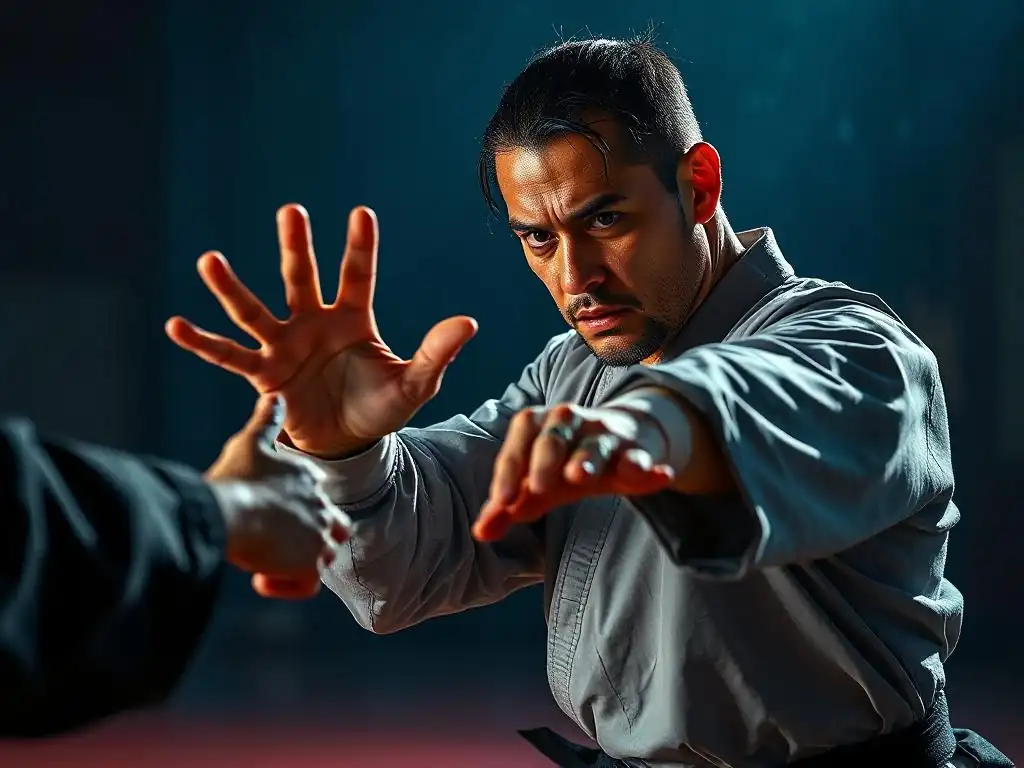
Welcome to Martial Arts Mastery, your gateway to unlocking the secrets of combat traditions worldwide. Delve into the rich history, intricate techniques, and profound philosophies that shape the world of martial arts. Ever wondered how GojuRyu practitioners develop that uncanny ability to anticipate their opponent's movements? Prepare to unravel the mysteries of GojuRyu sticky hand training – a crucial method for cultivating sensitivity and control. Discover how Kakie can elevate your martial arts practice. Read on to learn more.
- Introduction to Kakie: GojuRyu's Unique Training Method
- The Principles Behind GojuRyu Sticky Hands Training
- Kakie Drills: A Step-by-Step Guide to GojuRyu's Sticky Hands
- Benefits of Practicing Kakie for GojuRyu Practitioners
- Kakie vs. Chi Sao: Comparing GojuRyu's Sticky Hands to Wing Chun's
- Integrating Kakie into Your GojuRyu Training Regimen
- The Historical Significance of Kakie in GojuRyu Karate
- Advanced Kakie Techniques and Applications
- Conclusion: Mastering Sensitivity and Control Through GojuRyu's Kakie
- Frequently Asked Questions
- Final Reflection: Embracing the Art of Connection
- Unearth Your Inner Master: Embrace Kakie!
Introduction to Kakie: GojuRyu's Unique Training Method
Understanding the Importance of Sensitivity in GojuRyu Karate
In GojuRyu Karate, sensitivity is not just a desirable trait; it is a fundamental pillar upon which effective technique and strategy are built. Unlike some martial arts that rely primarily on visual cues and raw power, GojuRyu emphasizes close-range engagement where the ability to feel and react instantly to an opponent's pressure, balance, and intention is paramount. This tactile awareness allows practitioners to anticipate movements before they fully manifest, enabling timely defenses, evasions, and counter-attacks in the confined space of a clinch or close-quarters exchange.
Developing this acute sensitivity is crucial for executing GojuRyu's signature techniques, such as dynamic tension movements, joint locks, and precise strikes to vital points. Without the ability to "read" an opponent through physical contact, a practitioner might miss crucial windows for execution or fail to adapt to unexpected shifts in force or direction. This internal, felt understanding complements external visual awareness, creating a more complete and responsive martial artist capable of navigating complex combat situations.
What is Kakie and its Role in Developing GojuRyu Skills?
Kakie, often translated as "sticky hands," is a specialized two-person training drill unique to GojuRyu Karate. At its core, it involves partners maintaining continuous contact, typically wrist-to-wrist or forearm-to-forearm, while applying and yielding to pressure in a circular or flowing manner. This continuous contact is the mechanism through which practitioners cultivate the vital sensitivity needed for close-range fighting, teaching them to feel an opponent's energy, intent, and structural integrity directly.
The primary role of GojuRyu sticky hand training is to develop kinesthetic awareness – the body's ability to sense its own position, movement, and effort, and relate it to the external forces acting upon it. By constantly adjusting to a partner's movements and force, practitioners learn to maintain balance, control their own structure, and identify openings or weaknesses in their partner's defense. This tactile feedback loop accelerates the development of reflexes and intuitive responses that are difficult to acquire through solo practice or non-contact drills alone, making it an indispensable part of the GojuRyu curriculum.
The Principles Behind GojuRyu Sticky Hands Training
Exploring the Core Concepts of Kakie: Adherence and Flow
The fundamental principles guiding GojuRyu sticky hand training are adherence and flow. Adherence means maintaining constant, light contact with the partner's limb, much like glue or sticky tape. This isn't about gripping or applying strong static pressure, but rather about maintaining a sensitive connection that allows for the detection of subtle changes in force or direction. It requires relaxation and a non-resistant attitude, allowing the practitioner to feel the partner's intentions without meeting force with equal force initially.
Flow, on the other hand, refers to the continuous, often circular or spiral, movement inherent in Kakie drills. This isn't rigid back-and-forth action but a dynamic interplay where energy is redirected rather than blocked head-on. Practitioners learn to move with their partner's force, blending with it and redirecting it, rather than opposing it directly. This principle is deeply connected to the GojuRyu concept of Muchimi (heavy, sticky power) and Tenshin (changing the body's direction), enabling seamless transitions between defensive and offensive actions within the continuous contact.
Developing Sensitivity to Pressure and Movement Through Kakie
GojuRyu sticky hand training is specifically designed to hone a practitioner's ability to detect and respond to variations in pressure and movement. By maintaining continuous contact, the hands and forearms become highly attuned receptors. A slight increase in pressure from the partner might indicate an impending push or strike; a subtle shift in their weight distribution felt through the contact point could signal a change in balance or direction.
This constant feedback loop trains the nervous system to react instinctively. For example, if a partner initiates a sudden push, the trained practitioner doesn't visually analyze the movement and then decide to block. Instead, the increase in pressure is felt instantly, triggering an immediate, often subconscious, defensive or yielding response, such as redirecting the force or shifting one's own bodyweight. This refined tactile sensitivity, developed through consistent GojuRyu sticky hand training, is what allows practitioners to operate effectively in the chaotic, close-quarters environment where visual cues may be obscured.
The Connection Between Kakie and GojuRyu's Close-Range Combat
Kakie is not merely a standalone exercise; it is a direct bridge to the practical application of GojuRyu techniques in close combat scenarios. GojuRyu is known for its emphasis on fighting within grappling range, utilizing throws, joint locks, and powerful short-range strikes like elbow and knee strikes. The skills developed in GojuRyu sticky hand training – maintaining contact, feeling structure, redirecting force, and reacting to pressure – are precisely those needed to excel in this distance.
Consider a scenario where an opponent attempts a clinch. The practitioner trained in Kakie can maintain contact, feel the direction and strength of the opponent's force, maintain their own balance and structure under pressure, and fluidly transition into a throw, joint lock, or close-range strike based on the tactile information received. The principles learned in the controlled environment of GojuRyu sticky hand training translate directly to the ability to control an opponent, disrupt their balance, and apply effective techniques when locked in close proximity, which is a hallmark of GojuRyu's fighting strategy.
Kakie Drills: A Step-by-Step Guide to GojuRyu's Sticky Hands
Basic Kakie Drill: Exploring Initial Contact and Circular Motion
The most fundamental GojuRyu sticky hand training drill, often called Kakie Ichi, involves partners standing facing each other, typically in Sanchin or Shiko Dachi. They make contact, usually wrist-to-wrist or forearm-to-forearm, often with one partner's palm facing up and the other's palm facing down, creating a rotating circle. The key is to maintain light, continuous contact while moving the arms in a smooth, circular path, often clockwise for one partner and counter-clockwise for the other, or both moving in the same direction.
This basic drill focuses entirely on maintaining adherence and developing the feel for the circular flow. Partners are instructed to relax their shoulders and arms, using minimal muscular tension, and to feel the connection between their arms. The goal is not to apply force or resist, but to blend with the partner's movement, ensuring the contact is never broken unintentionally. This foundational GojuRyu sticky hand training establishes the essential tactile connection and sensitivity before introducing more complex elements.
Intermediate Kakie Drills: Introducing Changes in Direction and Force
Once proficiency is gained in the basic circular movement, intermediate GojuRyu sticky hand training drills introduce variations in direction and force. Partners might start the circular motion but then unpredictably change direction, requiring the other partner to instantly adapt while maintaining contact and flow. This teaches responsiveness and the ability to transition smoothly. Another variation involves introducing controlled pushes or pulls within the circular motion.
In these intermediate drills, the focus shifts slightly from just maintaining contact to subtly sensing and yielding to pressure, then potentially redirecting it. For instance, if a partner applies a gentle inward push, the other might yield slightly while continuing the circular flow, learning to absorb and diffuse force. These drills build upon the foundational sensitivity, adding layers of dynamic response necessary for effective close-range interaction, further developing the practitioner's GojuRyu sticky hand training skills.
Advanced Kakie Drills: Integrating Blocking and Striking Techniques
Advanced GojuRyu sticky hand training integrates defensive and offensive techniques directly into the continuous flow. While maintaining the sticky contact and circular movement, partners will introduce techniques like blocks, strikes, or joint manipulations. For example, from the circular flow, one partner might attempt a controlled short-range strike (like a palm heel or elbow) towards a target area (like the shoulder or chest, not the head initially), which the other partner must block or deflect using the principles of yielding and redirecting learned in earlier drills.
These drills are significantly more dynamic and require a high level of sensitivity and control. They teach practitioners how to transition seamlessly from the tactile exchange into practical techniques, demonstrating how the sensitivity gained through GojuRyu sticky hand training directly facilitates close-range combat. The focus remains on maintaining the 'stickiness' and flow, using the contact to feel openings or intentions, and executing techniques based on this immediate, felt information, rather than breaking contact entirely.
Benefits of Practicing Kakie for GojuRyu Practitioners
Enhancing Kinesthetic Awareness and Reflexes with Sticky Hands Training
One of the most significant benefits of consistent GojuRyu sticky hand training is the dramatic enhancement of kinesthetic awareness. By constantly receiving and responding to tactile feedback, practitioners develop a profound understanding of their own body mechanics in relation to external forces. They become acutely aware of their balance, posture, and structural integrity under pressure, and can instantly feel when they are off-balance or vulnerable.
This heightened kinesthetic sense directly translates into improved reflexes. Responses in Kakie become less about conscious thought and more about intuitive, physical reaction. The body learns to respond instantly to felt pressure – yielding, redirecting, or countering – without the delay of visual processing. This is invaluable in close-quarters combat where exchanges happen rapidly and reaction time is critical. GojuRyu sticky hand training essentially hardwires the body for sensitive, immediate physical responses.
Improving Close-Range Combat Skills in GojuRyu Karate
GojuRyu sticky hand training is specifically tailored to improve proficiency in the art's characteristic close-range fighting style. It provides a safe yet realistic environment to practice maintaining control and applying techniques when in physical contact with an opponent. Drills teach practitioners how to stay connected, disrupt an opponent's structure, and generate power from a rooted, stable base even when under pressure.
Skills such as trapping limbs, controlling posture through tactile feedback, and delivering powerful short-range strikes or joint manipulations become far more effective after dedicated GojuRyu sticky hand training. Practitioners learn to use the 'stickiness' to their advantage – feeling for gaps in defense, maintaining control during transitions, and setting up throws or strikes based on the opponent's movements. It bridges the gap between theoretical technique and practical application in grappling range.
Developing a Deeper Understanding of GojuRyu Principles Through Kakie
Practicing GojuRyu sticky hand training offers a visceral understanding of core GojuRyu principles that might otherwise remain abstract concepts. Principles like Muchimi (heavy, sticky power), Tenshin (changing the body's direction), Gamaku (hip power), and the interplay of hard and soft (Go and Ju) become tangible through the physical interaction of Kakie. Feeling how yielding to force ( Ju) can create an opening for a counter ( Go), or how rooting the hips ( Gamaku) provides stability under pressure, provides insights that simply cannot be gained through solo kata practice alone.
Kakie teaches the practitioner why certain movements and body mechanics are essential in GojuRyu. It demonstrates the practical application of concepts like maintaining a strong core while keeping the limbs relaxed and sensitive. Through this hands-on, continuous interaction, GojuRyu sticky hand training deepens a practitioner's appreciation and mastery of the art's unique fighting philosophy and physical dynamics.
Kakie vs. Chi Sao: Comparing GojuRyu's Sticky Hands to Wing Chun's
Key Differences in Approach and Application
While both Kakie in GojuRyu and Chi Sao in Wing Chun are referred to as "sticky hands" and involve continuous contact training, they have significant differences in their underlying approach and intended application. GojuRyu sticky hand training, or Kakie, often incorporates more circular and yielding movements, reflecting GojuRyu's Okinawan roots and its integration of softer, circular elements alongside hard, linear techniques. It tends to focus on feeling pressure, maintaining structure under force, and setting up techniques like throws, joint locks, and close-range strikes often involving the whole body's structure.
Chi Sao, in contrast, is more focused on controlling the central line and simultaneously blocking and striking from within the contact. While it also involves sensitivity, Wing Chun's Chi Sao typically emphasizes linear pressure, simultaneous attack and defense, and maintaining control of the opponent's limbs to prevent them from hitting the practitioner's centerline. The primary goal is often to create openings for direct, rapid-fire strikes along the shortest path to the opponent's vital areas. The body mechanics and footwork used also differ, reflecting the distinct combat philosophies of the two styles.
Similarities in Developing Sensitivity and Close-Range Control
Despite their differences, both GojuRyu sticky hand training (Kakie) and Wing Chun's Chi Sao share the fundamental goal of developing hyper-sensitivity to an opponent's movements and intentions through tactile contact. Both drills train practitioners to react instantly to pressure and subtle shifts, bypassing the slower visual processing loop. They cultivate the ability to feel an opponent's balance and structure, identifying weaknesses or opportunities for attack or defense.
Furthermore, both methods are invaluable for improving close-range combat skills. They teach practitioners how to operate effectively when in physical contact, maintaining control, disrupting the opponent's structure, and applying techniques from grappling range. Both emphasize relaxation and yielding (to a degree, though applied differently) to avoid meeting force with force directly, instead using the opponent's energy against them or redirecting it. The core principle of using continuous contact as a primary source of information and control in close quarters is a strong shared characteristic between GojuRyu sticky hand training and Wing Chun's Chi Sao.
Integrating Kakie into Your GojuRyu Training Regimen
How to Incorporate Sticky Hands Drills into Your Regular Practice
Integrating GojuRyu sticky hand training into a regular practice regimen is essential for reaping its full benefits. Ideally, Kakie drills should be performed multiple times per week, perhaps for 15-30 minutes during each session, after a thorough warm-up. It's beneficial to start each Kakie practice with basic drills, focusing solely on maintaining relaxed contact and smooth circular flow, before progressing to more complex variations. This reinforces the foundational sensitivity and adherence.
Instructors should guide practitioners through the progression, ensuring correct posture, relaxation, and understanding of the principles of adherence and flow. It's also important to practice with a variety of partners, as each person will offer different pressure, speed, and rhythm, which further refines sensitivity and adaptability in GojuRyu sticky hand training. Consistency is key; short, frequent sessions are more effective than infrequent, long ones.
Partner Drills and Solo Practice Methods for Kakie
GojuRyu sticky hand training is fundamentally a partner drill, as it relies on the interaction and feedback from another person's movements and pressure. Practicing with a partner allows for the dynamic exchange necessary to develop sensitivity to external forces, learn to yield and redirect, and apply techniques based on tactile input. Regular partner work is non-negotiable for effective Kakie development.
While not a direct replacement for partner work, solo exercises can complement GojuRyu sticky hand training by improving body mechanics and internal control. Practicing the circular arm movements slowly and deliberately, focusing on relaxation, smooth transitions, and maintaining a stable core, can help reinforce the physical principles. Some practitioners use a wall or a suspended object with some give to simulate resistance and practice maintaining contact and applying pressure, though this lacks the dynamic responsiveness of a human partner. However, the core of GojuRyu sticky hand training must involve partner interaction.
Progressing Safely and Effectively in Kakie Training
Progressing safely and effectively in GojuRyu sticky hand training requires patience, attention to detail, and clear communication with your partner. Begin with the most basic, low-intensity drills, focusing purely on sensitivity and maintaining relaxed contact. Avoid the urge to immediately turn Kakie into a sparring session; the goal is tactile learning, not winning. Gradually introduce more complex movements, changes in direction, and light pressure only when both partners are comfortable and have a solid grasp of the fundamentals.
When introducing techniques like blocks or strikes within the flow, execute them slowly and with control, focusing on the feeling of the technique and the partner's reaction rather than speed or power. Safety gear, like mouthguards or light padding, may be considered for more advanced drills involving targeted applications, though much of GojuRyu sticky hand training is done with relative control. Regular feedback from your instructor and partner is crucial for identifying areas for improvement and ensuring safe practice.
The Historical Significance of Kakie in GojuRyu Karate
The Origins and Evolution of Sticky Hands Training in GojuRyu
Kakie's origins are deeply intertwined with the history of Okinawan martial arts and their interaction with Chinese fighting systems, particularly those from Fujian province, which heavily influenced GojuRyu. It is believed that the concept of continuous contact drills for sensitivity and control entered Okinawan Te (the precursor to Karate) through exchanges with Chinese martial artists, possibly incorporating elements similar to the "Pushing Hands" (Tui Shou) found in some Chinese internal arts, although Kakie developed its own distinct GojuRyu characteristics.
Early Okinawan masters like Kanryo Higaonna, the founder of Naha-Te (the style that would evolve into GojuRyu), likely incorporated or refined such tactile sensitivity drills as part of their training, which included extensive study in China. His successor, Chojun Miyagi, the founder of GojuRyu, codified and emphasized Kakie as a core training method, recognizing its crucial role in developing the close-range fighting skills and internal power unique to his style. Thus, GojuRyu sticky hand training became an indispensable element passed down through the generations.
Kakie's Role in Preserving GojuRyu's Combat Effectiveness
Kakie has played a vital role in preserving the practical combat effectiveness of GojuRyu Karate throughout its history. While kata practice preserves the techniques and forms, GojuRyu sticky hand training preserves the feeling and application of those techniques in a dynamic, interactive environment. It ensures that practitioners don't just learn movements but also develop the crucial sensitivity, timing, and ability to respond to an opponent's energy that is necessary for real-world self-defense.
In an era where some martial arts have become primarily sport or performance-oriented, the continued emphasis on GojuRyu sticky hand training in traditional dojos helps maintain the art's roots as a functional fighting system. It continuously challenges practitioners to adapt, feel, and react under pressure, preventing the techniques from becoming purely mechanical. Kakie ensures that the principles of close-range control, yielding, and redirecting force remain alive and applicable, directly contributing to the enduring combat effectiveness of GojuRyu Karate.
Advanced Kakie Techniques and Applications
Utilizing Kakie in Grappling and Clinch Scenarios
Advanced GojuRyu sticky hand training naturally extends into grappling and clinch scenarios, reflecting GojuRyu's comprehensive approach to combat. The sensitivity developed through continuous contact allows practitioners to instantly feel changes in an opponent's balance, posture, and muscular tension when locked in a clinch. This tactile information is used to maintain control, disrupt the opponent's base, and set up throws or takedowns.
From a Kakie exchange, a practitioner might feel an opening in the partner's structure due to a shift in weight. Using the principles of adherence and flow, they can transition from the wrist/forearm contact to securing a grip, utilizing body mechanics rooted in Sanchin or Shiko Dachi, and executing a throw like Osoto Gari (major outer reaping) or a sweep. The sensitivity gained in GojuRyu sticky hand training allows practitioners to feel the opponent's reaction to their attempts and adjust instantly, making grappling entries and control more fluid and effective.
Combining Kakie with GojuRyu's Signature Circular Blocks
Combining GojuRyu sticky hand training with the art's signature circular blocks ( Mawashi Uke, Kakete, etc.) is a sophisticated application. GojuRyu blocks are often not static deflections but dynamic, circular movements designed to redirect force and control the opponent's limb. Kakie provides the perfect training method to develop the sensitivity and fluidity needed to execute these blocks effectively while maintaining contact and control.
In an advanced drill, a partner might initiate a strike, and instead of a linear block, the practitioner uses a circular GojuRyu block, maintaining contact with the attacking limb throughout the movement, much like in Kakie. This allows them to not only deflect the strike but also control the opponent's arm, disrupting their balance or setting up a counter-attack from the controlled limb. GojuRyu sticky hand training hones the ability to 'stick' to the opponent's arm during these circular deflections, ensuring control and creating opportunities, showcasing the deep synergy between Kakie and GojuRyu's unique blocking methodology.
Conclusion: Mastering Sensitivity and Control Through GojuRyu's Kakie
The Enduring Value of Sticky Hands Training in GojuRyu Karate
GojuRyu sticky hand training, or Kakie, remains an indispensable and highly valuable component of the art's curriculum. In a martial landscape that sometimes overemphasizes flashy techniques or purely physical conditioning, Kakie stands out as a method focused on cultivating internal awareness, sensitivity, and intuitive response. It provides a direct, physical dialogue with a training partner that accelerates the development of skills crucial for effective close-range combat – the very distance where most real-world altercations occur.
Its enduring value lies in its ability to teach practitioners to feel, adapt, and respond instantly to dynamic pressure and movement. This tactile mastery, honed through consistent GojuRyu sticky hand training, translates directly into improved balance, structure, timing, and the ability to apply GojuRyu's powerful techniques effectively under pressure. It is the bridge between theoretical knowledge and practical application, ensuring that the art remains rooted in its combative origins.
Continuing Your Journey in GojuRyu with Kakie
For any serious practitioner of GojuRyu Karate, dedicating consistent effort to GojuRyu sticky hand training is vital for unlocking the full potential of the art. It is not a technique to be learned once and set aside, but a continuous practice that deepens with experience and understanding. By regularly engaging in Kakie drills, from basic adherence exercises to advanced applications integrating strikes and grappling, practitioners can continually refine their sensitivity, improve their close-range control, and gain a more profound understanding of GojuRyu principles.
Embracing GojuRyu sticky hand training means committing to a path of continuous learning through tactile feedback. It requires patience, humility, and a willingness to feel and respond rather than just see and react. As you continue your journey in GojuRyu, allow Kakie to guide your body and intuition, transforming theoretical knowledge into fluid, effective, and sensitive martial skill.
Frequently Asked Questions
What is Kakie and how does it relate to GojuRyu karate?
Kakie is a GojuRyu sticky hand training method designed to develop sensitivity and control in close-range combat. It focuses on developing the ability to feel and react to an opponent's movements.
What are the primary benefits of practicing Kakie?
The main benefits include improved tactile sensitivity, enhanced reflexes, and greater understanding of body mechanics in a grappling situation. It allows practitioners to anticipate and counter attacks more effectively.
How does Kakie training differ from sparring or kumite?
Unlike kumite, Kakie emphasizes feeling and connection rather than direct striking. It's a more controlled and cooperative exercise, focusing on developing sensitivity rather than competitive fighting.
What kind of drills are typically involved in Kakie training?
Kakie drills involve constant contact with a partner's arms, focusing on maintaining that connection while feeling their movements and applying subtle pressures to control their balance and position.
Is Kakie training only useful for GojuRyu practitioners?
While it's a core component of GojuRyu, the principles of sensitivity and control developed through Kakie can be valuable to practitioners of other martial arts, particularly those involving grappling or close-quarters combat.
Final Reflection: Embracing the Art of Connection
The principles of Kakie, as explored in this article, are not merely historical relics of GojuRyu; they represent a profound approach to interaction that remains powerfully relevant today. The cultivation of sensitivity and control through GojuRyu sticky hand training offers a unique pathway to understanding and responding to the subtle nuances of any interaction, whether physical or interpersonal. This practice transcends the dojo, providing valuable tools for navigating the complexities of human connection in all aspects of life.
The influence of Kakie extends beyond the martial arts world, shaping our understanding of communication and responsiveness. The ability to feel and adapt, honed through the tactile exploration of Kakie, fosters empathy and deeper understanding in our relationships. The ultimate aim of Karate lies not in victory nor defeat, but in the perfection of the character of its participants.
- Gichin Funakoshi. This quote encapsulates the essence of Kakie, reminding us that the true value lies not just in mastering the technique, but in the personal growth and refinement it cultivates.
Now, consider how the lessons of Kakie can enrich your own life. Reflect on your interactions, both physical and verbal. Can you identify moments where greater sensitivity and control could have led to a more positive outcome? Embrace the spirit of Kakie – the willingness to connect, to feel, and to adapt – and discover the transformative power it holds for building stronger, more meaningful relationships with yourself and the world around you.
Unearth Your Inner Master: Embrace Kakie!
Thank you for exploring the art of Kakie with us! We hope this article has illuminated the path to heightened sensitivity and control in your Goju-Ryu practice. Now, it's time to put theory into motion and truly connect with the essence of "sticky hands."
Here are a few ways to continue your journey:
- Immerse yourself: Dedicate at least 15 minutes daily to Kakie practice with a partner, focusing on maintaining contact and reacting to subtle shifts in pressure. This daily commitment is key to truly internalizing the principles.
- Explore related martial arts forms: Research other martial arts styles that emphasize sensitivity and close-quarters combat, like Wing Chun's Chi Sao. Understanding different approaches can deepen your understanding of Kakie.
- Share your insights: Discuss your experiences and discoveries with fellow Goju-Ryu practitioners on the Martial Arts Mastery forums. Your unique perspective can inspire others.
How will you integrate Kakie into your training regimen to unlock new levels of sensitivity and control?