
The Philosophical Bedrock of Hung Gar's Powerful and Unyielding Stances

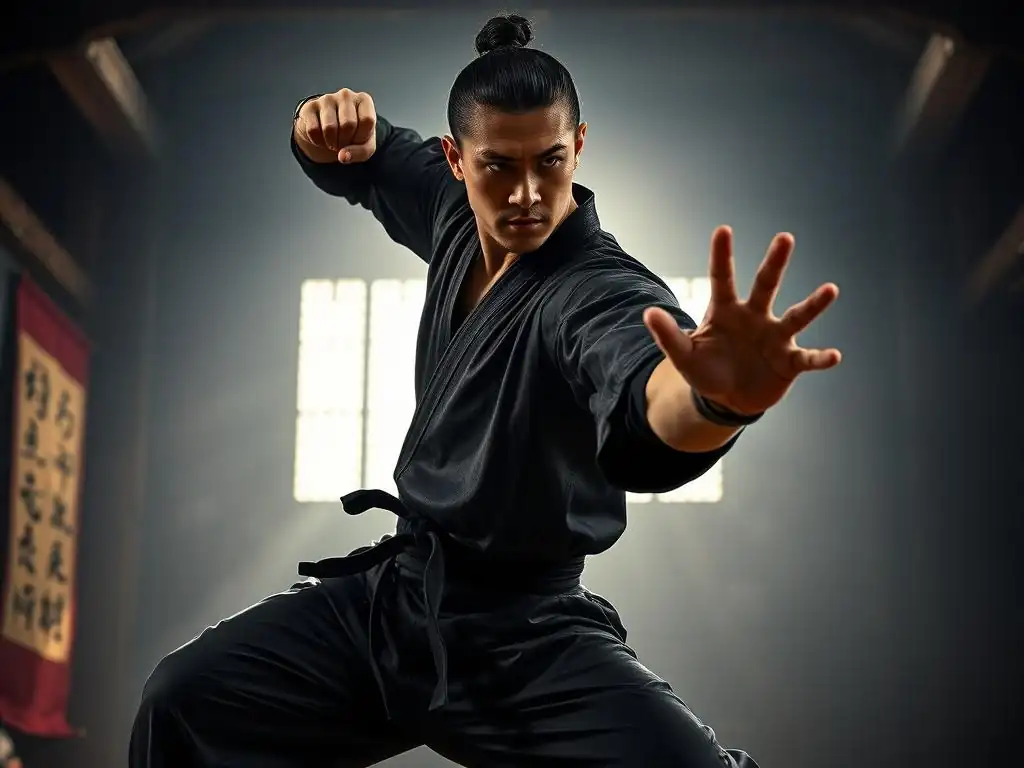
Welcome to Martial Arts Mastery, your gateway to unlocking the profound world of combat traditions! Delve into the rich tapestry of martial arts disciplines, from historical perspectives to practical applications. Prepare to be captivated as we explore the philosophical bedrock that underpins seemingly simple movements. Curious about how ancient wisdom shapes modern power? Let's begin with an in-depth look at Hung Gar stance philosophy training, revealing the secrets behind its powerful and unyielding stances and how they go beyond mere physical technique.
- Introduction to Hung Gar Stance Training: A Philosophical Perspective
-
The Five Animals and the Philosophical Significance of Hung Gar Stances
- Tiger Stance: Power, Aggression, and the Embodiment of Yang Energy
- Crane Stance: Balance, Precision, and the Cultivation of Yin Energy
- Leopard Stance: Speed, Agility, and the Philosophy of Direct Action
- Snake Stance: Flexibility, Adaptability, and the Art of Evasion
- Dragon Stance: Spirit, Vitality, and the Harmony of Mind and Body
- The Importance of Rooting in Hung Gar: Grounding and Stability
- Hung Gar's Bridging Techniques and Stance Transition Philosophy
- The Role of Meditation and Mindfulness in Hung Gar Stance Training
- Practical Applications of Hung Gar Stance Philosophy in Self-Defense
- Hung Gar's Stance Training and the Concept of "Iron Wire" (Tit Sin Kuen)
- Integrating Hung Gar Stance Philosophy into Your Martial Arts Journey
-
Frequently Asked Questions
- How does stance training in Hung Gar Kung Fu relate to its philosophical underpinnings?
- What are some of the key philosophical concepts reflected in Hung Gar stances?
- Why is rooting considered so important in Hung Gar stance philosophy training?
- How does Hung Gar's stance philosophy training contribute to practical self-defense?
- Beyond physical benefits, what are the potential personal growth advantages of Hung Gar stance philosophy training?
- Final Reflection: Embracing the Unwavering Spirit of Hung Gar
- Embrace the Stance: Fortify Your Foundation!
Introduction to Hung Gar Stance Training: A Philosophical Perspective
The Core Principles Guiding Hung Gar's Stance Development
Hung Gar Kung Fu, a prominent Southern Chinese martial art, places immense emphasis on developing powerful and stable stances. This focus is not merely on physical posture but is deeply rooted in a comprehensive philosophical framework. At its core, Hung Gar stance training is guided by principles derived from Chinese philosophy, including concepts of balance, stability, and the connection between the human body and the natural world.
Practitioners learn that a strong stance is the foundation for generating explosive power, maintaining equilibrium under pressure, and developing internal energy (Qi). The philosophy underscores that the legs and lower body must be as solid as a mountain, providing an unshakable base from which all techniques originate.
This philosophical underpinning extends beyond the physical mechanics of standing. It teaches patience, discipline, and perseverance, qualities essential for mastering the low, demanding stances characteristic of the style. For instance, holding the Horse Stance (Sei Ping Ma) for extended periods—often starting with several minutes and progressing to much longer durations in advanced training—cultivates mental fortitude alongside physical strength.
This rigorous approach in Hung Gar stance philosophy training builds resilience, teaching students to endure discomfort and maintain composure, mirroring the stability sought in combat situations and life challenges alike. The philosophy is that a practitioner's external stability reflects their internal calm and readiness.
Why Hung Gar Stance Philosophy Training Matters for Practitioners
Understanding the philosophy behind Hung Gar stances elevates training from mere physical exercise to a profound martial art practice. It provides context and purpose, explaining why certain stances are held low, why transitions are deliberate, and why rooting is paramount. For example, the emphasis on rooting—feeling connected to the earth—is not just about physical balance; it embodies the philosophical principle of drawing strength from one's foundation, whether physical, mental, or spiritual. This deeper understanding enhances a practitioner's ability to apply techniques effectively, as they grasp the source of power and stability inherent in each posture.
Furthermore, integrating Hung Gar stance philosophy training fosters a holistic development of the practitioner. It encourages introspection and self-awareness, vital for recognizing and correcting imbalances not only in posture but also in energy flow and mental state. A practitioner who understands the philosophical significance of the Tiger stance's aggressive power or the Crane stance's defensive evasion can embody these qualities more fully, making their techniques more authentic and potent. This philosophical depth transforms training from a set of movements into a living expression of principles, ultimately leading to greater mastery and a deeper appreciation for the art's rich heritage.
The Five Animals and the Philosophical Significance of Hung Gar Stances
Tiger Stance: Power, Aggression, and the Embodiment of Yang Energy
The Tiger stance, exemplified by postures like "Bow and Arrow Stance" (Gong Bou), is a cornerstone of Hung Gar, embodying raw power, aggression, and the dynamic force of Yang energy. Philosophically, the Tiger represents courage, strength, and the ability to face challenges head-on.
In training, practitioners adopt low, forward-weighted stances that allow for explosive forward movement and powerful hand techniques, such as the forceful Gwa Cheui (back fist) or Fu Jow (tiger claw). The philosophy here is about cultivating unyielding determination and the capacity to generate overwhelming force from a stable, forward-driving base, like a tiger pouncing on its prey.
This stance philosophy training focuses on developing powerful leg muscles and a solid connection through the hips to channel energy directly into strikes. The forward lean and low center of gravity in stances like Gong Bou emphasize forward intent and the projection of power. Historically, this reflected the need for direct, powerful attacks in close-quarters combat scenarios common in Southern China. Practicing the Tiger philosophy within Hung Gar stances teaches practitioners how to harness aggressive energy constructively, maintaining control and focus even when executing forceful techniques, ensuring that power is directed and effective rather than wild and unfocused.
Crane Stance: Balance, Precision, and the Cultivation of Yin Energy
In contrast to the Tiger, the Crane stance embodies balance, precision, and the fluid, evasive qualities of Yin energy. Stances like the "Crane Leg Stance" (Hok Gerk Ma) or "One Leg Stance" (Duk Lik Ma) require exceptional balance and control. Philosophically, the Crane represents grace, patience, and the ability to evade danger rather than meeting it directly. Hung Gar training incorporates these stances to teach practitioners lightness, agility, and the skill of using minimal effort for maximum effect, often through deflections, joint locks, or precise strikes to vulnerable points.
Hung Gar stance philosophy training in Crane postures develops core stability, ankle strength, and the ability to shift weight rapidly and subtly. The physical challenge of balancing on one leg cultivates concentration and inner calm. It teaches practitioners to find stability in seemingly unstable positions, reflecting the philosophical principle of finding peace and control amidst chaos. The Crane's evasive nature, embodied in these stances, complements the Tiger's directness, creating a balanced martial art system where practitioners can choose the appropriate response—direct confrontation or agile evasion—based on the situation.
Leopard Stance: Speed, Agility, and the Philosophy of Direct Action
The Leopard stance, often represented by quick, transitional postures or shorter, more mobile stances, embodies speed, agility, and the philosophy of striking directly and quickly. While less emphasized as a static holding stance compared to the Horse or Tiger, the Leopard's essence is crucial in Hung Gar transitions and rapid-fire techniques. Philosophically, the Leopard represents sudden bursts of energy, focused attacks, and efficient movement. Training incorporates the Leopard's spirit to develop explosive speed in footwork and hand combinations, enabling practitioners to cover distance quickly and launch rapid strikes.
Hung Gar stance philosophy training influenced by the Leopard focuses on dynamic tension and the ability to accelerate from a stable base. It emphasizes the quick coiling and uncoiling of the body to generate speed, similar to how a leopard stalks and pounces. The philosophy teaches that speed and agility are not just about moving fast, but about moving effectively and efficiently, minimizing wasted motion to maximize impact. This aspect of stance training ensures practitioners can transition smoothly between powerful stances and execute rapid, focused attacks, adding another dimension to their combat strategy.
Snake Stance: Flexibility, Adaptability, and the Art of Evasion
The Snake stance and its associated movements emphasize flexibility, adaptability, and the philosophical principle of flowing around obstacles. Represented by low, coiling postures and fluid body movements, the Snake in Hung Gar teaches practitioners to be elusive, to yield to force, and to redirect an opponent's energy. Philosophically, the Snake embodies subtlety, resilience, and the ability to find weakness through yielding strength. Training involves developing supple joints, core flexibility, and the skill of moving the body in complex ways while maintaining balance and control.
Hung Gar stance philosophy training incorporating the Snake's principles focuses on generating 'whipping' power and using body mechanics to evade or control an opponent's limbs. It teaches practitioners to utilize circular motion and body angling to slip away from attacks or trap an opponent. The philosophy here is about the power of softness and adaptability – like water flowing around a rock, the practitioner learns to yield and then strike from an unexpected angle. This element ensures that Hung Gar is not just about brute force but also includes sophisticated methods of evasion and control.
Dragon Stance: Spirit, Vitality, and the Harmony of Mind and Body
The Dragon is the most symbolic animal in Chinese culture and represents the highest level of mastery in Hung Gar, encompassing spirit, vitality, and the ultimate harmony of mind and body. While there isn't one single "Dragon stance" in the same way as the Horse or Tiger, the Dragon's essence permeates advanced Hung Gar, particularly in forms like the "Dragon Form" (Lung Ying Kuen).
Philosophically, the Dragon embodies internal power, wisdom, and the ability to manifest intention through fluid, powerful movement. Training in the Dragon spirit involves integrating all the other animal principles with a focus on internal energy cultivation (Qi Gong) and mental focus.
Hung Gar stance philosophy training at this level is about achieving a state where stances and techniques flow effortlessly, guided by intent and internal energy rather than just muscular force. It involves deep breathing, visualization, and cultivating a strong connection between the mind and the physical body. The philosophy teaches that true power comes from within, from the harmonious integration of physical technique, mental discipline, and vital energy. Mastering the Dragon spirit means transcending individual techniques and stances, embodying the dynamic, adaptable, and powerful essence of the art itself.
The Importance of Rooting in Hung Gar: Grounding and Stability
Developing Strong Roots: Physical and Mental Preparation
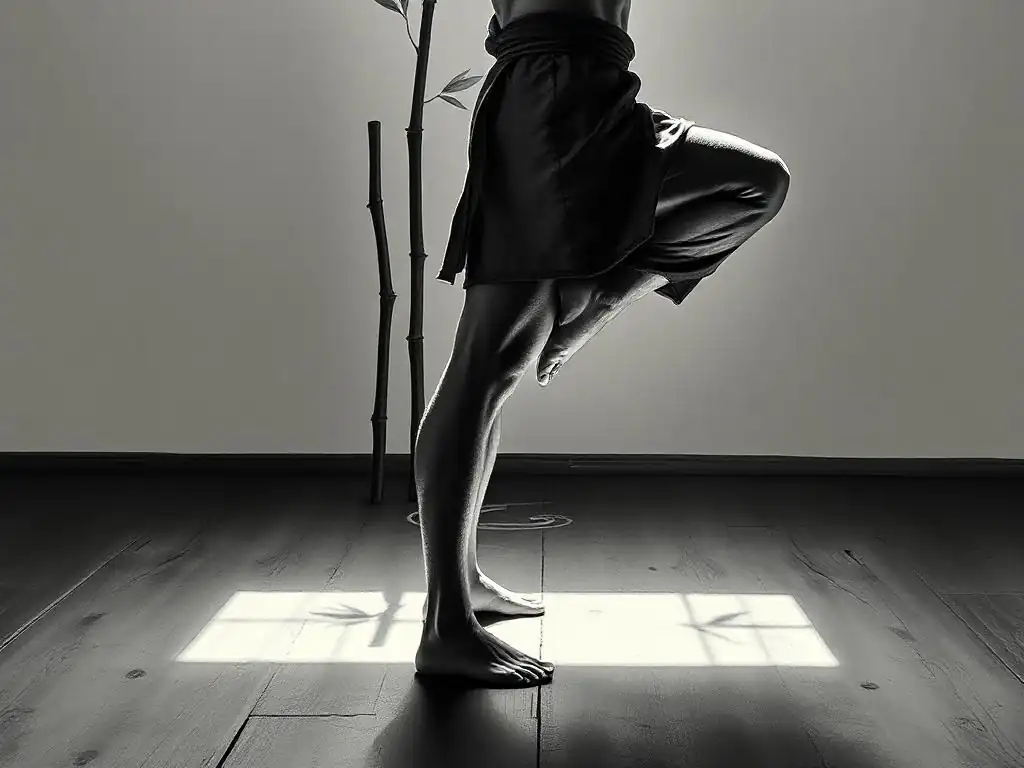
Rooting is perhaps the single most critical concept in Hung Gar stance philosophy training. It refers to the feeling of being deeply connected to the earth, providing an incredibly stable base. Developing strong roots requires rigorous physical conditioning, particularly strengthening the legs, hips, and core. This involves countless hours holding low stances like the Horse Stance (Sei Ping Ma), initially for short bursts of 30 seconds and gradually building endurance to 10-15 minutes or more per session for dedicated students. This physical discipline builds the necessary muscular structure and endurance.
Beyond the physical, rooting also demands significant mental preparation and focus. Practitioners must learn to relax their upper body while maintaining tension and stability in the lower body, sinking their weight down through their feet. This requires a focused mind, free from distraction, to maintain the correct posture and internal connection. The mental aspect of rooting cultivates patience and concentration, teaching the practitioner to remain calm and centered under pressure, whether during intense training or in a self-defense situation. This dual physical and mental training is foundational to effective Hung Gar stance philosophy training.
Connecting with the Earth: Understanding the Flow of Energy (Chi)
Connecting with the earth is the philosophical interpretation of rooting in Hung Gar. It's not just about physical weight distribution but about understanding and utilizing the flow of energy (Qi). The belief is that by sinking one's weight and relaxing the upper body, energy can flow down through the legs into the earth, and simultaneously, draw stable energy from the earth up through the body. This concept is central to generating 'shock power' (gung ging) or 'vibrating power' (jin ging), where force originates from the ground, travels up through the rooted structure, and is expressed through a strike.
This philosophical connection is practiced through mindful breathing and visualization techniques during stance training. Practitioners are encouraged to feel their connection to the floor, imagining roots extending down from their feet. This enhanced awareness of their physical connection to the ground allows them to become incredibly stable, difficult to move, and capable of generating significant force. Understanding this flow of energy is a key element in advanced Hung Gar stance philosophy training, transforming static postures into dynamic sources of power.
The Philosophy of Stability: Unshakable Foundation in Combat
The philosophy of stability in Hung Gar posits that an unshakable foundation is paramount in combat. If your stance is easily disrupted, your ability to generate power, defend yourself, or counter-attack is severely compromised. A strong, rooted stance allows a practitioner to absorb incoming force without being moved, redirect an opponent's energy, and launch powerful strikes from a stable platform. This principle is demonstrated in techniques where practitioners use their rooted stance to anchor themselves against pushes or pulls, effectively using their body weight and connection to the ground as leverage.
This stability isn't static rigidity; it's a dynamic, rooted stability that allows for controlled movement and power generation. Philosophically, this reflects the ideal of being firm yet adaptable, like a deeply rooted tree that can withstand a storm by bending slightly but never breaking its connection to the earth. Hung Gar stance philosophy training instills this principle deeply, ensuring that practitioners build their skills upon a foundation that is not only physically strong but also philosophically sound, providing confidence and resilience in any confrontation.
Hung Gar's Bridging Techniques and Stance Transition Philosophy
The Interconnectedness of Stances: Smooth Transitions for Continuous Flow
While Hung Gar emphasizes static strength in its core stances, the philosophy also recognizes the crucial importance of smooth, powerful transitions between them. Stances are not isolated postures but interconnected points in a continuous flow of movement. The philosophy dictates that transitions should be executed with the same power, control, and rooting as the static stances themselves.
Awkward or weak transitions create openings for an opponent and dissipate potential energy. Therefore, Hung Gar stance philosophy training includes extensive practice on moving fluidly and powerfully from one stance to another, such as shifting seamlessly from a Horse Stance to a Bow and Arrow Stance.
This interconnectedness is vital for maintaining balance and power throughout a sequence of techniques. It ensures that the practitioner is never truly off-balance or vulnerable during movement. Approximately 40-50% of a Hung Gar form's execution time can be spent in transition between static postures, highlighting the importance placed on this aspect. The philosophy teaches that martial power is not just in the strike or block, but in the entire sequence of movement that leads to and follows it, requiring mastery of the pathways between stable points.
Bridging the Gap: Using Stances to Control Distance and Power
Bridging techniques (Kiu Sao) in Hung Gar are hand and arm movements used to make contact with an opponent's limbs ("bridging the gap") to control distance, disrupt their structure, or create openings. The philosophy of stances is intimately linked to bridging, as the stance provides the stable base from which bridging techniques are applied and the power is generated. For instance, using a powerful forearm block (Gao Kiu) from a solid Bow and Arrow Stance allows a practitioner to absorb an attack and simultaneously drive forward, controlling the space between themselves and the opponent.
Hung Gar stance philosophy training teaches practitioners how to use their rooted stances to leverage their body weight effectively through bridging techniques. The ability to maintain a strong, rooted stance while engaging in close-range hand fighting is a hallmark of the style. The philosophy is that the stance is not just for standing; it is an active tool for controlling the fight, allowing the practitioner to become an immovable object or an irresistible force depending on the technique and situation. This synergy between stances and bridging techniques is fundamental to Hung Gar's effectiveness.
The Philosophical Implications of Adaptive Movement in Hung Gar
The ability to transition smoothly and powerfully between stances, utilizing bridging techniques, reflects the philosophical implication of adaptive movement in Hung Gar. While the core stances provide a foundation, combat is dynamic and requires constant adjustment. The philosophy teaches that rigid adherence to a single posture is impractical; instead, the practitioner must be able to adapt their stance and position instantly based on the opponent's movements and the changing circumstances of the fight. This adaptability ensures survival and effectiveness.
This aspect of Hung Gar stance philosophy training cultivates responsiveness and intuition. Practitioners learn to feel their opponent's energy through bridging contact and adjust their stance and body mechanics accordingly. This might involve shifting weight slightly, stepping back or forward, or changing the angle of their stance to maintain balance, generate power, or evade. The philosophy is that mastery lies not in holding one perfect stance, but in the fluid, powerful, and intelligent use of all stances in concert, constantly adapting to the dynamic flow of combat.
The Role of Meditation and Mindfulness in Hung Gar Stance Training
Cultivating Inner Awareness: Enhancing Focus and Control
Meditation and mindfulness play a significant, though often less visible, role in advanced Hung Gar stance philosophy training. Cultivating inner awareness is essential for enhancing focus and control, both critical for mastering the physically demanding stances and complex forms. Through practices like Zuo Chan (seated meditation) or even mindful breathing within stances, practitioners learn to quiet the mind, improve concentration, and become acutely aware of their body's alignment, tension, and energy flow. This heightened awareness allows for precise adjustments in posture and weight distribution, optimizing the stance's effectiveness.
This inner focus also helps practitioners endure the physical discomfort associated with holding low stances for extended periods. Instead of being overwhelmed by pain or fatigue, they learn to observe these sensations without judgment, maintaining their posture and mental composure. This mental discipline, fostered through mindfulness, directly translates to the ability to remain calm and focused under the physical and psychological pressure of combat. Approximately 10-15 minutes of dedicated mindfulness or breathing exercises might precede or follow physical stance work in a comprehensive training session.
The Mind-Body Connection: Integrating Mental Discipline with Physical Technique
Hung Gar philosophy emphasizes the inseparable connection between the mind and the body. Stance training is not just a physical exercise; it is a practice that integrates mental discipline with physical technique. A strong stance requires not only powerful legs but also a focused mind to maintain alignment, sink the weight, and feel the connection to the earth. Conversely, the physical rigor of stance training strengthens mental resolve and discipline. This symbiotic relationship is central to achieving mastery.
Through Hung Gar stance philosophy training that incorporates mindfulness, practitioners learn to direct their intention and energy effectively. They visualize the power flowing from the ground, through their body, and into their techniques. This mental engagement enhances the physical execution, making strikes more powerful and stances more rooted. The philosophy teaches that peak performance in martial arts requires a unified state of mind and body, where thought and action are seamlessly integrated, and this integration begins with the foundational practice of stances.
Mindfulness in Movement: Applying Zen Principles to Hung Gar Stances
Applying principles of Zen mindfulness to Hung Gar stances means practicing with full presence and awareness in every moment, even during movement or static holding. It involves paying attention to the subtle sensations in the body, the breath, and the mind, without getting lost in thought or distraction. When executing a transition or holding a posture, the practitioner focuses entirely on the act of doing it, ensuring that every movement is deliberate, efficient, and rooted.
This mindful approach to Hung Gar stance philosophy training transforms repetitive drills into opportunities for profound self-discovery and refinement. It encourages practitioners to continuously check their alignment, balance, and energy flow, making real-time adjustments. The philosophy is that true skill emerges from consistent, mindful practice, where the practitioner is fully engaged in the present moment, allowing their body and mind to work in perfect harmony. This level of awareness is what separates a skilled technician from a true martial artist.
Practical Applications of Hung Gar Stance Philosophy in Self-Defense
Using Stances to Generate Power and Maintain Balance in Real-World Scenarios
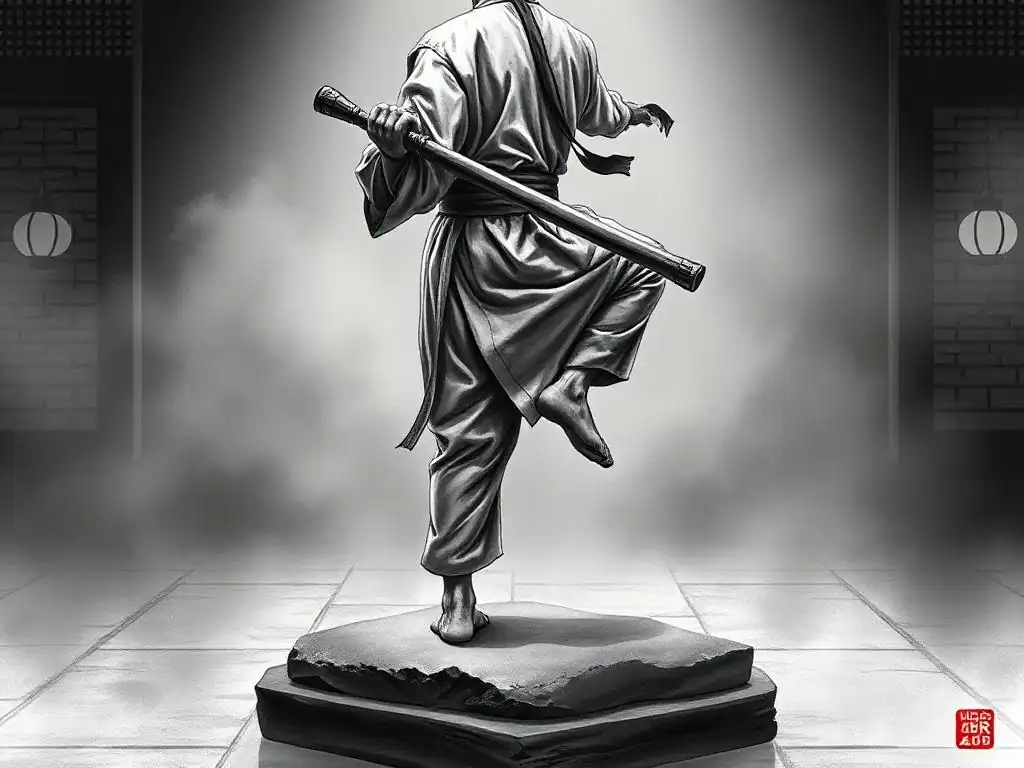
The philosophical emphasis on rooted stances in Hung Gar has direct and vital practical applications in self-defense. A strong stance provides the necessary stability to absorb or deflect attacks from various angles without being easily knocked off balance. For example, adopting a low Horse Stance allows a practitioner to become a solid anchor against a push or grapple attempt, making them incredibly difficult to move. The ability to maintain balance on uneven surfaces, like a street or sidewalk, is also enhanced by the rigorous training in diverse Hung Gar stances and transitions.
Crucially, these stances are the engine for generating significant power for strikes. Techniques like the straight punch (Jik Cheui) or the powerful bridge hand strikes gain their devastating force from the practitioner's ability to channel energy from the ground up through their rooted structure. In a self-defense situation, this means a smaller individual can generate surprising power by leveraging their body weight and connection to the earth through their Hung Gar stance, potentially delivering a decisive blow to deter an aggressor. This practical application underscores the value of dedicated Hung Gar stance philosophy training.
Adapting Stances to Different Environments and Opponents
While Hung Gar forms often feature deep, static stances, the practical application of Hung Gar stance philosophy involves adapting these principles to real-world scenarios. Combat doesn't happen in a vacuum; it occurs on various surfaces and against opponents of different sizes, strengths, and fighting styles. Practitioners learn to modify the depth and width of their stances while retaining the core principles of rooting, stability, and balance. A full Horse Stance might be impractical in a crowded space, but a narrower, rooted posture can still provide a stable base.
This adaptability extends to facing different types of opponents. Against a larger, stronger attacker, a practitioner might rely more on rooted stances to absorb force and counter from a solid base. Against a faster, more agile opponent, they might utilize more dynamic transitions and shorter, more mobile stances derived from the Leopard or Snake principles. Hung Gar stance philosophy training teaches the underlying principles (rooting, balance, power generation) that can be applied flexibly, ensuring that the practitioner is not confined by rigid forms but can apply the essence of the stances effectively in unpredictable situations.
The Defensive and Offensive Applications of Specific Hung Gar Stances
Each of the core Hung Gar stances has specific defensive and offensive applications rooted in its philosophical meaning and physical structure. The Bow and Arrow Stance (Tiger) is excellent for powerful forward attacks and absorbing frontal impact. The Horse Stance (fundamental) provides a stable base for powerful hand techniques to the sides and front, and is extremely difficult to push or pull from. The Crane Stance, requiring balance on one leg, is ideal for evasive maneuvers, leg techniques, and precise, focused strikes.
For instance, a practitioner in a solid Horse Stance can effectively use powerful forearm blocks (Gao Kiu) to ward off multiple attacks or deliver devastating close-range strikes. Shifting into a Bow and Arrow Stance allows for a strong, penetrating punch or palm strike. Utilizing a quick transition to a lower Snake-like posture can enable evasion or a low sweep. Hung Gar stance philosophy training ensures practitioners understand how and when to apply the unique strengths of each stance, making their self-defense capabilities versatile and robust, drawing power from their stable foundation.
Hung Gar's Stance Training and the Concept of "Iron Wire" (Tit Sin Kuen)
Iron Wire: The Ultimate Embodiment of Internal Power and Stance Mastery
The "Iron Wire" form (Tit Sin Kuen) is considered one of the most advanced and philosophically profound forms in Hung Gar, representing the ultimate embodiment of internal power (Nei Gong) and stance mastery. It is not just a sequence of movements but a comprehensive system of isometric tension, breathing techniques, and visualization performed within deep, rooted stances. The name "Iron Wire" refers to the feeling of internal strength and resilience cultivated, like steel wires running through the body, providing immense structural integrity and power.
Training Tit Sin Kuen is incredibly demanding, requiring significant physical endurance and mental focus. It involves holding stances under tension for extended periods while coordinating specific breathing patterns with muscular contractions. This specialized Hung Gar stance philosophy training develops not just external strength but also internal fortitude, improving circulation, strengthening organs, and cultivating a tangible feeling of internal energy. It is often said that mastery of Tit Sin Kuen is mastery of Hung Gar's internal aspects and its stance philosophy.
The Philosophical Depth of Iron Wire: Connecting Stance, Breath, and Intention
The philosophical depth of Iron Wire lies in its synthesis of stance, breath, and intention. The stances provide the physical framework, the breath (regulated through specific nasal inhalation and oral exhalation techniques) cultivates and circulates internal energy, and intention (Yi) directs this energy and imbues the movements with power and purpose. The philosophy is that true martial power is not just physical force but the result of aligning the body's structure (stance) with its internal energy (breath) guided by focused will (intention).
Tit Sin Kuen training teaches practitioners to feel the connection between their rooted stance and the tension generated throughout their body, coordinated with their breath. This practice deepens the understanding of how power is generated from the ground up and how internal energy can be harnessed. The philosophy is that this internal cultivation makes the body incredibly strong and resilient, like tempered iron, capable of both absorbing impact and delivering devastating force from any rooted position. It is the pinnacle of Hung Gar stance philosophy training's internal dimension.
Developing Iron Wire Strength: A Lifelong Journey of Stance Refinement
Developing the internal strength and mastery embodied by Iron Wire is not a quick process but a lifelong journey requiring consistent practice and dedicated stance refinement. It builds upon the foundational Hung Gar stance philosophy training, taking the principles of rooting, balance, and power generation to a higher level of internal cultivation. Practitioners typically spend years mastering the basic stances and forms before even beginning Tit Sin Kuen, and then many more years refining its intricate movements and breathing techniques.
The philosophy behind this long journey is that true mastery requires patience, perseverance, and a deep commitment to self-improvement. The physical and mental challenges of Iron Wire push practitioners to their limits, revealing weaknesses and forcing them to confront limitations. Overcoming these challenges through diligent practice strengthens not only the body but also the spirit, embodying the resilience of iron. This continuous process of refinement in Hung Gar stance philosophy training, particularly through forms like Iron Wire, leads to profound physical capability and a deeper understanding of the art's core principles.
Integrating Hung Gar Stance Philosophy into Your Martial Arts Journey
The Importance of Consistent Practice and Dedicated Study
Integrating Hung Gar stance philosophy into one's martial arts journey requires consistent practice and dedicated study. Mastery of the stances, both physically and philosophically, does not happen overnight. It demands regular, disciplined training sessions focused specifically on stance work, form practice, and the underlying principles. Even 10-15 minutes of focused stance holding daily can yield significant improvements over time, building the necessary muscle memory, strength, and mental fortitude.
Beyond physical repetition, dedicated study involves reading about Hung Gar history, philosophy, and its connection to broader Chinese thought. Understanding the context of why stances are trained in a particular way—their historical development, their connection to animal movements, and their philosophical meaning—deepens appreciation and improves execution. This combination of consistent physical practice and intellectual study is crucial for truly integrating the rich Hung Gar stance philosophy training into one's personal development as a martial artist.
Finding a Qualified Instructor: Guidance on Correct Stance Development
Finding a qualified instructor is paramount for correct Hung Gar stance development and understanding its philosophy. The low stances are physically demanding and require precise alignment to avoid injury and ensure proper energy flow. An experienced Sifu can provide essential hands-on corrections, explain the subtle nuances of weight distribution and posture, and guide students through the philosophical concepts in a practical way. Learning incorrect stances can lead to bad habits that are difficult to break and may hinder progress or cause physical strain.
A good instructor teaches not just the physical movements but also the underlying principles and philosophy, demonstrating how they are interconnected. They can help students understand the feeling of being rooted, the difference between muscular tension and structural integrity, and how to apply the philosophical lessons of patience and perseverance to their training. The lineage and experience of an instructor significantly impact the quality of Hung Gar stance philosophy training received, making their guidance invaluable.
Beyond the Physical: Embracing the Philosophical Essence of Hung Gar
Ultimately, integrating Hung Gar stance philosophy into one's martial arts journey means embracing the art's essence beyond its physical techniques. It's about understanding that the powerful stances are not just fighting postures but embodiments of discipline, stability, resilience, and connection to fundamental principles. It's recognizing that the lessons learned holding the Horse Stance for five minutes—patience, perseverance, inner strength—are applicable to challenges outside the training hall.
This philosophical immersion transforms the practice. The practitioner is no longer just learning to fight; they are cultivating character, developing internal energy, and seeking harmony between mind and body. Hung Gar stance philosophy training provides a tangible path for this development, using the physical body as a vehicle for understanding deeper truths about power, balance, and the human spirit. It is a journey of continuous learning and self-refinement, rooted in the unyielding foundation of Hung Gar's powerful stances.
Frequently Asked Questions
How does stance training in Hung Gar Kung Fu relate to its philosophical underpinnings?
Hung Gar stance training isn't just about physical conditioning. It's deeply connected to its philosophy, emphasizing rooting, stability, and unwavering resolve, mirroring the principles of a strong and grounded moral character.
What are some of the key philosophical concepts reflected in Hung Gar stances?
Concepts like balance, harmony, and inner strength are central. Hung Gar stances cultivate not only physical power but also mental fortitude and a deep understanding of one's own center.
Why is rooting considered so important in Hung Gar stance philosophy training?
Rooting is crucial because it embodies the concept of stability and connection to the earth. A strong root allows for powerful and efficient movements while remaining unshakeable in the face of adversity.
How does Hung Gar's stance philosophy training contribute to practical self-defense?
The stances provide a solid foundation for generating power and maintaining balance in combat. They also cultivate mental discipline and awareness, essential for effective self-defense.
Beyond physical benefits, what are the potential personal growth advantages of Hung Gar stance philosophy training?
Practitioners often report increased self-confidence, discipline, and a deeper understanding of themselves. The training fosters mental resilience and a strong sense of purpose, extending beyond the martial arts realm.
Final Reflection: Embracing the Unwavering Spirit of Hung Gar
The journey through the philosophical underpinnings of Hung Gar stances reveals more than just physical techniques; it unveils a profound connection to resilience and unwavering spirit. This exploration of stance philosophy is not merely an academic exercise, but a vital key to unlocking the true potential of Hung Gar training in the modern world. By understanding the principles of rootedness, balance, and focused intent, practitioners can transcend mere physical prowess and cultivate a mindset of unwavering strength, applicable far beyond the training hall.
The enduring power of Hung Gar lies not just in its formidable techniques, but in the philosophical bedrock that shapes its every movement. This philosophy, deeply rooted in Chinese culture and martial tradition, continues to resonate today, offering a pathway to self-mastery and inner peace. As Bruce Lee so eloquently stated: Absorb what is useful, discard what is not, add what is uniquely your own.
This sentiment perfectly encapsulates the spirit of Hung Gar, encouraging practitioners to not only master the traditional forms but also to internalize the underlying principles and adapt them to their own individual journey.
Now, as you step away from this exploration of Hung Gar stance philosophy training, I invite you to consider how these principles of rootedness, balance, and focused intent can be applied to your own life. How can you cultivate a stronger foundation, find greater equilibrium amidst the chaos, and approach your goals with unwavering determination? Embrace the spirit of Hung Gar, and discover the unyielding strength that lies within.
Embrace the Stance: Fortify Your Foundation!
Thank you for exploring the philosophical depths that empower Hung Gar's stances! Now, it's time to translate that knowledge into tangible strength and understanding. Ready to take the next step?
- Commit to a daily practice of Mabu (Horse Stance) for at least 5 minutes, focusing on grounding and mindful alignment. Feel the connection to the earth and the flow of energy through your body.
- Share this article with a fellow martial artist and discuss how Hung Gar's philosophical principles can enhance their training. Collaboration strengthens understanding!
- Explore the history of the Five Animals styles within Hung Gar. Understanding the origins can deepen your appreciation for the art.
How will you integrate the wisdom of Hung Gar's stances into your martial arts journey today?