
KiKenTaiIcchi: Uniting Spirit, Sword, and Body for Powerful Kendo Strikes

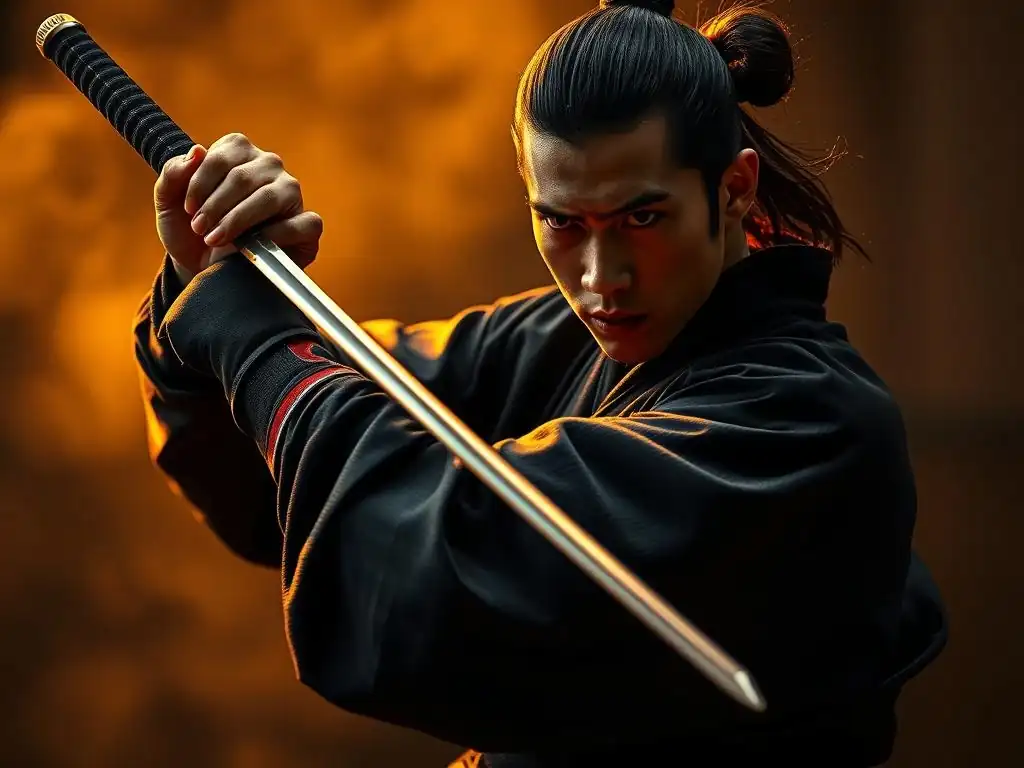
Welcome to Martial Arts Mastery, your gateway to the profound world of combat disciplines!
Delve into the intricate dance between spirit, sword, and body, a cornerstone of Kendo. Our exploration of KiKenTaiIcchi, where a perfectly executed strike embodies the unity of mind, technique, and physical presence, begins now. Discover how this philosophy, and its practical application, can elevate your understanding of Kendo and unlock the true potential of your strikes. Ready to master the art? Let's begin...
What is KiKenTaiIcchi? Defining the Core Principle
KiKenTaiIcchi (気剣体一致) is a fundamental principle in Kendo, representing the unification of spirit (Ki), sword (Ken), and body (Tai) into a single, cohesive action. This concept is not merely philosophical; it is the practical foundation for executing effective and powerful Kendo strikes. When a kendo practitioner achieves KiKenTaiIcchi, their mental intent, the movement of their sword, and the coordination of their body are perfectly synchronized, resulting in a strike that carries maximum force, precision, and validity.
It is the state where the mind decides, the body moves, and the sword cuts, all as one instantaneous event. Without this unity, a strike, even if it lands, may lack the necessary power or conviction to be considered valid in practice or competition.
This principle emphasizes that Kendo is far more than just physical technique. A strike performed with perfect body mechanics but lacking spirit or intent (Ki) will feel hollow and ineffective. Similarly, a strike with strong spirit but poor sword handling (Ken) or uncoordinated footwork (Tai) will fail to connect properly or generate sufficient force.
KiKenTaiIcchi is the synergy of these three elements, ensuring that every Kendo strike is not just a physical action, but a complete expression of the practitioner's skill and will. Achieving this state requires rigorous training that addresses not only physical conditioning and technique but also mental discipline and spiritual development, making it a lifelong pursuit for kendo practitioners.
The Significance of KiKenTaiIcchi for Kendo Practitioners
For any kendo practitioner, mastering KiKenTaiIcchi is paramount to progressing beyond basic movements and executing truly effective Kendo strikes. It transforms a simple swing of the sword into a purposeful, powerful action. In practice (Keiko), instructors constantly look for the presence of KiKenTaiIcchi in a student's strikes – often indicated by a strong Kiai (spirit shout), correct timing, and decisive body movement culminating in a clean cut.
A strike delivered with KiKenTaiIcchi is unmistakable; it feels "heavy" and complete, leaving no doubt about the practitioner's intent and execution. Conversely, strikes lacking this unity often feel weak, disconnected, and are easily defended against or judged invalid in assessment.
Furthermore, the pursuit of KiKenTaiIcchi cultivates essential qualities beyond physical technique. The focus on Ki develops mental resilience, presence, and the ability to project intent, which are crucial for facing an opponent. The discipline required to synchronize Ken and Tai refines coordination, balance, and timing – skills transferable to many aspects of life.
Achieving this unity leads to greater confidence and a deeper understanding of Kendo as a martial art that integrates mind, body, and spirit. Without KiKenTaiIcchi, a practitioner might learn the form of Kendo strikes, but they will struggle to achieve the power and effectiveness required for true mastery. It is the central goal that underpins countless hours of training in Kendo.
- What is KiKenTaiIcchi? Defining the Core Principle
- The Significance of KiKenTaiIcchi for Kendo Practitioners
The Three Pillars of KiKenTaiIcchi: Spirit, Sword, and Body
Ki (気): Cultivating the Spirit for Kendo Mastery
Cultivating Ki, or spirit, in Kendo is about developing mental focus, determination, and the projection of one's inner energy or intent. It's the driving force behind effective Kendo strikes. This isn't about mystical power, but rather about being fully present, focused, and committed to the action.
A strong Ki allows a kendo practitioner to overcome hesitation, maintain composure under pressure, and express their will through their movements and Kiai. It's the difference between a tentative strike and a decisive one that breaks through an opponent's defense. Training the spirit involves developing mental discipline, learning to control fear and doubt, and fostering a warrior's mindset focused on overcoming challenges.
The projection of Ki is often most evident through the Kiai, the spirit shout that accompanies a strike. A powerful, well-timed Kiai is not just noise; it's an expression of the practitioner's intent and commitment to the strike. It helps to focus energy, startle the opponent, and is a key element in a valid Kendo strike (Yuko-Datotsu).
Developing a strong Kiai is part of cultivating Ki, ensuring that the spirit leads the action. Furthermore, a strong Ki allows a practitioner to maintain Zanshin (remaining spirit/awareness) after the strike, staying alert and ready for the opponent's reaction, demonstrating that the strike was delivered with complete conviction and not just a physical action.
Developing Mental Focus and Intent in Kendo
Developing mental focus in Kendo involves training the mind to be completely present and centered, free from distractions and hesitation. This starts long before the actual engagement. It includes preparing mentally before practice or competition, clearing the mind, and setting a clear intention for the session or match.
During training, focus is honed through repetitive drills that demand attention to detail, such as hitting a specific spot on the target (Men, Kote, Do) with precision. Practitioners learn to quiet internal chatter and concentrate solely on the present moment, anticipating the opponent's movements while preparing their own decisive action. This intense focus is the initial spark for powerful Kendo strikes, guiding the subsequent physical movements.
Intent in Kendo is the purposeful will behind the strike. It's not just wanting to hit the target, but having the resolve to do so effectively. This intent must be clear and unwavering. It's cultivated by understanding the objective of each strike and committing to seeing it through completely.
In practice, this means executing strikes with full commitment, even in basic Suburi (swinging drills). In sparring (Jigeiko), intent is demonstrated by seeking opportunities, initiating attacks decisively, and following through. A strike with clear intent is often perceived by the opponent, influencing their reaction and potentially creating openings. This mental preparation and projection of intent are fundamental to unifying spirit, sword, and body.
Projecting Your Spirit Through the Sword
Projecting spirit through the sword means imbuing the physical action of striking with the practitioner's mental energy and will. It's as if the sword becomes an extension of the spirit itself. This projection is felt not just by the practitioner but also by the opponent.
A strike delivered with strong spirit feels heavy and carries a sense of conviction, even before physical contact. This is partly achieved through the unified timing of the Kiai, the footwork, and the cut, but it also stems from the practitioner's inner state. When the spirit is strong, the movements are naturally more decisive and powerful.
This projection is refined through countless repetitions of strikes, focusing not just on the physical form but on channeling one's energy into the movement. Techniques like Oji-waza (counter-attacks) particularly benefit from a strong spiritual presence, as they require reacting instantly and decisively to an opponent's initiative. The ability to project spirit through the sword is what elevates a technically correct strike to a valid and powerful one, embodying the core principle of uniting spirit, sword, and body for effective Kendo strikes. It's a subtle but critical element that distinguishes a skilled kendo practitioner.
Ken (剣): Mastering the Sword Technique for Powerful Strikes
Mastering Ken, or the sword technique, is the physical aspect of wielding the Shinai (bamboo sword) effectively to deliver precise and powerful Kendo strikes. This involves developing correct grip, swing mechanics, angle of the blade (Hasuji), and timing. A technically sound strike utilizes the body's mechanics efficiently, transferring power from the legs and core through the arms and into the sword.
Proper technique ensures that the strike lands on the correct target area with the desired force and angle, maximizing its effectiveness and validity. This requires dedicated practice on fundamental movements and continuous refinement under the guidance of experienced instructors.
The correct handling of the Shinai, particularly the grip known as Tenouchi, is paramount. Tenouchi involves gripping the sword firmly but not rigidly, with the left hand providing the primary power and the right hand guiding. The grip should allow for a snapping motion at the end of the cut, similar to wringing a towel, which imparts speed and force to the blade.
Incorrect grip leads to weak, slow, or inaccurate strikes. Mastery of Ken is built upon thousands of repetitions of basic swings (Suburi) and targeted strikes, focusing on consistency, speed, and precision. Without a solid foundation in sword technique, the power generated by the body and the intent from the spirit cannot be effectively channeled into the strike.
Proper Sword Handling and Grip (Tenouchi) in Kendo
Tenouchi is the sophisticated method of gripping the Shinai that is crucial for delivering sharp, powerful Kendo strikes. The hands are placed on the tsuka (handle) with specific pressure points. The left hand is positioned at the very end of the handle, gripping primarily with the bottom three fingers (pinky, ring, and middle), while the index finger and thumb are more relaxed.
The right hand is placed about a hand's width below the tsuba (guard), gripping more lightly, primarily for guidance. The grip should be firm enough to control the sword but relaxed enough to allow for a whip-like action at the moment of impact. Many beginners grip too tightly, especially with the right hand, which stiffens the movement and reduces power.
The final snapping action of the wrists and fingers at the end of the cut is the essence of Tenouchi. This action, performed simultaneously with the culmination of body movement and Kiai, accelerates the tip of the Shinai just before impact, generating the necessary speed and force for a valid strike. Developing proper Tenouchi requires constant attention during practice. Instructors often correct students' grip repeatedly, emphasizing the balance between firmness and flexibility. Mastering this technique is vital for translating the practitioner's spirit and body power into effective Kendo strikes.
Achieving Accuracy and Precision in Kendo Cuts
Accuracy and precision in Kendo cuts mean consistently hitting the designated target areas (Men, Kote, Do, Tsuki) with the correct part of the Shinai (Datotsu-bu) and the proper angle of the blade (Hasuji). This is not simply about hitting the target; it's about hitting it cleanly and effectively. For example, a Men strike should land squarely on the top of the headpiece, with the Shinai traveling vertically and the leading edge (corresponding to the sharp edge of a real sword) facing downwards. Incorrect Hasuji can result in a strike being invalidated, even if it lands with force.
Training for accuracy involves targeted practice, such as striking stationary targets or performing drills like Uchi-komi (continuous attack practice) with a partner who presents specific openings. Precision is refined by focusing on the exact point of impact and the angle of the sword throughout the cut. This requires keen spatial awareness, timing, and fine motor control, all built upon the foundation of proper grip and swing mechanics. Achieving both accuracy and precision ensures that when the spirit and body are unified, the resulting Kendo strikes land effectively and contribute to the practitioner's overall mastery.
Tai (体): Coordinating the Body for Optimal Kendo Performance
Tai, or body, refers to the physical mechanics, footwork, balance, and posture required for effective Kendo strikes. The body provides the power and mobility necessary to close distance, deliver a strike, and maintain stability. Proper body coordination ensures that the power generated from the legs and hips is efficiently transferred through the core and arms to the sword.
This involves dynamic footwork (Ashisabaki) that allows for quick movement, maintaining a stable and ready posture (Kamae), and ensuring that the entire body moves as a unified unit during the strike. Without effective body control, even strong spirit and good sword technique will fail to produce powerful and valid Kendo strikes.
Body training in Kendo includes conditioning, flexibility, and specific exercises designed to develop balance, core strength, and explosive power in the legs. Ashisabaki drills are fundamental, teaching practitioners to move forward, backward, and diagonally efficiently while maintaining a stable upper body. Kamae practice focuses on maintaining the correct ready stance, which is crucial for both defense and launching attacks.
The body must be relaxed yet ready, allowing for instantaneous movement and powerful execution of techniques. The coordination of Tai with Ken ensures that the power generated by the body is effectively transmitted through the sword, while its coordination with Ki ensures that the physical action is driven by mental intent, fully embodying KiKenTaiIcchi.
Footwork (Ashisabaki) and Body Movement in Kendo Strikes
Ashisabaki, or footwork, is the dynamic foundation of all movement in Kendo, including initiating and executing strikes. The primary footwork is Suriashi, a gliding motion that keeps the feet close to the floor, allowing for smooth, rapid movement without losing balance. Okuriashi is the most common method for moving forward into a strike, involving pushing off with the back foot and sliding the front foot forward, followed immediately by the back foot closing the distance. This coordinated movement generates forward momentum and power.
Effective body movement during a strike involves more than just the arms swinging the sword. The power for Kendo strikes originates from the legs and hips, which drive the body forward as the arms and sword move. The body should move with the sword, not separately from it. This integrated movement ensures that the entire body's momentum contributes to the force of the strike. Poor footwork or disconnected body movement results in weak, off-balance strikes that are easily countered. Training Ashisabaki and body coordination is therefore essential for delivering powerful and decisive Kendo strikes.
Maintaining Balance and Posture (Kamae) During Kendo Combat
Maintaining balance and proper posture (Kamae) is critical throughout Kendo combat, from the initial engagement to the execution and follow-through of a strike. Kamae is the ready stance, typically Chudan-no-Kamae, where the practitioner faces the opponent with the Shinai held forward. This stance is balanced, allowing for movement in any direction and providing a foundation for launching attacks or defending. A stable Kamae allows the practitioner to react quickly and generate power efficiently. Losing balance compromises the ability to strike effectively and leaves the practitioner vulnerable.
During the execution of Kendo strikes, maintaining balance is paramount. The powerful forward movement of Okuriashi must be controlled to avoid overextending or falling off balance after the strike. The body should remain stable and centered, allowing for immediate transition into Zanshin or preparing for the next action. Proper posture ensures that the body's structure supports the movement and allows for optimal power generation and control of the sword. Constant awareness of one's balance and posture is a key element in ensuring that Ki, Ken, and Tai are unified throughout the dynamic actions of Kendo.
Achieving KiKenTaiIcchi: Practical Training Drills and Techniques
Drills to Synchronize Spirit, Sword, and Body
Achieving KiKenTaiIcchi requires dedicated training that specifically targets the synchronization of mind, body, and sword. This is not something that happens accidentally; it is the result of focused practice on fundamental techniques performed with correct intent. Many traditional Kendo drills are designed precisely for this purpose, forcing the practitioner to unify their actions. These drills emphasize rhythm, timing, and the simultaneous culmination of Kiai, footwork, and sword movement. By performing these drills diligently, practitioners gradually build the muscle memory and mental discipline needed to execute powerful Kendo strikes where spirit, sword, and body act as one.
One fundamental approach is to consciously focus on the feeling of unity during practice. As a practitioner swings, steps, and shouts, they should strive for all three elements to peak at the exact moment of imaginary impact. This internal awareness helps to fine-tune the timing and coordination. Instructors often provide feedback on whether a strike felt "together" or "disconnected," guiding the student towards achieving this unified state. Over time, through consistent practice focusing on this synchronization, the execution of powerful Kendo strikes with KiKenTaiIcchi becomes more automatic and natural.
Suburi Practice for Developing Fundamental Kendo Strikes
Suburi, or solo swinging practice, is perhaps the most fundamental drill in Kendo and is essential for developing the basic mechanics needed for KiKenTaiIcchi. There are various types of Suburi, such as Joge-buri (large swing), Shomen-uchi Suburi (forward swing targeting the head), and Haya-Suburi (fast swings). While seemingly simple, proper Suburi requires coordinating the entire body: the legs drive the movement, the core provides stability, the arms guide the sword, and the hands execute the Tenouchi snap. Performing Suburi with focus cultivates the correct physical mechanics of powerful Kendo strikes.
Beyond just physical movement, Suburi should be practiced with intent and spirit. Each swing should be treated as a real strike aimed at an imaginary opponent. Adding Kiai to each swing helps synchronize the spirit with the physical action. Haya-Suburi, performed rapidly and continuously, is particularly effective for developing endurance, rhythm, and the ability to coordinate quick, successive movements, pushing the practitioner towards a state where body and sword move almost instinctively together, driven by focused intent. Consistent Suburi practice is the bedrock upon which effective Kendo strikes and the unity of KiKenTaiIcchi are built.
Kiri-kaeshi: Enhancing Endurance and Coordination
Kiri-kaeshi is a core Kendo exercise performed with a partner, involving a sequence of continuous strikes against the partner's Men (head). It begins with a large Men strike, followed by a series of diagonal strikes (Sayu-Men) moving back and forth while retreating, and concluding with another large Men strike moving forward. This drill is physically demanding and requires intense focus and coordination. The receiving partner absorbs the strikes, providing a moving target and feedback.
Kiri-kaeshi is invaluable for developing endurance, rhythm, and the ability to maintain KiKenTaiIcchi under fatigue. The continuous nature of the drill forces the practitioner to maintain a consistent level of spirit (Kiai), coordinate their footwork with their sword movements, and execute each strike with proper technique. The repetitive diagonal strikes are particularly effective for developing smooth body movement and coordinated Tenouchi. By practicing Kiri-kaeshi regularly, practitioners improve their ability to sustain the unified state of spirit, sword, and body, making their Kendo strikes more powerful and effective even during prolonged exchanges.
Focusing on Intent: Developing Kiai in Kendo
Developing strong Kiai is not just about shouting loudly; it's about projecting one's spirit and intent through vocalization. Kiai should originate from the hara (lower abdomen), the center of energy in traditional Japanese martial arts, rather than just the throat. A Kiai should be powerful, clear, and synchronized precisely with the moment of impact of the strike. It serves multiple purposes: focusing the practitioner's energy, expressing their determination, startling the opponent, and signaling the completion and validity of a Kendo strike in shiai (competition).
Training Kiai involves practicing shouting from the hara, ensuring the breath is deep and controlled. Practitioners are encouraged to "put their spirit" into their Kiai, making it an authentic expression of their inner state. In drills, instructors often emphasize the importance of Kiai for every strike, reinforcing its connection to the physical action. Over time, a practitioner's Kiai becomes a powerful tool for projecting their presence and unifying their spirit with their physical technique, integral to achieving KiKenTaiIcchi and executing decisive Kendo strikes.
Projecting Your Voice and Spirit During Strikes
Projecting your voice and spirit during strikes is a conscious effort to make your Kiai a powerful component of your attack. It's about more than just making noise; it's about channeling your energy and intent outwards. This involves training the voice to be strong and resonant, but more importantly, training the mind to be fully committed at the moment the Kiai is released. The Kiai should feel like an explosive release of energy that coincides exactly with the culmination of the sword's movement and the body's forward drive.
In practice, this is honed by focusing on the timing of the Kiai relative to the strike. It should not precede the strike significantly, nor should it lag behind. The peak of the Kiai should align with the moment of impact. This requires practicing the Kiai simultaneously with footwork and the sword swing. By consciously linking the vocalization with the physical action and mental intent, the kendo practitioner strengthens the connection between Ki, Ken, and Tai, making their Kendo strikes more cohesive and impactful.
Connecting the Strike: Feeling the Impact and Completion
"Connecting the strike" refers to executing the technique with such unity and focus that the practitioner feels the strike's impact and completion decisively. It's not just about the Shinai hitting the target; it's about the feeling of the entire body, spirit, and sword culminating together in one unified action. This feeling is a key indicator that KiKenTaiIcchi has been achieved for that particular strike. A strike delivered with true connection feels solid, powerful, and leaves no doubt about its execution.
This feeling of connection is developed through mindful practice, paying attention to the sensations in the body, the sound of the Kiai, and the feel of the Shinai hitting the target. It's about ensuring that the Tenouchi snap is firm, the body weight is behind the strike, and the spirit is fully committed. Instructors often ask students if they felt the strike "connect," guiding them to understand the physical and mental sensations associated with effective Kendo strikes performed with KiKenTaiIcchi.
Understanding the Zanshin (Remaining Spirit) After the Strike
Zanshin (残心), often translated as "remaining spirit" or "continuing mind," is the state of awareness and readiness maintained after executing a strike in Kendo. It is a crucial component of a valid strike in shiai and a reflection of whether the strike was performed with full commitment and KiKenTaiIcchi. Zanshin involves maintaining focus on the opponent, being ready to react if the strike was ineffective or countered, and demonstrating control and composure. It shows that the strike was not a reckless lunge but a purposeful action followed by continued readiness.
Achieving Zanshin is directly linked to KiKenTaiIcchi. A strike executed with complete unity of spirit, sword, and body naturally flows into a state of Zanshin because the practitioner was fully present and committed throughout the action. If a strike lacks spirit or body control, the practitioner is likely to be off-balance or unfocused afterwards, making Zanshin difficult or impossible to maintain. Thus, Zanshin serves as both a consequence and an indicator of successful KiKenTaiIcchi, demonstrating the holistic nature of effective Kendo strikes.
Common Mistakes that Hinder KiKenTaiIcchi in Kendo
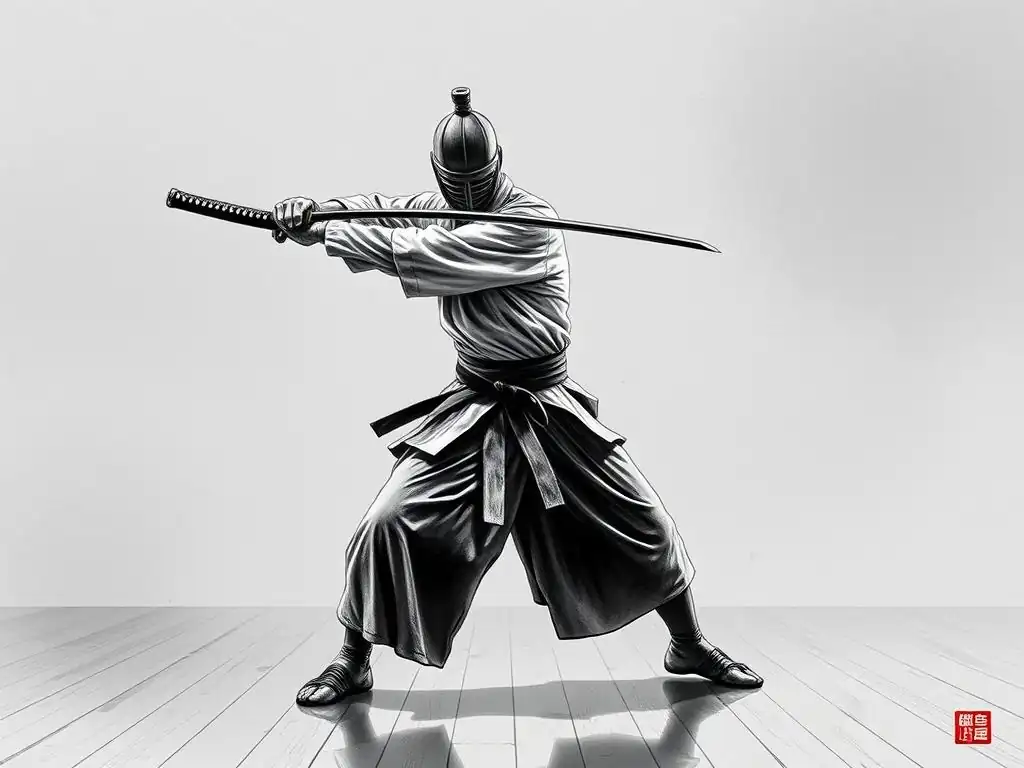
Several common pitfalls can prevent kendo practitioners from achieving KiKenTaiIcchi and executing powerful Kendo strikes. Recognizing these mistakes is the first step toward correcting them and improving one's practice. Often, these errors are interconnected; for example, poor footwork can make proper sword technique difficult, and a lack of mental focus can undermine both. Addressing these issues requires diligent self-awareness and consistent feedback from instructors.
Common mistakes often stem from prioritizing one element of KiKenTaiIcchi over the others or failing to synchronize them. A beginner might focus too much on just swinging the sword (Ken) without coordinating their body (Tai) or committing their spirit (Ki). Conversely, someone might have strong intent but lack the physical technique to channel it effectively. Identifying which element is weakest or where the synchronization breaks down is key to targeted improvement and developing unified Kendo strikes.
Lack of Mental Focus and Concentration
A prevalent mistake is the lack of adequate mental focus and concentration before and during a strike. If the mind is distracted, hesitant, or not fully committed, the Ki element of KiKenTaiIcchi is absent or weak. This results in tentative Kendo strikes that lack power and conviction. The practitioner might go through the physical motions correctly, but the strike feels empty because the intent is not there. This can manifest as delayed reactions, inability to seize openings, or striking without a clear target or purpose.
Overcoming this requires mental training alongside physical practice. Techniques like mindful breathing before entering the dojo or focusing intensely on the opponent's eyes can help cultivate concentration. During drills, consciously setting the intention for each strike and maintaining that focus throughout the movement is crucial. Learning to quiet the internal dialogue and remain present is vital for ensuring that the spirit is fully engaged, providing the necessary drive for powerful Kendo strikes unified by KiKenTaiIcchi.
Improper Sword Technique and Grip
Incorrect sword handling, particularly a poor grip (Tenouchi), is a major obstacle to achieving effective Kendo strikes. Gripping the Shinai too tightly, especially with the right hand, stiffens the wrists and prevents the essential snapping action that generates speed and force. Using only arm strength to swing, rather than leveraging the body's momentum, also results in weak strikes. Incorrect angle of the blade (Hasuji) means that even if the target is hit, the strike may not be considered valid.
Correcting improper sword technique requires constant vigilance and feedback. Instructors frequently check students' grips and swing mechanics. Drills focusing specifically on Tenouchi, such as executing the final snap repeatedly, are helpful. Practicing Suburi with attention to the angle and trajectory of the Shinai helps refine Hasuji. Building proper Ken technique is foundational; without it, even strong Ki and Tai cannot be effectively translated into powerful Kendo strikes.
Uncoordinated Body Movement and Footwork
Inefficient or uncoordinated body movement and footwork (Ashisabaki) severely hinder the execution of powerful Kendo strikes. Common mistakes include moving the body and sword separately, failing to use the legs and hips to generate power, or losing balance during or after the strike. Hesitant or incorrect footwork can prevent the practitioner from closing distance effectively or delivering the strike with sufficient momentum. For instance, lifting the feet too high during Suriashi or failing to coordinate the front and back foot in Okuriashi disrupts the flow and power generation.
Improving body coordination involves dedicated practice of Ashisabaki drills, focusing on smooth, efficient movement while maintaining a stable upper body. Practicing striking while emphasizing the drive from the legs and hips helps integrate body power into the strike. Awareness of one's balance throughout the movement, from the initial stance to the follow-through, is also crucial. By ensuring the body moves as a unified unit, practitioners can channel their physical energy effectively, supporting the sword technique and spirit to achieve powerful Kendo strikes with KiKenTaiIcchi.
Benefits of Mastering KiKenTaiIcchi in Kendo
Mastering the principle of KiKenTaiIcchi offers profound benefits for a kendo practitioner, extending far beyond merely improving physical technique. It is the key to unlocking the full potential of one's Kendo, leading to more effective strikes, enhanced mental capabilities, and overall growth in skill and understanding. The pursuit of this unity shapes the practitioner both inside and outside the dojo.
The benefits accrue gradually through dedicated practice focused on integrating spirit, sword, and body. As a practitioner improves their ability to synchronize these elements, their Kendo becomes more fluid, powerful, and purposeful. This mastery translates into tangible improvements in sparring (Jigeiko) and competitive matches (Shiai), as well as a deeper appreciation for the philosophical underpinnings of Kendo.
Increased Striking Power and Accuracy
Perhaps the most immediate and tangible benefit of achieving KiKenTaiIcchi is a significant increase in the power and accuracy of Kendo strikes. When spirit, sword, and body are perfectly synchronized, the entire force generated by the practitioner's focused intent and coordinated physical movement is channeled efficiently through the Shinai to the target. This results in strikes that are not only faster but also feel "heavier" and more decisive upon impact.
Accuracy also improves because the unified action is more controlled and deliberate. With clear intent (Ki), proper technique (Ken), and stable movement (Tai), the practitioner is better able to direct the Shinai precisely to the intended target area. This combination of increased power and accuracy makes strikes more effective in practice and more likely to be judged valid in competition, demonstrating the direct impact of unifying spirit, sword, and body for powerful Kendo strikes.
Improved Mental Fortitude and Focus
The pursuit of KiKenTaiIcchi inherently strengthens the practitioner's mental fortitude and focus. Cultivating Ki requires discipline, perseverance, and the ability to maintain concentration under duress. Learning to synchronize mind, body, and sword demands intense present-moment awareness and the ability to block out distractions. This mental training translates into greater resilience, improved reaction time, and the capacity to maintain composure in challenging situations within Kendo and in daily life.
As practitioners become better at unifying their spirit with their actions, they develop stronger self-confidence and a more determined mindset. The mental discipline honed in the dojo, focusing on intent and synchronization for every Kendo strike, builds a powerful internal focus that enhances overall cognitive function and emotional regulation. This mental growth is a significant, albeit less visible, benefit of striving for KiKenTaiIcchi.
Enhanced Overall Kendo Performance and Skill
Mastering KiKenTaiIcchi elevates a practitioner's overall Kendo performance and skill level significantly. It is the hallmark of advanced practitioners. Strikes become more effective, movements are more fluid and purposeful, and the practitioner's presence (Ki) becomes more palpable. The ability to consistently execute powerful Kendo strikes with unity allows for more successful attacks and counter-attacks.
Beyond individual techniques, KiKenTaiIcchi fosters a deeper understanding of the dynamic interplay between offense and defense, timing, and distance. It enables a practitioner to move and strike instinctively, reacting to the opponent with unified action rather than disjointed movements. This holistic improvement in skill makes the practitioner a more formidable opponent and leads to greater success and satisfaction in their Kendo journey.
KiKenTaiIcchi and its Role in Competitive Kendo (Shiai)
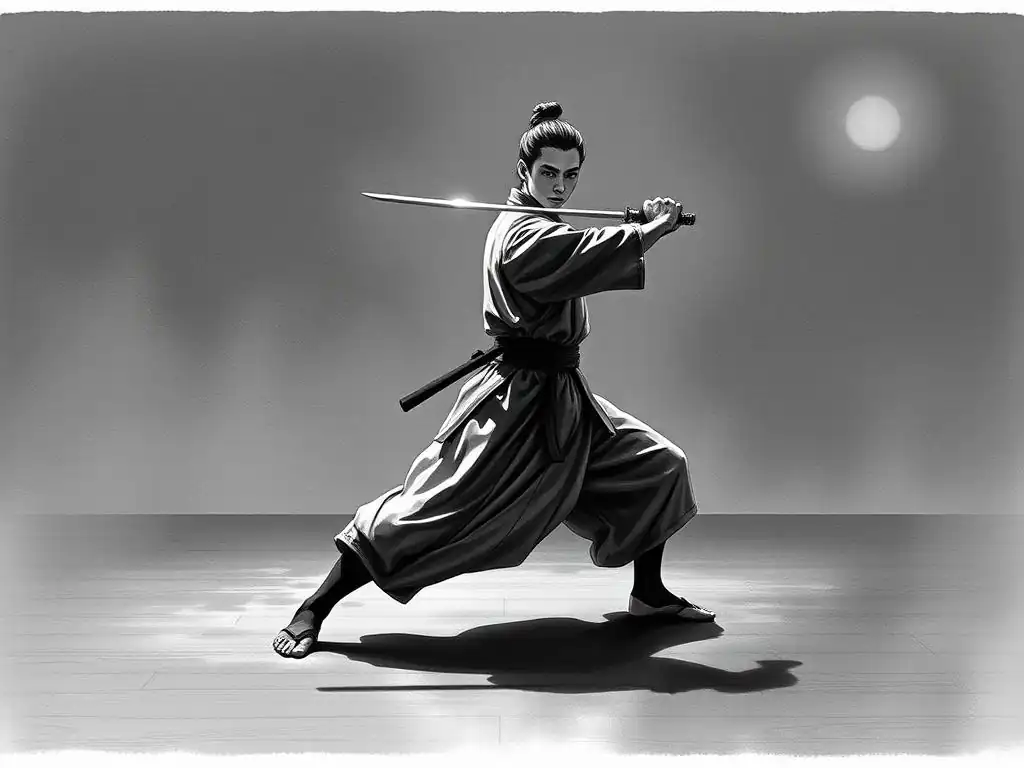
In the context of competitive Kendo (Shiai), KiKenTaiIcchi is not just a philosophical concept; it is a fundamental requirement for a strike to be awarded a point (Ippon). A strike must demonstrate Yuko-Datotsu (valid strike), which explicitly includes the presence of KiKenTaiIcchi. Judges look for the simultaneous culmination of a strong Kiai, correct target and technique, and decisive body movement followed by Zanshin. A strike that lacks any of these elements, even if it lands on the target, will typically not be counted.
Therefore, training for Shiai heavily emphasizes achieving KiKenTaiIcchi consistently under pressure. Practitioners must be able to generate this unified action quickly, effectively, and repeatedly against a resisting opponent. The pressure of competition often makes it difficult to maintain focus and coordination, highlighting the importance of rigorous training to make KiKenTaiIcchi an ingrained response rather than a conscious effort.
Applying KiKenTaiIcchi in Tournament Settings
Applying KiKenTaiIcchi in tournament settings requires the practitioner to execute their techniques with the same focus and unity as in practice, but under the added stress and intensity of competition. The speed and unpredictability of a Shiai match demand that the synchronization of spirit, sword, and body be instantaneous and automatic. This means that the rigorous training drills aimed at achieving unity must be performed with enough repetition and intensity that the coordinated action becomes second nature.
During a match, a practitioner must maintain a strong Ki from the moment they enter the arena. Their Kamae and initial movements should exude presence and intent. When an opening appears, the attack must be launched with explosive, unified action – the Kiai, the forward drive of the body, and the cut must arrive together, culminating in a powerful Kendo strike. Maintaining Zanshin immediately after the strike is equally crucial, demonstrating control and readiness, confirming the validity of the action in the eyes of the judges.
Using KiKenTaiIcchi to Gain a Competitive Edge
Mastering KiKenTaiIcchi provides a significant competitive edge in Shiai. A practitioner who can consistently deliver strikes with true unity is more likely to score valid points. Their strikes will be more powerful, harder to block or evade, and more likely to meet the criteria for Yuko-Datotsu. Furthermore, the strong Ki projected through their Kiai and movements can intimidate or unsettle an opponent, influencing the flow of the match.
An opponent facing someone who embodies KiKenTaiIcchi will feel the pressure, potentially becoming hesitant or making mistakes. The decisive nature of unified Kendo strikes makes them difficult to counter effectively. By making KiKenTaiIcchi the standard for every action, a kendo practitioner maximizes their offensive potential and minimizes vulnerabilities, making this principle the ultimate tool for success in competitive Kendo.
As a kendo practitioner progresses, their understanding and application of KiKenTaiIcchi deepen. It evolves from a focus on simply synchronizing physical actions and vocalization to a more profound integration of mind, body, and spirit that influences every aspect of their Kendo. Advanced practitioners embody KiKenTaiIcchi not just in isolated strikes but throughout their entire engagement with an opponent.
This deeper understanding connects KiKenTaiIcchi to other advanced concepts in Kendo philosophy and practice, such as Zanshin and the pursuit of Kendo as a path to personal development or enlightenment. It highlights that KiKenTaiIcchi is not merely a technique for powerful Kendo strikes but a principle that permeates the very essence of the art.
The Connection Between KiKenTaiIcchi and Zanshin
The connection between KiKenTaiIcchi and Zanshin is profound and reciprocal. As discussed earlier, Zanshin is a required element of a valid strike and a reflection of the practitioner's state of mind and body after the strike. Achieving true KiKenTaiIcchi during the strike makes maintaining Zanshin much more likely and natural. When the strike is executed with complete focus and commitment, the practitioner is fully present and controlled, allowing them to immediately transition into a state of readiness.
Conversely, cultivating strong Zanshin reinforces the importance of KiKenTaiIcchi. Knowing that the strike must be followed by continued awareness encourages the practitioner to execute the strike with full control and commitment, avoiding reckless or off-balance actions. Thus, Zanshin is not just a consequence of KiKenTaiIcchi but also a discipline that helps enforce the principle of unity during the strike itself, ensuring that Kendo strikes are not just powerful but also controlled and complete.
KiKenTaiIcchi as a Path to Kendo Enlightenment
For many dedicated practitioners, the pursuit of KiKenTaiIcchi transcends its function as a technical requirement for effective Kendo strikes and becomes a path towards personal growth and understanding, sometimes referred to as Kendo enlightenment or mastery. The discipline required to unify spirit, sword, and body cultivates self-awareness, mental control, and a deeper connection between one's inner state and outer actions.
The continuous effort to refine KiKenTaiIcchi teaches patience, perseverance, and humility. It reveals the intricate relationship between mind and body and the power of focused intent. Through this lifelong practice, Kendo becomes a form of moving meditation, a way to cultivate inner peace and outer effectiveness. The mastery of powerful Kendo strikes, born from the unity of spirit, sword, and body, becomes a metaphor for integrating one's entire being, leading towards a more harmonious and purposeful existence both within and beyond the dojo.
Frequently Asked Questions
What does KiKenTaiIcchi mean in Kendo?
KiKenTaiIcchi is a core concept in Kendo, meaning the union of spirit, sword, and body. It describes the ideal state where all three elements are perfectly synchronized in a strike to achieve maximum effectiveness.
How does Ki (spirit) contribute to a powerful Kendo strike?
Ki represents the mental focus, intention, and energy behind the strike. A strong Ki allows for decisive action and prevents hesitation, leading to a more powerful and effective blow.
What role does the Ken (sword) play in KiKenTaiIcchi?
The Ken refers to the proper handling and control of the shinai (bamboo sword). A skilled swordsman understands the blade's weight, balance, and how to generate power through precise movements.
How is Tai (body) important for achieving KiKenTaiIcchi?
Tai represents the body's posture, footwork, and overall physical coordination. Proper body mechanics are crucial for generating power, maintaining balance, and executing strikes with precision.
Why is KiKenTaiIcchi considered so important in Kendo training?
Mastering KiKenTaiIcchi is essential because it optimizes striking power and efficiency. It ensures that all aspects of the technique work together to create a unified and devastating blow, embodying the true spirit of Kendo.
Final Reflection: The Harmonious Strike
The journey through KiKenTaiIcchi reveals that true power in Kendo lies not just in physical technique, but in the complete unification of spirit, sword, and body. In a world often fragmented and disconnected, the principles of this ancient practice offer a potent reminder of the strength found in holistic integration, a concept increasingly relevant as we seek balance and purpose in our own lives.
The profound influence of KiKenTaiIcchi extends beyond the dojo, shaping our understanding of focus, discipline, and the pursuit of excellence. Its emphasis on mental clarity and physical coordination resonates deeply, reminding us that true mastery requires a harmonious blend of inner strength and outward action. The ultimate aim of martial arts is not for use in competition, but for cultivation of the self.
- Jigoro Kano, Founder of Judo. This quote encapsulates the essence of KiKenTaiIcchi, highlighting its potential for personal growth and self-discovery.
Now, consider how you can apply the principles of KiKenTaiIcchi to your own endeavors. Whether you're facing a challenging project, striving for a personal goal, or simply seeking greater inner peace, remember the power of unity. Strive to align your intentions, actions, and spirit, and you will discover a strength and resilience you never knew you possessed. Embrace the harmonious strike, not just in Kendo, but in every aspect of your life.
Ignite Your Kendo: Embrace the Unity!
Thank you for exploring the depths of KiKenTaiIcchi with us. We hope you’ve found valuable insights to elevate your Kendo practice. Now, it’s time to put that knowledge into action!
Here are a few ways to deepen your understanding and harness the true power of unity:
- Prioritize Focused Training: Deliberately work on synchronizing your spirit, sword, and body in every strike during your next practice session. Record your session and review your motion.
- Challenge yourself to explain the concept of KiKenTaiIcchi to a fellow Kendo practitioner or someone unfamiliar with martial arts. This will solidify your understanding and spark insightful discussions.
- Research historical interpretations of KiKenTaiIcchi from various Kendo schools and masters. Discover how different lineages approach this fundamental principle.
What specific drill or technique will you use to actively cultivate KiKenTaiIcchi in your next training session?