
The Importance of Bowing (Rei) and Etiquette Within Judo Competition Rules

Welcome to Martial Arts Mastery, your ultimate resource for exploring the diverse world of combat disciplines! Delve into the rich history, rigorous training, and profound philosophies that define martial arts. Ever wondered why a simple bow holds such significance in a high-stakes match? Uncover the hidden meaning and crucial role of Judo competition bowing etiquette within the rules of the sport, and discover how this tradition reflects the deeper values of respect and discipline. Prepare to be enlightened – the journey to martial arts mastery begins here.
- Understanding Judo Competition Etiquette: The Significance of Rei
- Judo Competition Rules and the Formal Bow
- Proper Execution of the Judo Bow
- Why is Judo Competition Bowing Etiquette So Important?
- Penalties for Improper Bowing or Etiquette Violations in Judo
- Beyond the Mat: The Application of Judo Bowing Etiquette in Daily Life
- Judo Competition Bowing Etiquette: A Summary
-
Frequently Asked Questions
- What is the significance of bowing (Rei) in Judo competition?
- When are Judoka required to bow during a Judo match?
- Why is proper etiquette, including bowing, emphasized in Judo competition rules?
- What are the potential consequences of failing to properly bow or demonstrate appropriate etiquette in Judo competition?
- Does the style of bowing (e.g., angle, depth) vary between different Judo schools or regions?
- Final Reflection: Respect in Motion
- Embrace the Way of Respect: Take Your First Bow!
Understanding Judo Competition Etiquette: The Significance of Rei
What is Rei in Judo? A Deep Dive into Bowing Etiquette
Rei, often translated simply as "bow," is a fundamental act of respect and politeness ingrained deeply within the practice and philosophy of Judo. It is far more than a mere gesture; it is a ritualized expression of gratitude, humility, and readiness, central to judo competition bowing etiquette. This formal act acknowledges the presence and effort of others, including training partners, opponents, instructors, and even the training space itself (dojo). Its performance is precise, requiring specific posture and focus, distinguishing it from casual nods or greetings.
In the context of judo competition, Rei serves as a crucial bookend to the engagement. It marks the transition from ordinary interaction to the intensity of combat and back again. Competitors perform Rei upon entering and leaving the competition area ( shiai-jo), to the referee, and crucially, to their opponent before and after the match.
This consistent application of Rei reinforces the respectful framework within which the contest takes place, ensuring that even in the heat of competition, the underlying principles of mutual respect are upheld. Adherence to proper judo competition bowing etiquette is not optional but a core component of participation.
Judo's Philosophical Roots: How Rei Reflects Respect and Discipline
Judo, founded by Jigoro Kano in 1882, is built upon core philosophical principles such as Jita Kyoei (mutual welfare and benefit) and Seiryoku Zenyo (maximum efficiency with minimum effort). Rei is a direct manifestation of Jita Kyoei, symbolizing the recognition that progress in Judo is a collaborative effort, requiring partners and opponents to challenge and help each other grow. The act of bowing acknowledges this interdependence and expresses gratitude for the opportunity to learn and improve through interaction.
Furthermore, the precise execution of Rei embodies the principle of discipline ( Shu-Ha-Ri, the stages of learning: obey, detach, transcend). Mastering the correct form of bowing requires attention to detail, control, and focus – qualities essential for effective Judo technique and strategy. By performing Rei correctly and consistently, practitioners cultivate inner discipline, demonstrating their commitment not just to the physical techniques but also to the ethical and philosophical underpinnings of the art. This disciplined approach to judo competition bowing etiquette reflects a deeper respect for the art itself and everyone involved.
Judo Competition Rules and the Formal Bow
The Mandatory Bow Before and After a Judo Match: A Rule-Based Requirement
According to the standard rules governing judo competitions, such as those set by the International Judo Federation (IJF), the formal bow (Rei) is a mandatory procedural element at several points. Competitors must perform a standing bow ( Ritsurei) upon entering the contest area and again upon leaving it. More significantly, before stepping onto the match area proper, they must bow to each other simultaneously from the designated waiting lines. This is repeated immediately after the referee announces the result of the match, regardless of who won or lost.
Failing to perform these mandatory bows correctly or at the required times is considered a breach of judo competition bowing etiquette and can potentially lead to official warnings or penalties. For instance, a competitor who rushes off the mat without bowing to their opponent and the referee after a match might receive a caution or even a minor penalty ( Shido), depending on the severity and context. This strict adherence to the bowing protocol underscores its importance not merely as tradition but as a codified rule ensuring respectful conduct within the competitive environment.
Rei and Referee Signals: Interpreting Bowing Cues in Judo
The referee plays a central role in orchestrating the flow of a judo match, and bowing is often integrated with their commands and signals. When the referee calls competitors to the edge of the mat to begin, they typically gesture or call "Rei!" indicating that the standing bow to each other is required. Similarly, after the match is concluded and the referee has announced "Sore Made" (end of time) or "Matte" (stop) followed by the decision, they will again prompt the competitors to bow to each other.
Competitors are also expected to bow to the referee themselves, often upon entering and leaving the mat area or when directly addressing them for a specific reason (though direct addressing is less common in formal competition during the match). This act of bowing to the official acknowledges their authority and the impartiality of the rules they enforce. Understanding these cues and responding with the appropriate judo competition bowing etiquette is part of a competitor's readiness and professionalism on the mat.
Proper Execution of the Judo Bow
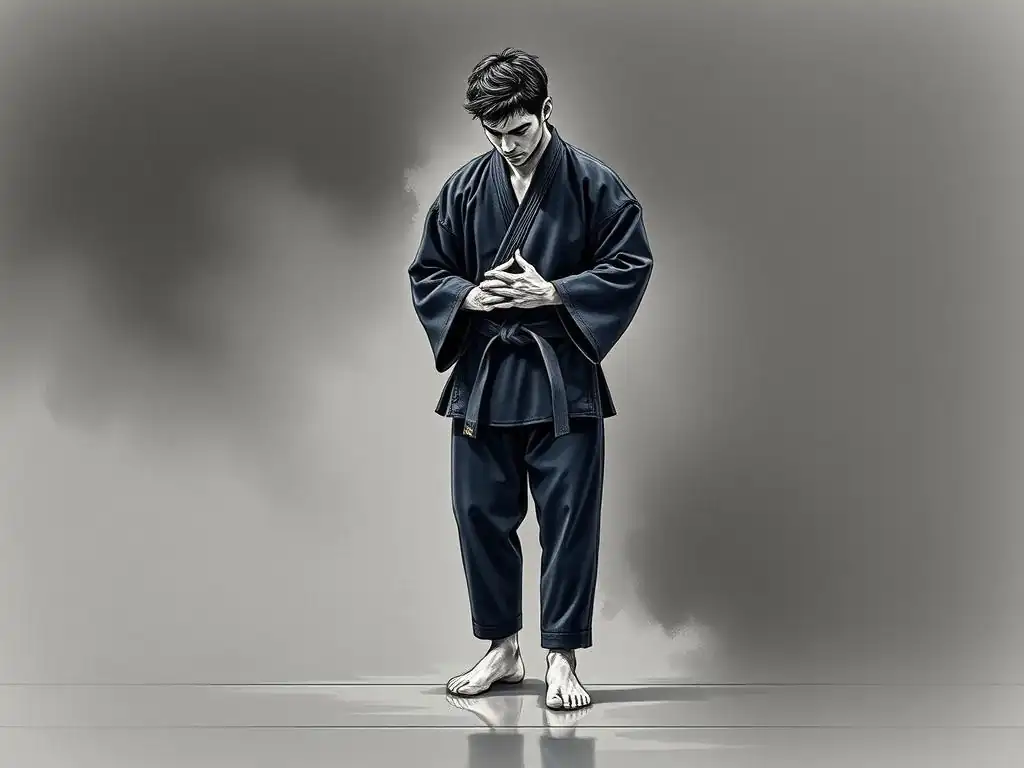
Ritsurei: The Standing Bow in Judo Competition
The standing bow, or Ritsurei, is the most frequently performed bow in judo competition. To execute a proper Ritsurei, the competitor stands with their feet together, heels touching or nearly touching, and hands resting naturally at their sides, fingers extended downwards. The back is kept straight, and the bow is performed by bending forward from the waist, typically at an angle of approximately 30 degrees. The eyes should ideally be directed downwards towards the feet or the floor in front of them, avoiding direct eye contact during the bow as a sign of humility and respect.
The duration of the bow is brief, perhaps 1-2 seconds, but it should be deliberate and controlled. Rushing the bow or performing it sloppily diminishes its meaning and can be seen as poor judo competition bowing etiquette. In competition settings, Ritsurei is used when entering and leaving the mat, bowing to the referee, and bowing to the opponent before and after the match. The precision in its execution reflects the practitioner's discipline and respect for the formal setting.
Zarei: The Kneeling Bow and its Historical Significance
The kneeling bow, or Zarei, is a more formal and historical form of Rei, though it is less common in the competitive arena today compared to Ritsurei. Zarei is typically performed from the seiza position (kneeling with the tops of the feet flat on the floor and sitting on the heels). From seiza, the practitioner places their hands flat on the floor in front of them, shoulder-width apart, forming a triangle with the thumbs and index fingers touching or close together.
The bow involves lowering the head and torso forward, bringing the forehead close to the floor between the hands. This deep bow signifies profound respect and humility. Historically, Zarei was common at the beginning and end of training sessions (randori or kata practice) and in formal ceremonies. While Ritsurei is the standard for judo competition bowing etiquette, understanding Zarei provides insight into the deeper cultural roots and the hierarchy of respect within traditional Japanese martial arts from which Judo evolved.
Why is Judo Competition Bowing Etiquette So Important?
Demonstrating Respect for Your Opponent: The Spirit of Judo
At its heart, Judo is not just about physical combat; it's about mutual improvement and respect. The act of bowing to your opponent before and after a match is a powerful demonstration of this principle, central to proper judo competition bowing etiquette. It signifies that you acknowledge their willingness to engage with you, to challenge you, and to help you learn, regardless of the outcome. It separates the intense physical struggle from the personal relationship built on mutual respect.
This bow serves as a reminder that the opponent is not an enemy but a partner in the pursuit of mastery. It diffuses potential animosity and ensures that the competition remains within the bounds of fair play and honorable conduct. Winning without respect for the opponent is seen as hollow in Judo, and the bow is the primary ritual reinforcing this crucial aspect of the sport's spirit.
Maintaining Discipline and Focus: How Rei Enhances Mental Preparation
Performing the required bows before and after a judo match contributes significantly to a competitor's mental state. The brief, formal act of Ritsurei serves as a moment of transition and centering. Before the match, it helps to clear the mind, focus energy, and prepare for the challenge ahead. It's a final act of acknowledging the formality of the event and the seriousness of the upcoming contest, reinforcing mental discipline.
After the match, the bow helps to process the result, whether victory or defeat, with grace and composure. It prevents excessive celebration or outward frustration, encouraging reflection on the performance rather than dwelling solely on the outcome. This consistent application of judo competition bowing etiquette fosters mental resilience and emotional control, essential attributes for high-level performance and personal growth in Judo.
Upholding Judo Traditions: Preserving the Cultural Significance of Bowing
Adhering to judo competition bowing etiquette is also an act of preserving the rich traditions and cultural heritage of Judo. Developed from ancient Japanese martial arts, Judo carries forward many of their rituals and customs. The bow is one of the most visible links to this history, connecting contemporary practitioners to the generations of judoka who came before them.
By performing Rei correctly and respectfully, competitors honor Jigoro Kano's vision and the evolution of Judo as a discipline that cultivates not just physical skill but also moral character. It reinforces the sense of community and shared identity among judoka worldwide, united by common principles and practices. Maintaining these traditions ensures that Judo remains more than just a sport; it remains a do (way) – a path of continuous self-improvement.
Penalties for Improper Bowing or Etiquette Violations in Judo
Shido and Hansoku-Make: Consequences of Disrespectful Conduct
Violations of judo competition bowing etiquette or general disrespectful behavior on the mat can result in penalties according to IJF rules. The most common penalty is a Shido, which is a caution or warning. Multiple Shido penalties can lead to the loss of the match. More severe or persistent acts of disrespect can escalate to a Hansoku-Make, which is disqualification from the match and potentially the tournament.
While a single, minor error in bowing might not immediately result in a Shido, a clear lack of respect, such as refusing to bow, turning one's back on the opponent or referee during the bow, or displaying overt contempt, is highly likely to incur a penalty. The referee has the discretion to assess the intent and severity of the etiquette violation. Upholding proper judo competition bowing etiquette is therefore not just a matter of tradition but a requirement for fair and legal competition.
Examples of Etiquette Violations in Judo Competitions
Examples of etiquette violations that might lead to penalties in judo competitions include:
- Failing to bow to the opponent before or after the match.
- Failing to bow to the referee when required.
- Turning away from the opponent or referee while bowing.
- Making disrespectful gestures or comments towards the opponent, referee, or coaches.
- Excessively celebrating a victory in a way that demeans the opponent.
- Arguing aggressively or disrespectfully with the referee's decision.
While referees are generally understanding of genuine mistakes or nervousness, deliberate or blatant disregard for judo competition bowing etiquette and general respectful conduct is taken seriously. A competitor who, for instance, immediately storms off the mat after a loss without acknowledging their opponent or the referee would likely face disciplinary action, underscoring the compulsory nature of these protocols.
Beyond the Mat: The Application of Judo Bowing Etiquette in Daily Life
Cultivating Respect and Humility: Lessons from Judo Rei
The discipline and philosophy embedded in judo competition bowing etiquette offer valuable lessons applicable far beyond the boundaries of the dojo or competition mat. The consistent practice of bowing cultivates a deep sense of respect for others – recognizing their inherent worth and the value of their interactions with us. This translates into daily life as improved interpersonal skills, greater empathy, and a more considerate approach to relationships.
Furthermore, the humility inherent in the bow encourages practitioners to let go of ego and arrogance. It teaches that everyone, regardless of status or achievement, is worthy of respect and that there is always more to learn. This humility fostered through judo competition bowing etiquette can lead to better collaboration, a willingness to listen to others, and a more grounded perspective on success and failure in all aspects of life.
Promoting Positive Sportsmanship: The Influence of Judo on Character Development
Judo's strong emphasis on etiquette, beginning with the formal bow, plays a significant role in character development and the promotion of positive sportsmanship. By requiring competitors to show respect for their opponents even in the heat of battle, Judo instills values that prioritize integrity and conduct over simply winning. This focus on the process and the manner of competition, rather than just the outcome, shapes individuals into honorable competitors.
The lessons learned through adhering to judo competition bowing etiquette — respect, discipline, humility, and grace in both victory and defeat — are transferable skills that contribute to becoming a responsible and positive member of society. Judo aims to develop individuals who are not only physically capable but also morally upright, and the ritual of Rei is a cornerstone of this holistic educational approach.
Judo Competition Bowing Etiquette: A Summary
Key Takeaways: Mastering the Art of Rei in Judo
Understanding and correctly executing judo competition bowing etiquette is fundamental to participating in the sport. It is a practice deeply rooted in Judo's philosophical principles of respect, discipline, and mutual welfare.
Key takeaways include:
- Rei (bowing) is a core ritual signifying respect, humility, and readiness in Judo.
- Proper judo competition bowing etiquette involves specific standing ( Ritsurei) and kneeling ( Zarei) forms.
- Bowing is mandatory before and after each match, upon entering/leaving the mat, and to the referee, as per official rules.
- Adhering to bowing etiquette demonstrates respect for opponents, officials, and the art itself.
- It aids in mental focus and discipline during competition.
- It helps uphold and preserve the rich traditions of Judo.
- Violations of judo competition bowing etiquette can result in penalties, including Shido or Hansoku-Make.
- The principles learned through bowing contribute to character development, promoting respect and humility in daily life.
Mastering judo competition bowing etiquette is not just about following rules; it's about embodying the spirit of Judo and showing respect for everyone involved in the journey of martial arts mastery.
Frequently Asked Questions
What is the significance of bowing (Rei) in Judo competition?
Bowing in Judo is much more than a simple gesture; it's a fundamental expression of respect, humility, and gratitude. It acknowledges your opponent and the art itself, embodying the core principles of Judo.
When are Judoka required to bow during a Judo match?
Judoka are required to bow before the start of the match (Ritsu-rei standing bow) and after the conclusion (Za-rei kneeling bow, depending on the dojo). This signifies the beginning and end of a respectful engagement.
Why is proper etiquette, including bowing, emphasized in Judo competition rules?
Emphasis on etiquette reinforces Judo's philosophy of mutual welfare and benefit. It ensures a safe and respectful environment for all participants, promoting good sportsmanship.
What are the potential consequences of failing to properly bow or demonstrate appropriate etiquette in Judo competition?
Failure to bow or adhere to etiquette may result in a warning or even disqualification, depending on the severity and the referee's judgment. It showcases a lack of respect for the art and your opponent.
Does the style of bowing (e.g., angle, depth) vary between different Judo schools or regions?
While the basic principle remains the same, the specific style of bowing can vary slightly between different Judo schools or regions. However, the intent of respect should always be clear.
Final Reflection: Respect in Motion
The principles explored throughout this article, focusing on Judo competition bowing etiquette, are not mere formalities confined to the mat. They represent a profound respect for tradition, opponents, and the very spirit of Judo, a respect that resonates far beyond the boundaries of the dojo and into our daily interactions. In a world often characterized by fleeting connections and diminished courtesy, the deliberate act of bowing serves as a potent reminder of the value of humility and mutual regard.
The enduring influence of rei and etiquette in Judo underscores the art's commitment to character development alongside physical prowess. It's a constant reminder that true strength lies not only in technique but also in the cultivation of inner discipline and respect. Judo is the way to the most effective use of both physical and spiritual strength. By training one to understand the principles of Judo, one can apply these principles to all aspects of life, thus developing oneself to the fullest extent.
- Jigoro Kano. This philosophy, deeply embedded in the practice of bowing, shapes not only the athlete but also the individual.
As you step off the mat, consider how the principles of respect and etiquette, so meticulously practiced in Judo, can enrich your own life. Embrace the power of a mindful bow, a gesture of humility and gratitude, in your interactions with others. Let the spirit of rei guide your actions, fostering a world where respect and understanding prevail, transforming every encounter into an opportunity for growth and connection.
Embrace the Way of Respect: Take Your First Bow!
Thank you for diving deep into the world of Judo etiquette and the profound importance of rei. Now that you understand the crucial role bowing plays in Judo competition and beyond, let's translate that knowledge into action.
- Begin incorporating a mindful bow (rei) into your daily life, whether it's acknowledging your training partners, showing respect to your sensei, or simply expressing gratitude.
- Explore the history of Judo etiquette and research other martial arts traditions to broaden your understanding of respect and discipline.
- Share this article with your dojo and ignite a discussion about the deeper meaning of rei and its impact on the Judo community.
What small act of respect will you incorporate into your routine today to honor the spirit of Judo?