
The Southpaw's Secret Weapon: Leveraging Stance for Unique Punching Angles


Welcome to Martial Arts Mastery, your ultimate resource for exploring the captivating world of martial arts! Ever wondered how a shift in perspective can unlock a whole new dimension of combat effectiveness? Dive into our featured article and discover the secrets behind the Southpaw punching stance technique, and how this unconventional approach can provide unique punching angles that can give you a decisive edge. Prepare to unravel the strategy, history, and application of this powerful style and get ready to elevate your understanding of martial arts combat.
- Understanding the Southpaw Advantage in Boxing
- Mastering the Southpaw Punching Technique
- Southpaw Punching Power: Maximizing Impact
- Southpaw Defense: Adapting to the Orthodox Onslaught
- Advanced Southpaw Tactics and Strategies
- Southpaw Training Drills for Enhanced Punching Angles
- Legendary Southpaw Boxers and Their Signature Punches
- Southpaw Stance: Common Mistakes and How to Avoid Them
- The Future of Southpaw Boxing: Adapting and Evolving
- Frequently Asked Questions
- Final Reflection: Embracing the Southpaw Advantage
- Unleash Your Southpaw Power!
Understanding the Southpaw Advantage in Boxing
What is a Southpaw Stance and Why Does it Matter?
A southpaw stance in boxing refers to a fighter who leads with their right hand and foot forward, positioning their left hand and foot back. This is the opposite of the conventional or orthodox stance, where the left hand and foot lead. Approximately 10-15% of the general population is left-handed, and while not all left-handed individuals adopt a southpaw stance in boxing, a significant percentage do. This unconventional positioning immediately presents challenges for orthodox fighters who are accustomed to facing opponents with the opposite lead.
The southpaw stance matters significantly because it disrupts the standard strategic and technical patterns of boxing. Orthodox fighters train primarily against other orthodox fighters, developing muscle memory and tactical approaches based on that common alignment. When facing a southpaw, their familiar lines of attack and defense are altered. The lead hands (southpaw's right, orthodox's left) are closer, and the rear hands (southpaw's left, orthodox's right) are further away, creating different potential collisions and openings. Mastering the southpaw punching stance technique is crucial for a fighter adopting this stance to maximize its inherent advantages.
The Element of Surprise: Southpaw's Unconventional Approach
The element of surprise is a cornerstone of the southpaw advantage. Orthodox fighters spend countless hours sparring and drilling against opponents who mirror their own stance. This repetition builds predictable reactions and expectations regarding angles, distance, and timing. When a southpaw steps into the ring, this established rhythm is immediately broken. The angles of attack are reversed; a southpaw's jab comes from the opposite side, and their powerful rear hand (the left cross) travels along an unfamiliar trajectory for the orthodox defense.
This unfamiliarity can lead to hesitation and defensive vulnerabilities in the orthodox opponent. For example, an orthodox fighter's muscle memory might instinctively parry or slip a jab in a way that is effective against a left jab but leaves them open to a right jab from a southpaw.
Furthermore, the positioning often results in the southpaw's lead foot being outside the orthodox fighter's lead foot, a positional advantage known as "getting outside the lead foot." This angle allows the southpaw to attack the orthodox fighter's center line more directly with their powerful rear hand, a key aspect of effective southpaw punching stance technique.
Southpaw vs. Orthodox: A Strategic Overview
The strategic dynamic between a southpaw and an orthodox fighter is unique. The primary strategic goal for the southpaw is often to maintain the outside lead foot position, creating opportunities for their powerful rear hand attacks and limiting the orthodox fighter's ability to land their rear hand. Conversely, the orthodox fighter typically aims to get their lead foot outside the southpaw's, or at least maintain an equal footing, to neutralize the southpaw's angles and land their own power shots. This footwork battle is fundamental to the southpaw vs. orthodox matchup.
Beyond foot positioning, the strategic overview involves exploiting the unfamiliarity. Southpaws often find success using their lead hand (right) not just as a jab, but also as a range finder, a check hook, or even a lead hook, capitalizing on the orthodox fighter's difficulty reading punches coming from that side. The southpaw's powerful rear hand (left) becomes a primary weapon, particularly the straight cross or hook, which can land with devastating effect when thrown from the advantageous outside angle. Developing a solid southpaw punching stance technique involves understanding these strategic principles and adapting them to the specific opponent.
Mastering the Southpaw Punching Technique
Southpaw Fundamentals: Footwork and Balance
Mastering the southpaw punching stance technique begins with fundamental footwork and balance specific to this stance. The foundation is the staggered stance itself, with the right foot and hand forward, and the left foot and hand back. Proper weight distribution is crucial, typically with slightly more weight on the back (left) foot to allow for explosive movement forward and powerful rear-hand shots, while maintaining enough weight on the lead (right) foot for pivoting and defense. The feet should be roughly shoulder-width apart, creating a stable base that allows for both mobility and power generation.
Footwork in the southpaw stance focuses on controlling distance and angles. Moving forward involves pushing off the back foot, while moving backward involves pushing off the lead foot. Lateral movement is key to gaining or maintaining the outside lead foot advantage. Pivoting on the lead foot is essential for creating angles for attacks or escaping danger. Maintaining balance during all movements and while throwing punches is paramount; a southpaw fighter who loses balance is vulnerable, regardless of their stance advantage. Consistent drilling of basic footwork patterns is vital for developing a strong southpaw base.
Generating Power from the Southpaw Stance
Generating power from the southpaw stance relies on the same fundamental principles as in the orthodox stance, but applied through the reversed alignment. The power primarily comes from weight transfer, hip rotation, and shoulder torque, coordinated with the extension of the punching arm. For the powerful rear left hand, the fighter pushes off the back (left) foot, rotates their left hip and shoulder into the punch, transferring weight from the back to the front foot. This kinetic chain, starting from the ground up, is what delivers maximum impact.
The southpaw stance, particularly when the lead foot is outside the opponent's, offers a unique angle for the rear left hand to travel directly towards the opponent's chin or body along their open side. This angle can amplify the power generated, as the opponent may not be positioned optimally to absorb or defend against a punch coming from this direction.
Training specifically on coordinating the body mechanics – the push from the back foot, the snap of the hips, and the rotation of the torso – is essential for a southpaw to fully harness the power potential of their stance and refine their southpaw punching stance technique.
Unique Punching Angles for Southpaws: Exploiting the Stance
The southpaw stance inherently creates unique punching angles that can confound orthodox opponents. The most significant is the angle created by the southpaw's rear left hand (cross or hook) when their lead right foot is outside the orthodox fighter's lead left foot. From this position, the southpaw can attack the orthodox fighter's center line and blind side more effectively. This angle makes it harder for the orthodox fighter to block with their lead arm or slip effectively to their left.
Another unique angle involves the southpaw's lead right hand. While often used as a jab, it can also be delivered as a lead hook or lead uppercut, coming from an angle that orthodox fighters are not used to defending against from a lead hand. For instance, a southpaw lead hook can wrap around the orthodox fighter's guard more easily than a standard orthodox lead hook against another orthodox fighter. Exploiting these unconventional angles requires precise footwork to establish position and sharp technique to land the punches cleanly, making the mastery of the southpaw punching stance technique critical.
Southpaw Punching Power: Maximizing Impact
The Southpaw Jab: A Powerful Lead Weapon
The southpaw jab, thrown with the lead right hand, is a deceptively powerful weapon. While it lacks the full rotational power of the rear hand, its effectiveness comes from its frequency, speed, and the angle from which it is delivered. Against an orthodox opponent, the southpaw jab often travels down the center line, potentially splitting the orthodox guard or landing before the orthodox fighter's left jab can connect due to the differing ranges created by the stance matchup.
To maximize the power of the southpaw jab, focus should be placed on a quick extension of the arm, snapping the punch out from the shoulder and rotating the fist slightly upon impact. A small push off the lead right foot can add momentum.
The southpaw jab can be used not just for scoring, but also for establishing distance, disrupting the opponent's rhythm, setting up power shots, and even acting as a defensive tool to keep the opponent at bay. A southpaw who develops a sharp, consistent jab possesses a significant advantage, utilizing a key element of effective southpaw punching stance technique.
Southpaw Cross: Delivering Devastating Rear-Hand Power
The southpaw cross, thrown with the powerful rear left hand, is arguably the most potent weapon in a southpaw's arsenal. This straight punch travels across the body, leveraging the full rotation of the hips and torso. When thrown correctly from the advantageous outside angle (southpaw's right foot outside orthodox's left), it can land flush on the orthodox fighter's chin with significant force, often resulting in knockdowns or knockouts.
Delivering a devastating southpaw cross requires coordinated body mechanics. The punch is initiated by pushing off the back left foot, simultaneously rotating the hips and shoulders counter-clockwise. The left hand extends straight towards the target, with the fist rotating as it lands. The lead right hand should remain up to guard the chin. The timing and trajectory of this punch are unfamiliar to orthodox fighters, making it difficult to defend against effectively. Developing this powerful rear-hand cross is central to a southpaw's offensive strategy and exemplifies advanced southpaw punching stance technique.
Southpaw Hook: Unleashing the Power Angle
The southpaw hook, typically thrown with the rear left hand, is a powerful close-range weapon that can capitalize on the unique angles of the stance. While the straight cross targets the front, the hook swings horizontally, aiming for the side of the head or body. From the southpaw stance, the left hook can be particularly effective when the fighter steps to the side (often to the left) to create an even sharper angle, or when fighting on the inside.
Unleashing the power of the southpaw hook involves rotating the body sharply and pivoting on the lead foot. The power comes from the torque generated by this rotation. The punch travels in an arc, with the elbow bent at approximately 90 degrees. A well-timed southpaw left hook can catch an orthodox fighter who is trying to step around the southpaw's lead side or is engaged in an exchange at close quarters. Mastery of the southpaw hook, combined with the cross and jab, provides a southpaw with a versatile and dangerous offensive repertoire, showcasing comprehensive southpaw punching stance technique.
Southpaw Defense: Adapting to the Orthodox Onslaught
Defensive Footwork for Southpaws
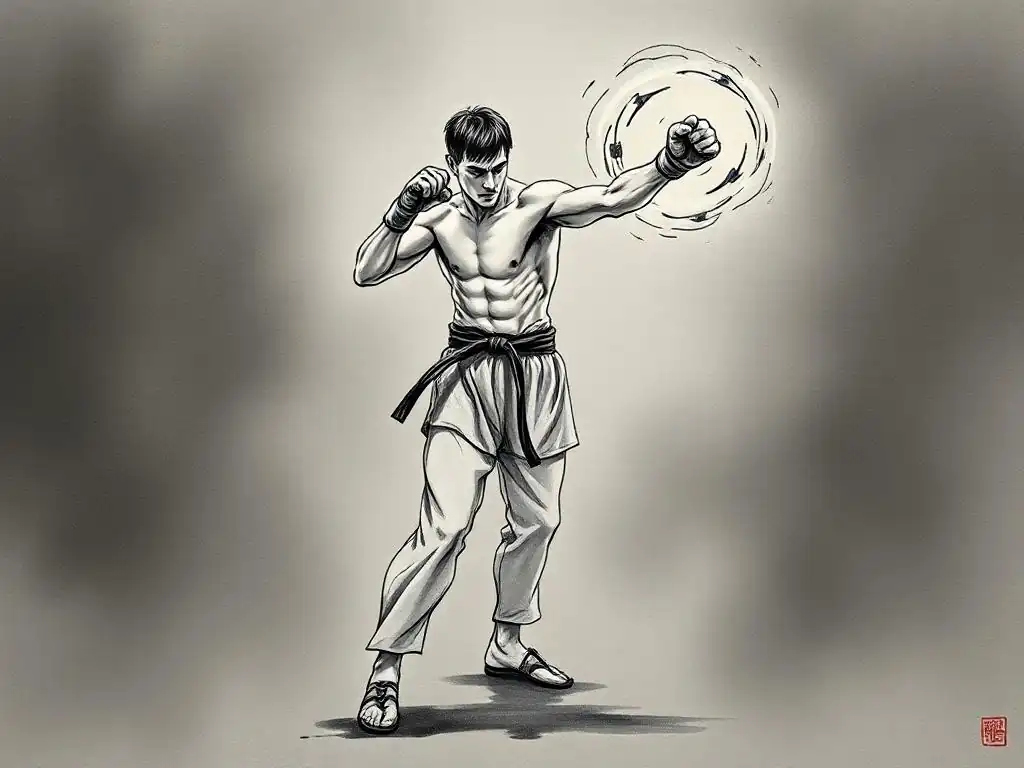
Defensive footwork is paramount for a southpaw, particularly when facing an orthodox opponent who is actively trying to neutralize the southpaw advantage. The primary defensive footwork goal is often to maintain the outside lead foot position, as losing this battle can put the southpaw at a disadvantage, susceptible to the orthodox fighter's power shots. Sidestepping and pivoting are crucial; stepping to the southpaw's left (away from the orthodox fighter's power hand) can create distance and angle off, while pivoting on the lead foot can help escape pressure or create counter opportunities.
Moving backward for defense requires pushing off the lead right foot while keeping the stance balanced and ready to counter. Moving forward defensively might involve stepping in quickly to smother an orthodox attack. A common defensive tactic is to use the lead right foot to step on or control the orthodox fighter's lead left foot, limiting their mobility and ability to get outside. Constant, fluid movement and maintaining a stable base are hallmarks of strong defensive footwork for a southpaw.
Blocking and Parrying Techniques against Orthodox Fighters
Blocking and parrying techniques for a southpaw against an orthodox fighter involve adapting standard defensive principles to the reversed angles of attack. The southpaw's lead right hand and arm are used to block or parry the orthodox fighter's left jab and left hook. The rear left hand and arm are positioned to block or parry the orthodox fighter's powerful right hand. Because the orthodox fighter's power hand (right) is further away, southpaws often rely heavily on head movement and footwork to evade it, but a solid block or parry is still necessary.
For instance, a southpaw might use their lead right glove to parry or catch the orthodox left jab coming down the center line. To defend against the orthodox right hand, the southpaw might bring their rear left arm up to block the incoming straight punch or hook. Slipping punches, especially the orthodox right hand by moving the head to the southpaw's left, is a highly effective defensive maneuver, utilizing the southpaw's orientation to evade the most dangerous incoming weapon. Effective blocking and parrying are critical components of a complete southpaw punching stance technique defense.
Counter-Punching Strategies for Southpaws
Counter-punching is a natural strength for many southpaws due to the unique angles they create. A primary counter-punching strategy involves slipping or parrying the orthodox fighter's jab and immediately countering with the southpaw's own lead right jab or a straight rear left cross. For example, after slipping the orthodox left jab by moving the head to the right, the southpaw is often in a prime position to land their powerful left hand straight down the middle.
Another effective counter involves timing the orthodox fighter's power right hand. By using footwork to step slightly to the side (often the southpaw's left) or slipping the punch by moving the head to the left, the southpaw can create an angle to counter with their own left hand, either a straight cross or a hook, as the orthodox fighter is recovering from their punch. This ability to evade and immediately retaliate with power from an unexpected angle is a key advantage stemming from skilled southpaw punching stance technique.
Advanced Southpaw Tactics and Strategies
Setting Traps and Controlling Distance as a Southpaw
Advanced southpaw tactics involve setting traps and expertly controlling distance to force the orthodox opponent into vulnerable positions. One common trap involves using the lead right hand to bait the orthodox fighter into reacting. A southpaw might flick out a light jab or feint with the right hand, anticipating the orthodox fighter's response (e.g., a parry or a counter jab) and being ready to counter with a powerful left hand. Another trap involves strategically giving ground to draw the orthodox fighter forward, then pivoting or stepping off at an angle to create an opening for a counter.
Controlling distance is vital. Southpaws often prefer fighting at a range where their lead right hand can touch the opponent (jab range) but where the orthodox fighter's powerful right hand is slightly out of range or its trajectory is disrupted by the southpaw's positioning. Using the lead leg to "check" or impede the orthodox fighter's movement is also a sophisticated method of distance control and maintaining the desired angle. Mastering these subtle movements and feints is crucial for elevating basic southpaw punching stance technique to an advanced level.
Developing a Southpaw Game Plan: Adapting to Different Opponents
Developing a robust southpaw game plan requires adaptability, as not all orthodox fighters react the same way to the southpaw stance. Some orthodox fighters struggle significantly with the angles and footwork, while others are well-versed in fighting southpaws and have specific strategies to neutralize their advantages. A southpaw must analyze their opponent's tendencies – how they react to the jab, their preferred range, whether they try to get inside or fight from the outside, and how they handle the southpaw's lead foot positioning.
Based on this analysis, the southpaw can tailor their approach. Against an orthodox fighter who struggles with the southpaw jab, the game plan might involve using it frequently to score and disrupt. Against an opponent who is good at getting inside, the southpaw might focus more on using movement, pivots, and lead hand control to maintain distance or create angles for short power shots. The ability to scout opponents and adjust the fundamental southpaw punching stance technique based on their style is a hallmark of an elite southpaw boxer.
Feinting and Deception in the Southpaw Stance
Feinting and deception are powerful tools in the southpaw's arsenal, amplified by the inherent unfamiliarity of their stance. A simple feint with the lead right hand can draw a reaction from the orthodox fighter, creating an opening for a real punch. Feinting with the rear left hand can make the orthodox fighter anticipate a power shot, potentially causing them to overreact defensively and open themselves up to a different attack, perhaps a lead hook or a body shot.
Body feints, head movement feints, and footwork feints are equally effective. A slight shift in weight or a subtle step can suggest an attack is coming, prompting a defensive response that the southpaw can then exploit. Because orthodox fighters are less accustomed to the visual cues and rhythms of a southpaw, their reactions to feints can sometimes be slower or more exaggerated, making them more susceptible to deception. Integrating feints seamlessly into the rhythm of movement and punching is a sophisticated aspect of southpaw punching stance technique.
Southpaw Training Drills for Enhanced Punching Angles
Shadow Boxing Drills for Southpaw Stance Improvement
Shadow boxing is a fundamental drill for refining the southpaw punching stance technique and exploring unique angles without the risk of impact. Southpaw fighters should dedicate significant time to shadow boxing, focusing specifically on maintaining proper stance and balance while moving. Drills should include practicing forward, backward, and lateral steps, as well as pivots, ensuring the lead foot stays outside the imaginary orthodox opponent's foot whenever possible.
Specific shadow boxing drills should focus on throwing punches from various angles. Practice throwing the southpaw jab while stepping to the side, simulating creating an angle. Work on throwing the rear left cross while pivoting slightly, mimicking the motion needed to maximize power from the outside lead foot position. Shadow boxing allows the southpaw to visualize the orthodox opponent and practice exploiting the unique angles repeatedly, building muscle memory for effective movement and punching.
Heavy Bag Workouts for Southpaw Power Development
Heavy bag workouts are essential for developing power in the southpaw punching stance technique. For a southpaw, this involves focusing on generating force through proper body mechanics – pushing off the back foot, rotating the hips and torso, and snapping the punches into the bag. Drills should emphasize throwing the powerful rear left cross and hook with full extension and rotation, simulating hitting a resilient target.
Specific heavy bag drills can include rounds focused solely on the rear left hand, throwing combinations that start with the jab and end with the cross, or practicing sequences that involve stepping off to the side to throw a powerful left hook or straight left hand from an angle. Working on body shots with the left hand is also crucial. The heavy bag provides resistance, allowing the southpaw to feel the power generated and refine their technique for maximum impact.
Pad Work Drills for Southpaw Accuracy and Speed
Pad work with a coach or partner is invaluable for developing accuracy, speed, and timing in the southpaw punching stance technique. Pad holders who are familiar with training southpaws can present pads in ways that simulate the openings found when fighting an orthodox opponent, encouraging the southpaw to throw punches from their advantageous angles.
Drills should include combinations that start with the lead right jab, setting up the rear left cross or hook. Practicing slipping incoming simulated orthodox punches and immediately countering with the southpaw's own shots is critical for developing reaction time and counter-punching skills. Pad work allows the southpaw to practice hitting moving targets and receiving feedback on their technique, ensuring accuracy and speed are honed alongside power and angle exploitation.
Legendary Southpaw Boxers and Their Signature Punches
Manny Pacquiao: The Southpaw Blitz and Power Combinations
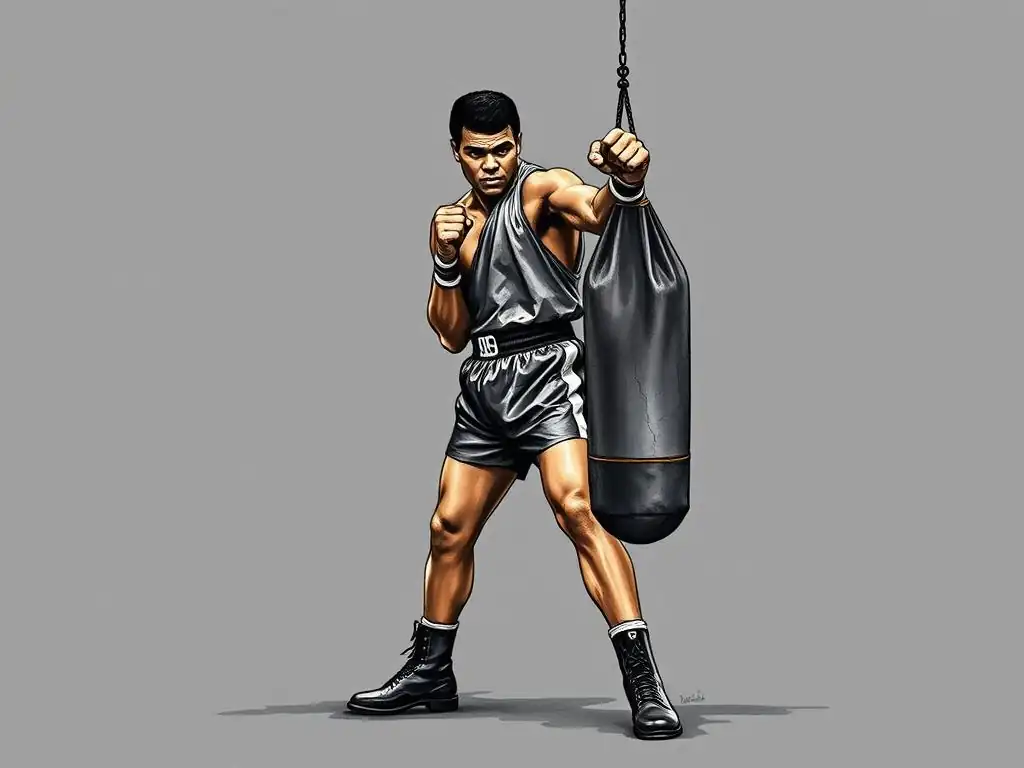
Manny Pacquiao, an eight-division world champion, is a prime example of a southpaw who leveraged his stance for devastating effect. His signature style, often referred to as the "Southpaw Blitz," involved overwhelming orthodox opponents with speed, volume, and power from unusual angles. Pacquiao excelled at using his lead right hand not just as a jab but also as a quick lead hook or straight right, catching opponents off guard.
His power combinations were legendary, often starting with the lead right and finishing with his thunderous rear left hand, frequently a straight cross or an uppercut delivered from an unexpected angle. Pacquiao demonstrated exceptional footwork, constantly moving and shifting angles to create openings and maintain his southpaw advantage. His ability to transition seamlessly between offense and defense while maintaining his southpaw punching stance technique made him incredibly difficult for orthodox fighters to handle.
Marvin Hagler: Relentless Pressure and Crushing Hooks
"Marvelous" Marvin Hagler, the undisputed middleweight champion of the 1980s, was another formidable southpaw who utilized his stance to apply relentless pressure and deliver crushing power. Hagler was known for his aggressive, forward-marching style, constantly cutting off the ring and forcing orthodox opponents into uncomfortable positions. While he could switch stances, his natural southpaw stance was where much of his power resided.
Hagler's crushing left hook was one of his most feared weapons. He often threw it with devastating effect from close to mid-range, capitalizing on the angle created by his southpaw stance. His ability to walk through opponents' punches and land his own heavy shots from the southpaw orientation made him a nightmare matchup. Hagler exemplified how a southpaw could use their stance not just for finesse but also for raw, overwhelming power and pressure, showcasing a different dimension of southpaw punching stance technique.
Lessons Learned from Southpaw Boxing Champions
Analyzing the careers of legendary southpaw champions like Pacquiao and Hagler reveals key lessons for aspiring southpaws. Both fighters demonstrated the immense potential of the southpaw stance when combined with exceptional skill and strategy. A primary lesson is the importance of mastering the unique angles and footwork battles specific to the southpaw vs. orthodox matchup. Pacquiao's speed and angle exploitation, and Hagler's relentless pressure and power, highlight different but equally effective ways to leverage the stance.
Another lesson is the development of a truly dangerous rear hand. Both champions possessed devastating left hands that orthodox opponents struggled to defend. Furthermore, their ability to adapt their southpaw punching stance technique to different opponents and situations underscores the need for versatility and a well-thought-out game plan. Studying their fights provides invaluable insight into maximizing the southpaw advantage.
Southpaw Stance: Common Mistakes and How to Avoid Them
Avoiding Telegraphing Punches as a Southpaw
One common mistake southpaws make is telegraphing their punches, particularly the powerful rear left hand. Because the rear hand travels a longer distance and requires significant body rotation, there's a tendency to show the punch beforehand with excessive shoulder movement, winding up, or dropping the hand. This gives the orthodox opponent time to react and defend.
To avoid telegraphing, a southpaw must focus on throwing punches with minimal unnecessary movement. The power should come from coordinated body mechanics initiated from the legs and hips, not from a large, visible wind-up of the upper body. Keeping the hands up and relaxed before punching, and initiating the movement from the core rather than the shoulder, helps disguise the punch. Practicing throwing punches smoothly and explosively during shadow boxing and pad work is crucial for minimizing telegraphing and refining southpaw punching stance technique.
Maintaining Balance and Footwork in the Southpaw Stance
Another frequent error is losing balance, especially when throwing powerful shots or moving quickly. The southpaw stance, like any stance, requires a stable base. Over-committing on punches, crossing the feet, or having feet too close together can all lead to a loss of balance, making the fighter vulnerable to counters.
Maintaining proper balance involves keeping the feet at a consistent, stable width and avoiding crossing them during movement. When throwing the rear left hand, ensure the weight transfer is controlled and the lead leg is stable to absorb the shift. Practicing footwork drills slowly and deliberately at first, then increasing speed while focusing on maintaining balance, is essential. Constant awareness of foot placement and weight distribution is key to effective southpaw punching stance technique and defense.
Overcoming Challenges of Fighting as a Southpaw
Fighting as a southpaw presents unique challenges that must be overcome. One is the relative scarcity of southpaw sparring partners, making it harder to simulate fights against other southpaws or practice specific southpaw vs. southpaw tactics. Another challenge is the difficulty many orthodox fighters have in adapting to the southpaw stance; while this is often an advantage, it can sometimes lead to awkward, unpredictable exchanges as the orthodox fighter struggles, which requires the southpaw to stay composed and stick to their plan.
Overcoming these challenges involves seeking out opportunities to spar with a variety of partners, including other southpaws if possible, and particularly orthodox fighters who are skilled at dealing with southpaws. It also requires patience and discipline in the ring, sticking to the developed game plan even when the opponent is struggling awkwardly. Understanding that the southpaw punching stance technique is a foundation, not a guaranteed win, and requires constant refinement and adaptation, is crucial for long-term success.
The Future of Southpaw Boxing: Adapting and Evolving
Southpaw Boxing: Trends and Innovations
Southpaw boxing continues to evolve, with trends focusing on increased versatility and tactical depth. Modern southpaws are often trained to be less reliant solely on the rear left hand and to develop a highly effective lead right hand, using it for multiple purposes beyond a simple jab – as a check hook, a lead uppercut, or even a straight right. There's also an increased emphasis on switching stances temporarily to confuse opponents or create new angles, though the natural southpaw stance remains the primary base.
Innovations in training methods and sports science also contribute to the evolution of southpaw boxing. Data analytics can help southpaws identify opponent tendencies and refine their specific southpaw punching stance technique to exploit weaknesses. Advanced strength and conditioning programs are tailored to the unique physical demands of the southpaw stance, maximizing power generation and endurance. The focus is on making the southpaw fighter not just an anomaly, but a strategically superior fighter capable of adapting to any opponent.
The Enduring Advantage of the Southpaw Stance
Despite orthodox fighters becoming more accustomed to facing southpaws through increased exposure and specialized training, the inherent advantage of the southpaw stance endures. The fundamental challenge of facing an opponent whose angles and rhythms are reversed remains a significant hurdle for most orthodox boxers. The southpaw's ability to attack the orthodox fighter's open side with their power hand from the outside angle is a persistent threat that is difficult to completely neutralize.
As long as the majority of boxers are orthodox, the southpaw will continue to possess a built-in element of surprise and tactical difficulty. The ongoing development of sophisticated southpaw punching stance technique, combining fundamental mechanics with advanced strategy and adaptability, ensures that the southpaw stance will remain a powerful and effective weapon in the sport of boxing.
Frequently Asked Questions
What is a Southpaw stance in martial arts?
A Southpaw stance is a left-handed stance, where the left foot and left hand are forward. This is the opposite of the orthodox stance, often giving Southpaws a unique advantage in combat.
Why is the Southpaw stance considered a "secret weapon"?
The Southpaw stance offers unconventional angles and movement patterns that many orthodox fighters are unfamiliar with. This element of surprise can disrupt their opponent's rhythm and defense.
What are some advantages of using the Southpaw punching stance technique?
Southpaws can leverage their stance for powerful lead hand punches and unique angles of attack. This can lead to improved accuracy and increased knockout potential, especially against orthodox opponents.
How does the Southpaw stance affect defensive techniques?
The Southpaw stance requires adjusted defensive strategies due to the mirrored positioning. Blocking and parrying techniques need to be adapted to counter the different angles of incoming attacks.
Is the Southpaw stance suitable for all martial arts disciplines?
While effective, the Southpaw stance may not be universally applicable. Its suitability depends on the specific rules and techniques of the martial art, as well as the individual fighter's style and preferences.
Final Reflection: Embracing the Southpaw Advantage
The exploration of the southpaw punching stance technique reveals more than just a fighting style; it unveils a strategic advantage built on asymmetry and unexpected angles. The power of the southpaw lies not just in its rarity, but in its ability to disrupt conventional expectations and create openings where orthodox fighters see only defense. This understanding is increasingly relevant in today's combat sports landscape, where innovation and adaptability are paramount for success.
The southpaw stance has undoubtedly influenced the evolution of boxing and MMA, forcing fighters to develop a more comprehensive understanding of angles and footwork. Personally, I've always been fascinated by the southpaw's ability to dictate the pace and control the narrative of a fight. The southpaw is a mirror image, a reflection of the orthodox fighter, and in that reflection lies both challenge and opportunity.
This quote encapsulates the essence of the southpaw's mystique and the strategic depth it brings to the sport.
Now, consider the implications of this knowledge. How can you apply the principles of asymmetry and unconventional thinking to your own life, whether in the ring or beyond? Embrace the unexpected, challenge the norm, and seek out the advantages hidden in your own unique perspective. The southpaw's secret weapon is not just a fighting technique; it's a mindset. Let it inspire you to find your own unique angle and leverage it to achieve your goals.
Unleash Your Southpaw Power!
Thanks for delving into the world of southpaw strategy! We hope you've gained a new appreciation for the unique advantages a left-handed stance offers. Now it's time to put that knowledge into action!
- Experiment with at least three new punching angles you've learned about today in your next sparring session.
- Explore different footwork patterns that naturally complement your southpaw stance and record your insights in a training journal.
- Share your favorite southpaw fighter and their signature move in the comments below.
What surprising angle did you discover today that you're excited to incorporate into your arsenal?