
Northern Praying Mantis: Why Its Trapping and Sweeps Are Unique


Welcome to Martial Arts Mastery, your gateway to unlocking the secrets of combat traditions worldwide. Delve into the fascinating world where discipline meets artistry, and explore the rich history, rigorous training, and profound philosophies that define martial arts. Ever wondered what makes the Northern Praying Mantis style so uniquely effective? Prepare to uncover the secrets behind its distinctive trapping sweeps and discover why they stand apart. Continue reading to understand the nuances of this captivating art and how its techniques can elevate your martial arts journey.
- Introduction to Northern Praying Mantis Kung Fu
- Fundamentals of Northern Praying Mantis Trapping
- The Art of Sweeping
- Synergistic Approach: Trapping Sweeps
- Unique Aspects Compared to Other Styles
- Practical Applications in Self-Defense
- Advanced Strategies
- Importance of Proper Training
- Mastering Trapping Sweeps
- Conclusion: Legacy of Trapping and Sweeps
-
Frequently Asked Questions
- What is unique about Northern Praying Mantis trapping sweeps compared to other martial arts?
- How does the Northern Praying Mantis style utilize "trapping" in its techniques?
- Why are sweeps considered an integral part of the Northern Praying Mantis system?
- What are some common targets for trapping sweeps in Northern Praying Mantis?
- How does the Northern Praying Mantis style's philosophy influence its trapping and sweeping techniques?
- Final Reflection: The Enduring Art of Trapping Sweeps
- Ignite Your Inner Mantis: Train Smarter, Not Harder!
Introduction to Northern Praying Mantis Kung Fu
Northern Praying Mantis (Tanglang Quan) is a highly effective Chinese martial art renowned for its speed, agility, and intricate hand techniques. Originating from Shandong province, this style is said to have been developed by Wang Lang during the late Ming Dynasty, who was inspired by the fighting prowess of a praying mantis and combined it with monkey footwork and techniques from eighteen other martial arts styles.
This unique synthesis resulted in a system characterized by rapid, continuous attacks and sophisticated close-range combat strategies. The style's movements often mimic the quick, precise actions of a mantis, emphasizing seizing, hooking, and striking with whip-like force.
The historical development of Northern Praying Mantis Kung Fu is rich and complex, branching into several lineages over centuries, such as Qi Xing (Seven Star), Mei Hua (Plum Blossom), and Liu He (Six Harmonies). Despite variations between branches, core principles remain consistent: the use of deception, rapid transitions between techniques, and a focus on overwhelming an opponent through swift, coordinated actions.
This martial art is not merely about physical techniques but also incorporates philosophical principles centered on adaptability and efficiency, mirroring the mantis's opportunistic yet decisive hunting approach. The emphasis is always on practical application in combat scenarios, making skills like Northern Praying Mantis trapping sweeps particularly valuable.
Defining Characteristics of the Style
Northern Praying Mantis is distinguished by several key characteristics that set it apart from many other Kung Fu styles. One of the most prominent is the use of the "Praying Mantis Hook" (Tanglang Gou), a versatile hand formation used for hooking, seizing, and striking vital points. This hand shape facilitates many of the style's renowned trapping techniques. The footwork, often attributed to monkey movements, is nimble and evasive, allowing practitioners to quickly close distance, shift angles, and evade attacks. This agile base is crucial for executing effective Northern Praying Mantis trapping sweeps.
Another defining trait is the principle of "continuous attack" (Lian Huan Bu Duan). Rather than single, powerful strikes, Northern Praying Mantis emphasizes rapid-fire combinations, overwhelming the opponent before they can recover or counter. This relentless pressure is applied through a blend of strikes, joint locks, throws, and, critically, trapping and sweeping maneuvers. The style also places significant importance on body mechanics, utilizing torque and coordinated whole-body movement to generate power and maintain balance during complex sequences. The integration of striking and grappling elements is seamless, making it a comprehensive fighting system.
Emphasis on Speed, Power, and Strategic Engagement
Speed is paramount in Northern Praying Mantis. The techniques are designed for rapid execution, often striking multiple times in the time it takes an opponent to execute a single technique. This is achieved through relaxed, whip-like movements and minimal telegraphing. The footwork allows for explosive bursts of speed and directional changes, enabling practitioners to quickly enter and exit combat range. This focus on speed is vital for the effectiveness of Northern Praying Mantis trapping sweeps, allowing practitioners to capitalize on momentary openings created by trapping.
While speed is emphasized, power is not sacrificed. Power generation in Northern Praying Mantis utilizes the principle of "short power" (Cun Jin), generating significant force over a very short distance, often through explosive hip rotation and coordinated body alignment. This allows devastating strikes and throws to be delivered even in close-quarters combat. Strategic engagement involves using deception, feints, and timing to create opportunities. Practitioners are taught to lure opponents into unfavorable positions or exploit their reactions, setting the stage for decisive techniques like the strategic application of Northern Praying Mantis trapping sweeps to disrupt balance and control.
Fundamentals of Northern Praying Mantis Trapping
Trapping is a core component of Northern Praying Mantis Kung Fu, providing a crucial bridge between striking and grappling. It involves controlling the opponent's limbs, typically their arms, to prevent them from striking, blocking, or defending effectively. This creates openings for subsequent attacks or transitions to other techniques. In Northern Praying Mantis, trapping is not a static hold but a dynamic process, often involving swift, fluid movements to seize, deflect, or entangle the opponent's limbs while simultaneously positioning for an attack. The distinctive hand shapes, particularly the mantis hook, are perfectly suited for this purpose.
The execution of Northern Praying Mantis trapping techniques relies heavily on sensitivity and timing. Practitioners develop a keen sense of touch (Ting Jing - listening energy) to feel the opponent's force and direction, allowing for instantaneous reactions. Trapping sequences are often initiated from a block or parry, quickly transitioning into control. For example, deflecting an incoming punch might immediately lead to seizing the opponent's wrist or forearm, pinning it, and striking with the other hand. This dynamic, responsive trapping system is essential for setting up the devastating Northern Praying Mantis trapping sweeps.
Trapping in Kung Fu Defined
Trapping in Kung Fu, including Northern Praying Mantis, refers to the art of controlling an opponent's limbs, primarily their arms, to nullify their offensive or defensive capabilities. It is distinct from grappling holds in that it is often momentary, designed to create an immediate opening for a strike, throw, or joint lock rather than establishing a prolonged control position. Trapping involves techniques like seizing, pressing, deflecting, and pinning limbs against the opponent's body or your own.
This control is typically achieved through sensitive hand and arm movements that intercept or follow the opponent's actions. The goal is to disrupt their structure and balance while maintaining your own, allowing you to deliver a follow-up technique unimpeded. Effective trapping requires precise timing, sensitivity to the opponent's movement and intention, and the ability to transition seamlessly between trapping and other techniques. It is a vital skill in close-range combat, where space is limited and rapid exchanges are common, making Northern Praying Mantis trapping sweeps particularly effective in confined spaces.
Role of Trapping in Combat
In combat, trapping serves multiple critical roles. Firstly, it neutralizes the opponent's primary weapons – their hands and arms – preventing them from striking or blocking. This creates a window of opportunity for the practitioner to attack. Secondly, trapping can disrupt the opponent's structure and balance, making them vulnerable to strikes, throws, or sweeps. By controlling a limb, you can often manipulate their entire body alignment.
Furthermore, trapping allows for close-range control and manipulation. Many Northern Praying Mantis techniques are designed for fighting in tight quarters, and trapping is essential for managing the engagement distance and preventing the opponent from creating space. It facilitates transitions from striking to grappling ranges and vice versa. A successful trap can instantly shift the momentum of an exchange, turning a defensive maneuver into an offensive opportunity, often leading directly into decisive Northern Praying Mantis trapping sweeps that take the opponent off their feet.
Principles of Effective Trapping
Effective trapping in Northern Praying Mantis adheres to several core principles. Sensitivity is crucial; practitioners must develop the ability to "listen" to the opponent's energy and intentions through physical contact. This allows for immediate, appropriate responses to their movements. Speed and timing are also paramount; traps must be executed quickly and at the precise moment of opportunity, often during the opponent's transition or commitment to a technique.
Control and structure are equally important. While trapping is dynamic, the practitioner must maintain their own stable structure and balance while disrupting the opponent's. This involves using body mechanics and leverage rather than relying solely on muscular strength. Finally, trapping is almost always combined with follow-up attacks. A trap is rarely an end in itself but a means to an end – typically a strike, throw, or sweep. The seamless integration of trapping with other techniques, such as setting up Northern Praying Mantis trapping sweeps, is what makes the style so formidable.
The Art of Sweeping
Sweeping techniques in martial arts are designed to disrupt an opponent's balance by targeting their legs or feet, forcing them to the ground. They are highly effective for controlling distance, creating openings, and finishing an engagement. In Northern Praying Mantis, sweeps are integral to the close-quarters fighting strategy, often used in conjunction with hand techniques to simultaneously attack the upper and lower body. The style's agile footwork and emphasis on maintaining low stances provide a strong base for executing powerful sweeps.
Northern Praying Mantis sweeps are characterized by their suddenness and precision. They are not brute-force techniques but rely on leverage, timing, and exploiting the opponent's off-balance moments. Common targets include the ankle, shin, knee, or hip, depending on the specific sweep variation. The goal is to remove the opponent's base of support, causing them to fall or stumble, rendering them vulnerable. The integration of sweeps with trapping techniques, leading to Northern Praying Mantis trapping sweeps, is a hallmark of the style's unique approach to combat.
Sweeps Defined and Purpose
A sweep is a martial arts technique used to take an opponent off their feet by targeting their legs or feet. This is typically achieved by striking, hooking, or pushing the opponent's leg, or by using your own leg or foot to disrupt their base. The primary purpose of a sweep is to unbalance and fell the opponent, thereby ending the confrontation or creating a superior position for follow-up techniques.
Sweeps are particularly effective in close-range combat where striking options might be limited, or against opponents who are heavily committed to a technique. They exploit the opponent's weight distribution and momentum. Successful sweeps require good balance from the attacker, precise timing, and an understanding of body mechanics to generate leverage. In Northern Praying Mantis, sweeps are often low and fast, utilizing the style's characteristic nimble footwork to position the body correctly for execution.
Integration of Sweeps
In Northern Praying Mantis, sweeps are rarely standalone techniques. They are seamlessly integrated into combinations with hand strikes, traps, and other maneuvers. A common strategy is to attack the upper body with strikes or traps, forcing the opponent to defend upwards, which often shifts their weight and makes their legs vulnerable to a sweep. Conversely, a low attack or feint might draw the opponent's attention downwards, creating an opening for an upper-body strike or trap.
The integration is dynamic and fluid. For example, after trapping an opponent's arm, a practitioner might simultaneously execute a sweep with their leg. This simultaneous attack on multiple levels is highly disruptive and difficult for the opponent to defend against. The synergy between hand techniques and foot sweeps is a defining feature of Northern Praying Mantis combat, culminating in the sophisticated execution of Northern Praying Mantis trapping sweeps.
Balance and Timing in Sweeping
Executing effective sweeps requires exceptional balance and precise timing. The practitioner must maintain their own stable base while disrupting the opponent's. Northern Praying Mantis training emphasizes low stances and strong leg conditioning to provide this stability. The footwork allows for rapid adjustments to maintain balance during the sweep and prepare for follow-up actions.
Timing is critical. Sweeps are most effective when the opponent is shifting weight, off-balance, or committed to another technique. Attacking the leg at the moment the opponent is transferring weight onto it, or when their balance is compromised by an upper-body attack or trap, significantly increases the sweep's likelihood of success. Developing this timing requires extensive training in sensitivity and reaction drills. The combination of solid balance and impeccable timing is what makes Northern Praying Mantis trapping sweeps so devastatingly effective.
Synergistic Approach: Trapping Sweeps
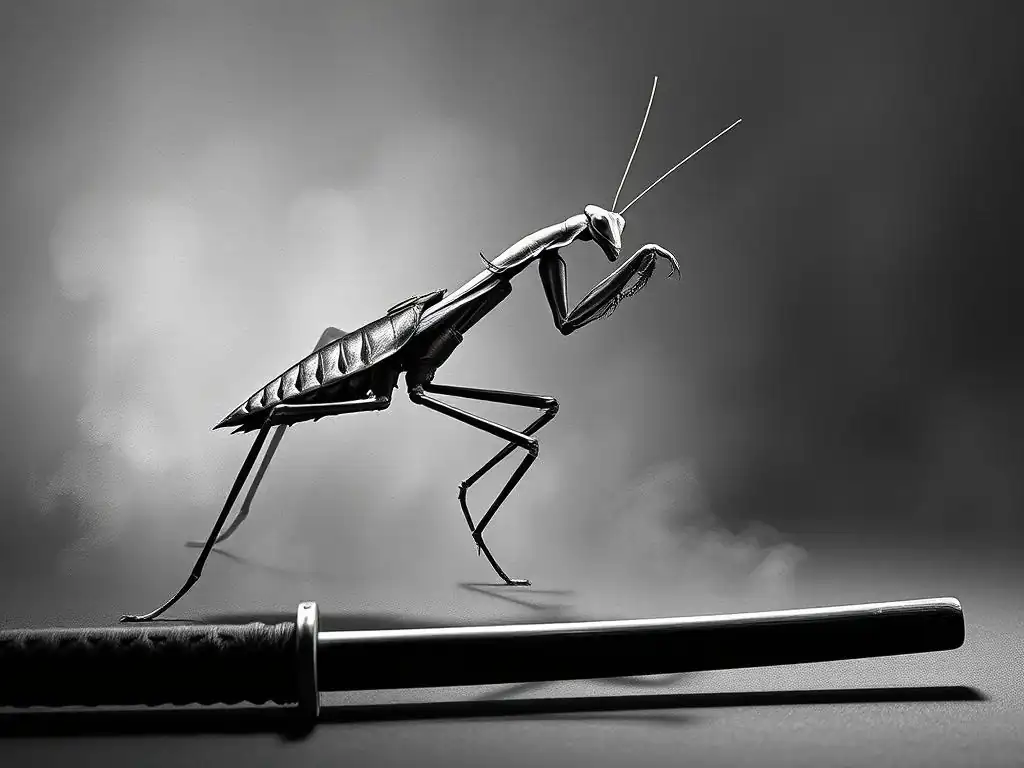
The true brilliance of Northern Praying Mantis Kung Fu lies in the synergistic combination of its trapping and sweeping techniques. These are not separate skills but are designed to work in concert, creating a highly effective close-quarters combat system. A typical interaction might involve using rapid hand techniques to engage and trap an opponent's arms, simultaneously or immediately following with a low sweep to their legs. This simultaneous attack on two levels is incredibly difficult for an opponent to defend against effectively.
This combined approach capitalizes on the strengths of both techniques. Trapping controls the upper body, limiting the opponent's ability to strike or maintain balance, while the sweep attacks their lower body, removing their base. The transition between trapping and sweeping is often instantaneous, a fluid movement that catches the opponent off guard. This integrated strategy forms the core of many advanced Northern Praying Mantis trapping sweeps, making them a unique and powerful aspect of the style.
Combining for Effectiveness
Combining trapping and sweeping techniques significantly enhances their effectiveness compared to using them in isolation. A successful trap often shifts the opponent's weight or posture, making them more susceptible to a sweep. Conversely, feinting a sweep or attacking the lower body can distract the opponent and create an opening for a trap or upper-body strike. The simultaneous application of control (trapping) and disruption (sweeping) creates a complex problem for the defender.
Consider a scenario where an opponent attempts to strike. A Northern Praying Mantis practitioner might use a rapid hand block that immediately transitions into a trap, seizing the attacking arm. While the opponent is reacting to having their arm controlled, their weight is often momentarily shifted. This precise moment is ideal for executing a low sweep with the leg, tripping them while their upper body is still controlled. This seamless flow from defense to control to takedown is a hallmark of effective Northern Praying Mantis trapping sweeps.
Disrupting Balance and Creating Openings
The primary goal of combining Northern Praying Mantis trapping sweeps is to severely disrupt the opponent's balance and create decisive openings. Trapping the arms prevents them from using their hands to regain balance if their feet are attacked. By controlling the upper body while attacking the lower body, the practitioner effectively takes away the opponent's ability to stabilize themselves.
This disruption creates significant openings for follow-up actions. Once the opponent is off-balance or falling, they are highly vulnerable. The practitioner can then deliver finishing strikes, apply joint locks, or transition to ground fighting if necessary. The speed and suddenness of the combined Northern Praying Mantis trapping sweeps mean that the opening created is often instantaneous and requires a rapid, decisive follow-up to capitalize fully on the advantage gained.
Unpredictable Attacks
The combination of trapping and sweeping also makes the attacks highly unpredictable. An opponent defending against a flurry of hand strikes and traps might not anticipate a sudden low sweep. Conversely, someone defending against leg attacks might be vulnerable to a sudden trap and upper-body strike. The ability to seamlessly transition between attacking different levels and controlling different parts of the body makes the Northern Praying Mantis practitioner's offense difficult to read and defend against.
This unpredictability is enhanced by the deceptive nature of Northern Praying Mantis movements. Feints and broken rhythms are often used to mask the true intention of a technique, making the sudden appearance of a trap or sweep even more surprising. The fluidity and speed of the transitions in Northern Praying Mantis trapping sweeps ensure that the opponent is constantly reacting to threats from multiple angles and levels, overwhelming their defensive capabilities.
Unique Aspects Compared to Other Styles
While trapping and sweeping techniques exist in many martial arts, the way they are integrated and utilized in Northern Praying Mantis possesses unique characteristics. The style's emphasis on continuous, rapid-fire hand techniques provides a constant stream of opportunities for trapping, which then flow directly into sweeps. The distinctive Praying Mantis hand shapes are particularly effective for seizing and controlling limbs with minimal effort.
Furthermore, the specific footwork of Northern Praying Mantis, with its nimble, evasive, and explosive movements, allows practitioners to position themselves optimally for sweeps after trapping, often from unconventional angles. This differs from styles that might rely on more linear footwork or static grappling entries. The seamless, dynamic flow between trapping and sweeping, often occurring almost simultaneously, is less common in styles that separate striking and grappling more distinctly. The specific mechanics of Northern Praying Mantis trapping sweeps are tailored to the style's overall strategy of overwhelming the opponent at close range.
Stance and Body Mechanics Differences
Northern Praying Mantis stances are generally higher and more mobile than the deep, rooted stances found in some Southern Kung Fu styles. This allows for rapid changes in direction and level, crucial for both evading attacks and executing quick Northern Praying Mantis trapping sweeps. The footwork, often described as "Seven Stars" (Qi Xing), involves intricate steps that allow for explosive forward movement, sideways evasion, and circling, providing a highly agile base.
Body mechanics in Northern Praying Mantis emphasize the use of the entire body for generating power and maintaining balance. Techniques often involve coordinated movements of the waist, hips, and shoulders to add torque and force to strikes and sweeps. This integrated body movement is essential for delivering powerful sweeps while maintaining stability, especially when simultaneously controlling an opponent's upper body with a trap. The structure allows for powerful, sudden Northern Praying Mantis trapping sweeps that leverage whole-body momentum.
Close-Range Combat and Interception
Northern Praying Mantis specializes in close-quarters combat. The techniques are designed to be effective at grappling range and even closer. Trapping is the primary tool for engaging and controlling an opponent at this distance, preventing them from generating power with long-range strikes. The speed and intricacy of the hand techniques allow for intercepting attacks before they fully develop.
Once engaged in close range, the combination of trapping and sweeping becomes paramount. The limited space means techniques must be compact and efficient. Northern Praying Mantis trapping sweeps are perfectly suited for this environment, allowing practitioners to neutralize threats and take down opponents in tight spaces where larger, more expansive techniques would be impractical. The style's focus on sensitivity and rapid reaction makes it highly effective at intercepting and controlling opponents at the initial point of contact.
Trapping Sweep Comparison: Northern Praying Mantis vs. Wing Chun
Comparing Northern Praying Mantis trapping sweeps to the trapping techniques found in Wing Chun highlights some key distinctions. Wing Chun is also renowned for its trapping (Chi Sao - sticking hands), focusing on centerline control, simultaneous block/strike, and maintaining constant contact to feel the opponent's intention. Wing Chun trapping tends to be more about controlling the immediate space and redirecting force along the centerline.
Northern Praying Mantis trapping, while also emphasizing sensitivity and control, is often more dynamic and utilizes a wider variety of hand shapes and movements, including hooks, wraps, and seizing actions, often from slightly off-center angles. Crucially, the integration with powerful, sudden sweeps is a more prominent and distinct feature of Northern Praying Mantis compared to Wing Chun, which relies more heavily on close-range strikes and pushing/uprooting techniques rather than dedicated leg sweeps for takedowns. While both styles trap, the application and follow-ups, particularly the sophisticated Northern Praying Mantis trapping sweeps, differ significantly in their execution and strategic intent.
Practical Applications in Self-Defense
The techniques of Northern Praying Mantis, particularly its trapping and sweeping combinations, are highly practical for self-defense situations. Real-world confrontations often occur at close range, are sudden, and involve opponents who may not adhere to traditional martial arts stances or attacks. The ability to quickly intercept, control, and take down an aggressor is incredibly valuable in such scenarios. Northern Praying Mantis trapping sweeps provide a direct and efficient means of neutralizing a threat by removing their base and control of their limbs.
Consider a situation where someone grabs you or throws a wild punch from close distance. The rapid, intercepting hand techniques of Northern Praying Mantis can immediately engage and control the aggressor's arms (trapping). From this controlled position, a swift, low sweep can be executed, taking the aggressor off balance and to the ground, effectively ending the immediate threat. This combination bypasses the need for forceful exchanges of strikes and moves directly towards ending the confrontation decisively.
Utilizing Trapping Sweeps in Scenarios
In self-defense scenarios, the context is crucial. Northern Praying Mantis trapping sweeps are particularly effective against common street attacks like grabs, pushes, or close-range lunging strikes. If an attacker grabs your shirt, Northern Praying Mantis principles advocate for immediately collapsing the distance and using hand techniques to control their grabbing arm(s) while simultaneously attacking vulnerable points or executing a sweep.
For instance, a two-on-one arm grab could be countered by using one hand to secure their grip on you while the other hand traps and pins their other arm, followed instantly by a sweep to their nearest leg. The suddenness and combined attack (upper body control, lower body disruption) are key.
Another example is defending against a tackle attempt; trapping the arms as they reach out can prevent the grab, and a well-timed sweep can take the attacker down before they complete their motion. The adaptability of Northern Praying Mantis trapping sweeps makes them suitable for a variety of unpredictable situations.
Adapting to Opponents and Situations
A key aspect of utilizing Northern Praying Mantis trapping sweeps in self-defense is the ability to adapt. Opponents will vary in size, strength, and level of aggression. Training emphasizes developing sensitivity (Ting Jing) to feel the opponent's force and direction, allowing the practitioner to adjust the technique on the fly. Against a stronger opponent, relying more on leverage and timing becomes critical. Against multiple opponents, the ability to quickly disable one threat with a trapping sweep allows focus to shift to the next.
Situational awareness is also vital. The environment (uneven ground, obstacles) can affect the feasibility of sweeps. A skilled practitioner learns when a sweep is the most appropriate response and when another technique, like a joint lock or throw, might be more suitable. However, the core principles of control and disruption inherent in Northern Praying Mantis trapping sweeps remain applicable, even if the exact execution needs slight modification based on the specific circumstances.
Training Drills
Developing proficiency in Northern Praying Mantis trapping sweeps requires specific training drills that build speed, sensitivity, balance, and coordination.
- Chi Sao (Sticking Hands) Variations: While similar to Wing Chun, Mantis Chi Sao often incorporates more dynamic movements, seizing, and the introduction of low-line attacks or leg checks that can transition into sweeps. Drills focus on maintaining contact, feeling energy, and reacting instantaneously.
- Trapping-to-Strike Drills: Partner drills where one person throws simple strikes, and the other practices intercepting, trapping the limb, and immediately following with a specific strike combination.
- Sweep Entries from Traps: Drills specifically focusing on transitioning from a controlled trap (e.g., wrist control, arm pin) directly into various sweeps (e.g., ankle sweep, knee sweep), emphasizing seamless movement and timing.
- Balance and Footwork Drills: Extensive training in the "Seven Stars" footwork and low stances to build the necessary stability for executing sweeps while under pressure or maintaining a trap.
- Combination Flow Drills: Practicing sequences that integrate defense, trapping, striking, and sweeping in a continuous flow, simulating realistic combat exchanges. For example: Deflect -> Trap arm -> Strike face -> Sweep leg.
These drills, practiced with increasing speed and resistance, are essential for internalizing the complex coordination required for effective Northern Praying Mantis trapping sweeps.
Advanced Strategies
Beyond the fundamental application of trapping and sweeping, Northern Praying Mantis incorporates advanced strategies that enhance the effectiveness and unpredictability of these techniques. These involve deeper levels of deception, highly refined timing, and the integration of trapping sweeps into complex, multi-stage sequences. Advanced practitioners learn to manipulate not just the opponent's limbs, but also their perception and expectations.
This includes using subtle body language, eye movements, and feints to misdirect the opponent's attention before launching a trapping sweep. It also involves developing the intuition to recognize the slightest shift in the opponent's weight or intention, allowing for pre-emptive or instantaneous execution of the technique. Mastering these advanced strategies elevates Northern Praying Mantis trapping sweeps from effective tactics to devastating art forms.
Incorporating Feints and Deception
Feints and deception are integral to advanced Northern Praying Mantis strategy. Before executing a Northern Praying Mantis trapping sweep, a practitioner might use a feint strike to the head to draw the opponent's guard up, making their lower body vulnerable to a sweep. Or, a feint sweep might be used to elicit a defensive reaction that creates an opening for a trap or upper-body strike.
Deception extends beyond simple feints. It involves creating false rhythms, changing speeds unexpectedly, and using misleading body language. The goal is to keep the opponent guessing and prevent them from anticipating the true attack. By masking the intention behind a movement, the sudden execution of a Northern Praying Mantis trapping sweep becomes much more likely to succeed, catching the opponent completely off guard.
Developing Reflexes and Intuition
Advanced proficiency in Northern Praying Mantis trapping sweeps relies heavily on highly developed reflexes and intuition. Techniques are executed not through conscious thought, but as instantaneous reactions to the opponent's movements. This is cultivated through thousands of hours of dedicated practice, particularly sensitivity drills like Chi Sao.
Intuition allows the practitioner to anticipate the opponent's actions based on subtle cues – a shift in weight, a tensing muscle, a glance. This predictive ability enables them to initiate a trap or sweep at the optimal moment, often before the opponent's technique is fully formed. It moves beyond simple reaction to proactive engagement, allowing for the fluid, spontaneous application of Northern Praying Mantis trapping sweeps in dynamic combat situations.
Advanced Trapping Sweep Combination: "Entangling Step, Crushing Sweep"
An example of an advanced Northern Praying Mantis trapping sweep combination might be the "Entangling Step, Crushing Sweep" (variations exist across lineages). This technique involves using intricate footwork (the "Entangling Step") to circle and disrupt the opponent's base from an oblique angle while simultaneously using hand techniques to trap and control one or both of their arms.
As the opponent is off-balanced by the footwork and controlled by the trap, a powerful, low sweep (the "Crushing Sweep") is delivered to the supporting leg, leveraging the practitioner's body weight and momentum. The combination requires precise timing, advanced footwork coordination, and highly developed trapping skills. It exemplifies the simultaneous attack on multiple levels that defines advanced Northern Praying Mantis trapping sweeps.
Importance of Proper Training
Mastering the intricate and dynamic techniques of Northern Praying Mantis trapping sweeps requires dedicated and proper training under qualified instruction. Unlike simpler techniques, trapping and sweeping combinations are highly dependent on subtle body mechanics, precise timing, and developed sensitivity. Incorrect practice can lead to inefficient movements, poor balance, and an inability to execute the techniques effectively under pressure.
Furthermore, training methods in traditional Kung Fu styles like Northern Praying Mantis often involve specific conditioning exercises, forms practice (which encode principles and movements), and partner drills designed to build the necessary attributes. Attempting to learn these complex techniques solely from books or videos is unlikely to yield true proficiency, especially in developing the crucial sensitivity and timing required for effective Northern Praying Mantis trapping sweeps.
Finding a Qualified Instructor
Finding a qualified instructor is perhaps the single most important factor in learning Northern Praying Mantis trapping sweeps correctly. A good teacher not only demonstrates the techniques but also understands the underlying principles, body mechanics, and energy flow. They can provide personalized feedback, correct subtle errors in posture or movement, and guide the student through progressive training methods.
A qualified instructor will belong to a recognized lineage or school and have significant experience both in practicing and teaching the style. They can ensure that the student develops the foundational skills – stances, footwork, basic hand techniques – before attempting the more complex Northern Praying Mantis trapping sweeps. Training under experienced guidance ensures safety, effectiveness, and a deeper understanding of the art.
Gradual Progression
Training in Northern Praying Mantis trapping sweeps follows a path of gradual progression. Beginners typically focus on fundamental stances, basic footwork, and core hand techniques. Only after building a solid foundation do they begin learning basic trapping principles and simple sweeping mechanics.
More complex combinations, like integrated Northern Praying Mantis trapping sweeps, are introduced later, once the student has developed sufficient balance, coordination, speed, and sensitivity. Advanced strategies involving feints and intuition come with years of dedicated practice. Rushing the learning process can lead to bad habits and an inability to perform the techniques effectively when they are most needed. Patience and consistent practice are key to mastering these sophisticated skills.
Safety Considerations
Training in any martial art, especially one involving takedowns like sweeps, carries inherent risks. Safety must be a primary consideration. This includes:
- Using proper protective gear (e.g., mouthguards, mats for throws/sweeps).
- Training on appropriate surfaces (e.g., cushioned mats).
- Learning breakfalls to safely absorb impact when being swept or thrown.
- Practicing techniques with control, especially during partner drills, gradually increasing intensity.
- Communicating with training partners and the instructor about any discomfort or injury.
Responsible training under supervision minimizes the risk of injury, allowing students to focus on developing their skills in Northern Praying Mantis trapping sweeps effectively and safely over the long term.
Mastering Trapping Sweeps
Mastering Northern Praying Mantis trapping sweeps is a journey that extends beyond merely executing the physical movements. It involves integrating these techniques seamlessly into a complete fighting strategy, developing the intuitive understanding of when and how to apply them, and continuously refining one's skills through ongoing practice and learning. True mastery means the techniques become second nature, flowing spontaneously in response to the opponent's actions.
This level of expertise requires not only physical conditioning and technical proficiency but also mental discipline, focus, and a deep understanding of the underlying principles of Northern Praying Mantis. It's about developing the sensitivity to feel the opponent's energy, the timing to act at the precise moment, and the adaptability to apply the techniques effectively against different opponents and in various situations. The path to mastering Northern Praying Mantis trapping sweeps is one of continuous refinement and application.
Path to Expertise
The path to expertise in Northern Praying Mantis trapping sweeps involves consistent, diligent practice over many years. It includes:
- Perfecting fundamental stances and footwork.
- Developing strong core strength and balance.
- Refining basic hand techniques and their applications.
- Extensive partner drills focusing on sensitivity and reaction.
- Practicing forms to embody the style's principles and transitions.
- Sparring (controlled practice combat) to apply techniques under pressure.
- Studying the theory and history of the style to deepen understanding.
Each stage builds upon the last, gradually developing the attributes necessary for the spontaneous and effective application of complex techniques like Northern Praying Mantis trapping sweeps in dynamic situations.
Integrating into Overall Skillset
Trapping sweeps in Northern Praying Mantis are not isolated techniques; they are integrated components of a comprehensive fighting system. Mastery involves seamlessly transitioning between trapping, sweeping, striking, joint locks, and throws. The ability to fluidly move from controlling an opponent's arm to sweeping their leg, and then perhaps following up with a strike or transitioning to a ground technique, is what makes the style so effective.
Integrating Northern Praying Mantis trapping sweeps into the overall skillset means understanding their role within the larger strategy. They are tools used to create opportunities, disrupt the opponent, and control the engagement. A skilled practitioner knows when a trap is appropriate, when to transition to a sweep, and what follow-up technique is best suited to the resulting opening. This holistic understanding elevates technical skill to practical combat effectiveness.
Continuous Learning
Martial arts mastery is a journey without an end. Even after achieving a high level of proficiency, continuous learning is essential. This involves refining existing techniques, exploring variations within the style, learning from training partners and other practitioners, and adapting to new challenges.
For Northern Praying Mantis trapping sweeps, continuous learning might involve exploring subtle variations in angle or timing, discovering new ways to set up the techniques, or adapting them for different body types or fighting styles. The art is dynamic, and a master is always a student, seeking to deepen their understanding and refine their execution of every technique, including the sophisticated Northern Praying Mantis trapping sweeps.
Conclusion: Legacy of Trapping and Sweeps
Northern Praying Mantis Kung Fu stands as a testament to the effectiveness of integrating rapid hand techniques with disruptive lower-body attacks. Its unique approach to trapping and sweeping creates a powerful system for close-quarters combat, allowing practitioners to quickly neutralize threats by controlling limbs and removing the opponent's base. The synergy between these elements is a defining characteristic of the style, setting it apart and contributing to its reputation as a highly practical and efficient martial art.
The Northern Praying Mantis trapping sweeps represent a sophisticated application of leverage, timing, and sensitivity. They are not simply techniques but dynamic interactions that capitalize on the opponent's reactions and vulnerabilities. The style's emphasis on continuous attack and seamless transitions ensures that these combinations are delivered with speed and unpredictability, making them incredibly difficult to defend against in real-world scenarios.
Powerful System for Close-Quarters Combat
The combined power of Northern Praying Mantis trapping sweeps makes it an exceptionally potent system for close-quarters combat. In situations where space is limited, and powerful, long-range strikes are impractical, the ability to control the opponent's limbs and take them down swiftly is invaluable. The style's mechanics are optimized for fighting in tight spaces, utilizing short-range power generation and agile footwork to navigate the immediate environment.
The emphasis on sensitivity allows practitioners to react instantaneously to changes in pressure and position, adapting their traps and sweeps on the fly. This responsiveness, combined with the inherent disruptiveness of attacking both upper and lower body simultaneously, ensures that Northern Praying Mantis practitioners possess a formidable set of tools for resolving confrontations effectively and decisively at close range. The Northern Praying Mantis trapping sweeps are central to this close-combat dominance.
Contribution to Kung Fu Traditions
Northern Praying Mantis Kung Fu, with its distinctive trapping and sweeping methodologies, has made a significant contribution to the broader landscape of Chinese martial arts. It exemplifies the ingenuity of combining seemingly disparate elements – the aggressive, seizing actions of a mantis with the agile, evasive movements of a monkey – to create a highly effective fighting system.
The sophisticated integration of hand techniques for control and leg techniques for takedowns found in Northern Praying Mantis trapping sweeps has influenced other styles and continues to be studied for its efficiency and practicality. It serves as a prime example of how martial arts evolve by observing nature and synthesizing diverse techniques into a coherent and powerful whole. The legacy of Northern Praying Mantis, particularly its renowned trapping and sweeping skills, continues to inspire and educate practitioners worldwide.
Frequently Asked Questions
What is unique about Northern Praying Mantis trapping sweeps compared to other martial arts?
Northern Praying Mantis trapping sweeps are unique due to their focus on simultaneous attack and defense. They emphasize disrupting the opponent's balance while launching a strike, often targeting vulnerable areas.
How does the Northern Praying Mantis style utilize "trapping" in its techniques?
"Trapping" in Northern Praying Mantis refers to controlling an opponent's limbs. This involves locking, entangling, or manipulating their arms to create openings for strikes or sweeps and nullifying their attack.
Why are sweeps considered an integral part of the Northern Praying Mantis system?
Sweeps are vital because they instantly destabilize an opponent, taking them off their feet. This allows for follow-up attacks and controls the engagement range, enabling the practitioner to dictate the fight.
What are some common targets for trapping sweeps in Northern Praying Mantis?
Common targets for trapping sweeps include the opponent's ankles, knees, and lower legs. The goal is to disrupt their stance and create an opening for further offensive maneuvers.
How does the Northern Praying Mantis style's philosophy influence its trapping and sweeping techniques?
The philosophy emphasizes efficiency and adaptability. Trapping and sweeping techniques are designed to be economical in motion and to exploit an opponent's weaknesses, mirroring the praying mantis's predatory nature.
Okay, here's a final reflection crafted to fit your article's theme and structure, optimized for emotional connection and a lasting impression:
Final Reflection: The Enduring Art of Trapping Sweeps
The intricate details of Northern Praying Mantis trapping sweeps, as we've explored, are not merely historical techniques; they represent a living testament to adaptability and precision in the face of challenge. The principles of efficient movement and strategic positioning, honed over generations, resonate far beyond the martial arts, offering valuable lessons in problem-solving and resourcefulness applicable to any field.
This art form, passed down through dedicated lineages, has profoundly shaped the cultural landscape of martial arts, emphasizing not brute force, but rather the intelligent application of leverage and timing. It reminds us that true strength lies in understanding and utilizing the environment to our advantage. The best fighter is never angry,
as the saying goes, and the Northern Praying Mantis style embodies this calm calculation, transforming perceived weaknesses into potent strengths.
Now, consider how the principles of Northern Praying Mantis trapping sweeps – the strategic use of space, the anticipation of an opponent's movements, and the efficient application of force – can be applied to your own life. Embrace the challenge of mastering your own "trapping sweeps," and discover the power of calculated action in achieving your goals.
Ignite Your Inner Mantis: Train Smarter, Not Harder!
Thanks for diving deep into the fascinating world of Northern Praying Mantis! Now that you understand its unique trapping and sweeping techniques, it's time to put that knowledge into action.
Here's how you can take the next step:
- Commit to mastering one specific Northern Praying Mantis trapping technique this week. Focus on precision and repetition to build muscle memory.
- Delve into the history and philosophy of Northern Praying Mantis by researching its lineage and influential masters.
- Share this article with fellow martial artists and start a discussion about the effectiveness of its unique movements.
What's one subtle adjustment you can make to your current stance to mimic the Mantis's unwavering balance?