
Building Kyokushin Power: Strength Training Regimens for FullContact

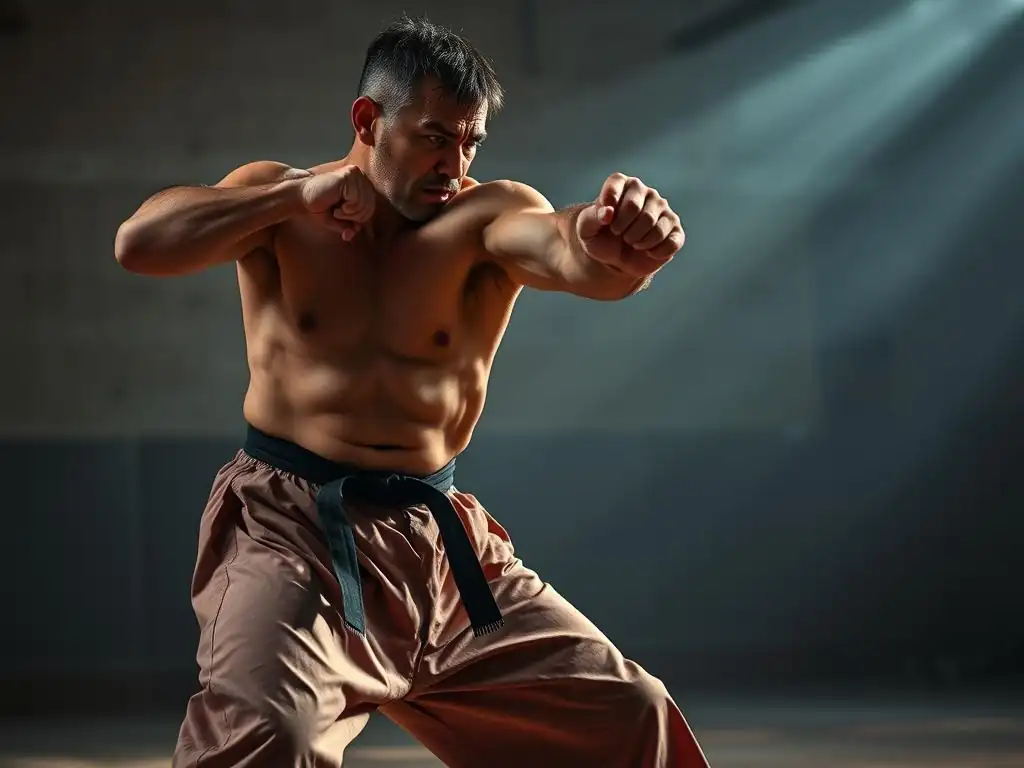
Welcome to Martial Arts Mastery, your ultimate resource for delving deep into the world of combat! Prepare to unlock the secrets of striking power and unwavering resilience. This week, we're exploring the rigorous strength training methodologies that forge the indomitable spirit of Kyokushin karate. Discover how these powerful regimens can translate to devastating full-contact prowess. Intrigued? Read on to uncover the intense exercises and philosophies that build true Kyokushin power strength training.
- Introduction: Kyokushin Karate and the Importance of Strength Training
- Understanding Kyokushin Power: Key Physical Attributes
- Kyokushin Power Strength Training: Foundational Exercises
- Designing a Kyokushin-Specific Strength Training Program
- Advanced Strength Training Techniques for Kyokushin
- Injury Prevention and Recovery for Kyokushin Athletes
- Measuring Progress and Adjusting Your Kyokushin Strength Training
- Conclusion: Mastering Kyokushin Power Through Dedicated Strength Training
-
Frequently Asked Questions
- What is the primary focus of Kyokushin power training?
- How does Kyokushin power training differ from general weightlifting?
- What are some key exercises for Kyokushin power strength training?
- How important is a structured training program for Kyokushin power development?
- What are some considerations regarding injury prevention in Kyokushin power training?
- Final Reflection: Forging Unbreakable Spirit
- Ignite Your Kyokushin Potential!
Introduction: Kyokushin Karate and the Importance of Strength Training
MartialArtsMastery.org: Kyokushin Karate - A Full-Contact Overview
Kyokushin Karate stands apart in the martial arts world for its unwavering commitment to full-contact sparring. Founded by Sosai Masutatsu Oyama, this style emphasizes physical conditioning and the ability to withstand and deliver powerful blows. Unlike point-fighting formats, Kyokushin bouts often involve sustained exchanges at close range, demanding incredible resilience, endurance, and the ability to generate significant Kyokushin power behind every strike and block. This rigorous approach means practitioners must build a robust physical foundation far beyond mere technical proficiency.
The philosophy of Kyokushin, often summarized as "Osu," embodies perseverance and pushing physical and mental limits. Training typically includes extensive conditioning, kata practice, and increasingly intense sparring as students progress. The physical demands placed on a Kyokushin practitioner are immense, requiring not just flexibility and speed but also the sheer physical strength to absorb kicks to the legs and body, deliver devastating punches and kicks, and maintain balance and posture under pressure. This necessitates a structured approach to physical preparation, making Kyokushin power strength training an indispensable part of a serious practitioner's routine.
The Role of Physical Strength in Kyokushin Success
In the arena of full-contact Kyokushin, physical strength translates directly into several key advantages. Firstly, it enhances the impact of offensive techniques; a stronger punch or kick carries more force, increasing the likelihood of stunning or incapacitating an opponent. For instance, a well-conditioned athlete with significant lower body strength can generate considerably more power in a gedan mawashi geri (low roundhouse kick) compared to someone lacking such development, potentially ending a fight or severely limiting an opponent's mobility.
Secondly, strength provides crucial defensive capabilities and resilience. Stronger muscles and connective tissues are better equipped to absorb the shock of incoming strikes, reducing the risk of injury and allowing the fighter to continue effectively. A strong core, for example, helps protect the vital organs from body blows and maintains stability when absorbing heavy impact.
Furthermore, overall physical strength contributes significantly to endurance, enabling a practitioner to maintain intensity and power throughout a demanding multi-round sparring match, a hallmark of competitive Kyokushin. Developing Kyokushin power strength training is not just about hitting harder; it's about building the physical fortitude required for the unique challenges of this demanding discipline.
Understanding Kyokushin Power: Key Physical Attributes
Core Strength for Kyokushin Stability and Power Generation
The core musculature, encompassing the abdominals, obliques, lower back, and hips, is the central link in the kinetic chain for virtually all Kyokushin techniques. It acts as a stable platform from which powerful movements originate and through which force is transferred.
Without a strong core, the power generated by the legs cannot be efficiently channeled into a punch, nor can the torque from the hips be fully utilized in a roundhouse kick. Consider the rotational power required for a mawashi geri; a weak core leaks energy during the transfer from the lower body through the trunk and out through the kicking leg, significantly reducing the strike's impact.
Furthermore, core strength is paramount for maintaining balance and posture, especially when exchanging blows or defending against sweeps. During a full-contact bout, athletes are constantly shifting weight, absorbing impacts, and executing techniques from potentially unstable positions. A strong core allows a Kyokushin fighter to stay grounded, recover quickly from being off-balance, and protect their midsection from devastating body shots. Specific exercises targeting the core, such as planks, rotational movements, and exercises that challenge stability, are fundamental to building this essential attribute for Kyokushin power strength training.
Lower Body Strength: Building a Solid Base for Kicks and Stances
The legs are the primary engine for mobility, stances, and the devastating kicks that are a cornerstone of Kyokushin Karate. Powerful quads, hamstrings, and glutes are essential for generating the force behind techniques like the mae geri (front kick), yoko geri (side kick), and the ubiquitous mawashi geri to varying levels.
A strong lower body allows for explosive pushing power off the floor, crucial for lunging attacks, retreating, and generating speed in kicks. Deep, stable stances, such as fudo dachi or sanchin dachi, which are maintained for extended periods during training and sparring, rely heavily on lower body endurance and isometric strength.
Beyond offensive power, leg strength contributes significantly to defensive capabilities. Strong legs provide a stable base to absorb the impact of low kicks (gedan) and maintain balance when an opponent attempts to sweep or push. The ability to drop weight and root oneself firmly is a defensive tactic enhanced by lower body strength. Developing robust lower body strength through Kyokushin power strength training ensures that kicks are not only powerful but also executed from a stable foundation, minimizing the risk of losing balance or being easily disrupted.
Upper Body Strength: Enhancing Punches, Blocks, and Conditioning
While Kyokushin sparring often emphasizes kicks, effective punches and blocks are equally vital. Upper body strength, particularly in the shoulders, chest, back, and arms, contributes directly to the speed and impact of tsuki (punches) and the resilience of uke (blocks). A strong shoulder girdle provides stability for powerful strikes and protects the joint from the impact of blocking heavy blows. Back strength is crucial for maintaining posture, generating pulling power (relevant in clinching scenarios or resisting being pulled off balance), and complementing the power generated by the core and lower body in punches.
Moreover, upper body strength is integral to overall physical conditioning and the ability to withstand the grueling pace of full-contact sparring. Strong arms and shoulders contribute to the stamina required to keep hands up for defense and maintain punching volume. While not the primary focus compared to lower body power, neglecting upper body Kyokushin power strength training would leave a significant gap in a fighter's physical preparation, limiting their ability to deliver forceful punches, execute solid blocks, and maintain their physical integrity throughout a demanding match.
Kyokushin Power Strength Training: Foundational Exercises
Compound Exercises for Overall Kyokushin Strength
Compound exercises are multi-joint movements that work several muscle groups simultaneously. They are highly effective for building overall strength, increasing muscle mass, and improving coordination – all critical components of Kyokushin power strength training. Focusing on these core lifts provides a strong base upon which more specific martial arts power can be built.
Squats: Building Lower Body and Core Power
The squat is arguably the king of lower body exercises, targeting the quads, hamstrings, glutes, and core. For Kyokushin, squats build the foundational strength needed for powerful kicks, explosive movements from stances, and maintaining stability under pressure. Performing variations like back squats or front squats helps develop the leg drive necessary for pushing off the floor during strikes and the muscular endurance required to hold low stances. Incorporating squats into Kyokushin power strength training routines is non-negotiable for developing robust lower body power.
A typical Kyokushin athlete might aim to squat 1.5 to 2 times their body weight for a few repetitions as a benchmark of significant lower body strength. For instance, a 70kg practitioner aiming for 105-140kg squats demonstrates a solid foundation for generating powerful kicks. Regular squat training improves hip mobility and ankle stability, which are also crucial for executing high kicks and maintaining balance during complex movements characteristic of Kyokushin Karate.
Deadlifts: Developing Posterior Chain Strength for Full-Contact Impact
The deadlift is a total body exercise that heavily taxes the posterior chain – the muscles on the back of the body, including the hamstrings, glutes, lower back, and traps. This exercise is unparalleled for building raw strength, hip extension power, and grip strength. In Kyokushin, the power generated from the hips is fundamental to explosive strikes like roundhouse kicks and powerful punches. The ability to brace the core and maintain a strong back under load directly translates to resisting being pulled or pushed off balance in a clinch or absorbing impact effectively.
Elite strength athletes can deadlift 2.5 to 3 times their body weight or more, illustrating the immense potential for developing full-body strength with this lift. While a Kyokushin fighter may not need competitive powerlifting numbers, aiming for a deadlift of at least twice their body weight for a few reps is a strong indicator of powerful hip drive and a resilient posterior chain, vital for generating and absorbing force in full-contact exchanges. Incorporating deadlifts is a cornerstone of developing Kyokushin power strength training.
Bench Press: Enhancing Punching Power and Upper Body Strength
While punches in Kyokushin utilize the entire body's kinetic chain, the bench press directly strengthens the chest, shoulders, and triceps – key muscles involved in the pushing motion of a punch. Developing strength in these areas contributes to the speed and force behind techniques like the straight punch (choku tsuki) and hook punch (kagi tsuki). Furthermore, a strong chest and shoulders provide resilience when blocking body shots or impacts to the upper torso.
A common goal for general upper body strength is being able to bench press your body weight for multiple repetitions. For a Kyokushin practitioner, this strength contributes not just to punching power but also to the ability to maintain a strong guard and withstand the physical pressure of an opponent. While technique is paramount, combining skilled punching mechanics with a strong bench press foundation significantly enhances the Kyokushin power behind offensive hand techniques.
Overhead Press: Shoulder Strength and Stability for Kyokushin Techniques
The overhead press (or strict press) builds strength in the shoulders, triceps, and upper chest, while also demanding significant core stability. Strong, stable shoulders are crucial for executing techniques like the age uke (rising block) and jodan uke (upper block) effectively, protecting the head from incoming kicks and punches. Overhead strength also contributes to the pushing force in certain strikes and the ability to maintain an upright posture throughout a bout.
Shoulder health and strength are particularly important in Kyokushin due to the constant use of arms for blocking and striking. The overhead press helps build the necessary resilience and power. Aiming to overhead press roughly 0.75 to 1 times your body weight is a good strength target for a well-rounded Kyokushin athlete. This strength ensures the shoulders can withstand repetitive impact and generate force effectively, supporting overall Kyokushin power strength training.
Isolation Exercises for Targeted Muscle Development
While compound lifts build foundational strength, isolation exercises target specific muscles or muscle groups. They are valuable for addressing weaknesses, balancing musculature, and providing supplementary work to enhance specific aspects relevant to Kyokushin.
Calf Raises for Ankle Stability and Power
Strong calves contribute to ankle stability, explosive push-off from the ground, and the power generated in certain kicks, particularly those involving plantarflexion of the ankle. While seemingly minor, ankle strength and stability are crucial for maintaining balance during dynamic movements and absorbing impact on landing.
Performing calf raises, both standing and seated, helps build strength and endurance in the gastrocnemius and soleus muscles. Aiming for sets of 15-20 repetitions helps build the endurance needed for sustained movement and power generation from the feet. This targeted work supports the lower body strength built through compound lifts, enhancing overall Kyokushin power strength training.
Glute Bridges for Hip Extension and Power
Glute bridges and hip thrusts specifically target the glutes and hamstrings, muscles primarily responsible for hip extension. Powerful hip extension is the driving force behind many Kyokushin techniques, including the snap of a front kick, the rotation of a roundhouse kick, and the force generation in punches.
Strengthening the glutes through exercises like barbell hip thrusts (aiming for 2-2.5 times bodyweight for reps for advanced athletes) directly translates to more explosive hips. This targeted strength work significantly enhances the Kyokushin power generated in rotational and linear movements, improving both striking force and dynamic balance.
Dumbbell Rows for Back Strength and Posture
Dumbbell rows work the lats, rhomboids, and biceps, contributing to overall back thickness and strength. A strong back is essential for maintaining good posture, which is vital for efficient movement and power transfer in Kyokushin. Back strength also helps counteract the forward-rounding tendency from striking and blocking, promoting better alignment.
Furthermore, back strength is involved in resisting being pulled or controlled in a clinch and contributes to the pulling motion sometimes used in setting up techniques. Performing dumbbell rows with proper form helps build a resilient upper back, supporting the demands of Kyokushin power strength training and overall structural integrity.
Forearm Curls for Grip Strength and Endurance
While Kyokushin sparring doesn't involve gi gripping like Judo or BJJ, grip strength is still valuable. It contributes to wrist stability during strikes, helps maintain a strong guard, and is relevant in the brief clinching or controlling situations that can occur. Strong forearms also add to the overall resilience of the arms when blocking heavy impacts.
Exercises like forearm curls (both wrist flexion and extension), reverse curls, and farmer's walks build grip strength and endurance. While perhaps not as critical as lower body power, dedicated forearm training complements overall strength development, contributing to the robustness required for full-contact Kyokushin and enhancing aspects of Kyokushin power strength training.
Designing a Kyokushin-Specific Strength Training Program
Periodization for Kyokushin Strength Gains
Periodization involves structuring training into distinct phases to manage volume and intensity over time, preventing overtraining and optimizing progress towards specific goals. For Kyokushin athletes, this means integrating strength training seamlessly with technical and sparring practice. A typical model might include phases focused on building a strength base (higher volume, moderate intensity), peaking for strength/power (lower volume, higher intensity), and maintaining strength during competition periods (lower volume, moderate intensity).
For example, an athlete might spend 6-8 weeks in an off-season building phase focusing on hypertrophy and general strength with sets of 8-12 repetitions on compound lifts. As competition approaches (e.g., 8-12 weeks out), they transition to a strength/power phase with sets of 3-6 repetitions, focusing on moving weight explosively. During the competitive season, training shifts to maintenance, perhaps 1-2 strength sessions per week with reduced volume, ensuring physical peak aligns with fight day rather than solely focusing on gym numbers. This strategic approach ensures Kyokushin power strength training supports, rather than detracts from, martial arts performance.
Sample Kyokushin Power Strength Training Regimen - Beginner Level
A beginner program focuses on learning proper form and building a basic strength foundation with compound movements. This sample regimen is a 3-day split, allowing ample recovery time while integrating with martial arts training.
Day 1: Lower Body Focus
- Squats: 3 sets of 8 repetitions
- Lunges: 3 sets of 10 repetitions per leg
- Glute Bridges: 3 sets of 15 repetitions
- Calf Raises: 3 sets of 15 repetitions
- Plank: 3 sets, hold for 30-60 seconds
This day targets the primary engines of Kyokushin power – the legs and core. Focusing on slightly higher repetitions helps build muscular endurance alongside strength, crucial for maintaining stances and executing multiple techniques. Rest 60-90 seconds between sets.
Day 2: Upper Body Focus
- Bench Press: 3 sets of 8 repetitions
- Overhead Press: 3 sets of 8 repetitions
- Dumbbell Rows: 3 sets of 10 repetitions per arm
- Push-ups: 3 sets of as many repetitions as possible (AMRAP)
- Forearm Curls: 3 sets of 15 repetitions
This session addresses the upper body strength needed for punching, blocking, and overall resilience. Learning proper form on the bench press and overhead press is critical before increasing weight. The push-ups add bodyweight volume for endurance. Rest 60-90 seconds between sets.
Day 3: Rest or Active Recovery
This day is crucial for muscle repair and growth. Rest completely or engage in light activities like stretching, foam rolling, or a gentle walk. Avoid strenuous strength training to allow the body to adapt and recover from the previous sessions, preparing for subsequent Kyokushin power strength training.
Sample Kyokushin Power Strength Training Regimen - Intermediate Level
An intermediate program increases intensity and complexity, incorporating lower reps for strength and potentially adding more dynamic movements. This is a sample 3-day split focusing on strength and power development.
Day 1: Compound Movements and Core
- Squats: 4 sets of 5 repetitions
- Deadlifts: 1 set of 5 repetitions (after warm-up sets)
- Overhead Press: 3 sets of 6 repetitions
- Hanging Leg Raises: 3 sets of 15 repetitions
- Plank: 3 sets, hold for 60+ seconds
This day leverages heavy compound lifts with lower repetitions to build maximal strength. The single heavy set of deadlifts is common for managing recovery while still gaining strength. Core work includes dynamic movement (leg raises) and static holds (plank). Rest 2-3 minutes between heavy sets, 60-90 seconds for core.
Day 2: Upper Body Strength and Power
- Bench Press: 4 sets of 5 repetitions
- Pull-ups: 3 sets of as many repetitions as possible (AMRAP) or weighted pull-ups
- Push Press: 3 sets of 5 repetitions
- Dumbbell Bench Press: 3 sets of 10 repetitions
- Dumbbell Rows: 3 sets of 10 repetitions
This session combines heavy pressing with pulling movements (pull-ups, rows) for balanced upper body development. The push press introduces a more explosive element, utilizing the legs to assist the overhead movement, relevant for generating force. Rest 2-3 minutes between heavy sets, 60-90 seconds for accessory work. This contributes significantly to Kyokushin power strength training.
Day 3: Lower Body Strength and Explosiveness
- Front Squats: 3 sets of 8 repetitions
- Romanian Deadlifts (RDL): 3 sets of 10 repetitions
- Box Jumps: 4 sets of 4 repetitions
- Calf Raises (weighted): 3 sets of 20 repetitions
- Medicine Ball Slams: 3 sets of 10 repetitions
This day focuses on lower body strength with variations (Front Squats, RDLs) and introduces plyometrics (Box Jumps) and explosive core work (Medicine Ball Slams) to enhance power output directly applicable to techniques. Rest 90-120 seconds between strength sets, 60 seconds between explosive sets. This blend targets both strength and the ability to apply it quickly, essential for Kyokushin power.
Sample Kyokushin Power Strength Training Regimen - Advanced Level
An advanced program incorporates higher intensity, more specialized lifts, and potentially more frequent training depending on recovery capacity and overall training load. This sample is a demanding 3-day split.
Day 1: Powerlifting Focus
- Back Squats: 5 sets of 3 repetitions (working towards a heavy triple)
- Bench Press: 5 sets of 3 repetitions (working towards a heavy triple)
- Deadlifts: 1 set of 3 repetitions (after warm-up sets, pushing for a heavy triple)
- Weighted Pull-ups: 3 sets of 5 repetitions
- Ab Wheel Rollouts: 3 sets of 10 repetitions
This day focuses on maximal strength development using the core powerlifting lifts. Low repetitions at high intensity are key. Significant rest is needed between sets (3-5 minutes). This builds the raw Kyokushin power base.
Day 2: Olympic Lifting Variations
- Power Cleans: 5 sets of 3 repetitions
- Push Jerk: 4 sets of 4 repetitions
- Snatch Grip Romanian Deadlifts: 3 sets of 8 repetitions
- Overhead Press: 3 sets of 6 repetitions
- Hanging Leg Raises (weighted): 3 sets of 12 repetitions
This session incorporates elements of Olympic lifting to develop explosive power and coordination. Power Cleans and Push Jerks train rapid, powerful hip and shoulder extension, directly applicable to generating force in strikes. Snatch Grip RDLs target the posterior chain from a different angle. Rest 2-3 minutes between sets.
Day 3: Bodyweight and Plyometric Training
- Plyometric Push-ups: 3 sets of as many explosive repetitions as possible
- Box Jumps (maximal height): 4 sets of 3 repetitions
- Sprint Intervals: 5 x 40m sprints with full recovery
- Bodyweight Squat Jumps: 3 sets of 10 repetitions
- Medicine Ball Rotational Throws: 3 sets of 10 repetitions per side
- Farmer's Walks: 3 sets, 40m distance
This day is dedicated to translating strength into explosive power and functional movement patterns relevant to Kyokushin. Bodyweight exercises are performed explosively, and sprints develop anaerobic power crucial for short bursts of activity in sparring. This is where raw strength is converted into dynamic Kyokushin power. Rest 60-90 seconds between sets/intervals.
Advanced Strength Training Techniques for Kyokushin
Plyometrics for Explosive Kyokushin Power
Plyometrics, or jump training, are exercises designed to produce fast, powerful movements, improving the speed-strength continuum. They involve rapidly stretching a muscle (eccentric phase) immediately followed by a rapid shortening (concentric phase), like coiling a spring. For Kyokushin, plyometrics enhance the explosiveness of kicks, the speed of footwork, and the ability to launch into techniques quickly. Examples include box jumps, squat jumps, depth jumps (for advanced athletes), and bounding.
Incorporating plyometrics into a Kyokushin power strength training regimen helps bridge the gap between slow, heavy lifting and the dynamic demands of sparring. For instance, performing 3-4 sets of 5-8 repetitions of squat jumps or box jumps can significantly improve the explosive power in the legs, leading to faster and more powerful kicks. These exercises train the nervous system to fire muscles more rapidly, enhancing reactive strength crucial for quick changes in direction and spontaneous techniques.
Olympic Weightlifting for Enhanced Power Output
Olympic lifts, such as the Clean & Jerk and the Snatch, are complex, full-body movements that train explosive power, coordination, and mobility. They involve lifting a barbell from the floor to an overhead position in distinct phases. The first pull from the floor and the second pull (or "scoop") are incredibly powerful movements driven by rapid hip and leg extension, mimicking the power generation needed for powerful kicks and strikes in Kyokushin.
While requiring significant technical proficiency, incorporating variations like Power Cleans, Hang Snatches, or Push Jerks into Kyokushin power strength training can dramatically improve an athlete's ability to generate force quickly. These lifts train the body to work as a cohesive unit, transferring force efficiently from the lower body through the core and upper body – the very essence of generating Kyokushin power in techniques. Performing sets of 2-4 repetitions with challenging weights helps develop maximal power output.
Isometric Training for Strength at Specific Angles
Isometric training involves holding a muscle contraction at a fixed length or joint angle without movement. While not building dynamic strength, it is highly effective for developing strength and stability in specific positions and improving the ability to hold tension under static load. In Kyokushin, isometric strength is vital for maintaining strong stances under pressure, holding a block position against impact, or bracing the core during exchanges.
Examples include wall sits (for leg endurance in low stances), plank variations (for core stability), and holding a static block position against resistance (like a band or partner). Incorporating isometric holds, such as holding a low sanchin dachi against a wall for 30-60 seconds, or performing planks for extended periods, directly enhances the muscular endurance and positional strength required to maintain structure and resilience throughout a full-contact bout, complementing dynamic Kyokushin power strength training.
Grip Strength Training for Kyokushin Grappling and Clinching
Although Kyokushin sparring primarily focuses on striking, brief clinches or control situations can occur, particularly when fighters are in close quarters. Strong grip and forearm strength are beneficial for controlling distance, resisting being pushed or pulled, and maintaining wrist stability during striking and blocking. While not as central as in grappling arts, a strong grip adds another layer of physical robustness.
Exercises like dead hangs (hanging from a bar for time), farmer's walks (carrying heavy weights for distance), using thick grip attachments on barbells/dumbbells, and dedicated forearm curls build grip strength and endurance. Including 2-3 sets of farmer's walks for 30-40 meters at the end of a strength session can significantly improve grip endurance, contributing to the overall physical preparedness required for full-contact Kyokushin and subtly enhancing aspects of Kyokushin power strength training.
Injury Prevention and Recovery for Kyokushin Athletes
Warm-up and Cool-down Protocols
Proper warm-up is non-negotiable before any Kyokushin training session, whether it's technical practice, sparring, or strength training. A dynamic warm-up increases heart rate, blood flow to muscles, and joint mobility, preparing the body for intense activity and significantly reducing injury risk. This should include light cardio (5-10 minutes), dynamic stretching (leg swings, hip circles, arm circles), and specific movements mimicking the activity to come.
Following a session, a cool-down is essential for promoting recovery and maintaining flexibility. This typically involves light cardio to gradually lower heart rate and static stretching, holding stretches for 20-30 seconds to improve flexibility and reduce muscle soreness. Incorporating foam rolling can also help release muscle tension. Adhering to proper warm-up and cool-down protocols is a foundational element of safe and effective Kyokushin power strength training.
Importance of Proper Form and Technique
Executing strength training exercises with correct form is paramount, even more so for martial artists who rely on their bodies for performance. Incorrect technique increases the risk of acute injuries (like strains or tears) and chronic issues (joint pain, tendonitis) that can sideline training for weeks or months. Poor form also reduces the effectiveness of the exercise, meaning less strength gain for the effort expended.
It is highly recommended to learn the proper technique for compound lifts from qualified coaches or reputable sources before attempting to lift heavy weights. Starting with light weights or even just bodyweight to master the movement pattern is crucial. Regularly reviewing and correcting form ensures that Kyokushin power strength training is not only effective but also safe, allowing consistent progress without unnecessary setbacks.
Active Recovery and Mobility Exercises
Active recovery involves engaging in low-intensity activities on rest days to promote blood flow, reduce muscle soreness, and aid recovery without adding significant stress. Examples include light jogging, swimming, cycling, or engaging in gentle martial arts movement drills. Mobility exercises focus on improving range of motion in key joints like the hips, shoulders, and ankles, which is vital for executing techniques like high kicks and maintaining flexibility often challenged by strength training.
Incorporating 1-2 active recovery sessions per week, along with daily mobility work (e.g., dynamic stretching routines targeting hip flexors, thoracic spine rotation, ankle dorsiflexion), helps maintain physical readiness and prevent stiffness. This approach supports the body's recovery process, allowing athletes to consistently engage in rigorous Kyokushin power strength training and technical practice.
Nutrition and Supplementation for Kyokushin Strength and Recovery
Adequate nutrition is the fuel for both performance and recovery in Kyokushin power strength training. Consuming sufficient protein is critical for muscle repair and growth; general guidelines suggest 1.6 to 2.2 grams of protein per kilogram of body weight daily for athletes. Carbohydrates provide the energy needed for high-intensity training, and healthy fats support hormone production and overall health. Ensuring sufficient caloric intake is necessary to support muscle building and prevent excessive fatigue.
Hydration is also fundamental, as dehydration can impair performance and delay recovery. While a balanced diet should be the primary focus, some athletes may consider supplementation to support their goals. For instance, creatine monohydrate is well-researched for its ability to improve strength and power output, while protein powder can help meet daily protein targets. However, supplementation should complement, not replace, a solid nutritional foundation and is best considered based on individual needs and potentially with professional guidance.
Measuring Progress and Adjusting Your Kyokushin Strength Training
Tracking Your Lifts and Performance
Consistent tracking is the cornerstone of effective strength training. Logging exercises performed, sets, repetitions, and the weight lifted provides concrete data to monitor progress over time. This could be done using a notebook, a spreadsheet, or a dedicated training app. Beyond just weight, tracking perceived exertion (RPE) or rest times can also provide valuable insights into training intensity and recovery.
For a Kyokushin athlete focusing on Kyokushin power strength training, tracking might include metrics like squat 1-rep max (or estimated max from reps), bench press progress, deadlift numbers, and even bodyweight exercises like maximum pull-ups. Seeing these numbers increase over weeks and months confirms that the training program is working and provides motivation to continue pushing limits.
Identifying Weaknesses and Addressing Imbalances
Training logs can help identify areas where progress is lagging or where imbalances might be developing. For example, if your squat is increasing steadily but your overhead press is stagnant, it might indicate a need to adjust your upper body training volume or technique. Similarly, if you notice persistent soreness in a specific area, it could point to a muscular imbalance or a need for more targeted prehabilitation/rehabilitation work.
Actively assessing your performance in both strength training and Kyokushin practice can reveal physical limitations hindering your Kyokushin power. Perhaps your kicks lack snap (suggesting a need for more explosive hip/plyometric work), or you struggle to maintain a strong guard late in sparring (indicating a need for more upper body endurance). Using this feedback to tailor your strength program ensures it remains relevant and addresses your specific needs as a martial artist.
Adapting Your Program Based on Progress and Needs
A strength training program should not be static. As you get stronger, the weights you lift will need to increase to continue providing a challenge. Your training goals may also shift depending on your Kyokushin training cycle – perhaps focusing more on power before a competition and more on general strength during the off-season. Injuries, fatigue, or changes in your schedule also necessitate adjustments.
Based on your tracking data and self-assessment, be prepared to modify your program. This could involve increasing weight, adding sets or reps, changing exercises, adjusting training frequency, or incorporating deload weeks to manage fatigue. Regularly reviewing and intelligently adapting your Kyokushin power strength training program ensures continued progress and optimal support for your martial arts journey.
Conclusion: Mastering Kyokushin Power Through Dedicated Strength Training
The Path to Full-Contact Dominance: Combining Skill and Strength.
Achieving mastery in Kyokushin Karate requires dedication to both technical skill and physical conditioning. While precise technique, strategic movement, and mental fortitude are foundational, the brutal reality of full-contact sparring demands a level of physical preparedness that cannot be overlooked. Developing genuine Kyokushin power involves building a body capable of delivering impactful strikes, absorbing punishment, maintaining endurance, and moving explosively throughout a bout.
Integrating a well-designed Kyokushin power strength training regimen into your overall training schedule is not merely supplementary; it is essential for reaching your full potential in this demanding martial art. By systematically developing core strength, lower body power, and upper body resilience through foundational and advanced exercises, practitioners can significantly enhance their performance in the dojo and the competition arena. This synergistic approach, where strength training amplifies technical execution, paves the path towards achieving full-contact dominance, embodying the spirit of Osu through unparalleled physical capability and martial skill.
Frequently Asked Questions
What is the primary focus of Kyokushin power training?
Kyokushin power training primarily focuses on developing explosive strength and impact power for full-contact karate. This involves building a strong foundation of functional strength applicable to fighting techniques.
How does Kyokushin power training differ from general weightlifting?
Unlike general weightlifting, Kyokushin power training emphasizes compound movements and plyometrics which directly translate to fighting techniques. It's about power generation not just muscle size.
What are some key exercises for Kyokushin power strength training?
Key exercises include squats, deadlifts, power cleans, and plyometric jumps. These movements build overall body strength and explosive power.
How important is a structured training program for Kyokushin power development?
A structured program is essential for progressive overload and preventing injury. It ensures balanced muscle development and sustainable power gains over time.
What are some considerations regarding injury prevention in Kyokushin power training?
Proper warm-up, cool-down, and form are crucial for minimizing injury risk. Listen to your body and allow for adequate recovery between training sessions.
Final Reflection: Forging Unbreakable Spirit
The journey to Kyokushin power strength training is more than just lifting weights; it's about cultivating an unbreakable spirit, a resilience that echoes through every strike and block. The principles discussed throughout this article, from foundational strength to specialized conditioning, are not merely exercises, but pathways to unlocking the full potential of the Kyokushin warrior. In a world that often prioritizes superficial strength, the dedication to authentic, functional power, as embodied by Kyokushin, remains profoundly relevant.
This pursuit of Kyokushin power has deeply influenced the martial arts landscape, pushing practitioners to understand the intricate connection between physical strength and mental fortitude. It's a constant reminder that true power comes not just from muscle mass, but from the unwavering commitment to pushing beyond perceived limits. The ultimate aim of Karate lies not in victory or defeat, but in the perfection of the character of its participants.
- Gichin Funakoshi. This quote encapsulates the essence of Kyokushin, where physical training serves as a vehicle for self-improvement and the cultivation of a strong, disciplined character.
Now, I invite you to reflect on your own journey. Whether you are a seasoned Kyokushin practitioner or simply seeking to enhance your physical and mental resilience, consider how these principles can be applied to your life. Embrace the challenge, push your boundaries, and forge your own unbreakable spirit. The power to transform yourself lies within you; unlock it, and become the strongest version of yourself, both inside and out.
Ignite Your Kyokushin Potential!
Thank you for diving into the world of Kyokushin strength training. You've now gained valuable insights into building the power needed for full-contact dominance. Let's translate that knowledge into action!
Here’s how to take your training to the next level:
- Commit to incorporating at least two dedicated strength training sessions per week focusing on compound movements like squats, deadlifts, and overhead presses.
- Share this article with fellow Kyokushin practitioners who are looking to enhance their power and performance.
- Experiment with plyometric exercises, such as box jumps and explosive push-ups, to improve your striking power and agility.
What specific strength training exercise are you most excited to integrate into your Kyokushin regimen this week?