
What is WadoRyu Karate? Understanding Its Unique Jujutsu Blend

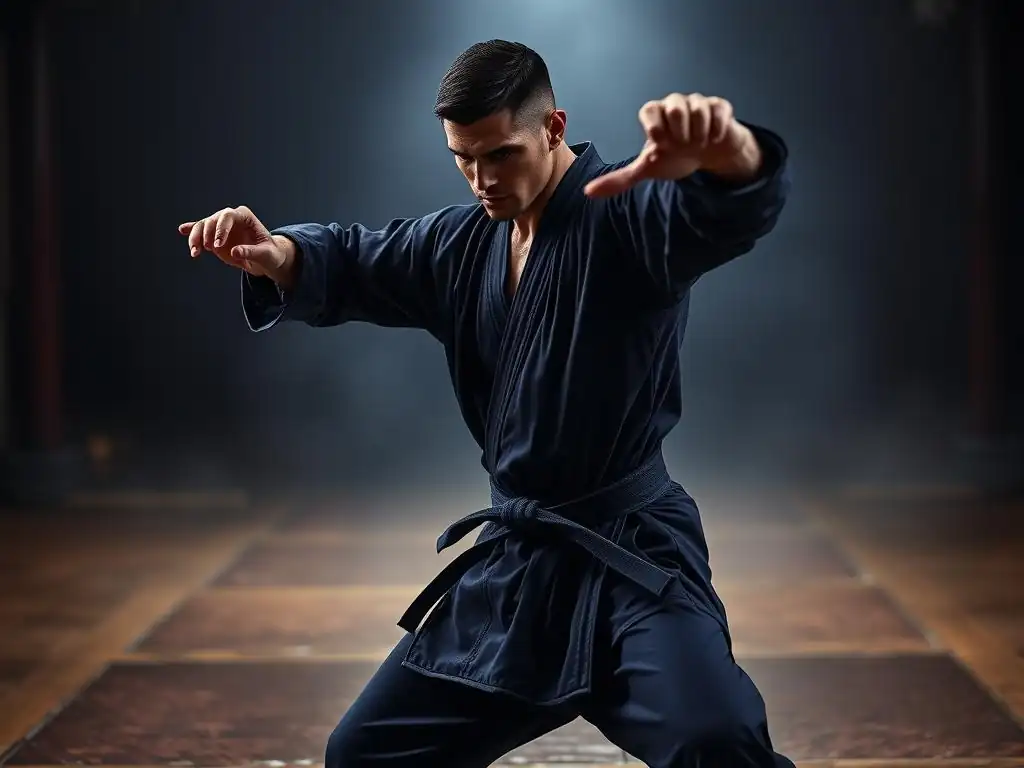
Welcome to Martial Arts Mastery, your gateway to understanding the rich tapestry of global combat traditions. Ever wondered how the flowing movements of Karate could be interwoven with the grappling prowess of Jujutsu? Dive into our exploration of WadoRyu Karate, where we unravel its fascinating history and unique blend of techniques. Discover how this discipline seamlessly merges striking and grappling, creating a dynamic and effective martial art. Prepare to delve deeper and unlock the secrets of this intriguing style...
- Introduction to Wado-Ryu Karate: A Jujutsu-Influenced Style
- Historical Origins of Wado-Ryu Karate
- Core Principles of Wado-Ryu Karate: The Jujutsu Connection
-
Wado-Ryu Karate Techniques: Emphasizing Fluidity and Control
- Striking Techniques (Atemi Waza): Accuracy and Efficiency
- Blocking Techniques (Uke Waza): Deflecting and Controlling
- Grappling Techniques (Ne Waza): Jujutsu Influences on Groundwork
- Joint Locks (Kansetsu Waza): Adapting Jujutsu for Self-Defense
- Throws (Nage Waza): Jujutsu Throwing Principles Applied in Wado-Ryu
- Wado-Ryu Karate Training Methods: Developing the Jujutsu Blend
- The Wado-Ryu Karate Jujutsu Blend in Self-Defense
- Wado-Ryu Karate vs. Other Karate Styles: Highlighting the Differences
- The Legacy of Wado-Ryu Karate: Continuing the Jujutsu Tradition
- Conclusion: Embracing the Wado-Ryu Karate Jujutsu Blend for Martial Arts Mastery.
-
Frequently Asked Questions
- What is the defining characteristic of WadoRyu Karate compared to other karate styles?
- How does the jujutsu influence in WadoRyu manifest in practice?
- What are some of the key principles emphasized in WadoRyu training?
- Is WadoRyu Karate effective for self-defense situations?
- Where can I learn more about the history and techniques of WadoRyu Karate?
- Final Reflection: Embracing the Fluidity of WadoRyu
- Unleash Your Inner Warrior: Explore the Art of Wado-Ryu!
Introduction to Wado-Ryu Karate: A Jujutsu-Influenced Style
Defining Wado-Ryu: Harmony and Peace Through Movement
Wado-Ryu, often translated as "Way of Peace" or "Way of Harmony," is one of the four major traditional karate styles of Japan. Founded by Hironori Otsuka in 1922, it stands apart from many other karate systems due to its foundational principles and unique movement philosophy. While commonly categorized as karate, Wado-Ryu's roots run deep into classical Japanese jujutsu, which profoundly shapes its techniques and overall approach to combat. This fusion is central to understanding what makes the WadoRyu Karate Jujutsu Blend so distinct.
The name "Wado" itself reflects the art's core philosophy. "Wa" (和) means harmony or peace, and "Do" (道) means way. Unlike styles that might emphasize brute force or rigid stances, Wado-Ryu prioritizes natural body movement, evasion, and using an opponent's force against them. The goal isn't just physical mastery but also the cultivation of character and a peaceful disposition, reflecting the "Wa" principle. This emphasis on fluid, efficient movement and minimal effort is a direct inheritance from its jujutsu lineage, distinguishing the WadoRyu Karate Jujutsu Blend.
The Distinctive Blend: Karate and Jujutsu in Wado-Ryu
The most defining characteristic of Wado-Ryu is its unique synthesis of Okinawan karate's striking techniques with the body dynamics, joint manipulation, and throwing methods of classical Japanese jujutsu. While many karate styles focus primarily on powerful, linear strikes from deep, stable stances, Wado-Ryu integrates elements like evasive body shifting ( Tai Sabaki), redirection of force ( Nagasu), and off-balancing ( Kuzushi) that are hallmarks of jujutsu.
This fusion creates a martial art that is both dynamic and adaptable. A Wado-Ryu practitioner is trained not just to deliver a powerful punch or kick but also to move out of the way of an attack, control an opponent's balance, or even execute a throw or joint lock if the situation dictates. This comprehensive approach, combining the percussive power of karate with the close-quarter control of jujutsu, is the essence of the WadoRyu Karate Jujutsu Blend, making it a highly practical system for self-defense.
Historical Origins of Wado-Ryu Karate
The Founder: Hironori Otsuka and His Martial Arts Journey
Hironori Otsuka (1892-1982) was the visionary behind Wado-Ryu. His martial arts journey began at a young age, diverging significantly from many of his Okinawan contemporaries who solely focused on karate. Otsuka Sensei's initial and primary training was in Shindo Yoshin-ryu Jujutsu, a prominent classical Japanese martial art system focusing on striking, joint locks, throws, and grappling. He began training in this style at the age of 13 under Tatsusaburo Nakayama and later became its third grandmaster.
By his late 20s, Otsuka Sensei was a master of Shindo Yoshin-ryu. His exploration of martial arts led him to encounter Okinawan karate through Gichin Funakoshi, the founder of Shotokan, who had recently introduced karate to mainland Japan. Otsuka Sensei trained with Funakoshi Sensei and other Okinawan masters like Kenwa Mabuni (Shito-Ryu founder) and Choki Motobu, absorbing their knowledge of striking techniques. However, he viewed some of the Okinawan methods as lacking the practical body mechanics and close-quarter principles he had mastered in jujutsu.
Otsuka Sensei's Jujutsu Background: Influencing Wado-Ryu
Otsuka Sensei's deep expertise in Shindo Yoshin-ryu Jujutsu was not merely a precursor to his karate training; it was the lens through which he refined and adapted the Okinawan art. Shindo Yoshin-ryu emphasized natural movement, soft techniques, and the effective use of leverage and body weight, principles that Otsuka Sensei found highly effective. He saw opportunities to integrate these sophisticated body mechanics into the more direct, powerful techniques of karate.
This background meant that when Otsuka Sensei encountered karate, he wasn't learning it in isolation. He was constantly analyzing how the striking methods could be made more efficient and practical by applying the evasive footwork, body shifting, and control principles from his jujutsu training. This critical perspective, rooted in decades of high-level jujutsu practice, was the fertile ground from which the WadoRyu Karate Jujutsu Blend would eventually grow.
From Shindo Yoshin-ryu Jujutsu to Wado-Ryu Karate
The formal establishment of Wado-Ryu Karate as a distinct style occurred gradually as Otsuka Sensei synthesized his diverse martial arts experiences. By 1922, he was training with Gichin Funakoshi. He began demonstrating his unique approach, combining karate strikes with jujutsu principles, and by 1924, he registered his own school. He formally named his system "Wado-Ryu" in 1940.
The evolution from his Shindo Yoshin-ryu roots to Wado-Ryu Karate involved selectively integrating and modifying techniques. He retained the core karate strikes (punches, kicks, strikes) but altered the delivery and defensive strategies based on jujutsu mechanics. For example, rigid blocking was often replaced or complemented by evasion and simultaneous counter-attacks, utilizing Tai Sabaki. Deep, static stances were deemed inefficient for practical movement and were replaced by higher, more mobile postures. This deliberate adaptation of karate through the lens of jujutsu principles is the defining characteristic of the WadoRyu Karate Jujutsu Blend.
Core Principles of Wado-Ryu Karate: The Jujutsu Connection
"Tai Sabaki": Body Shifting and Evasion Techniques
Tai Sabaki, or body management/shifting, is a cornerstone principle in Wado-Ryu, inherited directly from jujutsu. It involves moving the body skillfully to evade an attack rather than meeting it head-on with a block. This could be a slight pivot, a step to the side, or turning the body to present a smaller target while simultaneously positioning oneself for a counter-attack. The emphasis is on efficiency and minimizing the risk of injury by avoiding direct impact.
This principle is deeply ingrained in Wado-Ryu's defensive philosophy. Instead of a rigid, forceful block that stops an incoming strike, a Wado practitioner might shift their body out of the line of attack while using a softer movement to deflect or guide the opponent's limb past them. This not only protects the practitioner but also disrupts the attacker's balance and momentum, setting up opportunities for follow-up techniques, illustrating a key aspect of the WadoRyu Karate Jujutsu Blend.
"Nagasu": Redirecting Force, A Key Jujutsu Concept
Nagasu, meaning "to flow" or "to stream," refers to the principle of redirecting an opponent's force rather than opposing it directly. This is a fundamental concept in many classical jujutsu styles and is heavily utilized in Wado-Ryu. Instead of blocking a powerful punch with an equally powerful block (which could result in injury), the Wado practitioner might use a yielding motion to guide the punch harmlessly past them, often while simultaneously executing a counter-strike or setting up a control technique.
This principle requires sensitivity to an opponent's movement and intent. By blending with the incoming force and guiding it, the Wado practitioner conserves their own energy and uses the attacker's momentum against them. This fluid, non-resistant approach to defense is a clear indication of the strong jujutsu influence within Wado-Ryu and is vital to understanding the practical application of the WadoRyu Karate Jujutsu Blend.
"Kuzushi": Breaking Balance in Wado-Ryu
Kuzushi, the art of breaking an opponent's balance, is another critical principle borrowed from jujutsu and seamlessly integrated into Wado-Ryu. While striking arts often rely on impact to create openings, Wado-Ryu also emphasizes disrupting the attacker's equilibrium before or during a technique. This can be achieved through various means, such as pulling or pushing, stepping on a foot, applying pressure to a joint, or using body movement ( Tai Sabaki) to create an off-balance situation.
Once an opponent's balance is broken, they become vulnerable, making subsequent strikes, throws, or joint locks much more effective and requiring less force. This strategic approach to engagement, prioritizing the disruption of structure before applying power, highlights the sophisticated combat theory inherent in the WadoRyu Karate Jujutsu Blend and its practical application in self-defense scenarios.
"Ukemi": Breakfalling and Safe Landing Techniques
Ukemi, or breakfalling, is the practice of safely absorbing impact from throws, falls, or sweeps. While not a direct attack or defense technique in itself, it is a crucial safety element in martial arts that involve grappling, throws, or dynamic movements. Jujutsu, with its focus on throwing and ground techniques, places significant emphasis on Ukemi to prevent injury during training and application.
Wado-Ryu, incorporating throws and sweeps influenced by its jujutsu lineage, includes Ukemi training as a fundamental part of its curriculum. Practitioners learn how to fall correctly to dissipate the force of impact, protecting joints and the head. This inclusion underscores the comprehensive nature of the WadoRyu Karate Jujutsu Blend, acknowledging that in realistic situations, falling is a possibility, and safe recovery is as important as effective technique execution.
Wado-Ryu Karate Techniques: Emphasizing Fluidity and Control
Striking Techniques (Atemi Waza): Accuracy and Efficiency
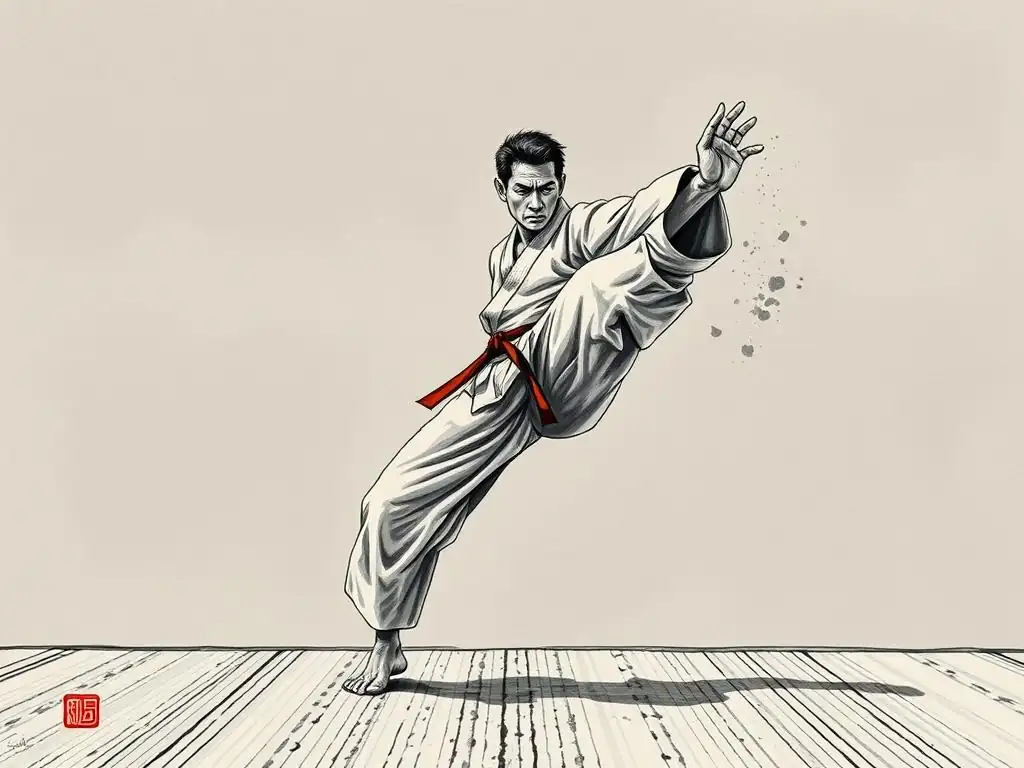
Wado-Ryu utilizes a range of striking techniques ( Atemi Waza), including punches, strikes, and kicks, derived from its karate foundation. However, the execution often differs from other styles. Strikes are typically delivered from higher, more natural stances, emphasizing speed and efficiency over raw power generated from deep postures. The focus is on accurate targeting of vital points and delivering penetrating force rather than simply pushing or shoving.
The application of Tai Sabaki and Nagasu is evident even in striking. A punch might be delivered while simultaneously shifting off the line of attack, or a block might flow into a strike. This integration means that strikes in Wado-Ryu are rarely static; they are part of a dynamic, fluid exchange. The goal is to deliver effective strikes while minimizing vulnerability, showcasing the inherent efficiency of the WadoRyu Karate Jujutsu Blend.
Blocking Techniques (Uke Waza): Deflecting and Controlling
Blocking techniques ( Uke Waza) in Wado-Ryu are heavily influenced by the principles of Nagasu and Tai Sabaki. Rather than rigid, forceful blocks designed to stop an attack dead, Wado blocks often involve softer, yielding movements that deflect or guide the incoming force away. This uses less energy and avoids meeting force with equal force, reducing the risk of injury to the blocker.
Furthermore, blocks in Wado-Ryu are often integrated with movement and counter-attack. A deflection might simultaneously set up a strike or transition into a control technique. The emphasis is on using the block not just to defend but also to create an opportunity for offense or control, reflecting the fluid, dynamic nature of the WadoRyu Karate Jujutsu Blend.
Grappling Techniques (Ne Waza): Jujutsu Influences on Groundwork
While Wado-Ryu is primarily known for its standing techniques, its jujutsu roots mean that it is not solely a striking art. Elements of groundwork or grappling ( Ne Waza), though less extensive than in dedicated grappling styles, are present, particularly in the context of transitioning from standing to ground or controlling an opponent who has been thrown or taken down.
This aspect of the WadoRyu Karate Jujutsu Blend involves techniques for maintaining control on the ground, escaping holds, and potentially applying joint locks or strikes from a grounded position. While not the main focus, the inclusion of these elements acknowledges the reality of physical altercations that may end up on the ground and provides practitioners with fundamental skills to manage such situations.
Joint Locks (Kansetsu Waza): Adapting Jujutsu for Self-Defense
Joint locks ( Kansetsu Waza) are a direct inheritance from Wado-Ryu's jujutsu lineage. These techniques involve manipulating an opponent's joints (wrist, elbow, shoulder, knee, ankle) to cause pain, control movement, or cause submission. Wado-Ryu incorporates a variety of joint locks, often applied in conjunction with strikes or after breaking an opponent's balance.
The application of joint locks in Wado-Ryu is typically geared towards practical self-defense scenarios, often used to control an attacker, facilitate an escape, or create an opening for a finishing technique. This integration of Kansetsu Waza is a clear indicator of the comprehensive nature of the WadoRyu Karate Jujutsu Blend, moving beyond simple striking to include methods of control and manipulation.
Throws (Nage Waza): Jujutsu Throwing Principles Applied in Wado-Ryu
Throws ( Nage Waza) are another significant contribution from Wado-Ryu's jujutsu foundation. While not as extensive or varied as in Judo or Aikido, Wado-Ryu includes techniques for off-balancing an opponent and causing them to fall or be thrown. These often utilize principles like Kuzushi (breaking balance) and leveraging an opponent's momentum.
Wado throws are frequently executed in conjunction with strikes or evasive movements. For instance, a strike might be used to distract or create an opening, followed by a swift throw utilizing body mechanics and leverage. The inclusion of Nage Waza provides Wado-Ryu practitioners with options beyond striking, allowing them to control or neutralize an opponent by taking them off their feet, further showcasing the versatility of the WadoRyu Karate Jujutsu Blend.
Wado-Ryu Karate Training Methods: Developing the Jujutsu Blend
Kata Training: Embodied Principles and Applications
Kata, pre-arranged sequences of movements representing combat scenarios, are a fundamental training method in Wado-Ryu, as in other karate styles. Wado-Ryu has a specific set of core kata, numbering around 15-16 depending on the lineage, which are often shorter and more compact than kata in styles like Shotokan. Wado kata emphasizes the principles of Tai Sabaki, Nagasu, and efficient movement, often incorporating subtle body shifts and transitions rather than large, powerful stances.
Training in Wado kata is not just about memorizing movements; it's about understanding the underlying principles and potential applications ( Bunkai). Practitioners analyze how the techniques within the kata embody the WadoRyu Karate Jujutsu Blend – how a seemingly simple block can be a deflection leading to a joint lock, or how a step can be a subtle off-balancing maneuver ( Kuzushi) before a strike. This deep study of kata is crucial for internalizing the style's unique mechanics.
Kumite (Sparring): Applying Techniques in Dynamic Situations
Kumite, or sparring, is essential for developing the ability to apply Wado-Ryu techniques in dynamic, unscripted situations. Wado-Ryu sparring often emphasizes light contact, control, and the application of principles like timing, distance, and Tai Sabaki. Rather than focusing on overwhelming force, practitioners are encouraged to use evasive movements and find openings through strategic positioning and counter-attacks.
There are various forms of Kumite in Wado-Ryu, ranging from pre-arranged ( Yakusoku Kumite) to more free-form sparring ( Jiyu Kumite). These exercises help practitioners develop reflexes, improve their understanding of distance and timing, and practice applying the fluidity and evasiveness characteristic of the WadoRyu Karate Jujutsu Blend against a resisting opponent.
Kihon (Basics): Mastering Fundamental Movements
Kihon involves the practice of fundamental techniques in isolation or simple combinations. This includes practicing stances, blocks, strikes, and kicks repeatedly to develop proper form, power, and body mechanics. In Wado-Ryu, Kihon training also focuses on developing the characteristic Wado movement – light on the feet, mobile stances, and efficient use of the body.
Mastering Kihon is the foundation upon which more complex techniques and applications are built. It ensures that practitioners develop the correct muscle memory for executing techniques with the fluidity and efficiency that defines the WadoRyu Karate Jujutsu Blend, ensuring that even basic movements embody the style's unique principles.
Randori (Free Practice): Applying Jujutsu Principles in a Dynamic Environment
Randori, or free practice, particularly focusing on the close-quarter and grappling elements, is another training method that highlights the jujutsu aspect of Wado-Ryu. While Kumite often focuses on striking range, Randori allows practitioners to explore transitions to throws, joint locks, and control techniques in a dynamic, less structured environment than pre-arranged Kumite.
This type of training is crucial for developing the practical application of the WadoRyu Karate Jujutsu Blend in situations where the distance closes or where striking alone is insufficient. It allows practitioners to practice Kuzushi, Tai Sabaki, and the application of control techniques against a resisting, moving partner, solidifying the integration of jujutsu principles into their overall martial skill set.
The Wado-Ryu Karate Jujutsu Blend in Self-Defense
Practical Applications of Wado-Ryu Techniques
The techniques of Wado-Ryu are designed with practical self-defense in mind. The emphasis on natural movement, evasion, and efficiency makes its methods highly applicable in real-world situations where rigid stances or complex sequences might be impractical. Techniques like simultaneous blocking and countering, using Tai Sabaki to get offline, and targeting vulnerable points are directly applicable to common self-defense scenarios.
For example, instead of a strong square block against a shove or grab, a Wado practitioner might use a yielding, circular movement to redirect the force while simultaneously stepping offline and striking. This type of integrated, fluid response is a hallmark of Wado-Ryu's practical approach, stemming directly from its unique blend of karate striking and jujutsu body mechanics.
Leveraging Jujutsu Principles for Effective Self-Defense
The jujutsu principles embedded within Wado-Ryu significantly enhance its effectiveness for self-defense. Tai Sabaki allows a defender to avoid serious injury by not being where the attack lands. Nagasu enables smaller individuals to deal with larger attackers by using the opponent's own strength against them. Kuzushi makes it easier to control or neutralize an attacker regardless of size or strength by disrupting their base.
Furthermore, the inclusion of joint locks and throws provides options for controlling or incapacitating an attacker without necessarily resorting to debilitating strikes, which can be crucial in situations where excessive force might be legally problematic. This layered approach, combining striking defense with control techniques, exemplifies how the WadoRyu Karate Jujutsu Blend provides a versatile toolkit for self-protection.
Wado-Ryu's Approach to Realistic Combat Scenarios
Wado-Ryu's approach to combat scenarios prioritizes efficiency, adaptability, and minimizing harm to oneself. It recognizes that real confrontations are often messy, unpredictable, and involve multiple ranges. Therefore, training incorporates transitions between striking, clinching, and potentially groundwork, reflecting the comprehensive nature of the WadoRyu Karate Jujutsu Blend.
Training often involves scenarios that simulate common attacks like grabs, shoves, and relatively untrained aggression, rather than focusing solely on point sparring against a skilled opponent. The emphasis on escaping holds, creating distance through Tai Sabaki, and using opportunistic strikes or control techniques makes Wado-Ryu a highly pragmatic system geared towards surviving and de-escalating realistic threats.
Wado-Ryu Karate vs. Other Karate Styles: Highlighting the Differences
Comparing Wado-Ryu to Goju-Ryu: Stance and Power Generation
Comparing Wado-Ryu to Goju-Ryu, another major Okinawan-based style, reveals significant differences, particularly in stance and power generation. Goju-Ryu, meaning "hard-soft," is known for its strong, rooted stances (like Sanchin Dachi) and emphasis on powerful, close-range techniques, including body conditioning and breathing exercises ( Sanchin Kata). Its power often comes from muscular tension and rooted stability.
Wado-Ryu, conversely, favors higher, more mobile stances and generates power not just from muscle but significantly from body mechanics, timing, and using weight transfer and momentum, influenced by jujutsu. While Goju-Ryu utilizes some joint locks and throws, the integration and emphasis on fluid evasion ( Tai Sabaki) and force redirection ( Nagasu) in Wado-Ryu are more pronounced and central to its core movement philosophy, distinguishing the WadoRyu Karate Jujutsu Blend.
Comparing Wado-Ryu to Shotokan: Linear vs. Circular Movements
A comparison between Wado-Ryu and Shotokan, arguably the most widely practiced karate style globally, highlights differences in movement philosophy. Shotokan often emphasizes deep, linear stances and powerful, direct movements – straight punches, linear blocks, and powerful kicks delivered along a direct line. Power generation often involves dropping body weight into techniques.
Wado-Ryu, while still utilizing linear techniques, places a greater emphasis on circular and evasive movements, reflecting its jujutsu influence. Stances are higher and more mobile, facilitating rapid shifts and pivots ( Tai Sabaki). Movements often involve blending with or flowing around an opponent's force ( Nagasu) rather than meeting it head-on. This contrast in movement dynamics is a key indicator of the WadoRyu Karate Jujutsu Blend's distinct character compared to the more linear focus of Shotokan.
The Unique Emphasis on Jujutsu in Wado-Ryu's Curriculum
While some other karate styles may contain elements that superficially resemble judo or jujutsu techniques (perhaps inherited from common Okinawan roots), Wado-Ryu's integration of classical Japanese jujutsu principles and techniques is uniquely deep and pervasive. This isn't just about including a few throws or joint locks; it's about the fundamental way the body moves, defends, and attacks being shaped by jujutsu concepts like Tai Sabaki, Nagasu, and Kuzushi.
Otsuka Sensei's background as a master of Shindo Yoshin-ryu Jujutsu meant he wasn't simply adding foreign techniques to karate; he was re-interpreting karate itself through the lens of sophisticated jujutsu body mechanics and strategy. This level of integration, where jujutsu principles inform striking, blocking, and movement at a foundational level, is what truly defines the WadoRyu Karate Jujutsu Blend and sets it apart within the world of karate.
The Legacy of Wado-Ryu Karate: Continuing the Jujutsu Tradition
Notable Wado-Ryu Practitioners and Their Contributions
Since its founding, Wado-Ryu has been propagated by numerous dedicated practitioners who have helped spread the style globally and preserve its unique characteristics. Key figures include Tatsuo Suzuki (1928-2011), who was instrumental in establishing Wado-Ryu in Europe and founded the Wado International Karate-Do Federation (WIKF), known for his dynamic demonstrations and emphasis on the Wado spirit.
Another prominent figure was Teruo Kono (1934-2000), who played a significant role in spreading Wado-Ryu throughout Europe and particularly in Germany, known for his technical precision. Hironori Otsuka II (1934-2022), the founder's son, became the second Soke (headmaster) of Wado-Ryu and continued to lead the main Wado-Ryu organization, preserving the traditional teachings. These individuals, among many others, dedicated their lives to mastering and teaching the WadoRyu Karate Jujutsu Blend, ensuring its survival and growth.
The Future of Wado-Ryu: Preserving and Evolving the Art
The future of Wado-Ryu involves a balance between preserving the core principles and techniques established by Otsuka Sensei and adapting to the needs of modern practitioners. Organizations worldwide continue to teach the traditional curriculum, emphasizing the unique WadoRyu Karate Jujutsu Blend. There is ongoing study of the kata and Bunkai to deepen understanding of the practical applications of the jujutsu elements.
Simultaneously, practitioners engage in competitive sport karate (though Wado-Ryu's emphasis on body evasion can sometimes differ from the point-scoring strategies of more linear styles) and explore the self-defense aspects in realistic training scenarios. The challenge lies in maintaining the integrity of the WadoRyu Karate Jujutsu Blend – ensuring that the evasive movement, control techniques, and philosophical underpinnings remain central, even as the art is taught and practiced in diverse environments globally, estimated to have hundreds of thousands of practitioners worldwide across various organizations.
Conclusion: Embracing the Wado-Ryu Karate Jujutsu Blend for Martial Arts Mastery.
Frequently Asked Questions
What is the defining characteristic of WadoRyu Karate compared to other karate styles?
WadoRyu Karate uniquely blends karate striking techniques with jujutsu joint locks and throws. This integration sets it apart from styles focusing primarily on striking.
How does the jujutsu influence in WadoRyu manifest in practice?
The jujutsu influence is evident in WadoRyu's emphasis on evasion, controlling an opponent's balance, and utilizing joint manipulation techniques for defense and offense.
What are some of the key principles emphasized in WadoRyu training?
WadoRyu training stresses the importance of tai sabaki (body shifting), nagashi (flowing movement), and kuzushi (breaking balance) to effectively apply techniques.
Is WadoRyu Karate effective for self-defense situations?
Yes, WadoRyu's combination of striking, grappling, and evasive maneuvers makes it a practical self-defense system, providing options for various combat scenarios.
Where can I learn more about the history and techniques of WadoRyu Karate?
You can find valuable resources, including historical overviews, training tips, and practical self-defense strategies, on websites dedicated to martial arts, such as MartialArtsMastery.org.
Final Reflection: Embracing the Fluidity of WadoRyu
The exploration of WadoRyu Karate, particularly its unique Jujutsu blend, reveals a martial art deeply rooted in adaptability and efficiency, principles that resonate profoundly in our ever-changing world. Understanding the origins and philosophy of WadoRyu offers more than just insight into combat techniques; it provides a framework for navigating life's challenges with grace and resilience.
WadoRyu's emphasis on harmonious movement and yielding to overcome force has profoundly influenced my understanding of conflict resolution, both on and off the mat. It's a reminder that true strength lies not in brute force, but in the ability to adapt and redirect. Karate is not a game. It is a life-or-death matter.
- Hironori Otsuka, founder of WadoRyu, reminds us that the principles we learn extend far beyond the dojo.
As we conclude this exploration of WadoRyu Karate and its Jujutsu blend, I invite you to consider how its core tenets of fluidity, adaptability, and respect can be applied to your own life. Embrace the WadoRyu spirit: find harmony in movement, yield to overcome obstacles, and strive for continuous self-improvement. The journey of a thousand miles begins with a single step; let this be your first step towards a more balanced and resilient you.
Unleash Your Inner Warrior: Explore the Art of Wado-Ryu!
Thank you for diving into the world of Wado-Ryu Karate! We hope you've gained a deeper appreciation for its unique blend of karate and jujutsu. Ready to put that knowledge into action?
Here's how you can continue your journey:
- Find a local Wado-Ryu dojo and attend a trial class. Experience the art firsthand!
- Dive deeper: Research the life and teachings of Hironori Otsuka, the founder of Wado-Ryu.
- Share this article with friends interested in martial arts and start a discussion about its distinct characteristics.
What aspect of Wado-Ryu's jujutsu influence intrigues you the most, and how do you think it complements the karate aspects of the style?