
The Evolution of Kicking Techniques: From Ancient Roots to Modern Taekwondo

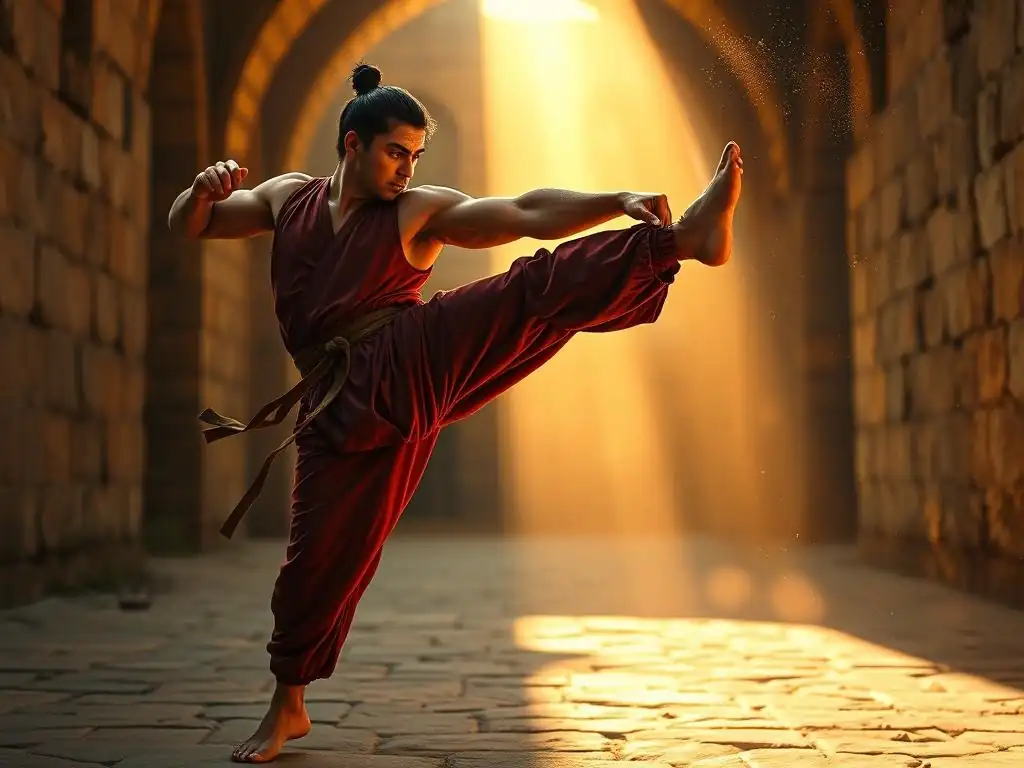
Welcome to Martial Arts Mastery, your gateway to unlocking the secrets of combat traditions worldwide. Ever wondered how the lightning-fast kicks of modern Taekwondo evolved from ancient battle strategies? Dive into our exploration of Ancient Taekwondo kicking evolution techniques and discover the rich history and transformative journey behind this iconic martial art. Prepare to unravel the mysteries and elevate your understanding of this powerful discipline.
- Introduction: Tracing the Roots of Taekwondo Kicking
- Ancient Influences on Taekwondo Kicking Techniques
- The Formation of Modern Taekwondo and Its Kicking Arsenal
- Key Figures in the Evolution of Taekwondo Kicking
- Comparing Traditional and Modern Taekwondo Kicking Styles
- The Biomechanics of Effective Taekwondo Kicking
- Taekwondo Kicking in Competition: A Constant Evolution
- The Future of Taekwondo Kicking: Trends and Innovations
- Conclusion: The Enduring Legacy of Taekwondo Kicking
-
Frequently Asked Questions
- How did kicking techniques in Taekwondo evolve from their ancient origins?
- What were the key differences between ancient Korean kicking techniques and modern Taekwondo kicks?
- What historical factors contributed to the development of Taekwondo kicking techniques?
- How did legendary practitioners contribute to the evolution of Taekwondo kicking techniques?
- What practical self-defense applications can be derived from understanding ancient Taekwondo kicking techniques?
- Final Reflection: The Enduring Legacy of the Kick
- Unleash Your Inner Kicking Master!
Introduction: Tracing the Roots of Taekwondo Kicking
Taekwondo, renowned globally for its dynamic and powerful kicking techniques, boasts a history that stretches back far beyond its formal naming in the mid-20th century. The art's emphasis on leg techniques is a defining characteristic, setting it apart from many other martial disciplines. Understanding the journey of these kicks requires delving into the martial traditions of Korea that predated Taekwondo, exploring how ancient practices, military necessities, and cultural influences converged to forge the foundation of modern Taekwondo's striking prowess. This exploration reveals a fascinating lineage of movement and power.
The journey through the evolution of ancient Taekwondo kicking evolution techniques highlights a continuous process of refinement and adaptation. From simple stomps and sweeps used in early forms of self-defense and military training to the complex, acrobatic maneuvers seen in contemporary sports Taekwondo, the development reflects changes in purpose, environment, and understanding of biomechanics. Examining this historical trajectory provides valuable insight not only into the art's past but also into the principles that make Taekwondo kicking so effective today, whether for sport, self-defense, or physical development.
The Significance of Kicking in Taekwondo's Development
Kicking is not merely one component among many in Taekwondo; it is arguably the most central and celebrated aspect. From the fundamental curriculum taught to beginners to the spectacular demonstrations and Olympic competitions, kicks are the hallmark of the art. This prominence stems from a variety of factors, including the historical context of Korean martial arts, which often utilized leg techniques extensively, and the strategic advantages kicks offer, particularly in terms of reach and power when targeting an opponent's body or head.
The emphasis on kicking profoundly shaped Taekwondo's development, influencing everything from training methodologies and stances to philosophical underpinnings regarding height and reach in combat. Early masters systematically categorized and codified hundreds of distinct kicking techniques, a level of specialization perhaps unparalleled in other martial arts. This focus led to sophisticated training regimens designed to build incredible leg strength, flexibility, balance, and precision, attributes that became synonymous with the Taekwondo practitioner. The pursuit of mastering these techniques remains a core objective for students worldwide, driving the art's global popularity.
Ancient Influences on Taekwondo Kicking Techniques
The groundwork for Taekwondo's formidable kicking arsenal was laid centuries ago within the Korean peninsula's diverse martial traditions. While precise historical records are sometimes fragmented, evidence points to a long-standing emphasis on foot and leg techniques in various forms of unarmed combat practiced throughout different Korean dynasties. These ancient arts, born from the necessities of survival, self-defense, and military engagement, provided a rich pool of techniques and principles that would eventually contribute to the formation of modern Taekwondo.
Understanding these ancient influences is crucial for appreciating the depth and lineage behind the dynamic kicks seen today. Practices like Subak and Taekkyon were not just historical footnotes; they were living traditions that preserved and evolved specific methods of using the legs for both offensive and defensive purposes. The study of these ancient Taekwondo kicking evolution techniques connects the modern art to its deep cultural and historical roots, illustrating a continuous thread of martial knowledge passed down through generations, adapting and transforming over time.
Pre-Taekwondo Martial Arts and Their Kicking Styles
Long before the term "Taekwondo" existed, various martial arts flourished in Korea, each contributing in some way to the eventual synthesis that formed the modern discipline. Arts like Subak and Taekkyon are frequently cited as significant precursors, known for their prominent use of leg techniques. These arts were practiced among both the military and the common people, serving purposes ranging from battlefield training and physical conditioning to folk games and self-defense.
The kicking styles within these pre-Taekwondo arts often differed from the highly formalized techniques of today, reflecting the specific contexts in which they were used. Techniques might include sweeping motions, low kicks to the legs, jumping kicks to evade or attack, and powerful stomps. While the exact technical details of many ancient kicks are lost to time, historical texts and artistic depictions provide clues, suggesting a practical, sometimes fluid, approach to using the lower body in combat scenarios, laying the foundation for the evolution of ancient Taekwondo kicking evolution techniques.
Subak: An Early Korean Martial Art with Kicking Emphasis
Subak was a martial art practiced during various Korean dynasties, notably during the Goryeo Dynasty (918-1392). Historical records mention Subak being practiced as a competitive sport during festivals and also as a form of military training. While it involved both hand and foot techniques, historical accounts often highlight its emphasis on striking, including kicks. For instance, during the reign of King Uijong (1146-1170), Subak contests were reportedly held, and participants displayed various striking skills.
Though detailed technical manuals from the Goryeo period are scarce, later texts like the Muyejebo (1598) and Muyedobotongji (1790), compiled during the Joseon Dynasty, describe various martial techniques, some of which are believed to have roots in earlier arts like Subak. These manuals illustrate techniques involving leg sweeps, kicks targeting the lower body, and even some higher kicks, suggesting a practical application of leg strength and balance in combat. The presence of such techniques in documented military arts underscores the long-standing recognition of kicking as a vital combat skill in Korea.
Taekkyon: The Precursor to Modern Taekwondo Kicking
Taekkyon is perhaps the most direct and widely acknowledged precursor to modern Taekwondo, particularly in terms of its dynamic leg techniques. Flourishing during the late Joseon Dynasty (1392-1897), Taekkyon was known for its fluid, dance-like movements, deceptive footwork, and powerful, often sweeping or hooking kicks. Unlike the linear, hard-style kicks often associated with some modern martial arts, traditional Taekkyon emphasized circular motion, flexibility, and using the opponent's balance against them.
Taekkyon techniques included kicks like baltteugi (stepping kick), nalchigi (flying kick), and various sweeping kicks ( kkyeot chigi). These techniques were often aimed at disrupting the opponent's balance or delivering powerful strikes from unexpected angles. The art survived into the 20th century despite periods of suppression and was recognized as a National Important Intangible Cultural Heritage of Korea in 1983. Its unique methodology and arsenal of leg techniques undeniably played a crucial role in the pool of knowledge from which the founders of Taekwondo drew, especially in developing the dynamic and varied kicking repertoire.
The Role of Military Training in Shaping Early Kicking Methods
Military necessity has historically been a primary driver for the development and refinement of martial techniques. In ancient Korea, as in many cultures, soldiers needed effective unarmed combat skills for situations where weapons were lost or impractical. Kicking techniques offered distinct advantages in battlefield or self-defense scenarios, providing range and power capable of incapacitating an opponent, even one potentially armored or armed with a short weapon.
Historical military texts and training practices from various dynasties incorporated unarmed combat methods that included kicks. The Muyedobotongji, a comprehensive martial arts manual from 1790, included sections on unarmed combat ( Kwonbeop) that described techniques utilizing the hands and feet. While the manual detailed specific stances and strikes, the emphasis on developing overall physical prowess, including strong legs and good balance, was paramount for soldiers. This military context fostered the development of practical, effective kicking techniques focused on generating maximum force and disrupting an opponent, influencing the foundational principles behind many ancient Taekwondo kicking evolution techniques.
The Formation of Modern Taekwondo and Its Kicking Arsenal
The mid-20th century marked a pivotal period with the formal emergence of Taekwondo. Following the end of the Japanese occupation in 1945, Korean martial artists who had trained in various styles, including traditional Korean arts like Taekkyon and arts introduced during the occupation like Japanese Karate, began to establish their own schools, known as kwans. These masters sought to create a unified Korean martial art, distinct from Japanese influences, drawing upon the rich, albeit sometimes fragmented, history of Korean martial practices.
This period saw significant experimentation and synthesis of techniques. Masters combined elements they deemed effective from different sources, leading to the development of a standardized curriculum and terminology. The process culminated in the official naming of "Taekwondo" in 1955, a term suggested by General Choi Hong Hi, intended to represent the art of hand and foot fighting. The creation of Taekwondo was a conscious effort to forge a national martial art that embodied Korean identity and martial prowess, with kicking techniques at its forefront.
The Influence of Japanese Karate on Early Taekwondo
While the founders of Taekwondo sought to create a uniquely Korean art, the significant exposure many of them had to Japanese Karate during the occupation undeniably influenced the initial development of modern Taekwondo. Several key figures trained in Karate schools in Japan, such as Shotokan, and brought back technical knowledge and training methodologies. This influence is particularly visible in some of the early stances, hand techniques, and linear movements incorporated into Taekwondo.
Specifically regarding kicks, the structured training methods and emphasis on powerful, focused strikes found in Karate likely influenced the systematization of Taekwondo's leg techniques. While Korean traditional arts like Taekkyon favored fluidity and sweeps, early Taekwondo incorporated more linear, powerful kicks aimed at breaking boards or delivering decisive blows. The synthesis involved adapting and transforming these influences, blending the power generation principles learned from Karate with the dynamic leg work rooted in Korean tradition to shape the nascent Taekwondo kicking arsenal.
The Standardization of Taekwondo Kicking Techniques
A critical phase in Taekwondo's development was the standardization of its techniques. As different kwans initially taught slightly varied curricula, there was a need to unify the art to promote it nationally and internationally. This effort involved defining core techniques, stances, and terminology, leading to the systematic categorization of kicks that forms the basis of training today. This standardization was essential for developing a coherent art form and facilitating instruction across different schools and regions.
The standardization process involved selecting and refining the most effective and representative kicking techniques from the various contributing styles. Masters worked to establish clear forms and applications for each kick, ensuring consistency in execution and teaching. This systematic approach allowed for the creation of belt ranking systems based on proficiency in these standardized techniques and paved the way for the development of formal patterns ( poomsae or hyung) that codified sequences of these fundamental movements, including a wide array of kicks.
The Development of Basic Kicks: Ap Chagi, Dollyo Chagi, Yop Chagi
At the heart of the standardized Taekwondo curriculum lie several fundamental kicks that are taught to every beginner and form the basis for more advanced techniques. These include Ap Chagi (front kick), Dollyo Chagi (roundhouse kick), and Yop Chagi (side kick). These kicks were chosen for their versatility, power, and strategic utility in various combat situations. Mastering these basics is considered essential for progression in the art.
Ap Chagi is a direct, linear kick used for forward striking or pushing. Dollyo Chagi, characterized by its circular motion, is perhaps the most iconic Taekwondo kick, known for its speed and power, often targeting the body or head. Yop Chagi is a powerful linear kick delivered from the side, emphasizing hip thrust and often used for defense or powerful side attacks. The systematic teaching and refinement of these core kicks ensured that practitioners developed a strong foundation in using their legs effectively, crucial for the continued evolution of ancient Taekwondo kicking evolution techniques into a modern system.
The Emergence of Advanced and Specialized Kicks
Building upon the foundation of basic techniques, the standardized Taekwondo curriculum expanded to include a vast array of advanced and specialized kicks. These techniques require greater flexibility, balance, coordination, and understanding of timing and distance. Examples include various spinning kicks ( Dwit Chagi - back kick, Dwit Dollyo Chagi - spinning hook kick), jumping kicks ( Twimyo Ap Chagi - jumping front kick, Twimyo Dollyo Chagi - jumping roundhouse kick), and complex combinations.
The development of these advanced kicks was driven by a combination of factors: the pursuit of greater effectiveness in self-defense scenarios, the desire for more spectacular techniques in demonstrations, and later, the demands of sport competition. Techniques like the 360-degree spinning hook kick require significant athletic ability and precise execution. The continuous innovation and refinement of these specialized kicks demonstrate the dynamic nature of Taekwondo's kicking repertoire, showcasing how the art continued to evolve beyond its initial standardization.
Key Figures in the Evolution of Taekwondo Kicking
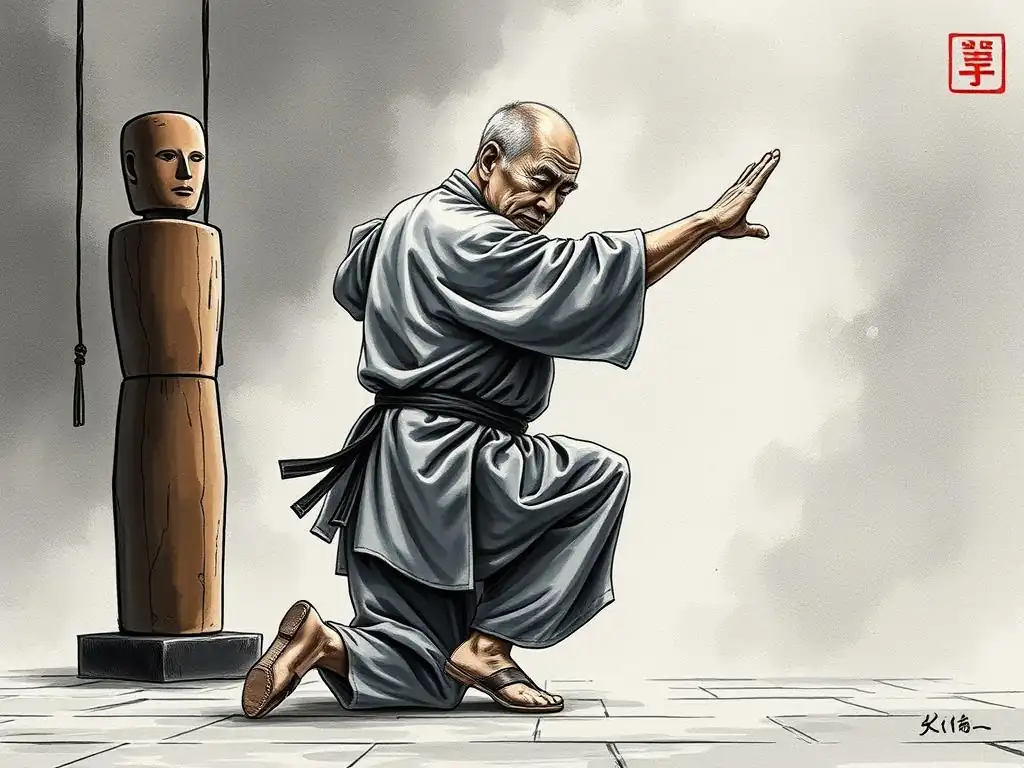
The journey of Taekwondo's kicking techniques from ancient practices to a globally recognized martial art was significantly shaped by the vision and efforts of key individuals. These pioneers drew upon historical knowledge, integrated new influences, and systematized techniques, leaving an indelible mark on the art as we know it today. Their contributions were critical in defining the technical syllabus, promoting the art, and fostering its evolution.
Understanding the roles of these figures provides insight into the decisions and philosophies that guided the development of Taekwondo's unique kicking arsenal. Their dedication to research, training, and dissemination helped transform disparate martial practices into a cohesive and powerful system. Without their pioneering work, the rich variety and technical sophistication of modern Taekwondo kicks might not exist, highlighting the human element in the evolution of ancient Taekwondo kicking evolution techniques.
General Choi Hong Hi: Founder of Taekwondo and His Contributions to Kicking Techniques
General Choi Hong Hi (1918-2002) is widely recognized as the founder of Taekwondo, having coined the name in 1955 and being instrumental in its early promotion and systematization. A military general with a background in Karate and traditional Korean martial arts, he envisioned a martial art that was both a powerful self-defense system and a form of physical and mental training rooted in Korean culture. His technical contributions were immense, particularly in categorizing and naming techniques.
General Choi oversaw the development of a comprehensive technical syllabus that included a vast number of kicking techniques. He meticulously detailed the biomechanics and application of each kick, often incorporating principles from physics to maximize power and efficiency. He is credited with developing or standardizing many of the patterns ( hyung) used in ITF Taekwondo, which showcase a wide range of kicks, including innovative aerial and spinning techniques. His emphasis on scientific principles and systematic instruction profoundly influenced how Taekwondo kicks were taught and practiced globally.
Nam Tae Hi: Pioneer and Innovator of Taekwondo Kicking
Among the prominent figures in early Taekwondo, Nam Tae Hi (1929-2013) stands out as a key technical innovator, particularly renowned for his exceptional kicking ability and contributions to training methodologies. Often referred to as the "Master of the Front Kick" or "Legendary Kicker," he was a close associate of General Choi Hong Hi and played a crucial role in demonstrating and popularizing Taekwondo's power.
Nam Tae Hi was known for his incredible speed and power in executing fundamental kicks like the Ap Chagi. He was instrumental in developing training drills and methods aimed at maximizing the power and precision of kicks, often using breaking demonstrations to showcase the effectiveness of the techniques.
His technical prowess and dedication to rigorous training standards inspired many early practitioners and helped solidify the reputation of Taekwondo kicks as among the most powerful in martial arts. His practical application and refinement of techniques were vital in the evolution of ancient Taekwondo kicking evolution techniques into a practical, powerful system.
Comparing Traditional and Modern Taekwondo Kicking Styles
While modern Taekwondo is a direct descendant of earlier Korean martial arts and the unified system developed in the mid-20th century, distinctions exist between what might be termed "traditional" and "modern" or "sport" Taekwondo kicking styles. These differences often stem from the primary focus of training – whether it's self-defense, philosophical development, or competitive sport. Understanding these variations provides insight into how the art continues to adapt and diversify while maintaining its core identity.
Traditional approaches, often emphasizing power, balance, and rootedness, might trace their lineage more directly to the kwans and the initial goal of practical self-defense and physical conditioning. Modern or sport Taekwondo, particularly under organizations like World Taekwondo (WT), has evolved significantly to meet the demands of competitive sparring, leading to changes in technique, strategy, and physical conditioning. Comparing these approaches highlights the dynamic nature of the art and the different paths its evolution has taken.
Differences in Stance, Power Generation, and Targeting
Differences between traditional and modern Taekwondo kicking styles are evident in fundamental aspects like stances, methods of power generation, and preferred targets. Traditional styles often emphasize lower, wider stances that provide a strong base for generating power through hip torque and body weight, aiming for powerful, potentially fight-ending blows. Kicks might be delivered with the full force of the body behind them, often targeting vital points or aiming to break an opponent's structure.
In contrast, modern sport Taekwondo, heavily influenced by sparring rules that prioritize speed, reaction time, and scoring points, often utilizes higher, more mobile stances. Power generation might prioritize speed and snap over sheer brute force, focusing on delivering quick, accurate kicks to legal scoring areas (typically the body protector and head). While powerful kicks are still present, the emphasis shifts towards multiple rapid-fire kicks, evasive footwork, and timing to land strikes within the rules, showing a clear adaptation in the evolution of ancient Taekwondo kicking evolution techniques for a new context.
Adapting Ancient Techniques for Modern Competition and Self-Defense
The fundamental kicking techniques rooted in ancient practices and standardized in early Taekwondo have been adapted for both modern sport competition and contemporary self-defense applications. For competition, techniques have been refined for speed, scoring efficiency, and rule compliance. For example, the Dollyo Chagi in sport Taekwondo is often executed with a focus on speed and targeting the sensor-equipped body protector or head, sometimes with less emphasis on full hip rotation compared to a power-breaking context.
Conversely, for self-defense, the focus shifts back to practical application in chaotic, unpredictable situations. Techniques might be modified for closer ranges, targeting vulnerable areas not allowed in sport, or combined with hand strikes, joint locks, or throws. While the basic mechanics of kicks like Ap Chagi or Yop Chagi remain, their application in self-defense emphasizes effectiveness and disabling an aggressor rather than scoring points. This dual application demonstrates the versatility and adaptability inherent in the evolution of ancient Taekwondo kicking evolution techniques.
The Biomechanics of Effective Taekwondo Kicking
Mastering Taekwondo kicks is not just about practicing movements; it involves a deep understanding of the underlying biomechanics that allow practitioners to generate speed, power, and accuracy. Effective kicking relies on coordinating the movement of multiple body parts – from the feet and legs to the hips, core, and even the arms – to transfer energy efficiently and deliver a strike with maximum impact. Analyzing the physics of motion, leverage, and force generation is key to optimizing performance.
Studying the biomechanics helps practitioners refine their technique, identify inefficiencies, and prevent injuries. Factors such as joint alignment, muscle activation sequence, balance during execution, and the angle of impact all play critical roles in determining the effectiveness of a kick. This scientific approach to training distinguishes high-level practitioners and is integral to the continuous refinement of Taekwondo's dynamic kicking techniques, building upon the intuitive understanding present in the evolution of ancient Taekwondo kicking evolution techniques.
Understanding Power Generation and Balance
Power generation in Taekwondo kicks is a complex interplay of muscle force, momentum, and body mechanics. While leg strength is essential, the primary source of power for many kicks, particularly rotational ones like Dollyo Chagi or Dwit Dollyo Chagi, comes from the rotation of the hips and torso. The leg acts like a whip, with the power originating from the core and transferring outwards. Proper sequencing of muscle activation, starting from the ground up, is crucial for maximizing kinetic chain efficiency and delivering a powerful strike.
Balance is equally critical, both for generating power and for maintaining stability before, during, and after the kick. Kicks are inherently off-balance movements, requiring the practitioner to support their weight on one leg while the other is in motion. Core strength, ankle stability, and the ability to quickly shift weight are vital. Practicing drills that challenge balance and coordination helps develop the proprioception needed to execute dynamic kicks effectively and recover quickly, essential skills refined through the historical evolution of ancient Taekwondo kicking evolution techniques.
Optimizing Technique for Speed, Accuracy, and Impact
Optimizing Taekwondo kicking technique involves fine-tuning movements to enhance speed, accuracy, and impact simultaneously. Speed often comes from minimizing unnecessary movement, using the smallest possible arc for the kick, and snapping the leg out and back quickly. Flexibility, particularly in the hips and hamstrings, allows for higher chambering and faster extension of the leg.
Accuracy requires precise body positioning, judging distance correctly, and maintaining focus on the target throughout the kick. Drills focusing on hitting specific points, like targets or pads, are essential for developing this precision.
Impact is a product of both power generation and delivering the strike with the correct part of the foot or lower leg (e.g., the ball of the foot for Ap Chagi, the instep or shin for Dollyo Chagi, the heel for Yop Chagi or Dwit Chagi) at the optimal angle. Combining speed, accuracy, and impact through diligent practice and understanding biomechanics is the goal of advanced kicking training.
Taekwondo Kicking in Competition: A Constant Evolution
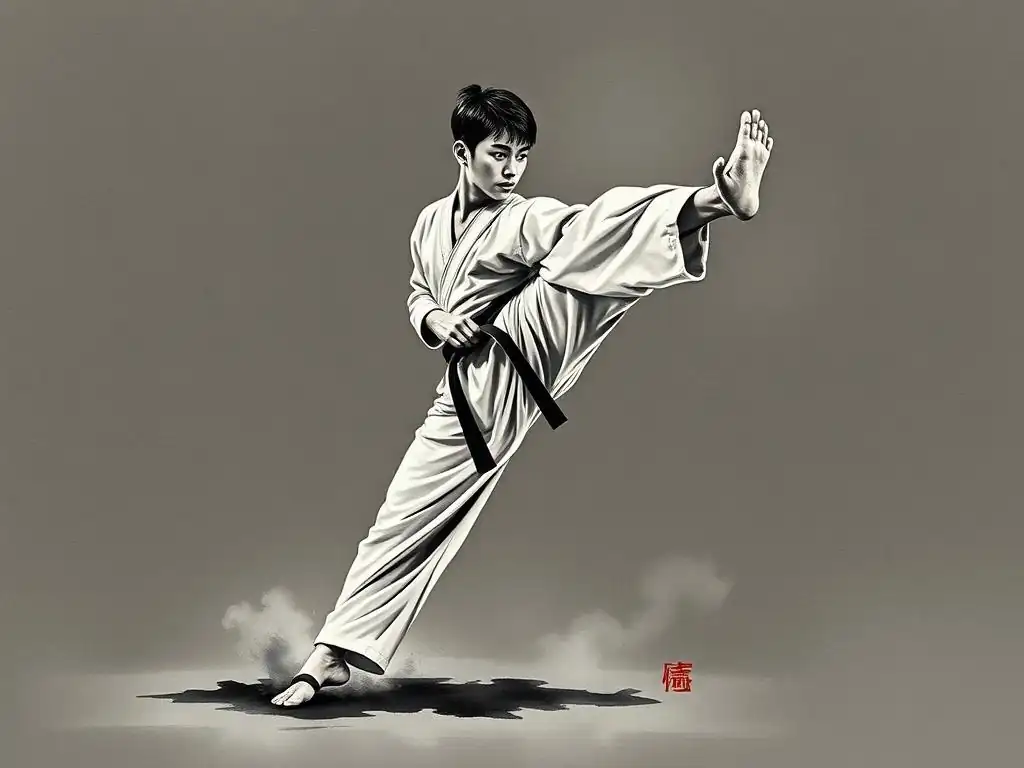
Competitive Taekwondo sparring, particularly under World Taekwondo rules, has become a major driver of technical innovation in kicking. The specific rules, scoring system, and use of electronic scoring equipment have significantly influenced the types of kicks that are most effective and frequently used in tournaments. This competitive environment fosters rapid adaptation and the development of new strategies and techniques to gain an edge over opponents.
The evolution of ancient Taekwondo kicking evolution techniques is vividly demonstrated in the competitive arena. What was effective a decade ago might be less so today due to rule changes, advances in training, and the emergence of new tactical approaches. Athletes and coaches constantly analyze matches, refine techniques, and develop innovative movements specifically designed to score points within the competitive framework, making the sport a dynamic laboratory for kicking technique development.
Rule Changes and Their Impact on Kicking Strategies
Rule changes in competitive Taekwondo have had a profound impact on kicking strategies. For example, the introduction of electronic body protectors and headgear, which score points based on impact force in specific areas, has led to a greater emphasis on delivering strong, clean strikes to these targets. This contrasts with earlier rules where subjective judging played a larger role. Techniques like quick, powerful Dollyo Chagi to the body protector and head kicks have become central to scoring.
Furthermore, rules regarding prohibited techniques, such as striking below the waist or certain types of spinning kicks that might be deemed dangerous, also shape strategic choices. The allowance of grabbing the opponent's leg for a brief moment before countering with a kick, permitted in some rule sets, introduces entirely new tactical possibilities. These rule-driven adaptations highlight how the practical application of Taekwondo kicks in a competitive setting continuously evolves, pushing practitioners to refine and innovate.
Innovative Kicking Techniques in Modern Sparring
Modern Taekwondo sparring showcases a range of innovative kicking techniques that have emerged or been refined to meet the demands of competition. Beyond the fundamental kicks, athletes utilize techniques like the "cut kick" (a fast, often low-amplitude kick aimed at disrupting the opponent's balance or leg), the "push kick" ( mireo chagi), and variations of spinning and jumping kicks executed with incredible speed and precision.
Complex combinations and transitions between techniques are also hallmarks of modern sparring. Athletes seamlessly link multiple kicks together, often incorporating footwork and feints to create openings. Techniques like the "scorpion kick" (a high, arching kick delivered backwards with the heel) or double/triple kicks in mid-air, while spectacular, are also practiced and occasionally used effectively in high-level competition. These innovations demonstrate the continued vitality and adaptability of Taekwondo's kicking repertoire in the face of competitive pressure.
The Future of Taekwondo Kicking: Trends and Innovations
The evolution of Taekwondo kicking techniques is far from over. As training methodologies advance, technology becomes more integrated into sports science, and practitioners continue to explore the boundaries of human movement, the art's kicking arsenal will undoubtedly continue to evolve. Future trends are likely to involve greater integration of scientific principles, personalized training approaches, and potentially the fusion of techniques with insights from other disciplines.
Exploring the future of Taekwondo kicking involves considering how athletes and practitioners will train, what new techniques might emerge, and how the art will adapt to changing contexts, whether in sport, self-defense, or as a form of physical fitness and self-improvement. The legacy of ancient Taekwondo kicking evolution techniques provides a strong foundation, but the future promises exciting developments driven by innovation and a relentless pursuit of excellence.
The Integration of New Training Methods and Technologies
The future of Taekwondo kicking training will increasingly leverage new training methods and technologies. Sports science is providing deeper insights into optimizing power generation, speed, and injury prevention. Techniques like plyometrics, strength and conditioning tailored specifically for kicking mechanics, and advanced flexibility training are becoming standard.
Technology is also playing a role. Motion capture analysis can provide detailed feedback on technique execution. Wearable sensors can measure impact force, speed, and angle. Virtual reality and simulation tools might offer new ways to practice timing and reaction against virtual opponents. These tools will allow practitioners to train smarter, with more precise data guiding their development, potentially leading to even more efficient and powerful kicking techniques than previously imagined.
Exploring Variations and Hybrid Kicking Styles
The continuous exploration of technique variations and the potential for hybrid kicking styles represent another avenue for future evolution. Practitioners may refine existing kicks, finding subtle variations in angle, trajectory, or timing that make them more effective against specific opponents or in particular situations. The vast number of possible movements of the human body suggests that there are still undiscovered nuances in executing kicks.
Furthermore, as martial arts continue to cross-pollinate, elements from other kicking-focused disciplines, such as Muay Thai, Savate, or Capoeira, might subtly influence Taekwondo techniques, leading to hybrid approaches. While maintaining the core identity of Taekwondo is important, judicious exploration of effective movements from elsewhere could enrich the art's kicking repertoire, ensuring its continued relevance and effectiveness in a changing world. This ongoing process builds upon the foundation laid by the ancient Taekwondo kicking evolution techniques.
Conclusion: The Enduring Legacy of Taekwondo Kicking
From its ancient roots in Korean martial practices like Subak and Taekkyon to its modern manifestation as a global sport and self-defense system, Taekwondo's kicking techniques have undergone a remarkable evolution. This journey reflects centuries of adaptation, refinement, and innovation, driven by military necessity, cultural expression, the vision of pioneering masters, and the demands of competition. Kicking remains the heart and soul of Taekwondo, captivating practitioners and spectators alike with its power, speed, and artistry.
The legacy of ancient Taekwondo kicking evolution techniques is not just a historical footnote; it is a living tradition that continues to inspire and inform contemporary practice. The fundamental principles of balance, power generation, and precision, honed over centuries, remain central to effective kicking today. As Taekwondo continues to evolve, incorporating new scientific understanding and training methods, its spectacular and effective kicking arsenal will undoubtedly continue to develop, ensuring its place as one of the world's most dynamic martial arts.
Celebrating the Art and Science of Taekwondo Kicks
Taekwondo kicks are more than just physical techniques; they represent a unique blend of art and science. The artistic aspect is evident in the aesthetic beauty, grace, and sometimes acrobatic nature of advanced kicks, particularly in forms and demonstrations. The precision, balance, and control required elevate kicking to a form of moving art.
The scientific aspect lies in the deep understanding and application of biomechanics, physics, and physiology needed to execute kicks with maximum efficiency, power, and minimal risk of injury. Analyzing joint angles, muscle recruitment patterns, momentum transfer, and impact dynamics transforms kicking from mere motion into an applied science. Celebrating both the artistic expression and the scientific principles behind Taekwondo kicks allows for a fuller appreciation of their complexity and effectiveness.
The Continued Evolution of Kicking Techniques in Taekwondo
The history of Taekwondo kicking is a testament to continuous evolution, and this process is ongoing. As athletes push physical boundaries, coaches develop new strategies, and researchers uncover deeper insights into human performance, Taekwondo's kicking techniques will continue to adapt and refine. New variations may emerge, training methodologies will improve, and the application of kicks in both sport and self-defense will continue to be explored.
The study of the evolution of ancient Taekwondo kicking evolution techniques provides a framework for understanding this ongoing development. It reminds us that the art is not static but a dynamic system that responds to its environment. The future promises further innovation, ensuring that Taekwondo's renowned kicking arsenal remains at the cutting edge of martial arts technique, inspiring future generations of practitioners around the world.
Frequently Asked Questions
How did kicking techniques in Taekwondo evolve from their ancient origins?
Ancient Taekwondo kicking techniques were heavily influenced by earlier Korean martial arts like Subak and Taekkyon. The evolution involved a gradual refinement and standardization of techniques, emphasizing power and efficiency for combat and self-defense, eventually leading to the more recognized forms of modern Taekwondo.
What were the key differences between ancient Korean kicking techniques and modern Taekwondo kicks?
Ancient techniques often involved more grounded stances and less emphasis on high kicks. Modern Taekwondo kicks prioritize speed and agility, with a greater variety of techniques designed for sport and competition.
What historical factors contributed to the development of Taekwondo kicking techniques?
The influence of various Korean dynasties and the need for self-defense against invaders played a significant role. Additionally, the philosophical underpinnings of martial arts, emphasizing discipline and mental fortitude, shaped the development process.
How did legendary practitioners contribute to the evolution of Taekwondo kicking techniques?
Legendary practitioners refined existing techniques and developed new ones through rigorous training and experimentation. Their contributions were often passed down through generations, forming the foundation of modern Taekwondo kicking styles.
What practical self-defense applications can be derived from understanding ancient Taekwondo kicking techniques?
Understanding the roots of Taekwondo allows for a deeper appreciation of the principles behind each kick. This knowledge can enhance practical self-defense effectiveness by providing a foundation for adaptable and powerful techniques.
Final Reflection: The Enduring Legacy of the Kick
The journey through the evolution of kicking techniques, from their ancient roots to modern Taekwondo, reveals more than just a progression of physical skills; it unveils a continuous refinement of human potential. Today, understanding this historical trajectory allows us to appreciate the depth and complexity embedded within each kick, transforming a simple movement into a powerful expression of discipline, art, and self-defense.
The evolution of Taekwondo kicking is not merely a historical account; it's a living testament to the dedication and innovation of generations. This exploration has deepened my appreciation for the intricate balance of power, precision, and control required to execute these techniques. The art of kicking is not just about strength; it's about understanding the body's mechanics and harnessing its energy with intention.
This quote encapsulates the essence of Taekwondo, highlighting that true mastery lies in the harmonious blend of physical prowess and mental acuity.
As we conclude this exploration of ancient Taekwondo kicking evolution techniques, I invite you to reflect on the lessons learned. Consider how the principles of discipline, perseverance, and continuous improvement, embodied in the evolution of these techniques, can be applied to your own life. Embrace the spirit of innovation and strive to refine your own skills, not just in physical pursuits, but in all aspects of your journey. Let the enduring legacy of the kick inspire you to reach new heights and unlock your own potential.
Unleash Your Inner Kicking Master!
Thank you for exploring the captivating journey of kicking techniques! We hope you’ve gained a new appreciation for the history and evolution of these powerful martial arts moves. Now, it’s time to put that knowledge into action!
Here’s how you can deepen your understanding and elevate your kicking game:
- Commit to spending 15 minutes this week practicing just ONE of the lesser-known historical kicking techniques we mentioned. Record yourself and analyze your form!
- Share your favorite historical kicking fact from this article with a fellow martial artist – ignite their passion for the art's rich history!
- Explore our website, MartialArtsMastery.org, to dive into related articles and uncover even more hidden gems of martial arts knowledge.
Which historical kicking technique are you most excited to experiment with first?