
Hapkido's Flowing Disarms: Seamless Transitions from Defense to Control

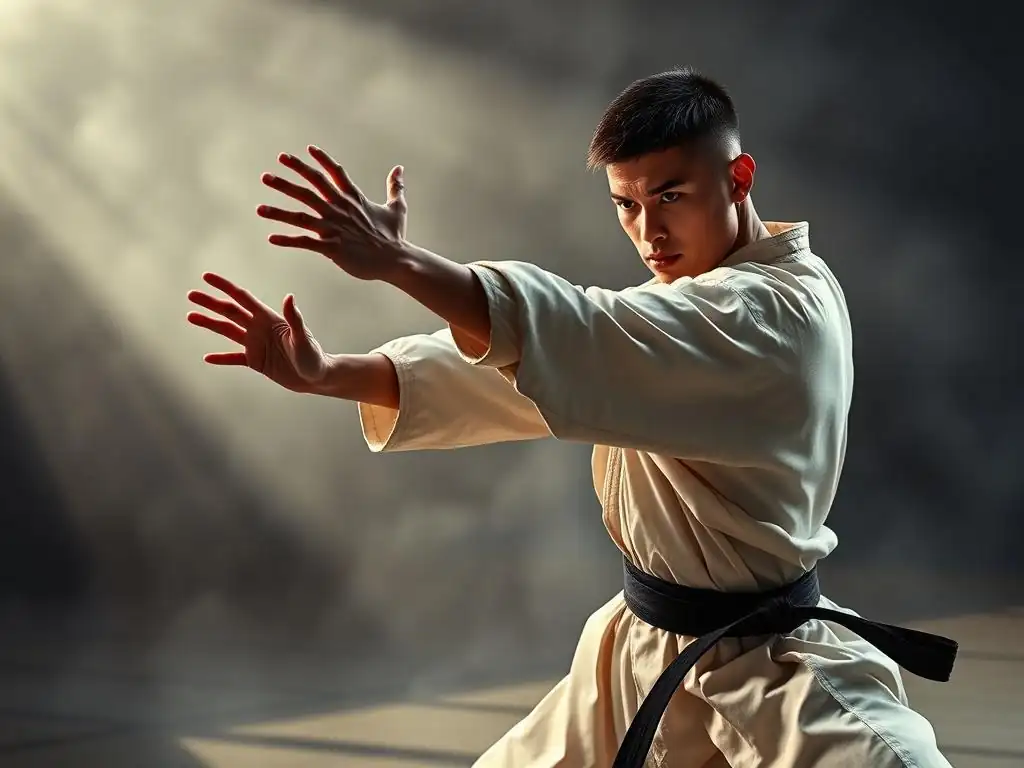
Welcome to Martial Arts Mastery!
Dive into the elegant power of Hapkido and unlock the secrets behind its flowing disarm techniques. More than just defense, these seamless transitions reveal a deeper understanding of movement, leverage, and control. Ready to explore the art of redirection and learn how to transform an opponent's force into your own advantage? Discover the principles that make Hapkido's disarms so effective and begin your journey toward mastery.
- Introduction to Hapkido Weapon Disarms: The Art of Flow
- Core Concepts Behind Hapkido's Disarming Techniques
- Common Hapkido Weapon Disarm Scenarios
- Hapkido Flowing Disarm Techniques: A Step-by-Step Breakdown
- Training Drills for Developing Hapkido Disarm Flow
- Advanced Hapkido Disarming Concepts
- The Philosophical Underpinnings of Hapkido Weapon Disarms
- Real-World Applications of Hapkido Disarming Skills
- Mastering Hapkido's Flowing Weapon Disarms: A Journey of Continuous Learning
-
Frequently Asked Questions
- What is a "flowing disarm" in the context of Hapkido?
- How does Hapkido's philosophy influence its disarm techniques?
- What types of weapons are commonly targeted in Hapkido disarm training?
- Are Hapkido flowing disarms practical for real-world self-defense situations?
- Where can I learn more about Hapkido disarm techniques and history?
- Final Reflection: Embracing the Dance of Control
- Unleash Your Inner Hapkido Master!
Introduction to Hapkido Weapon Disarms: The Art of Flow
Understanding the Principles of Hapkido's Flowing Motion
Hapkido's approach to combat is fundamentally rooted in the principle of YuWonHwa (유원화), meaning "Water, Circle, Harmony." This philosophy dictates that movements should be fluid, continuous, and adaptable, much like water flowing around an obstacle. When applied to weapon disarms, this means avoiding rigid, forceful blocks that meet an attack head-on. Instead, Hapkido practitioners are trained to blend with the attacker's energy and momentum, guiding it in a circular path to disrupt their balance and control their limb or the weapon itself. This fluid motion is key to executing effective Hapkido flowing disarm techniques.
The emphasis on circular movement allows a smaller, weaker individual to neutralize a larger, stronger opponent wielding a weapon. By redirecting force rather than opposing it directly, the Hapkido practitioner minimizes the risk of injury from the weapon while simultaneously setting up opportunities for control. This understanding of physics and body mechanics is central to the art, enabling techniques that are not only effective but also energy-efficient. It's this continuous, flowing motion that distinguishes Hapkido disarms from more linear or static approaches found in some other martial arts.
The Importance of Seamless Transitions in Weapon Disarmament
Executing Hapkido flowing disarm techniques effectively relies heavily on achieving seamless transitions between defensive maneuvers, control techniques, and the final disarmament. A pause or hesitation during the sequence can provide the attacker with a critical window to recover, adjust their grip, or launch a follow-up attack. Therefore, training focuses intensely on linking movements smoothly, ensuring that evasion flows directly into a joint lock or pressure point application, which then transitions immediately into the act of separating the weapon from the attacker.
This seamlessness is not just about speed; it's about maintaining continuous control over the attacker's limb and the weapon's trajectory throughout the encounter. For instance, deflecting a knife thrust isn't an end in itself, but merely the setup for the next step – perhaps a wrist lock or a control hold on the arm. The transition must be so fluid that the attacker has no opportunity to regain their balance or escape the developing control. Mastering these seamless transitions is paramount for the successful application of Hapkido flowing disarm techniques in a high-stress situation.
Core Concepts Behind Hapkido's Disarming Techniques
Hapkido's Circular Movements and Their Role in Disarms
The circularity inherent in Hapkido techniques is arguably the most critical element when dealing with weapons. Instead of blocking a linear attack head-on, which risks injury and requires significant opposing force, Hapkido advocates meeting the attack at an angle and guiding it in a curve.
This principle is evident in techniques like Dae Han Pal Mok Jipki (Great Korean Wrist Grab) variations used against a knife attack, where the defender moves offline and circles the attacking arm, disrupting the attacker's forward momentum and balance. This creates an opening to apply pressure or a joint lock while simultaneously gaining control of the weapon-bearing limb.
This circular motion also extends to footwork. Rather than standing static, practitioners use circular steps ( Won Hyung Bal Ki Sul) to evade the initial attack and reposition themselves relative to the attacker. This allows them to move to a safer angle, often to the side or rear of the opponent, where they can apply techniques with greater leverage and less risk. The combination of circular hand/arm movements and circular footwork creates a dynamic, flowing defense that makes Hapkido flowing disarm techniques highly adaptable and effective against various weapon attacks.
Utilizing Joint Locks and Pressure Points for Effective Control
Hapkido employs a wide array of joint locks ( Kwan Jul Ki Sul) and pressure points ( Hyul Do Ki Sul) as primary tools for controlling an opponent and facilitating weapon disarmament. Against a weapon-wielding attacker, applying a joint lock, such as a wrist lock ( Pal Mok Kwan Jul) or elbow lock ( Pal Gup Kwan Jul), can instantly incapacitate the limb holding the weapon or at least cause enough pain and discomfort to force the attacker to release their grip. These techniques are applied with leverage, often requiring minimal physical strength but precise knowledge of anatomy.
Pressure points, while sometimes used for striking to create an opening, are more commonly utilized in Hapkido disarms to amplify the effect of a joint lock or control hold. Applying pressure to specific nerve points near a joint being locked significantly increases the attacker's pain and compliance, making it easier to manipulate the limb and secure the weapon.
For example, combining a wrist lock with pressure on a point like Nae Kwan (P6) or Wae Kwan (SJ5) on the forearm can dramatically increase the pain and the likelihood of the attacker releasing the weapon. These precise applications are vital components of effective Hapkido flowing disarm techniques.
The Concept of "Yu" (Yielding) in Hapkido Weapon Defenses
The principle of Yu (유), or yielding, is fundamental to the non-resistant nature of Hapkido and is particularly crucial in weapon defense. Yielding does not mean surrendering; rather, it means adapting to and blending with the attacker's force rather than directly opposing it. When faced with a powerful strike from a weapon, a Hapkido practitioner doesn't attempt to block the force head-on, which would likely result in injury. Instead, they "yield" by moving with the force, redirecting its energy in a circular path.
This yielding motion allows the defender to absorb the initial shock of the attack while simultaneously setting up the technique. By not creating resistance, the attacker's force is used against them, contributing to their loss of balance or positioning. For instance, if an attacker swings a stick with great force, yielding involves stepping offline and guiding the stick's momentum past you, rather than trying to stop it.
This yielding creates the necessary timing and angle to transition into a control hold or joint lock on the attacker's arm, leading to the disarm. Mastering Yu is essential for the fluid execution of Hapkido flowing disarm techniques.
Common Hapkido Weapon Disarm Scenarios
Defending Against Knife Attacks: Flowing Disarms for Safety
Knife attacks are one of the most dangerous scenarios, and Hapkido offers specific Hapkido flowing disarm techniques designed for these threats. The core principle is to evade the initial thrust or slash by moving offline (e.g., using a 45-degree step) while simultaneously using a deflecting or guiding block to control the line of attack. This initial movement is crucial because it takes you out of the path of the blade. From this position, the technique immediately flows into controlling the attacker's wrist or arm.
Common techniques involve guiding the knife-hand in a circular motion downwards or outwards while simultaneously applying a wrist lock, such as Pal Mok Jipki (Wrist Grab) or Kwan Sul Jipki (Joint Break Grab). The goal is to disrupt the attacker's balance and leverage over the weapon.
For example, a technique might involve deflecting a downward stab, stepping inside, grabbing the wrist, and applying an Inverted Wrist Lock while circling the arm downwards and inwards, forcing the attacker to release the knife or fall to the ground. The key is the continuous, flowing transition from evasion to control to disarm, minimizing exposure to the blade.
Disarming Stick or Club Attacks: Hapkido's Adaptive Strategies
Stick or club attacks, whether overhead swings, thrusts, or side strikes, are also addressed with Hapkido flowing disarm techniques that emphasize redirection and control. The longer reach and greater momentum of a stick mean that timing and distance management are critical. Again, the primary defense involves moving offline to avoid the direct impact, often accompanied by a guiding block using the forearm or hand to direct the stick's trajectory away from the body.
Once the initial force is evaded and redirected, the Hapkido practitioner flows into a technique to control the attacker's grip on the stick or their arm. This might involve trapping the stick against the body or the ground, applying a joint lock on the wrist, elbow, or shoulder, or using a takedown to break the attacker's posture and ability to wield the weapon effectively.
For instance, against an overhead swing, one might step forward and to the side, guide the stick past, and then apply a shoulder lock ( Uh Kae Kwan Sul) or an elbow lock ( Pal Gup Kwan Sul) on the attacking arm, forcing the attacker to release the stick. The adaptability of Hapkido techniques allows them to be modified based on the type of stick (e.g., short baton vs. long staff) and the specific attack angle.
Addressing Gun Threats: Principles of Evasion and Control in Hapkido
While disarming a gun is inherently more dangerous and complex than disarming bladed or blunt weapons, Hapkido principles still offer a framework focused on immediate evasion, control, and disarmament. Hapkido flowing disarm techniques against a gun threat prioritize moving the line of fire away from the body as the absolute first step. This is often done with a simultaneous block/parry and a rapid offline movement, typically a step or pivot. The goal is to ensure that if the gun is fired during the initial reaction, the bullet does not hit a vital area.
Following the initial evasion and redirection of the weapon, the technique flows into controlling the weapon-bearing hand or arm with extreme prejudice. This often involves securing the wrist and potentially the slide of a semi-automatic pistol to prevent firing. Joint locks, particularly wrist and finger locks, are applied rapidly to force the attacker to release the weapon.
For example, against a gun held to the front, one might simultaneously deflect the barrel outwards with one hand while grabbing the wrist with the other, stepping offline, and applying a severe wrist lock ( Pal Mok Kwan Sul) combined with forward pressure to disrupt balance. Due to the extreme risk, Hapkido training for gun disarms emphasizes speed, commitment, and the understanding that success is not guaranteed, focusing on maximizing the chances of survival by rapidly transitioning from defense to control.
Hapkido Flowing Disarm Techniques: A Step-by-Step Breakdown
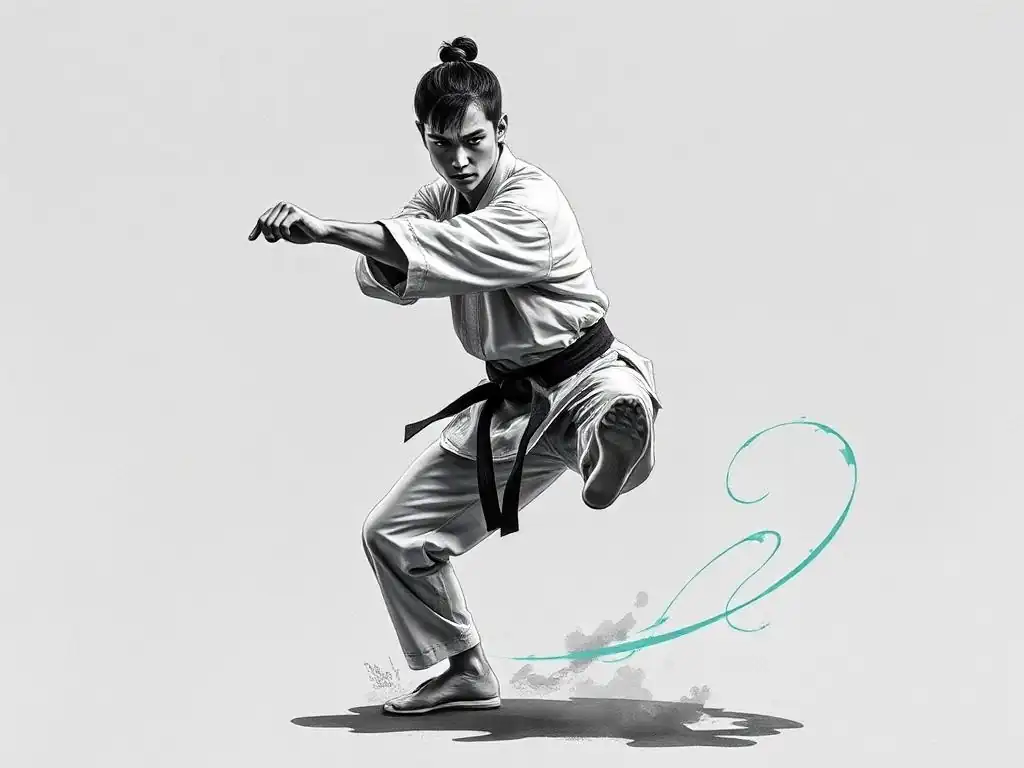
Step 1: Recognizing the Attack and Initial Evasion
The first critical step in executing Hapkido flowing disarm techniques is rapid recognition of the type of attack and the weapon being used, followed by immediate evasion. This isn't just about seeing the weapon; it's about perceiving the attacker's intent, trajectory, and commitment to the strike. Based on this assessment, the defender must instantly initiate a movement that takes them out of the direct line of the attack. This typically involves stepping offline (e.g., a 45-degree angle step, a side step, or a pivot) simultaneously with a basic block or deflection.
The initial evasion must be decisive and timed precisely as the attack is launched or just before it reaches its target. For instance, against a forward knife thrust, the evasion involves stepping to the side as the knife moves forward. This isn't a static block; it's a dynamic movement that changes the defender's position relative to the attacker and the weapon. This simultaneous action – evasion and initial contact/deflection – is the foundation upon which the rest of the Hapkido flowing disarm technique is built, ensuring survival of the initial threat.
Step 2: Redirecting the Weapon's Momentum
Once the initial evasion and contact are made, the second step involves actively redirecting the weapon's momentum. This is where Hapkido's circular principles and the concept of Yu (yielding) come into play. Instead of trying to stop the weapon, the defender guides its force along a curved path, usually downwards or away from their body and towards a direction that disrupts the attacker's balance. This redirection uses the attacker's own energy against them.
For example, if an attacker swings a stick horizontally, the defender might step inside the arc of the swing and use their forearm to guide the stick's trajectory past their body in a downward curve. This not only prevents the strike but also forces the attacker to overextend or lose balance. The redirection is not a passive deflection but an active manipulation of the attacker's limb and the weapon's movement, setting up the subsequent control phase. This seamless redirection is a hallmark of Hapkido flowing disarm techniques.
Step 3: Applying Joint Locks and Pressure Points for Disarmament
With the weapon's momentum redirected and the attacker's balance compromised, the third step is to apply a joint lock, pressure point, or combination thereof to gain control of the weapon-bearing limb and force the release of the weapon. This transition must be immediate and fluid from the redirection. As the attacker's arm is guided in a circular path, the defender simultaneously secures a grip on the wrist, elbow, or even fingers, depending on the technique.
Applying precise leverage on a joint like the wrist or elbow causes significant pain and mechanical disadvantage, making it difficult or impossible for the attacker to maintain their grip on the weapon. Pressure points can be simultaneously targeted to amplify this effect. For instance, while applying a wrist lock, the defender might use their thumb or knuckle to press on a relevant pressure point on the forearm. This combined application of joint manipulation and pressure is highly effective in breaking the attacker's will and physical ability to hold onto the weapon, leading directly to the disarmament.
Step 4: Maintaining Control and Follow-Up Techniques
Successfully disarming the attacker is a critical achievement, but the sequence is not necessarily over. Step four involves maintaining control over the now unarmed attacker and executing necessary follow-up techniques. Once the weapon is released, the defender should secure it, if safe to do so (e.g., kicking it away or picking it up). More importantly, the joint lock or control hold used to disarm the attacker should ideally be maintained to prevent them from initiating another attack or reaching for a secondary weapon.
From this controlled position, the Hapkido practitioner can transition into various follow-up techniques depending on the situation and the level of threat. This might include a takedown to fully incapacitate the attacker, a control hold to restrain them until help arrives, or simply creating distance to escape if the threat is neutralized and no further action is required. The ability to seamlessly transition from the disarm into control or follow-up is vital for ensuring safety and completing the encounter effectively using Hapkido flowing disarm techniques.
Training Drills for Developing Hapkido Disarm Flow
Partner Drills for Practicing Seamless Transitions
Partner drills are indispensable for developing the seamless transitions required for effective Hapkido flowing disarm techniques. These drills begin slowly, focusing on the precise mechanics of evasion, redirection, control, and disarmament. Partners take turns simulating attacks (with training weapons or padded substitutes) while the defender practices the sequence. Initial drills might break down the sequence into steps, but the goal is to gradually increase speed and fluidity until the steps blend together.
Specific drills include:
- Repetitive Disarm Entry: One partner provides a consistent attack (e.g., a straight knife thrust), and the defender practices only the evasion and initial redirection repeatedly to build muscle memory and timing.
- Flow Drill: Starting from the redirection phase, partners practice transitioning directly into the joint lock and disarm, then immediately resetting.
- Scenario-Based Drill: Partners work through a specific attack scenario from beginning to end (attack, evasion, redirection, control, disarm, follow-up), varying the speed and intensity as proficiency increases.
- Random Attack Drill: The attacker uses a variety of predefined attacks within a scenario, forcing the defender to react and choose the appropriate Hapkido flowing disarm technique on the fly.
These drills emphasize tactile feedback and timing, teaching practitioners to feel the attacker's energy and respond instinctively, making the Hapkido flowing disarm techniques truly fluid.
Solo Training Exercises to Enhance Sensitivity and Timing
While partner drills are crucial, solo training also plays a vital role in refining Hapkido flowing disarm techniques, particularly for developing sensitivity, timing, and body mechanics. Solo practice allows practitioners to focus on their own movement patterns, balance, and the internal feeling of executing techniques correctly without the variable resistance of a partner.
Useful solo exercises include:
- Shadow Boxing with Imaginary Weapons: Practicing evasion, redirection, and disarm motions against an imaginary attacker wielding a weapon. This helps visualize the technique and refine footwork and body positioning.
- Movement Patterns: Repeatedly practicing the fundamental circular footwork and body movements used in disarms (e.g., 45-degree steps, pivots, circular guides) to make them instinctive.
- Weapon Handling Drills: If using training weapons, practicing the motions of securing and manipulating the weapon during the disarm sequence (e.g., how to grip a training knife during a wrist lock, how to guide a stick).
- Balance and Core Strength Exercises: Many disarms require strong balance and core control. Exercises like single-leg stances, rotational movements, and core strengthening contribute to stability during dynamic disarming actions.
Solo training builds the foundational physical skills and mental visualization necessary for effective Hapkido flowing disarm techniques before applying them with a partner.
The Importance of Repetition and Muscle Memory in Hapkido
Mastering Hapkido flowing disarm techniques, like any complex physical skill, relies heavily on repetition to build muscle memory. In high-stress self-defense situations involving weapons, there is no time for conscious thought about technique execution. The response must be automatic, driven by ingrained physical patterns. Repetition trains the body to react instantaneously and correctly to specific stimuli.
Consistent, deliberate practice of disarm techniques thousands of times allows the complex sequence of evasion, redirection, control, and disarmament to become a single, integrated action performed without hesitation. This muscle memory ensures that even under duress, the practitioner can execute the Hapkido flowing disarm techniques smoothly and effectively. Instructors often structure training sessions to include high-volume repetition of core disarm entries and techniques, gradually increasing speed and realism. This dedication to repetitive practice is the bridge between understanding a technique intellectually and being able to apply it reliably in a real-world threat scenario.
Advanced Hapkido Disarming Concepts
Adapting Disarms to Different Weapon Types and Attack Styles
Advanced Hapkido training delves into adapting the core Hapkido flowing disarm techniques to a wider variety of weapon types and unpredictable attack styles. While basic training covers common threats like knives, sticks, and guns, advanced practitioners learn to apply the underlying principles of evasion, redirection, and control against less common weapons (e.g., chains, broken bottles, improvised weapons) or attacks that deviate from standard patterns (e.g., multiple attackers, surprise attacks from different angles).
This adaptation requires a deeper understanding of leverage, anatomy, and spatial relationships. For instance, disarming a chain might involve trapping links against the body or using rotational techniques on the attacker's wrist, different from disarming a rigid stick. Adapting to varied attack styles means being able to recognize subtle cues, adjust timing, and modify the angle or application of a joint lock on the fly. Advanced practitioners learn to see the principle behind the technique rather than just a rigid set of movements, allowing them to improvise effective Hapkido flowing disarm techniques in novel situations.
Integrating Throws and Takedowns After a Successful Disarm
A successful disarm neutralizes the weapon threat, but the attacker remains a danger. Advanced Hapkido flowing disarm techniques often integrate throws ( Don Ji Ki) and takedowns ( Neh Dun Ji Ki) as immediate follow-ups to control the now unarmed opponent. The momentum and position gained during the disarm sequence often naturally lead into opportunities for throws or takedowns.
For example, a wrist lock used to disarm a knife attacker might seamlessly transition into an Oh Kae Don Ji Ki (Shoulder Throw) by continuing the circular motion and disrupting the attacker's balance over the defender's hip. Similarly, controlling an arm during a stick disarm can flow directly into a Moo Reup Chi Ki (Knee Strike) followed by a takedown. Integrating these grappling elements ensures that the threat is fully neutralized, preventing the attacker from recovering or attempting further aggression. This layered approach, combining striking, joint locks, and throws/takedowns, makes Hapkido flowing disarm techniques comprehensive self-defense solutions.
Mental Preparedness and Awareness in Self-Defense Situations
Beyond physical techniques, advanced Hapkido training emphasizes mental preparedness and situational awareness as crucial components of effective self-defense, especially against weapon threats. Awareness begins long before an attack, involving scanning the environment for potential threats, recognizing pre-conflict indicators (e.g., body language, verbal cues), and planning potential escape routes. This proactive approach can help avoid dangerous situations entirely or provide precious seconds to react if an attack is unavoidable.
Mental preparedness involves controlling fear and maintaining focus under extreme stress. Training includes pressure testing drills that simulate the chaos and adrenaline of a real attack, helping practitioners learn to manage their physiological response. The ability to remain calm, assess the situation rapidly, and execute Hapkido flowing disarm techniques instinctively despite fear is paramount. Advanced students train not just their bodies but also their minds to be resilient and decisive in the face of danger, understanding that mental fortitude is as important as physical skill.
The Philosophical Underpinnings of Hapkido Weapon Disarms
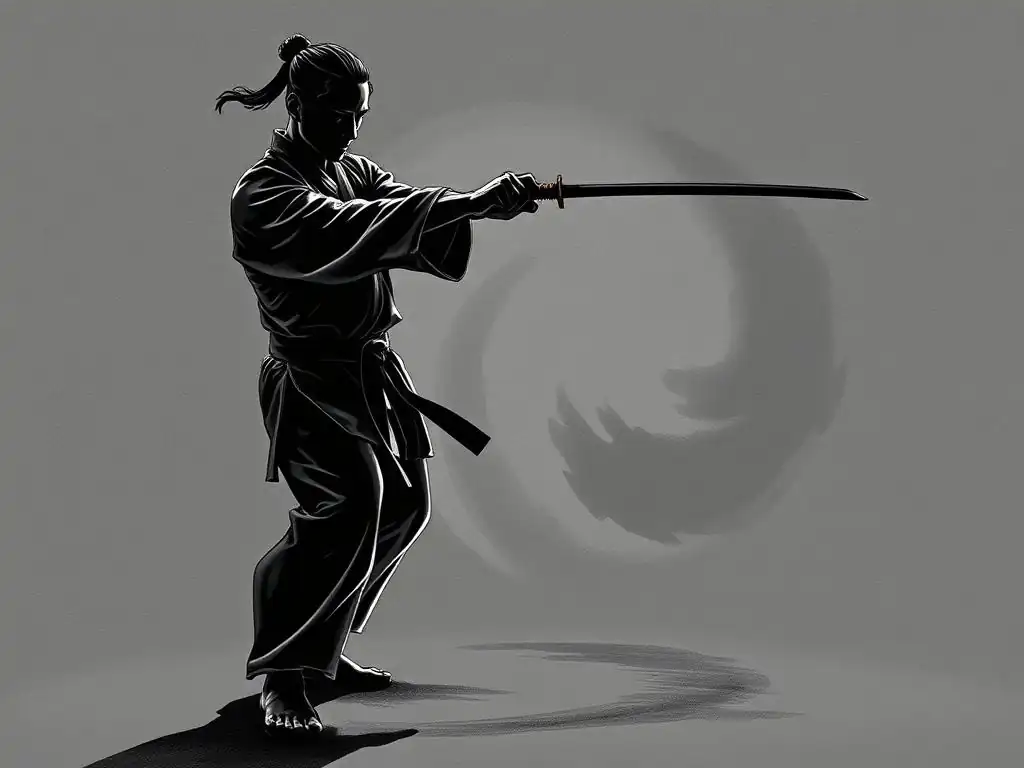
Harmony and Non-Resistance in Hapkido's Disarming Philosophy
At its core, Hapkido's philosophy, particularly as applied to weapon disarms, is deeply rooted in the concepts of harmony ( Hwa) and non-resistance ( Yu). Rather than meeting force with equal or greater force, Hapkido seeks to harmonize with the attacker's energy, blending with their movement to control it. This is not passive; it is a dynamic yielding that allows the defender to redirect the attack's momentum and leverage it against the attacker.
In the context of Hapkido flowing disarm techniques, this means not engaging in a power struggle over the weapon. Attempting to simply wrench a weapon away from a determined attacker often requires significant strength and risks injury. Instead, by yielding to the initial force and guiding the attack's trajectory in a circular path, the defender disrupts the attacker's balance and structure, creating an opening to apply control techniques that require less brute force. This philosophical approach makes Hapkido disarms accessible and effective for individuals of varying physical attributes.
The Ethical Considerations of Using Disarming Techniques
Hapkido training includes discussions on the ethical implications of using disarming techniques. While the primary goal is self-preservation and neutralizing a threat, the techniques themselves, particularly joint locks and pressure points, can cause injury. Ethical training emphasizes using the minimum necessary force to resolve the situation. The goal of a disarm is to remove the weapon and control the threat, not necessarily to inflict maximum damage.
Practitioners are taught to understand the potential consequences of their techniques and to use them responsibly. This includes recognizing when a disarm is necessary and when de-escalation or evasion might be a safer or more appropriate response. The ability to control the level of force applied within a technique is a key aspect of advanced training. Hapkido flowing disarm techniques are powerful tools, and ethical understanding ensures they are used judiciously and in accordance with principles of proportionality and self-defense law.
Hapkido's Emphasis on De-escalation and Conflict Resolution
Aligned with its philosophical roots in harmony, Hapkido places significant emphasis on de-escalation and conflict resolution as the preferred methods for dealing with confrontation, even when weapons are present. Physical techniques, including Hapkido flowing disarm techniques, are considered a last resort when all other options have failed and there is an imminent threat to safety.
Training often includes verbal de-escalation strategies and understanding the dynamics of conflict. The ability to read a situation, communicate calmly, and potentially defuse tension is prioritized. If physical intervention becomes necessary, the Hapkido practitioner aims to resolve the situation as quickly and safely as possible, ideally by controlling and disarming the attacker rather than resorting to excessive force. This holistic approach underscores that Hapkido is not just about fighting but about avoiding fights and resolving conflict with minimal harm when possible.
Real-World Applications of Hapkido Disarming Skills
Self-Defense Scenarios: Protecting Yourself and Others
The most direct real-world application of Hapkido flowing disarm techniques is personal self-defense. In situations where an individual is confronted by an attacker wielding a weapon – be it a knife in a street robbery, a stick in a physical altercation, or even a firearm threat – the ability to effectively disarm can be life-saving. Hapkido provides practical strategies and techniques to survive such encounters by neutralizing the primary threat.
For example, consider a scenario where someone is threatened with a knife during a mugging. Applying a well-practiced Hapkido flowing disarm technique involving evasion, redirection, and a wrist lock can allow the victim to take control of the weapon-bearing hand, force the attacker to release the knife, and potentially escape or control the situation further. While no martial art guarantees safety, Hapkido training significantly increases the chances of surviving a weapon confrontation by providing concrete, trainable responses.
Law Enforcement and Security Applications of Hapkido
Hapkido flowing disarm techniques are highly relevant and applicable in law enforcement and security contexts. Officers and security personnel frequently encounter individuals armed with various weapons. The Hapkido principles of blending, circular motion, and joint manipulation are effective for controlling and disarming suspects with minimal reliance on brute strength, reducing the need for potentially lethal force.
Techniques for controlling wrists, elbows, and shoulders, and methods for safely removing weapons like knives, sticks, or even firearms from non-compliant individuals, are valuable tools for law enforcement. For example, an officer trained in Hapkido might use a flowing wrist lock to gain control of a suspect brandishing a knife, leading the suspect to the ground and securing the weapon without resorting to striking or shooting. Many police and security forces around the world incorporate Hapkido-based control and disarm tactics into their training curricula due to their efficiency and relative safety compared to other methods.
The Importance of Responsible Training and Application
Given the potential for injury inherent in weapon disarms, responsible training and application are paramount. Hapkido schools emphasize practicing these techniques in a safe, controlled environment under the supervision of qualified instructors. Using training weapons made of rubber, foam, or wood is essential, and techniques involving joint manipulation are practiced slowly and with control to avoid injuring training partners.
Beyond safe practice, responsible application in real-world scenarios means using Hapkido flowing disarm techniques only when faced with a genuine, imminent threat involving a weapon. It requires good judgment to assess the situation, determine if a disarm is the necessary and proportionate response, and use only the force required to neutralize the threat. Hapkido training instills not just physical skills but also the ethical framework and judgment needed to apply these powerful techniques responsibly.
Mastering Hapkido's Flowing Weapon Disarms: A Journey of Continuous Learning
Finding a Qualified Hapkido Instructor and Training Environment
Mastering Hapkido flowing disarm techniques requires guidance from a qualified instructor within a suitable training environment. A good instructor possesses deep technical knowledge, understands the underlying principles, and can safely guide students through the progressive steps of learning complex techniques. They should also emphasize safety, ethics, and the philosophical aspects of Hapkido, not just the physical movements.
The training environment should be conducive to learning, with appropriate safety mats, training weapons, and a culture of mutual respect among students. Training partners are essential for practicing disarms, and a supportive environment encourages safe experimentation and feedback. Seeking out schools affiliated with recognized Hapkido federations or led by instructors with verifiable lineage can help ensure quality training that adheres to authentic Hapkido principles and methodologies.
The Ongoing Pursuit of Skill Refinement and Self-Improvement
Mastering Hapkido flowing disarm techniques is not a destination but a continuous journey of refinement and self-improvement. Proficiency requires consistent practice over many years. As practitioners gain experience, they deepen their understanding of timing, distance, leverage, and how to adapt techniques to different body types and situations.
Advanced training involves exploring variations of techniques, integrating disarms with other Hapkido skills (like striking, throws, and ground techniques), and developing the ability to react intuitively under pressure. Even experienced practitioners continue to refine their movements, seeking greater efficiency, fluidity, and precision. This lifelong dedication to practice and learning is central to the martial arts philosophy and essential for truly mastering the complex and dynamic nature of Hapkido flowing disarm techniques.
Embracing the Art of Flow in Hapkido and Life
Ultimately, embracing the art of flow in Hapkido extends beyond physical techniques to encompass an approach to life. The principles of yielding, blending, and seamless transitions learned through practicing Hapkido flowing disarm techniques can be applied to navigating challenges and conflicts in daily life. Approaching obstacles with flexibility rather than rigidity, seeking harmony rather than confrontation, and adapting gracefully to changing circumstances are lessons that transcend the dojang.
The journey of mastering Hapkido's disarms teaches patience, perseverance, discipline, and the value of continuous effort. It cultivates not just physical skills but also mental resilience and a philosophical perspective grounded in adaptability and non-resistance where appropriate. By embracing the art of flow in Hapkido, practitioners can find greater effectiveness, peace, and harmony both on and off the training floor.
Frequently Asked Questions
What is a "flowing disarm" in the context of Hapkido?
A flowing disarm in Hapkido refers to a seamless transition from an initial defense against an attack to a controlled disarming maneuver. It emphasizes fluid movement and redirection of the attacker's force.
How does Hapkido's philosophy influence its disarm techniques?
Hapkido's philosophy emphasizes harmony and redirection of energy. This means disarms are not just about brute force, but about using the attacker's momentum against them, achieving a balanced and efficient resolution.
What types of weapons are commonly targeted in Hapkido disarm training?
While Hapkido covers a wide range, common weapons targeted in disarm training include knives, sticks, and even firearms. The techniques emphasize adapting to the specific weapon and the attacker's grip.
Are Hapkido flowing disarms practical for real-world self-defense situations?
Yes, Hapkido's flowing disarms are designed to be practical by using natural body movements and leverage to neutralize threats quickly. They are effective when applied with proper training and understanding of distance and timing.
Where can I learn more about Hapkido disarm techniques and history?
MartialArtsMastery.org is dedicated to providing historical overviews, training techniques, and practical self-defense strategies regarding Hapkido. You can find more information on Hapkido flowing disarm techniques and the art's history there.
Final Reflection: Embracing the Dance of Control
The exploration of Hapkido's flowing disarm techniques, as we've seen, is not merely a study of physical movements; it's an immersion into a philosophy of yielding and redirecting force. This principle of harmonious redirection, of transforming aggression into control, resonates deeply in our increasingly turbulent world. Understanding how to navigate conflict with grace and precision, both physically and metaphorically, is a skill more valuable now than ever before.
The beauty of Hapkido lies in its adaptability and its emphasis on continuous flow. This concept of seamless transition, of moving from defense to control with fluidity and intention, has profoundly influenced my understanding of conflict resolution, extending far beyond the dojang. It reminds us that true strength lies not in brute force, but in the ability to adapt and redirect. The art of Hapkido is the art of harmony. It is the art of taking an opponent's strength and using it against them.
- Ji Han-Jae, Founder of Hapkido.
As we conclude this journey into the heart of Hapkido's flowing disarms, I invite you to consider how these principles can be applied to your own life. How can you embrace the dance of control, redirecting negativity and transforming challenges into opportunities for growth? Let the fluidity and adaptability of Hapkido inspire you to navigate the complexities of life with grace, strength, and unwavering intention.
Unleash Your Inner Hapkido Master!
Thank you for exploring the art of Hapkido disarms with us. We hope you’ve gained valuable insights into the flowing techniques and seamless transitions that define this powerful martial art. Now, it’s time to put that knowledge into action!
Here's how you can continue your Hapkido journey:
- Commit to mastering at least one new Hapkido disarm per week by practicing diligently with a partner or under the guidance of an instructor.
- Share your favorite Hapkido disarm technique (or a video!) on social media using #HapkidoMastery – let's inspire others!
- Research the origins and philosophy behind Hapkido's joint locking principles; understanding the "why" will deepen your practice.
What's the first Hapkido disarm you're going to perfect this week, and what challenges do you anticipate overcoming?