
The Hidden Link: How Age, Fatigue, and Stress Impact Your Fighting Reflexes

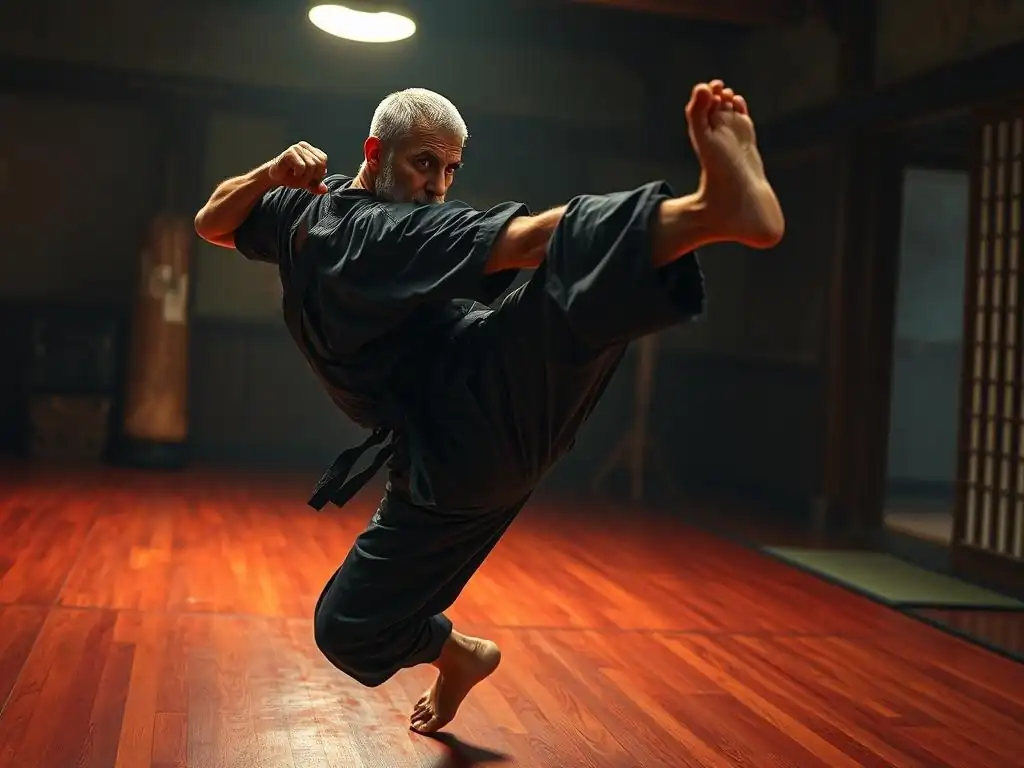
Welcome to Martial Arts Mastery, where we delve into the heart of combat excellence. Ever wondered how age, fatigue, and stress subtly erode your hard-earned fighting reflexes? This article unveils the hidden link between these often-overlooked factors and your performance, offering insights and actionable strategies to maintain peak responsiveness. Discover how to combat these influences and stay sharp, no matter the challenge. Ready to unlock the secrets?
Defining Fighting Reflexes: More Than Just Instinct
Fighting reflexes are often misunderstood as purely instinctual, automatic responses like pulling your hand away from a hot stove. While simple reflexes are certainly part of our biological makeup, the fighting reflexes crucial for martial arts mastery and combat are far more complex. They involve a sophisticated interplay between perception, cognitive processing, decision-making, and motor execution.
Unlike involuntary reflexes mediated primarily by the spinal cord, combat reflexes rely heavily on the brain's ability to quickly analyze a situation, select an appropriate response from a repertoire of learned techniques, and execute that response with precision and speed. This complex loop, often referred to as the perceptual-cognitive-motor loop, is what allows a martial artist to block a punch, evade a kick, or counter an attack effectively under pressure. These are not mere twitches; they are highly trained, situation-dependent responses that require significant mental and physical coordination.
Consider the difference between a simple reflex like blinking and a combat reflex like slipping a jab and countering with a cross. Blinking is automatic and requires no conscious thought. Slipping and countering, however, requires recognizing the incoming stimulus (the jab), assessing its trajectory and speed, accessing stored motor patterns (slipping, throwing a cross), and executing the sequence rapidly.
This process, while appearing instantaneous to an observer, involves neural pathways spanning from sensory input (eyes, proprioceptors) to brain processing centers (cortex, cerebellum, basal ganglia) and back down to the muscles. The efficiency and speed of this entire loop define the quality of one's fighting reflexes. Factors like age, fatigue, and stress can significantly impact the speed and accuracy of this complex process, slowing down recognition, impairing decision-making, or hindering motor execution, thereby directly affecting your fighting reflexes age fatigue stress performance.
- How does age affect fighting reflexes in martial arts?
- What role does fatigue play in diminishing fighting reflexes?
- How does stress negatively impact fighting reflexes during a fight?
- Are there training methods to mitigate the effects of age, fatigue, and stress on fighting reflexes?
- Can understanding the impact of age, fatigue, and stress actually improve my martial arts practice?
Frequently Asked Questions
How does age affect fighting reflexes in martial arts?
Age can significantly impact fighting reflexes by slowing down nerve conduction speed and reducing muscle power and reaction time. This makes it harder to react quickly to threats.
What role does fatigue play in diminishing fighting reflexes?
Fatigue, whether physical or mental, impairs fighting reflexes by reducing cognitive processing speed and diminishing muscle responsiveness. This can lead to delayed or incorrect reactions in combat.
How does stress negatively impact fighting reflexes during a fight?
Stress triggers the release of hormones like cortisol, which can impair decision-making abilities and create muscle tension, hindering fluidity and speed of movement and reflexes.
Are there training methods to mitigate the effects of age, fatigue, and stress on fighting reflexes?
Yes, specific training techniques like reflex drills, mindfulness exercises, and proper nutrition and recovery strategies can help maintain and even improve fighting reflexes despite these challenges.
Can understanding the impact of age, fatigue, and stress actually improve my martial arts practice?
Absolutely. By acknowledging these factors, martial artists can tailor their training to focus on compensatory strategies, improve mental resilience, and develop a more sustainable and adaptable fighting style.
Final Reflection: Preserving Reflexes in the Face of Time
The exploration of how age, fatigue, and stress erode our fighting reflexes reveals a truth that resonates far beyond the dojo or the ring. It speaks to the very essence of human resilience and adaptability in a world that constantly demands our attention and energy. Understanding these interconnected factors is not just about maintaining physical prowess; it's about preserving our ability to react, to protect ourselves, and to navigate life's challenges with confidence and grace.
This understanding has profoundly influenced how I view the aging process and the importance of mindful living. It's a reminder that our reflexes, both physical and mental, are not static; they are constantly being shaped by our lifestyle choices. The mind is everything. What you think you become.
- Buddha. This quote perfectly encapsulates the power of mental resilience in mitigating the effects of age, fatigue, and stress on our reactive capabilities. It underscores the importance of cultivating inner peace and mental clarity to maintain sharp reflexes throughout life.
Now, I invite you to reflect on your own life. How are age, fatigue, and stress impacting your ability to react, to respond, to truly live in the moment? Take the lessons learned here and apply them to your daily routine. Prioritize rest, manage stress, and challenge yourself physically and mentally. By doing so, you can not only sharpen your fighting reflexes but also cultivate a more resilient and fulfilling life, one where you are always ready to face whatever comes your way.
Ignite Your Inner Warrior: Reclaim Your Reflexes!
Thank you for exploring the impact of age, fatigue, and stress on your fighting reflexes. Now, it's time to put this knowledge into action and sharpen your skills.
Here are a few ways to get started:
- Commit to just 15 minutes of daily reflex training. This could include drills with a partner, reaction ball exercises, or even interactive video games designed to improve response time.
- Share this article with your training partners to spark a conversation and build a stronger, more resilient dojo community.
- Explore the Martial Arts Mastery archive for advanced drills focusing on fatigue resistance and mental clarity under pressure.
What's one small change you'll implement today to immediately boost your reflexes and overall performance?