
Martial Arts Training: The Ultimate Laboratory for Developing RealWorld Mental Resilience

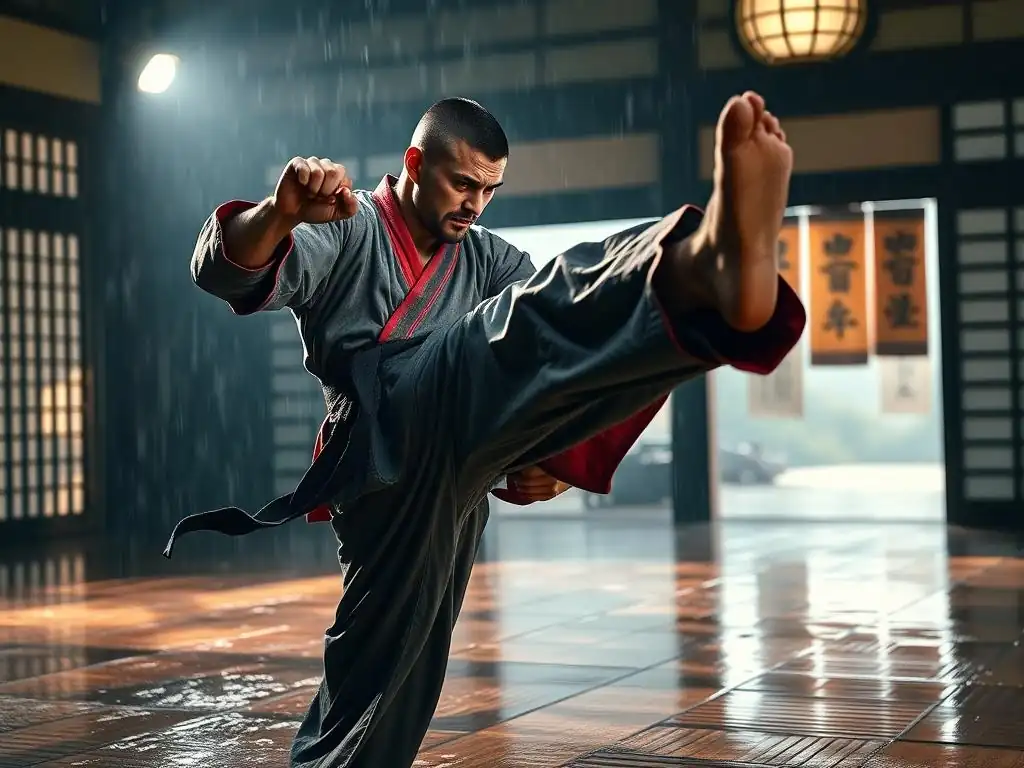
Welcome to Martial Arts Mastery, where we delve deep into the heart of combat disciplines. Ever wondered how martial arts training transcends physical prowess to forge unbreakable mental fortitude? This week, we explore Real-world Mental Resilience, revealing how the dojo becomes a crucible for cultivating the mindset needed to conquer challenges far beyond the mat. Discover the surprising connection between disciplined training and unwavering resolve, and unlock the secrets to applying these powerful principles to every facet of your life. Ready to tap into your inner strength?
Embracing Discomfort: Stepping Outside Your Comfort Zone
Martial arts training is inherently designed to push physical and mental boundaries. From the first awkward stance or painful stretch, practitioners are constantly exposed to discomfort. This isn't accidental; it's a fundamental part of the process. Think of holding a deep horse stance for several minutes – muscles burn, joints ache, and the mind screams for relief.
Yet, instructors encourage students to endure, to find strength beyond the initial pain. This consistent exposure to controlled physical and mental hardship builds a tolerance for discomfort, a crucial element for developing real-world mental resilience. It teaches the individual that perceived limits are often just that – perceptions – and that significant growth occurs when one chooses to step outside their comfort zone.
Beyond the physical, martial arts training involves the discomfort of vulnerability. Learning new techniques means accepting awkwardness and making mistakes in front of others. Sparring introduces the discomfort of potential failure or physical impact.
Overcoming the initial apprehension of being thrown in Judo or receiving a controlled strike in Karate requires facing fear and pushing through it. This repeated cycle of encountering discomfort, enduring it, and emerging stronger is a powerful laboratory for the mind, preparing individuals to face challenging or uncomfortable situations in their daily lives with greater fortitude and less hesitation, directly enhancing their capacity for real-world mental resilience.
Cultivating Discipline and Perseverance
Discipline is the bedrock of any successful martial arts journey. It manifests not only in adhering to dojo rules and etiquette but, more importantly, in the consistent commitment to training, even when motivation wanes. Earning rank, particularly the coveted black belt, is a testament to years of unwavering discipline and perseverance. While the exact timeline varies by art and school, achieving Shodan (first-degree black belt) often requires 3 to 5 years of dedicated, regular practice, attending classes multiple times a week, and practicing independently. This long-term commitment, overcoming boredom, fatigue, and life's distractions, instills a deep sense of self-discipline.
Perseverance in martial arts is tested repeatedly. Failing a belt test, losing a sparring match, struggling with a complex technique, or recovering from an injury are all common hurdles. A student learning a difficult throw in Aikido might practice it hundreds, even thousands, of times, falling and getting up repeatedly before achieving proficiency.
This relentless pursuit of mastery in the face of failure teaches the invaluable lesson of perseverance – the ability to keep going despite setbacks. This ingrained perseverance, honed on the mats, is directly applicable to achieving long-term goals in careers, education, or personal development, significantly bolstering real-world mental resilience.
Managing Fear and Anxiety in High-Pressure Situations
Martial arts training provides a unique environment to confront and manage fear and anxiety in a controlled setting. Activities like sparring, self-defense drills, or even demonstrating techniques under scrutiny inherently raise stress levels. The physiological response to confrontation – increased heart rate, tunnel vision, difficulty breathing – is something practitioners learn to recognize and manage. Unlike theoretical discussions of stress, martial arts offers a practical, physical experience of it.
Through repeated exposure in a safe space, practitioners develop coping mechanisms. They learn to stay calm under pressure, think strategically despite adrenaline, and act decisively when needed.
For example, in a grappling exchange in Brazilian Jiu-Jitsu, being in a disadvantageous position can trigger panic, but training teaches the practitioner to breathe, assess, and look for escape or reversal opportunities rather than succumbing to the fear. This repeated process of facing a stressful situation, navigating it consciously, and finding a resolution builds confidence and reduces the debilitating effects of fear and anxiety in unpredictable real-world situations, directly contributing to real-world mental resilience.
Developing Self-Awareness and Emotional Regulation
The intense physical and mental demands of martial arts training foster profound self-awareness. Pushing physical limits reveals strengths and weaknesses. Interacting closely with training partners, especially during sparring, often brings emotional responses to the surface – frustration when a technique doesn't work, anger when hit, or anxiety before a test. Recognizing these internal states, both physical and emotional, is the first step toward managing them effectively. Practitioners learn to observe their reactions without being overwhelmed by them.
Emotional regulation is then cultivated through conscious effort and the structure of training. Losing composure during sparring often leads to mistakes; therefore, learning to remain calm and focused becomes a practical necessity, not just a philosophical ideal. Instructors emphasize controlling reactions, maintaining respect even in competitive situations, and channeling emotions constructively.
Techniques like focused breathing before a match or mentally reviewing performance afterward become tools for emotional control. This heightened self-awareness and the learned ability to regulate emotional responses are invaluable skills for navigating complex interpersonal dynamics, professional challenges, and personal crises, forming a critical pillar of real-world mental resilience.
Judo: Developing Mental Fortitude through Overcoming Throws and Pins
Judo, meaning "the gentle way," paradoxically builds immense mental fortitude, particularly through its emphasis on throws ( nage-waza) and groundwork ( katame-waza). A core experience in Judo is being thrown, often hard, onto the mat. This requires a student to trust their training (ukemi, or breakfalls) and mentally accept a moment of complete vulnerability and lack of control. Repeatedly experiencing being thrown, analyzing why it happened, and then getting back up to try again instills humility, resilience in the face of physical defeat, and the mental toughness to continue despite impact and vulnerability.
On the ground, katame-waza involves holding techniques ( osaekomi-waza), joint locks ( kansetsu-waza), and strangulations ( shime-waza). Being subjected to a pin requires enduring physical pressure and discomfort while maintaining mental clarity to strategize an escape within a short timeframe (e.g., 20 seconds for an Ippon hold). Surviving being held or escaping a developing submission attempt builds incredible mental grit and the ability to function effectively under duress and physical disadvantage. This constant cycle of being challenged physically and mentally, analyzing the situation, and persevering directly translates to overcoming obstacles and developing real-world mental resilience.
Aikido: Enhancing Mental Toughness with Blending and Redirecting Force
Aikido, "the way of harmonious energy," focuses on blending with an attacker's movement and energy to neutralize aggression without direct confrontation. While less focused on physical impact than some other arts, Aikido profoundly challenges the practitioner's mindset. Instead of meeting force with equal or greater force, the Aikidoist learns to receive an attack calmly, move with it, and redirect the energy. This requires significant mental control, letting go of the instinctive fight-or-flight response that demands resistance.
Executing Aikido techniques effectively, such as turning a forceful grab into a joint lock like kote-gaeshi (wrist return), demands a centered, calm mind capable of adapting instantly to an unpredictable situation. It teaches patience, non-resistance to adverse circumstances, and the ability to look for points of connection and redirection rather than conflict. This mental discipline of remaining calm and adaptable when faced with perceived threats, finding harmonious solutions instead of escalating conflict, cultivates a unique form of mental toughness crucial for navigating complex social, professional, and personal challenges, thereby enhancing real-world mental resilience.
Muay Thai: Building Real-World Mental Resilience Through Conditioning and Mental Grit
Muay Thai, or Thai Boxing, is renowned for its intense physical conditioning and the sheer mental grit required to train and compete in it. Often called the "Art of Eight Limbs" due to its use of punches, kicks, elbows, and knee strikes, Muay Thai training is grueling. Daily sessions often involve miles of running, hours of pad work and bag work, clinching drills, and demanding sparring. Enduring this physical punishment day after day builds incredible physical stamina but, more importantly, profound mental resilience.
The ability to push through extreme fatigue during endless rounds on the heavy bag, absorb kicks and punches during sparring while maintaining composure and strategy, or continue fighting in the clinch despite exhaustion are direct lessons in perseverance and courage. Muay Thai fighters develop an exceptional tolerance for pain and discomfort, coupled with the mental fortitude to keep moving forward regardless of the physical cost.
This relentless training instills a warrior's spirit – the capacity to face adversity head-on, persevere through significant hardship, and maintain focus under extreme pressure. This raw, unyielding mental toughness translates powerfully to building real-world mental resilience in facing life's most challenging obstacles.
- Embracing Discomfort: Stepping Outside Your Comfort Zone
- Cultivating Discipline and Perseverance
- Managing Fear and Anxiety in High-Pressure Situations
- Developing Self-Awareness and Emotional Regulation
- Judo: Developing Mental Fortitude through Overcoming Throws and Pins
- Aikido: Enhancing Mental Toughness with Blending and Redirecting Force
- Muay Thai: Building Real-World Mental Resilience Through Conditioning and Mental Grit
- What is real-world mental resilience, and how does martial arts training help develop it?
- How does martial arts training specifically address the mental aspect of real-world challenges?
- Can someone with no prior experience in martial arts benefit from it in developing real-world mental resilience?
- What are some practical self-defense strategies taught in martial arts that contribute to real-world mental resilience?
- How does the historical overview of martial arts contribute to understanding and developing real-world mental resilience?
Frequently Asked Questions
What is real-world mental resilience, and how does martial arts training help develop it?
Real-world mental resilience is the ability to bounce back from adversity, handle stress, and maintain focus under pressure in everyday life. Martial arts training cultivates this through challenging physical and mental situations. It teaches you to remain calm and composed even when facing difficult opponents or intense training.
How does martial arts training specifically address the mental aspect of real-world challenges?
Martial arts emphasizes mindfulness, discipline, and focus. Through consistent practice, practitioners learn to control their emotions and reactions, improving their ability to think clearly under pressure and make rational decisions in stressful situations.
Can someone with no prior experience in martial arts benefit from it in developing real-world mental resilience?
Absolutely! Martial arts training is accessible to people of all fitness levels and experience. The curriculum is designed to gradually build skills and resilience, starting with basic techniques and progressing to more advanced concepts.
What are some practical self-defense strategies taught in martial arts that contribute to real-world mental resilience?
Beyond physical techniques, martial arts teaches situational awareness and de-escalation strategies. Learning to assess threats and respond calmly in potentially dangerous situations builds confidence and mental fortitude.
How does the historical overview of martial arts contribute to understanding and developing real-world mental resilience?
Studying the history of martial arts reveals the philosophical underpinnings of resilience. Understanding the values of perseverance, discipline, and respect, instilled by legendary practitioners, provides inspiration and motivation to overcome challenges.
Final Reflection: Forging Resilience Beyond the Dojo
The journey through martial arts training, as explored in this article, reveals its profound capacity to cultivate real-world mental resilience. It’s not just about physical prowess; it's about the unwavering spirit forged in the face of adversity, a spirit that translates directly to navigating the complexities and challenges of everyday life. The lessons learned on the mat – discipline, perseverance, and adaptability – become invaluable tools for overcoming obstacles and achieving personal growth.
This exploration has underscored the transformative power of facing discomfort and pushing beyond perceived limitations. The ability to remain calm under pressure, to learn from failures, and to maintain focus amidst distractions is not merely a skill for combat; it's a cornerstone of a fulfilling and successful life. The ultimate aim of martial arts is not to win fights, but to avoid fighting altogether.
- Miyamoto Musashi. This quote encapsulates the true essence of resilience: not just surviving, but thriving by cultivating inner strength and wisdom.
Now, consider the lessons you've absorbed from this exploration of martial arts and mental resilience. How can you consciously apply the principles of discipline, perseverance, and adaptability to your own life? Embrace the challenges that come your way, view setbacks as opportunities for growth, and cultivate the unwavering spirit of a martial artist. The path to real-world mental resilience begins with a single step – a conscious decision to face adversity with courage and determination.
Ignite Your Inner Warrior: Transform Knowledge into Action!
Thank you for exploring the power of martial arts for mental resilience. Now, let's translate these insights into tangible growth in your own life and community. It's time to unleash your potential and build unwavering mental fortitude.
- Step onto the mat (literally or metaphorically): Commit to a trial martial arts class at a local dojo or begin a meditation practice to cultivate inner calm. This is your primary action!
- Share this article with a friend or family member who could benefit from developing greater mental toughness. Spreading knowledge empowers everyone!
- Start a journal to track your progress and document the lessons you learn about resilience, both in training and in daily life.
What small but powerful step will you take today to start building your own mental resilience through the transformative power of martial arts?