
Balance is Key: Drills to Stabilize Your Taekwondo Kicking Stance

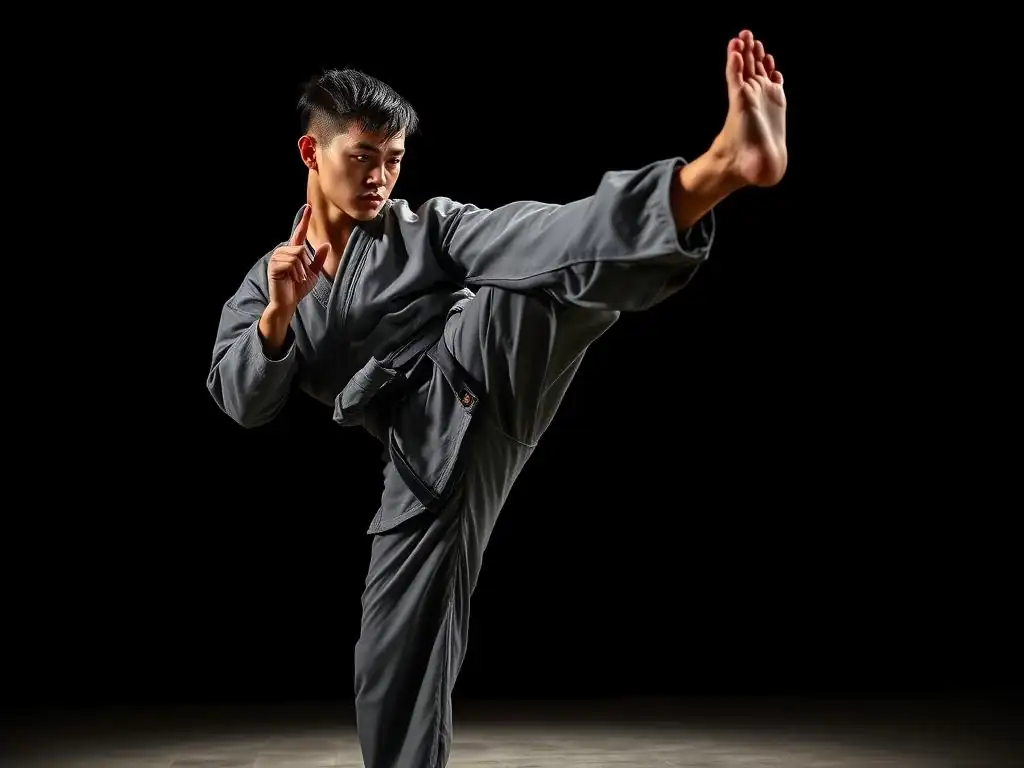
Welcome to Martial Arts Mastery, your comprehensive guide to the world's fighting arts.
Ever wonder how Taekwondo masters achieve that effortless balance while unleashing devastating kicks? This article dives deep into precisely that. Explore our guide on Taekwondo kicking stance balance drills and unlock the secrets to improved stability, power, and precision in your own practice. Prepare to elevate your skills and discover how seemingly simple drills can revolutionize your Taekwondo game. Let's begin!
- Introduction: The Importance of a Stable Kicking Stance in Taekwondo
- Understanding the Foundation: Taekwondo Stance Essentials
- Taekwondo Kicking Stance Balance Drills: Level 1 - Foundational Exercises
- Taekwondo Kicking Stance Balance Drills: Level 2 - Dynamic Movement Training
- Taekwondo Kicking Stance Balance Drills: Level 3 - Kick-Specific Balance Training
- Advanced Taekwondo Balance Training: Incorporating Instability
- Injury Prevention: Strengthening Supporting Muscles for Kicking Stability
- Integrating Balance Drills into Your Taekwondo Training Routine
- Conclusion: Achieving Mastery Through Balanced Kicking in Taekwondo
-
Frequently Asked Questions
- What is the importance of balance in Taekwondo kicking stances?
- What are some common balance issues Taekwondo practitioners face when kicking?
- What types of drills can improve balance specifically for Taekwondo kicking stances?
- How frequently should I practice balance drills to see improvement in my Taekwondo kicking stance?
- Are there any specific pieces of equipment that can aid in Taekwondo kicking stance balance training?
- Final Reflection: Finding Equilibrium in Motion
- Elevate Your Stance: Ignite Unshakeable Power!
Introduction: The Importance of a Stable Kicking Stance in Taekwondo
Why Balance Matters for Powerful and Accurate Taekwondo Kicks
In Taekwondo, a kick is only as effective as the base from which it is launched. Poor balance directly translates to diminished power and accuracy. When your stance is unstable, energy that should be directed into the kick is instead wasted on simply trying to stay upright.
This can reduce the force of a kick by a significant margin, sometimes estimated to be as much as 20-30% depending on the technique and the degree of instability. Furthermore, a wobbly base makes it difficult to control the trajectory and placement of your foot, causing kicks to miss their target or land weakly.
Beyond power and precision, balance critically impacts the speed and timing of your techniques. If you are constantly fighting to maintain your equilibrium, your reaction time is slower, and the execution of your kick becomes sluggish. This not only makes your attacks less effective but also leaves you vulnerable. A moment of instability during or after a kick creates an opening for your opponent to counter-attack. Developing solid Taekwondo kicking stance balance is therefore not just about looking steady, but about creating a foundation for explosive, controlled, and safe techniques.
The Connection Between Strong Stance and Effective Taekwondo Techniques
A strong, stable stance is the bedrock upon which all effective Taekwondo techniques are built. Think of your stance as the roots of a tree; the deeper and more stable the roots, the stronger and more resilient the tree. In Taekwondo, this means a strong stance allows you to absorb impact, generate force through proper body mechanics, and transition smoothly between movements. Complex techniques like jumping kicks, spinning kicks ( Dwit Chagi, Dollyo Chagi variations), and multiple kicks require an exceptional level of balance originating from a powerful stance.
Without a strong stance, even fundamental techniques like the front kick ( Ap Chagi) or roundhouse kick ( Dollyo Chagi) lose their snap and effectiveness. The ability to transfer weight efficiently from your base through your core and into your kicking leg is paramount for generating Do (power). A wobbly stance disrupts this kinetic chain, resulting in weaker, less penetrating strikes. Consistent practice of Taekwondo kicking stance balance drills directly reinforces the strength and stability of this critical foundation.
Understanding the Fundamentals of Taekwondo Stance and Balance
Understanding the fundamentals of Taekwondo stance involves recognizing key elements like proper foot placement, weight distribution, knee bend, and hip alignment in various stances such as Ap Seogi (walking stance), Ap Kubi (forward stance), and Gyeoreugi Seogi (fighting stance). For instance, in a fighting stance, weight distribution is typically around 60% on the back leg and 40% on the front leg, allowing for quick forward or backward movement while maintaining readiness to kick. Proper knee bend acts as a shock absorber and keeps muscles engaged, providing a spring-like readiness.
Balance in Taekwondo is not merely static stability – the ability to stand still on one leg – but dynamic control. It's the capacity to maintain equilibrium while moving, shifting weight, absorbing impact, and executing powerful techniques. This dynamic balance is what allows a practitioner to throw a rapid-fire combination of kicks or execute a complex spinning technique without falling over. Developing this dynamic control requires dedicated training focusing on Taekwondo kicking stance balance drills that challenge stability in motion and during transitions.
Understanding the Foundation: Taekwondo Stance Essentials
Identifying Key Elements of a Solid Taekwondo Stance
A solid Taekwondo stance is characterized by several interconnected elements working in harmony. Foot placement is fundamental; feet should be roughly shoulder-width or slightly wider apart depending on the specific stance, with appropriate angles to allow for hip rotation and stability. For example, in a fighting stance, the front foot often points slightly inward, while the back foot is angled 45-60 degrees outwards. Proper knee bend is crucial – knees should be bent enough to keep the muscles active and ready to move, but not so much that it causes fatigue or restricts movement.
Weight distribution is another critical factor, varying by stance but always aimed at centering your mass over your base of support. Your hips should be aligned to facilitate power generation and protect your center line. Finally, upper body posture – shoulders relaxed, guard up, torso relatively upright but ready to twist – contributes significantly to overall balance. A stable stance feels "rooted" to the ground, allowing you to push off effectively for movement and absorb the recoil from kicks or impacts. These elements together form the essential base for effective Taekwondo kicking stance balance.
Common Mistakes in Taekwondo Stance and How to Correct Them
Many practitioners, especially beginners, make common stance errors that compromise their balance and technique. One frequent mistake is having feet too close together, which creates a narrow base and makes side-to-side stability difficult. Another is locking the knees, which reduces shock absorption, prevents quick movement, and makes you easier to unbalance. Leaning too far forward or backward shifts your center of gravity outside your base, making you vulnerable. Poor hip alignment, such as keeping hips square in a stance meant for rotation, restricts power and makes balance during kicking more challenging.
Correcting these errors requires conscious effort and focused practice. Use a mirror to visually check your foot placement, knee bend, and posture. Practice transitioning slowly between different stances, paying attention to where your weight is distributed. For locked knees, focus on maintaining a slight bend even when standing still. To improve hip alignment, practice hip rotations and stretches. Incorporating specific Taekwondo kicking stance balance drills that target these common weaknesses, such as drills focusing on single-leg stability or controlled weight shifts, can help engrain correct habits.
The Role of Core Strength in Maintaining Kicking Balance
Core strength is absolutely vital for maintaining balance during Taekwondo kicks. The core muscles – including the abdominals, obliques, lower back, and hip flexors – act as the body's central stabilizing unit. They connect the power generated from your legs and hips to the execution of the kick by your torso and kicking leg. A weak core leads to instability in the trunk, causing you to wobble or lean excessively when you lift your leg to kick, significantly hindering your Taekwondo kicking stance balance.
A strong core provides a solid platform from which to launch kicks. It allows you to control the movement of your non-kicking leg and torso, preventing unnecessary sway that can throw you off balance. Furthermore, core strength is essential for the rapid recovery needed after a kick, enabling you to quickly return to a stable stance or transition into another technique. Regular core strengthening exercises are therefore indispensable Taekwondo kicking stance balance drills in their own right, building the internal stability required for high-level kicking performance.
Taekwondo Kicking Stance Balance Drills: Level 1 - Foundational Exercises
Bodyweight Balance Drills for Taekwondo Stance Improvement
Level 1 Taekwondo kicking stance balance drills focus on building fundamental static and slow dynamic balance using only your bodyweight. The primary goal here is to enhance proprioception – your body's awareness of its position in space – and develop the ability to make small, continuous muscular adjustments to maintain stability. These exercises are foundational and should be mastered before progressing to more complex or dynamic drills.
The principle behind these drills is simple: hold balanced positions for extended periods or perform slow, controlled movements that challenge your equilibrium. Start on a stable, flat surface. As your balance improves, you can increase the duration of holds or slightly modify the exercises to add difficulty, such as closing your eyes (which significantly increases the challenge by removing visual cues). Consistency is key at this level; even just 5-10 minutes daily can yield noticeable improvements in your basic Taekwondo kicking stance balance.
Single Leg Balance with Arm Extensions
Stand on one leg, lifting the other leg slightly off the ground. Keep a slight bend in the standing knee and engage your core. Hold this position for 30-60 seconds per leg. To increase difficulty, extend your arms forward, out to the sides, or overhead. You can also try moving your arms slowly or making small circles with the lifted leg. Focus on minimizing sway and feeling the small muscles in your foot and ankle working to stabilize you.
Slow Motion Taekwondo Kicks for Balance Control
Choose a basic kick like the front kick ( Ap Chagi) or roundhouse kick ( Dollyo Chagi). From a fighting stance, perform the kick in extremely slow motion. Pause at key points: the chamber position, full extension (if possible while maintaining balance), and the re-chamber position. Hold each position for 3-5 seconds, focusing intensely on controlling the standing leg and maintaining an upright posture. Perform 5-10 repetitions per leg for each chosen kick. This drill highlights exactly where your balance is weakest during the kick's motion.
Core Engagement Exercises for Stance Stability (Plank Variations)
Plank variations are excellent for building the core strength needed for Taekwondo kicking stance balance. The basic front plank involves holding a push-up position on your forearms and toes, keeping your body in a straight line. Hold this for 1-2 minutes.
Side planks, where you balance on one forearm and the side of your foot, are also crucial for oblique strength; hold for 30-60 seconds per side. For an added challenge, perform a plank with one leg or one arm lifted, or incorporate small movements like hip dips in a side plank. These exercises directly support your ability to keep your torso stable when the base (standing leg) is challenged.
Taekwondo Kicking Stance Balance Drills: Level 2 - Dynamic Movement Training
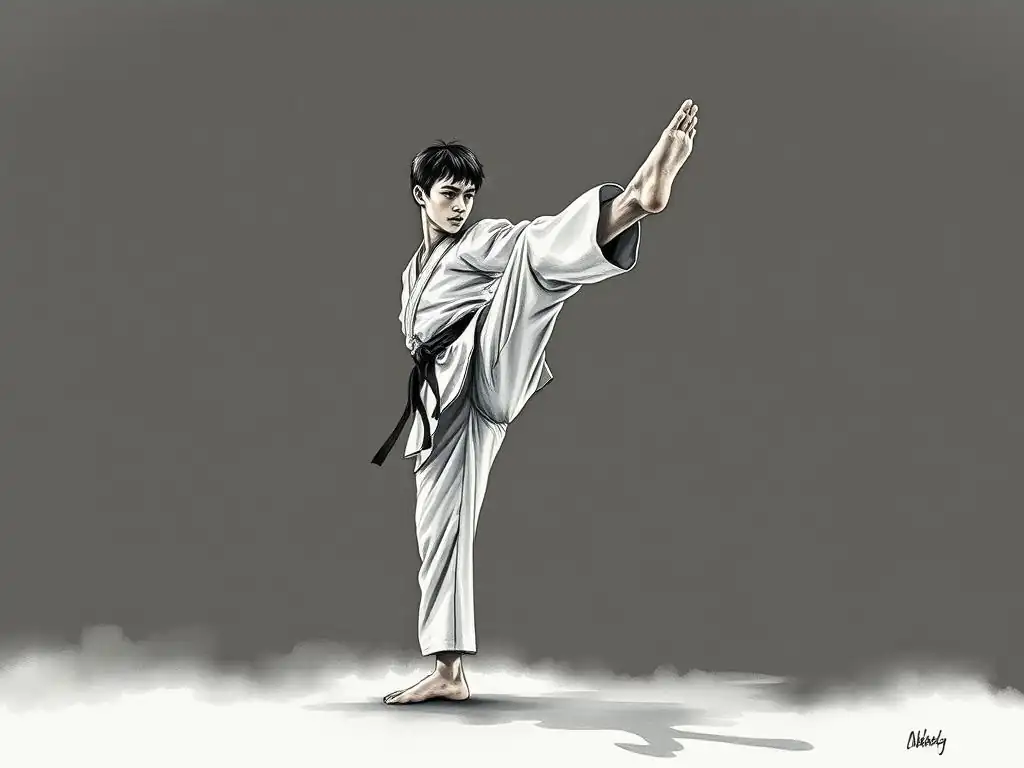
Incorporating Movement into Balance Training for Taekwondo
Taekwondo sparring and forms involve constant movement and transitions between stances and techniques. Level 2 Taekwondo kicking stance balance drills introduce dynamic elements to challenge your stability while you are in motion or changing direction. The goal is to develop the ability to absorb and redirect force while maintaining control, which is essential for effective footwork and kicking in a live situation.
These drills simulate the unpredictable nature of sparring, where you need to maintain your balance while advancing, retreating, changing angles, or reacting to an opponent's movements. By practicing balance in these dynamic contexts, you train your body's reflexes and stabilizing muscles to react quickly and effectively, making your Taekwondo kicking stance balance more functional and reliable under pressure.
Shuttle Runs with Stance Transitions
Set up two markers (e.g., cones, pieces of tape) about 5-10 meters apart. Perform shuttle runs between the markers. Each time you reach a marker, stop abruptly and immediately assume a stable Taekwondo fighting stance ( Gyeoreugi Seogi). Hold the stance for 1-2 seconds before turning and running to the next marker. Focus on stopping quickly without losing your balance and establishing a solid base upon stopping. Perform 5-10 full shuttle runs, ensuring a crisp, stable stance transition at each end.
Reactive Balance Drills with a Partner
Stand in your fighting stance facing a partner. Your partner will apply light, unpredictable pushes or pulls to your shoulders, hips, or arms. Your objective is to maintain your stance without stepping, using small, rapid adjustments of your feet and core. The partner should vary the direction and force of the pushes (keeping them light enough to avoid injury). Continue this drill for 2-3 minutes, focusing on staying relaxed but responsive, constantly re-centering your weight over your base.
Medicine Ball Throws While Maintaining Stance
Stand in a stable Taekwondo stance (e.g., fighting stance or a slightly wider guarding stance). A partner stands a few meters away and throws a light medicine ball (1-3 kg) to your chest or sides. Catch the ball and immediately return it while maintaining your stance and balance. The throws should require you to absorb and redirect force without stepping or becoming unstable. This drill challenges your core strength and Taekwondo kicking stance balance under external load. Perform 10-15 throws, switching sides and varying the angle of the throw.
Taekwondo Kicking Stance Balance Drills: Level 3 - Kick-Specific Balance Training
Drills to Improve Balance During Specific Taekwondo Kicks
Each Taekwondo kick has unique balance requirements related to the specific movement pattern, pivot, and body position. Level 3 Taekwondo kicking stance balance drills focus on isolating and reinforcing balance during the execution of common kicks. By breaking down the kick into phases and holding challenging positions, you can identify and strengthen the specific muscles and coordination needed for stability during that particular technique.
These drills are more advanced as they require a basic understanding of the kick's mechanics. They are designed to improve control during the chamber, extension, and re-chamber phases, which are often the most vulnerable points for losing balance. Consistent practice of these kick-specific exercises directly enhances the stability and control of your primary offensive weapons.
Roundhouse Kick Balance Drills
The roundhouse kick ( Dollyo Chagi) relies heavily on a strong pivot of the standing foot and powerful hip rotation. Maintaining balance on the ball of the standing foot while your other leg is extended and your body is rotating requires significant ankle, knee, and hip stability, as well as core control. These drills specifically target the ability to control this dynamic pivot and maintain equilibrium throughout the circular motion.
Side Kick Balance Drills
The side kick ( Yup Chagi) demands excellent linear stability. As you chamber the leg and extend it sideways, you must maintain balance on one leg while keeping your body relatively square to the direction of the kick and driving through the heel. This requires strong hip abductors, core strength, and precise control over the standing leg's alignment. Side kick balance drills focus on maintaining a level hip and stable base during the powerful lateral extension.
Back Kick Balance Drills
The back kick ( Dwit Chagi) is one of the most challenging kicks for balance due to the practitioner turning away from the target before kicking behind them. It requires strong spatial awareness, a stable pivot, and significant core and lower back strength to control the chamber, extension, and recovery while looking over your shoulder. Back kick balance drills help build the confidence and control needed for this complex technique.
Roundhouse Kick Drill: Pivot and Hold
From a fighting stance, initiate a roundhouse kick by pivoting on the ball of your standing foot and chambering your kicking leg. Instead of extending the kick, hold the chambered position with your knee up and foot ready. Focus on maintaining balance on the standing leg and keeping your torso upright. Hold for 5-10 seconds, then slowly re-chamber and return to your stance. Repeat 5-8 times per leg. This drill strengthens the standing leg's stability during the crucial pivot and chamber phase.
Side Kick Drill: Target Practice with Slow Extension
Assume a side stance or transition into one. Chamber your side kick towards a wall or a partner holding a pad. Slowly extend your leg towards the target, focusing on maintaining a stable, level hip and driving through the heel. Hold the extended position for 2-3 seconds, ensuring your standing leg is slightly bent and stable. Slowly re-chamber and return to your stance. Repeat 5-8 times per leg. This drill improves control and stability during the powerful extension phase of the side kick.
Back Kick Drill: Chamber and Re-chamber
From a fighting stance, pivot your body and chamber your back kick, looking over the shoulder of your standing side. Hold the chambered position, focusing on maintaining balance and keeping your core engaged. Hold for 3-5 seconds. Instead of extending the kick, slowly re-chamber the leg and return to your original fighting stance. Repeat 5-8 times per leg. This drill specifically targets the challenging chamber and recovery phases, which are critical for maintaining balance in the back kick.
Advanced Taekwondo Balance Training: Incorporating Instability
Using Instability to Challenge and Improve Balance
Once you have developed a strong foundation on stable surfaces, incorporating instability into your Taekwondo kicking stance balance drills is the next step towards advanced control. Training on uneven or wobbly surfaces forces your body's smaller, intrinsic stabilizing muscles in the feet, ankles, knees, and hips to work harder and more quickly. This enhances proprioception and develops the fine motor control needed for superior balance.
Training with instability closely mimics the challenges faced in sparring, such as stepping on an opponent's foot, landing awkwardly, or being pushed off balance. By deliberately training in these conditions, you improve your body's reactive balance mechanisms, making you more resilient and stable when unexpected forces occur. These advanced drills take your Taekwondo kicking stance balance to a higher level of functional control.
Balance Board Exercises for Taekwondo Kicking
Balance boards (rocker or wobble boards) provide a challenging unstable surface. Start by simply standing on the board and maintaining a basic Taekwondo stance, focusing on keeping the edges from touching the ground. Once comfortable, progress to performing slow, controlled chambers of fundamental kicks like the front kick or roundhouse kick while balancing on the board. The instability forces your standing leg and core to work overtime. Begin with short durations (e.g., 30-60 seconds) and gradually increase as your stability improves.
BOSU Ball Drills for Enhanced Stance Control
A BOSU ball (a dome-shaped inflatable device with a flat base) offers another excellent platform for instability training. Start with the dome side up. Practice holding various Taekwondo stances on the dome. Once stable, perform slow-motion kick chambers or even partial extensions. The soft, yielding surface challenges your ankle and knee stabilizers. For an even greater challenge, flip the BOSU ball over and balance on the flat, hard side (requires more ankle strength). Incorporate 5-10 slow kick repetitions per leg into your BOSU ball routine.
Resistance Band Exercises for Dynamic Balance
Resistance bands can be used to create external forces that challenge your dynamic balance in a controlled manner. Loop a resistance band around your ankles or just above your knees. Perform basic Taekwondo stances, footwork patterns (like stepping forward, backward, or sideways), or slow stance transitions while the band provides resistance pulling your legs inward or outward. This forces your hip abductors and adductors, as well as your core, to constantly engage to maintain stability against the pulling force. Perform these movements for 1-2 minutes per direction, focusing on maintaining your Taekwondo kicking stance balance despite the resistance.
Injury Prevention: Strengthening Supporting Muscles for Kicking Stability
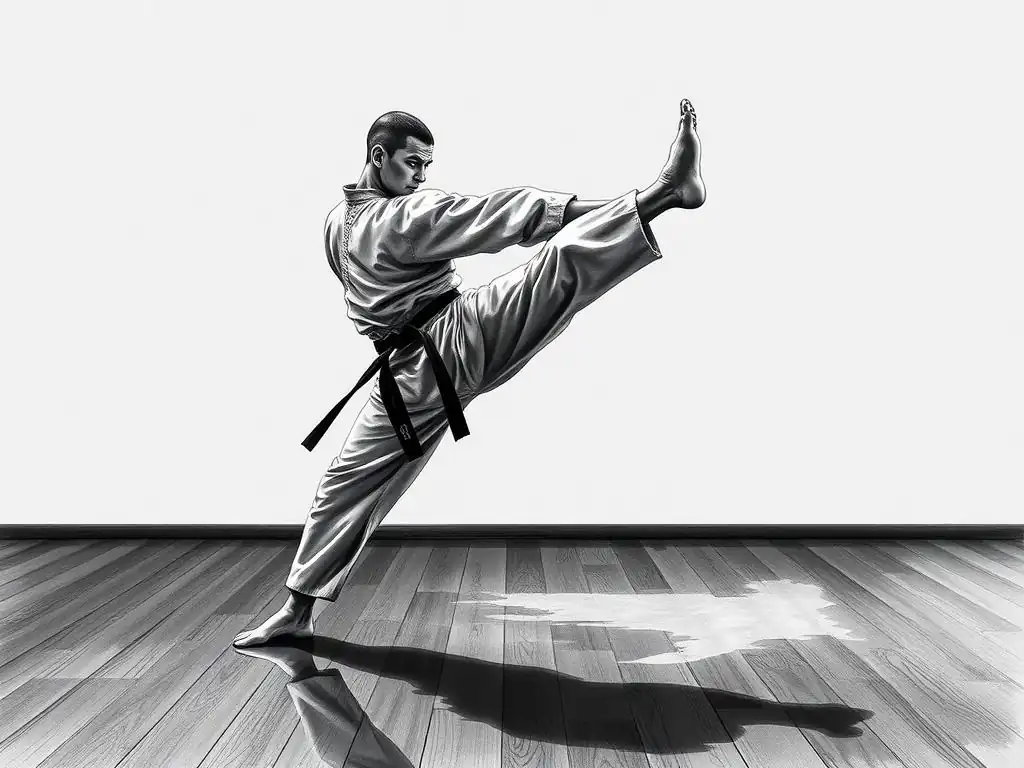
Identifying Key Muscle Groups for Taekwondo Balance and Stability
Effective Taekwondo kicking stance balance and stability rely on the strength and coordination of numerous muscle groups, particularly in the lower body and core. Key areas include the muscles surrounding the ankles (peroneals, tibialis anterior) for preventing rolls and providing fine adjustments; the muscles of the knees (quadriceps, hamstrings, adductors, abductors) for stability and shock absorption; the hips (glutes, hip flexors, rotators) for power generation and controlling the non-kicking leg; and the core (abdominals, obliques, lower back) for spinal and pelvic stability.
Weakness in any of these muscle groups can compromise the entire kinetic chain involved in kicking, leading to poor balance, reduced power, and increased risk of injury. For example, weak hip abductors (outer hip muscles) can cause the standing knee to collapse inward during a kick, destroying balance and potentially leading to knee issues. Therefore, dedicated strength training for these supporting muscles is a crucial component of developing robust Taekwondo kicking stance balance.
Strengthening Exercises for Ankles and Knees
Targeted strengthening exercises are essential for building resilient ankles and knees capable of supporting dynamic Taekwondo movements. Calf raises (standing on the balls of your feet and lifting your heels) strengthen the calves and improve ankle stability. Tibialis anterior raises (lifting just your toes while keeping your heels on the ground) strengthen the front of the shin, important for preventing shin splints and improving ankle control.
Single-leg squats or pistol squat progressions build significant strength in the quadriceps, hamstrings, and glutes, directly improving knee and hip stability under load. Side leg raises or exercises with a resistance band around the ankles strengthen the hip abductors, critical for preventing the standing knee from collapsing inward. Aim for 2-3 sets of 10-15 repetitions for these exercises.
Flexibility Training for Improved Range of Motion and Balance
While strength is important, flexibility also plays a critical role in Taekwondo kicking stance balance. Tight muscles can restrict your range of motion, making it harder to achieve a full chamber or extension without pulling your body off balance. For example, tight hip flexors can make it difficult to chamber a front kick high without leaning backward, thus compromising your base. Good flexibility allows for smoother, more controlled movements throughout the entire range of a kick, which inherently improves stability at the extremes of the motion.
Incorporating regular stretching into your training routine is highly recommended. Focus on stretches for the hip flexors (e.g., lunge stretch), hamstrings (e.g., forward fold or leg swings), quadriceps (e.g., quad stretch), and groin (e.g., butterfly stretch or side lunges). Dynamic stretching (controlled movements through range of motion) should be performed before training, while static stretching (holding a stretch for a period) is best done after training. Hold static stretches for approximately 30 seconds per side, focusing on deep, relaxed breathing.
Integrating Balance Drills into Your Taekwondo Training Routine
Creating a Weekly Balance Training Plan
Consistency is paramount when developing Taekwondo kicking stance balance. It's more effective to train balance for shorter durations multiple times a week than one long session infrequently. A recommended approach is to dedicate 10-15 minutes, 2-3 times per week, specifically to balance drills. These sessions can be incorporated into your regular Taekwondo training – perhaps as part of your warm-up or cool-down – or done on separate cross-training days.
Start by focusing on the foundational Level 1 and 2 drills to build a solid base. As you feel your balance improving, gradually introduce Level 3 and Advanced drills. Listen to your body; some days you may feel less stable, and it's okay to stick to simpler drills. The key is regular engagement with exercises that specifically challenge your equilibrium in ways relevant to Taekwondo.
Monitoring Progress and Adjusting Drills as Needed
Tracking your progress is a great motivator and helps you know when to increase the difficulty of your Taekwondo kicking stance balance drills. Keep a simple training journal. Note how long you can hold single-leg balances, how stable you feel during slow-motion kicks, or if you notice less wobbling during sparring footwork or kicks. Subjective feeling is important too – do you feel more confident and rooted in your stance?
When drills start to feel easy, that's the time to adjust. Increase the hold duration for static drills, add more repetitions for dynamic drills, or move up to the next level of complexity. For advanced drills, consider adding external challenges like closing your eyes (for static balance), using lighter weights held in different positions, or increasing the speed of dynamic movements while maintaining control. Continuously challenging your balance system is key to ongoing improvement.
Sample Weekly Training Schedule
Here is a sample structure for integrating Taekwondo kicking stance balance drills into a typical training week:
- Monday: Regular Taekwondo Training (focus on forms or basic techniques).
- Tuesday: 15 minutes dedicated to Balance Drills (e.g., Single Leg Holds, Slow Motion Kicks, Plank variations) + 10 minutes Injury Prevention Exercises (Ankle/Knee strengthening).
- Wednesday: Regular Taekwondo Training (focus on sparring drills or combinations).
- Thursday: Rest or Light Active Recovery (e.g., gentle stretching or walking).
- Friday: Regular Taekwondo Training (focus on advanced techniques or live sparring) + 15 minutes dedicated to Balance Drills (e.g., Reactive Drills, Kick-Specific Holds, Balance Board work).
- Saturday/Sunday: Rest or Cross-Training focusing on flexibility and core strength (e.g., Yoga or Pilates).
This sample schedule provides specific times for balance work without overwhelming your existing training load, ensuring consistent development of your Taekwondo kicking stance balance.
Conclusion: Achieving Mastery Through Balanced Kicking in Taekwondo
The Long-Term Benefits of Consistent Balance Training
Consistently practicing Taekwondo kicking stance balance drills yields profound long-term benefits that extend far beyond simply not falling over. Improved balance translates directly to increased power output in your kicks due to better weight transfer and stability. Your accuracy will sharpen as you gain finer control over your body's position during the kick. Speed and reaction time improve because you spend less energy and time stabilizing yourself. Furthermore, enhanced balance significantly reduces the risk of sprains, strains, and other injuries, particularly to the ankles and knees, as supporting muscles become stronger and more responsive.
Ultimately, consistent balance training unlocks the potential for executing more complex and dynamic techniques with confidence and control. Jumping kicks, spinning kicks, and rapid-fire combinations become more feasible and effective when launched from a rock-solid, yet adaptable, foundation. Balance training is an investment in your entire Taekwondo practice, making you a more efficient, powerful, and resilient martial artist.
Maintaining Balance as a Lifelong Pursuit in Taekwondo
Balance is not a skill you simply acquire and keep; it is a physical attribute that requires ongoing attention and maintenance, much like strength or flexibility. As you progress in Taekwondo, the demands on your balance will increase with more advanced techniques and higher levels of sparring. Integrating Taekwondo kicking stance balance drills as a permanent part of your training routine is essential for continuous improvement and maintaining peak performance throughout your martial arts journey.
Even as physical capabilities change with age, focusing on balance training remains crucial for injury prevention and maintaining mobility and control. The principles of stability, core engagement, and proprioception developed through these drills are fundamental to confident movement both inside and outside the Dojang. Making balance training a lifelong pursuit ensures that your Taekwondo kicks remain sharp, powerful, and stable for years to come.
Frequently Asked Questions
What is the importance of balance in Taekwondo kicking stances?
Balance is essential for power and accuracy in Taekwondo kicks. A stable stance allows for efficient energy transfer and prevents you from being easily thrown off balance by your opponent. Good balance also enables faster recovery after a kick.
What are some common balance issues Taekwondo practitioners face when kicking?
Common issues include shifting weight incorrectly, lifting the knee too high without stability, and poor core engagement. These can lead to wobbling, missed kicks, and vulnerability to counterattacks.
What types of drills can improve balance specifically for Taekwondo kicking stances?
Drills focusing on single-leg stability, core strengthening, and weight shifting exercises are highly effective. Examples include single-leg squats, plank variations, and slow-motion kicking drills.
How frequently should I practice balance drills to see improvement in my Taekwondo kicking stance?
Consistent practice is key. Aim for at least 2-3 sessions per week, focusing on quality over quantity. Gradual progression in difficulty will further enhance your balance.
Are there any specific pieces of equipment that can aid in Taekwondo kicking stance balance training?
While not essential, equipment like balance boards, resistance bands, and medicine balls can add variety and challenge to your balance drills. These tools help to engage supporting muscles and improve overall stability.
Final Reflection: Finding Equilibrium in Motion
The journey to mastering Taekwondo, particularly the art of kicking, is a constant pursuit of balance. This pursuit extends beyond the dojang and mirrors the delicate equilibrium we seek in our daily lives. Just as the drills outlined in this article aim to solidify a stable kicking stance, they also serve as a reminder that strength and control are born from a solid foundation.
The impact of these drills, and the philosophy they represent, resonates deeply within the Taekwondo community and beyond. The dedication required to perfect a kicking stance is a metaphor for the dedication needed to achieve any worthwhile goal. It teaches us resilience, patience, and the importance of consistent effort. Balance is not something you find, it's something you create.
This quote perfectly encapsulates the active and ongoing process of achieving stability, both in Taekwondo and in life.
Now, as you step off the mat and back into your daily routine, consider the lessons learned. How can you apply the principles of balance and stability to other areas of your life? Embrace the challenge of finding your equilibrium, not just in motion, but in every aspect of your journey. Let the pursuit of a perfect Taekwondo kicking stance be a constant reminder to cultivate strength, focus, and unwavering balance within yourself.
Elevate Your Stance: Ignite Unshakeable Power!
Thank you for exploring the path to a more grounded and powerful Taekwondo stance. You've now unlocked the secrets to improved balance and stability, and it's time to put that knowledge into action.
Here's how you can further refine your kicking foundation:
- Immediately implement at least 15 minutes of the stance drills learned during your next training session to actively improve core strength and grounding.
- Record a short video of yourself performing one of the drills and analyze it, focusing on areas for improvement in balance and technique.
- Share your improved stance in our community forum and inspire others on their journey to a more powerful Taekwondo game!
Ready to revolutionize your kicking game and unlock the true potential of your Taekwondo stance?