
The Breathing of Goju: Chojun Miyagi's Emphasis on Ibuki and Sanchin Kata

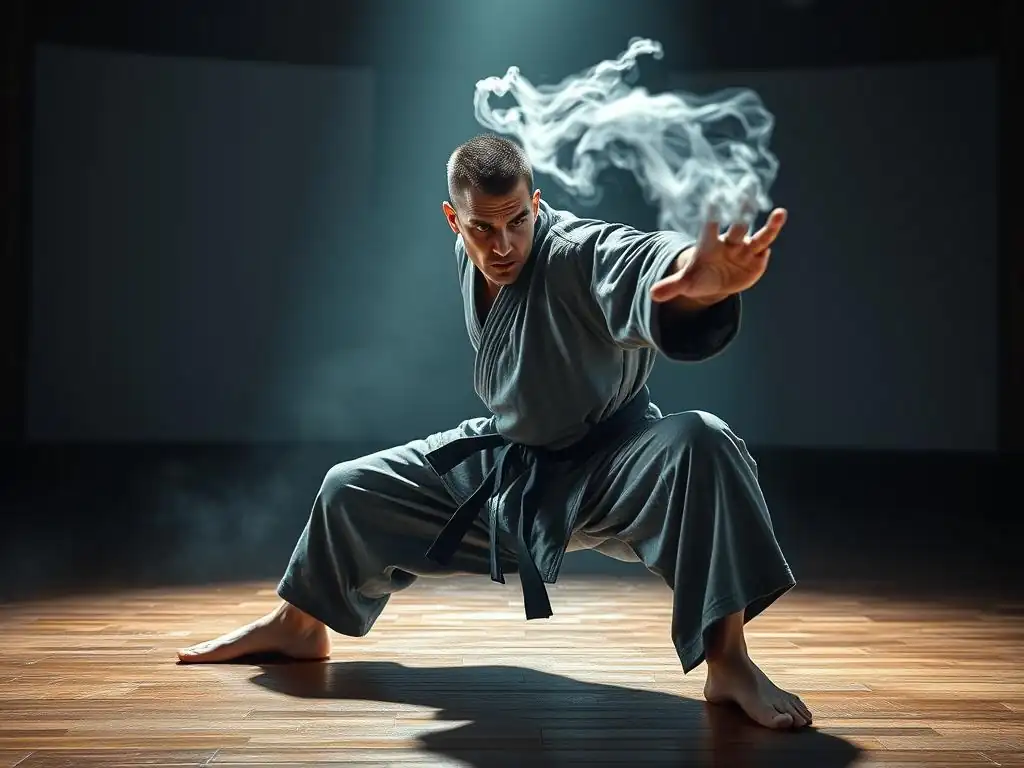
Welcome to Martial Arts Mastery, where we delve into the profound depths of combat traditions. Beyond the strikes and blocks, lies a vital, often overlooked element: the breath. In this profile, we explore the legendary Chojun Miyagi's unwavering emphasis on Goju breathing techniques, specifically Ibuki and its connection to the foundational Sanchin Kata. Discover how these powerful Goju breathing techniques can unlock a new dimension of power and control in your training, and how Miyagi Sensei wove them into the very fabric of his art, influencing generations of practitioners. Are you ready to breathe like a master?
- Introduction: Goju-Ryu Karate and the Importance of Breathing
- The Foundations of Goju Breathing: Ibuki and Sanchin
- Goju Breathing Techniques: Benefits and Applications
- Sanchin Kata: A Deep Dive into Form and Function
- Ibuki Breathing Exercises: A Practical Guide
- Goju Breathing and its Impact on Health and Longevity
- Integrating Goju Breathing into Your Training Regimen
- Conclusion: The Enduring Power of Goju Breathing Techniques
-
Frequently Asked Questions
- What is Ibuki breathing in Goju-Ryu, and why is it important?
- How does Sanchin Kata relate to Goju breathing techniques?
- What are the primary benefits of Goju breathing techniques for martial arts training?
- How does Goju breathing differ from other breathing exercises in martial arts?
- Can anyone learn Goju breathing techniques, or are there specific requirements?
- Final Reflection: The Enduring Breath of Goju
- Ignite Your Inner Strength: Embrace the Goju Breath!
Introduction: Goju-Ryu Karate and the Importance of Breathing
The Legacy of Chojun Miyagi and Goju-Ryu's Origins
Chojun Miyagi (1888-1953) stands as a pivotal figure in the history of Okinawan karate, credited with founding Goju-Ryu, one of the principal traditional styles. His lineage traced back to the renowned Naha-te master Kanryo Higashionna, who had studied martial arts extensively in Fuzhou, China. Miyagi dedicated decades to the rigorous study and refinement of Naha-te, incorporating elements from Chinese White Crane and other internal systems to create a unique synthesis. This new style, which he formally named "Goju-Ryu" (Hard-Soft Style) in 1930, emphasized a balance between hard, external techniques ( Go) and soft, internal methods ( Ju), with a profound focus on natural movement, physical conditioning, and, crucially, specialized breathing techniques.
Miyagi's vision for Goju-Ryu was not merely about combat effectiveness; it encompassed a path towards physical, mental, and spiritual development. He traveled extensively, demonstrating and teaching Goju-Ryu in mainland Japan and even Hawaii, promoting Okinawan karate on a global stage. His efforts led to Goju-Ryu becoming one of the first Okinawan karate styles officially recognized by the prestigious Dai Nippon Butoku Kai.
He established dojos and trained numerous influential students, including Jin'an Shinzato, Seiko Higa, Meitoku Yagi, and Seikichi Toguchi, who would carry on his legacy and further propagate Goju-Ryu worldwide. The curriculum he developed integrated traditional kata, such as Sanchin and Tensho, with supplemental exercises, conditioning drills, and philosophical principles, all underpinned by a deep understanding of energy flow and respiration.
Understanding the Central Role of Breathing in Goju Training
In Goju-Ryu, breathing is not merely a physiological function; it is an intrinsic element of every technique, kata, and physical conditioning exercise. Unlike many external martial arts that might focus primarily on muscular strength and speed, Goju-Ryu places significant emphasis on coordinating breath with movement to generate power, maintain stability, and develop internal energy. This focus is a direct inheritance from the Okinawan Naha-te tradition and its Chinese roots, particularly in internal martial arts where breath control is paramount for cultivating Qi or Ki (vital energy).
The various Goju breathing techniques are designed to regulate the body's internal state, improve physical resilience, and enhance the effectiveness of strikes, blocks, and stances. Proper breathing allows practitioners to remain relaxed when necessary, explode with power when required, and absorb impact more effectively. It is considered the bridge between the physical technique and the internal state, providing the foundation for both physical prowess and mental fortitude. Mastering Goju breathing techniques benefits training across all levels, from basic conditioning to advanced kata performance and practical self-defense applications.
The Foundations of Goju Breathing: Ibuki and Sanchin
What is Ibuki? Exploring Goju-Ryu's Unique Breathing Method
Ibuki is the signature forceful, diaphragmatic breathing method central to Goju-Ryu. It involves a deep inhalation, often through the nose, followed by a controlled, often audible, exhalation through the mouth, sometimes accompanied by muscular tension throughout the body. The sound produced during exhalation can range from a soft hiss to a guttural roar, depending on the specific technique and the desired effect. This unique breathing technique is not just about expelling air; it's a method for focusing energy, stabilizing the core, and developing internal strength.
There are variations of Ibuki, such as Junbiki Ibuki (preparatory Ibuki) which is often a deep, relaxed breath, and Nogare Ibuki (flowing Ibuki), a smoother, less forceful exhalation used in certain transitional movements or softer techniques. The forceful, tension-filled Ibuki is typically associated with moments requiring maximum power generation or structural stability, such as executing a powerful strike or receiving an attack. This type of Goju breathing techniques benefits training by building incredible core strength, improving oxygen exchange under stress, and cultivating a resilient physical structure.
Sanchin Kata: The Embodiment of Goju Breathing Principles
Sanchin kata, meaning "Three Battles," is arguably the most fundamental and important kata in Goju-Ryu, serving as the cornerstone for understanding the style's core principles, especially regarding breathing, posture, and internal energy. The "Three Battles" are often interpreted as the battle between mind, body, and spirit, or the battle against pain, fatigue, and fear. The kata is performed with slow, deliberate movements, accompanied by powerful, sustained Ibuki breathing and intense isometric tension throughout the body.
Every step, every hand movement, and every breath in Sanchin is meticulously choreographed to develop structural integrity, rootedness, and the ability to generate focused power from the core. The practitioner maintains a low, stable stance (Sanchin-dachi) while executing basic blocks and strikes, coordinating each action with a specific phase of the Ibuki breath.
This constant coordination of breath and movement, coupled with whole-body tension, is designed to forge a strong, resilient body and a focused, unwavering mind. Mastering Sanchin kata is considered essential for progression in Goju-Ryu, as it ingrains the fundamental Goju breathing techniques benefits training that are applied in all other aspects of the art.
Goju Breathing Techniques: Benefits and Applications
Enhancing Power and Stability: The Physical Benefits of Goju Breathing
The practice of Goju breathing techniques, particularly Ibuki and the breathing used in Sanchin kata, yields significant physical advantages. The coordinated tension and exhalation of Ibuki allow practitioners to generate explosive power at the moment of impact, effectively transferring energy from the core through the limbs. This is crucial for delivering powerful strikes and blocks. Furthermore, the deep, diaphragmatic nature of the breath, combined with isometric tension, creates a stable, rooted structure, making the practitioner less susceptible to being moved or unbalanced by an opponent.
Consider a powerful Seiken Tsuki (forefist punch) in Goju-Ryu. The power is not solely generated by the arm and shoulder muscles; it originates from the lower body and core, channeled through the body and amplified by the sharp, focused exhalation and tension of Ibuki at the point of impact. This integration ensures that the entire body works as a unified unit. Research into elite athletes in various sports has shown that proper bracing and core engagement, often linked to breath control, significantly improve force production and injury prevention. In Goju-Ryu, this principle is consciously cultivated through specific breathing exercises and kata, making the Goju breathing techniques benefits training physically evident in increased striking power and defensive stability.
Developing Internal Energy (Ki): Goju Breathing for Spiritual and Mental Focus
Beyond the physical, Goju breathing techniques are deeply intertwined with the development of Ki or vital energy, a concept central to many traditional Asian disciplines. While the concept of Ki can be interpreted in various ways—from bio-electrical energy to focused intent—in Goju-Ryu training, cultivating Ki involves harmonizing mind, body, and breath to achieve a state of centered power and heightened awareness. The controlled breathing and mental focus required for Ibuki and Sanchin kata practice train the practitioner to concentrate their energy and intent.
The demanding nature of Sanchin, requiring sustained physical effort and unwavering mental concentration alongside specific breathing, acts as a form of moving meditation. This process helps quiet the internal dialogue, improve focus, and build mental resilience. The ability to maintain composure and effective breathing under physical strain directly translates to maintaining calm and focus in stressful situations, including self-defense scenarios. Therefore, the Goju breathing techniques benefits training not only the physical body but also hones the mind and spirit, fostering inner calm and focused intent.
Goju Breathing Techniques for Self-Defense: Practical Applications
The practical application of Goju breathing techniques in self-defense is multifaceted. Firstly, the ability to quickly engage the core and exhale forcefully during a defensive movement, such as a block or parry, significantly increases the body's ability to absorb impact and minimize damage. This internal bracing, powered by Ibuki, turns the body into a more solid structure capable of withstanding strikes.
Secondly, the explosive exhalation and tension used in offensive techniques amplify striking power, making techniques more effective against an aggressor. A well-timed Gedan Barai (downward block) combined with sharp Ibuki can not only deflect an attack but also deliver a jarring counter-force. Furthermore, the stress reduction and mental clarity cultivated through consistent Goju breathing techniques benefits training practitioners by enabling them to remain calmer and think more clearly under the pressure of a real confrontation, allowing for better decision-making and execution of techniques. The ability to control one's breath is often the first step in controlling one's fear and reaction in a high-stress situation.
Sanchin Kata: A Deep Dive into Form and Function
The Three Battles of Sanchin: Understanding the Kata's Core Principles
Sanchin kata, translated as "Three Battles," embodies core principles of Goju-Ryu through its structured movements and intense practice. The "Three Battles" are widely interpreted as the internal struggles a practitioner must overcome: the battle of the mind (controlling fear, doubt, and distraction), the battle of the body (overcoming pain, fatigue, and physical limitations), and the battle of the spirit (cultivating perseverance, willpower, and inner strength). Executing Sanchin kata requires confronting these internal challenges simultaneously.
The kata's form is deceptively simple, consisting of a few basic stances, steps, and hand movements (primarily blocks and strikes). However, the difficulty lies in the how – maintaining perfect posture, coordinating every muscle with the specific Goju breathing techniques, and sustaining intense physical tension throughout the relatively short duration, typically ranging from 3 to 5 minutes depending on the practitioner and lineage. This intense physical and mental engagement is designed to forge a resilient body and an indomitable spirit, making Sanchin a foundational pillar for all subsequent Goju-Ryu training.
Mastering the Breath in Sanchin: Coordinating Movement and Respiration
Mastering the breath in Sanchin is synonymous with mastering the kata itself. The primary breathing method used is a deep, powerful Ibuki, often audible. The inhalation is typically deep and full, preparing the body, while the exhalation is slow, controlled, and forceful, lasting throughout the duration of a movement or a static posture. This exhalation is coupled with kime (focus/tension) – a full-body tensing that stabilizes the structure and concentrates energy.
For example, as the practitioner steps forward in Sanchin-dachi and executes a Mae Geri Gedan Barai (front kick followed by downward block), the entire sequence is typically performed on a single, long, controlled Ibuki exhalation. The tension is highest at the completion of each movement. This constant coordination of breath, movement, and tension is physically taxing but builds incredible endurance and the ability to unify body and mind. Different schools or lineages may have slight variations in the specific timing and sound of the Ibuki, but the core principle of unifying breath and action remains central to Sanchin practice.
Variations in Sanchin: Examining Different Interpretations and Styles
While Sanchin kata is fundamental to Goju-Ryu, its execution can show subtle variations depending on the specific lineage or school. The most common variations are often seen in the precise hand movements, the depth and speed of the stances, and the exact timing and nature of the Ibuki breathing.
For instance, some lineages might emphasize a more pronounced, guttural sound during Ibuki, while others prefer a quieter, more internal exhalation. The duration of the kata can also vary, with some schools practicing a longer, more physically demanding version. Historically, there were also variations in the steps and hand techniques themselves. Kanryo Higashionna's original Sanchin may have differed slightly from the version refined by Chojun Miyagi, and subsequent masters have also added their interpretations. Despite these variations, the core principles remain consistent:
- Emphasis on Sanchin-dachi (three-point stance)
- Integration of powerful Ibuki breathing
- Full-body tension and structural integrity
- Focus on internal development (mind, body, spirit)
These variations highlight the living nature of traditional martial arts, adapting slightly while preserving the essential Goju breathing techniques benefits training inherent in the kata.
Ibuki Breathing Exercises: A Practical Guide
Types of Ibuki Breathing: Junbiki Ibuki, Nogare Ibuki
Within Goju-Ryu, "Ibuki" is often used as a general term for forceful, controlled breathing, but it encompasses distinct types used for different purposes. The two most commonly differentiated are Junbiki Ibuki and Nogare Ibuki.
- Junbiki Ibuki (Preparatory Breathing): This is often a deep, relaxed, full breath, usually done as a preliminary exercise or at the beginning of training. It involves inhaling deeply, expanding the abdomen and chest, and exhaling completely, often with a sigh or relaxed sound. Its purpose is to calm the mind, prepare the body for exertion, and connect with the breath before engaging in more intense techniques. This type of Goju breathing techniques benefits training by promoting relaxation and oxygenation.
- Nogare Ibuki (Flowing Breathing): This involves a smoother, less forceful exhalation than the tension-filled Ibuki used in Sanchin. It is often used during transitions between techniques, in softer movements, or in kata like Tensho. The exhalation is still controlled and diaphragmatic but lacks the intense kime (tension) of full Ibuki. It allows for continuous energy flow and adaptability.
- Kiai Ibuki (Concentrated Spirit Breathing): While often just called Ibuki, this is the forceful, tension-filled exhalation used at the culmination of powerful techniques or throughout Sanchin kata. It involves deep inhalation, followed by a slow, powerful, and often audible exhalation through the mouth, coupled with intense, full-body muscular contraction (kime). This is the most iconic Goju breathing technique, used to maximize power, stability, and internal energy focus.
Understanding these types is crucial for proper application within the Goju-Ryu curriculum.
Step-by-Step Guide to Performing Ibuki Breathing Exercises
Practicing Ibuki correctly requires attention to posture, breath control, and muscular engagement. Here is a basic guide for performing the forceful Kiai Ibuki commonly used in Sanchin:
- Posture: Stand in Sanchin-dachi or a stable, upright stance. Ensure your spine is straight, shoulders relaxed but stable, and core engaged. Your tongue should be pressed lightly against the roof of your mouth, behind the front teeth.
- Inhalation: Inhale deeply through the nose. Focus on drawing the air down into your lower abdomen (diaphragm), feeling your belly expand. Your chest should rise minimally. This deep inhalation prepares your body and fills your "energy center" (tanden).
- Preparation for Exhalation: Just before exhaling, begin to engage your core muscles. This creates a stable base for the forceful exhalation.
- Exhalation: Exhale slowly and powerfully through the mouth, keeping the lips slightly pursed or open depending on the desired sound and lineage instruction. As you exhale, progressively tense your entire body – core, arms, legs, shoulders, even your face. The exhalation should be controlled and sustained, forcing the air out steadily. It is often accompanied by a specific sound, ranging from a hiss to a deep growl, produced from the back of the throat.
- Kime (Focus/Tension): Maintain intense muscular tension throughout the exhalation, especially at the end. This simultaneous tension and controlled exhalation is key to generating internal pressure and power.
- Completion: Once the exhalation is complete, release the tension and return to relaxed breathing, preparing for the next cycle.
Task List for Ibuki Practice:
- [ ] Find a quiet space.
- [ ] Assume a stable stance (Sanchin-dachi recommended).
- [ ] Inhale deeply through the nose into the lower abdomen.
- [ ] Engage core muscles.
- [ ] Exhale slowly and forcefully through the mouth.
- [ ] Progressively tense the entire body during exhalation.
- [ ] Sustain tension until exhalation is complete.
- [ ] Release tension and breathe normally.
- [ ] Repeat for several cycles (e.g., 5-10 repetitions).
Consistent practice is vital to integrate this Goju breathing technique into muscle memory.
Common Mistakes and How to Avoid Them in Ibuki Practice
Proper Ibuki practice, like any technical martial arts skill, requires attention to detail to avoid common errors that can diminish its effectiveness or even lead to strain.
One frequent mistake is shallow chest breathing instead of deep diaphragmatic breathing. This limits oxygen intake and prevents the development of core power. To avoid this, focus on feeling your abdomen expand on inhalation and contract on exhalation. Placing a hand on your belly can help monitor this. Another error is releasing tension too early during the exhalation.
The full-body kime must be sustained throughout the controlled expulsion of air to build internal pressure and stability. Practice holding the tension for the full duration of the exhalation. Some beginners also make the mistake of forcing the breath too aggressively, leading to lightheadedness or strain. While forceful, Ibuki should be controlled; it's about directed energy, not just pushing air out violently.
"The breath is the bridge that connects life to consciousness, the bridge that unites your body to your thoughts." - Thich Nhat Hanh (While not a Goju quote, it captures the essence of breath's role).
Another common issue is improper tongue position, which can affect the sound and control of the exhalation. Keeping the tongue pressed lightly against the roof of the mouth helps regulate airflow. Finally, inconsistency in practice is a major hindrance. Mastering Ibuki, like Sanchin kata, requires dedicated, regular repetition to become natural. Aim for short, frequent practice sessions rather than infrequent long ones. Recognizing and correcting these points is key to unlocking the full Goju breathing techniques benefits training offers.
Goju Breathing and its Impact on Health and Longevity
Stress Reduction and Mental Clarity: The Psychological Benefits
Beyond the physical applications in combat, Goju breathing techniques have profound psychological benefits, particularly in stress reduction and enhancing mental clarity. The controlled, rhythmic nature of Ibuki and the focused practice of Sanchin kata act as powerful anchors for the mind. In times of stress or anxiety, breathing often becomes shallow and rapid. Consciously slowing down the breath, deepening inhalations, and controlling exhalations, as taught in Goju-Ryu, directly counteracts this physiological stress response.
The intense concentration required for proper Ibuki and Sanchin practice leaves little room for distracting thoughts, effectively training the mind to focus intensely on the present moment. This mindful aspect of Goju training is akin to meditation, promoting a state of calm alertness. Regular practice has been reported by practitioners to improve their ability to manage stress in daily life, enhance concentration at work or study, and cultivate a greater sense of inner peace. This highlights how Goju breathing techniques benefits training not just the martial artist, but the individual's overall psychological well-being.
Improving Cardiovascular Health Through Goju Breathing
While not the primary focus of Goju breathing compared to power generation and internal development, the rigorous, controlled nature of Ibuki and Sanchin practice can contribute positively to cardiovascular health. The sustained isometric tension combined with controlled, sometimes forceful, exhalation places a unique demand on the cardiovascular system. This type of training, often referred to as isometric exercise, can help improve blood pressure regulation and strengthen the heart muscle over time when practiced safely and correctly.
Consider the physical exertion required to perform multiple repetitions of Sanchin kata with full tension and breath control. This provides a significant workout that challenges both the muscular and circulatory systems. While it differs from aerobic exercise like running, it contributes to overall physical conditioning. Furthermore, the stress reduction benefits mentioned earlier indirectly support cardiovascular health, as chronic stress is a known risk factor for heart disease. Thus, the Goju breathing techniques benefits training extend to supporting a healthier heart and circulatory system as part of a holistic approach to well-being.
Goju Breathing for Overall Well-being: A Holistic Approach
The emphasis on Goju breathing techniques within training reflects a holistic approach to human development, aiming to cultivate physical strength, mental discipline, and spiritual fortitude simultaneously. Chojun Miyagi envisioned Goju-Ryu as a path to becoming a better person, not just a skilled fighter. The breathing practices are integral to this vision, linking the external physical techniques to the internal state of the practitioner.
Regular engagement with Ibuki and Sanchin kata fosters body awareness, teaching practitioners to understand and control their physical structure and internal energy. This heightened awareness can lead to better posture, improved coordination, and a deeper connection between mind and body. The discipline required for consistent practice builds resilience and perseverance, qualities beneficial in all aspects of life. By integrating physical conditioning, mental focus, and specific breathing methods, Goju-Ryu training, particularly its emphasis on breathing, offers a comprehensive path towards improved overall well-being and potentially longevity, embodying the principle of Ken Kon Ichi Nyo (body and spirit are one).
Integrating Goju Breathing into Your Training Regimen
Starting with the Basics: Building a Solid Foundation in Ibuki
For anyone beginning their journey in Goju-Ryu or seeking to incorporate its breathing principles, the starting point is mastering basic Ibuki. This doesn't necessarily mean jumping straight into Sanchin kata. Initial training should focus on understanding the mechanics of diaphragmatic breathing and practicing controlled exhalations with increasing levels of tension.
Begin by practicing Junbiki Ibuki while standing or sitting, focusing purely on deep, abdominal inhalation and complete exhalation. Once comfortable, introduce the forceful Kiai Ibuki in a stable stance like Heiko-dachi (parallel stance) or Sanchin-dachi without movement. Practice the inhale, engage the core, and execute a slow, sustained, tense exhalation. Focus on the feeling of solidity and rootedness this creates. Aim for short, focused sessions, perhaps 5-10 repetitions several times a day. Building this fundamental control over the breath and accompanying tension is the essential first step to realizing the full Goju breathing techniques benefits training can offer.
Progressing to Sanchin Kata: Applying Breathing Principles in Form
Once the basic Ibuki breathing is understood and can be performed with some control and tension, the next crucial step is integrating it into Sanchin kata. Sanchin is the primary vehicle for learning how to coordinate this powerful breath with deliberate, structured movement and sustained whole-body tension.
Begin by learning the basic movements of Sanchin slowly, initially without full tension or forceful Ibuki. Focus on correct posture, stance transitions, and hand techniques. Once the sequence is memorized, gradually introduce the Ibuki breathing, coordinating each exhalation with the stepping and blocking/striking movements.
It is vital to receive guidance from a qualified Goju-Ryu instructor, as the subtle timing and application of tension in Sanchin are difficult to learn from descriptions alone. The instructor can provide physical corrections and feedback on your posture and breath. Mastering Sanchin is a long-term process, requiring years of dedicated practice, but it is where the practical application of Goju breathing techniques benefits training becomes most evident.
Advanced Breathing Techniques: Breathing in Suparinpei Kata
While Sanchin and Ibuki form the bedrock of Goju breathing, these principles are applied and sometimes expanded upon in more advanced kata. Suparinpei (meaning "108"), the longest and most complex kata in the Goju-Ryu curriculum, offers an example of how breathing evolves beyond the constant tension of Sanchin.
Suparinpei incorporates a wider range of techniques, including rapid movements, throws, joint locks, and pressure point strikes, alongside powerful strikes and blocks. While forceful Ibuki is still used at key moments of impact or tension, the kata also requires smoother, more flowing breathing (akin to Nogare Ibuki) during transitions and softer techniques.
This demonstrates the Goju principle of hard and soft – the ability to shift instantaneously between intense power generated by tension and Ibuki, and fluid movement supported by more relaxed breathing. Advanced practitioners learn to intuitively match the appropriate breathing technique to the specific movement and required energy output, showcasing the depth and versatility of Goju breathing techniques benefits training at the highest levels.
Conclusion: The Enduring Power of Goju Breathing Techniques
Chojun Miyagi's Vision: Preserving the Essence of Goju-Ryu
Chojun Miyagi's vision for Goju-Ryu was one of holistic development, viewing martial arts as a path to cultivate not just physical prowess but also mental and spiritual growth. Central to this vision was the profound emphasis on breathing techniques, particularly Ibuki and the breathing integrated within Sanchin kata. He understood that the breath was the key to unlocking internal power, stabilizing the body, focusing the mind, and connecting the practitioner to their vital energy ( Ki).
Miyagi meticulously structured the Goju-Ryu curriculum to ensure that these breathing principles were not just taught but deeply ingrained through constant practice, starting with fundamental exercises and progressing through the kata. His insistence on the rigorous practice of Sanchin as the core kata reflects his belief that mastering the breath and body tension within this form was essential for understanding and applying all other aspects of Goju-Ryu. Preserving this emphasis on Goju breathing techniques benefits training practitioners today by keeping alive the core principles that make Goju-Ryu unique and effective.
The Future of Goju Breathing: Adapting and Evolving for Modern Practitioners
In the modern era, Goju breathing techniques continue to be a cornerstone of training worldwide. While the traditional methods passed down through lineages remain vital, contemporary practitioners and instructors are also exploring the scientific underpinnings of these techniques. Research into diaphragmatic breathing, isometric exercise, and the mind-body connection provides modern validation for principles understood intuitively by masters like Chojun Miyagi decades ago.
The challenge for the future lies in preserving the depth and traditional understanding of Goju breathing while making its benefits accessible and relevant to new generations. This involves dedicated instruction that goes beyond rote memorization of form, emphasizing the internal feeling and purpose behind each breath and movement. As interest in mindfulness and functional fitness grows, the unique Goju breathing techniques benefits training offer a powerful, time-tested method for improving physical performance, mental resilience, and overall well-being, ensuring their continued relevance in the evolving landscape of martial arts.
Frequently Asked Questions
What is Ibuki breathing in Goju-Ryu, and why is it important?
Ibuki is a specific type of deep, forceful breathing used in Goju-Ryu. It is important because it is the cornerstone of Goju-Ryu's power generation and internal energy cultivation.
How does Sanchin Kata relate to Goju breathing techniques?
Sanchin Kata is intrinsically linked to Goju breathing, as it is the primary vehicle for practicing and refining the Ibuki breathing method. The kata's movements are designed to synchronize with and enhance breath control and power.
What are the primary benefits of Goju breathing techniques for martial arts training?
The benefits include increased power and stability, improved focus and concentration, and enhanced overall physical conditioning.
How does Goju breathing differ from other breathing exercises in martial arts?
Goju breathing, particularly Ibuki, is characterized by its audible and forceful exhalation, which distinguishes it from more subtle breathing methods found in other martial arts. The emphasis is on generating power from the core.
Can anyone learn Goju breathing techniques, or are there specific requirements?
While anyone can learn the basic principles, mastering Goju breathing requires consistent practice and guidance from a qualified instructor. There are no strict requirements, but dedication and patience are essential.
Final Reflection: The Enduring Breath of Goju
The exploration of Goju-ryu's breathing techniques, particularly Ibuki and Sanchin Kata, reveals more than just physical exercises; it unveils a profound connection between mind, body, and spirit. This holistic approach to training, emphasizing controlled breathing and mindful movement, resonates deeply in our increasingly stressful modern world, offering a pathway to inner peace and enhanced well-being. The benefits extend far beyond the dojo, impacting our daily lives with increased focus, resilience, and a greater sense of self-awareness.
The legacy of Chojun Miyagi and his emphasis on breathing continues to shape the practice of Goju-ryu and inspires practitioners worldwide. The discipline and focus cultivated through these techniques are not merely physical; they are transformative, fostering a deeper understanding of oneself and one's place in the world. The ultimate aim of Karate lies not in victory nor defeat, but in the perfection of the character of its participants.
This quote beautifully encapsulates the essence of Goju-ryu, highlighting that the true benefit lies in the personal growth achieved through dedicated practice and mindful breathing.
As you reflect on the principles of Ibuki and Sanchin Kata, consider how you can integrate these lessons into your own life. Embrace the power of controlled breathing to navigate challenges, cultivate inner strength, and find moments of stillness amidst the chaos. Let the enduring breath of Goju guide you towards a more balanced, focused, and fulfilling existence.
Ignite Your Inner Strength: Embrace the Goju Breath!
Thanks for exploring the powerful connection between breath and movement in Goju-Ryu! You've unlocked insights into how Ibuki and Sanchin Kata can transform your martial arts practice. Now, it's time to put that knowledge into action and deepen your understanding.
Here's how:
- Commit to practicing Ibuki breathing exercises daily for at least 5 minutes, focusing on controlled inhales and exhales. Feel the power build within!
- Explore variations of Sanchin Kata found in different Goju-Ryu lineages to broaden your appreciation for its depth.
- Share your personal experiences with Ibuki and Sanchin Kata in the comments below. Let's learn from each other's journey!
How will you incorporate the principles of Ibuki into your daily training routine?