
How Eskrima Stick Skills Translate to Potent EmptyHand Combat

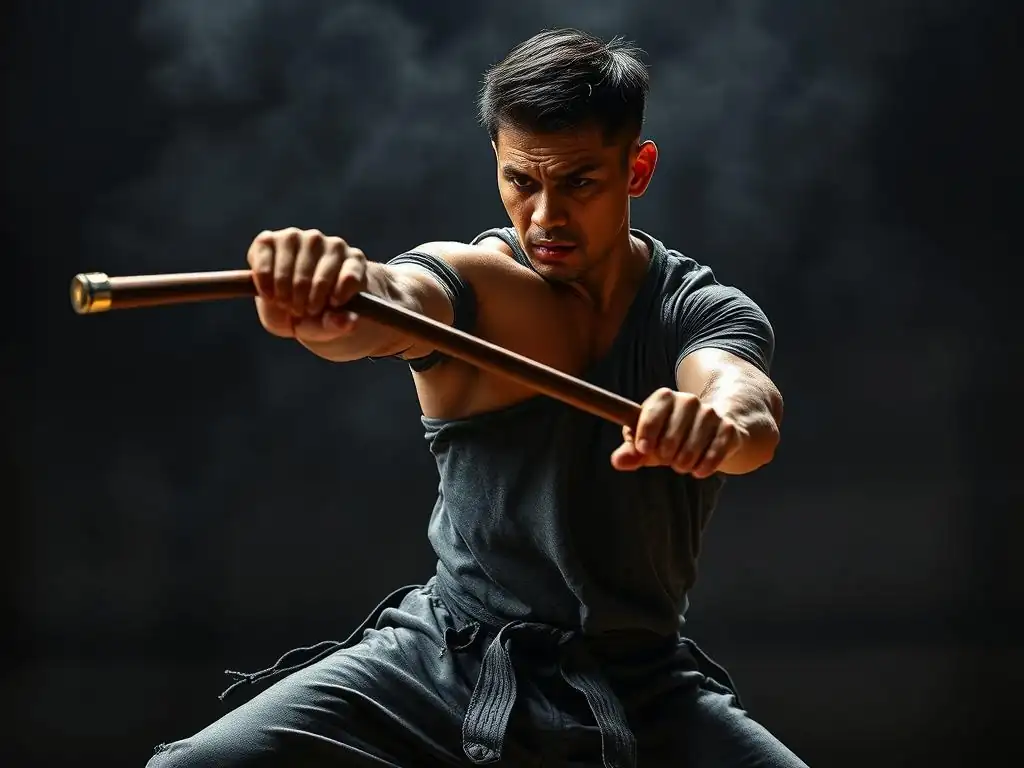
Welcome to Martial Arts Mastery, where we delve into the depth and breadth of the martial arts world. Ever wondered how wielding a simple stick can unlock devastating empty-hand techniques? In this article, we unravel the secrets of Eskrima stick empty hand combat, revealing how the principles learned with the stick can be seamlessly translated into a highly effective self-defense system. Prepare to discover the surprising connection and unlock a new dimension in your martial arts understanding...
- Introduction: Unveiling the Power of Eskrima's Stick Fighting for Empty Hand Self-Defense
- The Foundation: Eskrima Stick Fighting Fundamentals
- From Stick to Hand: The Direct Transfer of Skills
- Eskrima Footwork: Enhancing Mobility and Evasion in Empty Hand Combat
- Eskrima's Emphasis on Reflexes and Timing: Developing Instinctive Reactions
- Utilizing Eskrima's Defenses in Empty Hand Scenarios
- Specific Empty Hand Techniques Derived from Eskrima: Gunting and Hubud-Lubud
- The Psychological Edge: Confidence and Aggressiveness from Eskrima Training
- Integrating Eskrima Principles into a Comprehensive Empty Hand System: Blending with Other Martial Arts
- Training Drills for Seamless Transition: Eskrima to Empty Hand
- Conclusion: Unleashing Your Empty Hand Potential Through Eskrima Training
-
Frequently Asked Questions
- How does training with Eskrima sticks improve my empty-hand fighting abilities?
- What specific Eskrima techniques are most useful in empty-hand combat?
- Does Eskrima focus solely on weapon-based combat, or is there an empty-hand component?
- How does the focus on angles in Eskrima benefit me in an empty-hand fight?
- Is Eskrima stick training suitable for beginners with no prior martial arts experience?
- Final Reflection: Bridging Stick and Fist
- Unleash Your Inner Warrior: Transform Stick Skills Into Devastating Empty-Hand Power!
Introduction: Unveiling the Power of Eskrima's Stick Fighting for Empty Hand Self-Defense
Eskrima, also known as Arnis or Kali, is the indigenous martial art of the Philippines, renowned primarily for its dynamic and effective stick fighting techniques. While its weaponry skills are legendary, a core principle within Eskrima training is the seamless transition from weapon-based combat to empty-hand applications. This inherent duality means that the principles, footwork, and body mechanics developed through rigorous Eskrima stick training provide a powerful foundation for effective empty-hand self-defense, offering practitioners a significant advantage in unarmed confrontations.
Understanding this transition is crucial for anyone seeking a comprehensive self-defense system. The speed, timing, and angles learned with sticks translate directly to punches, elbows, and open-hand strikes. Furthermore, the defensive structures and movement patterns used to evade or block weapon attacks are highly adaptable to defending against unarmed assaults. Exploring how Eskrima stick empty hand skills complement and enhance one another reveals a sophisticated and highly practical approach to personal security.
The Foundation: Eskrima Stick Fighting Fundamentals
Understanding Eskrima's Core Principles: Redonda, Sinawali, and Rompida
Eskrima's effectiveness stems from a set of fundamental principles that govern its movements and strategies. Redonda, meaning "round" or "circular," emphasizes continuous, flowing movements, often utilizing circular or diagonal trajectories for strikes and defenses. This principle promotes fluidity and allows practitioners to chain techniques together seamlessly, overwhelming an opponent with a barrage of strikes or defenses. Training often involves drills focusing on continuous circular motion, building endurance and coordination.
Sinawali, named after the weaving pattern of bamboo, is a fundamental drill involving two sticks striking and weaving in specific patterns. There are numerous Sinawali variations (e.g., Heaven and Earth, Figure 8), each developing different coordination patterns, timing, and distance management. Practicing Sinawali for even 10-15 minutes daily significantly enhances bilateral coordination and the ability to maintain a rhythmic flow of strikes, preparing the body and mind for complex exchanges.
Rompida, meaning "breaking" or "cutting," often refers to powerful, downward diagonal strikes aimed at breaking an opponent's weapon or limb structure. These core principles, drilled relentlessly, build the foundational attributes necessary for both armed and unarmed combat.
Grip and Stance in Eskrima: The Building Blocks of Effective Striking
The grip on the stick in Eskrima, typically a relaxed but firm grip allowing for quick manipulation and power generation, is directly analogous to the tension and control needed in an empty hand strike. Holding the stick too tightly restricts movement and speed, much like clenching a fist prematurely in boxing.
A proper Eskrima grip allows the wrist to snap, adding significant power to strikes, a principle that translates to the wrist snap used in many effective empty-hand punches and open-hand strikes. The positioning of the stick relative to the hand also dictates striking angles and defensive structures, mirroring how hand position affects empty-hand guard and attack options.
Eskrima stances, such as the ready stance or various combat stances, emphasize balance, mobility, and the ability to generate power from the ground up. These stances are designed to allow rapid movement in any direction – forward, backward, or laterally – while maintaining a stable base for striking or absorbing impact.
The weight distribution and slight knee bend are crucial for kinetic chain transfer, enabling power generated from the legs and hips to travel through the core and into the strike, whether delivered by a stick or an empty hand. A common training metric is the ability to maintain a low, stable stance for extended periods, sometimes up to 5-10 minutes, building leg strength and endurance vital for dynamic movement in empty-hand exchanges.
Basic Eskrima Striking Techniques: Diagonal Forehand, Backhand, and Abaniko
Eskrima utilizes a systematic approach to striking, often based on standard angles of attack. The diagonal forehand strike (often Angle 1) and the diagonal backhand strike (Angle 2) are among the most fundamental. These strikes target the opponent's head, neck, or limbs and are delivered with speed and power, utilizing body rotation and weight transfer.
Mastering these angles with a stick develops the motor patterns and timing necessary for delivering powerful empty-hand strikes along the same trajectories, such as a straight punch or a hooking motion. Consistent practice of these angles, often involving hundreds of repetitions per training session, ingrains the fundamental mechanics.
The Abaniko, or fan strike, is a rapid, fanning motion often used for close-range attacks or as a defensive deflection. It involves whipping the stick with minimal large body movement, relying more on wrist and forearm action. This technique directly translates to empty-hand skills like rapid open-hand strikes, palm strikes, or even short, snapping punches.
The focus on generating speed and power from a small range of motion in Abaniko is highly applicable to close-quarters empty-hand combat where space is limited. A typical training regimen might include practicing Abaniko drills for 5 minutes straight to build wrist endurance and speed.
From Stick to Hand: The Direct Transfer of Skills
The "Empty Hand as Stick" Concept: Visualizing and Applying Stick Principles
One of the core principles of Eskrima stick empty hand transition is the concept of treating the empty hand as if it were holding a stick. This involves visualizing the range, angles, and power generation methods used with the weapon and applying them to the unarmed strike. When delivering a punch, for example, the practitioner might visualize the trajectory of an Angle 1 stick strike, ensuring the body mechanics replicate the power and speed of the weapon strike. This mental framework helps maintain the efficiency and effectiveness developed through weapon training.
This visualization isn't just theoretical; it's practiced through specific drills. Practitioners might shadowbox holding imaginary sticks, performing standard Eskrima patterns like Sinawali, but focusing on how their empty hands move and generate power. They then transition to the same movements without the imaginary stick, consciously applying the same principles of body alignment, weight transfer, and wrist snap. This conscious application of the "empty hand as stick" concept helps bridge the gap between weapon and unarmed combat, ensuring that the thousands of repetitions spent on stick drills directly contribute to empty-hand proficiency.
Mapping Eskrima Strikes to Empty Hand Strikes: Punches, Elbows, and Kicks
The 12 or more standard angles of attack in Eskrima provide a blueprint for empty-hand strikes. An Angle 1 or 2 stick strike (diagonal downward) maps effectively to a straight punch or an angled hammer fist targeting the head or collarbone area. Horizontal stick strikes (Angles 3 and 4) correspond to hooks or horizontal elbow strikes. Upward diagonal strikes (Angles 5 and 6) translate to uppercuts or upward elbow strikes. Even thrusting stick attacks (Angles 7 and 8) have empty-hand equivalents in straight punches or finger jabs.
Beyond hand strikes, Eskrima's principles inform kicks and knee strikes. The principle of attacking low lines (Angles 9 and 10) with a stick translates to leg kicks or knee strikes. The rapid, multiple strikes common in Eskrima translate to combinations of punches, elbows, and knees in empty-hand. For instance, a rapid Sinawali pattern with sticks can be performed as a rapid series of alternating punches or elbow strikes. Training often involves practicing these mapped strikes in sequence, ensuring the body can fluidly transition between the weapon-based motion and the empty-hand equivalent.
Disarming Techniques and Their Empty Hand Counterparts: Weapon Retention and Joint Locks
Eskrima is renowned for its sophisticated disarming techniques, which involve trapping, manipulating, and controlling an opponent's weapon-bearing limb to take away their weapon. These techniques rely heavily on understanding joint mechanics, leverage, and timing. The principles used to control a wrist holding a stick are directly applicable to controlling an opponent's wrist or arm in an empty-hand grappling or self-defense scenario. The goal shifts from taking away a weapon to controlling the limb to prevent strikes or set up joint locks and controls.
Many disarming sequences involve controlling the opponent's limb and applying pressure to vulnerable points like the wrist, elbow, or shoulder. These same points are targeted in empty-hand joint locks and controls. For example, a disarm that breaks an opponent's structure by twisting their wrist can be adapted into an empty-hand wrist lock or control technique.
Eskrima training often includes specific drills where practitioners practice disarms against padded sticks and then immediately transition to applying the same control principles to the partner's empty arm, highlighting the direct transfer of leverage and control concepts. This focus on controlling limbs is a hallmark of Eskrima stick empty hand applications.
Eskrima Footwork: Enhancing Mobility and Evasion in Empty Hand Combat
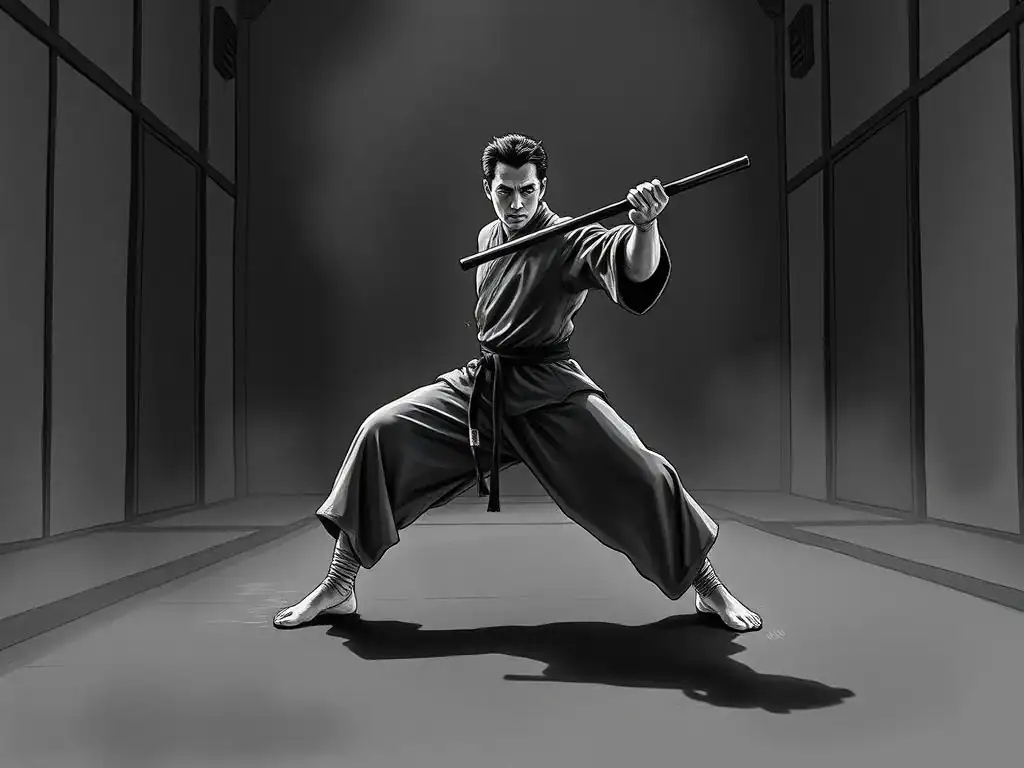
Triangle Footwork in Eskrima: Gaining Angles for Striking and Defense
Triangle footwork is a cornerstone of Eskrima movement. It involves stepping off the line of attack to either side, creating a triangular pattern relative to the opponent. This allows the practitioner to evade an incoming strike while simultaneously gaining a superior angle for their own counter-attack. Stepping to the outside of an opponent's attack puts the practitioner in a blind spot and allows strikes to the opponent's flank or back. Stepping to the inside can jam the opponent's technique and create opportunities for close-range attacks.
This deliberate angling is crucial in empty-hand combat. Staying directly in front of an opponent leaves one vulnerable to their most powerful linear attacks (punches, kicks). By utilizing triangle footwork, an empty-hand fighter can consistently move off the center line, making themselves a harder target while setting up angled attacks like hooks, uppercuts, or attacks to the body. Training drills often involve a partner attacking linearly while the practitioner practices evading using triangle steps, emphasizing timing and precise foot placement to cover approximately 2-3 feet per step while maintaining balance.
Applying Eskrima Footwork Principles to Empty Hand Movement: Agility and Positioning
Beyond the specific triangle steps, Eskrima footwork emphasizes overall agility, balance, and the ability to quickly shift weight and direction. Drills like the "passing through" drill, where practitioners move past each other while exchanging strikes, build comfort with close distances and dynamic movement. The constant motion and positional awareness developed through dodging stick strikes translate directly to evading punches and kicks in an empty-hand scenario. The ability to rapidly close or create distance is also a key component, allowing the fighter to control the range of the engagement.
Applying Eskrima footwork principles in empty-hand combat means not standing still. It involves constant micro-adjustments, pivots, and strategic steps to maintain optimal distance, create openings, and avoid incoming damage. The emphasis on circular movement and angling makes an Eskrima stick empty hand practitioner particularly difficult to pin down. Training involves practicing empty-hand movement patterns derived from Eskrima footwork, often incorporating defensive head movement learned from evading stick strikes, such as slipping or bobbing.
Eskrima's Emphasis on Reflexes and Timing: Developing Instinctive Reactions
Drills for Enhancing Reaction Time: Tapi-Tapi and Hubud-Lubud
Eskrima training heavily relies on partner drills that build instantaneous reflexes and timing. Tapi-Tapi is a drill where partners exchange predetermined or semi-predetermined strikes and defenses, often starting slowly and gradually increasing speed. This drill hones the ability to recognize incoming attacks and respond appropriately without conscious thought. It develops muscle memory for specific defensive and offensive sequences, making reactions almost automatic. Regular Tapi-Tapi practice, even just 10-15 minutes daily, measurably improves reaction time to visual and tactile cues.
Hubud-Lubud is a continuous flow drill involving trapping, striking, and controlling an opponent's hands and arms. It is a highly dynamic drill that requires acute sensitivity to pressure and movement. Practicing Hubud-Lubud develops the ability to feel an opponent's intentions through physical contact and react instantly. This sensitivity is invaluable in empty-hand close-quarters combat, allowing the practitioner to anticipate and counter strikes or grappling attempts based on subtle cues. Mastering Hubud-Lubud requires hundreds of hours of dedicated practice to achieve true fluidity and responsiveness.
Developing Sensitivity and Awareness: Reading Your Opponent's Movements
Beyond specific drills, the nature of sparring and training with sticks develops a heightened sense of awareness and sensitivity. Learning to track the fast movement of a stick teaches the eyes and mind to process information rapidly. This translates to the ability to read an opponent's body language, weight shifts, and subtle movements that telegraph an empty-hand attack. The constant need to react to unpredictable angles and speeds during stick sparring sharpens proprioception and spatial awareness.
Sensitivity, particularly emphasized in drills like Hubud-Lubud, involves learning to feel the opponent's energy, tension, and direction of force through physical contact. This allows for preemptive reactions or the ability to flow with and redirect an opponent's energy. Applying this sensitivity in an empty-hand context enables a fighter to feel when an opponent is about to punch, push, or grab, allowing for immediate defensive or offensive responses. This refined sensitivity is a key advantage for those transitioning Eskrima stick empty hand skills.
Utilizing Eskrima's Defenses in Empty Hand Scenarios
Blocking and Deflecting: Adapting Stick Defenses for Empty Hand Protection
Eskrima utilizes various blocking and deflecting techniques to deal with incoming stick strikes. These often involve using the stick to meet the incoming force at an angle, redirecting its energy, or using reinforced blocks. While directly blocking a punch with a bare forearm can be done, the principle of deflection and redirection is often more applicable in empty-hand combat. Learning to use forearm blocks, parries, and evasive movements to glance or redirect incoming strikes is a direct adaptation of stick defense.
For example, the umbrella block used against downward stick strikes can be adapted to an empty-hand defense against overhead attacks or even certain types of hooks, using the forearm or hand to deflect the force outwards. The low blocks used against leg attacks with sticks translate to checking kicks or blocking low punches. The key is adapting the principle of meeting, redirecting, or absorbing force at an optimal angle, rather than a literal one-to-one application. Training involves practicing these empty-hand adaptations against padded attacks, focusing on minimal force absorption and maximum redirection.
Evading and Redirecting: Using Movement to Avoid Attacks
Eskrima places a strong emphasis on evasion and using footwork to get out of the line of fire. Rather than relying solely on blocking, skilled practitioners prefer to evade the strike entirely while simultaneously positioning themselves for a counter. This involves the triangle footwork discussed earlier, as well as slipping, bobbing, and weaving techniques adapted from avoiding stick strikes. The speed and unpredictability of stick attacks necessitate rapid, decisive evasive movements.
Applying these evasion principles in empty-hand combat is highly effective. Slipping a punch or stepping offline from a kick is often safer and more energy-efficient than attempting to block or absorb the impact. Eskrima's focus on angles and constant movement means that an empty-hand fighter trained in its methods is constantly seeking to move to positions where the opponent cannot easily hit them, while they maintain the ability to strike. Redirecting an opponent's limb after an evasion to create opportunities for joint locks or controls is also a direct application of Eskrima's disarming principles.
Specific Empty Hand Techniques Derived from Eskrima: Gunting and Hubud-Lubud
The "Gunting" Technique: Trapping and Disabling Limbs
The term "Gunting" in Eskrima means "scissors" and refers to techniques that involve simultaneously attacking and disabling an opponent's limb, often using a shearing or cutting motion. With a stick or blade, this might involve striking the nerve or muscle of an arm or leg to incapacitate it. In empty-hand combat, the Gunting principle is applied through techniques that trap, control, and strike a limb simultaneously, often targeting vulnerable points like the biceps, triceps, or nerves.
An empty-hand Gunting technique might involve using one hand to trap an opponent's punching arm while simultaneously striking a nerve cluster on that arm with the other hand or an elbow. The goal is to disrupt the opponent's structure, create pain, and temporarily disable the limb, leaving them vulnerable to follow-up attacks. This approach is less about bone breaking (though possible) and more about disrupting function through nerve or muscle impact. Practicing Gunting drills involves targeting specific points on a partner's padded limb, focusing on precision and simultaneous action.
"Hubud-Lubud" Flow Drills: Developing Fluid Empty Hand Combinations
As mentioned earlier, Hubud-Lubud is a dynamic flow drill fundamental to Eskrima. While often starting with hand-to-hand sensitivity, it evolves to incorporate strikes, traps, and controls. In the empty-hand context, Hubud-Lubud becomes a drill for developing seamless transitions between trapping, striking, controlling, and even entering into grappling or joint locks. It teaches the practitioner to flow with an opponent's movements, reacting instantly and chaining techniques together.
Practicing empty-hand Hubud-Lubud involves partners continuously exchanging hand fighting, trapping, and striking sequences based on sensitivity and reaction. This drill builds the crucial ability to improvise and adapt in real-time empty-hand exchanges. It trains the body to automatically find openings, apply pressure, and transition between different types of techniques – from striking to trapping to controlling – without hesitation. Mastery of empty-hand Hubud-Lubud provides a highly fluid and unpredictable fighting style, making Eskrima stick empty hand practitioners formidable.
The Psychological Edge: Confidence and Aggressiveness from Eskrima Training
Overcoming Fear and Hesitation: Cultivating a Warrior Mindset
Training with weapons, even padded ones, in Eskrima drills like sparring or disarming practice, inherently builds a level of comfort with confrontation and the potential for injury. Facing down incoming stick strikes moving at high speed requires significant courage and helps practitioners overcome the natural human instinct to freeze in the face of aggression. This repeated exposure to simulated danger cultivates a warrior mindset – a willingness to engage and defend oneself assertively.
This psychological conditioning is invaluable in empty-hand self-defense. The confidence built from knowing one can handle the intensity of weapon training translates directly to facing an unarmed aggressor with less fear and hesitation. Practitioners are less likely to be paralyzed by fear and more likely to react decisively. This mental fortitude, tempered by the demands of Eskrima, gives practitioners a significant psychological edge in real-world confrontations, whether armed or unarmed.
Projecting Confidence and Control: De-escalation through Body Language
Beyond internal confidence, Eskrima training influences external demeanor. The balanced stances, focused gaze, and controlled movements developed in training project confidence and capability. This confident body language can itself be a powerful tool for de-escalation. An aggressor is less likely to target someone who appears capable and unafraid compared to someone who seems timid or uncertain.
Furthermore, the ability to move efficiently and maintain composure under pressure, honed by Eskrima drills, allows practitioners to project control even in chaotic situations. This calm assertiveness can sometimes deter an attacker before physical conflict even begins. While Eskrima stick empty hand skills prepare for the fight, the psychological benefits contribute to avoiding it altogether or managing it effectively from the outset.
Integrating Eskrima Principles into a Comprehensive Empty Hand System: Blending with Other Martial Arts
Combining Eskrima with Other Martial Arts Styles: Boxing and Muay Thai
While Eskrima provides a robust framework for empty-hand combat derived from weapon principles, its effectiveness can be further enhanced by integrating it with other martial arts styles that specialize in unarmed fighting. Boxing provides sophisticated footwork, head movement, and punching mechanics that complement Eskrima's linear and angular strikes. The defensive principles of boxing, such as slipping and rolling, can be seamlessly integrated with Eskrima's evasion techniques.
Muay Thai, with its powerful kicks, knees, and elbows, aligns well with Eskrima's emphasis on full-body power generation and its use of all parts of the body as weapons. The clinch work in Muay Thai can be combined with Eskrima's limb control and trapping principles. Many modern Eskrima systems already incorporate elements from striking arts to build a more complete empty-hand curriculum. Training might involve rounds dedicated to pure boxing or Muay Thai techniques, followed by drills applying Eskrima principles within those frameworks.
Developing a Personalized Empty Hand Combat Strategy: Tailoring Techniques to Your Strengths
The beauty of Eskrima's adaptable principles is that they can be tailored to an individual's physical attributes and preferences. Someone with strong legs might emphasize kicks and low-line attacks derived from Eskrima's lower angles, combined with Muay Thai leg kicks. Someone with quick hands might focus on rapid-fire striking combinations and hand trapping, blending Eskrima's Sinawali patterns with boxing punches.
Developing a personalized empty-hand strategy involves identifying which Eskrima stick empty hand translations feel most natural and effective for one's body type and then supplementing those with techniques from other arts if necessary. It's about creating a cohesive system where the weapon-derived principles enhance and inform the unarmed techniques, resulting in a unique and highly effective personal combat style. This requires experimentation during training, trying different combinations and focusing on what works best under pressure.
Training Drills for Seamless Transition: Eskrima to Empty Hand
Shadow Boxing with Stick Concepts: Visualizing and Practicing
Shadow boxing is a fundamental training method in most martial arts, and it's crucial for bridging the gap between Eskrima stick skills and empty-hand application. This involves practicing movements and techniques without a partner, but with a specific focus on applying Eskrima principles. A practitioner might shadowbox performing a Sinawali pattern, visualizing the sticks but executing the movements with empty hands, focusing on the same rhythm, angles, and body mechanics.
Another variation involves visualizing an opponent attacking with a stick and practicing empty-hand evasions and counter-attacks based on Eskrima defenses. This mental rehearsal helps solidify the Eskrima stick empty hand connection, allowing the body to internalize the transition. Regularly dedicating 10-15 minutes of shadow boxing to this specific visualization process is highly effective for skill transfer.
Partner Drills: Applying Stick Techniques in a Dynamic Setting
Partner drills are essential for developing the timing, distance, and feel necessary for applying Eskrima principles in a dynamic empty-hand context. Drills like empty-hand Hubud-Lubud, as discussed, focus on continuous flow and sensitivity. Other drills might involve a partner feeding specific empty-hand attacks (punches, grabs) while the practitioner responds using empty-hand techniques directly derived from Eskrima disarms, blocks, or counter-strikes.
For instance, a partner might throw a straight punch, and the practitioner practices evading offline using triangle footwork while simultaneously executing an empty-hand strike or trap based on an Eskrima counter-attack angle. These drills can start slowly to ensure correct mechanics and gradually increase in speed and intensity. Consistent partner work (e.g., 3-4 sessions per week) is vital for making the transition from weapon-based principles to reactive empty-hand skills.
Sparring with Limited Stick Contact: Gradually Transitioning to Empty Hand
Sparring provides the most realistic training environment short of actual conflict. To facilitate the Eskrima stick empty hand transition, sparring can be structured in phases. Initially, practitioners might spar with padded sticks, focusing on applying principles learned. A transition phase could involve "conditional" sparring where one partner uses a padded stick and the other uses empty hands, forcing the empty-hand fighter to apply their defense and counter-offense against a weapon.
Finally, empty-hand sparring rounds can be incorporated where practitioners focus on applying the footwork, angles, timing, and techniques derived from their Eskrima training against an unarmed opponent. This gradual progression, moving from weapon-focused sparring to empty-hand application, allows practitioners to test and refine their ability to translate their Eskrima skills under pressure. Regular sparring (e.g., 1-2 times per week) is crucial for pressure testing and refining these skills.
Conclusion: Unleashing Your Empty Hand Potential Through Eskrima Training
Eskrima's reputation as a formidable weapon-based art is well-deserved, but its depth extends far beyond the stick. The core principles, dynamic footwork, emphasis on timing and reflexes, and specific techniques honed through weapon training provide a powerful and surprisingly complete foundation for empty-hand combat.
By understanding and actively training the connection between Eskrima stick empty hand applications, practitioners can unlock a level of speed, fluidity, and tactical awareness that is highly effective in unarmed self-defense. The structured training methods, from fundamental drills to dynamic sparring, ensure that the skills learned with a stick are not just theoretical concepts but practical, instinctive reactions ready for any confrontation.
Frequently Asked Questions
How does training with Eskrima sticks improve my empty-hand fighting abilities?
Eskrima stick training develops hand-eye coordination, weapon awareness, and striking power, all of which directly translate to effective empty-hand techniques. You'll instinctively understand angles and distances better.
What specific Eskrima techniques are most useful in empty-hand combat?
Techniques like defanging the snake (disarming) and various striking patterns build reflexes and targeting skills. The footwork and body mechanics are also readily adaptable to empty-hand fighting scenarios.
Does Eskrima focus solely on weapon-based combat, or is there an empty-hand component?
While primarily weapon-based, Eskrima incorporates Panantukan (Filipino boxing) and Dumog (grappling), both integral to the art. These provide a complete self-defense system, blending weapons and empty hands.
How does the focus on angles in Eskrima benefit me in an empty-hand fight?
Eskrima emphasizes using angles for both attack and defense. This gives you an advantage in controlling space and creating openings, making your strikes more effective and your defense more solid.
Is Eskrima stick training suitable for beginners with no prior martial arts experience?
Yes, Eskrima is often considered relatively easy to learn initially. The fundamental techniques are straightforward and quickly applicable, making it a great starting point for martial arts training.
Final Reflection: Bridging Stick and Fist
The journey from wielding the Eskrima stick to mastering empty-hand combat is not merely a transition, but a transformation of martial understanding. We've explored how the principles of angles, footwork, and weapon awareness, honed through stick training, directly translate into a more potent and adaptable fighting style, proving that the stick is not just a weapon, but a key to unlocking deeper combat potential.
The influence of Eskrima extends far beyond the dojo, shaping not only physical prowess but also mental acuity and strategic thinking. The discipline instilled through stick training cultivates a heightened sense of spatial awareness and timing, skills that are invaluable in all aspects of life. The best weapon is the one you know how to use.
This simple truth underscores the power of Eskrima, where the stick becomes an extension of the body and the principles learned transcend the limitations of any single weapon.
Now, consider how you can apply these principles of adaptability and resourcefulness in your own life. Embrace the challenge of translating learned skills into new contexts, whether in martial arts or beyond. Let the lessons of Eskrima – the importance of angles, the power of footwork, and the unwavering focus on awareness – guide you towards a more potent and adaptable version of yourself.
Unleash Your Inner Warrior: Transform Stick Skills Into Devastating Empty-Hand Power!
Thanks for diving into the world of Eskrima and its incredible impact on empty-hand combat! We hope you've gained valuable insights into how stick training can sharpen your reflexes, coordination, and overall fighting prowess. Now, it's time to put that knowledge into action.
Here's how you can continue your journey to becoming a more complete martial artist:
- Immediately begin practicing the disarming techniques you learned with a training partner. Focus on smooth transitions and adapting the principles to different scenarios.
- Explore related martial arts that emphasize weapon-based combat, such as Kali or Silat, to broaden your understanding of combative movement and strategy.
- Consider joining a local Eskrima school and immersing yourself in the culture to maximize the knowledge of your practice.
Which Eskrima principle will you focus on incorporating into your empty-hand practice this week to experience a tangible improvement in your fighting ability?