
Hapkido Joint Locks Against Weapon Attacks: Effective Disarming Techniques

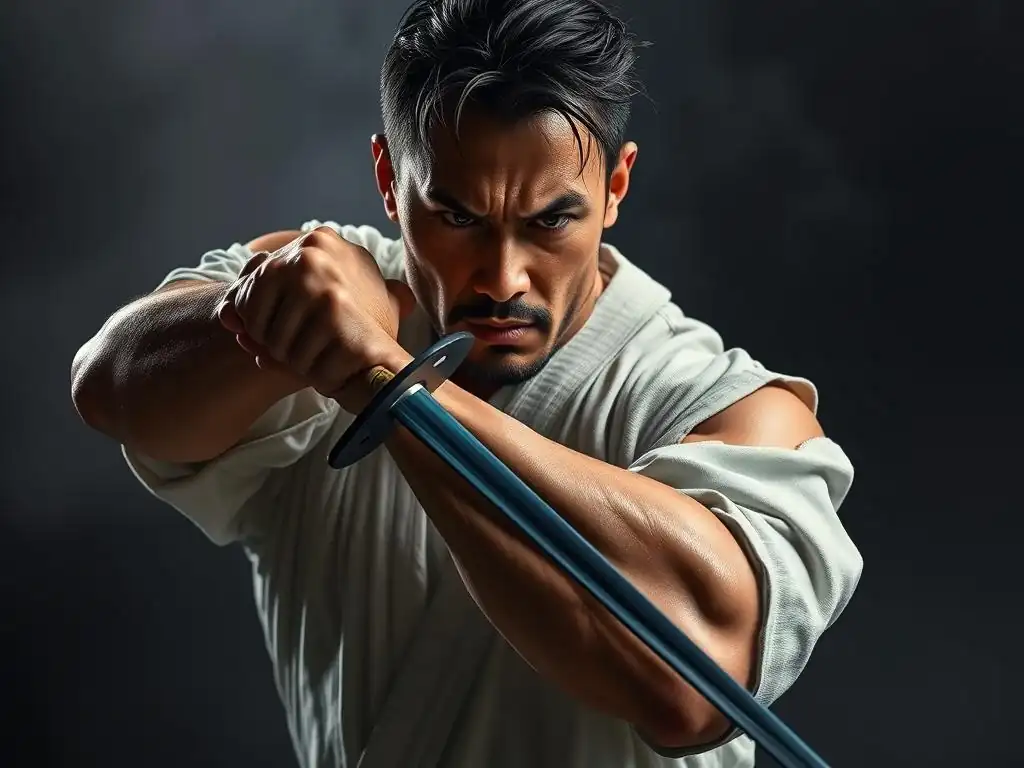
Welcome to Martial Arts Mastery, your ultimate guide to unlocking the profound secrets of combat. Are you ready to delve into the intricate world of Hapkido and discover how its principles can be applied to neutralizing even the most dangerous threats? Prepare to be amazed as we explore the art of Hapkido disarming weapon attacks, revealing effective joint lock techniques that could save your life. Curious to learn how to turn an attacker's weapon against them? Read on...
- Introduction to Hapkido Weapon Disarming
- Hapkido Principles for Weapon Disarming
- Common Weapon Attacks and Hapkido Joint Lock Responses
- Step-by-Step Hapkido Disarming Techniques
- Training Drills for Hapkido Weapon Disarming
- Safety Considerations in Hapkido Weapon Disarming Training
- Advanced Hapkido Disarming Techniques
- Conclusion: Mastering Hapkido Disarming for Self-Defense
-
Frequently Asked Questions
- What makes Hapkido effective for disarming weapon attacks?
- How does Hapkido differ from other martial arts in its disarming approach?
- What types of weapons does Hapkido training prepare you to defend against?
- How long does it typically take to become proficient in Hapkido weapon disarming techniques?
- Where can I find reliable resources to learn more about Hapkido disarming techniques?
- Final Reflection: Mastering Hapkido's Defensive Art
- Unleash Your Inner Defender!
Introduction to Hapkido Weapon Disarming
Hapkido, a dynamic and comprehensive Korean martial art, is renowned for its emphasis on joint locks, throws, and strikes. While strikes and kicks are vital components, the art's sophisticated joint manipulation techniques are particularly effective in controlling an opponent. This is especially true when facing an adversary armed with a weapon, where control and neutralization are paramount. The ability to quickly and safely disarm an attacker using leverage and anatomical vulnerabilities is a hallmark of advanced Hapkido training.
Disarming weapon attacks is a critical, albeit dangerous, aspect of self-defense. Hapkido's approach provides a structured methodology for dealing with threats involving knives, sticks, and even firearms. The focus isn't on meeting force with force, but rather on redirecting energy, exploiting balance, and applying precise pressure to incapacitate the aggressor and secure the weapon. Effective Hapkido disarming weapon attacks relies heavily on understanding human anatomy and the principles of motion.
The Importance of Weapon Defense in Hapkido
Weapon defense is not merely an advanced topic in Hapkido; it is considered an essential component of comprehensive self-protection. In real-world confrontations, the presence of a weapon dramatically escalates the danger and complexity of the situation. Relying solely on empty-hand techniques against a knife or club is often insufficient and carries a high risk of severe injury or worse. Therefore, dedicated training in Hapkido disarming weapon attacks is crucial for practitioners seeking practical self-defense skills.
Statistically, a significant percentage of violent assaults involve some form of weapon, ranging from improvised tools to knives and firearms. While precise global figures vary, studies often indicate that edged weapons and blunt objects are frequently used in close-quarters attacks. Hapkido's systematic approach to disarming provides practitioners with a strategic framework to respond to such threats, aiming to minimize harm while neutralizing the danger. Mastering Hapkido disarming techniques requires diligent practice and a deep understanding of timing, distance, and anatomical weaknesses.
Understanding Hapkido's Emphasis on Joint Locks for Disarming
Hapkido's unique strength in weapon disarming lies in its profound understanding and application of joint locks. Rather than attempting to overpower a weapon-wielding attacker, Hapkido focuses on disrupting their structure and control by targeting vulnerable joints like the wrist, elbow, and shoulder. This approach leverages the body's natural limitations, allowing a smaller or weaker defender to control a larger, stronger assailant who is armed.
Joint locks provide a pathway to control and subsequent disarming without necessarily resorting to injurious force immediately. A well-applied wrist lock, for instance, can create immense pain and instability, forcing the attacker to drop their weapon or become compliant. This emphasis on control through manipulation makes Hapkido disarming weapon attacks particularly effective in scenarios where minimizing injury to either party might be desirable, while still ensuring safety for the defender. The principle is to use leverage and anatomical constraints to achieve the desired outcome: separation from the weapon.
Hapkido Principles for Weapon Disarming
Hapkido's effectiveness in disarming weapon attacks stems from its core principles, which are applied universally across all techniques, including those involving weapons. Understanding and embodying these principles allows practitioners to adapt techniques to various scenarios and opponents. The synergy of these concepts creates a powerful system for self-defense against armed threats.
Utilizing Circular Motion (Won) for Weapon Control
Circular motion, or Won, is a fundamental principle in Hapkido. Instead of meeting an attacker's force head-on, Hapkido teaches practitioners to move offline and blend with the incoming energy, redirecting it in a circular path. This principle is invaluable in Hapkido disarming weapon attacks. When an attacker thrusts a knife or swings a stick, stepping directly into the path is dangerous. Moving circularly allows the defender to evade the initial attack while simultaneously gaining a superior angle for applying a joint lock or control technique.
Consider defending against a straight knife thrust. Instead of blocking directly, a Hapkido practitioner might step to the side and slightly forward, rotating their body in a circular path around the attacker's arm. This motion helps deflect the thrust and positions the defender to apply a wrist lock or elbow control from an angle where the attacker's force is no longer directed at them, but rather tangent to their movement. This principle conserves the defender's energy and uses the attacker's momentum against them.
The Power of Yu (Yielding) in Weapon Disarming
The principle of Yu, often translated as yielding or blending, is another cornerstone of Hapkido that is critical for Hapkido disarming weapon attacks. It involves not resisting force directly but rather absorbing and redirecting it. When faced with the powerful force of a weapon attack, attempting to block or stop the weapon head-on is usually futile and dangerous. Instead, Yu teaches the practitioner to move with the force initially, guiding it into a position where it can be controlled or neutralized.
For example, if an attacker is pushing strongly with a weapon (like a gun pressed against the body), Yu dictates that the defender should not push back. Instead, they might momentarily yield to the pressure while simultaneously moving off-line and initiating a circular control over the attacker's limb holding the weapon. This yielding prevents a static struggle of strength, which the attacker might win, and transitions the encounter into a dynamic situation where Hapkido's joint locks and throws can be effectively applied to achieve Hapkido disarming.
Understanding the Importance of Timing and Distance (Maai)
Timing ( Shi) and distance ( Maai) are crucial concepts in any martial art, but they become absolutely paramount when dealing with weapon threats. Maai refers to the critical distance between the defender and the attacker – the distance at which an attack can be launched effectively and, conversely, the distance required for a defender to respond safely. Against a knife, Maai is very close; against a stick, it's slightly further; and against a firearm, the relevant Maai shifts depending on whether the gun is pointed at a distance or pressed against the body.
Precise Shi (timing) is equally vital for successful Hapkido disarming weapon attacks. The defender must initiate their movement and technique at the optimal moment – not too early, which might alert the attacker, and not too late, which could result in being struck or cut. The timing of evading the initial attack and the simultaneous application of a joint lock requires significant practice. A delay of mere milliseconds can mean the difference between a successful disarm and a failed defense. Training drills in Hapkido heavily emphasize developing this intuitive sense of Maai and Shi.
Common Weapon Attacks and Hapkido Joint Lock Responses
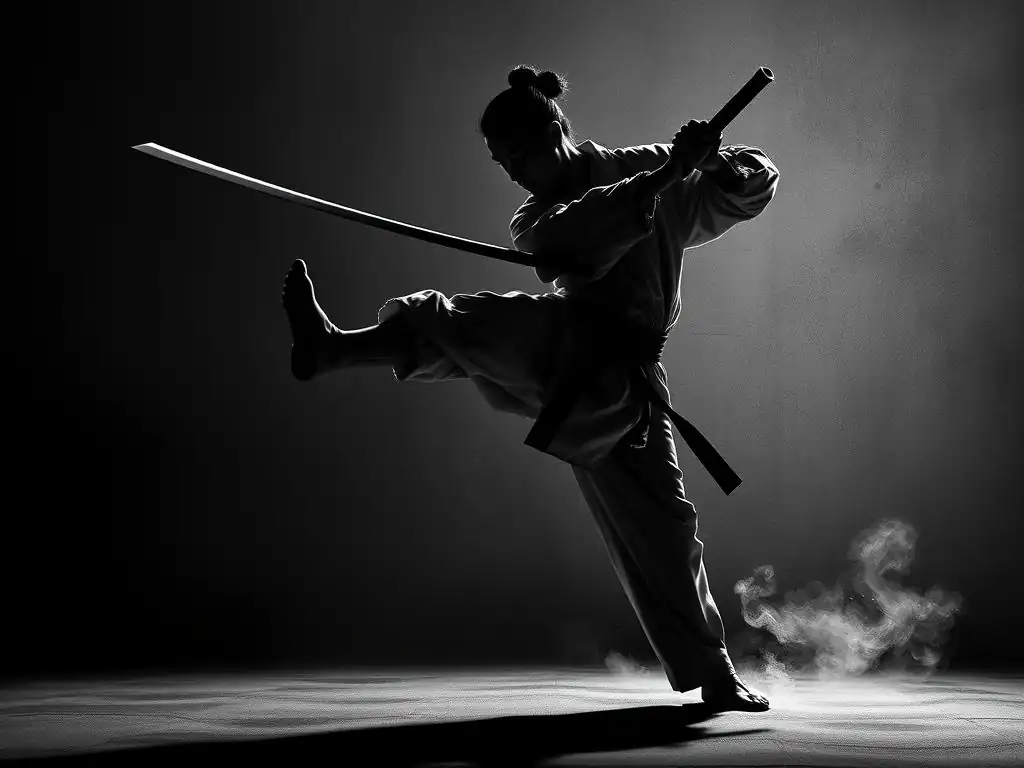
Hapkido training covers a range of responses to common weapon threats, focusing on techniques that transition into joint locks or control methods. While the specific techniques vary based on the type of weapon and the nature of the attack (thrust, slash, swing, point), the underlying principles of leverage, timing, and circular motion remain constant. Hapkido disarming weapon attacks are not static forms but dynamic responses tailored to the situation.
Defending Against Knife Attacks with Hapkido Joint Locks
Knife attacks are particularly challenging due to the speed and devastating potential of the weapon in close quarters. Hapkido techniques against knives prioritize immediate evasion from the line of attack, followed swiftly by control of the weapon-bearing limb, leading into a joint lock to facilitate disarming. The goal is to neutralize the threat before significant injury occurs.
Wrist Locks for Knife Disarmament
Wrist locks are frequently the first line of defense against knife attacks in Hapkido. Techniques like Pal Mok Gamki (Wrist Wrap) or Pal Mok Gukki (Wrist Bend) can be applied rapidly after evading a thrust or slash. By controlling the attacker's wrist and applying pressure in a direction contrary to the joint's natural movement, the defender can cause intense pain and disrupt the attacker's grip on the knife.
For example, against an overhead knife stab, a Hapkido practitioner might step off-line and execute a rising block that transitions immediately into a wrist wrap, twisting the attacker's hand and forcing the knife point away from the defender. This technique, when applied correctly, creates leverage that makes holding the knife extremely difficult, often resulting in the attacker dropping the weapon as the pain becomes unbearable. This is a core component of Hapkido disarming weapon attacks against blades.
Elbow Locks for Knife Control
If controlling the wrist isn't immediately feasible or sufficient, Hapkido techniques often transition to elbow locks for greater leverage and control against a knife-wielding assailant. Elbow locks can be applied from various angles and positions, often following an initial attempt at wrist control or after trapping the attacker's arm. Techniques such as Pal Gukki (Elbow Bend) or Pal Gaejang (Elbow Break - though often applied as a control) target the elbow joint's limited range of motion.
Applying an elbow lock, perhaps by pinning the attacker's arm against the defender's body or using the defender's forearm as a fulcrum, provides significant control over the attacker's entire limb. This control prevents further knife attacks and allows the defender time to secure the weapon or transition to a throw or takedown. An elbow lock can be particularly effective if the attacker is strongly gripping the knife, as it leverages a larger, more vulnerable joint.
Shoulder Locks for Knife Disarmament
Shoulder locks represent a higher level of control and can be used when the attacker's arm is extended or when other joint locks are not accessible. Techniques like Eokkae Gukki (Shoulder Bend) or manipulations involving the shoulder joint's rotation can incapacitate the attacker and facilitate disarming. These locks often require more complex body positioning and control than wrist or elbow locks.
Against certain knife attacks, such as a wide slash, a Hapkido practitioner might evade and move inside the attacker's range, trapping the arm and applying pressure to the shoulder joint. This could involve rotating the shoulder forcefully or hyperextending the arm while controlling the body. A well-executed shoulder lock can render the attacker's entire arm useless and create an opening to safely take the knife. Mastering these more complex joint manipulations is key to comprehensive Hapkido disarming weapon attacks.
Responding to Stick or Club Attacks with Hapkido Joint Locks
Stick or club attacks differ from knife attacks primarily in range and the type of force involved (impact vs. cutting/stabbing). Hapkido defense against sticks focuses on evading the arc of the swing or thrust and then controlling the weapon-bearing limb through joint manipulation or trapping, often followed by a throw or takedown.
Applying Arm Bars Against Stick Attacks
Arm bars are exceptionally useful joint locks against stick or club attacks. As the attacker swings, the Hapkido practitioner evades and moves inside the arc of the weapon, trapping the arm and applying pressure to the elbow joint, hyperextending it. Techniques like Paljang Beop (Arm Bar Methods) are central here. The goal is to control the arm holding the stick, preventing further strikes and creating pain that forces the attacker to release the weapon.
Imagine an attacker swinging a baseball bat horizontally. The defender steps back and to the side, allowing the bat to pass, while simultaneously trapping the attacker's arm near the elbow. By applying pressure against the elbow joint, the defender can execute an arm bar, breaking the attacker's posture and control over the stick. This is a classic application of Hapkido disarming against a blunt weapon.
Targeting Pressure Points with Joint Locks During Stick Defense
Hapkido often combines joint locks with pressure point manipulation ( Hyel Do Bup) to enhance effectiveness, particularly against stick attacks where achieving immediate disarming might be harder due to the longer weapon. Applying pressure to nerve points near a joint that is already locked can significantly amplify the pain and compliance level.
For instance, while applying an arm bar against a stick-wielding attacker, the defender might also use their thumb or knuckle to press a sensitive nerve point on the attacker's forearm or elbow. This dual application of joint stress and nerve pressure dramatically increases the likelihood of the attacker releasing the stick quickly. This integrated approach is characteristic of advanced Hapkido disarming weapon attacks.
Using Hapkido Throws After Joint Lock Application
After applying a joint lock against a stick attack and gaining control of the attacker's limb, Hapkido frequently transitions into a throw ( Donjigi) or takedown ( Teuksu Gwonbeop). A joint lock often breaks the attacker's balance and posture, making them vulnerable to being thrown.
For example, after securing an arm bar on the attacker's stick-holding arm, the defender can use the controlled arm as leverage to execute a hip throw ( Eoreum Cheogi) or a sweeping throw ( Bari Cheogi). The throw removes the attacker from their feet, separating them from the weapon and further neutralizing the threat. This combination of joint lock and throw is a powerful sequence in Hapkido disarming weapon attacks.
Hapkido Joint Locks Against Gun Threats
Defending against a gun threat is perhaps the most dangerous scenario, and Hapkido, like other martial arts, approaches this with extreme caution. Techniques are primarily focused on threats where the gun is at close range or touching the body, as defending against a gun at a distance is generally considered impractical and dangerous. Hapkido disarming against firearms emphasizes immediate control of the weapon and the attacker's hand, combined with rapid movement off the line of fire.
Safe Disarming Principles in Gun Defense
The absolute priority in Hapkido gun defense is to move out of the line of fire immediately while simultaneously controlling the weapon. There is no blocking a bullet. The technique must be initiated the instant the decision is made to resist. Hapkido principles dictate controlling the weapon-bearing limb using joint manipulation while moving the body to safety. The goal is not a fancy disarm but survival by taking the weapon out of play.
Training for gun defense in Hapkido is conducted with utmost seriousness, often using simulation firearms. Practitioners learn to identify the most common angles of attack (e.g., gun pointed to the front, side, or back of the head or body) and practice explosive, precisely timed movements that simultaneously redirect the weapon and initiate a joint lock on the attacker's hand or wrist. The emphasis is on speed, commitment, and simultaneous action.
Wrist Manipulation for Gun Control
Wrist manipulation is a key element in Hapkido disarming against gun threats at close range. Techniques involve trapping the attacker's hand around the gun grip and applying rotational or bending force to the wrist. The aim is to twist the gun away from the defender and gain control.
For instance, if a gun is pointed at the defender's chest, the defender might execute a swift, circular evasion while grasping the attacker's wrist and hand around the gun. Applying a technique similar to Pal Mok Gamki (Wrist Wrap) with forceful rotation can torque the attacker's wrist, making it difficult or impossible to maintain the grip and potentially causing them to drop the weapon or lose control. This is a high-risk technique requiring perfect timing and execution for successful Hapkido disarming.
Utilizing Body Positioning to Secure the Weapon
Effective Hapkido disarming against a gun threat involves not just manipulating the wrist but also using the defender's own body positioning to secure the weapon and prevent the attacker from regaining control or firing. This often involves pinning the attacker's arm and the weapon against the defender's body or trapping it using leverage from the defender's structure.
After applying a wrist lock and twisting the gun away, the defender might immediately press the attacker's hand and the weapon tightly against their own chest or hip, using their body weight and structure to maintain control while simultaneously moving to a safer position or applying a follow-up technique. This ensures that even if the attacker doesn't immediately drop the weapon, it is pointed safely away and secured, allowing the defender time to complete the disarm or transition to control holds. This integrated approach is vital for Hapkido disarming weapon attacks involving firearms.
Step-by-Step Hapkido Disarming Techniques
Breaking down complex Hapkido disarming techniques into sequential steps is crucial for learning and practicing them effectively. While real-world situations are dynamic, understanding the core mechanics of a technique provides a foundation for adaptation. Here, we outline the basic steps for a few representative Hapkido disarming weapon attacks.
Pal Moku Gamki (Wrist Wrap) vs. Knife Thrust: Detailed Breakdown
This technique is a common response to a straight knife thrust to the torso. It utilizes evasion, circular motion, and wrist manipulation.
Initial Response and Evasion
- Step 1: Recognize the incoming straight knife thrust.
- Step 2: Simultaneously step sharply off the line of attack (e.g., to the outside of the weapon arm) while initiating a circular defensive movement with the nearest arm. This defensive movement aims to deflect or guide the incoming arm/weapon.
- Step 3: Your body should now be out of the direct path of the thrust, positioned slightly to the side of the attacker's weapon-bearing arm.
This initial phase is critical and must be explosive. Studies on reaction time suggest that even trained individuals have a significant delay (around 0.2-0.3 seconds) between recognizing a threat and initiating a physical response. Practicing this immediate evasion reduces that crucial response time.
Applying the Joint Lock
- Step 4: As you evade and guide the arm, grasp the attacker's wrist firmly with one or both hands. Your grip should secure the wrist and, if possible, part of the hand holding the knife.
- Step 5: Apply rotational pressure to the attacker's wrist in a direction that causes pain and disrupts their grip – typically twisting against the natural motion of the wrist.
- Step 6: Simultaneously, use your body weight and leverage to increase the pressure, perhaps stepping closer or turning your hips into the movement.
This joint lock application leverages the vulnerability of the wrist. The average range of motion for wrist rotation is about 80-90 degrees in either direction (supination/pronation). Applying forceful rotation beyond this comfortable range, combined with bending, creates significant pain and makes holding the knife difficult.
Securing the Weapon and Follow-Up
- Step 7: Maintain the wrist lock and rotational pressure until the attacker is forced to drop the knife or their grip is sufficiently compromised.
- Step 8: As the knife falls or is released, secure the weapon by kicking it away, picking it up if safe, or ensuring it is no longer a threat.
- Step 9: Transition to a control hold, throw, or takedown on the attacker to prevent them from continuing the assault after being disarmed.
- [ ] Recognize thrust
- [ ] Step off-line/Evade
- [ ] Guide/Deflect arm
- [ ] Grasp wrist securely
- [ ] Apply rotational wrist lock
- [ ] Add body leverage
- [ ] Maintain lock until disarm
- [ ] Secure weapon
- [ ] Transition to control/follow-up
This sequence for Hapkido disarming weapon attacks requires hundreds, if not thousands, of repetitions in training to become instinctive.
Hwae Jeon Eup Keup (Spinning Arm Bar) vs. Stick Strike: Detailed Breakdown
This technique is effective against certain stick swings, utilizing circular motion and an arm bar.
Recognizing the Attack Pattern
- Step 1: Identify the type of stick attack, such as a horizontal or diagonal swing.
- Step 2: Understand the trajectory and range of the weapon to time your entry.
Training often involves recognizing attack "tells" – subtle shifts in posture or movement that precede a strike. Reaction drills against various stick attacks are practiced extensively, sometimes with padded sticks, to improve this recognition phase. A typical Hapkido class might dedicate 15-20 minutes of a 90-minute session to such weapon defense drills.
Executing the Joint Lock
- Step 3: As the strike is launched, execute a circular step that moves you inside the arc of the weapon, close to the attacker's body. Simultaneously, use one arm to block or guide the incoming arm above the elbow.
- Step 4: Trap the attacker's arm against your body or use your forearm as a fulcrum near their elbow joint.
- Step 5: Step through or spin your body, applying pressure against the elbow joint in a way that hyperextends it, creating the arm bar.
This spinning motion utilizes centrifugal force and body weight to enhance the leverage applied to the elbow. The elbow joint is designed to bend primarily in one direction; forcing it straight or backward causes intense pain and risks dislocation or fracture with sufficient force.
Maintaining Control and Neutralizing the Threat
- Step 6: Maintain the arm bar pressure, which should force the attacker to bend over or fall, making it difficult to hold onto the stick.
- Step 7: Once the arm is controlled and the attacker is off-balance, secure the stick. This might involve kicking it away or using a free hand to take it.
- Step 8: Transition to a control technique or a throw/takedown to fully neutralize the attacker after achieving Hapkido disarming.
- [ ] Identify stick strike type
- [ ] Step circularly inside arc
- [ ] Guide/Trap arm above elbow
- [ ] Trap arm against body/fulcrum
- [ ] Execute spin/step-through
- [ ] Apply arm bar pressure to elbow
- [ ] Maintain lock until disarm
- [ ] Secure weapon
- [ ] Transition to control/follow-up
This technique sequence demonstrates how Hapkido disarming weapon attacks against sticks often involve body movement combined with joint control.
Soo Jang Gamki (Palm Heel Wrap) vs. Gun Threat: Detailed Breakdown
This technique is applicable against a gun pointed directly at the defender's body from close range. It prioritizes immediate redirection and control.
Adapting the Technique to Different Angles of Attack
- Step 1: Recognize the gun threat and its angle (e.g., chest, head, side).
- Step 2: Your immediate action must be explosive and simultaneous: move your body off the line of fire while reaching to control the weapon.
- Step 3: The specific hand placement and initial body movement will vary slightly depending on the angle of the gun threat, but the principle is to move to safety and control the weapon-bearing hand instantly.
Against a gun pointed at the chest, for example, you might step sharply to your side (e.g., right) while your right hand reaches across your body to grasp the attacker's gun hand, and your left hand reinforces the grip or controls the attacker's elbow. This simultaneous movement is crucial.
Focusing on Leverage and Balance
- Step 4: Secure a firm grip on the attacker's hand around the gun. Your palm heel can press against the back of their hand, or your fingers can wrap around their fingers/thumb, depending on the exact technique variation ( Soo Jang Gamki specifically uses the palm heel).
- Step 5: Apply rotational and bending force to the attacker's wrist, using the leverage gained from your grip and body position. The goal is to twist the gun away from you and break the attacker's balance.
- Step 6: Use your body weight and movement (stepping, turning) to amplify the force applied to the wrist and disrupt the attacker's stability.
The leverage applied targets the relatively weak wrist joint against the attacker's grip strength. By twisting the hand holding the gun, you use the weapon itself as a lever against the joint.
Transitioning to Follow-Up Techniques
- Step 7: Maintain the lock and control over the weapon until the attacker releases it or is incapacitated.
- Step 8: As control is established, transition immediately. This might involve pulling the attacker off-balance into a throw, taking them to the ground, or applying further control holds.
- Step 9: Secure the weapon once it is released or fully controlled, ensuring it cannot be used again.
- [ ] Recognize gun threat/angle
- [ ] Explosively move off-line while reaching
- [ ] Grasp attacker's hand/wrist around gun
- [ ] Apply rotational/bending wrist lock (e.g., Palm Heel Wrap)
- [ ] Use body leverage/movement
- [ ] Maintain lock/control
- [ ] Transition to throw/takedown/control
- [ ] Secure weapon
Training for this type of Hapkido disarming against firearms is often done with extreme caution, emphasizing the simultaneity of evasion and control, as a moment's hesitation can be fatal.
Training Drills for Hapkido Weapon Disarming
Effective Hapkido disarming weapon attacks aren't learned by simply observing techniques; they require rigorous, repetitive, and realistic training drills. These drills help develop the necessary reflexes, timing, precision, and confidence to apply techniques under pressure.
Partner Drills for Practicing Joint Locks Against Weapons
Partner drills are fundamental to Hapkido weapon disarming training. They involve one partner acting as the attacker (using a training weapon) and the other as the defender, practicing the techniques.
- Basic Repetition: Partners practice a specific disarming technique repeatedly from a static or predictable attack, focusing solely on the correct hand placement, body mechanics, and joint lock application. For example, practicing the Pal Mok Gamki vs. a slow, committed knife thrust 50 times per side.
- Progressive Resistance: Once the basic mechanics are understood, the attacker adds increasing levels of realistic resistance – slightly pulling away, trying to maintain grip, or varying the angle slightly. This simulates a resisting opponent.
- Situational Drills: Practice techniques from various common attack scenarios (e.g., knife held to the throat, stick swing from the side, gun pointed from behind). These drills increase the defender's ability to recognize threats and select the appropriate response.
- Flow Drills: Partners practice chaining techniques together. If the initial joint lock doesn't work perfectly, the defender transitions to a follow-up lock, throw, or control. This develops adaptability. A typical Hapkido class might spend 30-40 minutes on partner drills focused on weapon defense.
Solo Drills for Refining Technique and Timing
While partner work is essential, solo drills also play a significant role in Hapkido disarming training. They allow practitioners to focus on their own movement, balance, and the precise mechanics of the technique without the variable of a partner.
- Shadow Boxing with Imaginary Weapons: Practicing evasion movements and the initial hand/body positioning against imagined weapon attacks. This helps refine footwork and simultaneous body movement.
- Movement Patterns: Drilling the circular steps and body rotations used in disarming techniques repeatedly. For instance, practicing the spinning movement for the arm bar against a stick attack until it is fluid and balanced.
- Tool-Assisted Practice: Using a training knife or stick to practice the feeling of guiding or controlling the weapon. This might involve practicing securing the "weapon" against one's own body or maintaining control while moving.
Solo practice allows for focused repetition, potentially hundreds of times, to hardwire the fundamental movements before adding the complexity of a partner.
Incorporating Sparring into Weapon Disarming Training
While full-contact sparring with real weapons is obviously out of the question, incorporating controlled, light-contact sparring with padded or simulated weapons is invaluable for testing Hapkido disarming techniques under pressure.
- Light-Contact Weapon Sparring: Using padded knives or sticks, partners engage in simulated attacks and defenses. The focus is on successful disarming and control, not causing injury. This helps practitioners deal with the speed and unpredictability of a live opponent.
- Scenario-Based Sparring: Setting up specific scenarios (e.g., starting from a conversational distance, in a confined space) where one person is designated the attacker with a training weapon and the other the defender. This adds environmental factors and decision-making under stress.
- Integration Sparring: Incorporating weapon attacks into regular Hapkido sparring where the defender might initially be unarmed. This forces practitioners to transition from empty-hand defense to weapon defense if a weapon is "introduced" into the scenario. These drills, while demanding, are crucial for developing realistic Hapkido disarming skills under dynamic conditions.
Safety Considerations in Hapkido Weapon Disarming Training
Training Hapkido disarming weapon attacks inherently involves risks. Prioritizing safety is paramount to prevent injuries to practitioners. This requires a structured approach to training, appropriate equipment, and a clear understanding of the responsibilities involved.
Importance of Controlled Practice
All Hapkido weapon disarming techniques must be practiced in a slow, controlled manner initially. Speed and power are added only after the mechanics are fully understood and the safety of the partner is assured. Techniques involving joint locks, especially, can cause serious injury if applied incorrectly or with excessive force before a partner submits.
Instructors play a vital role in ensuring a safe training environment. They must supervise drills closely, correct technique errors immediately, and emphasize communication between partners (e.g., using tap-outs to signal pain or submission during joint locks). A significant portion of early weapon defense training focuses purely on the feel of the technique and the partner's response, rather than speed or force.
Proper Equipment and Protective Gear
Using appropriate training equipment is non-negotiable for safe Hapkido disarming weapon attacks training.
- Training Weapons: Use padded sticks, rubber knives, and simulation firearms (often plastic or metal replicas with no firing capability). These tools allow for realistic handling and movement practice while minimizing the risk of serious injury compared to real weapons.
- Protective Gear: Depending on the drill, practitioners may wear protective gloves, headgear, mouthguards, and groin protectors. While full protective suits aren't always used for intricate joint lock drills, gear that protects against accidental impacts or scrapes from training weapons is essential. For instance, padded arm sleeves can protect against stick impacts during blocking and trapping drills.
Investing in and consistently using proper safety equipment significantly reduces the risk of accidents during Hapkido disarming practice.
Understanding Legal and Ethical Implications of Self-Defense
Hapkido disarming weapon attacks are powerful self-defense tools, but practitioners must understand the legal and ethical responsibilities associated with their use. Martial arts training confers the ability to cause serious harm, and this power should only be used when absolutely necessary for self-preservation or the defense of others.
Instructors should educate students on the principles of self-defense law in their region, which typically revolve around the concept of using reasonable force proportional to the threat. Using a joint lock to potentially break an arm to disarm an attacker wielding a deadly weapon might be considered reasonable, but using the same technique against an unarmed, non-threatening individual would not be. Understanding these implications is as important as mastering the physical techniques themselves.
Advanced Hapkido Disarming Techniques
As practitioners progress in Hapkido, their weapon disarming skills evolve beyond basic techniques. Advanced training focuses on combining elements, adapting to complex situations, and developing intuitive responses.
Combining Joint Locks with Strikes and Kicks
While joint locks are central to Hapkido disarming, advanced practitioners learn to seamlessly integrate strikes ( Chigi) and kicks ( Chagi) into their disarming sequences. A strike or kick can momentarily stun or distract an attacker, creating an opening to apply a joint lock. Conversely, a joint lock can break an attacker's posture, making them vulnerable to strikes or kicks to finish the encounter.
For example, against a stick attack, an advanced Hapkido practitioner might evade the swing and deliver a quick, sharp kick to the attacker's knee to disrupt their balance before flowing immediately into an arm bar to secure the weapon. Or, after applying a wrist lock against a knife, they might use their free hand to deliver palm heel strikes to the attacker's head or body to ensure compliance and facilitate the disarm. This combination makes Hapkido disarming weapon attacks more dynamic and effective.
Adapting Techniques to Unconventional Weapons
Real-world attackers don't always use standard knives, sticks, or guns. They might use broken bottles, improvised clubs, or other objects. Advanced Hapkido training includes principles for adapting known disarming techniques to these unconventional weapons.
This adaptation relies on understanding the core principles (evasion, control, leverage on joints) rather than memorizing specific techniques for every possible object. The practitioner analyzes the threat posed by the improvised weapon (cutting, blunt force, puncture) and applies the Hapkido disarming principles and joint lock mechanics that are most applicable to controlling the limb wielding that specific object. This requires creativity and a deep understanding of Hapkido's foundational movements.
Developing Intuitive Responses to Weapon Attacks
Ultimately, the goal of advanced Hapkido disarming training is to develop intuitive, almost automatic responses to weapon threats. This level of skill comes from years of consistent, realistic practice where the techniques are no longer consciously thought through but become reflexive actions.
Developing this intuition involves extensive scenario training, pressure testing techniques, and refining timing and distance judgment to a high degree. It's about reacting effectively under stress, often leveraging multiple Hapkido principles and techniques simultaneously or in rapid succession. While no one is immune to the shock of a weapon threat, advanced training aims to minimize the freeze response and enable a trained Hapkido practitioner to initiate effective Hapkido disarming actions instinctively.
Conclusion: Mastering Hapkido Disarming for Self-Defense
Mastering Hapkido disarming weapon attacks is a significant undertaking that requires dedication, consistent practice, and a deep understanding of the art's principles. It is a vital aspect of self-defense in a world where the threat of armed violence is a reality. Hapkido's unique emphasis on joint locks, combined with its principles of circular motion, yielding, timing, and distance, provides a powerful framework for neutralizing weapon threats.
From defending against common knife and stick attacks using wrist, elbow, and shoulder locks to addressing the critical danger of gun threats with immediate control and leverage, Hapkido offers structured responses. However, these techniques are not magic formulas; their effectiveness depends entirely on the practitioner's training, precision, and ability to apply them under the immense pressure of a real attack.
The Ongoing Journey of Hapkido Training
Achieving proficiency in Hapkido disarming is not a destination but an ongoing journey. The techniques are complex, the stakes are high, and the need for refinement never ends. Practitioners must continually drill the fundamental movements, practice with partners at increasing levels of realism, and seek guidance from experienced instructors. The skills degrade without regular maintenance, and adapting to new threats or scenarios requires continuous learning.
A dedicated Hapkido student might spend hundreds of hours over several years specifically practicing weapon defense drills. This consistent effort builds the muscle memory, reflexes, and psychological preparedness necessary to potentially survive an armed encounter. The journey involves not just learning techniques but embodying the principles of Hapkido disarming.
Emphasizing Responsible Use of Hapkido Techniques
Finally, proficiency in Hapkido disarming weapon attacks comes with a profound responsibility. These techniques are designed for self-preservation against deadly force. They are not for aggression, showing off, or resolving minor conflicts. Hapkido instills a strong ethical code emphasizing humility, respect, and the avoidance of conflict whenever possible.
The ability to disarm an attacker carries the moral and legal obligation to use that skill only when absolutely necessary and to apply only the force required to neutralize the immediate threat. Responsible Hapkido practitioners understand the gravity of using these techniques and view them as a last resort for protecting life. This ethical foundation is as integral to mastering Hapkido disarming as the physical skills themselves.
Frequently Asked Questions
What makes Hapkido effective for disarming weapon attacks?
Hapkido leverages joint locks and pressure points to control an attacker's limb, disrupting their balance and forcing them to release the weapon. This effectiveness stems from its focus on circular motions and redirection of force.
How does Hapkido differ from other martial arts in its disarming approach?
Unlike some arts that focus on brute strength, Hapkido emphasizes leveraging an attacker's momentum against them. It utilizes precise joint manipulation and throws to disarm, regardless of the attacker's size.
What types of weapons does Hapkido training prepare you to defend against?
Hapkido training encompasses defenses against a wide range of weapons, including knives, sticks, and even firearms at close range. The principles are adaptable to various weapon types.
How long does it typically take to become proficient in Hapkido weapon disarming techniques?
Proficiency varies, but consistent training focusing on basic techniques and sparring scenarios can yield noticeable improvements within a year. Mastery requires dedicated practice and application.
Where can I find reliable resources to learn more about Hapkido disarming techniques?
MartialArtsMastery.org offers in-depth articles, videos, and resources on Hapkido, including its disarming techniques. Look for sections on joint locks, weapon defense, and practical applications.
Final Reflection: Mastering Hapkido's Defensive Art
The techniques explored within this article, detailing Hapkido's joint locks against weapon attacks, are not merely historical relics; they are vital skills for self-preservation and a testament to the art's enduring relevance in a world where threats, unfortunately, persist. The ability to effectively disarm an attacker, using the principles of leverage and redirection inherent in Hapkido, offers a powerful alternative to brute force, emphasizing control and minimizing harm.
The study and practice of Hapkido disarming techniques have profoundly shaped my understanding of conflict resolution, both on and off the mat. It's not just about physical prowess; it's about cultivating a mindset of awareness, adaptability, and respect for the potential for violence. As Bruce Lee famously said, Adapt what is useful, reject what is useless, and add what is specifically your own.
This philosophy resonates deeply with Hapkido's approach to weapon defense, constantly evolving and adapting to new threats while retaining its core principles.
Now, consider the implications of this knowledge. How can you integrate the principles of awareness, leverage, and controlled response into your own life? Whether you choose to pursue formal Hapkido training or simply cultivate a more mindful approach to your surroundings, remember that true strength lies not in aggression, but in the ability to de-escalate conflict and protect yourself and others with grace and precision. Embrace the discipline, hone your skills, and become a force for peace in a world that desperately needs it.
Unleash Your Inner Defender!
Thanks for exploring the world of Hapkido weapon disarms with us! We hope you've gained valuable insights into these effective self-defense techniques. Now it's time to put that knowledge into action.
Here’s how you can continue your journey:
- Commit to practicing one specific joint lock technique demonstrated in the article at least three times a week. Repetition builds muscle memory and confidence!
- Explore related martial arts styles like Aikido or Jujutsu to broaden your understanding of joint manipulation and leverage.
- Share this article with fellow martial artists or friends interested in self-defense, and invite them to discuss their experiences with weapon disarming techniques.
What's one small step you can take today to begin mastering the Hapkido joint lock that resonated most with you?