
The Concept of "Ki" (Internal Energy) in Hapkido Locks, Throws, and Strikes

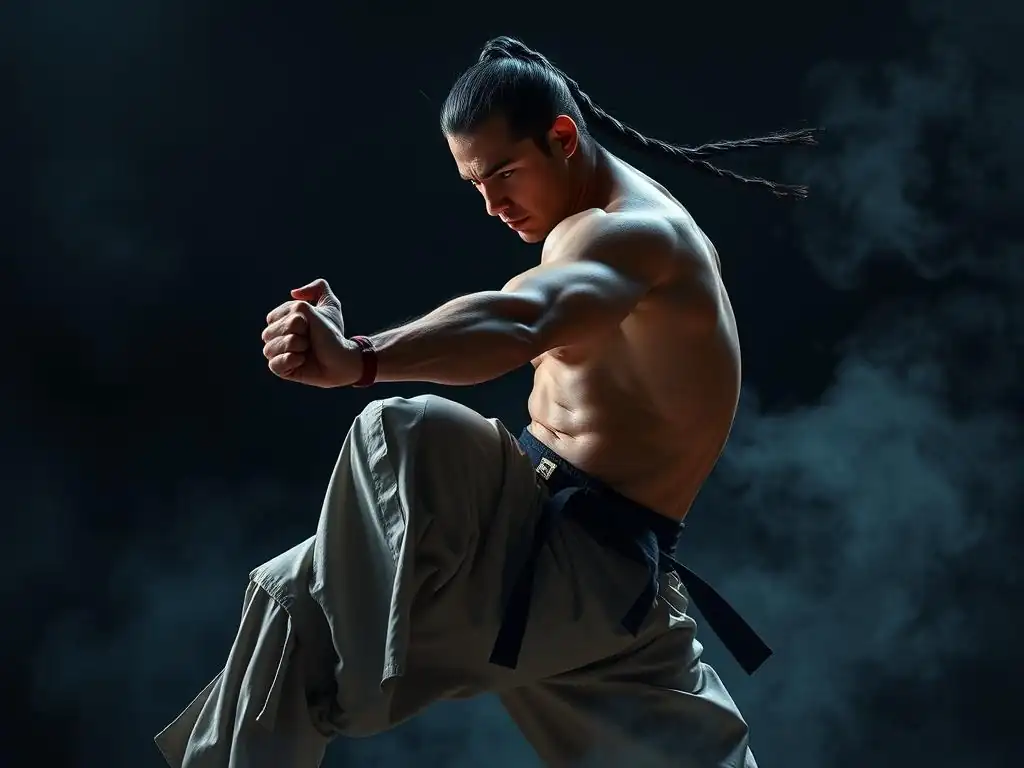
Welcome to Martial Arts Mastery, your portal to the world's most effective and fascinating fighting systems. Dive deep into the heart of Hapkido and discover how the elusive concept of Ki, or internal energy, fuels its devastating locks, throws, and strikes. Curious about how to harness this power? Explore our comprehensive guide and unlock the secrets behind Hapkido's potent internal energy development.
- Utilizing Body Mechanics and Leverage in Hapkido Locks, Throws, and Strikes
- Understanding Biomechanics in Hapkido: An Introduction to Efficient Movement
- Biomechanics and Hapkido Joint Locks: Enhancing Techniques with Leverage
- Biomechanics in Hapkido Throws: Generating Momentum and Balance
- Hapkido Strikes and Biomechanics: Amplifying Force and Impact
- Developing Body Mechanics for Hapkido Mastery: Practical Exercises and Drills
- The Principles of Physics in Hapkido
- Advanced Concepts of Biomechanics in Hapkido: Beyond the Basics
- Conclusion: Embracing Biomechanics for a Deeper Understanding of Hapkido
-
Frequently Asked Questions
- What is the role of "Ki" in Hapkido, as discussed by MartialArtsMastery.org?
- How does a Hapkido practitioner develop and control their "Ki" according to MartialArtsMastery.org?
- How does understanding "Ki" improve a Hapkido practitioner's locks, throws, and strikes, as explained on MartialArtsMastery.org?
- Does MartialArtsMastery.org emphasize the physical or spiritual aspects of "Ki" in Hapkido more?
- Can someone with no martial arts experience learn to harness "Ki" through Hapkido training, according to MartialArtsMastery.org?
- Final Reflection: Harnessing the Flow of Ki
- Unleash Your Inner Ki: Embrace the Flow!
Utilizing Body Mechanics and Leverage in Hapkido Locks, Throws, and Strikes
Understanding Biomechanics in Hapkido: An Introduction to Efficient Movement
What is Biomechanics and its Significance in Hapkido Training?
Biomechanics is the study of the mechanical laws relating to the movement or structure of living organisms. In the context of Hapkido, it involves analyzing how the body moves, how force is generated and transferred, and how leverage can be applied most effectively. Understanding biomechanics is fundamental to developing powerful strikes, inescapable joint locks, and efficient throws.
It moves beyond simply mimicking techniques to understanding the underlying principles that make them work, allowing practitioners to optimize their movements for maximum effect with minimum wasted effort. This understanding is crucial for all levels, from beginner to advanced, enabling consistent improvement and a deeper appreciation of the art's principles.
The significance of biomechanics in Hapkido training lies in its ability to enhance efficiency and power while reducing the risk of injury. By applying principles of leverage and force application correctly, a smaller practitioner can effectively control or neutralize a larger opponent. For instance, applying a joint lock with precise understanding of joint mechanics requires significantly less brute strength than attempting to muscle through resistance.
Similarly, a throw executed with proper body mechanics and timing utilizes the opponent's own weight and momentum against them, a core tenet of Hapkido. This focus on intelligent movement, rather than raw power, is what makes Hapkido an effective self-defense system for diverse body types, embodying a form of practical Hapkido Ki Internal Energy application through physical principles.
The Role of Leverage and Body Weight in Generating Power and Efficiency
Leverage is a critical principle in Hapkido, enabling practitioners to amplify their force and gain mechanical advantage over an opponent. It involves using the body, or parts of the body, as levers and fulcrums to manipulate an opponent's structure or generate force. In joint locks, leverage is applied at specific points on a limb to create pressure and control with minimal effort.
For example, a wrist lock might use the practitioner's forearm as a lever and the opponent's elbow as a fulcrum, allowing significant control over the entire arm with relatively little force applied at the wrist. This strategic application of leverage is far more effective and energy-efficient than relying solely on muscular strength.
Body weight is another indispensable tool in Hapkido's biomechanical arsenal. Proper use of body weight, often referred to as "sinking" or "rooting," involves aligning the body structure to direct one's mass into a technique. In striking, dropping one's weight into a punch or kick adds significant force.
In throws, shifting weight correctly off-balances the opponent and drives the technique. For instance, in a hip throw, rotating and sinking the hips beneath the opponent's center of gravity allows the practitioner to lift and project a much heavier person using structural alignment and weight transfer, rather than just leg or back strength. This unified use of the body's mass, often discussed in terms of generating internal force or Hapkido Ki Internal Energy, is key to executing Hapkido techniques with power and efficiency.
Biomechanics and Hapkido Joint Locks: Enhancing Techniques with Leverage
Focusing Body Mechanics for Effective Joint Manipulation and Control
Effective joint manipulation in Hapkido is less about brute strength and more about precise application of force at vulnerable points using optimal body mechanics. This involves understanding the anatomical limits of joints and applying pressure or torsion in directions they are not designed to move. Proper body positioning relative to the opponent is paramount.
For instance, when applying an arm bar, aligning your body perpendicular to the opponent's extended arm, maintaining a stable base, and using your hips and core to drive the pressure downwards ensures maximum effectiveness. This focus on structural integrity and alignment allows the practitioner to maintain control even against a struggling opponent.
Furthermore, maintaining close proximity and controlling the space around the joint being manipulated is critical. This minimizes the opponent's range of motion and leverage options. Consider a finger lock: holding the opponent's hand close to your body and isolating the finger prevents them from using their larger arm muscles to escape.
The force comes not just from the hand applying the lock, but from the entire body structure supporting the lock and preventing the opponent from moving. This integrated use of the body, from the ground up, embodies a form of unified power generation that can be felt as significant control, sometimes described as a manifestation of focused Hapkido Ki Internal Energy.
Using Leverage to Increase Pain Compliance in Hapkido Joint Locks
Leverage is the primary mechanism for generating pain compliance in Hapkido joint locks. By creating a mechanical advantage, the practitioner can apply significant pressure or torque to a joint with relatively little effort, quickly reaching the joint's anatomical limit and causing pain.
This is achieved by using the practitioner's body as a lever, the opponent's body (often a stable joint or the ground) as a fulcrum, and applying force at the appropriate point. For example, a gooseneck wrist lock uses the practitioner's supporting hand as a fulcrum under the opponent's palm, while the other hand applies force to bend the wrist backward, leveraging the small bones and tendons of the wrist against the fulcrum.
The effectiveness of leverage is exponentially increased when applied correctly. A force of just 10 pounds applied with good leverage at a vulnerable joint point can feel like hundreds of pounds of pressure to the opponent, forcing compliance or risking serious injury. This principle is applied across all joint locks, from wrist and elbow locks to shoulder and finger locks.
Understanding the specific joint mechanics – the axis of rotation, the range of motion, and the weak points – allows the practitioner to select the optimal leverage point and direction of force for maximum pain and control. This intelligent application of force, rooted in physics and anatomy, is a core component of Hapkido's practical self-defense efficacy, demonstrating how efficient mechanics can translate into overwhelming control, akin to wielding focused Hapkido Ki Internal Energy.
Sensitivity Drills for Developing Awareness in Joint Lock Applications
Sensitivity drills are crucial for developing the proprioception and tactile awareness needed to apply joint locks effectively. These drills focus on feeling the opponent's structure, tension, and subtle movements to anticipate their reactions and adjust the lock accordingly. Instead of applying maximum force immediately, sensitivity training teaches practitioners to use just enough pressure to gain control and elicit compliance, increasing pressure only as needed.
This allows for safer training and more adaptable application in dynamic situations. Drills might involve slowly applying a lock, with the partner offering slight resistance, requiring the practitioner to feel for escapes and maintain control with minimal effort.
Another aspect of sensitivity drills involves learning to feel the opponent's "root" or balance. An opponent who is well-rooted is harder to manipulate. By feeling their weight distribution, the practitioner can subtly shift the opponent's balance before applying the lock, making them unstable and easier to control.
This tactile feedback loop between the practitioner and opponent is vital for timing and execution. Through consistent practice of these drills, practitioners develop an intuitive understanding of how much force is needed, where the opponent is vulnerable, and how to maintain control even when the opponent resists, developing a deep connection often associated with sensing and manipulating Hapkido Ki Internal Energy.
Biomechanics in Hapkido Throws: Generating Momentum and Balance
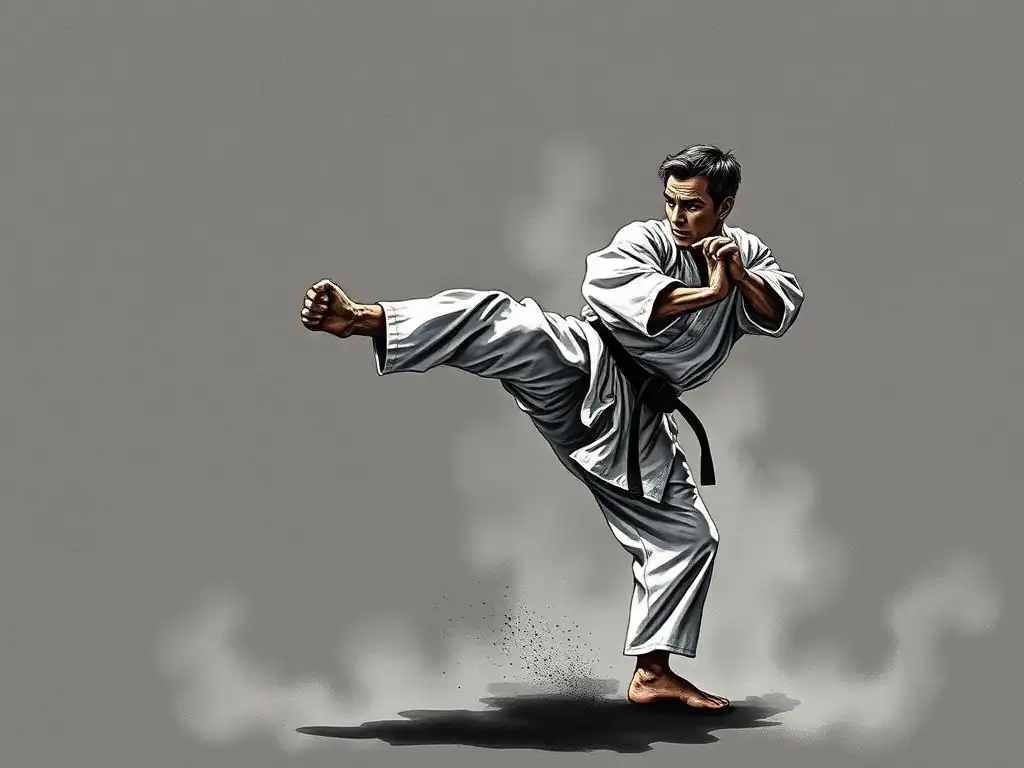
Harnessing Leverage for Powerful and Balanced Throws
Leverage is just as critical in Hapkido throws as it is in joint locks, though applied differently. In throws, leverage is used to disrupt the opponent's balance and create a mechanical advantage to lift or project their weight. This often involves using the practitioner's body as a lever against the opponent's center of gravity or limbs.
For example, in an Osoto Gari (major outer reaping), the practitioner uses their leg as a lever to sweep the opponent's leg while simultaneously applying forward pressure with their upper body, leveraging the opponent off their base. The fulcrum is often the point of contact where the practitioner's body interacts with the opponent's.
Effective leverage in throws requires precise timing and body positioning. Getting "inside" the opponent's space and establishing a strong connection allows the practitioner to apply leverage directly against the opponent's structure. Consider a hip throw: by rotating the hips deeply under the opponent's center, the practitioner creates a powerful lever arm.
Lifting with the legs and driving forward with the hips then uses this lever to project the opponent over the practitioner's hip fulcrum. This coordinated movement generates significant power, allowing a smaller person to throw a much larger one, demonstrating the principle that intelligent application of physics is more effective than raw strength, embodying the concept of unified body power akin to Hapkido Ki Internal Energy.
The Importance of Centering Body Weight During Hapkido Throwing Techniques
Maintaining proper centering of one's own body weight is paramount in executing Hapkido throws effectively and safely. A strong, stable center of gravity provides the foundation for generating power and maintaining balance during the dynamic action of a throw. If the practitioner is off-balance during the throw, they risk losing control, failing the technique, or even being thrown themselves. Centering involves keeping the core engaged, the spine aligned, and the weight distributed optimally over the base of support (usually the feet). This allows for efficient transfer of force from the ground up through the body and into the opponent.
Furthermore, centering allows the practitioner to utilize their entire body weight effectively in the throw. Instead of relying solely on arm or shoulder strength, a well-centered practitioner can drop their weight, rotate their hips, and extend their legs in a coordinated manner, channeling the force generated from their entire mass into the technique.
This integrated body movement creates a powerful, unified force that destabilizes the opponent and drives the throw. This concept of unified body weight and centered movement is often linked in martial arts philosophy to the cultivation and direction of Hapkido Ki Internal Energy, where the body acts as a single, coordinated unit.
Developing Sensitivity for Optimal Timing and Execution in Throws
Sensitivity is crucial for the timing and execution of Hapkido throws. It involves feeling the opponent's balance, posture, and subtle shifts in weight to determine the precise moment to initiate the throw. Attempting a throw when the opponent is firmly rooted will require excessive force and likely fail. However, initiating the throw just as the opponent is shifting their weight, stepping, or being pulled off-balance requires significantly less effort and is far more effective. This is often referred to as "breaking the opponent's balance" or "Kuzushi."
Sensitivity drills for throws focus on developing the ability to feel the opponent's center of gravity and anticipate their reactions. Drills might involve pushing and pulling gently with a partner, feeling how their weight shifts, and practicing stepping and turning movements in response. Learning to recognize the opponent's "dead points" – moments where they are momentarily off-balance or transitioning between movements – is key.
Executing the throw precisely at this moment maximizes the chances of success. This intuitive timing, developed through sensitivity and practice, allows the practitioner to throw an opponent with surprising ease, a skill sometimes attributed to the ability to sense and exploit the opponent's vulnerability using one's own directed Hapkido Ki Internal Energy.
Hapkido Strikes and Biomechanics: Amplifying Force and Impact
Directing Body Mechanics for Devastating Hapkido Striking Techniques
Effective striking in Hapkido, whether punches, kicks, or hand strikes, relies heavily on directing body mechanics to amplify force. Power is generated not just from the limb delivering the strike, but from the entire body, starting from the ground. This involves rooting the feet, engaging the core, rotating the hips and torso, and extending through the shoulder and striking limb in a coordinated sequence.
Each part of the body contributes momentum and force, which is then channeled into the point of impact. For instance, a powerful punch starts with grounding the feet, rotating the hips powerfully, allowing the torso to follow, and finally extending the arm.
The alignment of the body is also critical for transferring force efficiently and protecting the joints. Striking with proper alignment ensures that the force travels through the bones and muscles effectively, maximizing impact on the target while minimizing stress on the practitioner's own body. A common error is striking solely with arm strength, which limits power and risks injury.
By contrast, a strike driven by proper body mechanics integrates the power of the legs, hips, and core, creating a whip-like effect that accelerates the striking limb to a high velocity just before impact. This integrated movement is a fundamental principle for generating significant force, often linked to the concept of releasing unified body power or Hapkido Ki Internal Energy.
Utilizing Body Weight to Penetrate an Opponent's Defenses with Strikes
Utilizing body weight effectively is key to adding mass and penetrating power to Hapkido strikes. This involves dropping or "sinking" one's weight into the strike at the moment of impact. For example, when delivering a punch, a slight downward shift of weight just before impact adds the practitioner's body mass to the force of the strike, increasing its density and penetration.
Similarly, in kicks, leaning slightly into the kick or allowing the hips to drop adds significant weight transfer. This is different from simply leaning forward; it's about aligning the body structure to direct the force of gravity and one's mass into the target.
Penetrating strikes aim to transfer energy through the target, rather than just hitting its surface. This requires not only speed and force but also the backing of the practitioner's body weight. Think of breaking boards: it's not just a sharp tap, but a strike that drives through the material.
This requires aligning the body mass behind the strike. This principle is applied to various Hapkido strikes, from palm heels aimed at vital points to powerful side kicks. By integrating body weight, the practitioner increases the effective mass behind the strike, making it much harder for an opponent to absorb or defend against, a physical manifestation of directed power often associated with the concept of Hapkido Ki Internal Energy.
Power Generation Drills for Increasing Power and Precision in Hapkido Strikes
Power generation drills are essential for developing the coordinated body mechanics necessary for effective striking. These drills focus on isolating and then integrating the movements of different body parts to build speed and force. Bag work is a common drill, allowing practitioners to practice hitting with full power while focusing on hip rotation, weight transfer, and follow-through. Pad holding drills provide feedback on impact force and precision. Shadow boxing, performed with focus on technique and speed, helps ingrain proper movement patterns.
Specific drills might include practicing hip twists to develop rotational power, stepping drills to coordinate footwork with strikes, and exercises focusing on core engagement to stabilize and transfer force. For example, medicine ball twists or rotational exercises mimic the hip and torso movement used in punches and kicks.
Repetitive practice of basic strikes, emphasizing correct body mechanics over speed initially, builds the foundation for powerful and accurate techniques. As proficiency increases, drills incorporate speed and timing, allowing the practitioner to refine their ability to generate maximum force at the precise moment of impact, cultivating the unified power often discussed in terms of Hapkido Ki Internal Energy.
Developing Body Mechanics for Hapkido Mastery: Practical Exercises and Drills
Proper Stance and Footwork for Efficient Movement
A strong and stable stance is the foundation of good body mechanics in Hapkido. It provides balance, allows for efficient movement, and enables the generation and transfer of power. Proper stances vary depending on the technique and situation, but common principles include keeping the feet shoulder-width apart (or slightly wider), maintaining a slight bend in the knees, keeping the weight balanced, and being ready to move in any direction. A common fighting stance might involve one foot slightly forward, with weight evenly distributed or slightly biased towards the back foot for mobility.
Footwork is the dynamic application of stance, enabling the practitioner to move efficiently, close or create distance, change angles, and maintain balance while executing techniques. Basic Hapkido footwork includes shuffling, stepping, pivoting, and circular movements. Drills focus on smooth, controlled movement, staying low, and keeping the base stable.
For instance, practicing stepping while maintaining guard, or pivoting around a central point, helps develop coordination and balance. Efficient footwork is crucial for setting up techniques, evading attacks, and maintaining optimal positioning relative to the opponent, facilitating the seamless flow of movement and power often linked to the concept of Hapkido Ki Internal Energy.
Balance and Core Engagement Exercises for Stability
Exceptional balance is non-negotiable for effective Hapkido. Techniques like throws and kicks inherently require maintaining one's own balance while disrupting an opponent's. Core strength and engagement are fundamental to balance and overall body control. The core acts as the central link between the upper and lower body, allowing for efficient transfer of force and providing stability. Exercises like planks, Russian twists, and leg raises build core strength and endurance.
Balance exercises can be integrated into regular training. Simple drills like standing on one leg, or performing techniques while balancing on an unstable surface (like a balance board), challenge proprioception and strengthen stabilizing muscles. Practicing dynamic balance, such as moving and changing direction quickly while maintaining posture, is also vital. A strong core and refined balance allow the practitioner to remain stable while applying powerful techniques or absorbing impacts, enabling a more unified and controlled application of physical force, which aligns with the principles of directing Hapkido Ki Internal Energy.
Partner Drills for Integrating Body Mechanics into Hapkido Techniques
Partner drills are essential for applying theoretical knowledge of biomechanics in a practical context. These drills simulate real-world interactions, allowing practitioners to feel how their body mechanics affect an opponent's balance, structure, and response. Drills might involve practicing specific joint locks or throws slowly with a partner, focusing on leverage points and body positioning rather than speed or force. Resistance drills, where a partner offers controlled resistance, help practitioners learn to maintain structure and apply force effectively against opposition.
Flow drills, where partners transition between techniques, help develop adaptability and the ability to apply biomechanics dynamically. For example, starting with a wrist grab defense and flowing into a joint lock, then perhaps a throw if the opponent resists in a certain way.
These drills emphasize feeling the opponent's movement and adjusting one's own body mechanics accordingly. Through consistent partner practice, the principles of leverage, weight transfer, and alignment become intuitive, integrated into the practitioner's muscle memory, leading to more powerful, efficient, and adaptable Hapkido techniques, embodying the practical application of unified body power, often described as Hapkido Ki Internal Energy in action.
The Principles of Physics in Hapkido
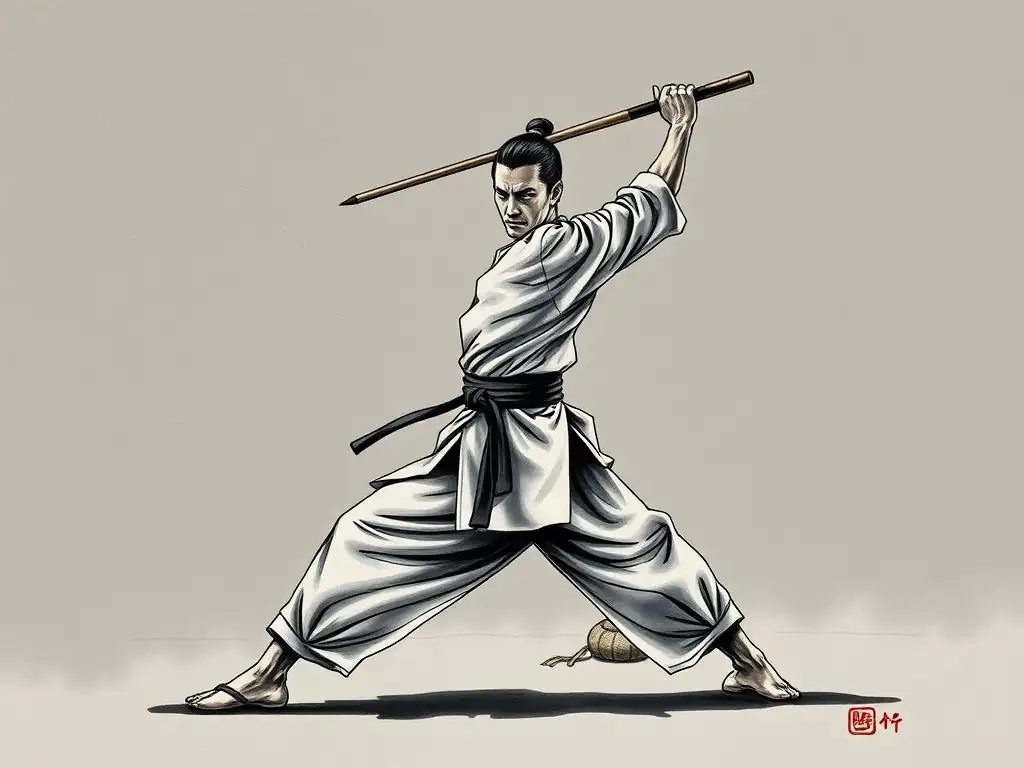
The Connection Between Physics, Body Mechanics, and Effective Technique
Hapkido techniques are fundamentally governed by the laws of physics, including concepts like force, mass, acceleration, momentum, inertia, and leverage. Body mechanics is essentially the application of these physical principles to human movement. Understanding the connection between physics and body mechanics allows practitioners to perform techniques more effectively and efficiently. For example, Newton's third law (for every action, there is an equal and opposite reaction) is evident in the concept of grounding: pushing down into the earth allows you to generate upward or forward force.
Leverage, as discussed earlier, is a direct application of physics principles related to simple machines. The human body acts as a complex system of levers. Understanding how to create longer lever arms or use fulcrums effectively multiplies the force applied.
Momentum (mass times velocity) is crucial in strikes and throws; generating speed in a strike or using the opponent's momentum against them in a throw both rely on this principle. By consciously or subconsciously applying these physical laws through refined body mechanics, a Hapkido practitioner optimizes their movements for maximum impact and control, demonstrating the power of applied physics, which can be felt as a potent form of Hapkido Ki Internal Energy.
Achieving Efficiency and Power Through Understanding Physics in Hapkido
Efficiency and power in Hapkido are direct results of applying physics principles correctly. Efficiency means achieving the desired outcome (a lock, throw, or strike) with minimal wasted energy. This is achieved through optimal body alignment, using leverage, and coordinating movements to transfer force smoothly. For example, a poorly executed throw might rely on brute lifting force, wasting energy and risking strain. A throw executed with good physics uses momentum, leverage, and the opponent's off-balance state, requiring far less energy.
Power comes from generating force effectively and transferring it efficiently. Physics dictates that force equals mass times acceleration. By engaging the entire body (mass) and moving limbs quickly through coordinated action (acceleration), significant force can be generated. Directing this force accurately into the target or through the opponent's structure is where efficiency comes in. Understanding how to align forces, utilize rotational energy from the hips and torso, and drop body weight into techniques allows for the generation of surprising power, often described as rooted or unified power, akin to the concept of Hapkido Ki Internal Energy.
Physics as a Tool for Self-Improvement and Technical Refinement
Viewing Hapkido through the lens of physics provides a powerful framework for self-improvement and technical refinement. Instead of just practicing a technique repeatedly hoping it improves, understanding the underlying physics allows practitioners to diagnose problems and make precise adjustments. If a strike lacks power, the issue might be insufficient hip rotation (lack of acceleration) or poor weight transfer (lack of effective mass). If a throw fails, it might be incorrect timing (missing the moment of off-balance) or poor leverage (incorrect positioning of fulcrum or lever arm).
By analyzing techniques based on physics principles, practitioners can identify specific areas for improvement. This analytical approach complements traditional practice and helps avoid relying on ineffective methods. It encourages a deeper, more intellectual engagement with the art, transforming practice from simple repetition into a process of continuous refinement based on objective principles. This systematic approach to mastering physical principles contributes to the development of deeply effective and seemingly effortless techniques, often perceived as embodying the flow and power of Hapkido Ki Internal Energy.
Advanced Concepts of Biomechanics in Hapkido: Beyond the Basics
Utilizing Preemptive Movement to Control an Opponent's Balance
Advanced Hapkido practitioners utilize preemptive movement to control an opponent's balance even before a technique is fully applied. This involves subtle shifts in weight, pressure, or positioning that subtly disrupt the opponent's stability, making them vulnerable to subsequent techniques. For instance, a slight pull or push disguised as a simple grip might cause the opponent to brace or shift their weight in response, creating an opening for a throw or joint lock. This is not just reacting to the opponent's movement, but subtly manipulating it.
This concept ties into sensitivity; the ability to feel the opponent's posture and balance allows the practitioner to apply minimal force at the right time and place to create instability. It's about exploiting the opponent's natural reactions and postural reflexes.
By subtly controlling their base or alignment, the practitioner dictates their movement options and sets them up for failure. This level of control, often achieved through deep understanding of biomechanics and timing, demonstrates a mastery that goes beyond basic application, hinting at the ability to manipulate the opponent's structure and energy, sometimes discussed in terms of sensing and directing Hapkido Ki Internal Energy in relation to another.
Applying Counter-Leverage for Enhanced Control
Counter-leverage is an advanced concept where the practitioner uses the opponent's own leverage or force against them. When an opponent attempts to apply force or leverage, the practitioner uses their body mechanics to redirect or amplify that force back onto the opponent, or to create a counter-force that neutralizes or reverses the opponent's action. This is often seen in escapes from holds or locks, where the practitioner uses the opponent's grip or pressure point as a fulcrum to generate leverage for their escape.
For example, if an opponent is pushing, instead of simply pushing back, the practitioner might yield slightly while simultaneously changing their angle or applying pressure to a joint, using the opponent's forward momentum to facilitate a throw or joint break. This requires not only a deep understanding of one's own biomechanics but also the ability to quickly assess and react to the opponent's applied forces and leverage points.
It's a dynamic application of physics and body mechanics that allows a practitioner to turn a disadvantage into an advantage, showcasing a high level of skill and adaptability, a sophisticated form of applying pressure and counter-pressure often associated with manipulating or redirecting Hapkido Ki Internal Energy.
The Ethical Considerations of Using Biomechanics in Self-Defense
Given the potential for significant damage through the precise application of biomechanics, especially in joint locks and strikes, ethical considerations are paramount in Hapkido training and self-defense. Understanding leverage points and anatomical vulnerabilities allows practitioners to inflict pain or cause injury with relative ease. This power comes with responsibility. The ethical use of Hapkido techniques dictates that force should be applied only when necessary for self-defense and should be proportional to the threat.
Trainers emphasize control and de-escalation where possible. The goal of a joint lock in self-defense is typically pain compliance to control a situation, not necessarily to break the joint, although the potential for serious injury is inherent if resistance continues. Similarly, strikes are used to incapacitate a threat, not to inflict gratuitous harm.
Understanding the devastating potential of techniques rooted in sound biomechanics reinforces the importance of discipline, respect, and the principle of using Hapkido only as a last resort for protection. This responsible application of powerful physical principles underscores the ethical dimension inherent in mastering skills that can profoundly impact another person, reflecting the balance and control sought in cultivating Hapkido Ki Internal Energy.
Conclusion: Embracing Biomechanics for a Deeper Understanding of Hapkido
The Ongoing Journey of Biomechanical Development in Hapkido Training
Mastering biomechanics in Hapkido is not a destination but an ongoing journey. As practitioners gain experience, their understanding of how their body interacts with an opponent's structure deepens. What might initially feel like disjointed movements gradually becomes integrated and fluid. Continuously refining stance, footwork, core engagement, and the precise application of leverage and body weight leads to greater efficiency, power, and control. This refinement process is often subtle, involving small adjustments that yield significant improvements over time.
Advanced training often involves exploring more nuanced applications of biomechanics, such as off-balancing through subtle pressure or utilizing the opponent's breathing to create openings. This continuous exploration of physical principles allows practitioners to unlock higher levels of skill and effectiveness in their Hapkido practice. It reinforces that the art is not just a collection of techniques, but a dynamic system grounded in the laws of physics and the capabilities of the human body, a journey towards unified movement often described as cultivating Hapkido Ki Internal Energy.
Integrating Body Mechanics into All Aspects of Your Hapkido Practice
To truly excel in Hapkido, body mechanics must be integrated into every aspect of training and application. This means consciously thinking about stance and weight distribution during warm-ups, focusing on hip rotation and core engagement during basic technique drills, analyzing leverage points during joint lock practice, and feeling the opponent's balance during throws. It's about moving beyond simply performing the steps of a technique to understanding and embodying the underlying principles that make it work.
Integrating biomechanics makes practice more intelligent and effective. It transforms rote repetition into purposeful refinement. By consistently applying these principles, practitioners develop a deeper connection with their own body's capabilities and limitations, as well as those of an opponent. This holistic approach to training, where physical principles guide every movement, leads to more powerful, efficient, and adaptable Hapkido techniques, embodying a mastery rooted in fundamental physical laws and often associated with the effective channeling of Hapkido Ki Internal Energy.
Frequently Asked Questions
What is the role of "Ki" in Hapkido, as discussed by MartialArtsMastery.org?
Ki, or internal energy, in Hapkido is considered fundamental to generating power and efficiency in techniques. It's believed that harnessing Ki allows practitioners to execute locks, throws, and strikes with greater force and control. It emphasizes internal alignment and focus.
How does a Hapkido practitioner develop and control their "Ki" according to MartialArtsMastery.org?
Development of Ki involves specific breathing exercises, meditation, and focused intent during training. Consistent practice and mindful execution of techniques are key to cultivating and channeling this internal energy. Proper posture and body mechanics are also essential.
How does understanding "Ki" improve a Hapkido practitioner's locks, throws, and strikes, as explained on MartialArtsMastery.org?
A deeper understanding of Ki allows for more efficient power generation. By focusing Ki, practitioners can enhance the effectiveness of their locks, throws, and strikes, making them more impactful and controlled. This leads to improved technique and overall performance.
Does MartialArtsMastery.org emphasize the physical or spiritual aspects of "Ki" in Hapkido more?
While both aspects are relevant, MartialArtsMastery.org likely presents a balanced approach. It focuses on how to practically apply Ki to enhance physical techniques. However, the mental and spiritual focus that supports the development of Ki is also acknowledged.
Can someone with no martial arts experience learn to harness "Ki" through Hapkido training, according to MartialArtsMastery.org?
Yes, beginners can learn to harness Ki through dedicated Hapkido training. The process involves gradual development of awareness, breathing techniques, and focused intent. Consistent practice is crucial for unlocking the potential of Ki.
Final Reflection: Harnessing the Flow of Ki
The exploration of Hapkido Ki Internal Energy reveals more than just a martial art technique; it unveils a profound connection between mind, body, and spirit, resonating deeply with our modern quest for holistic well-being. The principles discussed throughout this article, from the focused intention behind a lock to the explosive power of a strike, highlight the potential within each of us to cultivate and channel our own internal energy for greater strength, balance, and resilience.
The journey into understanding Ki has personally underscored the importance of mindful movement and the power of intention in every action. It's not simply about physical prowess, but about cultivating a deeper awareness of ourselves and the energy that flows within. As Bruce Lee eloquently stated, Empty your mind, be formless, shapeless, like water. Now you put water into a cup, it becomes the cup. You put it into a bottle, it becomes the bottle. You put it in a teapot, it becomes the teapot. Now water can flow or it can crash. Be water, my friend.
This encapsulates the adaptability and potential that harnessing Ki can unlock, not just in Hapkido, but in life itself.
Now, consider how you can apply these principles of Hapkido Ki Internal Energy to your own life. Can you find moments to cultivate mindful movement, to focus your intention, and to tap into the wellspring of energy within? Embrace the challenge to connect with your inner strength, to find balance amidst chaos, and to unlock the potential that lies dormant within you. The journey to harnessing your own Ki begins with a single, conscious breath.
Unleash Your Inner Ki: Embrace the Flow!
Thank you for exploring the power of "Ki" within Hapkido! We hope this article has illuminated its significance in enhancing your locks, throws, and strikes. Now, it's time to integrate this knowledge into your practice.
Here's how to deepen your understanding and harness your inner energy:
- Prioritize feeling over force. In your next training session, actively focus on sensing the flow of Ki during each technique. Reduce reliance on muscular strength and emphasize smooth transitions.
- Experiment with breath control to amplify your Ki. Research different breathing techniques used in meditation and martial arts. Try incorporating them into your warm-ups and observe their impact on your energy levels.
- Share your insights with fellow Hapkido practitioners. What aspects of Ki resonate with you the most? How do you personally connect with this concept in your training?