
Axes in Warfare: A Global History from Stone Age Tools to Fearsome Battle Axes

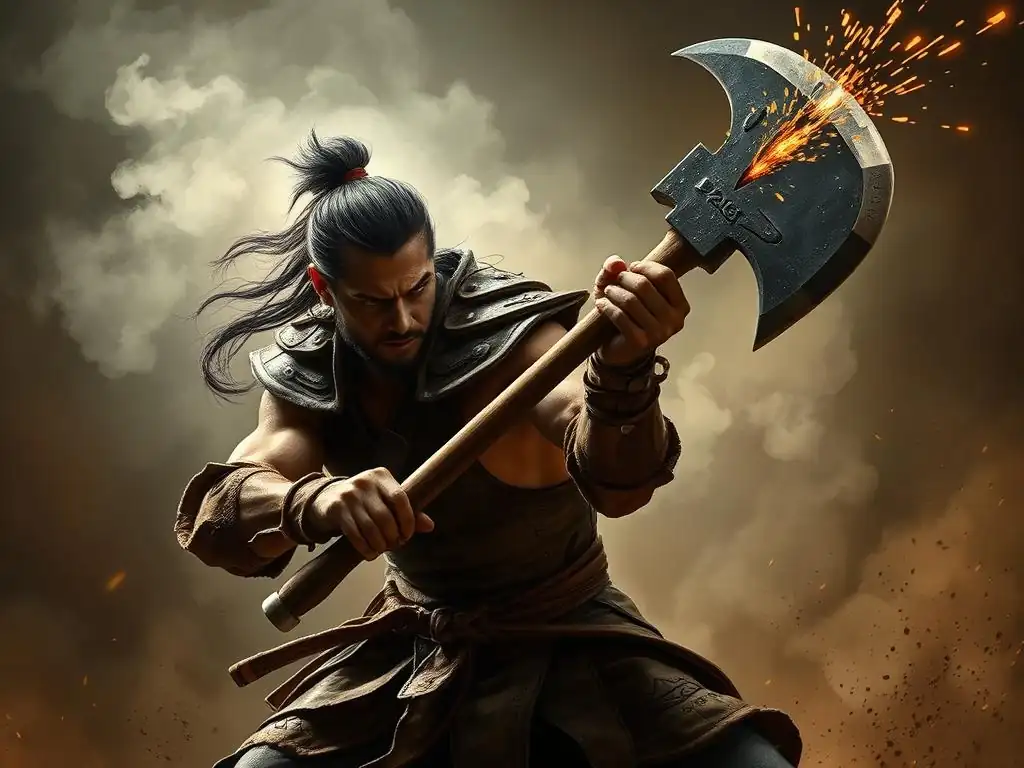
Welcome to Martial Arts Mastery, your gateway to unlocking the secrets of combat traditions worldwide. Ever wondered how a seemingly simple tool could become a symbol of power and devastation? Dive into our detailed exploration of ancient battle axe history tactics, uncovering the evolution of this formidable weapon and its impact on martial arts across cultures. Prepare to be surprised by the axe's enduring legacy – and discover the strategic brilliance behind its deadly swing.
Bronze Age Axe Combat Tactics: Strategies and Formations
Bronze Age warfare saw the development of more sophisticated ancient battle axe history tactics as armies grew larger and organized formations became more common. Individual combatants wielding bronze axes would leverage the weapon's weight and chopping power. Unlike the thrusting spear or the slicing sword, the axe excelled at delivering devastating, crushing blows capable of breaking bones and potentially penetrating or disabling early forms of bronze armor, particularly at joints or against helmets.
The balance of the weapon, often heavier towards the head, allowed for powerful swings, requiring significant physical strength and skill to control effectively in the chaos of close combat. Archaeological evidence, such as damaged bronze shields and helmets found in burial sites and battlefields across Europe and the Near East, indicates that axes were formidable weapons capable of inflicting serious damage, supporting the idea that direct, powerful strikes were a core tactical element.
Beyond individual duels, Bronze Age armies likely employed axe-wielders within larger tactical structures. While detailed military manuals from this period are scarce, depictions in art and the organization of known armies suggest that troops armed with battle axes might have been deployed in dense formations.
For instance, some interpretations of Egyptian military reliefs show troops arranged in ranks, where axe-like weapons (including the Khopesh, which shared functional characteristics with axes) could be used to hack through enemy lines or engage in brutal close-quarters fighting after initial missile exchanges. The strength of axe formations lay in their ability to deliver concentrated, powerful blows, potentially disrupting enemy shield walls or breaking through less-disciplined ranks.
Considering the nature of Bronze Age combat, which often devolved into fierce melees, the ability of an axeman to deliver decisive, repeated strikes would have been a critical factor in the tactical outcome of engagements. These ancient battle axe history tactics were fundamental to how Bronze Age forces fought and won battles.
- What is the general historical timeframe covered when discussing axes in warfare?
- What kinds of information can I expect to find about battle axes on MartialArtsMastery.org?
- Does the history of battle axes vary significantly across different cultures?
- Beyond combat, were axes used for other purposes that impacted warfare?
- How did the design and materials of axes evolve over time, and how did this affect battle tactics?
Frequently Asked Questions
What is the general historical timeframe covered when discussing axes in warfare?
The history spans from the Stone Age, when axes were first used as tools, to their development and application as fearsome battle axes throughout various historical periods across the globe.
What kinds of information can I expect to find about battle axes on MartialArtsMastery.org?
You can expect to find information on the historical overviews, training techniques associated with axe combat, and even the practical self-defense strategies involving axes.
Does the history of battle axes vary significantly across different cultures?
Yes, the history of battle axes varies significantly, with different cultures developing unique designs, tactics, and cultural significance around the weapon. This includes a global perspective from various martial arts traditions.
Beyond combat, were axes used for other purposes that impacted warfare?
Absolutely. Axes served as tools for construction and woodcraft, influencing siege warfare and the creation of fortifications, making them essential for logistical support and military engineering.
How did the design and materials of axes evolve over time, and how did this affect battle tactics?
The evolution of axe design and materials, from stone to metal, directly impacted battle tactics by increasing the weapon's effectiveness, durability, and versatility, leading to specialized combat techniques and offensive strategies.
Final Reflection: The Enduring Echo of the Axe
The journey through ancient battle axe history tactics reveals more than just the evolution of a weapon; it unveils a fundamental aspect of human conflict and ingenuity. The axe, from its humble beginnings as a stone tool to its fearsome manifestation on the battlefield, echoes through time, reminding us of the enduring human capacity for both creation and destruction. Its relevance today lies in understanding how past innovations, even those born from violence, shape our present and inform our future.
The axe's influence extends far beyond the battlefield, permeating mythology, folklore, and even our modern understanding of power and authority. The image of the axe, wielded by gods and warriors alike, continues to resonate within our collective consciousness, a testament to its enduring symbolism. History is a vast early warning system.
- Norman Cousins. This quote perfectly encapsulates the importance of understanding the past, particularly the history of tools like the battle axe, to better navigate the complexities of the present.
As we conclude this exploration of the axe's history, let us not simply marvel at its evolution, but reflect on the lessons it offers. Consider how innovation, driven by necessity and ambition, can shape the course of history. And, most importantly, let us strive to channel our ingenuity towards building a future where the echoes of conflict are replaced by the harmony of progress. The choice, ultimately, lies within our hands.
Unleash Your Inner Warrior: Forge Your Path!
Thank you for exploring the compelling history and enduring impact of axes in warfare. We hope you’ve gained a newfound appreciation for these fascinating tools of combat. Now, it's time to take your fascination further!
- Delve deeper: Research a specific type of battle axe mentioned and explore its historical use, construction, and cultural significance.
- Share your newfound knowledge: Discuss your favorite battle axe fact or historical anecdote with a fellow history enthusiast or martial arts practitioner.
- Explore a local museum: Visit a local museum or historical society to view examples of ancient axes or learn more about their role in regional conflicts.
What fascinating axe detail captivated you the most, and how has it inspired your perspective on historical warfare?