
The Risky Business of HighFlying Kicks: A Strategic Kyorugi Analysis

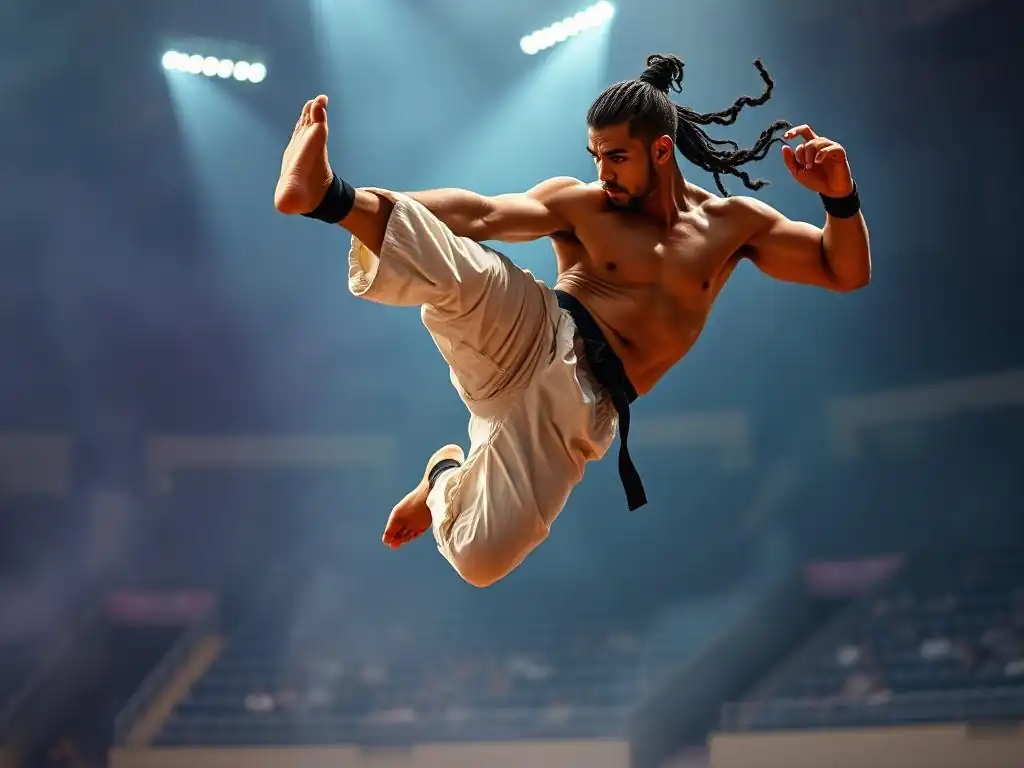
Welcome to Martial Arts Mastery, where we delve deep into the world's fighting traditions! Ever wondered if those spectacular high-flying kicks you see in competition are truly worth the risk? This week, we dissect the strategic complexities of utilizing high-flying kick strategy analysis in Kyorugi, exploring the potential rewards and devastating consequences. Prepare to have your understanding of ring strategy challenged!
- The Strategic Use of Head Kicks in Taekwondo Kyorugi
- Introduction to Head Kicks in Taekwondo Kyorugi
- Understanding the Risks Associated with Head Kicks
- Strategic Analysis of Head Kick Implementation
- Defensive Strategies Against Head Kicks
- Optimizing Training for Head Kicks in Kyorugi
- Tactical Considerations for Head Kicks
- Case Studies: Head Kick Successes and Failures in Kyorugi
- The Future of Head Kicks in Taekwondo Competition
- Conclusion: Mastering the Art of Strategic Head Kicks
-
Frequently Asked Questions
- What are the primary risks associated with incorporating highflying kicks into a Kyorugi sparring strategy?
- How can a martial artist effectively train to mitigate the risks associated with highflying kicks?
- What are some strategic considerations when deciding whether to use a highflying kick in a Kyorugi match?
- Are there specific types of Kyorugi sparring partners against whom highflying kicks are generally more or less effective?
- What role does deception and feinting play in successfully landing a highflying kick in a Kyorugi context?
- Final Reflection: Embracing Calculated Risk in Pursuit of Excellence
- Unleash Your Inner Kyorugi Champion!
The Strategic Use of Head Kicks in Taekwondo Kyorugi
Introduction to Head Kicks in Taekwondo Kyorugi
Defining Head Kicks in Taekwondo Sparring
In Taekwondo Kyorugi, or sparring, head kicks are techniques targeting the opponent's head area. These powerful and often visually spectacular maneuvers include various kicks such as the turning kick (dollyo chagi), back kick (dwi chagi), hook kick (goryeo chagi), and axe kick (naeryeo chagi), specifically aimed at scoring points by making contact with the head.
According to World Taekwondo rules, a successful head kick typically scores three points, or potentially four points if it's a turning kick to the head involving rotation and landing. This high point value makes head kicks incredibly attractive in competitive Kyorugi, as a single successful technique can dramatically shift the score and momentum of a match.
Executing a head kick requires a combination of flexibility, balance, speed, and precision. Unlike body shots which score two points (three for a spinning kick), the head is a smaller, more mobile target, and the defensive posture of opponents is often geared towards protecting this vital area. Therefore, a successful head kick is not merely about physical execution but also strategic timing and setup. A well-timed highflying kick strategy analysis reveals that these techniques are often the culmination of intricate footwork, feints, and reading the opponent's reactions, highlighting their complexity beyond simple physical prowess.
The Allure and Risks of Head Kicks in Kyorugi
The allure of head kicks in Kyorugi is undeniable, primarily due to their high scoring potential and the psychological impact they can have on an opponent. A clean head kick can instantly provide a significant lead, especially in tight matches, and can demoralize the competitor who was struck. Furthermore, the dynamic and acrobatic nature of many head kicks excites spectators and judges alike, contributing to the overall spectacle of Taekwondo competition. Coaches often encourage their athletes to develop potent head attacks as a primary weapon in their arsenal.
However, the inherent risks associated with head kicks are substantial and cannot be ignored. Attempting a head kick often involves a significant commitment of balance, leaving the attacker vulnerable to counter-attacks if the technique misses or is blocked. The energy expenditure required for powerful, high kicks is also considerable, potentially leading to fatigue later in the match.
A thorough highflying kick strategy analysis must weigh these risks against the potential rewards, considering the opponent's defensive capabilities, the match situation, and the athlete's own physical and strategic readiness. The decision to attempt a head kick is a calculated gamble, not a spontaneous action.
Importance of Strategic Head Kick Analysis
Given the high stakes involved, a strategic head kick analysis is crucial for both executing these techniques effectively and defending against them. Understanding when, how, and why to attempt a head kick goes beyond simply having the physical capability. It involves analyzing the opponent's movement patterns, identifying defensive weaknesses, and predicting reactions. For instance, an opponent who consistently drops their guard after a certain movement might present a brief window for a head attack.
Moreover, a strategic highflying kick strategy analysis considers the match context – the score, the time remaining, and the opponent's energy levels. Attempting a risky head kick when holding a comfortable lead might be ill-advised, whereas it could be a necessary gamble when trailing significantly. Similarly, understanding how to set up a head kick using feints, combinations, and footwork is paramount. This strategic layer transforms the head kick from a simple physical technique into a sophisticated tactical weapon, making detailed analysis indispensable for success in competitive Taekwondo.
Understanding the Risks Associated with Head Kicks
Loss of Balance and Exposure to Counter-Attacks
One of the most significant risks when attempting a head kick in Taekwondo Kyorugi is the potential loss of balance. Many head kicks, such as the turning kick or axe kick, require lifting one leg high and rotating the body, momentarily reducing the athlete's stable base to a single supporting leg.
If the kick is blocked, missed, or anticipated, the attacker can be left off-balance, making them highly susceptible to a swift counter-attack. Opponents are trained to capitalize on these moments of vulnerability, often launching a quick punch or push kick to the chest to score points or disrupt the attacker further.
Consider a scenario where an athlete attempts a roundhouse kick to the head. If the opponent uses a strong forearm block and simultaneously steps inside, the attacker is left with their kicking leg extended and their weight shifted, making it difficult to recover quickly. A well-executed counter punch to the body or a close-range hook kick can score points before the attacker regains their balance. A comprehensive highflying kick strategy analysis must therefore include drills and strategies for maintaining balance during and immediately after kick execution, as well as rapid recovery methods to mitigate the exposure time.
Stamina Depletion from Performing Complex Kicks
Performing powerful and high head kicks is physically demanding and can significantly deplete an athlete's stamina over the course of a match. These techniques require explosive power from the legs and core, combined with flexibility and coordination. Repeated attempts, especially if unsuccessful or defended against, can quickly lead to fatigue. As stamina wanes, the speed, height, and power of kicks decrease, making them less effective and potentially increasing the risk of injury.
For example, a typical 3-round Kyorugi match requires sustained energy. If an athlete attempts five or six high-effort head kicks per round, the cumulative energy cost is substantial. This depletion can impact other aspects of their game, such as footwork, defensive reactions, and the ability to execute other techniques effectively in later rounds.
A thorough highflying kick strategy analysis involves understanding an athlete's conditioning level and pacing the use of high-energy techniques like head kicks throughout the match to avoid premature fatigue. Coaches often monitor athletes' breathing and movement patterns to gauge stamina levels and adjust the strategic approach accordingly.
Calculating the Risk-Reward Ratio of Head Kick Techniques
Every attempt at a head kick involves an implicit calculation of the risk-reward ratio. The potential reward is high points (3 or 4 points), which can be match-altering. The risks include losing balance, being counter-attacked, expending significant energy, and potentially receiving zero points if the kick doesn't land cleanly or is blocked effectively. A smart highflying kick strategy analysis requires athletes and coaches to constantly evaluate this ratio based on the specific circumstances of the match.
For instance, if an opponent has demonstrated strong defensive capabilities against head kicks, consistently blocking or moving away, the risk of attempting such a kick might outweigh the reward. Conversely, if an opponent shows signs of fatigue, has a tendency to drop their guard, or is weak in their defensive structure, the potential reward increases while the risk might decrease.
In a match where one is trailing significantly with little time left, the risk-reward calculation might favor attempting a high-risk, high-reward head kick as the only viable path to victory. This dynamic assessment is a cornerstone of advanced Kyorugi strategy.
Strategic Analysis of Head Kick Implementation
Identifying Optimal Opportunities for Head Kicks
Identifying the optimal opportunities for attempting head kicks is a critical component of effective Kyorugi strategy. These openings are often fleeting and require sharp observation and anticipation. Ideal moments might arise when an opponent is moving forward aggressively, leaving their head exposed, or when they are retreating in a linear fashion without adequate head defense. Another common opportunity occurs when an opponent is off-balance after executing their own technique or when they are momentarily distracted by a feint or combination.
A detailed highflying kick strategy analysis reveals that successful head kicks are rarely thrown randomly. They are typically launched when the opponent is in a compromised position, either offensively or defensively. For example, timing a turning kick to the head just as an opponent finishes a body punch can catch them off guard. Similarly, observing an opponent who consistently leans forward when setting up a kick creates a potential opening for a quick axe kick. Recognizing these subtle cues and exploiting them requires intense focus and experience.
Reading Opponent's Stance and Predicting Openings
Reading an opponent's stance and predicting their movements is fundamental to setting up effective head kicks. An opponent's stance can reveal much about their intentions and potential vulnerabilities. For instance, a very bladed stance might make body shots harder but could leave the lead side of the head slightly more exposed if they are not diligent with their guard. Conversely, a squarer stance might offer more targets but could also provide a more stable base, making them harder to unbalance.
Predicting openings involves recognizing patterns in the opponent's behavior. Do they always shift their weight in a certain way before attacking? Do they consistently drop their hands after blocking? A thorough highflying kick strategy analysis involves scouting opponents beforehand and observing their habits during the early stages of a match. For example, if an opponent consistently drops their left hand when throwing a right body kick, this predictable movement creates a potential window to launch a quick right turning kick to the head over their lowered guard. Anticipating these patterns allows athletes to time their head kick attempts precisely.
Feinting and Deception Techniques to Set Up Head Kicks
Feinting and deception are indispensable tools for creating openings for head kicks. Simply throwing a head kick without any setup is often predictable and easily defended. Feints, which are simulated attacks designed to elicit a reaction from the opponent, can disrupt their guard or defensive posture, creating the split-second opening needed for a successful head kick. Common feints include faking a body kick to draw the opponent's guard down, or faking a punch to make them cover their head, only to follow immediately with a real head kick.
For example, an athlete might throw a quick, light turning kick to the body. If the opponent reacts by dropping their arms to block, the athlete can immediately follow with a full-power turning kick to the head. This "level change" feint is highly effective.
Another technique is using footwork feints, stepping as if to move in one direction or attack with a different technique, then quickly changing direction or launching the head kick. According to many coaches, effective feinting can increase the success rate of head kicks by 30-50% compared to throwing them without setup. A sophisticated highflying kick strategy analysis emphasizes the integration of various feinting techniques into the overall game plan.
Defensive Strategies Against Head Kicks
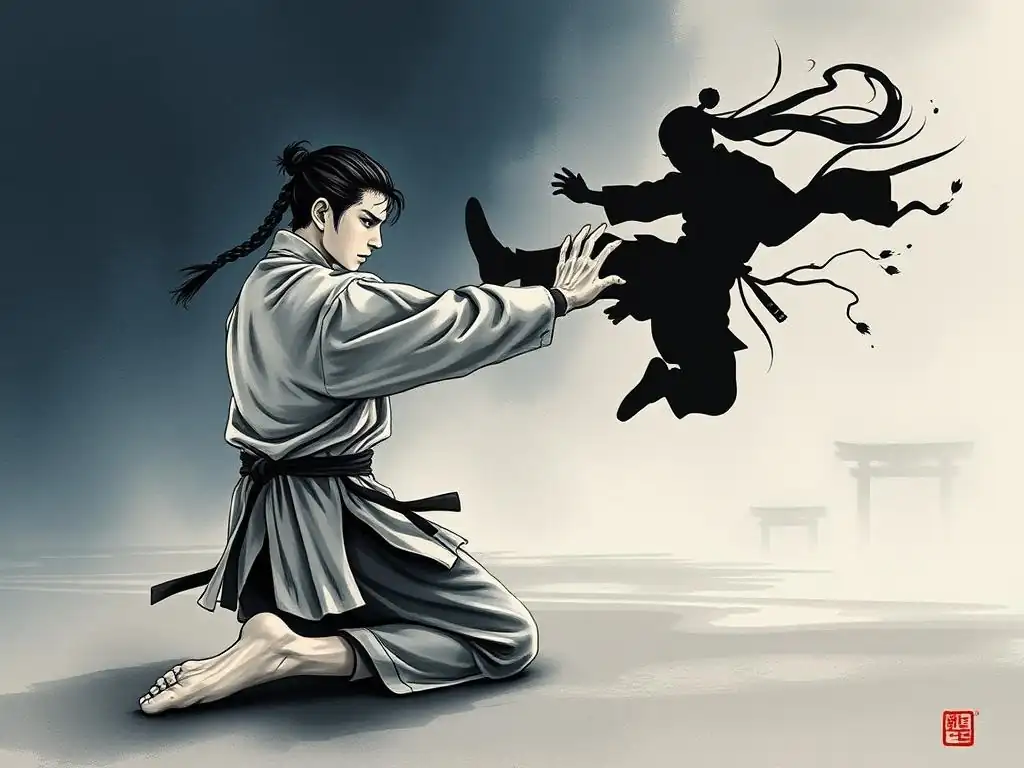
Blocking and Intercepting Head Kicks Effectively
Effective defense against head kicks is paramount for survival and success in Kyorugi. The primary defensive strategies involve blocking and interception. Blocking typically involves using the forearms or shoulders to protect the head area. A common technique is raising both forearms to form a protective shell around the head, ensuring they are tight against the head to absorb or deflect the impact. This requires strong core engagement and quick reaction time.
Intercepting a head kick involves meeting the opponent's kicking leg with a defensive technique, often a block or a check, before it reaches the target. This can disrupt the kick, reduce its power, or cause the opponent to lose balance. For instance, using a strong arm block while simultaneously stepping into the kick can absorb much of the force and potentially unbalance the attacker.
Some athletes also use their lead leg to check or parry incoming kicks, though this requires excellent timing and awareness. Mastering these defensive maneuvers is a key part of a complete highflying kick strategy analysis, preventing opponents from exploiting vulnerabilities.
Counter-Attacking Strategies After Blocking Head Kicks
Successfully defending a head kick often creates an immediate opportunity for a counter-attack. Because the opponent has committed to a high-energy technique and may be momentarily off-balance or recovering, this is a prime window to strike. Effective counter-attacks need to be swift and decisive, capitalizing on the opponent's vulnerability. Common counter-attacks include a rapid punch combination to the body or head, a quick push kick to disrupt their balance further, or a fast turning kick or back kick as they attempt to recover their stance.
For example, if an opponent attempts a turning kick to the head and it is blocked, a common counter is to step in quickly with a punch or a short-range hook kick to the body. The timing is critical; the counter must be launched immediately after the block. Another effective counter is to use the momentum of the opponent's blocked kick against them, sometimes involving a sweep or push as they land. Training drills specifically focused on blocking and then immediately transitioning into a counter-attack are essential for developing this crucial aspect of highflying kick strategy analysis.
Managing Distance to Neutralize Head-Kick Threats
Managing the distance between oneself and the opponent is a fundamental defensive strategy to neutralize the threat of head kicks. Most head kicks are most effective at a specific range. By controlling the distance, an athlete can either move too close for the kick to generate sufficient power or move too far away for it to reach the target. Effective footwork is key to maintaining optimal distance, constantly adjusting based on the opponent's movements and intentions.
Staying just outside the opponent's effective kicking range forces them to step in to attack, which can be anticipated and defended against. Conversely, moving quickly into close range can jam the opponent's kicks, making it difficult for them to fully extend their leg and generate power. Athletes who are adept at managing distance can significantly reduce the number of clean head kick opportunities their opponents have. This proactive defensive measure, analyzed as part of a comprehensive highflying kick strategy analysis, is often more effective than relying solely on reactive blocking.
Optimizing Training for Head Kicks in Kyorugi
Drills to Improve Accuracy and Speed of Head Kicks
Optimizing training for head kicks involves specific drills focused on enhancing both accuracy and speed. Accuracy is paramount; a powerful kick that misses the target scores no points and carries high risk. Drills using targets, such as focus mitts held at head height or electronic scoring targets, are essential. Repetitive drills focusing on hitting a small, moving target help develop the precision needed to connect with an opponent's head. Varying the height and angle of the target simulates real sparring situations.
Speed is equally crucial, as head kicks must be fast enough to land before the opponent can react and defend. Training with resistance bands attached to the legs can help build explosive speed. Partner drills where the opponent provides a moving target and reacts realistically to feints and setups further enhance timing and speed. According to studies on Taekwondo training, incorporating speed-focused drills multiple times per week can improve kick velocity by 10-15% within a few months. A dedicated highflying kick strategy analysis in training ensures that both attributes, accuracy and speed, are developed in tandem.
Building Strength and Flexibility for Advanced Techniques
Executing powerful and high head kicks requires a significant degree of strength and flexibility. Strength, particularly in the legs, hips, and core, provides the power behind the kick. Flexibility in the hamstrings, hip flexors, and groin allows the leg to be lifted high and extended fully without strain. Training programs must incorporate strength and conditioning exercises alongside flexibility work.
Strength training should include squats, lunges, deadlifts, and core exercises like planks and Russian twists. Plyometric exercises, such as jump squats and box jumps, help develop explosive power. Flexibility training should involve static and dynamic stretching routines targeting the key muscle groups used in kicking. Dedicated flexibility work, performed regularly, can increase range of motion, enabling higher kicks and reducing the risk of muscle strains. Athletes aiming for a highflying kick strategy analysis often spend significant time on flexibility, sometimes dedicating 20-30 minutes per training session to stretching.
Developing Footwork and Agility for Effective Kick Delivery
Effective head kick delivery is heavily reliant on superior footwork and agility. Footwork is used to close distance, create angles, manage range, and set up techniques. Agility allows for quick changes in direction, rapid adjustments, and maintaining balance before, during, and after a kick. Without good footwork, even the most powerful and accurate kick is unlikely to land against a skilled opponent.
Drills focusing on lateral movement, forward and backward bursts, pivoting, and sliding are essential. Ladder drills and cone drills improve agility and coordination. Partner drills simulating sparring scenarios, where footwork is used to gain a positional advantage before kicking, are particularly valuable. Integrating footwork seamlessly with kicking technique is a hallmark of advanced athletes. A comprehensive highflying kick strategy analysis in training considers footwork not just for defense, but as an integral part of the offensive setup for head kicks.
Tactical Considerations for Head Kicks
Adapting Head-Kick Strategy to Different Opponent Styles
A successful highflying kick strategy analysis must involve adapting the approach based on the opponent's style. Different opponent styles present unique challenges and opportunities for head kicks. Against a defensive opponent who keeps a tight guard and relies on counter-attacks, setting up a head kick might require more elaborate feints and combinations to break through their defense. Opportunities might be fewer, but potentially more impactful if they land.
Against an aggressive, forward-moving opponent, opportunities for head kicks might arise as they step in, but the timing needs to be precise to avoid being jammed or countered. Axe kicks or cut kicks might be more effective in this scenario, landing over their forward momentum. Against a highly mobile opponent who constantly moves in and out, timing is crucial, often requiring kicks to be thrown as they are entering or exiting range. Understanding these stylistic differences allows athletes to tailor their highflying kick strategy analysis for maximum effectiveness against any given competitor.
Integrating Head Kicks into a Comprehensive Game Plan
Head kicks should not be used in isolation but integrated into a comprehensive game plan that includes body kicks, punches, and footwork. Relying solely on head kicks makes an athlete predictable and easier to defend against. A well-rounded game plan uses a variety of techniques and strategies to keep the opponent guessing and create openings.
For example, an athlete might start by attacking the body with kicks and punches to draw the opponent's guard down, then switch levels and go for a head kick. Or they might use footwork to constantly change angles, making it difficult for the opponent to anticipate the direction of the next attack, which could be a head kick.
A sophisticated highflying kick strategy analysis considers how head kicks complement other techniques and movements, creating combinations and sequences that maximize scoring opportunities while minimizing risk. The goal is to make the head kick a potent threat within a larger, unpredictable offensive structure.
Psychological Impact of Head Kicks on Opponents
The psychological impact of successful head kicks on opponents is significant and should be considered in a highflying kick strategy analysis. Being hit cleanly in the head, even with protective gear, is jarring and can affect an opponent's confidence and willingness to engage. It can make them more hesitant, defensive, or even flustered, leading to errors.
A spectacular head kick can also shift the momentum of a match dramatically, giving the attacker a psychological edge. Conversely, repeatedly attempting head kicks and failing can be frustrating and demoralizing for the attacker. Coaches often use successful head kicks not just for points, but to break an opponent's spirit or force them to change their strategy in a way that benefits the attacker. For instance, an opponent who is wary of head kicks might become overly defensive, opening up opportunities for body shots or quicker techniques.
Case Studies: Head Kick Successes and Failures in Kyorugi
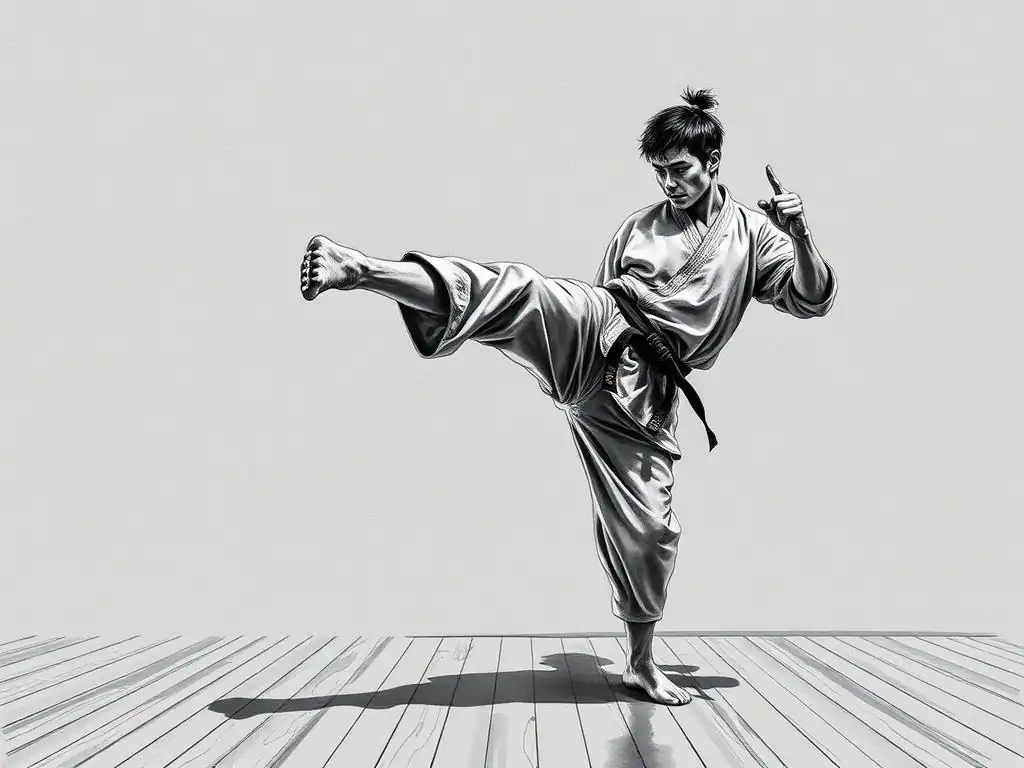
Analyzing Notable Kyorugi Matches Featuring Head Kicks
Analyzing notable Kyorugi matches provides invaluable insights into the practical application of head kicks. Consider the match between Steven Lopez (USA) and Hadi Saei (IRI) at the 2007 World Championships. Saei, known for his strategic brilliance, used precise timing and setup to land crucial head kicks against the powerful Lopez, contributing significantly to his victory. This match highlighted how technical execution combined with strategic timing can overcome raw power.
Another example is the match featuring Servet Tazegül (TUR), an Olympic champion renowned for his dynamic kicking. Tazegül often utilized deceptive footwork and lightning-fast turning kicks to the head, even against opponents with strong defenses. His matches demonstrate the importance of speed and unpredictability in making head kicks effective. Analyzing footage from these and other elite-level matches allows athletes and coaches to dissect successful highflying kick strategy analysis in action, observing the setups, timing, and reactions that lead to points or defensive successes.
Learning from Mistakes: Avoiding Common Pitfalls
Examining failures in head kick attempts is equally important for learning and improvement. Common pitfalls include throwing head kicks from too far away, making them easy to evade; failing to set up the kick with feints or combinations, making it predictable; losing balance after the attempt, leading to counter-attacks; and attempting head kicks when fatigued, resulting in slow, weak techniques.
A classic example of a common failure is the "naked" head kick – simply throwing a turning kick to the head without any prior action. Elite athletes rarely fall for this, easily blocking or countering. A highflying kick strategy analysis must identify these common errors and focus training on avoiding them. For instance, if an athlete consistently loses balance after an axe kick, drills should focus on strengthening the supporting leg and improving landing mechanics. Learning from these mistakes, both one's own and those observed in others, is a crucial part of developing a robust head kick strategy.
Lee Dae-hoon: A Case Study in Head-Kick Mastery
Lee Dae-hoon, the multiple World Champion and Olympic medalist from South Korea, serves as an excellent case study in strategic head-kick mastery. While possessing exceptional physical abilities, Lee's success with head kicks comes from his intelligent application within a broader game plan. He is known for his versatile kicking arsenal and his ability to seamlessly integrate head attacks.
Lee often uses quick, low-scoring techniques to gauge his opponent's reactions and create openings. He is a master of distance management and uses subtle movements to set up his powerful turning and hook kicks to the head. His highflying kick strategy analysis involves patience, waiting for the perfect moment rather than forcing the technique.
For instance, he might spend a minute probing the opponent's defense with body shots and footwork before suddenly exploding with a perfectly timed head kick. His matches exemplify how head kicks, when used strategically within a sophisticated game, become incredibly difficult to defend against. His precision and timing, rather than just raw power, are the keys to his head-kick success.
The Future of Head Kicks in Taekwondo Competition
Evolving Strategies and Techniques
The strategies and techniques surrounding head kicks in Taekwondo Kyorugi are constantly evolving. As defensive tactics improve, attackers must develop new ways to penetrate guards and create openings. The rise of faster, more agile athletes necessitates quicker setups and more deceptive movements. We are seeing more use of unconventional angles and less common kicks, such as inverted turning kicks or rapid-fire combinations culminating in a head attack.
Modern highflying kick strategy analysis incorporates data analytics to identify opponent tendencies and optimize training plans. Wearable sensors and video analysis tools provide detailed feedback on speed, power, and accuracy, allowing athletes to fine-tune their techniques. The emphasis is increasingly on efficiency – landing head kicks with minimal energy expenditure and risk, often through superior timing and setup rather than brute force. This evolution ensures that head kicks remain a vital, dynamic part of competitive Taekwondo.
The Role of Head Kicks in Modern Kyorugi
In modern Kyorugi, head kicks continue to play a pivotal role due to their high scoring potential. While body shots and punches are important for accumulating points and managing the fight, a single successful head kick can instantly change the score and momentum. This makes the threat of the head kick ever-present and influences the defensive strategies of all competitors.
Elite-level matches often feature moments of intense strategic maneuvering, with both athletes constantly aware of the head-kick threat. The mere possibility of a head kick can force an opponent to adopt a more cautious or defensive posture, creating opportunities for attacks elsewhere. A robust highflying kick strategy analysis acknowledges this pervasive influence; the head kick is not just an offensive technique, but a strategic tool that shapes the entire dynamic of the match, even when not successfully landed.
Balancing Risk and Reward in Competitive Taekwondo
The ongoing challenge in competitive Taekwondo, particularly concerning head kicks, is balancing risk and reward. While the points are high, the potential consequences of a failed attempt are significant. Athletes and coaches must continually assess this balance based on the specific match situation, opponent, and athlete's condition.
A smart highflying kick strategy analysis means knowing when to take the gamble and when to play it safe. In a close match in the final round, a risky head kick might be necessary. In contrast, with a comfortable lead, prioritizing defense and lower-risk techniques might be the better approach. The evolution of the sport means athletes are becoming more adept at both executing and defending against head kicks, making this strategic balance even more critical for success at the highest levels. The ability to make these split-second strategic decisions is what separates good athletes from champions.
Conclusion: Mastering the Art of Strategic Head Kicks
Key Takeaways for Effective Head-Kick Implementation
Mastering the art of strategic head kicks in Taekwondo Kyorugi involves several key takeaways. Firstly, head kicks are high-risk, high-reward techniques that require precise timing, speed, and accuracy, not just raw power. Secondly, effective implementation relies heavily on strategic setup through feints, combinations, and superior footwork to create openings and deceive the opponent. Simply throwing a head kick without preparation is often ineffective and dangerous.
Thirdly, a strong defense against head kicks, involving effective blocking, counter-attacking, and distance management, is equally vital. Finally, a comprehensive highflying kick strategy analysis must consider the opponent's style, the match situation, and the psychological impact of head kicks. Training should focus on developing physical attributes alongside strategic understanding and execution. Success with head kicks is a blend of physical prowess and tactical intelligence.
Continuous Improvement and Adaptation in Kyorugi Strategy
The world of competitive Taekwondo is constantly evolving, and so too must the strategies surrounding head kicks. Athletes and coaches must engage in continuous improvement and adaptation. This involves analyzing performance data, studying opponents, learning from successes and failures, and experimenting with new techniques and setups.
Staying ahead requires not just refining existing skills but also anticipating future trends in both offense and defense. What worked effectively last year might be less successful next year as opponents adapt. Therefore, a dynamic highflying kick strategy analysis is essential, constantly seeking to innovate and optimize approaches to head kicks within the ever-changing landscape of Kyorugi competition. This commitment to learning and adaptation is crucial for sustained success.
The Enduring Appeal of Head Kicks in Taekwondo
Despite the risks, the head kick retains its enduring appeal in Taekwondo. Its potential to score significant points, its visual spectacle, and its psychological impact make it a central element of the sport's identity. For athletes, mastering the head kick is a benchmark of technical skill and strategic understanding.
The pursuit of perfecting the highflying kick strategy analysis and execution continues to drive innovation in training and competition. As athletes push the boundaries of what's possible, the strategic use of head kicks will undoubtedly remain one of the most thrilling and decisive aspects of Taekwondo Kyorugi, embodying the blend of power, precision, and strategy that defines the sport.
Frequently Asked Questions
What are the primary risks associated with incorporating highflying kicks into a Kyorugi sparring strategy?
Highflying kicks, while visually impressive, leave you vulnerable to counter-attacks due to the extended time spent off the ground. They also require significant flexibility and balance, making them high-risk if not executed perfectly.
How can a martial artist effectively train to mitigate the risks associated with highflying kicks?
Training should focus on building flexibility and strength, as well as practicing balance and control in dynamic movements. Drills should simulate sparring scenarios to improve execution speed and accuracy under pressure.
What are some strategic considerations when deciding whether to use a highflying kick in a Kyorugi match?
Consider your opponent's skill level and fighting style. Evaluate your own stamina and flexibility on that particular day. Only attempt a highflying kick if you have a clear opening and high confidence in its execution.
Are there specific types of Kyorugi sparring partners against whom highflying kicks are generally more or less effective?
Highflying kicks can be effective against opponents who are defensively passive or predictable. They are less effective against aggressive, fast-moving opponents who can easily exploit the extended recovery time.
What role does deception and feinting play in successfully landing a highflying kick in a Kyorugi context?
Deception is crucial. Feinting low to draw your opponent's guard down can create the opening needed for a highflying kick. Varying your attacks keeps your opponent guessing and increases the likelihood of success.
Final Reflection: Embracing Calculated Risk in Pursuit of Excellence
The analysis presented throughout this article underscores the inherent tension between risk and reward in Taekwondo's Kyorugi, particularly when employing highflying kick strategies. While these techniques offer the potential for decisive victories and spectacular displays of athleticism, they also expose competitors to vulnerabilities that can be exploited by astute opponents. Understanding this delicate balance is not merely academic; it's crucial for athletes and coaches seeking to elevate their performance in a constantly evolving competitive landscape.
The allure of the highflying kick extends beyond the immediate scoring opportunity; it embodies a spirit of innovation and daring that resonates deeply within the martial arts community. This pursuit of excellence, even when fraught with peril, is what makes Kyorugi so captivating and inspiring. The master has failed more times than the beginner has even tried.
- Stephen McCranie. This quote encapsulates the essence of embracing calculated risk, acknowledging that setbacks are inevitable on the path to mastery, but they are also invaluable learning opportunities.
As you reflect on the strategies and analyses presented here, consider how you can apply these principles not only to your Taekwondo training but also to other areas of your life. Are you willing to embrace calculated risks in pursuit of your goals? Are you prepared to learn from your mistakes and adapt your approach accordingly? The courage to step outside your comfort zone and the wisdom to assess potential consequences are essential ingredients for success, both on and off the mat. Embrace the challenge, and may your journey be filled with both spectacular victories and invaluable lessons.
Unleash Your Inner Kyorugi Champion!
Thanks for diving into the strategic world of high-flying kicks! Now that you've explored the risks and rewards, it's time to take your Kyorugi game to the next level.
- Commit to mastering one new high-scoring kick combination this week and practice it daily.
- Share your favorite Kyorugi highlight reel moment with a fellow martial artist and discuss the strategies involved.
- Consider recording your sparring sessions to analyze your strengths and weaknesses using the insights from this article.
Which Kyorugi technique are you most excited to refine in your next training session?