
Poomsae & Hyung Explained: The Core of Taekwondo's Solo Practice

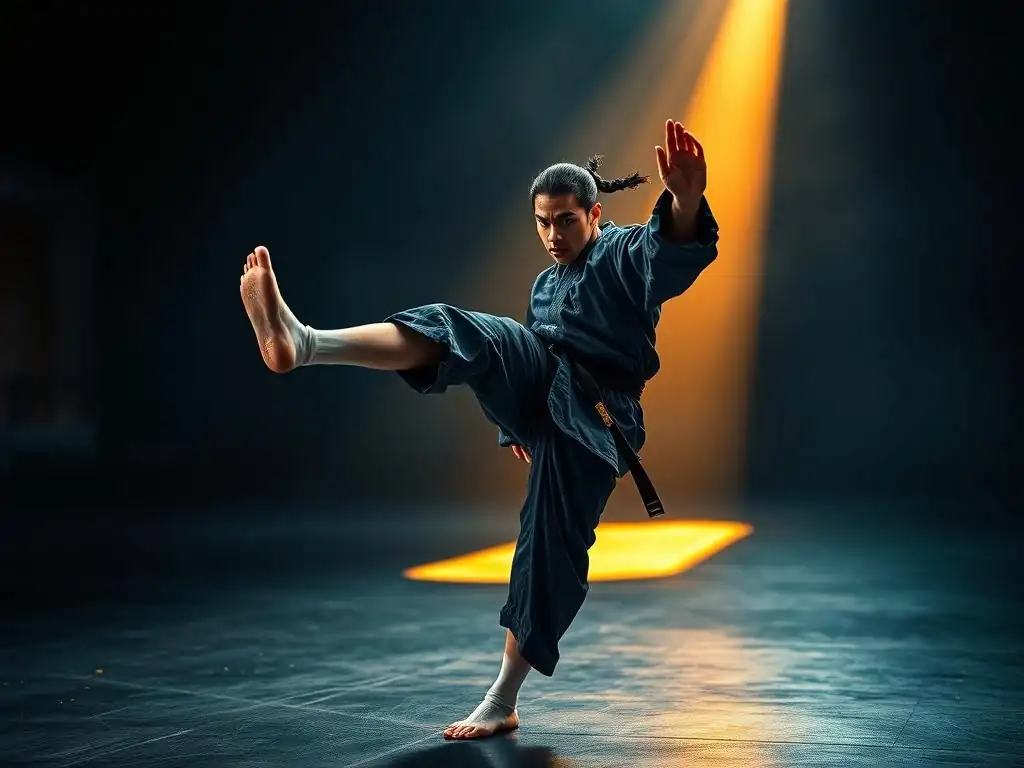
Welcome to Martial Arts Mastery, where we delve into the rich tapestry of global combat traditions. Ever wondered how a lone practitioner refines their skill and builds a formidable foundation? Dive in as we explore the heart of Taekwondo's solo practice, unpacking the intricate world of Poomsae & Hyung. Prepare to unlock the secrets behind Taekwondo poomsae technique progression and discover how these forms shape both body and mind. Intrigued? The journey to mastery begins now...
- Introduction to Taekwondo Poomsae and Hyung: A Solo Journey to Mastery
- Poomsae vs. Hyung: Unveiling the Differences and Similarities
- Deep Dive into Taekwondo Poomsae Technique Progression
- The Benefits of Practicing Taekwondo Poomsae
- Mastering Taekwondo Poomsae: Tips and Training Strategies
- Common Mistakes to Avoid in Poomsae Training
- Poomsae in Taekwondo Competitions: Judging and Performance
- Beyond the Dojo: Applying Poomsae Principles in Everyday Life
- Conclusion: Embracing the Art of Taekwondo Poomsae for Lifelong Growth
-
Frequently Asked Questions
- What exactly are Poomsae and Hyung in Taekwondo?
- How does practicing Poomsae help with overall Taekwondo skill?
- What is "Taekwondo poomsae technique progression," and why is it important?
- Are there different types or styles of Poomsae?
- How often should I practice Poomsae to improve my Taekwondo poomsae technique progression?
- Final Reflection: Embracing the Timeless Art of Poomsae
- Unleash Your Inner Mastery!
Introduction to Taekwondo Poomsae and Hyung: A Solo Journey to Mastery
Understanding the Role of Forms in Taekwondo Training
Forms, known as Poomsae in World Taekwondo (WT) or Hyung in International Taekwon-Do Federation (ITF) and other styles, are pre-arranged sequences of offensive and defensive techniques performed against imaginary opponents. They are a fundamental pillar of Taekwondo training, serving as a dynamic syllabus that encapsulates the art's entire technical repertoire.
Unlike sparring, which focuses on reactive application, forms demand precise execution, balance, timing, and power in isolation, allowing practitioners to internalize movements and principles without the unpredictable variable of an opponent. This structured practice ensures a systematic learning curve, guiding students from basic blocks and stances to complex kicking and hand techniques.
Beyond mere physical exercise, the practice of forms is deeply educational. Each pattern tells a story or represents a philosophical concept, often tied to Korean history, mythology, or natural elements. For instance, the eight Taegeuk forms in WT are associated with trigrams from the I Ching, symbolizing concepts like heaven, earth, fire, and water. Similarly, ITF patterns often commemorate historical figures or significant events in Korea's past. By practicing these forms, students not only refine their physical skills but also connect with the cultural and philosophical roots of Taekwondo, developing a deeper understanding of the art's purpose and history.
The Significance of Solo Practice for Taekwondo Practitioners
Solo practice, particularly through Poomsae or Hyung, is indispensable for achieving true mastery in Taekwondo. It provides a controlled environment where practitioners can focus intently on their own body mechanics, alignment, breath control, and technique execution without external distractions. This inward focus is crucial for developing muscle memory, improving proprioception (awareness of one's body in space), and identifying personal areas for improvement. Unlike partner drills or sparring, solo forms allow for countless repetitions of specific movements, refining everything from the angle of a block to the snap of a kick.
Furthermore, solo practice cultivates mental discipline and self-reliance. Performing a complex pattern requires concentration, focus, and the ability to push through physical fatigue. It teaches practitioners to be their own toughest critics, constantly striving for precision and power. This internal challenge builds mental fortitude, perseverance, and a deeper connection to the art itself. It is through dedicated solo work on forms that the foundational Taekwondo poomsae technique progression truly takes root, allowing students to build a solid technical base before applying those techniques in dynamic situations.
Poomsae vs. Hyung: Unveiling the Differences and Similarities
Historical Origins of Poomsae and Hyung in Korean Martial Arts
The history of forms in Korean martial arts is intertwined with the development of Taekwondo itself, particularly in the post-WWII era as various kwans (schools) emerged. Many early forms were derived from or heavily influenced by Japanese karate kata, such as the Pinan (Heian) series, which were adapted into the Palgwe and later the Taegeuk series in styles that would eventually form World Taekwondo.
Other influences came from traditional Korean martial arts, though the extent of this influence is debated. The Kwans that formed the Korea Taekwondo Association in 1955 initially used a mix of forms, leading to a need for standardization.
The split between major Taekwondo organizations significantly influenced the evolution of their respective form sets. The patterns developed by General Choi Hong Hi for the International Taekwon-Do Federation (ITF), known as Hyung (or Teul), were designed to reflect his specific technical philosophy, emphasizing sine wave motion, linear movements, and distinct blocking and striking theories. These forms, such as Chon-Ji, Dan-Gun, and the later patterns, were created largely from the 1950s onwards.
Meanwhile, the World Taekwondo (WT) system standardized its forms first with the Palgwe series and later replaced them primarily with the Taegeuk series for colored belts, introducing the Yudanja (black belt) forms like Koryo, Keumgang, Taebaek, Pyongwon, Sipjin, Jitae, Cheonkwon, Hansu, and Ilyeo, which were formalized from the late 1960s and 1970s. This divergence in historical development led to distinct stylistic differences in their respective forms.
Key Distinctions Between Poomsae and Hyung Styles
While both Poomsae (WT) and Hyung (ITF) serve the purpose of practicing techniques in sequence, their execution and underlying principles differ notably. A primary distinction lies in the body motion: ITF Hyung often utilizes a "sine wave" motion, involving a slight up-and-down movement with each step, which is theorized to generate power through body mass and momentum. WT Poomsae, conversely, typically emphasizes a more linear or grounded movement, focusing power generation through hip rotation and snapping motions without the pronounced vertical oscillation. Stances also show differences; for example, the walking stance ( gunnun sogi) in ITF might be longer than its WT counterpart ( ap kubi).
Technical differences extend to specific movements and their interpretation. ITF patterns often feature chambering for strikes and blocks that might differ in angle or path compared to WT forms. The application (or hoshinsool) of techniques within the forms can also be interpreted differently between the two styles.
For instance, a specific block might be applied slightly differently in an ITF Hyung compared to a WT Poomsae, reflecting the organizational emphasis on certain principles of force application or defense. These distinctions are significant enough that a practitioner trained primarily in WT Poomsae would find ITF Hyung technically challenging and vice versa, despite the shared Korean martial art heritage.
Similarities in Application and Purpose Across Different Forms
Despite their stylistic and historical differences, Poomsae and Hyung share fundamental similarities in their purpose and application within Taekwondo training. Both serve as the core method for students to learn, practice, and perfect the vast array of techniques within their respective systems, including stances, blocks, strikes, kicks, and transitions. They are the standardized curriculum that ensures technical consistency across schools and practitioners within the same organization, providing a benchmark for skill assessment during belt tests and competitions.
Crucially, both Poomsae and Hyung function as a form of moving meditation. The repetitive, focused execution of movements fosters mental clarity, discipline, and a deep connection between mind and body. They build physical attributes such as balance, flexibility, strength, and endurance.
Moreover, the underlying goal of internalizing techniques for practical self-defense remains constant. Whether practicing a Taegeuk Poomsae or an ITF Hyung, the practitioner is ultimately learning sequences that can, in theory, be applied against an attacker, albeit in a highly stylized and codified manner. The journey through the Taekwondo poomsae technique progression (or Hyung progression) is fundamentally about building a comprehensive technical foundation.
Deep Dive into Taekwondo Poomsae Technique Progression
The Foundational Poomsae: Building Blocks of Taekwondo Skill
The journey through Taekwondo poomsae technique progression begins with the foundational forms, typically the Taegeuk series (Taegeuk Il Jang through Taegeuk Pal Jang) in the WT system. These eight patterns are designed to introduce students incrementally to the basic stances, blocks, strikes, and kicks. Taegeuk Il Jang, for example, introduces the walking stance ( ap kubi), front stance ( ap seogi), low block ( arae makgi), middle block ( momtong makgi), high block ( olgul makgi), and middle punch ( momtong jirugi). It contains just 18 movements, performed along a simple 'King' or 'Heaven' character diagram. Each subsequent Taegeuk form builds upon the previous one, adding a few new techniques and a slightly more complex pattern diagram.
Mastering these foundational forms is absolutely critical. They establish the core mechanics that underpin all future Taekwondo techniques. Proper execution of a basic arae makgi in Taegeuk Ee Jang lays the groundwork for more complex defensive movements later on. Similarly, developing a strong, stable ap kubi in Taegeuk Sam Jang is essential for executing powerful front kicks ( ap chagi) or punches. Instructors often spend significant time on these early forms, correcting posture, balance, hip rotation, and the precise path and timing of each technique. The goal is not speed or power initially, but accuracy and understanding of fundamental principles.
Mastering Basic Stances and Movements in Lower-Level Forms
The initial stages of Taekwondo poomsae technique progression heavily emphasize the correct execution of basic stances and movements. Stances like ap seogi (walking stance), ap kubi (front stance), and dwit kubi (back stance) are the bedrock upon which all techniques are built. Incorrect weight distribution or alignment in a stance compromises balance and reduces power. For instance, in Taegeuk Sa Jang, which introduces the dwit kubi more prominently, maintaining approximately 70% of the weight on the back leg is vital for stability when executing techniques like the knife hand block ( sonnal makgi).
Basic movements such as the straight punch ( momtong jirugi), various blocks ( arae makgi, momtong makgi, olgul makgi), and the simple front kick ( ap chagi) are drilled repeatedly within the Taegeuk forms. The focus is on the correct trajectory of the limb, the chambering and recoil, and the precise point of impact (imaginary, in this case). For example, a momtong jirugi should travel in a straight line from the hip, rotating the fist just before impact. These seemingly simple actions, when executed with precision and proper body mechanics learned in the lower forms, become the foundation for more dynamic and complex techniques encountered later in the Taekwondo poomsae technique progression.
Importance of Repetition and Precision in Early Poomsae Training
Repetition is the cornerstone of mastering the foundational Taekwondo poomsae technique progression. Students are expected to perform the same forms hundreds, if not thousands, of times. This deliberate practice builds muscle memory, allowing the body to execute techniques automatically and correctly without conscious thought. When a movement becomes ingrained, the practitioner can then focus on adding speed, power, and refinement. This phase is less about learning new techniques and more about perfecting the quality of the techniques already introduced.
Precision is equally vital. Minor errors in stance width, body angle, hand position, or eye focus ( siseon) can significantly impact the effectiveness of a technique. Instructors meticulously correct these details, often stopping students to adjust a foot placement by just an inch or a hand position by a few degrees. This attention to detail in the early forms instills the discipline required for higher-level practice. A student who develops sloppy habits in Taegeuk Il Jang will struggle significantly when attempting the more intricate and demanding movements found later in the Taekwondo poomsae technique progression, such as those in Taegeuk Pal Jang which includes jumping kicks ( twi eo chagi) and spinning techniques.
Intermediate Poomsae: Refining Technique and Developing Power
As students advance through the colored belt ranks (typically from approximately 4th Gup to 1st Gup), their Taekwondo poomsae technique progression moves into the intermediate phase. While still practicing the foundational Taegeuk forms for review, they are introduced to new Taegeuk patterns (e.g., Taegeuk Oh Jang through Pal Jang) or, in some systems, transition to the Yudanja (black belt) forms starting with Koryo. This stage focuses on refining the basic techniques learned earlier and developing the ability to generate significant power through proper body mechanics, hip rotation, and coordination. Techniques become more complex, requiring greater balance and control.
The intermediate forms demand a higher level of physical fitness and technical understanding. For example, Taegeuk Chil Jang introduces the tiger stance ( beom seogi) and the scissor block ( gawi makgi), requiring improved balance and coordination. Taegeuk Pal Jang incorporates jumping techniques and more dynamic transitions. The transition to the first black belt form, Koryo (30 movements), represents a significant leap, introducing advanced stances like the fixed stance ( gojeong seogi) and techniques like the target kick ( pyojeok chagi), requiring a more sophisticated understanding of weight transfer and power application. This phase is about moving beyond simply performing the steps to truly executing the techniques with intent and force.
Introducing More Complex Combinations and Strategies
Intermediate Poomsae introduces practitioners to more complex sequences of movements that simulate realistic self-defense scenarios. Instead of single block-and-punch combinations found in the early forms, students encounter rapid-fire sequences involving multiple blocks followed by counter-attacks, sometimes incorporating kicks. For instance, Taegeuk Yuk Jang includes a sequence involving a high section block ( olgul makgi) immediately followed by a downward block ( naeryo makgi), requiring quick transitions and balance. Koryo introduces combinations like a double knife hand block ( sonnal dung momtong makgi) transitioning into a spear hand strike ( pyeon sonkkeut jirugi), demanding seamless flow and power generation through complex body movements.
These intricate combinations are not just random sequences; they represent strategic responses to potential attacks. Practicing them helps students develop tactical thinking within the context of solo practice. They learn to link techniques efficiently, understanding how one movement sets up the next. This phase of the Taekwondo poomsae technique progression is crucial for bridging the gap between individual techniques and their application in dynamic situations, albeit still within the structured format of the form. Mastering these combinations requires significant practice and attention to detail regarding timing and coordination between different body parts.
Enhancing Balance, Coordination, and Timing in Mid-Level Forms
Intermediate Poomsae significantly challenges and develops the practitioner's balance, coordination, and timing. Forms like Taegeuk Oh Jang introduce techniques performed from the dwit kubi (back stance) followed by stepping forward into an ap kubi (front stance) for a punch, requiring smooth weight transfer and maintaining balance during the transition. Taegeuk Pal Jang and Koryo feature jumping techniques, requiring explosive power and the ability to land securely while maintaining readiness for the next movement. The fixed stance ( gojeong seogi) in Koryo, with weight distributed roughly 50/50, demands precise leg strength and alignment for stability.
Coordination becomes more complex as students execute simultaneous movements, such as blocking with one hand while striking with the other, or coordinating hip rotation with the extension of a kick or punch. The gawi makgi (scissor block) in Taegeuk Chil Jang is a prime example, requiring both arms to move in coordinated, opposing arcs. Timing is paramount, ensuring that power is generated at the precise moment of impact and that transitions between techniques are fluid and efficient. This refinement of balance, coordination, and timing in intermediate Poomsae is essential for executing techniques effectively and powerfully, marking significant progress in the Taekwondo poomsae technique progression.
Advanced Poomsae: The Pinnacle of Taekwondo Form Mastery
Upon achieving black belt ranks (1st Dan and above), practitioners delve into the advanced Poomsae, continuing their Taekwondo poomsae technique progression with the Yudanja forms (Koryo, Keumgang, Taebaek, Pyongwon, Sipjin, Jitae, Cheonkwon, Hansu, Ilyeo). These forms represent the culmination of technical skill, incorporating highly complex techniques, stances, and movements that demand exceptional strength, flexibility, balance, speed, and precision. They are significantly longer and more physically demanding than the Taegeuk series. Keumgang (27 movements), for example, features the diamond stance ( keumgang seogi), mountain block ( santul makgi), and knee strike ( murup chigi), requiring immense power and stability.
Mastering these advanced forms is a lifelong pursuit. They require not just physical prowess but also a deep understanding of the underlying principles of force, leverage, and body mechanics. Forms like Sipjin (31 movements), meaning 'Ten,' symbolizing decimal and perfection, introduce intricate footwork and hand techniques performed in quick succession. Taebaek (26 movements), named after Korea's sacred mountain, features powerful techniques like the palm heel block ( batangson makgi) and thrusting kicks. This stage of the Taekwondo poomsae technique progression is about refining every minute detail, achieving maximum power and fluidity, and imbuing the movements with spirit and presence.
Executing Dynamic Techniques with Speed and Accuracy
Advanced Poomsae are characterized by dynamic and explosive movements that must be executed with both speed and pinpoint accuracy. Techniques like jumping kicks ( twi eo chagi), spinning kicks ( dollyo chagi), and rapid-fire hand strikes are common. For instance, Keumgang Poomsae includes a powerful santul makgi which requires simultaneous high and low blocks executed with great force. Taebaek involves fast transitions between stances and powerful strikes like the batangson chirugi (palm heel strike). Achieving speed without sacrificing accuracy is a significant challenge at this level.
Practitioners focus on generating maximum power through efficient body mechanics, including hip rotation, knee bend, and core engagement. The snap and recoil of techniques become paramount. A correctly executed side kick ( yeop chagi) in Keumgang should extend fully with explosive force and retract quickly. Similarly, the timing of breath control ( kihap) is critical for maximizing power and demonstrating spirit. This level of execution requires years of dedicated practice, building the necessary physical conditioning and muscle memory established in the earlier stages of the Taekwondo poomsae technique progression.
Understanding the Philosophical Depth Embedded in Upper-Level Poomsae
Beyond the physical techniques, the advanced Poomsae are imbued with deep philosophical and cultural significance. Each form is named after a concept, historical figure, or natural element, and its movements are designed to reflect these meanings. Koryo is named after the ancient Korean dynasty, its movements symbolizing the strength and spirit of the Korean people. Keumgang represents the Diamond Mountain, symbolizing hardness and strength. Taebaek signifies the sacred mountain, representing the foundation of Korea. Sipjin embodies the decimal concept, representing growth and perfection.
Understanding these meanings adds a layer of depth to the practice. It's not just about performing movements; it's about embodying the spirit and philosophy of the form. The final form, Ilyeo (29 movements), named after the Buddhist philosopher Wonhyo's principle of "Oneness," represents the state of spiritual cultivation and the integration of mind and body.
Practicing Ilyeo is meant to bring the practitioner to a state of calm unity. This philosophical exploration is a critical part of the advanced Taekwondo poomsae technique progression, transforming the physical movements into a form of active meditation and a pathway to deeper self-understanding and mastery.
The Benefits of Practicing Taekwondo Poomsae
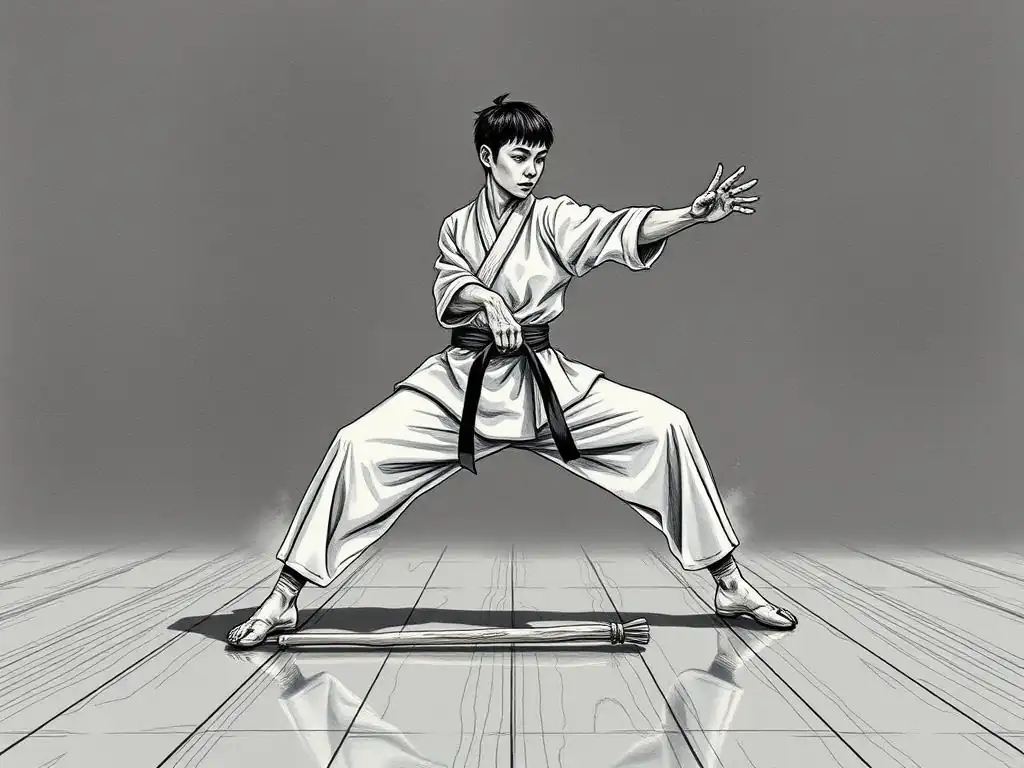
Enhancing Physical Fitness and Coordination Through Poomsae
Regular practice of Taekwondo Poomsae provides a comprehensive physical workout, significantly enhancing overall fitness. The dynamic movements, which involve a wide range of stances, blocks, strikes, and kicks, improve cardiovascular health, muscular strength, and endurance. Executing forms like Taebaek or Sipjin requires sustained effort and bursts of power, providing both aerobic and anaerobic benefits. The constant transitions between stances and techniques build strong legs, core, and upper body strength.
Furthermore, Poomsae training is exceptional for developing coordination and balance. Performing complex sequences that involve simultaneous hand and foot movements, changes in direction, and maintaining stability in challenging stances directly improves proprioception and body control. Techniques like the gawi makgi (scissor block) or sequences involving multiple spinning movements demand high levels of coordination. The requirement to maintain balance during kicks, especially higher or jumping kicks, strengthens stabilizing muscles and refines equilibrium, contributing significantly to the practitioner's overall physical capability.
Developing Mental Focus and Discipline Through Solo Practice
The solo nature of Poomsae practice is a powerful tool for cultivating mental focus and discipline. Performing a form requires intense concentration to remember the sequence of movements, execute techniques correctly, and maintain proper form and power throughout. The absence of an opponent means the practitioner must rely solely on internal motivation and self-correction. This process builds the ability to concentrate for extended periods, block out distractions, and remain present in the moment.
The discipline fostered by Poomsae extends beyond the training hall. The commitment required to practice forms repeatedly, constantly striving for improvement, instills patience, perseverance, and a strong work ethic. It teaches the value of diligent, focused effort towards a long-term goal – mastery of the forms and, by extension, the art of Taekwondo. This mental fortitude is a valuable asset that translates into other areas of life, from academic pursuits to professional challenges.
Improving Self-Defense Skills by Internalizing Poomsae Applications
While Poomsae are not direct simulations of sparring or self-defense scenarios, they are designed to internalize the fundamental techniques and principles that are applicable in real-world situations. Each movement within a form represents a potential block, strike, or counter-attack. By practicing these sequences repeatedly, practitioners develop muscle memory for essential defensive and offensive actions. The transition from an ap kubi to a dwit kubi while executing a block, for instance, teaches efficient movement and weight transfer that could be used to evade and counter an attack.
The application or hoshinsool of Poomsae movements is a separate area of study, where the techniques from the forms are practiced with a partner to understand their practical use. However, the solo practice is the necessary prerequisite. It ensures that the fundamental mechanics of a technique – the power generation, the correct angle, the timing – are ingrained.
Without the solid technical foundation built through dedicated Poomsae practice, applying techniques effectively in a dynamic self-defense situation becomes significantly more challenging. The Taekwondo poomsae technique progression is, at its heart, a system for building a reliable technical foundation for combat application.
Mastering Taekwondo Poomsae: Tips and Training Strategies
The Importance of Visualization and Mental Rehearsal
Visualization is a powerful technique for mastering Taekwondo Poomsae. Before physically performing a form, take time to mentally walk through the sequence. Imagine the movements, the stances, the transitions, and the feeling of executing the techniques powerfully and accurately. Visualize yourself performing the form flawlessly, paying attention to details like balance, posture, and eye focus. This mental rehearsal helps reinforce the pattern in your mind, improves recall, and can even activate the same neural pathways used during physical execution.
During physical practice, continue to visualize the imaginary opponents and the purpose of each technique. Don't just go through the motions; perform each block and strike with intent, as if defending against or attacking a real threat. This approach adds realism and dynamism to your Poomsae, transforming it from a mere dance into a martial performance. Consistent visualization, combined with physical practice, accelerates the learning process and deepens your understanding of the Taekwondo poomsae technique progression.
Seeking Guidance from Experienced Instructors for Correct Technique
While solo practice is essential, guidance from experienced instructors is invaluable for mastering Taekwondo Poomsae. An instructor can identify subtle errors in your technique that you might not notice yourself – incorrect weight distribution, improper hip rotation, a block that is slightly off-angle. They can provide personalized feedback and drills tailored to address your specific weaknesses. For example, if your dwit kubi is unstable, an instructor might give you specific exercises or corrections within the Poomsae itself.
Instructors also possess a deeper understanding of the nuances and principles behind each movement and form. They can explain the intended application of techniques, provide historical or philosophical context, and help you understand how each form fits into the overall Taekwondo poomsae technique progression. Attending classes regularly, asking questions, and actively seeking corrections are crucial steps in refining your forms and advancing your skill level.
Utilizing Video Analysis to Identify and Correct Errors
Utilizing modern technology like video analysis can be a highly effective training strategy for mastering Taekwondo Poomsae. Record yourself performing your forms from different angles (front, side, back). Watching the recordings allows you to see your performance objectively and identify errors that you might not feel or recognize while doing the form. You can compare your execution to videos of high-level practitioners or demonstrations of the standard forms.
Look for specific details: Is your stance width correct? Is your body facing the right direction? Are your blocks and strikes ending in the correct position? Is your weight transfer smooth? Are you maintaining balance during kicks? By pinpointing specific issues through video analysis, you can then focus your practice on correcting those exact problems. This self-assessment tool, combined with instructor feedback, provides a powerful feedback loop for continuous improvement in your Taekwondo poomsae technique progression.
- [x] Record Poomsae practice
- [ ] Analyze video for stance errors
- [ ] Analyze video for hand technique errors
- [ ] Analyze video for kicking technique errors
- [ ] Identify areas for improvement
- [ ] Focus next practice session on identified errors
Common Mistakes to Avoid in Poomsae Training
Rushing Through Forms Without Proper Understanding
One of the most common mistakes practitioners make is rushing through their Poomsae, prioritizing speed over precision and understanding. This often happens when students are eager to learn the next form or demonstrate power. However, executing techniques quickly without proper balance, chambering, or hip rotation results in sloppy movements that lack power and effectiveness. Speed should be the result of proper technique, not a substitute for it.
Performing a form too quickly also prevents the practitioner from fully engaging mentally with each movement and its purpose. The philosophical aspects and the intended applications are lost when simply going through the motions at high speed. It is far more beneficial to perform a form slowly and deliberately, focusing on perfect execution of each technique and transition, than to race through it with poor form. Mastery in the Taekwondo poomsae technique progression comes from quality of practice, not just quantity or speed.
Neglecting the Importance of Stance and Balance
Another critical error is neglecting the fundamental importance of stance and balance. Stances are the base of every technique; a weak stance leads to a weak technique. Students sometimes become focused solely on the hand or foot movement and forget about their foundation. Leaning too far forward or backward, having the wrong width or length in a stance, or distributing weight incorrectly are common issues that compromise stability and power generation.
Maintaining balance throughout the form is also crucial. Wobbly stances, losing balance during transitions, or being unstable after a kick indicates a fundamental flaw in technique. Good balance allows for efficient movement, powerful execution, and the ability to transition quickly to the next technique. Dedicated practice on basic stances and drills specifically designed to improve balance should be a constant part of Poomsae training, reinforcing the base required for advanced techniques in the Taekwondo poomsae technique progression.
Failing to Apply the Principles of Power Generation
Simply moving through the techniques of a Poomsae does not equate to martial effectiveness. A significant mistake is failing to apply the principles of power generation, which include hip rotation, body weight transfer, knee bend, and breath control ( kihap). Techniques performed without these elements are often weak and ineffective, resembling dance more than martial arts. For example, a punch thrown without hip rotation loses a significant percentage of its potential force.
Practitioners must consciously engage their core and hips in every strike and block. They must understand how to use gravity and body weight during downward movements and generate upward force from the legs. The kihap, a shout or sharp exhalation, is not just for show; it helps tense the core muscles at the moment of impact, increasing power and demonstrating spirit. Actively focusing on these power generation principles transforms the physical movements of the Taekwondo poomsae technique progression into truly martial techniques.
Poomsae in Taekwondo Competitions: Judging and Performance
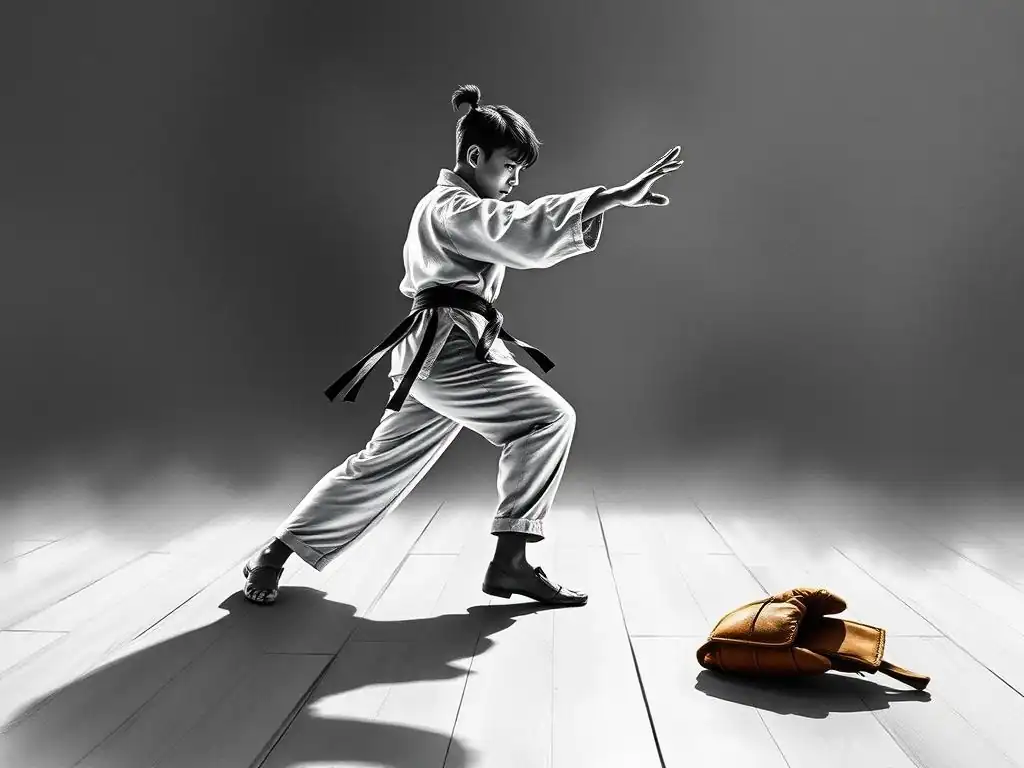
Understanding the Judging Criteria for Poomsae Competitions
Poomsae competitions provide a platform for practitioners to demonstrate their technical proficiency and performance ability. Judges evaluate competitors based on specific criteria, broadly categorized into two main areas: technical accuracy and presentation. Technical accuracy accounts for a significant portion of the score, often around 60-70%. This includes the correctness of stances, the precision of hand and foot techniques (angle, trajectory, finish point), balance, coordination, and the proper use of breath control ( kihap). Errors in these areas result in point deductions. For example, stepping on a line might incur a 0.1-point deduction, while a major balance break could be 0.3 points or more.
Presentation, accounting for the remaining 30-40% of the score, assesses the competitor's ability to convey the spirit and power of the form. This includes rhythm and timing (performing techniques at the appropriate speed and with correct pauses), power and speed (demonstrating explosiveness where required), and expression of energy ( kwan). Confidence, focus ( siseon - eye focus), and overall presence also contribute to the presentation score. A technically perfect form performed without energy or spirit will score lower than a performance that combines accuracy with dynamic execution and strong martial presence.
Developing a Winning Poomsae Performance Strategy
Developing a winning Poomsae performance strategy involves balancing technical perfection with compelling presentation. Before the competition, meticulous practice focusing on every detail of the required forms is essential. This includes not just the movements themselves but also the transitions between them, the timing, and the kihap placement. Practicing under simulated competition conditions, perhaps in front of peers or instructors acting as judges, can help identify areas for improvement under pressure.
During the performance, the strategy shifts to execution and presence. Start strong, with a clear bow and focused junbi (ready) stance. Execute each technique with confidence, power, and precision, maintaining balance and correct posture throughout. Pay attention to rhythm and timing, hitting pauses and executing dynamic movements with appropriate speed. Maintain strong eye focus throughout the form, demonstrating concentration and awareness. Finish crisply, returning to the parro (return) stance and bowing with respect. A memorable performance combines technical accuracy with palpable energy and confidence, showcasing mastery over the Taekwondo poomsae technique progression.
The Role of Presentation and Confidence in Competition Success
In the competitive arena, presentation and confidence play a crucial role in distinguishing top performers. Judges are looking for more than just correct movements; they want to see a practitioner who embodies the spirit of Taekwondo. This is where elements like rhythm, power, speed, and expression of energy become vital. A strong kihap delivered at the appropriate moment can significantly impact the judges' perception of power and spirit. Smooth, powerful transitions between techniques demonstrate flow and control.
Confidence, projected through posture, eye contact (towards the front, not the judges), and decisive movements, signals mastery and self-assurance. Hesitation, fumbling, or a lack of conviction in the movements detracts from the performance. Even a minor technical error can sometimes be overshadowed by a powerful and confident presentation that captivates the judges. Therefore, while technical accuracy is fundamental, training to perform Poomsae with energy, rhythm, and unwavering confidence is essential for success in competition.
Beyond the Dojo: Applying Poomsae Principles in Everyday Life
Cultivating Discipline and Perseverance Through Taekwondo Training
The discipline and perseverance required to progress through the Taekwondo poomsae technique progression are invaluable qualities that extend far beyond the dojo. The commitment to practicing forms repeatedly, even when tired or unmotivated, builds mental toughness. The process of identifying errors, accepting critique, and working diligently to correct weaknesses teaches humility and resilience. This consistent effort towards a long-term goal – achieving the next belt rank or mastering a difficult form – instills a deep-seated discipline that can be applied to academic studies, career goals, or personal projects.
The Taekwondo philosophy, often touched upon in Poomsae meanings, emphasizes qualities like integrity, perseverance, self-control, and an indomitable spirit. By embodying these principles in their physical training, practitioners internalize them as life skills. Facing the challenge of a complex form like Ilyeo or overcoming the frustration of repeatedly making the same mistake in Koryo builds a powerful sense of perseverance that helps individuals tackle obstacles and setbacks in everyday life with greater determination.
Enhancing Self-Confidence and Mental Resilience
Mastering Taekwondo Poomsae significantly enhances self-confidence and mental resilience. As practitioners successfully learn and perform increasingly complex forms, they gain a tangible sense of accomplishment. Each belt promotion, earned through demonstrating proficiency in the required forms and other skills, reinforces their progress and capability. Overcoming the physical and mental challenges presented by difficult techniques within forms builds a belief in one's ability to tackle difficult tasks.
This growing self-confidence is further bolstered by the physical strength and coordination developed through training. Feeling capable and in control of one's body translates into feeling more capable and in control in other areas of life. The mental resilience built by pushing through challenging practices and dealing with the pressure of belt tests or competitions prepares individuals to face stress and adversity with a stronger mindset. The structured progression of Taekwondo poomsae technique provides a clear path of achievement that directly contributes to a practitioner's self-esteem and mental fortitude.
Promoting a Healthy Lifestyle Through Martial Arts Practice
Engaging in Taekwondo, with Poomsae practice as a core component, inherently promotes a healthy lifestyle. The physical demands of training improve cardiovascular health, build muscle, increase flexibility, and aid in weight management. Regular exercise is a cornerstone of physical well-being, and the structured routine of martial arts provides a consistent and engaging way to stay active. The energy expenditure during a rigorous Poomsae session can be significant, contributing to overall fitness goals.
Beyond the physical aspects, Taekwondo encourages mental well-being. The focus and concentration required for Poomsae can act as a form of active meditation, reducing stress and promoting mental clarity. The sense of community within a dojo provides social support. Furthermore, the emphasis on self-improvement and discipline can motivate practitioners to make healthier choices in diet, sleep, and other lifestyle areas. The holistic nature of martial arts training, with Poomsae at its core, supports a balanced and healthy way of living.
Conclusion: Embracing the Art of Taekwondo Poomsae for Lifelong Growth
Continuing the Journey of Self-Improvement Through Solo Practice
The mastery of Taekwondo Poomsae is not a destination but a continuous journey of self-improvement. Even at the highest black belt ranks, practitioners continue to refine their forms, seeking greater precision, power, and deeper understanding. The subtleties of timing, the nuances of weight distribution, and the philosophical depth of each movement offer endless opportunities for growth. Solo practice remains the essential tool for this ongoing refinement, allowing for focused attention on personal development.
Embracing this lifelong journey means committing to regular, dedicated practice, even when formal classes are not possible. It means revisiting foundational forms with a more experienced eye, finding new layers of technique and meaning. It means pushing physical and mental boundaries with advanced patterns. The Taekwondo poomsae technique progression is a spiral, not a straight line; practitioners revisit earlier concepts with increased understanding, constantly building upon their foundation. This dedication to continuous improvement is one of the most valuable lessons Taekwondo teaches.
The Enduring Legacy of Poomsae in Taekwondo
Poomsae (and Hyung) represent the enduring legacy and technical heart of Taekwondo. They are the codified history and principles of the art, passed down through generations of practitioners. They provide a standardized method for teaching and learning, ensuring that the core techniques and philosophies are preserved. While sparring and self-defense application are vital components of Taekwondo, it is the forms that contain the complete technical syllabus and the art's rich heritage.
As Taekwondo continues to evolve globally, particularly through sports competition, the role of Poomsae remains central to its identity as a martial art. They connect contemporary practitioners to the roots of the discipline and provide a pathway for developing not just physical skill but also mental discipline and spiritual understanding. The dedication to mastering the Taekwondo poomsae technique progression is an act of preserving and honoring the art itself, ensuring its continuity for future generations.
Frequently Asked Questions
What exactly are Poomsae and Hyung in Taekwondo?
Poomsae and Hyung are pre-arranged forms used in Taekwondo. They consist of specific sequences of stances, blocks, and strikes performed against imaginary opponents. They serve as a foundation for developing technique.
How does practicing Poomsae help with overall Taekwondo skill?
Poomsae practice improves balance, coordination, and muscle memory. It also reinforces proper technique and timing, essential for sparring and self-defense.
What is "Taekwondo poomsae technique progression," and why is it important?
It refers to the structured learning of Poomsae from basic to advanced levels. It's crucial for building a solid foundation in fundamental movements before tackling more complex forms.
Are there different types or styles of Poomsae?
Yes, Taekwondo has various Poomsae, including Taegeuk Poomsae (for beginners) and Black Belt Poomsae (like Koryo and Keumgang). Each Poomsae introduces new techniques and philosophical concepts.
How often should I practice Poomsae to improve my Taekwondo poomsae technique progression?
Consistent practice is key! Aim for at least 2-3 sessions per week, focusing on correct form and precision. Regular repetition builds muscle memory and enhances understanding.
Final Reflection: Embracing the Timeless Art of Poomsae
The journey through the intricacies of Poomsae and Hyung, as explored in this article, reveals more than just a series of movements; it unveils a profound connection to the history and philosophy of Taekwondo. The enduring relevance of Poomsae lies in its ability to cultivate discipline, focus, and a deep understanding of martial arts principles, even in our rapidly evolving world. These forms serve as a living bridge, connecting practitioners to generations of martial artists who have honed their skills through dedicated practice.
The influence of Poomsae extends far beyond the dojang, shaping character and fostering a sense of self-awareness. The dedication required to master these forms instills resilience and perseverance, qualities that are invaluable in all aspects of life. The beauty of Poomsae lies not only in its physical execution but also in the mental fortitude it cultivates. As Bruce Lee so eloquently stated: Absorb what is useful, discard what is not, add what is uniquely your own.
This sentiment perfectly encapsulates the spirit of Poomsae, encouraging practitioners to personalize their understanding and expression of the forms.
As you continue your journey in Taekwondo, I urge you to embrace the challenge and beauty of Poomsae. Let each stance, each block, and each strike be a testament to your dedication and a reflection of your inner strength. Allow the timeless wisdom embedded within these forms to guide you not only in your martial arts practice but also in your pursuit of a more balanced and fulfilling life.
Unleash Your Inner Mastery!
Thank you for diving deep into the world of Poomsae and Hyung. We hope you've gained a new appreciation for the artistry and discipline within these vital solo forms. Now, it's time to translate that knowledge into action!
Here's how you can take your Poomsae/Hyung journey to the next level:
- Commit to Mastering One Form: Dedicate the next month to perfecting a specific Poomsae or Hyung. Focus on precision, power, and presence.
- Share Your Practice: Record a short video of yourself performing the form you're working on and share it with a fellow martial artist for feedback.
- Explore related forms: Investigate and learn the historical context and meaning behind your chosen Poomsae/Hyung.
Ready to elevate your form and deepen your understanding of martial arts?