
Krav Maga Kick Defense Mastery: Turning Kicks into Your Offensive Opening


Welcome to Martial Arts Mastery!
Delve into the world of combat and self-improvement. Are you ready to transform incoming threats into opportunities? This article explores a crucial aspect of one of the world's most effective self-defense systems. Curious about mastering Krav Maga kick defense and turning your opponent's strikes into your own offensive advantage? Then keep reading and unlock the secrets to deflecting and countering kicks with confidence.
- Introduction to Krav Maga Kick Defenses: A Proactive Approach
- Analyzing Common Kick Attacks in Street Fights
-
Krav Maga Kick Defense Techniques: A Step-by-Step Guide
- The Intercepting Angle: Deflecting Kicks Before They Land
- The Importance of Footwork and Evasive Maneuvers in Kick Defense
- Krav Maga Blocking Techniques Against Roundhouse Kicks: Shin Block and Counter-Punch
- Defending Against Front Kicks: Downward Palm Strike and Groin Grab
- Neutralizing Side Kicks: Intercepting Step and Leg Sweep
- Counter-Offensive Strategies After a Krav Maga Kick Defense
- Drills and Training for Krav Maga Kick Defense Proficiency
- Advanced Krav Maga Kick Defense Concepts
- Common Mistakes to Avoid in Krav Maga Kick Defense
- Conclusion: Mastering Krav Maga Kick Defense for Self-Preservation
-
Frequently Asked Questions
- What is the primary focus of Krav Maga kick defense?
- How does Krav Maga kick defense differ from traditional martial arts defenses?
- What are some common Krav Maga techniques used to defend against kicks?
- Why does Krav Maga emphasize offensive openings after defending a kick?
- What are some considerations when practicing Krav Maga kick defense?
- Final Reflection: Embracing the Kick as Opportunity
- Unleash Your Inner Warrior: Defend and Dominate!
Introduction to Krav Maga Kick Defenses: A Proactive Approach
Understanding the Aggressive Nature of Krav Maga Defense
Krav Maga, a self-defense system developed for the Israel Defense Forces, is fundamentally rooted in aggression and efficiency. Unlike traditional martial arts that may emphasize passive blocking or elaborate defensive forms, Krav Maga approaches defense as an immediate bridge to counter-offense. When discussing Krav Maga kick defense, this philosophy means that merely stopping a kick is insufficient; the defense must simultaneously disrupt the attacker and create an opening for a decisive counter-attack.
The goal is to neutralize the threat rapidly and effectively, often within seconds of the initial attack. This proactive stance differentiates Krav Maga significantly from systems focused solely on absorbing or evading attacks.
The aggressive nature is also reflected in the choice of defensive techniques. Krav Maga defenses are designed to cause pain or injury to the attacker while protecting the defender. For instance, a Krav Maga kick defense might involve striking the attacker's shin or knee with a block, causing discomfort and disrupting their balance, immediately enabling the defender to launch strikes to vulnerable targets like the eyes, throat, or groin.
This isn't about points or performance; it's about survival and ending the confrontation as quickly and safely as possible. The mindset is one of immediate, overwhelming response rather than prolonged engagement.
Why Traditional Kick Blocking Falls Short in Real-World Scenarios
Traditional martial arts often teach blocks that rely on absorbing the impact of a kick with a conditioned limb or a rigid structure. While effective in controlled sparring environments with rules and padding, these methods can be problematic in real-world street confrontations. Street kicks are often delivered with full force, sometimes with footwear, and against unconditioned bodies. A purely absorptive block against a powerful kick to the thigh or ribs could still result in significant injury, such as bruising, muscle damage, or even fractures. Furthermore, these blocks often leave the defender static and vulnerable to follow-up attacks or combinations.
In the context of Krav Maga kick defense, the focus shifts from passive absorption to active deflection and redirection. A rigid block might stop a kick, but it doesn't necessarily create an opportunity. A Krav Maga defense, however, aims to control the kick's energy and redirect it away from the defender's body while simultaneously positioning the defender for a counter.
For example, instead of just raising an arm to block a high kick, a Krav Maga practitioner might use a simultaneous block and movement to get inside the kick's arc, disrupting the attacker's balance and range. This approach minimizes the force absorbed and maximizes the potential for an immediate, fight-ending response.
Transforming Defense into Offense: The Krav Maga Kick Defense Philosophy
The core philosophy behind Krav Maga kick defense is that the defense is the beginning of the offense. Every defensive movement is designed not just to protect but also to set up a counter-attack. When defending against a kick, the defender isn't merely reacting; they are actively using the attacker's momentum and commitment to the kick against them. This might involve moving offline to evade the full force while simultaneously striking, or using a block that also functions as a check or a control point on the attacker's limb.
This transformative approach means that training in Krav Maga kick defense involves practicing defensive techniques concurrently with offensive follow-ups. For instance, a drill might involve defending a roundhouse kick with a shin block followed immediately by a groin strike and an eye gouge simulation. The time lag between defense and offense is minimized to fractions of a second. This integrated approach ensures that the defender is never just defending; they are always moving towards neutralizing the threat, turning the attacker's aggression and their own Krav Maga kick defense into a swift, decisive counter-offensive action.
Analyzing Common Kick Attacks in Street Fights
Identifying High-Risk Kick Targets: Groin, Knees, and Head
In real-world street confrontations, attackers often target areas that are highly vulnerable and likely to cause immediate incapacitation or severe pain. When considering Krav Maga kick defense, understanding these primary targets is crucial for effective preparation. The groin is a notoriously vulnerable area, often targeted with front kicks or low roundhouse kicks due to its unprotected nature and the severe pain caused by impact. A strike to the groin can instantly end a fight, making defense against kicks aimed at this area a top priority in Krav Maga training.
The knees are another high-risk target, particularly susceptible to low roundhouse kicks or side kicks. A forceful kick to the knee can cause ligament damage, dislocation, or even fracture, severely impairing mobility and ending the threat posed by the defender. Krav Maga training emphasizes defending against kicks targeting the structural integrity of the legs.
Finally, while less common as an initial attack due to the balance required, head kicks (like high roundhouses or axe kicks) pose a significant knockout threat. Defending the head is paramount, often requiring simultaneous blocking and evasive footwork, reflecting the comprehensive nature of Krav Maga kick defense training against varied threats.
Recognizing Telegraphing Signs of an Incoming Kick
Attackers, even untrained ones, often exhibit involuntary movements or "tells" before launching a kick. Recognizing these telegraphing signs is a vital component of proactive Krav Maga kick defense. Common tells include shifting weight heavily onto one leg (the supporting leg) before lifting the other, a slight dip or lean backward before a powerful kick, or chambering the kicking leg visibly before extending it. Sometimes, an attacker might tense their body or clench their fists just before initiating movement.
Training in Krav Maga kick defense includes drills focused on observing these subtle cues. Practicing with partners who deliberately or naturally exhibit these tells helps develop the defender's perceptual speed. While not every attacker will telegraph their moves clearly, being attuned to these potential indicators can provide a critical fraction of a second's warning, allowing the defender to initiate their Krav Maga kick defense technique more effectively, potentially intercepting the kick before it even reaches full power or range.
Understanding the Biomechanics of Common Street Kicks: Roundhouse, Front Kick, and Side Kick
Effective Krav Maga kick defense requires an understanding of how common kicks are generated and delivered. The roundhouse kick, often seen in various martial arts and street fights, typically involves pivoting on the supporting foot and swinging the kicking leg in a circular motion, generating power from the hips and torso rotation. Understanding this rotational force helps in anticipating the angle and power of the incoming strike, informing the appropriate defensive angle and blocking technique.
The front kick is a more linear attack, driving the foot (usually the ball or heel) straight forward from the hip or knee. It's quicker and requires less setup than a roundhouse but often lacks the same sheer power unless delivered with significant momentum. Defending against a front kick in Krav Maga often involves meeting the force head-on or redirecting it along its linear path.
The side kick is delivered by turning the body and extending the leg sideways, using the heel or blade of the foot. This kick generates power from hip extension and often targets the midsection or legs. Understanding the sideways projection and the need for lateral evasion or strong interception is key to effective Krav Maga kick defense against this specific attack.
Krav Maga Kick Defense Techniques: A Step-by-Step Guide
The Intercepting Angle: Deflecting Kicks Before They Land
A fundamental principle in Krav Maga kick defense is using the "intercepting angle." This involves moving slightly offline (e.g., 45 degrees) towards the inside of the attacker's kicking leg as they initiate the kick. By stepping into this angle, the defender reduces the distance the kick travels, intercepts it earlier in its trajectory (often before it reaches full power), and moves out of the direct line of force. This simultaneous movement and block/deflection disrupts the attacker's balance and power generation.
For example, if an attacker throws a right roundhouse kick, the defender might step forward and slightly to their left (the defender's left, which is towards the attacker's right leg side). As they step, they use a block or deflection with their arm or leg to meet the incoming kick. This technique is crucial in Krav Maga kick defense because it leverages the attacker's forward momentum, turning their aggression into a disadvantage for them while positioning the defender advantageously for an immediate counter-attack. It's a dynamic defense, not a static one.
The Importance of Footwork and Evasive Maneuvers in Kick Defense
Footwork is absolutely critical in Krav Maga kick defense. Simply standing still and blocking is rarely the optimal solution. Effective footwork allows the defender to manage distance, change angles, and evade the primary line of attack. Lateral movements, diagonal steps (like the intercepting angle), and even retreating movements are all part of the Krav Maga kick defense toolkit. The goal is often to move just enough to avoid the full impact or to get inside the kick's effective range, where the attacker is off-balance and vulnerable.
Evasive maneuvers are often used in conjunction with blocks or deflections. For instance, against a powerful roundhouse kick aimed at the ribs, a defender might simultaneously use a forearm block and a slight step backward or diagonally away from the kick. This combination reduces the force of impact on the block and ensures the defender is less likely to be overwhelmed. Mastering various footwork patterns and integrating them seamlessly with defensive hand/leg techniques is a cornerstone of proficient Krav Maga kick defense training.
Krav Maga Blocking Techniques Against Roundhouse Kicks: Shin Block and Counter-Punch
The shin block is a primary technique in Krav Maga kick defense against roundhouse kicks, particularly those targeting the legs or lower body. This involves lifting the shin of one leg and turning it outwards to meet the incoming kick, using the strong bone of the shin to absorb the impact. While initially painful, consistent conditioning can increase tolerance. However, the Krav Maga application isn't just a passive block; it's often delivered with force, aiming to damage the attacker's kicking limb (e.g., their instep or shin), causing pain and potentially ending their ability to kick effectively.
Crucially, the shin block is almost always paired with a simultaneous or immediate counter-punch. As the defender raises their shin to block the incoming roundhouse kick, they simultaneously deliver a punch (often a straight punch or hook) with the hand on the same side as the blocking leg, or a cross-punch with the opposite hand. This coordinated action ensures that while defending the kick, the defender is already attacking the attacker's upper body, exploiting the opening created by their committed kick. This simultaneous defense and offense embodies the core principle of Krav Maga kick defense.
Defending Against Front Kicks: Downward Palm Strike and Groin Grab
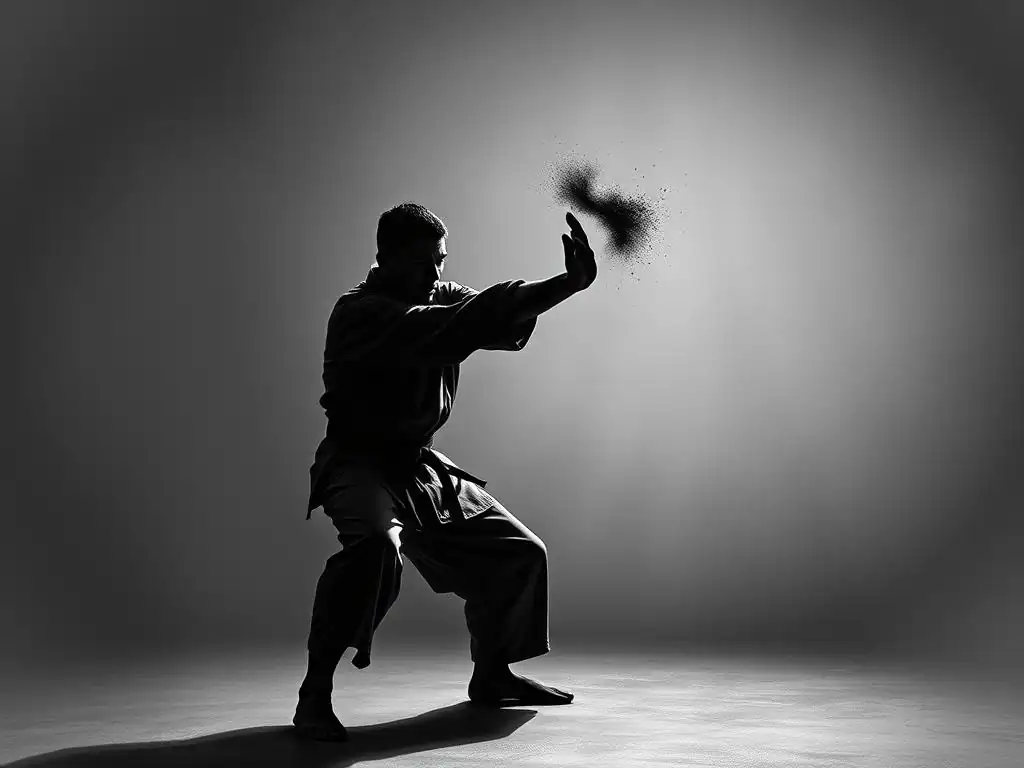
Defending against a front kick in Krav Maga often involves deflecting or redirecting the linear force. One common technique is a downward palm strike (or forearm block) to the incoming kick, pushing it downwards and offline. As the defender performs this deflection, they simultaneously step slightly offline to further evade the kick's trajectory. This technique aims to disrupt the kick and create an opening.
Another aggressive Krav Maga kick defense against a front kick, particularly one aimed at the lower body or groin, involves a simultaneous deflection and groin grab/strike. As the defender deflects the kick downwards or outwards, they simultaneously reach for the attacker's groin or deliver an upward strike to the groin with their free hand. This immediate and painful counter exploits the attacker's vulnerability while their leg is extended, often incapacitating them instantly and ending the threat. This is a prime example of how Krav Maga kick defense turns the attacker's move against them.
Neutralizing Side Kicks: Intercepting Step and Leg Sweep
Neutralizing a side kick, which is a powerful linear strike delivered from the side, often involves moving into the kick's trajectory at an oblique angle or using a strong block/check combined with a counter. An effective Krav Maga kick defense involves an intercepting step combined with a forearm block or check. As the attacker extends their leg for the side kick, the defender steps forward and slightly towards the attacker's kicking side, using their forearm to meet the incoming kick near the hip or thigh. This jams the kick at its source and disrupts the attacker's balance.
Following this interception, a common counter-offensive strategy involves a leg sweep or takedown. Because the attacker is often committed to the side kick and potentially off-balance from the interception, the defender can transition their movement into a sweep of the attacker's supporting leg or use their body weight to drive forward and take the attacker to the ground. This illustrates how Krav Maga kick defense against a side kick seamlessly flows from defense to control and neutralization of the threat on the ground.
Counter-Offensive Strategies After a Krav Maga Kick Defense
Exploiting the Attacker's Imbalance Post-Kick
A key element in Krav Maga kick defense is recognizing and exploiting the attacker's state after their kick is defended. Kicking, especially powerful kicks, requires significant balance and commitment. When a kick is effectively defended, deflected, or intercepted, the attacker is often left momentarily off-balance, with their weight shifted and one leg off the ground or just returning. This creates a critical window of vulnerability that Krav Maga teaches practitioners to immediately capitalize on.
This moment of imbalance is the prime opportunity for the defender to transition from their Krav Maga kick defense into a decisive counter-attack. The attacker's body is often exposed, their hands may be lowered for balance, and their ability to defend themselves is compromised. Recognizing the visual cues of this imbalance – wobbling, a delayed return of the kicking leg, or arms flailing for stability – is part of the advanced training in Krav Maga kick defense and follow-up.
Delivering Effective Counter-Strikes: Punches, Elbows, and Knees
Once the attacker's kick has been defended and they are off-balance, the Krav Maga practitioner immediately launches a counter-offensive using the most effective tools available at close range: punches, elbows, and knees. These strikes are aimed at vulnerable targets to maximize impact and quickly end the confrontation. A common sequence after a successful Krav Maga kick defense might involve a rapid series of strikes: palm heel strikes to the nose or chin, eye gouges, elbow strikes to the head or ribs, or knee strikes to the groin or thigh.
The type of counter-strike used depends on the distance and the opening available after the Krav Maga kick defense. If the defender has moved inside the kicking range, elbows and knees become highly effective. If there's still a bit of distance, powerful punches or palm strikes are used. The principle is aggressive, continuous attack until the threat is neutralized. Training in Krav Maga kick defense integrates these counter-strikes as part of the technique itself, not as a separate action performed afterwards.
Using Takedowns and Grappling to Control the Encounter After a Kick Defense
In addition to striking, another crucial counter-offensive strategy following a successful Krav Maga kick defense is transitioning into takedowns or grappling to control the attacker. If defending a kick leaves the attacker significantly off-balance or if the defender has managed to trap or control the kicking leg, taking the fight to the ground or achieving a dominant standing control position can be the most effective way to neutralize the threat.
Techniques might include sweeping the attacker's supporting leg after intercepting their kick, driving forward into a tackle-like takedown, or using control of the kicking limb to manipulate the attacker's balance and force them to the ground. Once on the ground, the goal isn't sports-style grappling but maintaining a dominant position (like mount or side control) to deliver strikes or control the attacker until the threat is completely neutralized or the defender can safely escape. This layered approach, moving from Krav Maga kick defense to striking or grappling, ensures adaptability in a real fight.
Drills and Training for Krav Maga Kick Defense Proficiency
Reaction Drills: Improving Response Time to Kick Attacks
Developing rapid reaction time is paramount for effective Krav Maga kick defense. Reaction drills focus on minimizing the time between recognizing an incoming kick and initiating the appropriate defense and counter. These drills often start slowly, with a partner throwing pre-determined kicks at a moderate speed, and gradually increase in speed and unpredictability. Drills might involve responding to visual cues (the partner's movement) or auditory cues (a shouted command).
A common reaction drill involves partners standing a realistic distance apart. One partner throws various kicks (front kick, roundhouse, side kick) randomly, while the other must react instantly with the correct Krav Maga kick defense technique and an immediate counter-strike. The focus is on speed, accuracy, and the fluid transition from defense to offense. Progress is measured by the decrease in reaction time and the successful execution of the combined technique under increasing pressure.
Sparring Scenarios: Integrating Kick Defenses into Live Combat
Live sparring, even light contact, is essential for integrating Krav Maga kick defense techniques into realistic combat scenarios. Sparring allows practitioners to experience the timing, distance, and unpredictability of real kicks under pressure. Unlike drills that isolate techniques, sparring requires simultaneous awareness of multiple potential attacks and the ability to choose and execute the correct Krav Maga kick defense on the fly, followed by appropriate counter-attacks.
Sparring scenarios for Krav Maga kick defense often focus on specific types of attacks or environments. For example, a round could focus primarily on defending leg kicks, or another might simulate a confined space where movement is restricted. While full-force kicking is usually avoided in training for safety, controlled sparring with protective gear allows practitioners to pressure-test their defenses and counters against realistic movement and intent, bridging the gap between isolated technique practice and actual application.
Partner Drills: Practicing Blocking and Countering Specific Kick Techniques
Partner drills are the foundation for learning and refining specific Krav Maga kick defense techniques. These drills involve a partner simulating a specific kick repeatedly, allowing the defender to focus on executing the correct defense and immediate counter-attack with proper form and timing. Drills can be broken down step-by-step: first practice the defense, then add the counter, then combine them with movement.
Examples include:
- Partner throws slow-to-medium speed roundhouse kicks to the thigh; defender practices shin block and simultaneous cross-punch.
- Partner throws front kicks to the stomach/groin; defender practices downward deflection/grab and simultaneous upward groin strike.
- Partner throws side kicks to the ribs; defender practices intercepting step with forearm check and immediate forward drive/takedown setup.
These focused partner drills are crucial for building muscle memory and proficiency in specific Krav Maga kick defense scenarios before attempting to integrate them into more dynamic sparring. They allow for repetition and correction of technique details.
Developing Leg Strength and Flexibility for Enhanced Kick Defense
While Krav Maga kick defense focuses on redirecting force rather than brute strength absorption, developing leg strength and flexibility is still beneficial. Stronger legs provide a more stable base for defensive movements and counter-attacks. Flexibility, particularly in the hips and hamstrings, can aid in executing defensive movements like evasive steps and getting the leg up quickly for a shin block if needed.
Training might include:
- Strength exercises: Squats, lunges, calf raises to build foundational lower body strength.
- Plyometrics: Box jumps, jump squats to improve explosive power for quick movements and counter-strikes.
- Flexibility: Static and dynamic stretching focusing on hip flexors, hamstrings, and groin to improve range of motion for defensive positioning and evasive maneuvers.
While not the primary focus, incorporating conditioning for leg strength and flexibility complements the technical aspects of Krav Maga kick defense, improving overall physical readiness and resilience.
Advanced Krav Maga Kick Defense Concepts

Anticipating Multiple Attackers and Kick Combinations
Real-world confrontations rarely involve a single attacker throwing a single, isolated kick. Advanced Krav Maga kick defense training prepares practitioners for the complexity of multiple attackers or attackers who use kick combinations. This involves developing situational awareness to scan the environment and potential threats, not just focusing on the immediate attacker. Against multiple attackers, the strategy often shifts to rapid neutralization of the closest threat (potentially with a kick defense and counter) and creating space to deal with others.
Defending against kick combinations (e.g., low kick followed by a high kick) requires dynamic adaptation. Instead of a single defense, the practitioner must be ready to transition from one Krav Maga kick defense technique to another seamlessly. Drills simulating these complex scenarios, often involving multiple partners or pre-arranged combination attacks, are used in advanced training to build the necessary adaptability and mental processing speed under pressure.
Using Environmental Objects for Added Protection During a Kick Attack
In a street fight, the environment itself can become a tool for Krav Maga kick defense. Advanced concepts involve recognizing and utilizing nearby objects for cover or to impede the attacker's movement or kicks. For example, if attacked with a kick near a car or a wall, the defender might strategically position themselves to use the object as a barrier, forcing the attacker to kick into the obstacle or limiting their angles of attack.
This requires developing environmental awareness – scanning the surroundings not just for threats but also for potential defensive aids or obstacles. Using a parked car, a trash can, or even a narrow doorway can significantly alter the dynamics of an encounter involving kicks. Incorporating environmental factors into training scenarios makes the practice of Krav Maga kick defense more realistic and adaptable to unpredictable street conditions.
Adapting Kick Defenses to Confined Spaces
Confined spaces, such as hallways, stairwells, or crowded rooms, present unique challenges for Krav Maga kick defense. The ability to use extensive footwork or evasive maneuvers is severely limited. In such scenarios, the emphasis shifts even more towards intercepting kicks at close range, jamming the attacker's movement, and immediate, brutal close-quarters counter-attacks.
Training in confined spaces involves practicing defenses that require minimal movement but maximum disruption. Techniques like close-range shin blocks, checks that prevent the kick from extending, and simultaneous defense/strikes to the inside of the attacker's leg or groin become paramount. The goal is to shut down the kick before it can generate power and immediately transition to overwhelming strikes or control tactics suited for the close distance, highlighting the adaptability inherent in Krav Maga kick defense principles.
Common Mistakes to Avoid in Krav Maga Kick Defense
Over-Reliance on Blocking Instead of Evading
A frequent mistake practitioners make, especially those from traditional martial arts backgrounds, is over-relying on static blocking without incorporating evasion or movement. While blocks are part of Krav Maga kick defense, they are rarely used in isolation. Standing still and simply raising a block against a powerful kick absorbs too much force and leaves the defender vulnerable.
Effective Krav Maga kick defense emphasizes combining a block or deflection with simultaneous movement – stepping offline, retreating slightly, or moving into an intercepting angle. Avoiding the mistake of just blocking means actively using footwork to reduce the impact force and position oneself for a counter. Training should constantly reinforce the principle of movement integrated with defense.
Hesitation and Delayed Reactions
Hesitation is deadly in a real confrontation, particularly when facing a kick. A delayed reaction means the kick arrives with more power, the defender is less likely to be in the optimal position for defense, and the window for an effective counter-attack shrinks or disappears entirely. This is why reaction drills are so crucial in Krav Maga kick defense training.
Common causes of hesitation include fear, uncertainty about the correct technique, or analysis paralysis. Overcoming this involves realistic, high-intensity training that builds automatic, instinctive responses. Practitioners must train to react immediately upon recognizing the threat, initiating their Krav Maga kick defense without conscious deliberation. The speed of the transition from perceiving the threat to executing the defense/counter is often the deciding factor.
Neglecting Follow-Up Counter-Strikes
As previously emphasized, the core of Krav Maga kick defense is the immediate transition to offense. A significant mistake is successfully defending a kick but then failing to follow up with aggressive counter-strikes. A successful defense creates a momentary advantage; neglecting to exploit this advantage allows the attacker to recover, regain their balance, and launch further attacks.
Training must drill the defense and the counter-attack as a single, fluid movement. Practicing the defense in isolation is insufficient. Every Krav Maga kick defense technique is incomplete without its associated counter-offensive action. Practitioners must internalize that the defense is merely the setup for the attack that will neutralize the threat. Failing to counter means only doing half the job and potentially losing the fight despite a successful initial defense.
Conclusion: Mastering Krav Maga Kick Defense for Self-Preservation
The Ongoing Journey of Learning and Refining Your Kick Defense Skills
Mastering Krav Maga kick defense, like all aspects of self-defense, is not a destination but an ongoing journey. The principles remain constant – defense as a setup for offense, aggression, and efficiency – but the application requires continuous refinement. Each training session offers an opportunity to improve reaction time, perfect technique details, enhance physical conditioning, and deepen the understanding of real-world threats.
Experienced practitioners continually revisit fundamental Krav Maga kick defense drills, explore variations for different scenarios (like uneven ground or obstacles), and participate in realistic simulations. The goal is not just proficiency but automaticity – being able to execute effective defenses and counters instinctively under stress, without conscious thought. This dedication to continuous learning is vital for maintaining a high level of self-preservation capability.
Emphasizing the Importance of Consistent Practice and Realistic Training Scenarios
Consistency in training is paramount for developing reliable Krav Maga kick defense skills. Infrequent practice leads to skill decay, slower reactions, and a diminished ability to perform under pressure. Regular training sessions, ideally several times a week, are necessary to build and maintain the required physical conditioning, technical proficiency, and mental toughness.
Furthermore, training scenarios must be as realistic as safely possible. Practicing Krav Maga kick defense against predictable, slow attacks in a sterile environment provides limited benefit. Incorporating elements of surprise, varying attack speed and power, using protective gear for harder contact, and simulating real-world environments (like low light or uneven surfaces) prepares practitioners for the chaos and unpredictability of an actual street confrontation.
Embracing the Krav Maga Mindset: Aggression, Adaptability, and Survival
Ultimately, mastering Krav Maga kick defense is as much about developing the right mindset as it is about technical skill. The core Krav Maga mindset is characterized by aggression (in the sense of forward momentum and overwhelming response, not uncontrolled rage), adaptability (the ability to adjust techniques based on the situation), and an unwavering focus on survival.
When faced with a kick attack, the Krav Maga practitioner doesn't panic or freeze. They react instantly, aggressively employing their Krav Maga kick defense to disrupt the attacker, seize the initiative, and transition immediately to a decisive counter-offensive. This mental fortitude, combined with well-honed physical skills, is the true essence of mastering Krav Maga kick defense for real-world self-preservation.
Frequently Asked Questions
What is the primary focus of Krav Maga kick defense?
Krav Maga kick defense prioritizes neutralizing the threat and quickly transitioning to offense. It emphasizes practical application and aggressive counter-attacks, rather than elaborate blocks.
How does Krav Maga kick defense differ from traditional martial arts defenses?
Unlike some traditional arts that focus on perfect form, Krav Maga kick defense is about efficient, immediate response. It emphasizes practicality in real-world scenarios and focuses on ending the conflict quickly.
What are some common Krav Maga techniques used to defend against kicks?
Common techniques include intercepting the kick, disrupting the attacker's balance, and counter-striking while the attacker is vulnerable. Simplicity and effectiveness are key.
Why does Krav Maga emphasize offensive openings after defending a kick?
Krav Maga teaches that defense is only temporary. Creating an offensive opening after a kick defense immediately changes the dynamic and puts the defender in control of the situation.
What are some considerations when practicing Krav Maga kick defense?
Focus on realistic scenarios, reaction speed, and power in your counter-strikes. Practice against various kick types to develop a comprehensive defense.
Final Reflection: Embracing the Kick as Opportunity
The principles explored in this article, focusing on Krav Maga kick defense, are not merely theoretical exercises confined to the dojo. They represent a fundamental shift in perspective, transforming what is perceived as a threat into a strategic advantage in real-world self-defense scenarios. The ability to effectively neutralize a kick and immediately transition into an offensive maneuver is more relevant than ever in today's unpredictable world, where awareness and decisive action can make all the difference.
This journey into Krav Maga kick defense has profoundly influenced how I view conflict and personal safety. It's not just about blocking; it's about understanding the dynamics of movement, anticipating your opponent's intentions, and seizing the moment to regain control. This philosophy extends beyond physical combat, shaping how we approach challenges in all aspects of life. The best defense is a good offense,
as the saying goes, and in Krav Maga, this is not just a cliché, but a core principle that empowers us to take charge of our own safety and well-being.
Now, I invite you to consider how you can apply these principles of awareness, anticipation, and decisive action in your own life. Whether you choose to pursue Krav Maga training or simply cultivate a more proactive mindset, remember that you have the power to transform perceived threats into opportunities for growth and resilience. Embrace the challenge, hone your skills, and empower yourself to face any situation with confidence and unwavering determination.
Unleash Your Inner Warrior: Defend and Dominate!
Thank you for diving into the world of Krav Maga kick defenses! We hope you’ve gained valuable insights into transforming potential threats into powerful opportunities. Now, let's put that knowledge into action.
- Commit to mastering at least one of the defenses discussed in the article this week. Dedicate 15 minutes a day to practicing the technique until it becomes second nature.
- Share your newfound knowledge! Teach a friend or training partner the defense you've learned and get their feedback.
- Explore our website, martialartsmastery.org, and discover the rich tapestry of martial arts wisdom waiting for you.
What's the first Krav Maga kick defense you're going to conquer this week, and how will you adapt it to your personal fighting style?