
Can You Learn Arnis/Eskrima Online? Pros & Cons for Stick Beginners

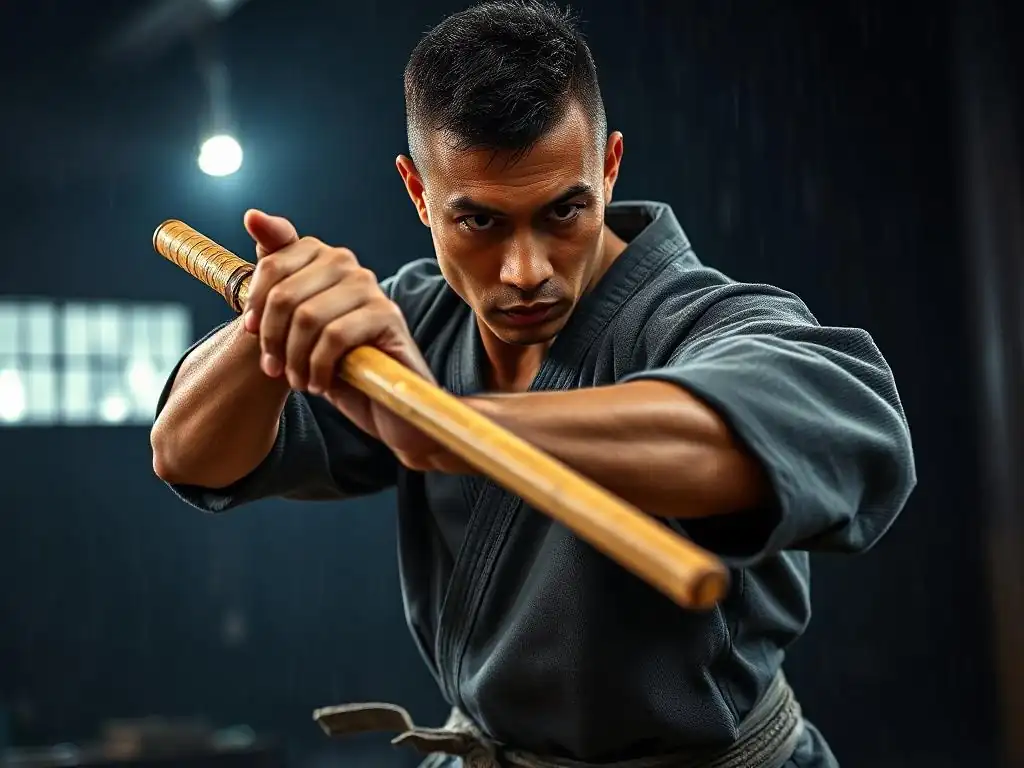
Welcome to Martial Arts Mastery, your ultimate resource for exploring the diverse world of combat disciplines! Ever wondered if you could truly learn the dynamic art of Arnis Eskrima online? This article dives deep into the pros and cons for beginners eager to pick up the stick online. Discover if virtual training can ignite your journey into this powerful Filipino martial art, and prepare to unravel the secrets of Arnis Eskrima online beginners - are you ready to begin?
- Can You Learn Arnis/Eskrima Online? Pros & Cons for Beginners
- Introduction: Arnis/Eskrima Training in the Digital Age
- What is Arnis/Eskrima and Why Learn It?
- The Rise of Online Martial Arts Training: Is it Effective for Arnis/Eskrima?
-
Pros of Learning Arnis/Eskrima Online
- Accessibility and Convenience of Online Arnis/Eskrima Lessons
- Cost-Effectiveness of Online Training vs. Traditional Schools
- Variety of Online Arnis/Eskrima Instructors and Styles
- Learn at Your Own Pace: The Flexibility of Online Arnis/Eskrima
- Lack of Hands-On Sparring and Partner Drills
- Difficulty in Getting Personalized Feedback and Corrections
- Potential for Developing Bad Habits Without In-Person Guidance
- Risk of Injury Due to Improper Technique
- Motivation and Discipline Challenges
- Essential Equipment for Online Arnis/Eskrima Training
- Key Considerations Before Starting Online Arnis/Eskrima Training
- Tips for Success in Online Arnis/Eskrima Training
- Blended Learning: Combining Online and In-Person Arnis/Eskrima Training
- Is Online Arnis/Eskrima Right for You? A Self-Assessment Guide
- Conclusion: Embrace the Possibilities and Limitations of Online Arnis/Eskrima Training
-
Frequently Asked Questions
- Can you actually learn Arnis/Eskrima effectively online as a beginner?
- What are the biggest pros of starting Arnis/Eskrima training online?
- What are the main cons of relying solely on online Arnis/Eskrima training?
- What kind of equipment do I need to start learning Arnis/Eskrima online?
- What should I look for in a good online Arnis/Eskrima course for beginners?
- Final Reflection: Embracing the Digital Blade
- Ignite Your Inner Warrior: Begin Your Arnis Journey Today!
Can You Learn Arnis/Eskrima Online? Pros & Cons for Beginners
Introduction: Arnis/Eskrima Training in the Digital Age
In recent years, the digital landscape has transformed how we access information and skills, including the ancient practice of martial arts. Aspiring practitioners looking to delve into the dynamic world of Filipino martial arts, often known collectively as Arnis, Eskrima, or Kali, are increasingly turning to online platforms.
This shift raises a fundamental question, particularly for those just starting out: can the intricate, hands-on techniques of stick fighting truly be mastered through a screen? For many Arnis Eskrima online beginners, the convenience and accessibility of virtual classes offer an appealing entry point, but the effectiveness of this approach compared to traditional in-person instruction requires careful consideration.
This article explores the viability of learning Arnis/Eskrima online, specifically for beginners. We will weigh the significant advantages, such as unparalleled access and flexibility, against the inherent limitations, particularly concerning physical interaction, personalized feedback, and the practical application of techniques. Understanding these pros and cons is crucial for anyone considering starting their journey into the fascinating world of Filipino martial arts from the comfort of their home.
What is Arnis/Eskrima and Why Learn It?
Brief History of Filipino Martial Arts (FMA)
Filipino Martial Arts (FMA), commonly referred to as Arnis, Eskrima, or Kali, boast a rich and complex history deeply intertwined with the culture and survival of the Philippine islands. These arts developed over centuries, adapting to various influences from indigenous fighting methods to interactions with foreign powers like Spain. Historically, FMA were practical systems of combat, designed for self-preservation using readily available tools such as sticks, knives, and even empty hands.
The term "Arnis" is often linked to the Spanish word "arnes," meaning armor or harness, reflecting the weaponry worn by practitioners, while "Eskrima" derives from the Spanish word for fencing, "esgrima." "Kali," though its etymology is debated, is widely used, particularly in Western circles, and is sometimes seen as referring to the mother art or blade-based systems.
During the Spanish colonial era, the practice of FMA was often suppressed, forcing practitioners to train in secret or disguise their movements within traditional dances or theatrical performances. This period of clandestine practice led to a fragmentation of styles, with different islands and even families developing unique systems. Despite suppression, the arts survived, passed down through generations, often within families or small, dedicated groups.
This history of resilience and adaptation is a core element of FMA, making it not just a fighting system but a cultural heritage. For Arnis Eskrima online beginners, understanding this background adds depth to their training.
Benefits of Learning Arnis/Eskrima: Self-Defense, Fitness, and Cultural Connection
Learning Arnis/Eskrima offers a multifaceted range of benefits that extend beyond mere physical combat. On a practical level, it is a highly effective system for self-defense, particularly emphasizing weapon defense and close-quarters combat. The training sharpens reflexes, improves hand-eye coordination, and teaches practical strategies for dealing with threats, even if unarmed. The focus on stick work provides a foundation for understanding weapon dynamics applicable to various objects.
Beyond self-defense, FMA training provides an excellent full-body workout. Drills involve dynamic movements, footwork, and core engagement, contributing to improved cardiovascular health, strength, flexibility, and stamina. A typical hour-long session can burn between 400-600 calories, depending on intensity.
Furthermore, engaging with Arnis/Eskrima connects practitioners to a vibrant piece of Filipino culture and history. Learning the techniques often involves understanding the philosophy, etiquette, and values embedded within the art. Many systems have specific terminology in Filipino languages (like Tagalog or Visayan), offering a linguistic connection. For Arnis Eskrima online beginners, this cultural immersion, even through digital means, provides a richer understanding of the art's significance and evolution. It's a journey into a martial tradition that is both practical for modern times and deeply rooted in the past.
Why Arnis/Eskrima is Appealing to Beginners: Simplicity and Practicality
Arnis/Eskrima holds particular appeal for beginners due to its practical, direct approach and relatively accessible entry point. Unlike some martial arts that require years to master basic stances and forms before practical application, FMA often introduces fundamental concepts and techniques, such as basic striking angles (commonly taught as 12 primary strikes) and defensive blocks, relatively early in training. This allows beginners to grasp functional movements and principles quickly.
The use of sticks provides a tangible tool that helps beginners understand distance, targeting, and power generation in a clear manner. Holding a stick can make abstract concepts of leverage and trajectory more intuitive.
The emphasis on principles over rigid forms also makes Arnis/Eskrima adaptable. While there are structured drills and techniques, the core focus is often on applying these principles to dynamic situations, whether with a stick, knife, or empty hands. This pragmatic focus resonates with individuals seeking a martial art for practical self-defense.
Moreover, the training equipment, primarily rattan sticks and protective gear, is relatively inexpensive compared to uniforms and extensive safety equipment needed for some other martial arts. This lower initial barrier to entry makes Arnis Eskrima online beginners feel more comfortable investing in training before committing to potentially higher costs of traditional schools.
The Rise of Online Martial Arts Training: Is it Effective for Arnis/Eskrima?
Online Arnis/Eskrima Training: Expanding Accessibility
The proliferation of high-speed internet and video conferencing technology has dramatically expanded the reach of martial arts instruction, including Arnis/Eskrima. Online platforms, ranging from dedicated martial arts academies offering subscription services to individual instructors using social media and video platforms, now provide access to FMA training regardless of geographical location.
This is particularly significant for enthusiasts living in areas without local FMA schools or those with demanding schedules that preclude attending fixed-time classes. For many potential Arnis Eskrima online beginners, the ability to train at any time of day or night, and to learn from instructors located anywhere in the world, represents an unprecedented level of accessibility.
This digital expansion democratizes access to knowledge that was once confined to specific regions or lineages. Someone in a remote town in Montana can now potentially learn from a Grandmaster based in Manila or a renowned instructor in Europe. This global reach allows beginners to explore various styles and teaching methodologies within Arnis/Eskrima before potentially committing to a specific lineage or school, if they eventually choose in-person training. The sheer volume of available content, from introductory lessons on basic strikes to complex disarming techniques, means that a beginner has a vast library of resources at their fingertips, available 24/7.
Challenges of Learning Stick Fighting Online: Maintaining Authenticity
While online training offers undeniable convenience, it presents significant challenges, particularly for a physically interactive art like stick fighting. One major hurdle is maintaining the authenticity and practical effectiveness of the training without direct, in-person interaction. Martial arts, especially those involving weapons and dynamic movement like Arnis/Eskrima, rely heavily on tactile feedback, timing, distance management, and the ability to react to a live, unpredictable partner.
Online formats struggle to replicate these crucial elements. While instructors can demonstrate techniques, they cannot physically guide a student's body, correct subtle errors in posture or grip that impact power and safety, or provide the critical experience of feeling how a technique works against resistance.
The nuances of generating power through body mechanics, understanding the proper angle of impact, and developing sensitivity to an opponent's movement are difficult to convey solely through video. A beginner practicing alone might develop habits that look correct visually but are fundamentally flawed in application – flaws that would be immediately apparent and correctable in a partner drill or sparring session.
For Arnis Eskrima online beginners, this lack of immediate, physical correction can lead to inefficient technique at best, and potential injury at worst. The absence of live partner work also means beginners miss out on developing critical attributes like timing, distance, and the psychological aspect of facing a resisting opponent, which are vital for practical self-defense application.
Pros of Learning Arnis/Eskrima Online
Accessibility and Convenience of Online Arnis/Eskrima Lessons
Perhaps the most significant advantage of learning Arnis/Eskrima online is the unparalleled accessibility and convenience it provides. Traditional martial arts schools operate on fixed schedules, requiring students to commute to a specific location at set times. This can be a major barrier for individuals with irregular work hours, family commitments, or those living far from a suitable dojo.
Online training removes these geographical and time constraints entirely. A beginner can train from their living room, backyard, or even a hotel room while traveling, at any time of day or night that fits their schedule. This flexibility makes it possible for many more people to start their journey in Arnis/Eskrima who otherwise might not have the opportunity.
Moreover, online platforms often allow students to revisit lessons multiple times. If a beginner doesn't fully grasp a technique during a live online session or a recorded class, they can pause, rewind, and rewatch the instruction as many times as needed. This self-paced learning environment caters to different learning speeds and allows for deeper absorption of complex movements and principles. For Arnis Eskrima online beginners juggling busy lives, this ability to integrate training seamlessly into their existing routine is a powerful motivator and enabler.
Cost-Effectiveness of Online Training vs. Traditional Schools
Another compelling advantage of online Arnis/Eskrima training, especially for beginners, is its potential cost-effectiveness compared to attending a traditional brick-and-mortar school. Dojo memberships typically involve monthly fees that can range significantly depending on location and instructor reputation, often costing anywhere from $100 to $300+ per month.
In addition to membership fees, there might be costs for uniforms, testing fees for rank progression, and potentially travel expenses. While online platforms vary in their pricing models, many offer subscription plans that are considerably less expensive, often ranging from $20 to $70 per month for access to a library of content or live classes.
Furthermore, the initial investment in equipment for online Arnis/Eskrima training is relatively low. A beginner primarily needs a pair of rattan sticks and potentially some basic eye protection. These items can often be purchased for under $50. In contrast, some traditional schools might require specific uniforms or safety gear that adds to the initial cost. This lower financial barrier makes it easier for Arnis Eskrima online beginners to try out the art and see if it's a good fit before making a larger financial commitment. It provides an affordable way to get a solid introduction to the fundamentals.
Variety of Online Arnis/Eskrima Instructors and Styles
The online world opens up access to a vast array of Arnis/Eskrima instructors and stylistic variations that would be impossible to access locally for most people. Filipino Martial Arts are incredibly diverse, with hundreds, if not thousands, of distinct systems and lineages, each with its own unique emphasis, techniques, and training methodologies.
While a traditional school is typically tied to a specific style and instructor, online platforms allow beginners to explore different approaches. A beginner interested in the rapid-fire close-range techniques of Balintawak can find instructors teaching that system online, while someone interested in the long-range applications of Largo Mano can find resources for that as well.
This diversity allows Arnis Eskrima online beginners to find a teaching style or system that resonates most with them. They can sample different instructors through introductory videos or trial periods before committing to a specific program. This is a significant advantage over the limited options available in a specific geographical area. It fosters a broader understanding of the richness and variety within FMA and allows beginners to potentially find a teacher whose communication style and curriculum structure best suit their learning needs.
Learn at Your Own Pace: The Flexibility of Online Arnis/Eskrima
The ability to control the pace of learning is a significant benefit of online Arnis/Eskrima training, particularly for beginners. In a traditional class setting, the instructor sets the pace for the entire group, moving on to the next technique when they feel most students have grasped the current one. This can be challenging for individuals who need more time to process information or physically execute movements, or conversely, for those who grasp concepts quickly and are ready to move ahead.
Online learning removes this constraint. Beginners can spend as much time as needed on a specific drill or technique, repeating segments of a video until they feel comfortable.
This self-paced approach allows for a more personalized learning experience. Arnis Eskrima online beginners can focus on areas where they struggle without feeling pressured to keep up with peers. They can also accelerate through concepts they understand quickly. This flexibility allows beginners to build a solid foundation at a speed that is optimal for their individual learning style and physical capabilities. It empowers the student to take ownership of their learning journey, focusing on mastery rather than simply progressing through a curriculum on a fixed timeline.
Lack of Hands-On Sparring and Partner Drills
The most significant drawback of learning Arnis/Eskrima online, especially for beginners, is the inherent lack of hands-on sparring and partner drills. FMA are designed to be applied against a resisting opponent.
While solo drills build muscle memory and technique, the crucial elements of timing, distance management, sensitivity to pressure, and reactive footwork can only be truly developed by working with a live partner. Feeling the proper angle to apply a block against a strike, understanding how an opponent's body language signals intent, or learning to flow dynamically in a drill cannot be replicated by hitting a training dummy or practicing in the air.
Sparring, even light and controlled, teaches essential lessons about pressure, adrenaline response, and applying techniques under duress. It reveals the practical effectiveness and limitations of learned movements in a dynamic environment. Without this vital component, Arnis Eskrima online beginners risk developing techniques that are technically correct in isolation but ineffective or impractical when faced with a real-world situation or a resisting opponent. The physical feedback loop provided by a partner is irreplaceable for developing true proficiency and practical application.
Difficulty in Getting Personalized Feedback and Corrections
Another major limitation of online Arnis/Eskrima training is the difficulty in receiving personalized, real-time feedback and corrections from an instructor. While some online platforms offer options for submitting videos for review or participating in live sessions where instructors can offer verbal cues, this cannot fully replace the immediate, physical adjustments a skilled instructor provides in person. An instructor in a dojo can see subtle issues with a student's grip, posture, weight distribution, or body mechanics that are hard to spot on a two-dimensional screen, especially without multiple camera angles.
More importantly, an in-person instructor can physically guide a student's hand or body into the correct position, adjust their stance, or demonstrate the necessary feeling of a movement. This tactile feedback is invaluable for beginners who are still developing body awareness and coordination in the context of complex martial movements. For Arnis Eskrima online beginners, the lack of this direct, personalized correction means that errors might go unnoticed or uncorrected for extended periods, potentially hindering progress and reinforcing incorrect habits.
Potential for Developing Bad Habits Without In-Person Guidance
Closely related to the difficulty of getting feedback is the significant potential for Arnis Eskrima online beginners to develop bad habits without the constant oversight and correction of an experienced instructor. In any physical discipline, especially a complex martial art, seemingly minor errors in technique can have a cumulative negative impact on efficiency, power, and safety. Incorrect grip on a stick, improper body alignment during a strike, or flawed footwork might not be immediately obvious to a beginner practicing alone, but these issues can become ingrained through repetition.
Once bad habits are formed, they are significantly harder to correct than learning the technique correctly from the start. An online instructor can point out errors based on what they see on screen, but they cannot physically intervene to stop a student from repeating a flawed movement or guide them towards the proper execution. This means that while Arnis Eskrima online beginners can learn the sequence of movements, they may not be learning the movements with the optimal structure, power generation, or safety considerations that an in-person instructor would ensure.
Risk of Injury Due to Improper Technique
Improper technique, a risk exacerbated by the lack of personalized feedback in online training, can significantly increase the risk of injury for Arnis Eskrima online beginners. Stick fighting involves dynamic movements, powerful strikes, and potentially awkward angles if executed incorrectly.
Issues like poor grip can lead to blisters or strains, incorrect body mechanics can stress joints (like wrists, elbows, shoulders, and knees), and improper footwork can result in twists or falls. While training with padded sticks or focusing solely on solo drills reduces some risks compared to live sparring, repetitive incorrect movements can still lead to overuse injuries over time.
Furthermore, without an instructor physically present to monitor safety during solo drills or guide the setup of a safe training space, beginners might inadvertently create hazardous conditions. For example, practicing powerful swings in a confined space without adequate clearance. An in-person instructor not only corrects technique but also supervises the training environment and ensures students understand safety protocols, like maintaining distance from others and using appropriate protective gear, especially eye protection. Arnis Eskrima online beginners must be hyper-vigilant about their technique and environment to mitigate these increased injury risks.
Motivation and Discipline Challenges
Maintaining motivation and discipline can be significantly more challenging when learning Arnis/Eskrima online compared to attending a traditional school. In a dojo, the structured schedule, the presence of classmates, and the direct guidance and encouragement from an instructor create a built-in support system and accountability structure. The social aspect of training alongside others, sharing challenges, and celebrating progress fosters camaraderie and commitment. The direct interaction with an instructor provides immediate feedback and motivation.
When training alone at home, Arnis Eskrima online beginners must rely entirely on their intrinsic motivation. There's no class schedule to adhere to (unless attending live online sessions), no peers to train with, and no instructor physically present to push them or notice if they skip practice. Distractions are abundant in a home environment. This requires a high degree of self-discipline and the ability to create and stick to a personal training schedule. Many beginners find it difficult to maintain consistency and intensity without the external structure and social reinforcement of a traditional martial arts community.
Essential Equipment for Online Arnis/Eskrima Training
Choosing the Right Arnis/Eskrima Sticks (Baston/Olisi)
The primary tool for Arnis/Eskrima training is the stick, commonly referred to as a baston or olisi. For Arnis Eskrima online beginners, choosing the right sticks is important for both safe and effective practice. The most traditional and widely used material is rattan.
Rattan sticks are relatively lightweight, durable, and absorb impact well without splintering dangerously like some hardwoods. A standard length for beginner sticks is typically between 26 and 28 inches (approximately 66-71 cm), with a diameter of about 0.75 to 1 inch (approximately 2-2.5 cm). The weight should feel comfortable and balanced in your hand; sticks are often sold in pairs, and ideally, the two sticks in a pair should be close in weight.
While rattan is standard, other materials are available. Some beginners might start with padded sticks for certain drills to reduce the risk of accidental impact, although rattan is necessary to develop the proper feel and weight distribution for techniques. Heavier woods like Bahi or Kamagong are used in some systems but are generally too dense and heavy for beginner solo training and carry a higher risk of injury.
For online practice focusing on solo drills and technique learning, a good pair of standard rattan sticks is the most essential and appropriate starting point. Ensure they are smooth and free of splinters.
Safety Gear: Eye Protection and Training Weapons
Safety is paramount in any martial art involving weapons, even when training solo online. For Arnis Eskrima online beginners, the most critical piece of safety gear is eye protection. Accidental ricochets, slips, or misjudged movements can send a stick end or splinter towards the face at high speed. Standard safety glasses or goggles, similar to those used in woodworking or chemistry labs, are inexpensive and offer crucial protection. While full face masks or fencing masks are necessary for partner drills and sparring, eye protection is the minimum requirement for solo online practice to prevent serious injury.
Beyond eye protection, consider the type of training weapons used. As mentioned, padded sticks can be useful for specific light contact drills if you have a training partner (though finding one for online training can be difficult). For solo practice, standard rattan is usually sufficient, but ensuring your training space is clear and free of hazards is also a form of safety preparation.
Some practitioners also use hand protection like thin gloves to prevent blisters from repetitive gripping and striking, though this is often a matter of personal preference and the intensity of training. Prioritizing eye safety, however, is non-negotiable.
Setting Up Your Home Training Space
A dedicated and safe training space is crucial for effective and injury-free online Arnis/Eskrima practice. For Arnis Eskrima online beginners, this doesn't need to be elaborate, but it must be sufficient. You need enough room to swing your sticks freely in all directions – front, back, and to the sides – without hitting walls, furniture, or other obstacles. A space of at least 8x8 feet (approximately 2.5x2.5 meters) is generally recommended, though more space is always better. Clear the area of tripping hazards like rugs or loose objects.
The flooring should ideally offer some grip but not be too hard or too soft. Concrete or tile can be hard on the joints during footwork, while thick carpet can make pivoting difficult. A smooth, firm surface is best. Ensure there is adequate ventilation and lighting. If you are attending live online classes or filming yourself, position your camera or device so that your full body is visible to the instructor or for later review. Remove anything breakable from the vicinity. Setting up a consistent training space helps create a routine and reinforces the discipline needed for online learning.
Key Considerations Before Starting Online Arnis/Eskrima Training
Assessing Your Physical Fitness and Coordination
Before diving into online Arnis/Eskrima training, especially for beginners, it's wise to honestly assess your current physical fitness level and coordination. While Arnis/Eskrima is accessible to many, it does require a certain degree of physical capability. Basic mobility, balance, and coordination are necessary to perform the fundamental stances, footwork patterns, and striking motions safely and effectively. If you have pre-existing injuries or significant physical limitations, consult with a healthcare professional before starting any new exercise regimen, including martial arts.
While online courses can teach techniques, they typically don't replace the need for general physical conditioning. Arnis/Eskrima training involves repetitive movements and dynamic body mechanics that can be taxing. Having a baseline level of fitness, including some core strength and flexibility, will make learning easier and reduce the risk of strain or injury. Arnis Eskrima online beginners should be prepared to potentially incorporate supplemental fitness activities like stretching, strength training, or cardio to support their martial arts journey.
Researching and Choosing a Reputable Online Instructor
The quality of instruction is paramount, regardless of whether it's online or in-person. For Arnis Eskrima online beginners, choosing a reputable instructor or platform is a critical step. Unfortunately, the online space is vast, and not all instructors have the same level of experience, lineage, or teaching ability. Look for instructors who openly discuss their lineage and training history – who did they learn from, and what system do they represent? While lineage isn't everything, it often indicates a structured and authentic training background.
Seek out platforms or instructors who offer clear curriculum outlines, provide sample videos, and ideally, offer some form of interaction or feedback mechanism, even if it's through email or forums. Read reviews or testimonials if available. Be wary of programs that promise instant mastery or make unrealistic claims. A good online instructor for Arnis Eskrima online beginners will focus on building strong fundamentals, emphasizing safety, and providing clear, detailed explanations. Don't hesitate to try introductory lessons or contact the instructor with questions before committing to a paid program.
Understanding the Importance of Supplemental Training: Strength and Conditioning
While online Arnis/Eskrima courses teach techniques and principles, they are often most effective when supplemented with general strength and conditioning. The dynamic movements of FMA require explosive power, core stability, and muscular endurance. Developing these physical attributes through targeted exercises will enhance your performance, reduce fatigue during training, and decrease the likelihood of injury. For instance, exercises that improve grip strength are beneficial for stick manipulation, while plyometrics can improve footwork speed and agility.
Arnis Eskrima online beginners should consider incorporating exercises like squats, lunges, push-ups, planks, and rotational movements into their fitness routine. Flexibility training, particularly for the shoulders, hips, and wrists, is also important for executing techniques with proper range of motion. Cardio exercises like running or jump rope can improve stamina, which is essential for longer training sessions or potential self-defense scenarios. Viewing online Arnis/Eskrima training as part of a broader physical fitness plan will yield better results and a more resilient body.
Tips for Success in Online Arnis/Eskrima Training
Creating a Structured Training Schedule
One of the biggest hurdles in online learning is maintaining consistency. For Arnis Eskrima online beginners, creating a structured training schedule is essential for success. Treat your online training sessions like appointments you cannot miss. Decide how many days a week you will train and for how long. Block out these times in your calendar. Consistency is more important than duration; shorter, regular sessions (e.g., 30-45 minutes, 3-4 times a week) are often more effective than infrequent, long sessions.
Having a schedule helps build discipline and ensures that training doesn't fall by the wayside amidst other commitments. It also helps track progress. Within your scheduled time, plan what you will focus on – perhaps dedicating one session to footwork, another to striking drills, and a third to reviewing techniques. A structured approach provides clarity and makes the learning process feel less overwhelming for Arnis Eskrima online beginners navigating a wealth of online content.
Filming Yourself for Self-Assessment
Since you lack the immediate physical correction of an in-person instructor, filming yourself practicing is an invaluable tool for self-assessment. Set up your phone or camera to record your solo drills, footwork patterns, and technique repetitions from different angles (front, side, maybe even overhead if possible). Reviewing these recordings allows you to see your movements objectively. You can compare your execution to the instructor's demonstration in the online lessons.
Look for discrepancies in posture, balance, angle of strikes, grip, and flow. Are you leaning too far forward? Is your non-striking hand in a safe position? Is your footwork synchronized with your strikes? This self-analysis helps identify areas for improvement that you might not notice while simply performing the movement. For Arnis Eskrima online beginners, this practice fosters a critical eye and helps bridge some of the feedback gap inherent in online learning.
Finding a Training Partner for Drills
While online training is primarily solo, finding a training partner can significantly enhance your learning experience and is strongly recommended if possible. This partner doesn't need to be an experienced FMA practitioner; another beginner or even a patient friend or family member willing to learn basic drills with you can make a huge difference. Partner drills allow you to practice timing, distance, blocking against a live (though non-resisting, especially initially) stick, and basic flow.
Even simple drills like feeding basic strikes for blocking practice, or mirroring footwork patterns, provide crucial interaction that solo training cannot replicate. If you can find another Arnis Eskrima online beginner in your area, you could potentially practice together, reinforcing each other's learning and providing mutual feedback. While not always feasible, seeking out opportunities for partner practice, even occasionally, adds a vital dimension to online Arnis/Eskrima training.
Joining Online Arnis/Eskrima Communities for Support
Connecting with other students and practitioners online can provide valuable support, motivation, and additional learning opportunities. Many online Arnis/Eskrima programs have associated forums, social media groups, or private communities. These communities allow beginners to ask questions, share their progress (perhaps even share videos for peer feedback), discuss challenges, and learn from the experiences of others. Hearing how other Arnis Eskrima online beginners are tackling similar issues can be very encouraging.
These online groups can also be a source for finding training partners in your local area, or information about seminars and workshops. Being part of a community, even a virtual one, helps combat the isolation that can sometimes come with training alone at home. It provides a sense of belonging and shared purpose, reinforcing your commitment to the art and expanding your network within the FMA community.
Blended Learning: Combining Online and In-Person Arnis/Eskrima Training
Integrating Online Resources with Traditional Instruction
For many, the most effective way to learn Arnis/Eskrima is through a blended approach that combines the accessibility and vast resources of online training with the invaluable hands-on guidance of traditional in-person instruction. Online platforms can serve as an excellent supplement to traditional classes. Beginners attending a local school can use online videos to review techniques learned in class, practice drills at home, and explore concepts that might not be covered in depth in their specific curriculum.
For Arnis Eskrima online beginners who started online but later find a local school, the online training provides a solid foundation in basic terminology, movements, and principles, allowing them to potentially integrate into a beginner class more smoothly. Conversely, students at a traditional school can use online resources from different instructors or styles to broaden their understanding and see different perspectives on techniques they are learning. This integration leverages the strengths of both learning environments for a more comprehensive training experience.
Finding Seminars and Workshops to Supplement Online Learning
For those who primarily train Arnis/Eskrima online, attending in-person seminars and workshops is a crucial way to gain hands-on experience and receive direct feedback. Many renowned FMA instructors travel and teach weekend seminars or intensive workshops in various locations. These events provide a concentrated opportunity to train directly with experienced practitioners, receive personalized corrections, participate in partner drills, and experience the energy of training in a group setting.
Attending even one or two seminars a year can significantly accelerate the learning process for Arnis Eskrima online beginners. It allows them to pressure-test techniques they've learned in isolation, get corrections on fundamental errors that might have developed, and gain experience working with live partners under supervision. These events bridge the gap between theoretical knowledge gained online and the practical application needed for proficiency in Arnis/Eskrima. Look for announcements from online instructors or FMA organizations about upcoming events in your region.
Is Online Arnis/Eskrima Right for You? A Self-Assessment Guide
Questions to Ask Yourself Before Committing to Online Learning
Before committing to online Arnis/Eskrima training, especially as a beginner, take some time for honest self-assessment. Consider the following questions:
- How motivated am I to train consistently without external supervision?
- Do I have the self-discipline to create and stick to a regular training schedule at home?
- Can I create a safe and sufficiently large training space in my home?
- Am I comfortable learning primarily through visual and verbal instruction, without physical guidance?
- Do I understand that online training has limitations, particularly regarding partner drills and real-time feedback?
- Am I willing to actively seek out supplemental resources, film myself, and potentially find a training partner?
- What are my primary goals for learning Arnis/Eskrima? (e.g., self-defense, fitness, cultural interest, competition)
- Do I have the financial resources and willingness to invest in necessary safety gear (at minimum, eye protection)?
- Am I prepared for the possibility of needing to correct ingrained habits later if I transition to in-person training?
Answering these questions honestly will help Arnis Eskrima online beginners determine if the online format aligns with their personality, learning style, and goals.
Determining Your Learning Style and Preferences
Understanding your own learning style is key to deciding if online Arnis/Eskrima is a good fit. People learn in different ways:
- Visual Learners: Benefit from watching videos and demonstrations. Online training is often well-suited for visual learners.
- Auditory Learners: Learn best by listening to instructions and explanations. Clear verbal cues in online lessons are important.
- Kinesthetic Learners: Learn by doing and feeling the movement. This is where online training presents the biggest challenge, as tactile feedback and physical guidance are limited.
If you are strongly kinesthetic, you may find the lack of hands-on correction in online Arnis/Eskrima training frustrating and less effective. While online resources can provide the what and how of a technique, they struggle to convey the feel. For Arnis Eskrima online beginners who are kinesthetic learners, supplementing online training with in-person workshops or finding a practice partner becomes even more crucial for developing proficiency. Consider which learning style you rely on most heavily and how well online formats typically cater to it.
Conclusion: Embrace the Possibilities and Limitations of Online Arnis/Eskrima Training
Online Arnis Eskrima: A Viable Starting Point
For many aspiring practitioners, online Arnis/Eskrima training offers a viable and valuable entry point into the world of Filipino martial arts. Its unparalleled accessibility breaks down geographical and temporal barriers, allowing individuals to begin their training journey regardless of where they live or their busy schedules. The cost-effectiveness of many online programs makes it an affordable option for Arnis Eskrima online beginners to explore the art without a significant initial financial commitment.
Furthermore, the vast array of instructors and styles available online provides a unique opportunity to find a teaching approach that resonates and to gain a broad understanding of FMA diversity. Online resources excel at delivering foundational knowledge, demonstrating techniques, and explaining principles through clear visual and auditory instruction.
The Future of Filipino Martial Arts Training: Online and Beyond
While online platforms offer significant advantages, particularly in making Arnis/Eskrima accessible to a global audience of beginners, it is crucial to acknowledge their inherent limitations. The absence of hands-on partner drills, real-time physical feedback, and the dynamic environment of sparring means that online training alone cannot provide the full depth and practical application necessary for true mastery and effective self-defense.
Developing proper timing, distance, sensitivity, and the ability to perform techniques under pressure requires interaction with a live partner. Therefore, Arnis Eskrima online beginners who are serious about long-term proficiency and practical application should ideally view online training as a powerful tool to be used in conjunction with, or as a stepping stone towards, in-person instruction, workshops, and partner practice.
The future of Filipino martial arts training likely lies in a blended approach, leveraging the global reach and resource abundance of online platforms alongside the irreplaceable value of direct, human-to-human transmission and practical application found in traditional training environments.
Frequently Asked Questions
Can you actually learn Arnis/Eskrima effectively online as a beginner?
While not ideal, yes, you can learn the fundamentals of Arnis/Eskrima online. Focus on stance, footwork, and basic strikes before progressing. Remember to supplement with in-person training when possible.
What are the biggest pros of starting Arnis/Eskrima training online?
The primary advantage is accessibility and convenience. You can learn at your own pace, on your own schedule, and often at a lower cost than traditional dojos.
What are the main cons of relying solely on online Arnis/Eskrima training?
The biggest drawback is the lack of direct feedback from an instructor. This can lead to developing incorrect techniques and unsafe practices.
What kind of equipment do I need to start learning Arnis/Eskrima online?
As a beginner, you'll need a pair of rattan sticks, roughly 26-28 inches long. Also consider eye protection and a padded training area to minimize injury.
What should I look for in a good online Arnis/Eskrima course for beginners?
Look for courses that emphasize fundamental techniques, provide clear video demonstrations, and offer some form of instructor feedback, even if it's through online forums or video submissions.
Final Reflection: Embracing the Digital Blade
The exploration of learning Arnis/Eskrima online, especially for beginners, reveals a fascinating intersection of tradition and technology. The digital realm offers unprecedented access to martial arts training, democratizing knowledge and potentially sparking a global interest in these Filipino fighting arts. However, the inherent limitations of virtual instruction demand careful consideration and a realistic understanding of what can be achieved.
The journey of learning Arnis/Eskrima, whether in person or online, is deeply personal. It's about more than just mastering techniques; it's about cultivating discipline, respect, and a connection to a rich cultural heritage. The online space can provide a valuable entry point, but ultimately, the true essence of the art lies in the dedication and commitment of the practitioner. The best fighter is never angry.
- Miyamoto Musashi (While not directly related to Arnis/Eskrima, this quote underscores the importance of discipline and control, qualities essential in any martial art, regardless of the learning environment).
Now, consider the possibilities. How can you, armed with this knowledge, leverage the opportunities presented by online Arnis/Eskrima training? Perhaps it's as a supplement to in-person classes, a way to explore the art before committing to a physical dojo, or even a means of connecting with a global community of practitioners. Embrace the digital blade, but remember that true mastery requires dedication, perseverance, and a deep respect for the traditions that have shaped this incredible martial art.
Ignite Your Inner Warrior: Begin Your Arnis Journey Today!
Thank you for exploring the dynamic world of Arnis/Eskrima with us. We hope this article has illuminated the possibilities and challenges of learning this incredible martial art online. Now, it's time to take the next step!
Here are a few ways to continue your journey:
- Start with the fundamentals: Commit to mastering basic strikes and blocks with a reputable online Arnis/Eskrima program. This is the foundation upon which all further skills are built.
- Find a local Guro! Even with online learning, supplement your training with occasional in-person sessions to refine your technique and benefit from direct feedback.
- Share your passion! Connect with fellow Arnis enthusiasts online and share your experiences, tips, and progress. You never know who you might inspire.
What single, small action will you take today to begin or further your Arnis journey?