Essential Training Weapons: From Practice Swords to Kali Sticks – Reviews & Comparisons
Welcome to the definitive resource for selecting the right training weapons for your martial arts journey. Whether you’re a beginner exploring kali sticks, a seasoned practitioner refining your sword forms, or a parent seeking safe practice weapons for kids, this subcategory offers in-depth reviews, side-by-side comparisons, and buyer’s guidance. We focus on durability, safety, weight, balance, and intended use, ensuring you invest in gear that enhances your drills without compromising on safety. Below, we break down essential categories to help you make an informed choice.
🟢 Wooden Practice Swords: Bokken & Washers – Durability and Feel
Wooden practice swords, such as the bokken (Japanese wooden katana) and washers (rattan or hardwood sticks from Filipino martial arts), are the backbone of traditional training. Our reviews assess wood types—white oak, red oak, and hickory—for density, grain, and resistance to splintering. A well-balanced bokken mimics the weight and handling of a live blade, crucial for suburi (solo cutting drills) and kumitachi (paired forms). We compare brands like Budo Direct and Kult of Athena, highlighting grip texture, tang construction, and finish quality. Expect guidance on sanding down rough edges, oiling for longevity, and choosing the right length based on your height and style (e.g., Aikido vs. Kendo).
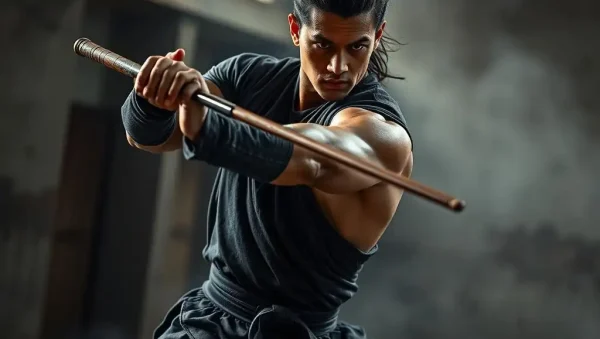
For kali sticks, typically made from rattan, we prioritize flexibility and shock absorption over hardness. Rattan’s woven fibers provide a slight give, reducing impact on joints during flow drills and sparring. We test different diameters (e.g., 1-inch vs. 1.25-inch) and finishes (varnished vs. plain), explaining how a lighter stick speeds up hand-speed training while a heavier one builds forearm strength. Our comparisons cover single-stick vs. double-stick sets, including bagged vs. loose rattan and the importance of end caps to prevent fraying. By the end, you’ll know whether to invest in a budget-friendly pair for heavy contact or a premium set for competition.
🥋 Safety-First Synthetic Weapons: Polypropylene & Nylon Options
Synthetic training weapons have revolutionized modern martial arts, offering a safer alternative to wood for beginners and high-intensity drills. Our reviews focus on polypropylene swords (like the Cold Steel Bokken) and nylon sticks (e.g., Kali Gear models), which flex upon impact, drastically reducing bruising and breakage. We test their rigidity, UV resistance, and grip stability under sweat. These weapons are ideal for sparring, pair drills, and self-defense practice where accidental contact is common. We also evaluate padded training swords (foam-core with nylon shell) for children or point-control drills, ensuring they meet safety standards while still providing realistic weight distribution.
Comparisons highlight the trade-offs: polypropylene is stiffer and more durable but can leave welts, while nylon is softer yet wears faster. We provide specific model insights, such as the Red Dragon line versus RVA Katana, detailing handle wrapping, balance point, and whether they suit kata (forms) or bunkai (application). Additionally, we cover synthetic rattan sticks made from high-impact polymer, which offer consistent weight without the need for replacing brittle rattan. Expect clear recommendations on which synthetic weapon fits your skill level, from a novice’s first bo staff to an advanced practitioner’s escrima rep, and how to maintain these low-maintenance tools for years of service.
⚔️ Precision Weapons: Steel Trainer Swords & Dagger Replicas
For advanced practitioners seeking realism, steel training swords (unsharpened but full-weight) and dagger replicas bridge the gap between wooden and live blades. Our reviews cover blunt steel katana for tameshigiri (cutting practice) without the edge, and federschwert (feder) for European longsword drills. We analyze steel quality (e.g., 1065 carbon steel), heat treatment, and edge thickness, ensuring a safe yet responsive flex. These weapons are perfect for flowing drills and solo forms, where weight and handling accuracy are paramount. We compare brands like Hanwei and Deepeeka, discussing tang construction (full vs. rat-tail) and pommel design for counterbalancing.
For kali practitioners, we review aluminum training bolos and barong replicas, which emulate heavy blades without the risk of cutting. We stress the importance of blunt edges and rounded tips for safety, while highlighting how these tools improve angle precision and muscle memory. Our comparisons include weight charts, blade lengths, and grip ergonomics, so you can choose between a single-handed karambit trainer (curved claw) or a double-edged dirk. We also caution against using steel trainers for contact sparring without protective gear, and we recommend specific gloves and guards to pair with them. Expect honest assessments on whether a steel trainer is worth the investment over wood or synthetic for your specific discipline.
🛡️ Specialized Tools: Kali Sticks, Bo Staffs, and Nunchaku – Pairing and Length
Beyond swords, essential training includes impact weapons like kali sticks, bo staffs, and nunchaku. This subsection dives into size selection: a bo staff should match your height (traditionally up to your eyebrows), while kali sticks are measured from the crease of your wrist to the tip of your middle finger. We review wood vs. rattan for bo staffs, highlighting weight differences (oak is heavier, rattan is flexible). For nunchaku, we compare foam, wood, and metal—explaining that foam is for beginners, wood for traditional kata, and metal for advanced free-sparring (with caution). Our comparisons include connector types (chain, rope, or solid), which affect speed and control.
We also cover pairing drills—how to choose two sticks that are balanced identically for double-stick work, and how to select a shorter eskrima stick for off-hand practice. For bo staff training, we discuss taper (thicker center for grip, slimmer ends for speed) and finish (waxed vs. varnished) to prevent slipping. Our buyer’s guide includes brand spotlights like Century Martial Arts for introductory sets and Rattan Direct for competition-grade sticks. We offer practical tips on wrapping kali sticks with tape for improved grip and protecting your bo staff with a carrying bag. Expect clear size charts and comparison tables to simplify your purchase, whether you’re outfitting a home dojo or preparing for tournament season.
📊 Comparison Methodology: How We Test and Rate Training Weapons
Transparency is vital in our comparisons; we use a standardized testing protocol for every training weapon we review. Our methodology includes measuring weight (in grams), overall length, handle circumference, and balance point (distance from tip to center of gravity). We conduct impact tests on foam mats to check for splintering or denting, and we simulate 100 strikes to evaluate grip fatigue and hand shock. For swords, we perform a flex test by bending the blade 90 degrees and measuring recovery time. We then rate each weapon on a 1-5 scale across five criteria: durability, grip comfort, realism, safety, and value for money.
Our bite-sized reviews consolidate data into an at-a-glance format, but we also provide deeper narrative comparisons for top contenders. We openly state affiliate relationships and never accept paid placements, ensuring unbiased feedback. We re-test every six months to check for production consistency, and we encourage user feedback through comments. For each comparison, we include a “best for” section—e.g., “best for beginners” or “best for competition.” We also explain how to adapt a weapon for different arts (e.g., using a heavier bokken for Aikido vs. a lighter one for Iaito). By following our methodology, you can trust that our recommendations match your specific needs, budget, and training intensity, whether you’re a hobbyist or a professional instructor.
Frequently Asked Questions
What is the difference between a bokken and a kali stick?
A bokken is a wooden sword shaped like a Japanese katana, used for Aikido, Kendo, and Iaido. It has a curved blade, a guarded handle (tsuka), and a weighted tip. A kali stick is a straight, cylindrical weapon from Filipino martial arts, typically 20-28 inches long, used for escrima or arnis. It lacks a guard and has uniform thickness. Both are effective for drills, but bokken focuses on sword techniques, while kali sticks emphasize hand-speed and flow.
Are synthetic training weapons safer than wooden ones?
Yes, synthetic weapons (polypropylene or nylon) are generally safer because they flex upon impact, reducing blunt force trauma and eliminating splinters. They are ideal for sparring with light contact and for children. However, wooden weapons provide more realistic weight and feel, better for kata and muscle memory. For heavy-contact drilling, synthetic is recommended; for traditional practice, wood is preferred. Always pair both with proper protective gear like gloves and headgear.
How do I choose the correct length for a bo staff?
The traditional rule is to select a bo staff that reaches your eyebrows when standing upright. This ensures balance for spinning and making thrusts. For beginners, a slightly shorter staff (up to your chin) is easier to control. Weight matters too—oak is heavier, rattan is lighter and more flexible. Test both to see which feels comfortable for twirling. Always check that the staff has a consistent taper to avoid weak spots.
Can I use a steel trainer sword for full-contact sparring?
No, steel trainer swords—even blunt ones—are too heavy and stiff for full-contact sparring without proper armor. They are designed for solo forms, partner drills, and cutting practice against tatami mats. For sparring, use synthetic swords or padded weapons to prevent injury. If you must use steel in paired work, restrict to slow, controlled compliant drills with extreme blade awareness and wear thick safety gear like gloves and masks.
How often should I replace rattan kali sticks?
Rattan kali sticks are consumable; their lifespan depends on use frequency and impact force. With daily sparring, you might replace them every 2-3 months. Regular solo drills can last 6-12 months. Look for signs of fraying, excessive bending, or cracking—replace immediately if splinters appear. To extend life, wrap the sticks with athletic tape or polyurethane coating, and store them away from direct sunlight and moisture. Always keep a spare set on hand for sudden breakage during training.