
The Concept of "Takemusu Aiki": Martial Creativity Born from Aikido Forms

Welcome to Martial Arts Mastery, where we delve into the profound depths of combat traditions! Prepare to journey beyond mere physical technique and uncover the hidden wisdom within martial arts. Today, we explore a fascinating intersection of form and innovation, dissecting the concept of Takemusu Aiki – a martial creativity born directly from Aikido forms and concepts. Curious about how structured patterns can unlock spontaneous and effective self-expression? Read on to discover how mastering the kata can ignite your own Aiki evolution!
- Introduction to Takemusu Aiki: A Creative Expression in Aikido
- Origins and Development of Takemusu Aiki
- Takemusu Aiki: More Than Just Forms
- The Connection Between Aikido Forms and Aiki Development
- Practical Application of Takemusu Aiki Principles
- Key Concepts Underlying Takemusu Aiki
- Training Methods for Cultivating Takemusu Aiki
- Examples of Takemusu Aiki in Practice
- The Philosophy of Takemusu Aiki: Beyond Technique
- The Future of Takemusu Aiki: Preserving and Evolving the Art
- Conclusion: Embracing Aiki Creativity Through Forms
-
Frequently Asked Questions
- What is Takemusu Aiki, and how does it relate to Aikido?
- How do Aikido forms contribute to Aiki creativity?
- What are some concepts underlying Takemusu Aiki?
- Why is Aiki creativity important in practical self-defense?
- How does MartialArtsMastery.org help practitioners develop Aiki creativity, forms, and concepts?
- Final Reflection: Embracing Limitless Aiki Creativity
- Ignite Your Aiki: Unleash Limitless Creativity!
Introduction to Takemusu Aiki: A Creative Expression in Aikido
Takemusu Aiki represents a profound concept within the practice of Aikido, signifying the spontaneous generation of appropriate techniques and responses regardless of the situation. It is the state where Aiki creativity flows unimpeded, allowing a practitioner to harmoniously resolve conflict through an infinite variety of movements and applications. This isn't merely about knowing many techniques, but about embodying the underlying principles so deeply that new forms emerge naturally and effectively in dynamic interaction.
This level of Aiki creativity is often considered the highest aspiration in Aikido, moving beyond the rote memorization and application of prescribed forms or kata. While foundational forms are crucial for building the necessary physical structure, sensitivity, and understanding of fundamental concepts, Takemusu Aiki transcends these fixed patterns, enabling a practitioner to respond with effortless adaptability and precision to any attack or circumstance. It embodies the idea that true mastery lies in the ability to create, not just replicate.
Understanding the Core Principles of Takemusu Aiki
At its heart, Takemusu Aiki is rooted in the unified operation of mind, body, and spirit, guided by the principle of Aiki – harmonious energy. It requires a deep internalization of fundamental concepts like kokyu (breath power), ma-ai (distance and timing), kuzushi (breaking balance), and awasé (blending). These principles, initially learned through structured forms, become intuitive drivers of action, allowing for spontaneous technique generation.
Developing this level of Aiki creativity necessitates rigorous training that builds a strong foundation in Aikido's core forms while simultaneously fostering an environment where spontaneous application is encouraged and explored. It's a process of moving from conscious execution of forms to unconscious, principle-driven response. This requires not just physical practice but also mental cultivation, developing heightened awareness, presence, and the ability to remain calm and centered under pressure.
The Role of Aikido Forms (Kata) in Cultivating Aiki Creativity
Aikido forms, or kata, serve as the essential grammar and vocabulary for developing Aiki creativity. While seemingly rigid, these structured movements contain the fundamental concepts and physical mechanics necessary for effective technique. Practicing kata repeatedly helps to engrain proper body structure, connection, movement patterns, and the application of force without relying solely on physical strength.
Through the diligent study of forms, practitioners internalize principles like entering ( iri), turning ( tenkan), and blending ( awasé). A basic kata like Ikkyo, for example, teaches fundamental body alignment, control of the opponent's center, and the principle of leading energy. Mastering these basic forms provides the practitioner with a robust toolkit of physical concepts and movements from which Aiki creativity can later spontaneously emerge. It's the necessary foundation upon which dynamic, adaptive skill is built.
Origins and Development of Takemusu Aiki
Morihei Ueshiba and the Evolution of Aikido's Creative Potential
Morihei Ueshiba, the founder of Aikido (O-Sensei), is credited with articulating the concept of Takemusu Aiki. His own martial journey evolved dramatically over his lifetime. Initially rooted in traditional Japanese martial arts like Daito-ryu Aiki-jujutsu and various weapon forms, his practice became increasingly infused with spiritual and philosophical insights. He moved from a focus on merely defeating an opponent to a vision of martial art as a path of harmonious resolution and cultivation of ki.
In his later years, O-Sensei's techniques became less fixed and more fluid, embodying a profound level of Aiki creativity. Eyewitness accounts describe his movements as unpredictable, effortless, and perfectly adapted to any attack. He spoke of Takemusu Aiki as the state where techniques spring forth infinitely from the source of Aiki, a testament to a lifetime of rigorous physical training combined with deep spiritual understanding. He saw forms not as ends in themselves, but as vehicles to access this higher state of creative martial expression.
Saito Sensei and the Codification of Takemusu Aiki Training
Among O-Sensei's most dedicated students was Morihiro Saito Sensei, who spent over 20 years living near the founder in Iwama, Japan. Saito Sensei dedicated himself to preserving and systematizing O-Sensei's teachings, particularly the connection between body techniques and weapon forms (Aiki-jo and Aiki-ken). He developed a detailed curriculum designed to methodically build the skills necessary for Takemusu Aiki.
Saito Sensei's contribution was significant because he provided a structured path towards understanding O-Sensei's often-abstract later teachings. His system meticulously details the fundamental forms and their relationship to paired practice, emphasizing a strong physical foundation. By diligently practicing these codified forms and paired exercises, students could systematically develop the body mechanics, timing, and connection required, laying a concrete groundwork for the eventual emergence of spontaneous Aiki creativity. His Iwama-ryu system is particularly noted for its emphasis on weapon forms as integral to understanding body techniques.
Takemusu Aiki: More Than Just Forms
Beyond Replication: Developing Spontaneous Application
While the mastery of fundamental forms is indispensable in Aikido training, Takemusu Aiki represents the stage beyond mere replication. It is the ability to take the principles and movements learned through kata and apply them spontaneously and effectively in unpredictable, dynamic situations. This transition requires moving from conscious thought about technique to an intuitive, instantaneous response driven by principle.
This spontaneous application is the hallmark of Aiki creativity. Instead of thinking "this attack requires Shihonage," the practitioner's body reacts based on the opponent's energy, distance, and balance, generating whatever movement is most appropriate in that unique moment – which might be a variation of Shihonage, or something entirely different. This transition is facilitated by extensive practice that allows the underlying concepts to become ingrained at a subconscious level.
The Importance of Kokyu (Breath Power) in Takemusu Aiki
Kokyu, often translated as "breath power" or "unified breath," is a vital concept underpinning Takemusu Aiki. It is not simply about breathing, but about coordinating the body's movement and intention with focused energy, often originating from the body's center ( hara). Effective kokyu allows a smaller person to generate significant power and connection, enabling techniques that don't rely on brute strength.
In the context of Aiki creativity, kokyu is the engine that drives spontaneous technique. It provides the necessary connection and power to execute movements that arise intuitively. Training kokyu is integrated into many basic forms and specific exercises like Suwariwaza Kokyuho. Mastering kokyu allows the practitioner to blend seamlessly with an attack and effect a resolution using unified energy, making the spontaneous techniques of Takemusu Aiki both powerful and effortless.
The Connection Between Aikido Forms and Aiki Development
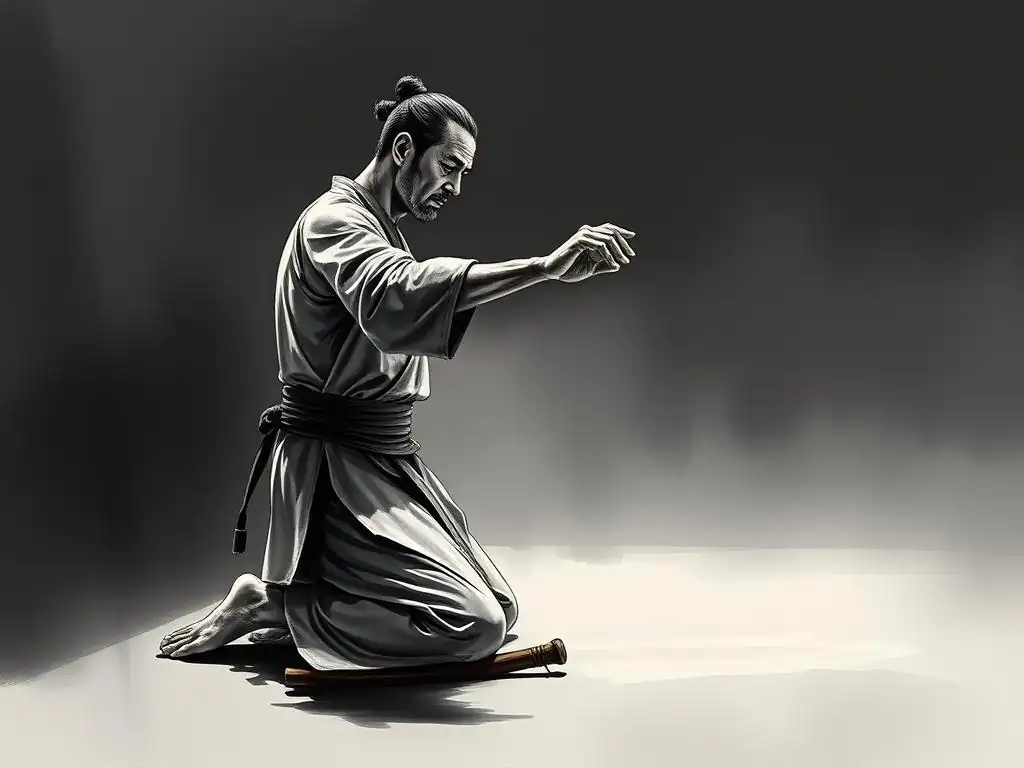
Utilizing Kata to Internalize Aikido Principles
Aikido kata are essentially physical embodiments of the art's core principles. Practicing forms like Ikkyo, Kote Gaeshi, or Tenchi Nage repeatedly allows the practitioner to internalize concepts such as centering, extension of ki, blending with force, and controlling an opponent's line of balance. Each form provides a controlled environment to explore these fundamental dynamics against a cooperative partner (or sometimes solo).
For example, the basic Ikkyo form teaches how to enter safely off a grab, establish connection, break the opponent's balance forward, and control their arm and body to the ground. Repeating this form hundreds, even thousands of times, builds the necessary physical structure, sensitivity to the partner's movement, and understanding of leverage and control without relying on force. This deep internalization of concepts through forms is the bedrock upon which Aiki creativity is built.
From Static Forms to Dynamic Application: The Transformative Process
The journey from practicing static forms to achieving dynamic, spontaneous Aiki creativity is transformative. It involves a shift from executing a predetermined sequence of movements to responding fluidly and appropriately to a live, unpredictable attack. The forms provide the template and the vocabulary, but the dynamic application requires the ability to recognize the underlying principle in a chaotic situation and apply it creatively.
This transition is often facilitated by moving from basic kata practice to variations, then to randori (freestyle practice). In randori, the practitioner must draw upon the concepts and movements learned through forms but apply them instantaneously without prior knowledge of the attack. This process hones sensitivity, timing, and the ability to adapt, pushing the practitioner towards the spontaneous generation of technique characteristic of Takemusu Aiki. It's where the learned forms truly come alive as tools for Aiki creativity.
Practical Application of Takemusu Aiki Principles
Developing Intuitive Response Through Repetitive Practice
Developing the intuitive response necessary for Takemusu Aiki is primarily achieved through massive repetition of fundamental movements and forms. Aikido practitioners often spend years repeating basic kata, suburi (solo weapon swings), and paired exercises. This isn't mindless repetition; it's deliberate practice aimed at ingraining correct body mechanics and principle application into muscle memory and subconscious reaction.
Consider the suburi of the Aiki-jo (short staff). There are often around 20 basic suburi forms. Practicing each of these 100 or more times per session, multiple times a week, for years, builds incredible precision, timing, and connection through the body and weapon. This level of repetition allows the practitioner's body to respond correctly without conscious thought when presented with a similar vector or angle of attack, forming the basis for spontaneous Aiki creativity.
Adapting Aikido Techniques to Unforeseen Circumstances
A key aspect of Takemusu Aiki is the ability to adapt learned forms and concepts to unforeseen circumstances. Real-world situations rarely present textbook attacks. An opponent might use an unusual grip, attack from an unexpected angle, or resist in a way not covered in standard kata. This is where Aiki creativity truly shines.
Instead of being stuck trying to apply a specific form that doesn't fit, the practitioner operating under Takemusu Aiki principles can fluidly modify the technique or transition to an entirely different approach. For instance, if attempting an Ikkyo on a wrist grab and the opponent strongly resists the downward movement, the practitioner might instantaneously shift to a Kote Gaeshi or even a form of Kokyu Nage, using the opponent's resistance to facilitate the new technique. This adaptability is a direct result of deeply understanding the underlying concepts rather than just memorizing sequences.
Key Concepts Underlying Takemusu Aiki
Ma-ai (Distance) and Timing in Aiki Creativity
Ma-ai, the critical distance between practitioners, and timing are fundamental concepts for effective Aikido and essential for Aiki creativity. Correct ma-ai allows the practitioner to enter safely and effectively, while precise timing enables blending with the attack and initiating a technique at the optimal moment when the opponent's balance is compromised.
In Takemusu Aiki, the practitioner's sensitivity to ma-ai and timing becomes highly refined. They can instinctively adjust their distance and initiate movement precisely as the attack unfolds, often before the opponent's technique is fully committed. This allows for the spontaneous generation of appropriate responses that capitalize on the fleeting moment of opportunity, demonstrating a high level of reactive Aiki creativity.
Kuzushi (Breaking Balance) as a Foundation for Spontaneous Technique
Kuzushi, the principle of breaking an opponent's balance, is a cornerstone of virtually all Aikido techniques and a critical concept for enabling Aiki creativity. An opponent who is off balance is significantly easier to control and throw, regardless of their size or strength. Aikido forms meticulously teach various methods of achieving kuzushi through movement, blending, and pressure.
For spontaneous technique to emerge in Takemusu Aiki, the practitioner must instinctively recognize opportunities for kuzushi and exploit them instantly. This isn't about forcefully pulling or pushing; it's often achieved by leading the opponent's energy, changing direction, or creating voids that they are compelled to fill, thus disrupting their stability. The ability to recognize and create kuzushi on the fly is paramount for the fluid, creative techniques characteristic of Takemusu Aiki.
Awasé (Blending) and the Harmonious Response in Takemusu Aiki
Awasé, the principle of blending or harmonizing with an opponent's movement and energy, is perhaps the most distinctive concept in Aikido and central to Takemusu Aiki. Instead of meeting force with force, awasé involves joining with the attack, redirecting its energy, and leading the opponent. This allows for efficient, non-conflicting resolution.
In Takemusu Aiki, awasé is the mechanism that enables Aiki creativity. By seamlessly blending with an attack, the practitioner maintains their own balance and center while simultaneously disrupting the opponent's. This creates the window of opportunity for a spontaneous technique to emerge naturally from the unified flow of energy. The ability to instantly match and redirect incoming force through refined awasé is what makes Takemusu Aiki techniques appear effortless and infinitely adaptable.
Training Methods for Cultivating Takemusu Aiki
Solo Practice (Tandoku Dosa) and its Significance
Solo practice, known as Tandoku Dosa or Suburi (for weapons), is a foundational training method for cultivating the physical structure and internal feeling necessary for Takemusu Aiki. Practicing basic movements and weapon forms alone allows the practitioner to focus entirely on their own body mechanics, balance, posture, and the cultivation of ki extension without the distraction of a partner's resistance.
Examples include basic empty-hand movements like Tenkan (turning) and Irimi (entering) practiced repeatedly, or solo suburi with the jo (staff) and bokken (wooden sword). This solo training builds the essential physical "hardware" and internal awareness. A practitioner might perform 50 or 100 repetitions of a single jo suburi to perfect the cut and develop connection from the hara. This deep physical understanding forms the silent, intuitive base for later Aiki creativity.
Paired Practice (Kumi Tachi, Kumi Jo) for Aiki Refinement
Paired practice, such as Kumi Tachi (paired sword forms) and Kumi Jo (paired staff forms), is crucial for developing timing, distance ( ma-ai), blending ( awasé), and sensitivity to a partner's intention and movement. These are pre-arranged forms where partners execute specific sequences of attacks and defenses.
While seemingly fixed, these forms are designed to teach fundamental principles of engagement, entry, control, and finishing techniques against a resisting partner. Practicing Kumi Jo forms, of which there are often several dozen codified sequences, teaches practitioners how to manage distance, read an opponent's intent from their posture and movement, and apply principles like kuzushi and awasé in a dynamic context. Mastery of these paired forms bridges the gap between solo practice and free application, refining the sensitivity needed for spontaneous Aiki creativity.
Integrating Sparring (Randori) to Test Creative Aikido Application
Randori, or freestyle practice, is the training method where the potential for Takemusu Aiki is truly tested and developed. In randori, one or more attackers launch unpredictable attacks, and the defender must respond using any appropriate technique that emerges spontaneously. There are no pre-set forms to follow.
This is where the concepts and physical skills learned through solo practice and paired forms must be applied in real-time. Randori forces the practitioner to move beyond conscious thought and rely on intuitive response. It hones the ability to instantly read an attack, find kuzushi, blend effectively, and generate a technique on the spot. While challenging, regular randori is essential for developing the adaptability and fluidity that characterizes true Aiki creativity.
Examples of Takemusu Aiki in Practice
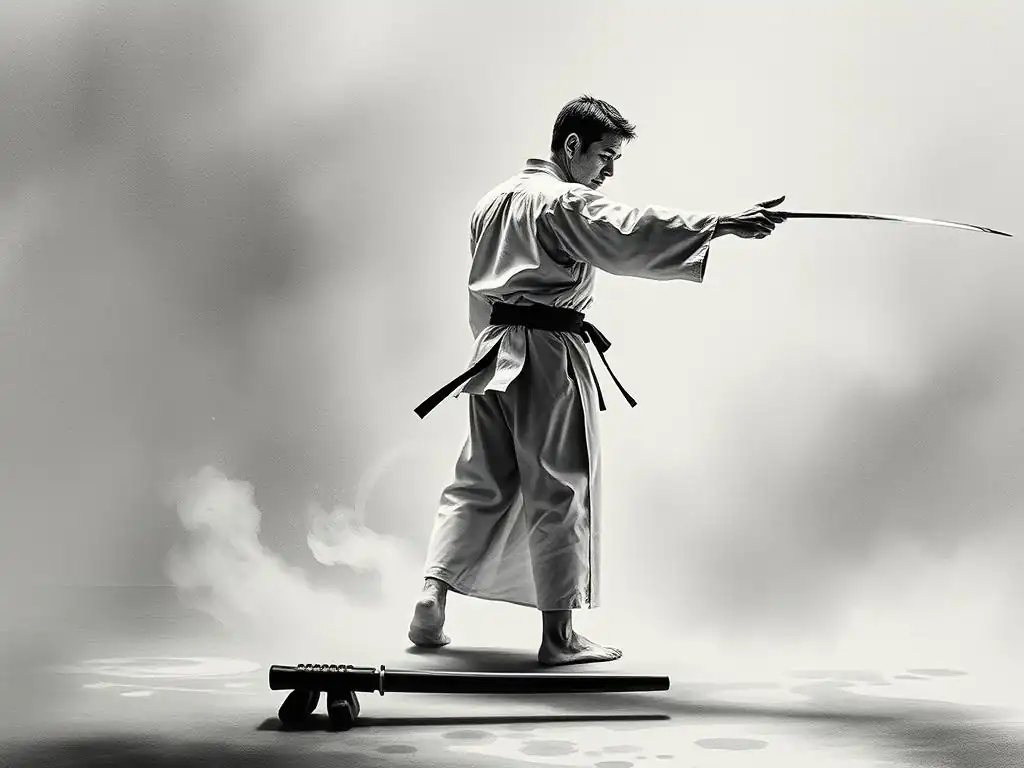
Analyzing Suwariwaza Kokyuho
Suwariwaza Kokyuho is a fundamental seated breathing exercise, often practiced at the beginning or end of class. While seemingly simple, it is a powerful example of how basic forms cultivate core concepts vital for Takemusu Aiki. In this exercise, uke (the partner) grabs nage's wrists, and nage uses unified body power ( kokyu) and subtle movement to break uke's balance and control their arms.
This form teaches the practitioner to generate power from their center, use body structure and breath rather than muscular force, and blend with the partner's resistance. The goal is to achieve maximum effect with minimum effort. Mastering Suwariwaza Kokyuho develops the internal strength and connection that underlies effortless movement and spontaneous technique generation, demonstrating how even simple forms are vehicles for deep Aiki creativity development.
Analyzing Ikkyo
Ikkyo ("first principle") is arguably the most foundational technique in Aikido and a prime example of how studying a form leads to understanding core concepts essential for Takemusu Aiki. The basic Ikkyo form, typically practiced from various grabs and strikes, teaches fundamental principles like entering ( iri), turning ( tenkan), establishing control at the opponent's center, and leading their energy to the ground.
Through rigorous practice of the Ikkyo form, practitioners learn about posture, connection, distance management, and how to achieve kuzushi. While the basic form is fixed, the principles learned – controlling the opponent's arm line, disrupting their balance, moving from the center – can be applied creatively in countless variations depending on the attack and reaction. This mastery of the Ikkyo concept, honed through the form, enables Aiki creativity in dynamic situations far removed from the basic practice.
The Philosophy of Takemusu Aiki: Beyond Technique
Aiki as a Path to Self-Development and Harmony
The philosophy underlying Takemusu Aiki views the martial art not merely as a system of fighting techniques, but as a path for self-development and the realization of harmony. The spontaneous generation of technique reflects a state of inner harmony and presence, where the practitioner is fully connected to themselves and their environment.
The development of Aiki creativity is thus intertwined with personal growth. It requires cultivating qualities like calmness under pressure, non-attachment to outcome, compassion, and a deep understanding of conflict resolution that transcends physical engagement. Takemusu Aiki embodies the ideal of using martial principles to foster peace and harmony, both internally and externally.
The Ethical Considerations of Creative Martial Expression
Takemusu Aiki, with its potential for infinite technique generation, carries significant ethical considerations. The power it represents must be tempered with responsibility and compassion, core tenets of Aikido's philosophy. The ability to spontaneously generate powerful techniques means the practitioner must also exercise restraint and choose resolutions that are appropriate to the situation, ideally resolving conflict with minimal harm.
This level of Aiki creativity should not be used for aggression or unnecessary injury. The ethical dimension requires the practitioner to understand the potential impact of their spontaneous actions and act in accordance with Aikido's principles of peace and harmony. It emphasizes that true mastery includes the wisdom to know when and how to apply technique, and often, when not to.
The Future of Takemusu Aiki: Preserving and Evolving the Art
Challenges and Opportunities in Modern Aikido Training
Modern Aikido training faces challenges in effectively transmitting the concept of Takemusu Aiki. The emphasis on fixed forms and a lack of sufficient dynamic practice like randori in some dojos can hinder students' ability to move beyond replication to true Aiki creativity. Balancing the preservation of traditional forms with the need to develop spontaneous application is a constant challenge.
However, there are also opportunities. Increased access to diverse training methods, cross-training insights, and a deeper understanding of motor learning and psychology offer new avenues for cultivating the necessary skills. Emphasizing the concepts embedded within forms, fostering a playful and exploratory approach to practice, and integrating more dynamic, less predictable training can help students unlock their potential for Aiki creativity.
The Enduring Legacy of Aiki Creativity in Martial Arts
The concept of Aiki creativity, embodied by Takemusu Aiki, represents an enduring legacy that extends beyond Aikido itself. It highlights the universal martial principle that true mastery lies not in a fixed set of responses, but in the ability to adapt and create effectively in the face of unpredictability.
This principle resonates across various martial disciplines and even in non-martial contexts like business or personal conflict resolution. The idea of deeply internalizing fundamental concepts through diligent practice ( forms) to the point where spontaneous, effective, and harmonious action becomes possible is a powerful model for skill development and creative problem-solving in any field. The pursuit of Takemusu Aiki continues to inspire practitioners to seek a deeper, more creative connection to the art.
Conclusion: Embracing Aiki Creativity Through Forms
Takemusu Aiki: A Continuous Journey of Discovery and Expression
Takemusu Aiki is not a destination but a continuous journey. It is the ongoing process of refining one's understanding of Aikido's core concepts, deepening the internalization of principles learned through forms, and developing the sensitivity and presence required for spontaneous, harmonious response. It represents the highest expression of Aiki creativity, where technique emerges effortlessly from a place of deep understanding and connection.
Embracing Takemusu Aiki means committing to rigorous practice of forms, paired exercises, and dynamic application methods like randori. It means striving to understand the "why" behind the techniques, not just the "how." It is a path of physical, mental, and spiritual cultivation that promises not just martial proficiency, but a profound capacity for creative, harmonious interaction with the world. The pursuit of this ultimate Aiki creativity is what makes the path of Aikido endlessly fascinating and rewarding.
Frequently Asked Questions
What is Takemusu Aiki, and how does it relate to Aikido?
Takemusu Aiki is a core concept in Aikido, often translated as "martial creativity" or "spontaneous technique." It emphasizes the ability to adapt and create new techniques based on fundamental Aikido principles and kata (forms).
How do Aikido forms contribute to Aiki creativity?
Aikido forms (or kata) provide a foundation for Aiki creativity. By repeatedly practicing these forms, practitioners internalize the principles of movement, balance, and energy flow, allowing them to improvise and adapt effectively.
What are some concepts underlying Takemusu Aiki?
Key concepts include musubi (connection/blending), ma-ai (harmonious distance), and kokyu-ryoku (breath power). These concepts foster sensitivity and adaptability, which are crucial for developing Aiki creativity.
Why is Aiki creativity important in practical self-defense?
In real-world self-defense situations, rigid adherence to pre-defined techniques is often ineffective. Aiki creativity enables practitioners to respond fluidly and effectively to unpredictable attacks, utilizing Aikido principles in spontaneous ways.
How does MartialArtsMastery.org help practitioners develop Aiki creativity, forms, and concepts?
MartialArtsMastery.org offers historical overviews, training tips, and philosophical insights into Aikido, deepening understanding of its forms and underlying concepts. This supports the development of Aiki creativity through informed and mindful practice.
Final Reflection: Embracing Limitless Aiki Creativity
The journey through the concept of Takemusu Aiki reveals that true mastery lies not just in the perfect execution of forms, but in the boundless creativity they inspire. This understanding is profoundly relevant today, as we navigate a world demanding adaptability and innovative solutions in every field, not just martial arts. The principles of Takemusu Aiki, fostering spontaneous and effective action, offer a powerful framework for cultivating this essential creativity.
The influence of Takemusu Aiki extends far beyond the dojo, shaping our approach to problem-solving and self-expression. Its emphasis on intuitive response and continuous learning encourages us to break free from rigid structures and embrace the unexpected. The art of peace begins with you. Work on yourself and your appointed task in the art of peace. Everyone has a spirit that can be refined, a body that can be trained in some manner, a suitable path to follow. You are here for no other purpose than to realize your inner divinity and manifest your inner enlightenment. Foster peace in your own life and then apply the art to all that you encounter.
- Morihei Ueshiba. This quote perfectly encapsulates the spirit of Takemusu Aiki, highlighting the importance of personal growth as the foundation for creative expression and peaceful interaction.
Now, consider how you can integrate the principles of Takemusu Aiki into your own life. How can you use established forms and knowledge as a springboard for innovation and spontaneous action? Embrace the unexpected, trust your intuition, and continuously refine your spirit. The path to Aiki creativity is open to all; dare to step onto it and discover the limitless potential within you.
Ignite Your Aiki: Unleash Limitless Creativity!
Thank you for exploring the depths of Takemusu Aiki with us! Now that you understand the essence of martial creativity, it's time to embody these principles in your own practice.
- Dive deep into your Aikido forms: Dedicate your next training session to experimenting with variations and feeling the flow of energy.:
- Share your insights! Engage with fellow practitioners in the Martial Arts Mastery community and discuss your interpretations of Takemusu Aiki.
- Surprise yourself: Try a new, unorthodox approach to a familiar technique – even if it feels awkward at first!
What creative adaptation will you bring to your next Aikido practice?